
Guest Interview with Mark Simmonds: Author of ‘Breakdown and Repair’ mental health book.

mark1

(image: Mark Simmonds and Lucy Streule)
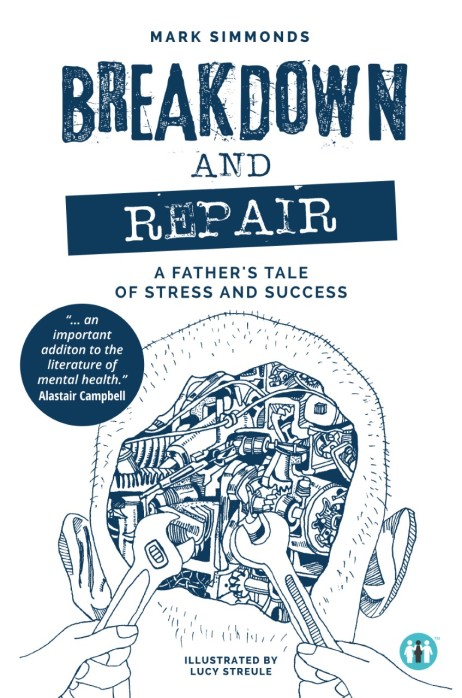
 

breakbook1


What inspired you to write a book about yours and your daughter’s journey with mental health?

It was July 2017 and I was attending a summer party, hosted by the Marketing Society, the organisation that brings together business people working together in the areas of marketing and advertising. Gemma Greaves, the CEO, was delivering a speech, during which she announced that the Society was going to join the mental health crusade. This seemed odd, slightly incongruous. But then it dawned on me that times had changed. Mental health was no longer the taboo topic it was when I suffered my mental breakdown back in 2001.

Everyone was talking about it now. I also had another 16 years’ experience under my belt, including caring for Emily, my daughter, who suffered from anorexia from 2012 until 2018. So, I had no excuse but to come out of the mental health closet and leave a legacy of sorts to the world. And even if that book helped just one person, then it would have been worth the effort.


How did you manage to recover from your stress, anxiety and break down, what helped you?

It was the 19th July 2001. Extreme stress at work had brought on the panic attacks, which were soon followed by a mental breakdown and the onset of severe agitated depression. I was no longer communicating with my wife or my three young children, even though we were all living under the same roof. That morning, I went cycling down a country road. My brain felt like a jumble of spaghetti when I collided with a 10-ton truck. It appears I tried to take my own life.

That’s how I recovered from the breakdown, because when I woke up in the John Radcliffe Hospital in Oxford a few hours later, the dense fog seems to have lifted. From that point onwards, I began to behave like a normal human being. No idea why. The physical impact caused by the accident to my brain? The awful realisation that I had come within a whisper of losing my life, my wife and my kids. There are far more conventional ways of recovering from breakdowns, but that was mine.

How did I recover from stress and anxiety? To be honest, I haven’t! I have simply learned to manage it over the years. I have put banisters in place that help keep me on the straight and narrow: I pick the right working environments, I manage my own expectations and set realistic goals. I satisfy my needs as an introvert. I take medication. I sleep well, eat well, exercise enough. But like all mental illnesses, be aware that it’s always lurking in the bushes, ready to pounce at moments you don’t expect.

mark2

(image: Mark Simmonds and Lucy Streule)

Did you find that Emily received good care and how did you help support her?

Yes, Emily received excellent help and support both from the NHS (Buckinghamshire Child and Adolescent Mental Health Services, the Highfield Unit and Cotswold House, Oxford) and from the Cardinal Clinic near Windsor. The dedication and professionalism of all the staff was outstanding and they did their absolute best to help Emily through the illness. But here is the thing. The quality of the support and the hours spent coaxing a patient back to health have little effect or impact until that patient wants to recover.

It took Emily 6 years to decide that she had had enough of anorexia. and it was only then she finally got better. Anorexia (or Ana as we ‘affectionately’ called her) was a brutal enemy, unforgiving and merciless. More than a match for even the most qualified, most experienced doctors, psychiatrists and counsellors.


As a father, what was it like to see Emily struggle with anorexia and to try and save her at the time?

I have suffered from depression at various stages in my life and have experienced living at the bottom of the dark pit where Emily found herself. So, it was painful to watch her suffer because I knew exactly what she was feeling. The upside was that I was able to empathise and sympathise with her. I got it. And the way in which I talked to my daughter and tried to support her was more in line with what she needed. People who are suffering from mental ill health don’t respond very well to rational or logical arguments because their brains are temporarily ‘broken’. The neurotransmitters are not connecting with one another. They need lots of hugging, hand holding, being listened to and loved. An irrational and emotional approach is more effective than a rational one.

Where are you both now in terms of recovery?

As far as my daughter was concerned, it was just 12 months ago when the full-blown Anorexia Wars came to an end. We are all fully aware that war could break out again sometime in the future. As a good friend described it, all we could hope was “that Ana will get incarcerated and gagged in small section deep in Emily’s brain, a high security area from which she can never escape.”

Thankfully, at the moment, our daughter is flying high. She is living and working in London for ITV, eating well, drinking alcohol in moderation (trust me that is a positive thing!), firmly back on track.

As far as I am concerned, life is great. As I mentioned earlier in this piece, I don’t think that you ever escape fully from either stress or anxiety, but I am determined not to let it get in the way of doing great things, trying new stuff, taking risks, saying things that you might regret, taking on people with whom you don’t agree. I want to make sure I end up under the right tombstone.


How has reaction to the book been and how was the writing process?

The writing process was a joy! I loved more or less every minute of it. Working closely with Kasim, my editor at Trigger to agree the overall shape and structure of the book, researching stories and expert perspectives/points of view to add colour, collaborating with the wonderfully talented graphic designer, Lucy Streule, around the illustrations. And spending hour after hour with my wife and family editing, tweaking, improving the book. A wonderful experience.

The reaction has been great, both from friends and from people I have never met.

Alastair Campbell comes into the latter category and he kindly agreed to endorse my book. This is what he said: “I loved this book and devoured it in a single day. Whether on his own illness, his mother’s or his daughter’s struggles, Mark writes clearly and without sentimentality. He is brutally honest about the reality of mental illness across the generations with important insights about how to survive it. Though it is filled with sadness and heartbreak, ultimately his story is a testimony to the power of love and of the human spirit.”


breakbook2

Mark Simmonds published his first book, Breakdown and Repair, with Trigger Publishing, in March 2019 (https://www.amazon.co.uk/Breakdown-Repair-Fathers-Success-Inspirational/dp/1912478994). It provides a full account of his daughter’s struggle against anorexia and is illustrated by Lucy Streule. It also talks candidly about his own experiences with mental ill health.

You can also follow Mark on Instagram (mentalhealthmark).
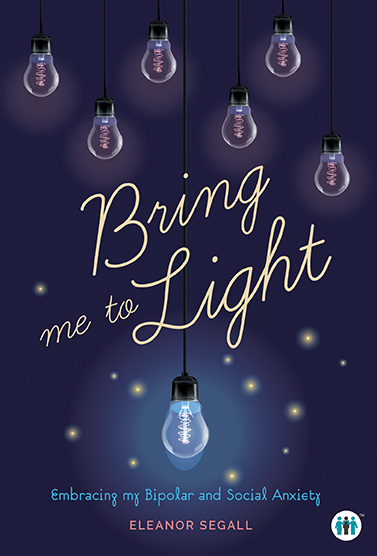
 

Looking to the future: Life and Positivity by Eleanor

progress1

(image: Pinterest)

‘The only thing constant in the world is change‘- India Arie

In the past few weeks, it hasn’t been the easiest of times. My anxiety has come back on some days, leaving me feeling pretty low and unable to do certain tasks. However, as each day passes it is slowly improving and I am looking towards the future, both in my life and career.

I am making the transition again to being self employed. For me, this is difficult to blog about- but as we look towards the Jewish New Year, I am holding on to hope.

Hope that all will improve.

Hope that good things are on their way.

Hope that the light is coming back again.

My book will be published in just over a month’s time and I am so excited to hold the paperback in my hands! Thank you everyone who pre ordered the book and made it into a best seller.

I am grateful for every blessing that has come my way. I also have more writing projects planned, stay tuned for further details :). I know it all will lead to good in the end.

I’m currently looking into therapy and further support- EMDR therapy if possible, which helps to process trauma through rapid eye movements and images.

Everything will work out for the good, just some days it is hard to see. A note to self: keep positive and keep going. Good, happiness and dreams are on it’s way even if temporarily hidden.


How to reduce Stress and maintain Mental health during a Divorce: Guest blog by Luci Larkin at Woolley&Co

divorce1

(image: https://sasforwomen.com/divorce-quotes-inspirational/)

Going through a divorce or relationship breakdown can be one of the most stressful situations a person can find themselves in. You lose your friend, partner, confidante and have to adapt to living as a single person, often as the primary carer of children. 

This is a time of extreme and mixed emotions made more complicated by the stresses and worries of legal and financial considerations as well as having to support and counsel any children that may be involved and suffering too.

With mental health problems on the rise and divorce being listed as one of the leading contributors, Luci Larkin from Family Law Solicitors, Woolley & Co, explains how you can reduce stress during such a turbulent time in your life.

“If you have decided your marriage is over you will most probably want to make the whole process of divorce as painless as possible. Contrary to public perception not all divorces have to involve outright war leaving a trail of destruction and despair.

Every individual going through a relationship breakdown will deal with this in their own way. Some prefer to carry on as though nothing has happened, others find it cathartic to talk to someone about their problems.”

It’s fair to say that anyone going through a separation or divorce is going to experience a series of emotional stages post-breakdown. These could range from anger and depression to fear and frustration. All perfectly normal feelings and reactions to an emotionally difficult situation. It’s important to recognise these feelings but to try and stay positive. 

Sometimes the support of friends and family is enough to see a person through, others may need more help such as counselling or medical advice.

With the right divorce lawyer you should be able to resolve a divorce sensibly enabling you and your children to move on with your lives in the most amicable and constructive way.” 

So what is the secret? 

Divorce lawyers’ tips for a less stressful divorce

Luci explains, “As tempting as it is to take advice from your best friend or the “know it all guy” in the pub it’s really important to seek proper professional advice. Couple this with my 5 tips below:


  1. Talk to a family lawyer who is ideally a member of Resolution committed to resolving disputes in a non-confrontational way.
  2. Listen to the professional advice given to you and try to act upon it. Always negotiate before you litigate. Compromise is the essence of any agreement.
  3. Inevitably there will be disagreements with your spouse but try to keep emotions under control and avoid verbal abuse and threats. This will simply lead to them becoming difficult and inflexible. You do not want a war.
  4. Try to avoid involving the children or using them as a pawn. They are innocent in this situation and they will need the love and support of both parents. Ideally sit down and agree a parenting plan.
  5. Think about timing. You may have been thinking about a divorce for years whereas your partner may only have received the news a matter of weeks ago. Expecting your spouse to discuss future living arrangements at a time when they are still reeling from the news that you want to end the marriage, may be unrealistic. You might have to slow down for a while, be patient, and wait until they are ready to move things forward.”

Whilst getting a divorce is clearly not an ideal situation it does not have to be a time consuming, stressful, unpleasant money pit.

Sensible advice coupled with calm cooperation can help to ensure the experience is as painless and cost effective as possible but more importantly that you and your children can move forward with your lives in the best possible way.

Luci is an experienced and approachable divorce and family solicitor with Woolley & Co, based in Barnet, Greater London.  Her working mantra is to establish what clients want and move towards achieving that outcome as quickly and as cost-effectively as possible. 


Book Interview for Bring me to Light: ‘Recovery is possible’ by Kat O’Connor at Shemazing

bringmetolightbook

My interview with Kat O’Connor at the wonderful Shemazing over in Ireland was published today. Thank you so much!

Here are some small extracts:

‘Eleanor Segall has penned a book about what it is really like to live with bipolar disorder. The inspirational author’s book Bring Me To Light is bound to open your eyes about a disorder that affects so many people across the globe.

Eleanor spoke to Shemazing about mental illness, becoming a published author and opening up about her personal struggles and being diagnosed with bipolar disorder at the age of 16.

Having dreamed of being a writer since she was a kid, seeing her book for sale is a true pinch me moment for Eleanor. “I couldn’t dream that I would write a book of my life story or its circumstances at 31. When I was ill in 2014, I knew I wanted to share my story to help people with bipolar disorder and mental health conditions. Helping others is the reason I have written the book and why I kept going with it. I want to break the stigma bipolar and particularly psychosis has. It is such an honour to be published and Trigger seemed like the perfect home for my book.

Read the full interview here: https://www.shemazing.net/recovery-is-possible-i-have-bipolar-disorder-but-it-is-not-the-end/

A guide to Therapies and finding the right one for you: Guest blog by the Worsley Centre

louisn1

(image: Quotir)

If you find yourself at a point in life where you think you might need to seek some professional help, then the decision as to which therapy is right for you can be a daunting one. At its worst, depression and anxiety related disorders can take away our ability to make rational, informed decisions, so how could you possibly know which one is right for you? 

There’s no definitive way of knowing, and even if you start one course of therapy, only to discover it isn’t for you, it’s important to remember it’s not a one-size-fits all decision. If you’re trying to take a long-term approach to taking care of your mental health, then you need to take the time and effort to find the appropriate course of treatment to meet your needs. 

So here’s a basic guide to some of the most common therapies, and how they might be able to help you (although it’s worth bearing in mind that this isn’t an exhaustive list). 

Counselling 

This might sound like a catch-all term to describe all of the therapies below, but actually counselling is subtly different from other types of therapy. Counselling can often be a useful short term strategy to cope with events in our lives which can, quite understandably, cause mental health stresses. These can include bereavement, miscarriage, sudden redundancy, relationship problems or problems with infertility. Counselling sessions normally last for 6-12 weeks, though they can of course be tailored to every individual person’s needs. 

Psychotherapy 

Psychotherapy is primarily a talking therapy, but may also utilise art, writing, music or drama. Psychotherapy can help with a range of conditions, including anxiety, stress, depression, eating disorders, post-traumatic stress disorder, obsessive compulsive disorder. This therapy aims to teach you to manage painful emotions and relationships more successfully. 

Psychotherapy basically involves talking with the patient, discussing strategies to solve problems and changing behaviour. 

It’s worth noting that most of the other therapies in this post are forms of psychotherapy. 

Psychodynamic therapy 

This is a form of psychotherapy which focuses less on the patient-therapy relationship. Patients are told to speak freely and openly about any issues that come to mind, whether it be fears, anxieties or desires. It is a more short-term incarnation of psychotherapy. It’s often used to treat people with serious depressive disorders, or who may struggle to forge meaningful relationships in their lives. 

Interpersonal Psychotherapy 

Interpersonal psychotherapy is a short-term form of psychotherapy treatment. It’s very structured, and includes a lot of homework and continuous assessment. It primarily looks at ways depression can be triggered by changes in relationships to others, such as bereavement, or relocation. 

It will usually start with a 1-3 week assessment of symptoms, as wells as social history and the patient’s relationships. The therapy aims to come up with treatment strategies to deal with problem areas in a patient’s life; over the course of the treatment the emphasis of these problem areas might change, as will the therapist’s strategies. IPT is a relatively young form of psychotherapy treatments. 


Cognitive Behavioural Therapy 

Cognitive behavioural therapy is a short-term form of psychotherapy which puts its focus on problem solving as a way of breaking certain thought patterns and modes of behaviour. It’s very much a therapy which focuses on the here and now, as opposed to trying to look for explanations of present day behaviour in past events. CBT has proven to be effective in the treatment of anxiety and panic disorders, depression, post-traumatic stress disorder, phobias and obsessive compulsive disorder. 

CBT works on the concept that a person’s perception of a certain situation determines their and feelings, and hopefully break free of unhelpful patterns of behaviour. 

Mindful Based Cognitive Therapy 

This is another form of cognitive therapy which incorporates mindfulness strategies and breathing exercises into courses of treatment. Mindfulness techniques use breathing and meditation to place people in the present moment, and MBCT uses these techniques to encourage patients to deal with overwhelming or stressful situations.  Again, it aims to break unhelpful thought patterns which can lead to recurrent episodes of depression or anxiety. As well as mindfulness, patients are taught to understand the relationship between how you think and how you feel. 

Neuro-Linguistic Programming Therapy 

Neuro-linguistic programming focuses on behaviour modification techniques to help improve a client’s sense of self-awareness, confidence and communication skills. Again, it helps people to understand that the way they operate in the world is in turn affected by how they view of the world. 

It’s often used to treat phobias, help people deal with self-esteem problems, post-traumatic stress disorder and is designed to help patients understand the workings of their own mind. 

Couples and Family Therapy 

The title of this therapy is relatively self-explanatory, but basically it encourages individuals to resolve problems in the context of family units, or as part of a couple. This helps people to better understand their role within a group dynamic, and how their actions affect the other person within a family or couple. 

During the therapy, family members are encouraged to work together to solve a problem which may be directly affecting a family member, with each person encourage to express their thoughts and feelings in an open and supportive forum. Family and couples therapy is geared towards making different family members empathise with one another, understand each other’s point of view, and switch roles where necessary. 

The ultimate goal of family and couples therapy is restore healthy relationships. This branch of therapy essentially believes that family life is like being part of a system, which is only as strong as the individual within it. Family and couple therapy ultimately aims to restore balance to this system. 

These are, arguably, the most well-known and high-profile forms of therapy. As outlined at the beginning of this article, it’s not an exhaustive list; there are many more specific types of therapy which may prove to be the right one for you. It’s also worth mentioning that it’s perfectly normal to try a few of the therapies on this list, as it might take a few referrals before you find the right one for you. 

The Worsley Centre offers counselling and psychotherapy sessions for couples, individuals and groups in the Greater Manchester area. 

https://theworsleycentre.com/ 


How stressed are UK Students in 2019? Guest post by the Natwest Student Living Index


natwest1

(Image: Natwest Student Living Index)

The NatWest Student Living Index 2019 has launched recently,  delving into both stress and mental health for students at university.
https://personal.natwest.com/personal/life-moments/students-and-graduates/student-living-index.html

University-age students are more engaged with mental health and wellbeing than ever, and the study found that 1 in 4 students are very satisfied with their university’s mental health support.

Other noteworthy findings from the survey include:
• 71% of students say that their university offers affordable health and wellbeing programs (gym classes, yoga, meditation, mindfulness)
• 40% of students are concerned about their financial situation following university
• 45% of students find their university degree stressful
• 1 in 4 UK students find managing money stressful

The 2019 NatWest Student Living Index revealed that close to half of all UK students feel
extremely stressed by their degree studies. 1 in 4 students in the UK described managing their money as extremely stressful, while only 6% felt they received sufficient money management support from their university on average.

NatWest’s Student Living Index 2019 asked students from 35 top university cities about all aspects of student life, including the amount of wellbeing and mental health support on offer for students at university in 2019.

Is their degree the cause of the stress? On average, 45% of students in the UK feel extremely stressed by their degree  Cambridge (60%) and Durham (57%) students are the most stressed by their degree studies.
Have Universities supported students with mental health resources?

1 in 4 students are very satisfied with their university’s mental health resources, while 71% said that their university offers affordable health and wellbeing programs.
Interestingly, while students in Poole feel the most stressed by money management, the city also came last when students were asked about the availability of affordable well-being programs:

 53% of students in Poole said their university offers affordable well-being programs, this is the lowest ranked city and 18% below national average.

 Less than 1% of Students in Reading and Stirling feel supported by their university when managing their finances.

 94% of students in Aberystwyth feel their university offers affordable well-being programs

Are you a student in the UK? Read more about the findings here:  https://personal.natwest.com/personal/life-moments/students-and-graduates/student-living-index.html

An Increase in Anxiety: Panic attacks and Therapy thoughts.

panic1

(image: Your Tango)

Hi friends,

It has been a while since I’ve shared a personal blog and I want to be as honest as possible.

It has been a whirlwind of a time- I got married to my wonderful husband in July- we really had the best day, I have been editing and finishing writing my book Bring me to Light and I also started a new job at a charity in May- which has meant I have been blogging less. I love my new job however I am much busier!

This has meant an increase in my anxiety levels and panic attacks in the mornings at times, related to social anxiety. I worry about the day ahead and sometimes don’t feel able to leave home. I have been trying to combat this but its been really hard and is still ongoing for me.

I have had a lot of CBT and talking therapies but believe my anxiety to be trauma based re what happened to me 5 years ago, being sectioned and in hospital. As such, I would like to have EMDR therapy, a type of therapy that helps to process trauma through focusing on images and rapid eye movement. It is hard to describe but I believe this is what I need in order to keep my anxiety disorder under control- and get rid of most of it.

In the mean time I have been leaning on my support network and have been prescribed beta blockers for when the anxiety is at its highest. I have also been referred back to psychiatry in order to get a referral for EMDR.

Except…. my NHS borough don’t fund EMDR therapy so the only route in is via a service called IAPT. It may be that I have to go privately if the NHS standard of therapy is not good enough but there we are. There is still a 2 year waiting list to even have an assessment for therapy, but via IAPT it is quicker, so I hope I can get some form of help for me. The funding for mental health in the UK is atrocious and I hope this will improve….

Having the support of my parents, Rob and family has been hugely helpful to me and my new amazing colleagues who believe in me and have been very supportive.

But, it has been exhausting.

Panic attacks make me want to sleep, blank out and sometimes you can’t do that. You have to face the day and fight. That’s where the beta blocker meds come in for me right now as they calm the body down when you need to show up to something (deep breathing doesn’t do it for me). Usually, I feel better once I don’t react to the anxiety negatively and try to dig deep and push through, but its not easy.

This week, we are going on honeymoon in Italy and I am looking forward to a relaxed, sunshiney break by and in the pool, beach and spa with Rob and eating lots of delicious Italian food. A break is desperately needed and I hope I won’t have any panic attacks on holiday, but have a restful time!

Here’s hoping I will find something that will help ease the panic. I have tried so many things for so many years and it’s still here.

Eleanor x


Mental health and the juggling act: New Job, My book and Wedding. by Eleanor

bringmetolightbook

(image: Trigger Publishing)

Nearly a month ago, I started my new job at a big Jewish charity here in London. I work in a small but lovely team in PR and Communications- helping run social media, write and distribute press releases and copywriting. I am enjoying it but its totally different from my other work and I am far less immersed in the mental health world than I was a few months ago. It is a juggling act. Trying to keep up with changes and all that’s occurring though. Hopefully soon I will find time to write articles again for my friends at Metro.co.uk and Happiful.

This has brought its own challenges as I havn’t been blogging here as much either, due to writing my book. My book  ‘Bring me to Light’  will be released in the UK on November 5th and the USA shortly after, with Trigger Publishing. The title references going from darkness to light, as I have done with my bipolar and anxiety since I was 16. I have written most of it (50,000 words!) but my very kind editor has extended the deadline for it so I can write everything I need too, whilst also doing my day job and wedding planning (!). I am really excited to see a printed copy and to promote it later this year- the hard work will be worth it I hope. I also hope you enjoy reading it and thank you all for your ongoing support.

So, wedding planning, we are 5 weeks away now until I marry Rob, my fiance. It has come round so fast especially as we have had a year and few month’s engagement, I am counting down the days until I am under the Chuppah (Jewish marriage canopy) and we are officially married in presence of those we love! This week I had my final dress fitting and it was super emotional. I still can’t believe its happening. Rob’s dad is recovering slowly at home but his condition is still serious as he has cancer.

Naturally, you will be wondering- how am I staying sane with my bipolar with everything going on and with Robs dad not being well? Firstly, as we know, stressors can make bipolar worse and trigger episodes. At the moment, my main mood stabiliser Lithium keeps me very grounded and stable. Despite the stress, I am not dipping down into  deep depression as I would have done in the past. Yes-  there are times when I might feel stressed, overwhelmed, exhausted or tired and just want to sit in my pyjamas watching Made in Chelsea or First Dates. There are also times when I am too tired to cook or do laundry and need support with those. I am lucky to have a very supportive family who look out for me too.

My work colleagues have been super supportive when I have been overwhelmed or anxious and I am finding the flexibility of my work helpful too.  I am having less anxious days now I am working too due to exposure therapy and going out a little more (taking the bus and cabs and talking to new people).

For me, I really need self care time, time to switch off and unplug. As we go into Shabbat  now is the perfect time to read and be quiet, come off my phone and computer and just be. I really promote looking after you and taking time to sleep and rest for optimum mental health and to feel better again. Sometimes it can help to let others know how you’re feeling too.

I have two weeks to give in my first book manuscript and five til my wedding day. These are dreams I have had for years and I can’t quite believe they’re happening. Staying sane while planning a wedding without a planner can be hard but we have worked as a team. Having a good cry has really helped also at times, when things get too much! But generally happy, wonderful things so not to complain. Everything at once can get a lot for anyone. Life at the moment is hectic but I am pacing myself as much as possible.

If you would like to preorder my book, you can do so on Amazon or the Trigger website and I would love to know if you do :).

Thanks for being there for me and for supporting my work too. I hope we end the stigma against mental health by talking, sharing and explaining.

Love,

Eleanor xxx

Mental Health Awareness Week: The Mental Health Foundation: Body Image 13th-19th May 2019

mentalhealthawarenessweek

(image: Mental Health Foundation)

This week, starting today is the Mental Health Awareness Week by the UK charity the Mental Health Foundation. Its theme is looking at Body Image, how we think and feel about our bodies.

Mental Health Foundation say ‘Body Image can affect us all at any age- during this week we are publishing new research and campaigning for change’    .

They continued,

Last year we found that 30% of all adults have felt so stressed by body image and appearance that they felt overwhelmed or unable to cope. That’s almost 1 in every 3 people.

Body image issues can affect all of us at any age and directly impact our mental health.

However there is still a lack of much-needed research and understanding around this.

As part of Mental Health Awareness Week:

  • We will be publishing the results of a UK-wide survey on body image and mental health.
  • We will look at body image issues across a lifetime – including how it affects children and young people, adults and people in later life.
  • We will also highlight how people can experience body image issues differently, including people of different ages, genders, ethnicities and sexualities.
  • We will use our research to continue campaigning for positive change and publish practical tools to help improve the nation’s relationship with their bodies.’
  • The good news is that we can tackle body image through what children are taught in schools, by the way we talk about our bodies on a daily basis and through policy change by governments across the UK.’

For more on how you can get involved see : https://www.mentalhealth.org.uk/campaigns/mental-health-awareness-week


Royal family launches Shout UK- a Mental health crisis text line: Guest blog

shout1

Be Ur Own Light is supporting the incredible initiative from the Duke and Duchess of Cambridge and Sussex- Shout UK, a new text support line in the UK for people in mental health crisis- anyone who is struggling. They have teamed up with Crisis Text line to reach vulnerable people.

I feel privileged to live in a country where stigma is beginning to fall and where mental health issues are beginning to be understood better. Texting would have helped me as an ill teenager with bipolar!

Shout are looking for volunteers too to man the text lines as crisis counsellors.

Thank you to the Duke and Duchesses for the incredible profile they are giving mental health. #GiveUsAShout