Dealing with my mental health on holiday abroad: Trip to Israel

On Monday, I returned from a wonderful holiday to Israel with my fiance Rob, seeing friends and family. I hadn’t been to Israel in 9 years for various reasons and he hadn’t been for 13 years (!) so we were determined to make the most of our trip. We definitely don’t want to leave it so long next time.

We travelled around the country staying with family and in hotels too. If anything, we almost packed in too much trying to see everyone- and I still didn’t get to see everyone I wanted to as we were only there for a week. I was also very conscious of the fact that it was very hot and it became apparent that I couldn’t cope with walking  in 36 degree heat for too long!

I made sure that I had lots of water on me as my medication, Lithium,  dehydrates my body quickly so I have to intake more water than most. I found that through heat and dehydration, I would get tired quite quickly so if we had spent a morning travelling, I would need to spend a few hours either resting in air conditioning or sleeping.

In general, my anxiety is better when I am abroad, though there were a few days where morning anxiety did overwhelm  and I chose to rest and sleep and then go out later in the day. My fiance was very understanding of this and went for a wander some mornings. However, once I was rested and had eaten breakfast/ drunk lots of water, I was able to enjoy and do lots of fun things.

On our trip we went to visit my best friend/ cousin and her family in a place called Tel Mond, near Netanya and we went for a day trip to Netanya- which is a beach side resort. They also made a barbeque for us when we arrived which was lovely and we saw other friends who live there. We met their newest arrival – gorgeous baby girl- and I had lots of cuddles with my new cousin!

We then went to Jerusalem for a few days- to the Western Wall to pray, walking in the Old City, seeing my other cousins and catching up over ice cream and meeting friends for dinner in the evening. We spent time in the Jerusalem First station near our hotel, which has restaurants and stalls as well as live music- a bit like Covent Garden! Rob and I went shopping and bought things for our future home as well as for family in England.

After this, we travelled to spend Jewish sabbath- shabbat with my other cousins who moved to Israel last year- and spent time walking around where they live and meeting their friends. It was restful and lovely to catch up with them, eat delicious food and rest.

Our final day was spent in Tel Aviv, going in the swimming pool,  walking around the streets by the beach, drinking iced coffee and going out for dinner with another cousin who happened to be travelling there with her friends. Rob and I also had time to ourselves which was important and we didn’t want to leave!

I am lucky that my medication very much helps my bipolar and so I was able to do all of the above.

For me when abroad, my main concerns are taking my medication on time and each day, getting enough sleep, eat well, staying out the sun at hot times and making sure I rest and drink enough. If I follow that, I can largely function.

Sometimes my anxiety  about being in a new place can kick in upon waking- so I was thankful my fiance understood it took me a bit longer to adjust to the day, but once I was rested, I was able to really enjoy the holiday.

Its important to note that everyone is different on holiday. However, it is vital to cut yourself slack, take rest days (or rest half days) and also take medication on time. I don’t drink alcohol on my meds- but keeping hydrated if you are is so important too.

Also make sure you declare your condition on travel insurance so you are covered if you become unwell abroad! This will make it more expensive but worth it. You don’t want to get sick abroad and have no cover.

I am pleased too that I stayed well- despite being very tired on my return. I made sure I caught up on sleep and didn’t go straight in to work – although I am now back at work.

I am missing my trip already and so thankful to my fiance, friends and family for making it so special.

Why you can overcome mental health challenges and anxiety to succeed in life: Guest post by James Kenneth

Hi, I’m James. I’m 25. I’m a regular person just like you.

I suffer from clinical anxiety. I’ve had anxiety for as long as I can remember.

I’ll take you on a journey through my life experience and perhaps this, in turn, will help you on your life path.

As a child, I was rather timid – not the most sociable. I spent a lot of my time reading (which I still do). And, I was rather anxious too.

Every week, several times a week, I would wet my underwear at school because I was scared to tell the teacher that I needed the toilet. Every week without fail, several times a week, I would wet the bed at night because I was afraid to go to the toilet by myself in the night-time. All this wetting myself only stopped when I reached the age of 11, and boy was that a relief. Not just for me, but for my Mum as well – the laundry pile reduced massively.

By the time I went to secondary school, it was clear that something really wasn’t right. I wasn’t making friends, and I just felt downright awful.

My Mum, to whom I am eternally grateful, decided to put me in talking therapy. And it helped. I actually ended up being in therapy, on and off, for ten years. I’ll talk more about my experience with therapy a bit later.

At aged 14, I had a major positive breakthrough. I was on a school trip with 30 other teens. We were outside the country, in a totally different environment, away from home.

At first, I was how I’d always been – shy, worried, quiet. But then something big happened. I opened my mouth. Not only that, but people liked what I had to say. People found me fun and humorous, and  liked me. That gave me a major confidence boost. It was one of the biggest turning points in my life.

It’s all because I was determined to change, to grow. I, of my own volition, opened my mouth, took a leap, and overcame a big emotional obstacle.It wasn’t easy but it was needed.

When I was 19, I moved to a different country. Was I ready to? I was still an emotional wreck to be honest. Much more mentally healthy than I had been at age 11, but an emotional wreck nonetheless. But, thank G-d, really big positive transformation began from this point on.

The main reason – because I am, and always have been, 100% determined to totally manage and overcome my anxiety and I know I will. I was ready to make big changes.

With G-d’s grace, I searched for and acquired some fabulous mentors to help me. They aided me to deepen my self-awareness and hence overcome more emotional obstacles. It is known that awareness is often the first step towards change.

At age 21, I decided it would be a good idea to see a doctor. I was prescibed with Venlafaxine. It took 6 weeks to kick in and then wow – life changed dramatically. I was still James Kenneth, but I was calmer, more content, and level-headed. I’m not saying the medicine totally removed the anxiety, but it helped – big time.

While on the Venlafaxine, since I had a calmer mind, I was able to work even more on overcoming my emotional obstacles. And I did. I was on that medicine for a total of three years and it worked me wonders. And then I came off it when I no longer needed it.

Let’s talk more about my therapy. As the many years of therapy went by, I spoke out what was on my mind and I became increasingly self-aware. With the new self-awareness I had and the support, I was able to gradually change my way of thinking to a healthier one.

It’s funny, the reason I actually stopped therapy after 10 years of it, was because I now understood myself and what I had to work on, far better than the therapist did. It definitely gave me more insight.

Another thing that’s help me in more recent years is reading self-help books. Some of these books have really helped me on my journey of growth. I very much recommend. “The Road Less Travelled” by Dr. Scott Peck, “The Wisdom of the Enneagram” co-written by Richard Don Riso and Russ Hudson, and “The Power of Now” by Eckhart Tolle.  I recommend having a browse online and finding out more. I think they’re great!

To end, I’d like to tell you how things are now, in my current life situation. Not only am I no longer an emotional wreck – I’m a happy, self-aware individual who lives a great life. I’ve been happily married now for a year and a half. I’m not saying I no longer have any anxiety. I do. But I’m not the same person I was at age 11.

Heck, I’m not the same person I was even one year ago.

Every year I’m making leaps and bounds in managing my mental illness because I am determined to overcome it and live my best life. I believe that you can get better to, just reach out for help from others- be it medical teams, mentors, doctors or counsellors . With this help, we can recover and it is ESSENTIAL to reach for help and practise self care, kindness and compassion.

James Kenneth is a writer who has had  clinical anxiety and writes on self help. 

A Guide to Mood Disorders: Guest blog By Ellie Willis

Mood disorders encompass many disorders of how you feel from day-to-day, whether that is abnormally elevated (mania) or depressed and in low mood. They can include depressive illness such as major depressive disorder, dysthymia, postnatal depression and the bipolar spectrum disorders. They also feature anxiety and panic disorders. These are often down to brain chemistry and sometimes environment.


Major Depressive Disorder

Major depression is defined as a depressive illness where you experience a significantly lowered mood and a loss of interest in activities that you would normally enjoy. While it is normal to feel sadness and grief when your life significantly changes, such as when a loved one passes away, when it doesn’t go away or gets worse, it may evolve into major depression. Some of the symptoms of depression are:

• Feelings of helplessness or hopelessness • Feeling guilty over insignificant things • Withdrawing from family and friends • Drinking alcohol or taking drugs as a coping mechanism • Having problems with concentration • Being unproductive • Having a lack of confidence • Feeling irritated or frustrated • Having a lack of interest in sex.

While sometimes a depressive episode seems to come out of the blue, there are often things that can trigger them. These may include: Genetic risk factors • Alcohol or other substance abuse • Medical problems such as thyroid issues or chronic pain • Certain medications such as steroids • Sleeping problems • Stressful life events 

Studies have shown that there appears to be a genetic component to depression. That is, if one of your parents has a depressive illness, you may end up suffering from depression yourself.

Dysthymia is a chronic form of depression that occurs when you suffer from a mild to moderate depression for at least two years. Although dysthymia causes problems in everyday life, dysthymia is often not severe enough to warrant hospitalisation. The chronic nature of the disorder means that you may believe that you have always felt like this.

The good news is that there are a wide range of medications to treat major depressive disorder, such as antidepressants. There are many kinds of medications around, and you may have to try a few until you and your psychiatrist find the perfect one with little to no side effects.

As of the time of writing, the antidepressants most commonly used are SSRIs and SNRIs (selective serotonin reuptake inhibitors and serotonin-norepinephrine reuptake inhibitors). These refer to the types of neurotransmitters (chemicals in the brain that affect mood, among other things) that they affect.

With antidepressants, it is extremely important not to stop medication all at once, unless there are serious side effects and even then, only under medical advice. This is because of discontinuation syndrome. Simply put, this means that your body gets used to the medication being in your system (different to addiction where you crave the drug) and you experience symptoms such as nausea, dizziness and insomnia, to name a few.

Another important way to treat depression is psychotherapy in one form or another. This can help you by learning coping skills to deal with depressive thoughts and negative thinking, as well as having someone to speak to with complete privacy. There are a few other ways for you to combat depression in adjunct to medications or therapy.

These are: • Maintaining good sleeping habits • Exercising more • Seeking out activities that bring you pleasure • Being around caring and supportive people

Postnatal Depression

Postnatal depression is a depressive illness where a new mother experiences depression in the first few months after giving birth to a child.

Some of the symptoms of postnatal depression include:

• Feeling sad or empty • Lowered self-esteem • Changing appetite (usually a decrease) • A loss of enjoyment in everyday activities • Changes in sleep patterns such as insomnia • Not being able to concentrate • Feeling cut off from the baby • A loss of interest in sex • Feeling ashamed, guilty or inadequate • Withdrawing from family and friends • Mood swings • Thoughts of harming yourself or the baby

There are a number of factors that make postnatal depression more likely. Some of these may include: • A history of depression, especially postnatal depression in the past • If the baby is sick or colicky • If you are in an abusive relationship • If you are suffering from stress • If you have little support from family and friends •

Treatment for postnatal depression is essentially similar to that for major depression, such as antidepressants and therapy and in some cases intervention from a psychiatrist or hospital team is required.


Bipolar Disorder Spectrum

Bipolar disorder is a mental illness characterised by periods of extreme mood states known as mania and depression. It is one of the most serious mental illnesses and is the sixth most disabling condition in the world at the time of writing. It is chronic and potentially life threatening. However, those with it can go on to recovery and live happy and fulfilled lives between episodes. 

According to some studies, one in fifty people may suffer from a form of bipolar disorder. In many cases, there is a family history.

Mania is one pole of bipolar disorder – an extremely elevated or depressed mood, sometimes accompanied by psychosis. You may have racing thoughts or speak so quickly it is difficult for others to understand. You may also have trouble getting to sleep at night or suffer from insomnia. There is a danger of reckless behaviour such as overspending, unsafe sexual activity or aggression. You may feel a sense of grandiosity, making unrealistic plans. Despite mania feeling great at the time, the consequences of mania can be destructive.

Some of the signs of depression include a lowered mood, self-esteem or interest in enjoyable activities, pessimism, reduced energy and changes in appetite. Suicidal thoughts are also possible and must be monitored closely. As bipolar disorder is a recurrent illness and there isn’t any known cure, you may need to take medications to maintain your mood at a normal level.

Hypomania is the hallmark of bipolar II where the patient might feel euphoria or agitation. Hypomanic episodes are similar to manic episodes except they are less severe and sometimes pleasurable to you. There is never psychosis in a hypomanic episode. Despite hypomania increasing productivity, or making you feel increased self-esteem, the consequences can be major, especially as your mood goes down to depression.

A mixed state is a combination of manic and depressed symptoms. In a mixed state you may feel very sad or hopeless while feeling extremely energised. These can be dangerous, because of the suicide risk from being depressed as well as impulsive. If you feel you are heading into a mixed state, you should contact your psychiatrist as soon as possible.

Bipolar disorder type I is characterised by at least one episode of full-blown mania as well as depressive episodes. There is also a chance of psychosis (delusions/ hallucinations)  accompanying a manic episode. Bipolar type II features only hypomania and never mania or psychosis. While these manias are less destructive, the depression tends to be worse, and there is often a high suicide risk.

Cyclothymia is a bipolar spectrum disorder where you may have long periods of minor depression lasting at least two years alternating with hypomania. These depressive periods tend to be irritable and agitated rather than melancholic and lacking in energy.

Bipolar NOS (not otherwise specified) simply refers to bipolar disorders that do not strictly meet the criteria of any of the previously mentioned types of bipolar disorder.

The treatment of bipolar disorder involves medications such as Lithium carbonate, lamotrigine, sodium valporate, and quetiapine, as well as psychotherapy to help overcome negative thoughts that exacerbate depression or after effects of mania. 

As bipolar disorder is a recurrent illness and there isn’t any known cure, you may need to take medications for life to maintain your mood at a normal level. Despite this, many patients continue to do well as long as they stay compliant with treatment and keep aware of their changing mood states.


Anxiety Disorders

The term anxiety disorder covers a wide range of illnesses from panic disorder to post-traumatic stress disorder (PTSD). Despite the wide range of diseases, many share similar treatment options. There is a stigma affecting some anxiety disorders due to stereotypes in the media.


Generalised Anxiety Disorder

It is normal for people to feel some anxiety over normal life events such as exams, work problems or family issues. However, when it causes problems in your everyday life or is particularly severe you may have an anxiety disorder. Generalised anxiety disorder involves having irrational fears, such as being afraid harm will come to you or your loved ones, financial issues, health, relationships and work.

Physical symptoms when experiencing anxiety may include: • Light-headedness • Becoming tired easily, or being unable to sleep properly • Feeling tense or restless, or losing your temper easily • Nausea • Shortness of breath • Headaches • Trembling • Muscle tension Treatment generally involves medications or therapy.

Psychological treatments may involve: • Learning relaxation techniques such as muscle relaxing exercises or meditation • Therapy to teach you how to solve problems that cause anxiety with anxiety disorders, psychological treatments are generally more effective than medication, however it can still be useful.

The most common treatments are antidepressants or benzodiazepines such as alprazolam or diazepam. Generally, benzodiazepines shouldn’t be taken long-term, as there is a risk of becoming dependent on them.

Anxiety disorders are relatively common in the population, with statistics that approximately 25% of the people suffer some kind of anxiety disorder that may warrant treatment in their lifetime. Anxiety is treatable, and therapy or medication may minimise the effects on your life and relationships.

Panic Disorder

Panic disorder is a mental health condition where you experience a feeling known as a panic attack recurrently.

Some of the symptoms of a panic attack include: • Shortness of breath • Dizziness or light-headedness • Tightness or pain in the chest • Trembling or shaking • Dry mouth • Muscle tension • Difficulty gathering thoughts or speaking • Tingling fingers or feet • A choking or smothering feeling • Hot or cold flushes • Nausea or butterflies • Blurred vision • Fear of dying, losing control or going mad

When you have panic disorder, you may also worry about the implications of a panic attack such as humiliation or feeling of going crazy.

You may try and flee from the situation hoping the panic attack will stop. Panic disorder is generally treated via therapeutic methods rather than medications. This may involve your doctor teaching you about panic disorder, for example, that a panic attack is distinguishable from other mental illnesses such as other anxiety disorders or psychosis – this is known as psycho education.

A therapist may instruct you not to avoid any situations where a panic attack may occur. This may be unpleasant at first, but slowly you will not feel anxious in the situation. This will help prevent agoraphobia and the disability it causes.

A common treatment for anxiety disorders is CBT – but there are many types too including exposure therapy and talking therapies. They can be incredibly helpful for you to overcome feelings of anxiety.

This guest blog was written by Ellie Willis, an expert in mental health.


Metro article extract by Eleanor: ‘My Dad and I have helped each other through our Bipolar disorder’

Our founder Eleanor and her Dad shared their story with Metro.co.uk for Fathers Day and Dads Mental Health Day. Here is an extract:

I am the child of a father with bipolar disorder. I was diagnosed with the same condition aged 16 in 2004 – this was only four years after my dad was diagnosed at the age of 44. Our story is a special and unique one, and dad and I have a strong bond as a result.

However, it has not always been easy for me and my family.  Growing up with my mum, dad and younger sister in Hertfordshire, I didn’t fully know that my dad had serious mental health issues until my teenage years. I was largely sheltered from it by my mum and my loving grandparents as a child. My grandparents would look after us when dad was ill with depression and mum had to work.

I am the eldest, and being the child of someone with a mental illness did bring its own challenges. I have always felt a sense of duty and responsibility to look after my sister and both my parents, despite receiving a lot of love and care. This sentiment has meant that I have always felt a need to look after those around me, and make sure my dad is stable with his health.

Many children of those with serious mental health issues are exposed to a lot more than I was. My childhood was largely happy. My dad was never sectioned or hospitalised and never experienced the psychosis that I have experienced with my own bipolar. There were no alcohol or drug issues in my home but dad did experience mood fluctuations with both mania and depression.

He also experienced panic attacks that stopped him from working. Dad remembers having these when I was just four-years-old. In 1996, he had his first bout of severe depression and anxiety. His panic attacks meant that he had to stop working at his job in finance after collapsing there.

Mum became the breadwinner, with two children under seven. My sister was only five-years-old. I know this wasn’t easy for anyone though I don’t fully remember it. I have been told that dad was often not around during the day due to his depression. He would retreat into his bed and sleep, but would come and see us in the evenings, once we came home from school.

I do remember visiting him in hospital one time after his severe panic made him collapse in the street. He was having his heart monitored to rule out a heart attack and was eventually discharged home.

Dad was never referred to a psychiatrist and he believes this is why his bipolar was undiagnosed for so long. He gradually recovered with antidepressant medication and support from the GP and my mum.

He slowly coaxed himself out of bed and out the house to walk down the road to buy a paper. This would take several hours. His depression lifted and he eventually went back to work. Life was easier for our family for a while, although financially, things were tight and there was always a risk my dad might not be able to work.


Read the rest of the article : https://metro.co.uk/2018/06/17/my-dad-and-i-have-helped-each-other-through-bipolar-disorder-heres-our-story-7627817/?ito=cbshare

Twitter: https://twitter.com/MetroUK | Facebook: https://www.facebook.com/MetroUK/

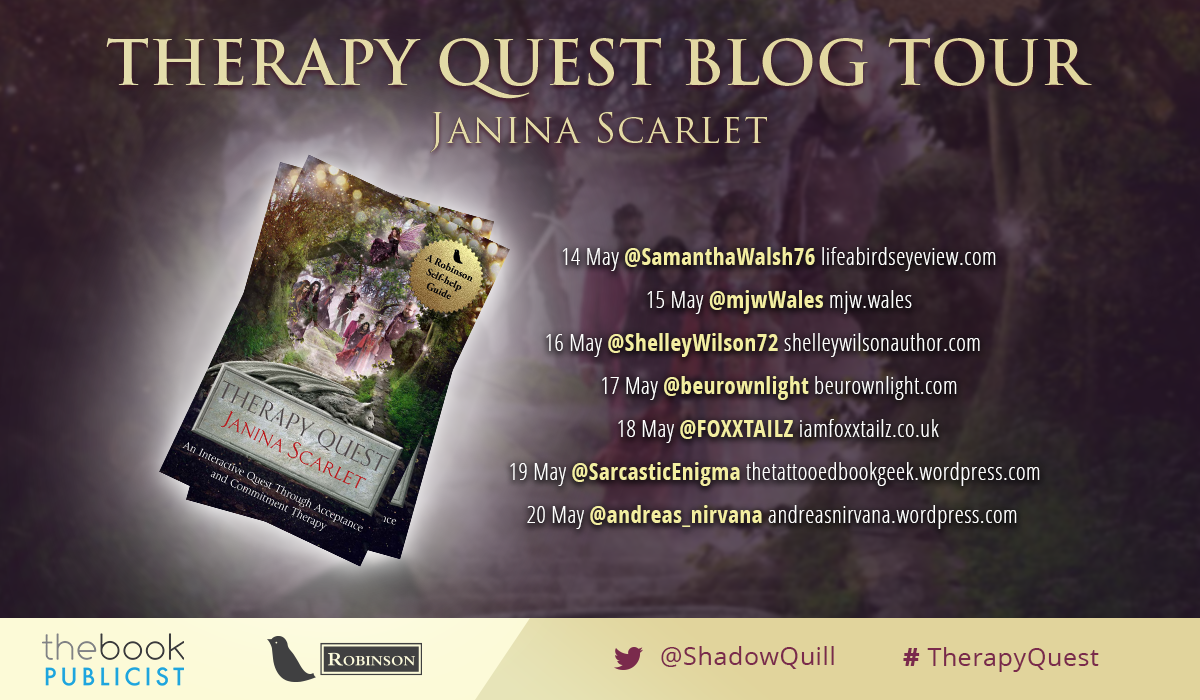
Guest Post: Interview with Dr Janina Scarlet, author of new book ‘Therapy Quest’

I have got to know Dr Janina Scarlet, psychologist as I have written more across the media. Janina writes about therapy and mental health in an approachable and meaningful way. She also loves superheroes and fantasy and incorporates them into her work!

This week for Mental Health Awareness Week, I spoke to her as she launches her  new book ‘Therapy Quest’.

bloggertour.png
(image: The Book Publicist/ Dr Janina Scarlet)


What is your new book Therapy Quest about?

Therapy Quest is an interactive fantasy book in which YOU (the reader) are the main character. You are transported to a magical world of Here and are the Chosen One to stop an evil sorceress, Mallena, from destroying the world. Only you don’t feel like a hero. Not at all. Your anxieties and insecurities nearly lead you to abandon your quest altogether. However, if you decide to partner up with some new friends, such as a vampire with an eating disorder, and an Ogre who struggles with obsessive-compulsive disorder, you just might be able to become a hero after all.

The book is written in a game-like format, which allows you to make choices along the way. Each choice you make will change the rest of your journey and can either allow you to earn or lose points. Some choices can kill your friends or your character, so you have to be careful.

Each time you make a choice, you will also learn a mental health skill, and you will need all the skills you can learn along the way to help you in your final battle.

What was your inspiration for writing it?

I knew I wanted to write a fantasy book with self-help elements in it, in which the reader could learn these skills through the characters they were reading about. My editor, Andrew McAleer, had the brilliant idea of having a similar format to “Choose Your Own Adventure” fighting fantasy books. This sounded like a very interesting challenge to me, and I am extremely honoured to have been able to work on it.

Could you explain a bit about what Superhero Therapy is and how it works in the book?

Superhero Therapy refers to incorporating elements of popular culture, such as fantasy and science fiction books, movies, TV shows, as well as video games, comic books (Superhero or otherwise) into evidence-based (research-supported) therapy to help clients to become their own version of a superhero in real life (IRL).

In Therapy Quest, the reader is the Chosen One, the Hero of their own journey even if they question their ability to do so. Through learning skills such as mindfulness, self-compassion, acceptance, and following their own core values, the readers are invited to take their own superhero journey and develop their own superhero skills, which can be utilized in their every day life as well.

Who could you recommend the book to?

I would recommend this book to anyone age 12 and up who might enjoy fantasy books and would like to learn skills to manage depression, anxiety, trauma, or other mental health struggles.

drjanina

Dr Janina Scarlet is a clinical psychologist and the author of Therapy Quest, a revolutionary self-help book which combines therapy with an interactive fantasy quest.

Fitness and how it can help Depression: Guest Post by Paul Matthews

Dark times can come. When you reach your darkest days, the ones in which your thoughts are controlling you and you can barely do anything, you should try and keep yourself busy, if this is possible. Its not always possible for people who are unwell- but distractions and exercise are always helpful, especially if they benefit your overall health.

These are the top 3 reasons why taking exercise could help you if you’re suffering from depression:

1: Engage your mind and keep it busy

Last year was one of the worst periods of my life: I broke up with my girlfriend, changed my job and lost one of my best friends. I was that sad and my mind was not properly functioning, all my thoughts were invading me all day and I was barely able to do anything.

One day, I went for a 5 mile run, because it was sunny, right after work. During this time, no negative thought hit me. That was when I opened my eyes: if you don’t dwell on depressive thoughts, then you will be able to see the light at the end of the tunnel. I decided to get a gym membership and I started working out for an hour after work. It has really helped me manage my depression. I am happy right now: my life is busy, but I have plenty of energy every day and less dark clouds.

Keep active and you should hopefully see the benefit!


2: Your lifestyle can affect your mental health

One of my friends who had depression loved junk food. He was constantly sad and depressed. He also did hardly any exercise. I encouraged him to exercise more and go to the gym if possible. The exercise helped him feel more positive and like he was taking good steps back to wellness. 
3. Help Your Self Esteem and Do it for you 

Many people told me that they were embarrassed to do exercise and particularly going to the gym as they felt “ugly, insecure, overweight and not fit” and so on. The best advice I can give is: get yourself some good fitness clothing you feel comfortable in. This might sound a bit weird, but properly fitting exercise wear can boost confidence and promote positive mental health.

Its also important to note that you aren’t the only one feeling this way and most people feel the same about themselves. Take that leap today.

When you are approaching fitness, whether if it’s in the gym or outside, or even at home, you must not forget about why you are doing it, why it’s important for you and how this could help you with your mindset.

Gentle exercise includes swimming, walking and yoga. There is something for everyone.

Try and see over the wall and remember: after the storm, the sun will rise again. Keep it up!


paulm

(image: Paul Matthews)

Paul Matthews is a freelance business writer in Manchester, who has headed up several campaigns. His aim is to better inform business owners and professionals on the hidden dangers of the workplace. You can often find him mountain biking or at the local library.

You can contact him at : https://twitter.com/paulwritesalot

When Life begins to whirlwind: Finding self care. by founder Eleanor

I havn’t written here for several weeks, because I have felt a little bit like Dorothy and Toto the dog at the start of the Wizard of Oz film, when they are caught in the hurricane.

Sometimes life sweeps you up in its path and can get very busy. This for me at the moment is not a bad thing. My boyfriend- now fiance and I got engaged about 2 weeks ago. If you didnt know (WordPress followers) he proposed to me at the Shard here in London, overlooking the sunset over the river Thames and Tower Bridge/ Tower of London. It was super romantic and very very special. We are both so excited.

However, in the community we come from, we have had to organise an engagement party and ceremony quite quickly and do all the admin that comes with coordinating families. My parents are divorced and my Mum has remarried which means we have more family than normal too.

So, getting 200 emails in just a week and a half was not easy but we did it! We also got our families together for a meal and went to visit grandparents too. As well as organising other plans.  Its been a lovely yet overwhelming time and so grateful for everyones love and kindness.

Sometimes I literally have to take myself away from planning so I can cope. I was doing a lot of it myself but decided for my health (and bank balance) that I need to get back to work properly- and do what I love, writing

When I feel overwhelm I just tell my support network and take a breather. Its the only way. Self care is hugely important.

I will also be writing an article for Metro on stress and insomnia during engagement period. Thankfully I am sleeping a lot better now but in the first few days after we announced our engagement, I struggled to sleep due to adrenaline overload.

I have also enjoyed the summer like sun here in London and being in nature at the weekend (we had a bank holiday- day off work).

Sometimes life does feel like a whirlwind- whether that is positive or negative. What is important is to ride out the storm and take time for you. This is what I am learning….

Love,

Eleanor    xx

Guest Post: On Sexual Abuse by Anonymous Woman

The writer of this article is an anonymous woman who wanted to speak out to share her story of being sexually abused as a child and teen. She also has mental health issues as a result.

Trigger warning: please read with care 


I have been abused twice, both times were at the hands of people I knew and respected, once when I was 8 and once at around age 17/18.

A lot of the memories were lost due to the extent of the trauma, but having EMDR has opened up the box, broken the chain that was firmly fixed around it and let all the memories out.

It has been horrendous, reliving the abuse, the detail of my memory, almost physically feeling I am back, as a child in that bed, remembering the details .  The family friend was a women, who was so trusted by all of us, growing up I adored her, admired her, almost wanted to be her, and now, all of those feelings have vanished replaced by to many emotions to specify one.

When I was a teenager I was abused by a well known Rabbi, thankfully the abuse this man carried out has come out in to the community.

I have written this letter in the hope that more people in the community may feel more able to step forward to talk about this.

If someone would like my e mail address please ask the blog owner for it.  

Dear my abuser (s) 

This letter will never get sent , but I want you to know what impact you had on my life, how those actions which may have only lasted 15 -30 minutes , actions which you probably have forgotten about, shaped the person I have become. 

In a strange way I am grateful for the memories of what you did, as not having the memory, yet knowing that something happened was worse. When the memories savaged my brain, invading my mind with your face, your hands and your body I believed that the shock and horror would never pass, everything I had ever thought of you, all my memories of you changed from seeing you as a positive, supportive influence to a monster who had harmed me in the worst way possible.

Your actions, made me aware from such a young age of my body .For years I knew, that from the age of around 9 my body was an immensely complicated thing in my mind, at such a young age being so aware of my body affected my confidence, self esteem and self love . 

At age 8 you took away the most precious thing, you helped yourself to my innocence, you took away from the person I could have become and began my journey to becoming the person I have been.

That knowledge made me in to a pretty messed up person.

My child is around that age . I look at my child  and see a happy future, a future filled with love and self confidence. The thought of something similar happening to my child  is to painful to contemplate.

By the time I was in my teens, my journey of self destruction was well on its way. I had learned by that time how to hide things, how to keep secrets, how to come across as confident and well adjusted and to this day my public persona and the person I am inside are two very different people. My life, for so many years was about seeking physical pleasure in order to reassure myself that I was a loveable, attractive person, that having sex was the self affirmation I needed to survive, lowering myself, giving my body freely, whilst hating myself for doing it, gave me the tools to breath, to live. Even today, if I do not feel my husband desires me it destroys me for days.

There were so many questions, mostly WHY, and HOW, how could I have let this happen to me twice, and why did it happen twice ( I know now that is was BECAUSE it happened once it happened again ) , how could I have stood as an older teen -when I let the pictures overtake my mind I am screaming silently why, why, why.

It is like being at a movie, a never ending movie, you can not leave the screening, you are on the screen, you try to yell, you try to reach out to the girl in the movie, but she can not hear you, you see her at 8, you see her at 17 you see her life unravelling, and you can not do anything to stop it, you want to beg her to tell, you want to beg her to be strong.

You see the girl grow, you see the way she lived her life, and you understand how the girls journey began, it makes sense to you that the girl ends up with severe mental health issues , you see how mental health issues are worsened by no self esteem, how other tragic events  could tip her over the edge and compel her to seek comfort in the arms of any man who would take her, and you understand her.  

 I understand now that cause and effect would dictate that the reason I ended up in your office, was a direct result of what she did to me at age 8, that she was the one who started the chain of events.

You taught me, you guided me to the mind-set that “the way to get love and care is to do what a man wants”.

My whole self worth was wrapped up in a package labelled, please sleep with me.

I feel so much sadness, sadness for the girl you both violated, sadness that the girl whose body you choose to fulfil your sick desires was mine, sadness that I am constantly questioning everything, why was I there, how could I have let you, why didn’t I tell anyone, when will I be able to go a day, an hour, 10 minutes without one of you pushing your way in to my thoughts.

There is nothing I can do to turn back time, there is no way I can ask you why, or sit with you and show you the movie of my life, the one which you started, I pray that there will come a time I can accept what you both did, I hope with all my heart a day will come when you will not mean anything to me.

All I can do is wait, sit with these constant overwhelming thoughts, trying to untangle them like a necklace with those annoying knots in the chain that are impossible to open, yet I will persevere.

I will continue to pick at the chain until all those knots have gone and you both become dust that is blown away from my mind


If you need support with sexual abuse and you live in the UK please contact:

The Survivors Trust

Safe Line

Night Time Anxiety and Panic: by (our founder) Eleanor

anx

(image: http://chrisdblog.com/12-tips-to-stop-nighttime-anxiety/)
Hi everyone,

I am writing this post because I wanted to talk about something that I experience frequently, night time anxiety and panic.

I know these aren’t rational. Its often to do with a social event trigger, having to be around lots of people or if I have a work event and it feels too overwhelming. I fear being judged or crowds of people. These days, I tend to keep busy during the day and I know I am anxious if I am procrastinating about going to bed. As thats when the anxiety kicks in, my chest feels tight, I feel hot or clammy and my negative thoughts race.

Consciously, I know the fear of the triggered event is not real. However, subconsciously my body goes into fight or flight mode, pumps me with adrenaline and worry so I cannot sleep. My thoughts start racing and the only relief I can get when I am really heightened is to cancel the feared situation or tell myself I may cancel it in the morning.

Which is not always good. For me, its so important to have exposure to the triggers to lessen my anxiety. Some nights though, this is impossible.

People should also know that I and other anxiety sufferers don’t want to cancel our plans and don’t want to feel like this. I don’t want to be flooded with adrenaline and other horrible anxiety symptoms and left feeling so exhausted and alone.

Its worst at night when everyone is in bed asleep too because there is no one to talk to at that time. Sometimes, I try meditation or talking to myself kindly (‘its Ok nothing bad will happen you are safe’). Often, I am able to eventually get to sleep.

However, when I wake in the morning, the anxiety is still there and often at its height about ten minutes after I wake, leaving me feeling depleted, shaky, vulnerable and unable to face the day,

Most days I am OK, but if something new comes up that triggers me I am sucked back into the anxiety spiral. I have had extensive therapy and take medication but am starting to think Ill need anxiety meds for my night time anxiety.

Anyone else have this? Its so debilitating at times. I am still trying to find the answer that works for me. You are not alone.

Love,

Eleanor   x 

Guest Post: Learn How to cope with Postpartum Depression by Kayla Clough at ourstart.com

After having a baby, there are many women who find themselves suffering from postpartum depression. Postpartum depression can cause feelings of sadness, lethargy, anxiety, and hopelessness. It’s important to do everything that you can to treat the symptoms of postpartum depression as much as you can so that you can build an amazing bond with your baby and rest assured that you are being the best mother that you can possibly be. The following guide walks you through a few ways you can handle postpartum depression effectively.

kayla2.jpg

(image: Kayla Clough)

Talk About the Way That You Are Feeling

There are many women who feel ashamed of the way that they are feeling and try to hide it from their friends and family. This is not a good idea because it can lead to isolation and cause the sadness and feelings of hopelessness to become exasperated. It’s best to be upfront and honest with your friends and family about the way that you are feeling so that they can help you battle the feelings as much as possible.


Take a Break from Time to Time

Being a new mother can be overwhelming. There is so much to do, and it often feels as though everything you do is not good enough. Take a break from time to time to unwind and allow your emotions to reset. Taking a long bath or simply enjoying a cup of tea alone on the porch while reading a great book can help you to be able to feel less anxious and allow your body and mind time to relax so that you can go back to caring for your baby with less stress.


Get Plenty of Sleep

When you are not getting enough sleep, it can be hard to regulate your emotions. It’s best to get as much sleep as you can when you have a little one. Take naps when they take naps and realize that the house, laundry, and the dishes can all be taken care of during the day. You can lay your baby down next to while you fold clothes or carry them against your chest in a carrier while you wash dishes or clean the house.


Get Up and Move

After having a baby many women feel lethargic and do not realize that they need to get up and move around to make themselves feel better. Getting regular exercise has been shown to lift moods and can help you to lose some of the weight that you may have put on during your pregnancy. It’s important to realize that the better you feel about yourself, the better mother you can be with your little one.


Don’t Be Afraid to Get Professional Help

There are times when overcoming postpartum depression on your own is too difficult to do. You can seek professional help from a psychiatrist to get advice and medication to help treat the symptoms that you are experiencing. Being able to be less stressed, anxious, and sad can help you to be able to live a more fulfilling life.

Postpartum depression does usually go away over time. If you have suffered from postpartum depression before, there is a good chance that you will suffer from it with future pregnancies. Be sure to properly prepare for the situation so that you can treat it from the start so that you do not have to suffer from the feelings associated with postpartum depression for any longer than you have to.


kayla

Kayla Clough is the email specialist at OurStart. Kayla is a recent graduate of Eastern University in PA, USA where she majored in Marketing and Human Resources. Kayla loves all things fashion, her golden retriever Max, and coffee. When she is not working, you can find her binge watching Sex in the City and baking her latest find on Pinterest.

Facebook: https://www.facebook.com/OurStart

Blog: https://ourstart.com/