
Extract from my Metro article on Homelessness and Mental health issues

This is an extract from a Metro.co.uk article that our founder Eleanor wrote and researched on rough sleeping, homelessness and mental health issues. To read the full article click here: http://metro.co.uk/2018/04/10/homelessness-and-mental-health-whats-being-done-to-help-7421391/

The ‘Beast from the East’ put homelessness under the spotlight in February and March as rough sleepers faced freezing conditions. But a more persistent problem among homeless people, which is little talked about, is the prevalence of mental health issues. As someone with bipolar disorder, who has never been homeless, I wanted to investigate what support there is out there for homeless people with mental health conditions.

Anyone can be affected by homelessness, regardless of age, race or sex. Among homeless people, 44% have been diagnosed with a mental health condition, according to Homeless Link. Homeless link points out that homelessness is a stressful, lonely, traumatic experience, which has a major impact on mental health.

In summarising some of its research into homelessness and mental health, Crisis says: ‘Serious mental health issues, such as schizophrenia, bipolar and post traumatic stress disorder are more common among homeless people. ‘Suicide rates are nine times higher, demonstrating the very real need of effective support’

Homeless people with mental health issues, particularly rough sleepers, often have less access to mental health professionals due to their lack of address or their complex needs. Being homeless is extremely overwhelming. Treatment may be the last thing on the mind of a homeless person with a mental health condition when they are focused on finding a way to get food and a place to sleep. The prevalence of drug and alcohol addictions is an added problem.

According to Crisis: ‘Homeless people are more vulnerable to alcohol and drug use. ‘Multiple diagnosis of substance and mental health issues can be a barrier. Rates of alcohol and drug use are four times higher than in the general population.’

Understandably, addiction can get worse when someone is homeless, due to the stress. St Mungo’s is charity that has conducted research into this area and affected change in legislation. Its investigation â€˜Stop the Scandal’, looks at mental health and rough sleeping. The charity called for a national strategy to end rough sleeping and changes to the law.

Following St Mungo’s campaign, in 2017 the government backed the Homelessness Reduction Act. This legislation, which came into force on 3 April, is designed to prevent people becoming homeless and to give councils more power to tackle the issue. The government also committed to halve rough sleeping by 2022.

St Mungo’s is leading the way on this. It said: ‘Our experience is that homeless people are treated poorly and often labelled and judged. ‘People see drink or drugs behind rough sleeping, but rarely think about mental health. ‘Mental ill-health can affect anyone, but people sleeping rough face adverse weather conditions, fear and isolation’.


Read more: http://metro.co.uk/2018/04/10/homelessness-and-mental-health-whats-being-done-to-help-7421391/?ito=cbshare

Twitter: https://twitter.com/MetroUK | Facebook: https://www.facebook.com/MetroUK/
What happens during a Manic episode: Bipolar One Disorder Tales by founder Eleanor

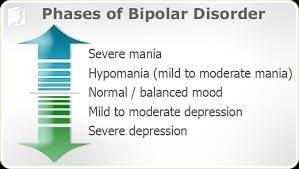
When most people think of bipolar disorder, they may think of the two opposing poles that make up the illness. High and low. Manic and depressed. Many also believe that all people with bipolar flit between these moods constantly and that the illness is severe or alike in everyone who has it. This is not the case.

There are two types of bipolar disorder. I have the first one – Bipolar affective One disorder, which means that I have serious manic episodes which include psychosis (loss of touch with reality). This has happened to me twice in my life and both times I have needed hospitalisation. Bipolar two is characterised by lesser manic episodes (hypomania) and more mixed states.

mania2

(image: https://www.34-menopause-symptoms.com/mood-swings.htm)

Being Bipolar One is very challenging. When I get ill, I get really really sick. Loss of insight, loss of reality, needing anti psychotic medicines now- ill. Ill to the point of being sectioned under the mental health act due to lack judgement and insight. Believing that my family are out to get me and people are going to harm me – ill.  Really unwell.

When one of these serious manic episodes strikes for me, my thoughts begin racing and I can’t concentrate. I don’t sleep, I am more creative in the short term but a gibbering wreck in the long term. I start believing I can do things that I can’t rationally. I am super vulnerable and I speak much faster. I may not make much sense and when the delusions begin, I start believing I am going to be harmed.

Luckily, these episodes are kept at bay by a host of excellent medications including Lithium and Quetaipine. I also take anti depressants to keep the low periods at bay in my life.

Full blown psychosis and mania for me are very rare but they do happen. In 10 years, from 2004-2014 I did not have a hospitalisation. I was depressed and anxious but I was able to recover at home.

I had no hypomanic or manic episodes for a decade! No psychosis. One therapist even questioned my diagnosis, before my 2014 hospitalisation.

Mania for me means danger. That danger means I am more vulnerable. I have to be very careful who I surround myself with during those times. I don’t drink alcohol to excess or take drugs, but some with this kind of mania do. Or they spend lots of money or engage in risk taking behaviours such as sexual activity.

I have learnt that as long as I take my medication regularly, get enough sleep, eat well (and don’t engage in long haul travel) that I can keep my symptoms at bay. If my medicines work! (this is always a fear.. that they could stop working).

Mania for me strikes out of the blue sometimes. I also have to be careful that my mood stabiliser medicine is holding me- as with high doses of anti depressants, mania can be triggered without it.

When in psychosis in hospital I have thought the following untrue delusions

– I am being harmed by my family
– There are CCTV cameras watching and filming me in my bedroom/ hospital room
– I have been abused in some way (my mind convinces itself)
– I am being held by a criminal gang (in hospital)

These delusions have always disappeared over time, with excellent care from psychiatrists and psychologists, anti psychotic medicine and good support from family.

I don’t get these when well, and rarely have to go through them. I am learning to accept that my brain chemistry is not the same as other people and having bipolar, a chronic illness, is not my fault. I just do the best I can to manage symptoms and keep myself as well as possible.
If you want to share your story of mania and bipolar, please do write below.

There is hope and recovery after mania. Thank you to all on the Facebook group who voted for this one.  

Love, Eleanor x


A Life Update: How Stress and Anxiety can turn into Panic Attacks.

I havnt written a blog update on life for a while. I think this is because so many amazing and exciting things have been happening that the anxiety and panic attacks have had less air time.

Many of you know that since January, I have been published widely across the media and am now writing as a career. Ive been nominated for a blog award, given my first radio interview, am writing chapters for a potential book and achieved my dream of being featured in Glamour Magazine, Cosmopolitan and Elle as well as being a writer for Metro, Happiful Magazine  and the Jewish News where my life story was published. And working with charities such as Mind, No Panic, SANE and STOP Suicide and the amazing team at AND Digital.

And breathe.

This is all exciting and wonderful and I feel very blessed that people are accepting of me and my story. I feel lucky to have a new career and to be achieving my dreams.

But what most of you may not see or know is I still suffer with social anxiety.

I was invited to record a mental health podcast but couldnt travel there because it felt too overwhelming to step into this new big media environment. I was due to give a talk but couldnt attend due to anxiety about standing up there on my own being vulnerable. Luckily we had planned for this scenario and they were so kind and used my blog testimony anyway.

However I hate letting anyone down. For me panic attacks happen as a response to stress. I get triggered in new work situations and when I havnt met the person before. Everything feels overwhelming and all I want to do is hide from the fear.

Ive been in therapy for 6 months…psychodynamic …talking therapy and its been helpful. Im still learning to find coping mechanisms as my response to the feared situation is often to cancel or postpone it and shut down.

Im learning how to navigate my new world whilst having a panic disorder. I will get negative thoughts and fears, tight chest, racing heart. And then have to stop the feared trigger.

I know I am not the only one feeling like this and many of you also have anxiety disorders. Please know that you aren’t alone.

Seek support from your doctor and try different methods. I find meditation to be helpful to me alongside exposure therapy and talking therapy. It will be trial and error for you as it is for me.

Im not sure if i should have anxiety medication for emergencies as I already take so much medication. But it could be that I need them in order to function and progress further. Im on anti depressants and mood stabilisers already which help me.

I feel lucky to be able to work and write and blog. I just hope that I can learn to cope better in face to face work situations too. Thanks to all who voted for this blog on Facebook and I hope it will give you an insight.

Eleanor x


Dating with a Mental Illness: for Glamourmagazine.co.uk by our founder Eleanor

Here is an extract from an article I wrote for Glamour UK Magazine (online) which was a dream come true. It is my true story about what dating with bipolar and social anxiety is like. I hope it helps you. For full article see link at the end:

glamour
(image: from stock and Glamour)

According to the mental health charity, Mind, 1 in 4 people in the UK will experience a mental health problem each year. In England alone, 1 in 6 people report experiencing depression or anxiety every single week. Eleanor Segall is one of those six, having lived with bipolar disorder for 13 years. Here, she shares her candid account of what so many millennials struggle with every single day: finding love while secretly battling a mental health disorder. Eleanor reveals in honest detail the judgement she faced in her quest for “The One” and how she finally learnt to open up about the taboo illness and let herself fall in love.

“I sat on my bed with tears running down my face. ‘I have something to tell you’, I said to my boyfriend, two months into dating.

“It isn’t easy and I wanted to tell you sooner but I didn’t want to share it too soon. Three years ago, I was hospitalised for my bipolar disorder. I didn’t want to tell you, in case you saw me differently or thought I was ‘crazy’. I wanted you to get to know me for me and see my personality and who I really am without it.”

He looked at me with genuine care and said, “Eleanor it doesn’t matter. I want to be with you for you, the fact you have an illness doesn’t bother me in the slightest. I want to be educated on it. Tell me more.”

So, for two hours, I told him everything. I told him how I had been diagnosed at 16 with bipolar affective disorder and how it may run in my family. I told him there could be times when I would be unwell with severe depression or mania and would have to stop working, that I had had psychosis in the past – but that I was medicated with Lithium and anti depressants to hold my moods.

I told him I had been hospitalised as a teenager and, at aged 25, my life had been far from easy, but that the love of my family and support from my medical team, had saved my life. He listened, supported and held no stigma towards me or my illness. It was a revelation after many years of dating men that may not have always understood how best to support me or for whom I was not ‘the one’.

With disclosure of a mental health condition and because I was diagnosed so young, there were many years of dating fear for me. I feared others judgement of the fact I had bipolar and at times this turned into anxiety prior to going on dates.

I was worried that people would think I was different or not worthy enough and when I look back, that is because I was struggling to deal with how I saw myself. As a teenager, you don’t want to be different, you want to fit in and as I reached my early 20’s, I began to be very anxious about dating. My self esteem had taken a battering as well as I had had my heart broken in a past relationship, which led to depression and anxiety.

I survived the heartbreak, however, I knew that I wanted to settle down with someone and have a family, but I didn’t know if it would ever be possible. Particularly after I was in hospital, I had no idea whether there would be a man who could deal with my illness and all it can entail.

There were so many times when I cancelled dates (often blind ones set up through well meaning friends or family) because I would get so nervous, my heart would race and I would be terrified that they would see through the well cultivated veneer. On first and second dates particularly I always felt I was hiding something: my mental health past.

But I wasn’t alone. According to the mental health charity, Mind, 1 in 4 people in the UK will experience a mental health problem each year. In England alone, 1 in 6 people report experiencing depression or anxiety each week.

Celebrities including Stephen Fry, Britney Spears, Catherine Zeta Jones, and Demi Lovato have all talked about their struggles with bipolar disorder.

A year and a half after I left hospital and had recovered, I began to date again and signed up to an online dating website to meet new people, set up through acquaintances. The social anxiety was at its height and I often had to cancel dates two or three times before meeting. Some men gave up on me due to this, but some understood.

A year and a half after being fully back on the dating scene, I met my current boyfriend. We clicked from our first date in a coffee shop and our second date (drinks at a lovely local pub).

Read more and full article here: http://www.glamourmagazine.co.uk/article/dating-with-a-mental-illness

Extract from Cosmopolitan UK Article by Olivia Blair on Anti Depressants- featuring our founder Eleanor

I was so excited to be featured in Olivia Blair’s article for Cosmopolitan UK on anti depressants- 6 women share what its really like to be on Anti depressants.

I am so thrilled to be in this article with 4 other brave women. My first time in Cosmo! Thank you Olivia.

Below is my part of the article but please click here to read the others experiences too:  https://www.cosmopolitan.com/uk/body/health/a18720313/women-on-antidepressants-working/

I become suicidal when depressed, it’s vital I take medication for my health”

Eleanor Segall, 29, mental health blogger

“I started taking antidepressants when I was 15 after an acute depressive episode where I had to take time off school. A year later I was diagnosed with bipolar disorder and was hospitalised so I was prescribed a mood stabiliser as well to keep me on an even keel.

I was concerned about some of the side effects but the positives for my mind and brain chemistry outweighed the negatives. Over the years, I have been on different antidepressants including fluoxetine, duloxetine and now sertraline. I also continue to have psychodynamic therapy and have tried CBT, art therapy and meditation.

There is a big stigma around anti depressants, particularly against bipolar and other chronic conditions. But I think this new study offers proof that, for some of us, they are vital.”

Dispelling the Online stigma: Twitter, Antidepressants and #MedsWorkedforMe

I wasnt going to write a blog on this because it might feed the Twitter trolls. But I have decided that its really important that I speak out about whats been going on this week on there, in realm of mental health on social media. Theres been a lot of stigma against medication as well as much support for it.

This week, a study by Oxford University and published in the psychology medical journal the Lancet, found that anti depressants work and are effective in a large number of cases. It was hailed as the first major study to prove this. Some medications were found to be more effective than others, but it provided a fantastic proof- that anti depressant medications do help relieve depression in many cases. They are not just a placebo pill.

However, of course, there are a large number of people who have had bad experiences with anti depressants and want to make their voices heard- yet often at the expense of those of us who it works for.

On Twitter, using the trending hasthtag #antidepressants and #medsworkedforme, I shared that anti depressants coupled with my mood stabilisers, have very much helped my bipolar disorder. My brain chemistry and illness is such that unmedicated I can have episodes of suicidal depression, psychosis and mania. My medication keeps my moods balanced and well, so I can function and live a normal life. I have been on anti depressants for almost 15 years now. I have been on fluoxetine, duloxetine and now sertraline.

The only bad experience I ever had with them is when my previous mood stabiliser stopped working and due to an increased dose of duloxetine to relieve my depression (which it did), I tipped over into a fast and unpredictable manic episode. This is the risk that those of us with bipolar run.

Yet, by and large my experiences with meds have been hugely positive. They keep me stable and well.

Unfortunately, on Twitter, I got trolled for the first time by people sharing the following ‘helpful’ opinions (they were not helpful and highly stigmatised):

1) You should reduce your sugar intake as sugar causes highs and lows and is addictive as cocaine. If you reduce your sugar, your bipolar will improve.

(To this I had to reiterate that no medication and less sugar will make my illness worse… and that excess sugar does not cause bipolar 1 disorder.. i.e. it does not have that impact on my mood swings.. bipolar is a real illness in the brain. Reducing sugar may help with overall health but seriously you are going to tell me this?)

2) Others asked what alternative therapies I had tried- eg exercise instead of medication. I reiterated the above re psychosis and suicidal ideation. Which unfortunately cant be treated with exercise alone.

3) People shared their own stories eg the man who had multiple severe illnesses and takes no medication because ‘it shortens life span’ and its a medical fact apparently that these medications cause psychosis. (Some psychiatric meds cause side effects but psychosis- really? Also why would you tell me it will shorten my life?)

There was a lot of what I would call militant stigma against medication, either by people who fear it or have experienced negative effects.

While medication is not for everyone, we shouldn’t be shaming people for taking it. I shouldn’t be shamed for keeping my brain healthy and well through taking meds. And neither should any of you.

Make sure you fight this stigma (and the block button is always useful).

Love,

Eleanor