The UK went into Lockdown and I went into Meltdown: Guest blog by Nicole

quotesblog

(image: Nicole_no_filter)

The UK went into lockdown and I went into meltdown.

When I heard the announcement on the news, I was on my Mum’s sofa and I immediately felt the usual sick way that I do when I get anxious. I needed to get out of the house, so I quickly escaped on a walk with my dog. My thoughts were far from pleasant and I silently cried while I slowly paced around my local area. This marked the start of a tough couple of weeks.

I fell into the behaviours that you would probably expect from a person with anxieties, I was obsessed with updates on the lockdown, it became my most frequently searched term on Google! My skin condition, urticaria, flared up which happens when I experience stress. My sleeping got worse than usual and I was easily irritated by silly things. Most of all, I fixated on the negatives of my situation, such as the impact living alone would have on me.

I’m not going to pretend that I had an epiphany on day fifteen and I’m now thriving in my new life of one daily walk and it being a glam day if I put on jeans!

However, I’ve now established a flexible routine and I’ve settled into working from home.

I check the news once a day and I appreciate that I am lucky to be healthy and still have my job. However, I don’t give myself a hard time when I have a bad day and I don’t pay attention to unhelpful comments online, criticising people for struggling as there are others with more serious struggles. Of course, this is true, but I heard recently that, ‘you wouldn’t tell someone not to be happy, because there is someone happier’ and that has stuck with me ever since.

The most positive outcome of this situation for me, is that I am in touch with my thoughts, emotions and my behaviour, more than ever.

Some things that have helped me are:

  • Reawakening my passion for writing: As a Careers Coach, I regularly create resources and assist others with writing about themselves. However, it had been so long since I wrote for pleasure. I now record my thoughts in a journal, you are currently reading my second blog post and I rediscovered my love for writing poems. Writing has felt a bit like offloading to my best friend; I get out my thoughts and I then feel better. 


  • Walking: I think it’s amazing that so many people are focusing on their fitness, but I was previously anxious about my weight, so I don’t put pressure on myself to follow a rigid exercise routine. Pre-lockdown, when I had a crap day, I benefitted from getting out of the house and being around others; walking isn’t a substitute for this, but it helps me to get rid of negative energy by doing something active. 


  • Keeping my space tidy: This won’t work for everyone but a clear space, means a clearer mind for me. I also find cleaning quite therapeutic as it helps me to focus on the task in hand and not overthink. 


  • Paying it forward: I have been trying to spread some positivity remotely, for example, I suggested to my colleagues that we each send a card to another person in the team with a positive message. I also started an Instagram account to raise awareness of mental health and share experiences and strategies with others. As a people person, helping and connecting with others always lifts my mood. 
  • Revisiting coping mechanisms for anxiety: I have done a lot of research into cognitive behaviour therapy techniques over the last few years, as some of the principles are useful for my job in supporting young people. I have also personally been through this type of therapy; this helps me to reframe negative thoughts and therefore gain better control of my feelings and actions. 

I’d be lying if I didn’t say that I still regularly think that I can’t wait for this to be over! I miss the little things in my life, but the lockdown has caused me to have a deeper appreciation for all the good aspects of it.

I have also realised that the little things ARE the BIG things. Being forced into this situation that I have no control over, has helped me to put less focus on other things that I can’t control.

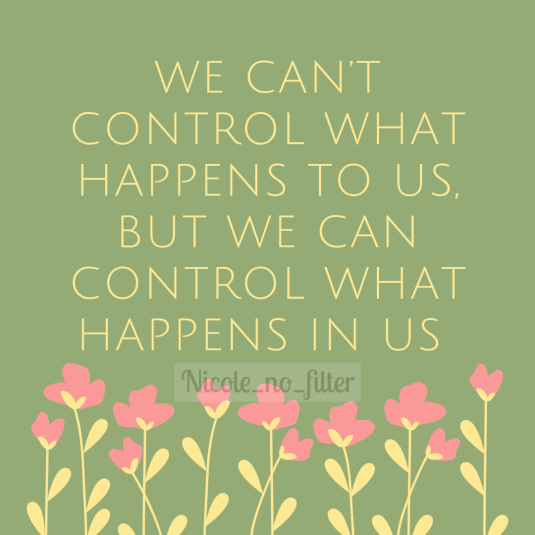
I was previously anxious about being single as I am about to approach my 30th birthday, but I have gained a more positive perspective on this. I may not be able to control what happens TO me, but I can control what is IN me, which are my thoughts and how they make me feel and react.

Nicole is a careers coach and freelance writer in the UK and is on Instagram @nicole_no_filter

Mental Health Blog Awards 2020- Vote for Us! : by Eleanor

mhblogawards1

(image: Mental Health Blog Awards)

Hi friends,

Voting is now open (first round) for the Mental Health Blog Awards 2020 and we have been nominated in the Blogger of the Year Category.

We would love you to vote for us, to recognise all of our hard work- including that of our guest bloggers, in battling mental health stigma.

I started the blog 4 years ago and it is an honour to be nominated.

You can vote for us- listed as Eleanor at Be Your Own Light here and please also vote for others in other categories if you are aware of their work! There are some incredible people nominated.

From Mike Douglas, founder of the awards:

“I am delighted to welcome you to the Mental Health Blog Awards. 

I look forward to continuing to celebrate the amazing work, effort, energy, emotion and so much more you all put into raising awareness, supporting, signposting, explaining and comforting in 2020.”

mhblogawards2

(image: Mental Health Blog Awards)

First round voting closes on 1st May and you can vote here: https://s.surveyplanet.com/bG5vzH_q


With love and thanks,

Eleanor 

x

5 Ways you can reduce Anxiety in Every Day Life: Guest blog by Samantha Higgins

theway2

(image: Picuki.com)

Reducing anxiety at the moment in our every day lives is so important.

Having anxiety is something that many people have challenges with. It is estimated that about 1 in 5 adults have an anxiety disorder and that more than that will experience an anxiety disorder at some point in their life.

The symptoms of anxiety include feeling restless or on edge, being easily irritated, difficulty controlling feelings of worry and having difficulty sleeping, amongst others. 

If you feel that you may be experiencing symptoms of anxiety, there are many things you can do to help reduce and manage those feelings. 


1. Look at Lifestyle Choices

A number of different lifestyle behaviours could contribute to your anxiety. Drinking alcohol, taking drugs, eating junk food will all play a big role in how you feel. For example, excessive drinking or the use of drugs can cause a multitude of health problems including liver and kidney damage. It also causes mental illness such as drug and alcohol addictions. You may need further support from a psychiatrist or rehab unit if you are struggling with addiction or mental illness.

On the opposite side, exercising regularly and eating healthy foods are proven to boost your mood, increase the chemicals in your brain that make you feel happy and improve your overall physical health. 

If you want to manage anxiety, consider looking at your current lifestyle choices and if there is anything you have the power to change. Be honest in your assessment but know you have options for assistance.  Making a big lifestyle change is hard but if there is something you know is causing your mental health and anxiety to worsen, it is a good idea to remove that from your life if possible. 


2. Talk to Your Family and Friends

Even if you think your family and friends would not understand, you might end up getting some of your most valuable support from them. You should not ever feel you have to hide any of your mental health concerns from them, unless you know that they would react badly.

Try to avoid shutting people out, being secretive about your mental illness or becoming defensive when people ask. 

True friends will listen and care. There is still a stigma to mental illness but it is important to find someone you trust.


 3. Set Boundaries

If necessary you can set boundaries for yourself. This could mean letting people know there are certain activities you don’t participate in. It could also mean a limit on how much time you spend with friends and family, in order to practise self care and recuperate. 

Many people who struggle with anxiety disorders find that setting up a schedule for themselves that they are consistent in keeping can greatly reduce feelings of anxiety. It helps them to feel more in control and gives them a structure that feels secure.

Setting boundaries is a way for you to have control over your situation and environment, although these should not be too rigid. There are certain things that can’t be controlled that can increase anxiety. 


4. Let Go of Things You Can’t Control

If something is out of your control that is causing your anxiety there are ways that you can cope with these feelings.  One suggestion is to write down how you are feeling to help let those emotions go. The BACP tells us that, “It can help to express this anxiety in a way that you can control. That could be writing down what you feel, or keeping a journal.”

You can also try making a list of things you are grateful for, or use breathing and relaxation techniques. 

If you are still struggling to cope with things out of your control seek help from a professional. 


5. Get Professional Help

You could turn to all types of mental health professionals to get help, including GPs (physicians), psychiatrists, psychologists, counsellors and therapists. You may be referred for talking therapies, cognitive behavioural therapy, mindfulness or EMDR therapy for trauma.  They may also recommend medication for you too.

In the UK, you would go via your NHS GP who can refer you on to see a psychiatrist or to IAPT for counselling.  Also check out the Counselling Directory website.

When searching for a good therapist in the USA, Karen Whitehead, who does counseling in Alpharetta, GA tells us that, “Psychologists (PsyD), Licensed Social Workers (LMSW/LCSW), Licensed Professional Counsellors (LPC), and Licensed Marriage and Family Therapists (LMFT) can all evaluate and treat mental illness, provide talk therapy, support and feedback, and teach coping strategies such as mindfulness.”

Your counsellor will be able to help you better assess your situation and get to the core of your anxieties. Even if you already know why you get anxious, you can benefit from learning coping skills.

Your counsellor can indeed equip you with tools adapted for your specific needs. You will have feedback on what is and what is not working. You can learn to live with, manage and in many cases, recover from anxiety.


You Are Not Alone

Do not ever think you are alone when it comes to your anxiety. Try not to beat yourself up if setbacks occur or you have a bad day.

Talk with your therapist about ways that you can help to further reduce your anxiety. They will be able to help you.


This blog was written by freelance writer Samantha Higgins.

Im not coping perfectly right now, but that’s OK: Lockdown Life by Eleanor

hopenikki

(image: Pinterest)

Hope will carry you through. At the moment it feels like fear is taking over at times! Everything is so uncertain with the current global pandemic and routines changing, being unable to source certain freelance work, having to stay indoors a lot, not being able to see friends or family in person. People dying and being hospitalised. Everything is scary. Add to that the fear of death, the fear of the virus whenever I go out and you have…

Anxiety overdrive!

I was in self isolation a few weeks ago for what could have been mild Covid 19- I had a dry cough, sweats and fatigue. I recovered and am fine and still don’t know if it was Coronavirus or something else.

Then, the UK went into a form of lockdown.

I am not coping perfectly with all this. I’m trying my best to put routine and structure into my days. Some days I am so tired from it all, I need an afternoon nap in order to be more productive. I wake some days feeling anxious about what is to come, it all feels so surreal. One night, I sat and cried as everything felt too much with trying to balance work and life.

But, I wiped my tears, talked it out with family and felt better.

One thing I have started is a project called Corona Cards which sends handmade cards to people feeling lonely or needing cheering up in isolation. I now have 3 other team members (Bex, Donna and Abigail) making cards and its been really enjoyable. We send them by post to UK residents at no cost to them and you can follow us on Twitter @corona_cards and Instagram @coronacards1.

We have sent about 30-35 cards already and you can request them by asking me or messaging our pages. We hope it helps people’s mental health, particularly anyone very low or suicidal.

Crafting and focusing on the project has helped me a lot, I go for a short walk to the postbox to post them and therefore have a purpose to my walks! To know it is helping people also means a lot, and I have had 2 back in return which is lovely.

Thankfully, I can still have sessions with my therapist by Zoom and I have family support too. It is such a strange time in all our lives and it is understandable that anxiety and fear will creep back in. Especially if we have loved ones who are ill or we have existing mental health conditions.

I have learnt that life is a long game. Obviously, simply telling you to think a particular way isn’t helpful, but if you can slowly train your brain with help , then you’ll get a much better perspective on everything surrounding life and Covid. By no means does this suggest that we should all look miles away in the future and think about retirement properties or what your grandkids will be like, it simply means that you should take stock of the most important things around you and prioritise those.

I am thinking of those who are ill, particularly the ones I know about personally and wish them a full recovery.

A wise friend of mine told me this week that it is OK to take time for yourself. To just be, to look after your mental health. She is right.

So right now, despite feeling like I should be constantly working or busy with Pesach cleaning, I will be looking out for self care and I hope you will too. Keep focusing on gratitude.

Wishing all my Jewish friends a happy Pesach and everyone else a good Easter break.

How are you feeling?

Eleanor x

We will beat this, It will get better: Guest blog by Jenny Nguyen

distance1

(image: Mercury News, Daphne Sashin -USA)

We are currently living in strange times, where the majority of people are practicing “Social Distancing”. This has become the norm for most people for a couple of weeks or months. Its only a few months of the first year of the new decade, and no one expected coronavirus to have such an impact of everyday life.

Many people out there are worried and anxious about what is happening, you are not alone. We are all in this together and we can beat this virus. My blog is all about me and my anxiety and how I been coping during these difficult times.

Let me start by saying that even before coronavirus, I have suffered from anxiety for most of my life. I am always constantly worried and stressed about what the future holds. It is the uncertainty that makes me so nervous. Sometimes I just want to stay in bed and not talk to anyone. 

It was when something in my life happened, I decided to take matters into my own hands in order to help deal with my anxiety. I decide to self-refer myself and attend CBT classes provided by the NHS. My counsellor has been so helpful in helping me to put things in perspective.  I learnt different ways to help me deal with the anxiety. During the week, I still continue with my CBT lessons, but it is done by telephone.

I really appreciate the work the NHS does. They work so hard to try and help people struggling through hard times and saves people’s lives. 

When I first heard about the coronavirus, it was okay but then when we started to get cases in UK, my anxiety levels started to kick in. I realised that I suffer from health anxiety too, where I would often check online the symptoms and some days, I convince myself that I have coronavirus.

Social media and the news are reporting about coronavirus and this made me more anxious about what the future holds and if I will be able to survive through this time. It started to get really bad after a few days, as cases in the UK kept increasing and we had deaths in the UK. 

Things started to get bad with my mental health as I started to develop symptoms of the virus. One Saturday evening, I started to develop a high fever and started panicking. I had so many thoughts running through my head and ended up calling NHS 111. All they said was ‘it’s a cold’. During that time, I was so scared and my anxiety levels was so high. That evening I found it hard to sleep but I drank a lot of water. The next day I was okay, but decided not to go in to work. It was the right decision to make. 

At work, the decision was made that everyone would work from home until further notice. During the first few days of working at home, it was good because it was great to have freedom of what I wanted to do at home, as we won’t have this much free time again. As time went on, I could feel my anxiety levels increasing and my mind kept wandering to the worst things that could happen to me and my family.

We are in tough times and it is affecting everyone mental health, even if you don’t admit it but this is the time we can work on ourselves and pick up a hobby we enjoy. I suffer from loneliness and I often need others to support me. This is the time you can reconnect with past friends. I recommend reaching out to an old friend and talking to them.

We all go through the same things and know that this bad situation will end very soon. We don’t know when, but we will beat it together.

In order to help with my anxiety levels in this situation, I focus on myself and try to find ways I can help others in this situation. I want to help others who are suffering and find ways to inspire them, that everything will be okay. Having fresh air when you are on lockdown is very important. I have a garden and once in a while I go out for a walk.

We need to protect our mental health. It is okay to be struggling. It’s okay to lose your footing and scramble to stay upright. It’s okay to be screaming on the inside or outside. It’s okay to be scared or anxious or depressed. You are not alone and people are here to support you.

We will get through this together and use this time to do something you always wanted to do. We will beat this! It will get better!


This blog was written by freelance writer Jenny Nguyen, in the UK.

Lockdown and Dealing with Mental Health: Guest blog by author Graham Morgan MBE

ardmore1

(image of Ardmore, Scotland by http://scotlandwildlife.blogspot.com/2011/07/tobermory-to-ardmore-bay-isle-of-mull.html )

My name is Graham Morgan. This is my story of how I’m coping under lockdown.

I have just got back from walking Dash the dog round Ardmore. There was not a person in sight; just the sound of the curlews and the crows, the roar of the cold wind in the trees and the sound of the waves on the seashore. It gave me a chance to think and ponder on this first day of lockdown. It blew my tiredness away. As I reached the point; I looked along the Clyde to Dunoon; where my sister works as a midwife and hoped she was ok and thought about my brother, a medical director and psychiatrist;  having to make decisions about the future that no one should have to make.

Driving the two minute journey home I passed the post office van ; strange to see the postie with his mask and blue gloves. I felt slightly guilty for being out and had to remind myself that we are allowed one exercise session a day; that walking the dog counts as that.

I am so lucky compared to others. My friend phoned last night to say he had just managed to get home after breaking the news to his friend’s sister that that friend had killed himself days ago. Back to an email saying he was sacked from his job and that his tenant. who he shares his house with, was leaving the house as London, feels too unsafe. To deal with that?

I found out recently a Twitter friend was passing round my book on a psychiatric ward. The thought of being back in hospital but with no visitors and all the restrictions that happen now, fills me with horror; makes my last hospital stay feel pleasant. 

Yesterday a young man contacted me on Facebook to say how much he enjoyed my book START and how he was now in self isolation. I remembered he had been in hospital for months and months; was just getting used to his first flat; getting back to education, finding joy in his creativity. I remembered the loneliness I felt when I lived alone; those days when there was no one to speak to, to share a smile with. How it tore at me! Slapped me to the ground with sadness. I think of so many friends who are already lonely; lost in their lives, lacking the energy to even make a cup of tea.

I am indeed lucky. So far in our tiny household we have got over the twin’s meltdowns when we took them out of school last Monday. How frightened they were and how much they miss their friends. Home schooling for the moment is fun, I imagine, as the weeks go, by it will get harder. We are lucky we still have perspective; not to get angry and argue because of our own anxiety.

I am used to being awake in the early hours, yet somehow I am sleeping OK at the moment and have decreased my drinking. 

My understanding of the world (due to my beliefs at the moment) is that I am evil and bringing about its destruction; I think I am partly responsible for the fires and floods; the wars but, for some reason, coronavirus seems to have nothing to do with me. I have no idea why, but it is a relief.

I have more realistic worries, like the special care my Mum made to get a long tight hug when I left her in England to go back up to Scotland. 

We have been working from home and have been more or less self- isolated since Monday because my partner has asthma and yet her separated husband is a key worker  and looks after the kids too. There is relief that these are ‘real’ worries that I can grasp; not my usual ones.

The most pressing concerns are how to work from home as well as home schooling the children; how to get bread and eggs. The biggest inconvenience has been having to queue outside the chemist for my anti depressants; thankful that my GP realised I was taking them too infrequently and that now I am back up to the required dose I feel so much more relaxed.

I have one quandary; a minor one. I went to get my jag (injection) yesterday for my mental illness. The CPN (community psychiatric nurse) who gave me it had no more protection than normal. It was quick and painless.

He said he didn’t know where the community mental health team would be soon; they may be based with another more urban one by my next appointment. He said that if I, or anyone else near me, got any symptoms I was to phone in but that he had no idea what they would do if I did; that I might have to take oral medication.

At that I was lost because, of course I would have to;  not doing so at such a time would cause so much trouble but, at the same time; I am on a community section because I cannot make myself take medication, how can I agree to that, if it happens?

I have my work, I have food, my lovely family and Dash the dog who cuddles tightly up to me every night. I have my writing, my books, my music. So many people I know have nothing approaching that. 

I think I am glad I don’t have the imagination to see the scale of what is happening and am not torturing myself with the ‘what ifs’. Good luck to all of you who may not be in such a good place. Let us all help each other as best we can over the coming weeks.


Graham Morgan has an MBE for services to mental health and is the Author of START (by Fledgling Press) a memoir of compulsory treatment, love and the natural world. Available from Amazon and Waterstones on line.

He can be found at @GrahamM23694298 on twitter and at Graham Morgan – author; on facebook or at the Scottish Booktrust Live Literature database at https://www.scottishbooktrust.com/authors/graham-morgan


How Debt can have a huge impact on your Mental health by Ian Sims

debt1

(image: Money Under 30)

With the coronavirus outbreak, it is a worrying time for many of us financially. With that in mind, today we would like to share this about debt and mental health: 

Worries about money can hugely influence your overall wellbeing. A study conducted in 2019 showed that 9.5 million people in the UK have issues with their mental health, in direct relation to money woes, whilst a staggering 18 million worry about lack of money daily (source:N26).

How mental health impacts your finances

Research conducted by National Debtline indicates that approximately one in four adultswill experience an issue with their mental health within any given year. It is worth noting mental health incompasses a range of conditions and experiences, including:

● Anxiety

● Depression

● Bipolar disorder

● Phobias

● Schizophrenia

● Dementia

It is also worth highlighting that having a mental health issue or condition does not automatically mean you will struggle with finances or debt. However, it may make it harder to deal with. Research indicates that around half of all adults in the UK who are having debt problems also have a mental health issue (source: National Debtline).

It can causes a vicious cycle of problem health and finances

Unfortunately, feelings of stress, anxiety and even depression relating to growing fears about lack of money can lead to a vicious circle. It can impact your finance management abilities in a variety of ways. For example, serious anxiety or depression may cause you to lose energy or avoid your debt entirely. This may lead someone to avoid keeping up to date of their finances.

Problems with mental health could also affect finances if it means that it reaches a serious point where the person is required to take time off work. Depending on their individual circumstances (such as whether they are entitled to sick leave or not) this could mean a sharp reduction in their income. Unfortunately, this might have the unintended impact of making their mental health worse.

Other signs that debt is causing an impact on one’s health mentally include:

● Become overwhelmed or sick at the thought of the debt you are in

● Starting to withdraw completely from family and friends due to debt anxiety

● Symptoms of preexisting mental health conditions such as depression, are worsening

● Struggling to eat properly

● Struggling to sleep

● Regularly underperforming at work

What you can do if you are in debt and struggling with mental health

Do not suffer in silence, there are a number of places you can turn to that are confidential and free. This includes services such as the Samaritans or Mind. There are also debt charities dedicated to providing advice on how to get out of your debt, such as StepChange and National Debtline.

If you are looking to lower or consolidate your debts, you can look at debt management companies, but please note that they make take a fee for using their services

If you need help in the current crisis with getting Universal Credit or other welfare benefits for job loss or want to know more about managing your finances, check out the government and money websites such as MoneySavingExpert by Martin Lewis.

This blog was written by expert and freelance writer Ian Sims.


Mental Health Tips to get you through Coronavirus Lockdown: Guest blog by Chantal Shaw

6-683x1024

(image: Self Care Pursuit)

If you’re stuck at home during the Coronavirus outbreak and need some tips to help with your mental health, you have come to the right place.

Being on lockdown can make us all feel depressed and more anxious. Self care for ourselves and our families are more important than ever.

Here are some suggestions of things to do to help your mental health and self care at the moment:

– Follow an exercise video- Listen to guided relaxation (I recommend channels ‘Relax for a while’ and ‘Michael Sealey’ on Youtube).

– Write down your thoughts and feelings in a journal- this helps to clear your mind.

– Nourish your body with healthy food and stay hydrated, so important to get help with groceries if possible and drink lots of water.

– Have a bath to help relax you and keep you feeling good.

– Watch stand up comedy on Netflix, Amazon Prime or on TV. 

– Do a puzzle, if you enjoy them.

– Play a board or card game.

– Limit your exposure to the news to once a day if you are able to stop anxious thoughts. 

– Bake/ cook – good for being mindful and creating something delicious, with a sense of achievement.

– Read a book and let your mind imagine.

– Go for a walk in nature (responsibly and if your country’s guidelines allow you to!).

– When you get up- make your bed and don’t stay in pyjamas all day, to get you into a good routine and positive mindset.

– Have a phone or zoom chat with positive influences in your life.

– Tidy your home as best you can.

– Play upbeat music (and dance or sing).

– A few drops of pure lavender oil in your bath or a lavender pillow spray to help you fall off to sleep and help reduce anxiety.

– Learn a new skill- many online courses are being offered.

– Break down the tasks that are overwhelming you in to small achievable chunks.


If you are having persistent overwhelming negative thoughts or feelings please tell someone- speak to a trusted friend or family member, your GP, the Samaritans on 116 123 (UK- you can also email them if you prefer), a counsellor.

Things can and will get better.

Our mental health is just as important as our physical health, look after it.


Chantal Shaw is a guest writer from the UK and the sister of our founder Eleanor.

How to make your surroundings more comfortable if you have Anxiety: by Daniel Tannenbaum

freecalm1

(image: 123RF.com)

Your environment has a huge impact on your mood, and this is especially the case when it comes to anxiety.

For example, many believe that your surroundings can often be a direct reflection of your current state of mind – for example, lots of clutter may suggest you feel overwhelmed.

Alternatively, it can make existing feelings feel worse such as lots of mess being a key trigger for depression.

However, your surroundings can also make you feel better, if you do it right. Here are some tips to help you to make your surroundings more cozy and comfortable, to help reduce anxiousness and make you feel calmer.


Soft lighting

Using soft lighting, especially in the evenings, can help you to feel more relaxed than harsh, bright, white lighting. Aesthetically, things like fairy lights draped along a wall or from ceiling to ceiling or lanterns, can also be nice to look at, which can be a great way of boosting morale. After all, if you are happy in the environment you are in, this will also have a positive impact on your mood.


Hygiene

For those that panic over clutter and messiness, having a home or workplace built with the right surfaces in mind can help you alleviate this. With companies specializing in hygienic surfaces, you can optimize your home or workplace to have doors, walls and floors which are easier to clean and reduce the spread of germs.

Simple examples include the role having blank walls and cladding over individual tiles in the bathroom or kitchen which can get grimy and hard to clean.


Cushions

After a long day at work, you want to feel that when you come home you can completely unwind. For many, this might mean tuning into an hour of TV or watching a film to help alleviate the stresses and strains that may have accumulated during the day, causing anxiety. Make this cozier and an altogether far more pleasant experience by having lots of cushions in different textures.


Rearranging furniture

You don’t necessarily need to purchase anything to change your surroundings and make them more comfortable. It could be as simple as rearranging furniture. It can help change your perspective, and also increase the visual appeal of the space you are in, making you feel calmer.


Plants

A number of studies have shown the mood boosting impact of having plants in the home. This tends to be one of the most cost effective ways to make your surroundings better, whilst also adding a pop of colour too.


Turn off electronics in the evening

Never completely unwinding and mentally checking out of looking at emails and social media can have a harmful impact on your overall levels of anxiety. To make you feel more at ease in your surroundings, it is highly recommended that you allocate times where you completely switch off your electronic devices, especially at night. Instead, why not look at more relaxing activities to do such as reading or having a hot bath?


This article was written by freelance blogger Daniel Tannenbaum

Why People are using Weighted Blankets to cope with Anxiety: by Calming Blanket

weightedblanket1

(image: Calming Blanket)

Weighted blankets have been found to have a number of key benefits to those that use them. One of the biggest advantages of using weighted blankets has been its ability to reduce stress and anxiety in users. But how do weighted blankets work, and how does it impact on people’s levels of anxiety? We decided to take a closer look.

How do weighted blankets work against anxiety?

It works in a few different ways, but the main factor it all comes down to is these blankets’ ability to stimulate the body’s proprioceptive input. This input in our body is important, as it helps the body recognise and establish environment awareness.

The awareness trigger is key, as this can help the brain get access to the body’s environment at a much quicker rate than without this type of blanket. This can help the brain to feel more relaxed, having a domino relaxation effect on the rest of the body.

In short, this entire process stimulated by the proprioceptive input, helps to reduce feelings of anxiety, because of the light pressure that is applied to the body.

In addition, for many people suffering from anxiety, lack of sleep unfortunately also goes hand in hand, and weighted blankets also tackle this too. This is because this light blanket pressure helps to release the hormones serotonin and melatonin. The former is known for having a huge impact on mood, while the latter helps with falling to sleep.

Interestingly, it is also believed that the feeling of a weighted blanket has similar emotional benefits to that of a hug or a baby that is swaddled tightly. The main reason for this is the release of the hormone oxytocin, known for helping to make people feel calmer and more relaxed.

Where can I find a weighted blanket?

The best weighted blankets on the market are by the Australian company Calming Blanket – and are recently available to buy in the UK.

Available for adults and children, they provide a range of super comfy weighted blanket options (2.2kg, 4.5kg, 6.8 kg and 9kg) that only use super soft fabric, as well as providing inner ties which do an important job of making sure weight is distributed evenly across the blanket.


This blog was written by Calming Blanket, a weighted blanket company that helps people with anxiety.