New Kids Wellbeing Book – ‘Sophie Says It’s Okay To Make Mistakes’ By Esther Marshall And Buzz Burry. Review by Eleanor.

(image: Sophie Says/Esther Marshall/BuzzBurry)

Many of you know that I love Esther Marshall’s bestselling Sophie Says book series for childrens wellbeing. I have blogged before about the books in the series which include ‘I Can I Will’, ‘Its Okay Not To Be Okay’ and ‘Be Proud Of Who You Are’ and now introducing her brand new book ‘It’s Okay To Make Mistakes’. Esther is on a mission to encourage confidence, resilience and emotional wellbeing in the children of today. She tragically lost her sister to mental illness and as part of her sister’s legacy she goes into schools and other organisations to read her books and embed wellbeing, promoting wellness from the early years and more.

The blurb says, ‘Mistakes aren’t something to fear — they’re how we learn, grow, and discover what we’re capable of.

In Sophie Says: It’s Okay to Make Mistakes, Sophie and her friends face challenges big and small, from getting an answer wrong in class to trying something new for the very first time. With kindness, courage, and encouragement, they learn that every mistake is a chance to try again.

This heartwarming children’s book teaches little ones that:

  • It’s okay to try, fail, and try again.
  • Mistakes help us build resilience and confidence.
  • Everyone — even grown-ups — makes mistakes.
  • The most important thing is to keep going and never give up.

Beautifully illustrated and filled with empowering messages, this story helps children aged 3–8 embrace failure as part of their journey, boosting their self-esteem and emotional wellbeing.’

Esther says that this book is for parents, teachers, and anyone who wants to raise confident, resilient kids and it contains beautiful illustrations from Buzz Berry. Esther has also thrown in a mistake of her own in the book so that she is also showing children it’s okay to make mistakes. Can you also find bunny hiding on each page? 

This book follows Sophie and her friends as they make a big mess in the kitchen and learn that mistakes can lead to laughter, learning and even better cookies! Throughout the book, the character of Bunny reinforces that its ok to make mistakes.

(image: Sophie Says/Esther Marshall/BuzzBurry)

I will end this blog with a lovely quote from the book,

‘Remember if you stumble or fall,

Mistakes are a part of it all.

They teach us to be better, to learn and to play,

And help us grow stronger in every way!’.

I really love the Sophie Says books and they are perfect for that little person in your life aged 3-8, who needs a wellbeing boost. As well as the books, there are affirmation cards, colouring books and more resources. For more/ to order a copy please see www.sophiesaysofficial.com

Eleanor x

This post is non sponsored.

The Let Them Theory (Mel Robbins) And Its Positive Impact on Mental Health and Life.

(image: Eleanor Segall)

If you havn’t heard of the bestselling book ‘The Let Them Theory’ by Mel Robbins, I urge you to grab a copy or watch Mel’s videos on Youtube. This book teaches you how to take back your emotional power. Say you break up with someone who doesn’t see your worth or you get excluded from social arrangements from your friend group, or you have a difficult relationship with a parent or sibling…. this book teaches you how to live the best and happiest life for you, without causing terrible emotional impact to others and yourself.

This blog is not an advert for the book. I havnt been paid to read and review. I just found it personally so helpful and life changing for me. I am an empath, I am sensitive and I take peoples actions to heart. I am slowly learning to choose me and look after what I can control and not worry so much about others behaviour or people pleasing. Not easy when you want to be kind and you also have anxiety- but boundaries are so important. Building your own self confidence and protecting yourself is key too.

Mel Robbins says,

The moment you say “Let Them,” you stop giving your power away. And when you say “Let Me,” you take it back and start living life for you—your dreams, your peace, your values.

This quote is from page 106 of The Let Them Theory. It’s a powerful reminder to stop chasing approval and start choosing yourself.”

(image: Mighty Ape)

Love,

Eleanor

x

Crave: Harnessing The Hidden Biology of Addiction and Cancer by Dr Raphael E. Cuomo, PHD.

(image: Todd Trapani, Unsplash)

Modern life surrounds us with easy dopamine triggers: sweetened coffee on every corner, endless scrolls of video, nicotine vapes disguised as fashion accessories. My research career has shown me that these cues are not merely temptations; they are biological signals that reshape metabolism, immunity, and even cancer risk. In my book, Crave: The Hidden Biology of Addiction and Cancer, I set out to explain why.

Why cravings feel hard wired

Craving evolved as a survival mechanism. In the brain, the mesolimbic pathway flags calorie dense fruit, social bonding, or safety as worth seeking. That same circuitry now lights up for ultraprocessed snacks and late night streaming. Functional MRI studies reveal identical patterns of dopaminergic surge whether volunteers anticipate nicotine or a sugary drink, and chronic exposure dulls the reward system’s sensitivity. Over time, people need stronger stimuli for the same lift, a neuroadaptation called tolerance. My laboratory group has observed that tolerance often precedes measurable changes in inflammatory biomarkers that predict cancer progression.

From appetite to oncology

The epidemiology is startling. Meta analyses link daily sugary beverage intake with elevated colorectal cancer incidence, independent of body mass. Tobacco remains the most potent modifiable carcinogen worldwide, yet nicotine pouches marketed as “clean alternatives” still activate . Adults who replace smoking with high sugar snacks trade one risk for another; insulin spikes feed oncogenic pathways. Craving is the bridge that explains these patterns.

Listening instead of suppressing

A central message of the book is that craving is not a moral failing. It is feedback. By tuning into the signal, by asking why a craving appears rather than fighting it, we can leverage biology rather than battle it. For example, a brief walk that raises heart rate for ten minutes stimulates endocannabinoids that naturally quell appetite and elevate mood. Clinical trials suggest that this micro intervention yields sharper cognitive performance than an afternoon energy drink.

Sugar Cravings and Mental Health

Craving for sugar sits at the crossroads of addiction science and mental health because sucrose triggers the same dopamine opioid cascade in the brain that reinforces nicotine and alcohol, yet the rapid glucose spikes that follow can crash into irritability and low mood, creating a loop that feels compulsive rather than indulgent.

Evidence based tools break this loop: cognitive behavioural therapy teaches people to notice the stress cue that precedes a sugar hunt, mindfulness based relapse prevention strengthens the ability to ride out urges, nutrition counselling pairs slow digesting carbohydrates with protein to steady blood glucose, and peer groups such as SMART Recovery provide social accountability when willpower fades.

Small pivots, measurable gains

Patients who swap sugary breakfasts for fiber rich protein report fewer mid morning crashes within three weeks. Continuous glucose monitoring confirms smoother glycemic curves, and inflammatory markers such as CRP trend downward after eight weeks. Similar improvements follow digital media fasts that compress social scrolling into defined windows, freeing cognitive bandwidth and reducing late night cortisol spikes that impair immune surveillance.

Practical first steps

There exist a number of science grounded experiments readers can try: hydrate before caffeine to blunt adrenal overstimulation, pair resistance exercise with a protein rich meal to modulate leptin, schedule technology free evenings to restore natural melatonin rhythms. Track how your body responds, adjust, repeat. The data you gather on yourself becomes a personalised research study with real health dividends.

Final thought

Our ancestors survived by responding to biological urges; we thrive today by understanding them. Crave offers a map from reflexive consumption to intentional living, informed by years of bench science, clinical trials, and population studies. My hope is that readers finish the book feeling empowered to decode their own signals, rewrite their relationship with desire, and protect long term health in the process.

If that resonates, I invite you to explore the full story within the pages of Crave and share your experiences. Let curiosity, not discipline alone, guide your next step. To get your copy of Crave, please see the following link: https://www.amazon.com/dp/B0F8YVNB2S

(image: Raphael E Cuomo PHD)

Why I Wrote Arabella And The Worry Cloud, A Little Girl With Anxiety On Thoughts of Life And Love Blog (with Mandy Kloppers)

(image: Shelley the Artist/ E Segall)

Exciting times! Thank you so much to my fellow mental health blogger Mandy Kloppers at Thoughts of Life and Love blog for hosting my blog on why I wrote Arabella and the Worry Cloud– to help children with anxiety. I know Shelley illustrated it for the same reason. I had so many worries as a child and young adult- I definitely had my own Worry Cloud!

When I was a little girl and well into my teen years and beyond, I had a lot of anxieties. As a self-confessed empath and worrier, I could feel when something was wrong. This led to separation anxiety with symptoms including nausea at school. Children who have anxiety need to feel safe, settled and above all, heard by parents/carers and the adults in their life at school.

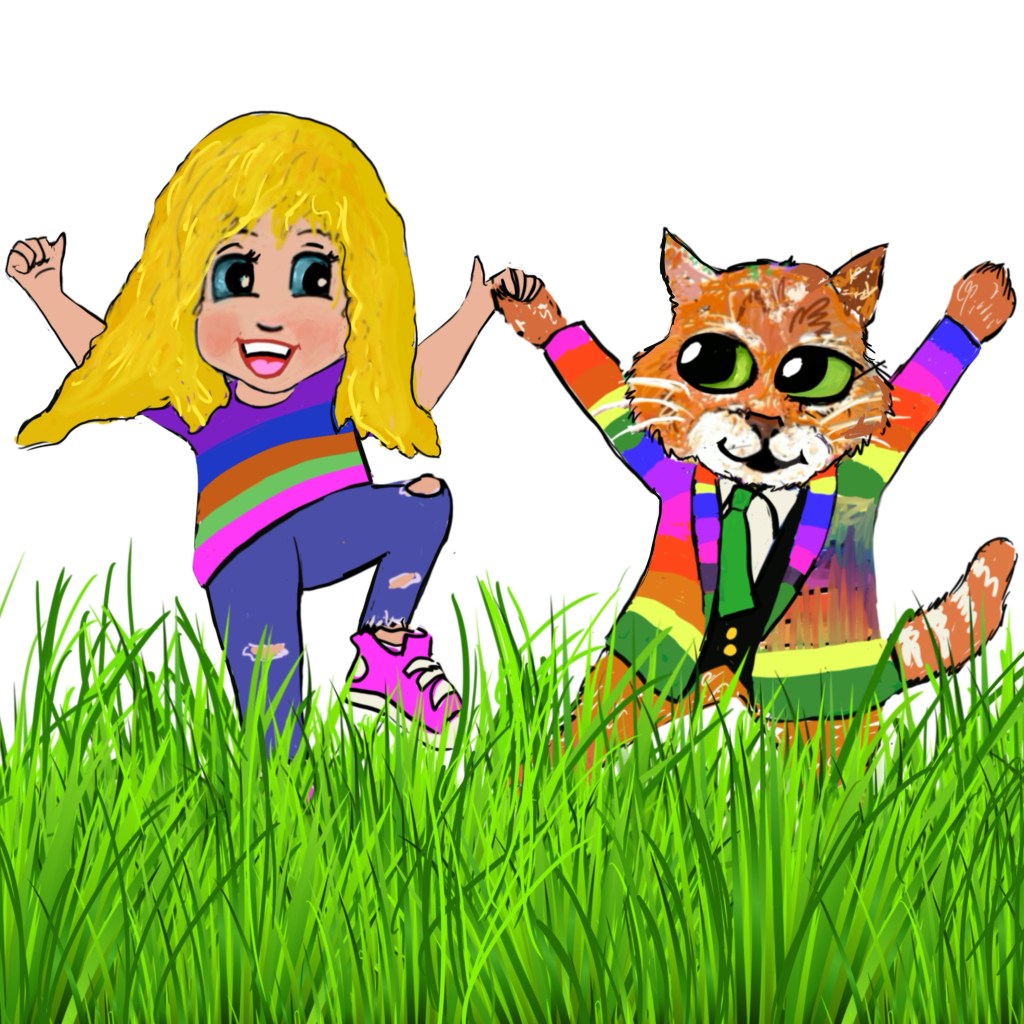
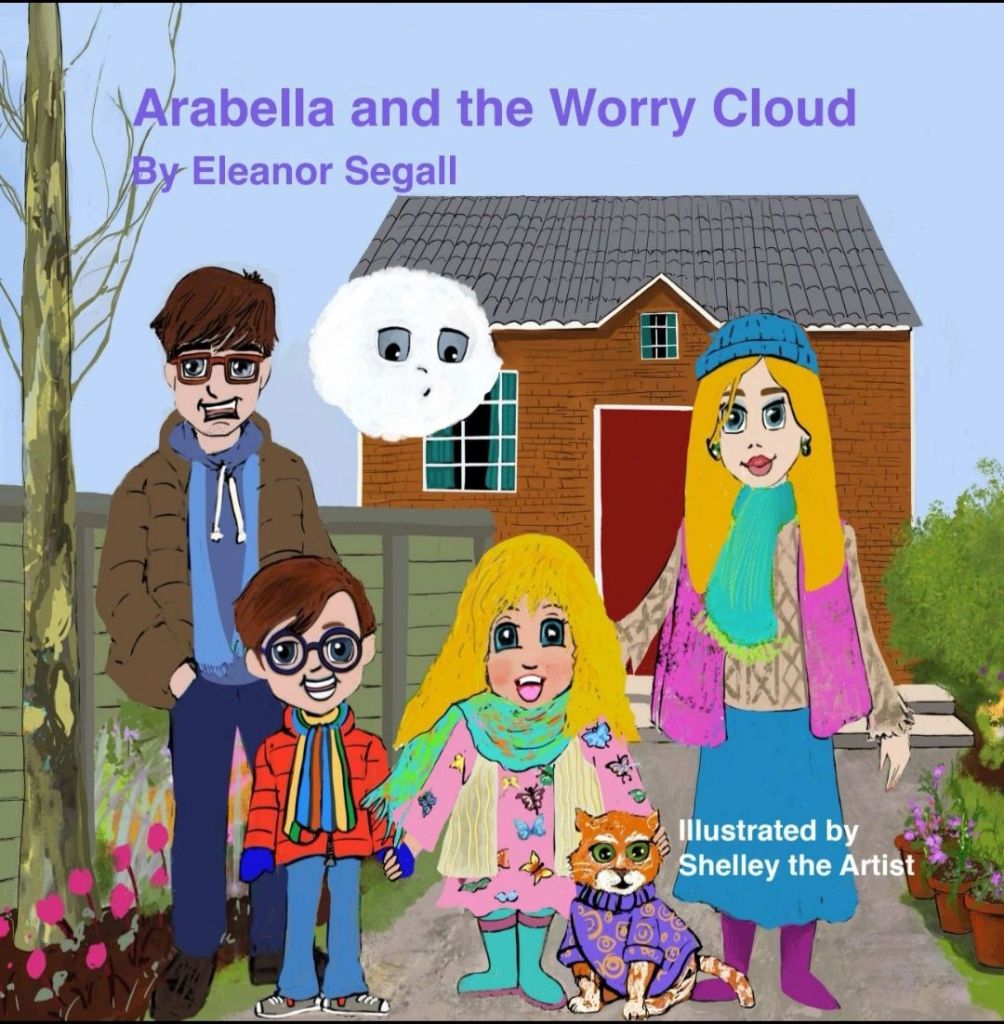
I wrote my first children’s picture book, Arabella and the Worry Cloud, in 2019 and published it last year. It is based on me as a young 7-year-old girl who had a lot of anxiety. In the book, Arabella worries about her socks not fitting on her feet, losing her shoes in a muddy puddle, the rain soaking her and cold freezing her toes, the rainbow in the sky losing its colour, her cat Pickles getting lost, the plants in the garden dying, losing her homework, failing a test and being blown away by the wind. These worries are partly represented by a Worry Cloud that comes down to see her from the sky and threatens to rain on her with all her worries.

Eventually, Arabella realises that if she thinks jolly, happy, sunny thoughts in place of the worries, she can push the Worry Cloud away with the joyous light beams of positive thinking. Arabella unlocks happy memories with her family, visualising wonderful times with them and it gives her confidence to face the Worry Cloud head on, so it can go away and leave her in peace.

So many children will have their own version of the Worry Cloud.

(image: Shelley the Artist/ E Segall)

Read the full blog here about how my experiences informed me writing Arabella and how it can help you:

https://thoughtsonlifeandlove.com/why-i-wrote…/95242/

Arabella and the Worry Cloud is out now on Amazon, for 4-8 year olds.

Veganism: How Compassion Shapes Our Emotional Wellbeing by Sadie Jade

(image: Hollie Usher Photography)

Being vegan means a person chooses not to use any animals products – whether that’s the food they eat, the clothes they wear, the products they use, even down to the entertainment they choose. This lifestyle choice is a philosophical stance and belief system that seeks to exclude all forms of exploitation and cruelty to animals.

I’ve been vegan for around 9 years now and speaking from experience as an empathetic and sensitive person, at times the world can feel a little overwhelming (understatement? Possibly). Don’t get me wrong, going vegan was the best decision for me. I am an animal lover at heart and deeply care about the environment, so being vegan enables me to live a life in harmony with my values. When I finally aligned my actions with my beliefs about animal welfare, I experienced a sense of relief and authenticity that had been missing before.

The problem is knowing the full extent of animal suffering at the hands of humans that really weighs heavy.

I remember the first time I truly connected with a cow. Looking into her gentle eyes, I saw an individual who was sentient and wanted to live, love, and be free from harm – just like any of us. That moment changed me forever. Now, walking past butcher shops or seeing leather goods in store windows can feel devastating, knowing a beautiful creature had their life needlessly taken for something we can source elsewhere with no suffering involved. These everyday encounters that are ordinary to most, serve as constant reminders of the disconnect between my values and society’s ‘normal’ practices.

This awareness has affected my relationships too. There was a time that social gatherings were tricky to navigate. Watching friends or family consume animal products while knowing what I know about factory farming creates an internal struggle: balancing my love for them with my ethical convictions. Sometimes it makes me so sad to know that, after all I have told them about animal suffering, they continue to choose to subject animals to it in the name of taste preferences.

However, this emotional challenge isn’t unique to vegans. Many people feel uncomfortable watching documentaries about animal agriculture or visiting slaughterhouses. This natural empathy exists in most of us, but marketing campaigns and industrialised food systems have created a psychological distance between our plates and the reality of animal suffering. The meat industry spends billions on advertising that presents happy animals on family farms, while the reality remains carefully hidden from public view.

The emotional challenges faced by vegans often stem from a place of deep compassion – a quality our world desperately needs more of, not less. Rather than viewing this sensitivity as a weakness, we can recognise it as a strength that drives positive change. Understanding that these feelings of distress come from a place of love and justice can help frame them in a more constructive light.

(image: Kerry McLaughlin Photography)

In my book, The Vegan Lifestyle Journal, I talk about the secrets to finding ways to channel our emotional sensitivity into positive action while maintaining our own wellbeing. This might mean setting boundaries, practicing self-care, celebrating small victories, and remembering that personal peace and advocacy for animals can coexist. After all, the goal isn’t to carry the weight of the world’s suffering, but to do our part in creating positive change while maintaining our own emotional balance.

For anyone feeling overwhelmed by awareness of animal suffering, remember that every person who chooses compassion contributes to a larger movement toward a more ethical world. While the journey may sometimes feel lonely or challenging, living in harmony with our deepest values ultimately contributes to better mental health and a more peaceful existence.

Sadie Jade is a Suffolk born author and public speaker who is passionate about making the world a better place for animals, people, and the environment.With almost a decade of experience in animal advocacy, Sadie is well known for delivering talks to thousands of people across the UK in schools and colleges, at community events and public speaking engagements such as podcasts and panel debates, and through the publication of her book and her guest articles for respected news outlets.

This blog is the view of Sadie Jade.

Arabella And The Worry Cloud Article On Parents News UK.

(image: E Segall/Shelley The Artist)

I am delighted to say that our children’s picture book ‘Arabella and the Worry Cloud‘ about a little girl with anxiety and how she manages her worries, is featured on Parents News UK website! Not only is it Children’s Mental Health Week but it is also Time to Talk day, where we share our stories about mental health.

Here’s a snippet of their thoughts:

‘Supporting children with anxiety, London-based author Eleanor Segall has drawn from her own childhood experiences to write Arabella and the Worry Cloud, a heartfelt picture book supporting children aged 5–8 who struggle with anxiety. Eleanor, who has lived with bipolar disorder since her diagnosis at age 16, aims to help young readers understand and manage their worries through relatable storytelling.

Arabella and the Worry Cloud introduces readers to Arabella, a seven-year-old girl who faces daily worries, from small tasks like putting on her socks to bigger fears about her cat or schoolwork. Her constant companion, the Worry Cloud, symbolises her anxious thoughts, teaching children that worries, like clouds, come and go.

Eleanor shares coping tools within the story, inspired by techniques that helped her manage her own anxiety. Through Arabella’s journey, children learn that even when caught in life’s “rainstorms,” the clouds will eventually clear.’

(image: E Segall/Shelley The Artist)

You can read the full article here. Thanks to all at Parents News UK!

SUNSHINE: A Cancer Journey. The Powerful New Book From Author Emily J. Johnson by Eleanor

(image: Emily J. Johnson)

Three years ago, I read and reviewed author Emily J. Johnson’s debut book ‘Pushing Through The Cracks, which details her family’s journey with mental illness. Emily then released a book called BELLY about her binge eating and how she found recovery.

I was saddened when I heard that Emily had been diagnosed with thyroid cancer in 2023, after all she had faced. A lump found by chance at the doctor in her neck, led to her diagnosis. However, in true Emily style (she is a fighter), she not only went through a lot of trauma and medical treatment, but she has come out the other side to find her own SUNSHINE. The thyroid cancer diagnosis left her struggling to cope as she navigated the impact on her loved ones. During her treatment, a medical emergency lead to a profound experience in theatre that changed everything.

As you can see from the cover of this book, this is a story of hope after trauma and adversity. It’s a life-affirming story about love, hope, and rediscovering joy in simple things.

Emily returned to writing during her recovery, publishing her third book SUNSHINE, sharing her cancer journey. Once fully recovered, she re-trained as a mindfulness and meditation practitioner and will embark on her teaching practice in 2025, supporting cancer patients along with other members of her community in learning these beneficial practices. 

Emily is always helping others whether that is through her talent as an author and sharing her thoughts in writing and now through her work helping people.

The book is beautifully written and hugely eye opening about a cancer that does not get huge amounts of media air time. Emily goes through treatment and comes out the other side stronger. As she says,

A chance discovery leads to a shock diagnosis;.

A traumatic experience leaves me questioning everything.

But in the darkness, I discover the light. My light, my sunshine.’

SUNSHINE by Emily J. Johnson is a remarkable book and is out now on Amazon here.

(image: Emily J Johnson).

5 Reasons Why Your Child Needs To Read ‘Arabella and the Worry Cloud’ Picture Book By Eleanor and Shelley The Artist

(Image: Eleanor Segall/ Shelley The Artist)

Note: Arabella is written for 4-8 year olds. Every child is different and some children younger than 4 have enjoyed this book, but it is largely a Key Stage One book.

When I was a little girl, I had a lot of anxieties. As a self confessed empath and worrier, I could feel when something was wrong and sometimes this led to child anxiety. This included separation anxiety with symptoms such as nausea at school. Children who have anxiety need to feel safe, settled and above all, heard by parents/carers and the adults in their life at school.

I wrote Arabella and the Worry Cloud based on me as a young 7 year old girl who worried a lot. In the book, Arabella worries about her socks not fitting on her feet, losing her shoes in a muddy puddle, the rain soaking her and cold freezing her toes, the rainbow in the sky losing its colour, her cat Pickles getting lost and the plants in the garden dying, losing her homework, failing a test and being blown away by the wind. These worries are partly represented by a Worry Cloud who comes down to see her from the sky and threatens to rain on her with all her worries.

Eventually, Arabella realises that if she thinks jolly, happy, sunny thoughts in place of the worries, she can push the Worry Cloud away with the joyous light beams of positive thinking. Arabella unlocks happy memories with her family, visualising wonderful times with them and it gives her confidence to face the Worry Cloud head on, so he can go away and leave her in peace.

So many children will have their own version of the Worry Cloud. Here’s 5 reasons why you should read Arabella and the Worry Cloud with them:

  1. It is a hopeful story– Arabella never loses sight of hope even when the Cloud tells her life is scary, saying ‘If I can see the sun and smell the passing rain, everything will be alright. The storm will not last forever’. This is the key message of our story- all thoughts will pass, you are safe and fear will not stay forever. This is particularly helpful for children who feel stuck with anxiety.

2. It can help children to process their emotions about worries safely, with help of parent or carer- The Worry Cloud represents Arabella’s thoughts and the book shows how Arabella sends him away with help of positive thinking and visualising happy memories. Some children may need further intervention from a team of professionals, but the book introduces worry/anxiety in such a way that it can be read to assist children when they worry (and distract them from negative thought patterns).

3. It is a positive, age appropriate book about child anxiety and worries with an uplifting message, filled with rhyming prose and beautiful, vibrant illustrations by renowned artist Shelley The Artist. Shelley combines old fashioned art with work on her ipad and the result is a beautiful array of illustrations your child will love.

4. It is a book about mental health in a child appropriate metaphor – As an author with a background in mental health writing and lived experience, I understand the needs of having books which discuss mental health issues in a safe and supportive way. As this book is aimed at 4-8 year olds, it slowly introduces worries some children may face at this age.

5. It has had some lovely reviews from children, parents and readers:

“I really enjoyed the book and really liked Arabella and I found the cat funny. I learnt to not worry about things and that we should only think happy things.” Matilda, aged 8

“A stunningly beautiful book with such important mental health and wellbeing messages. Suitable for primary school age children: I recommend adults read it too as it’s incredibly special and meaningful! Thank you for writing this and inspiring us all.” Mrs Davies, parent

“Arabella and the Worry Cloud conveys a wonderful message, is written with lovely imagery and is beautifully illustrated. The cloud is a really good way to portray anxiety – children will be able to relate to this and feel encouraged to overcome their worries with positive thinking like Arabella does.” Dr DF

“This book is perfect if you have a young child who is a bit anxious or worries easily as it’s relatable and puts anxiety in simple terms that a young child can easily understand.” Diary of Lydia

“Beautifully written and illustrated, this book will appeal to children and parents/guardians alike. More importantly, it’s going to help kids overcome their anxiety from an early age and understand that they are not alone. Highly recommended.” Britt Pfluger

This is my favourite book ever ever ever. The words of my 4-year-old son who is a bit of a worrier himself! He had lots of questions and was very engaged throughout. Have already read it three times with him. Well done on a lovely debut kids’ book!” Joanna Gutkin, parent

To get your copy of Arabella and the Worry Cloud, go to Amazon here. I can’t wait for you to read it with your child/niece/nephew/grandchild and to share it with them and their friends too!

Thank you,

Eleanor x

The Inherited Mind: A Story Of Family, Hope And the Genetics Of Mental Illness by Award-Winning Journalist James Longman (featuring our story!)

(image: James Longman/ Hyperion Avenue)

A couple of years ago, an intriguing email landed in my inbox. It was from the award- winning journalist James Longman (of ABC News). He told me he was writing a book investigating his own father’s illness and how much of mental illness is inherited. His father died by suicide when he was just a child and had a diagnosis of schizophrenia and depression, but James did not know a huge amount about this mental health history at the time.

James wanted to delve deeper into the family and genetic side of mental illness. As he got older, James’s own bouts of depression spurred him to examine how his father’s mental health might have affected his own. He engaged with experts to uncover the science behind what is inherited, how much environmental factors can impact genetic traits, and how one can overcome a familial history of mental illness and trauma.

James had seen my own story of family illness with bipolar disorder, as my Dad and other relatives also have the same condition and so he reached out to interview me. With permission from my Dad, I had a wonderful chat over Zoom with James, talking about the links with certain types of mental illness in families and how these types of illness can cause suicidal thoughts and sadly in James’s fathers case, suicide. We also discussed the hopeful journey that can occur if you have access to the right support networks, medications and therapy. Medication in particular has helped to keep us well over the years as bipolar has a definite biological link too.

In The Inherited Mind, James invites readers to reflect on their own stories as he shares his quest to better understand himself and his family. Through speaking to mental health experts, to those who have had similar familial experiences, and about his own life stories, James shows us, with heart and humour, how much our bodies can empower and inform us about our own personal mental health histories.

We are honoured to have our story featured in James’s informative and essential book. Thanks again to him for featuring us as a case study. It will be out in January and you can pre order your copy here

Find Your Confidence: The No Nonsense Guide To Self Belief: New book by Author and Life Coach Holly Matthews.

(image: Green Tree/Bloomsbury and Holly Matthews)

I had the pleasure of reading and reviewing Holly Matthew’s debut book ‘The Happy Me Project’ a few years ago. Holly became a friend when I met her online in 2017 and became one of the first people to sign up to her ‘Happy Me Project’ life reset, which included a workbook and online classes. Holly is one of the most inspirational people I know- not only did she decide to become a life coach and NLP practitioner after the tragic passing of her husband Ross, but she was also an award-winning TV actress and is Mum to two wonderful girls. Holly truly helps people going through difficulties in their lives and so when her new book ‘Find Your Confidence’ came out, I knew I needed to get myself a copy and review it.

The book talks about finding self belief in a wide variety of situations such as in the workplace, at job interviews, at home in every day life. The publisher says,

Each chapter is broken down to focus on a different everyday scenario as Holly provides simple and practical advice for tackling confidence head-on. Learn how to:
– Thrive in social situations
– Develop the tools to be a confident partner and parent
– Ace speaking in public and being assertive in the work place
.’

(image: Green Tree/ Holly Matthews)

The book’s premise is that ‘Everyone can access confidence – it’s just a case of learning how.‘ Holly says, ‘Confidence is not a skill that we’re born with or without but something that can be taught, practised and developed throughout your life. Focusing on both your inner and outer confidence, will help transform your self-belief from the inside out.’

I absolutely love this guide and tips to strengthen self belief at home and in public. Singer and actress Suzanne Shaw has said, ‘ This book is needed in every household for adults and kids. An absolute guide to help you eradicate self-doubt and give you a huge injection of confidence! 

Holly breaks down each chapter into ways to find and build confidence. I truly love the book and know it will be really helpful to me (and others) in specific life situations going forward. Self belief and confidence is something so many people struggle with and having these exercises, links and resources will be invaluable. Working with Holly is very special!

Find Your Confidence: The no nonsense guide to self belief by Holly Matthews is out now in all good book shops (and online).

For links and resources to help alongside the book please see Holly’s website: https://www.iamhollymatthews.com/findyourconfidence/