5 Reasons Why Your Child Needs To Read ‘Arabella and the Worry Cloud’ Picture Book By Eleanor and Shelley The Artist

(Image: Eleanor Segall/ Shelley The Artist)

Note: Arabella is written for 4-8 year olds. Every child is different and some children younger than 4 have enjoyed this book, but it is largely a Key Stage One book.

When I was a little girl, I had a lot of anxieties. As a self confessed empath and worrier, I could feel when something was wrong and sometimes this led to child anxiety. This included separation anxiety with symptoms such as nausea at school. Children who have anxiety need to feel safe, settled and above all, heard by parents/carers and the adults in their life at school.

I wrote Arabella and the Worry Cloud based on me as a young 7 year old girl who worried a lot. In the book, Arabella worries about her socks not fitting on her feet, losing her shoes in a muddy puddle, the rain soaking her and cold freezing her toes, the rainbow in the sky losing its colour, her cat Pickles getting lost and the plants in the garden dying, losing her homework, failing a test and being blown away by the wind. These worries are partly represented by a Worry Cloud who comes down to see her from the sky and threatens to rain on her with all her worries.

Eventually, Arabella realises that if she thinks jolly, happy, sunny thoughts in place of the worries, she can push the Worry Cloud away with the joyous light beams of positive thinking. Arabella unlocks happy memories with her family, visualising wonderful times with them and it gives her confidence to face the Worry Cloud head on, so he can go away and leave her in peace.

So many children will have their own version of the Worry Cloud. Here’s 5 reasons why you should read Arabella and the Worry Cloud with them:

  1. It is a hopeful story– Arabella never loses sight of hope even when the Cloud tells her life is scary, saying ‘If I can see the sun and smell the passing rain, everything will be alright. The storm will not last forever’. This is the key message of our story- all thoughts will pass, you are safe and fear will not stay forever. This is particularly helpful for children who feel stuck with anxiety.

2. It can help children to process their emotions about worries safely, with help of parent or carer- The Worry Cloud represents Arabella’s thoughts and the book shows how Arabella sends him away with help of positive thinking and visualising happy memories. Some children may need further intervention from a team of professionals, but the book introduces worry/anxiety in such a way that it can be read to assist children when they worry (and distract them from negative thought patterns).

3. It is a positive, age appropriate book about child anxiety and worries with an uplifting message, filled with rhyming prose and beautiful, vibrant illustrations by renowned artist Shelley The Artist. Shelley combines old fashioned art with work on her ipad and the result is a beautiful array of illustrations your child will love.

4. It is a book about mental health in a child appropriate metaphor – As an author with a background in mental health writing and lived experience, I understand the needs of having books which discuss mental health issues in a safe and supportive way. As this book is aimed at 4-8 year olds, it slowly introduces worries some children may face at this age.

5. It has had some lovely reviews from children, parents and readers:

“I really enjoyed the book and really liked Arabella and I found the cat funny. I learnt to not worry about things and that we should only think happy things.” Matilda, aged 8

“A stunningly beautiful book with such important mental health and wellbeing messages. Suitable for primary school age children: I recommend adults read it too as it’s incredibly special and meaningful! Thank you for writing this and inspiring us all.” Mrs Davies, parent

“Arabella and the Worry Cloud conveys a wonderful message, is written with lovely imagery and is beautifully illustrated. The cloud is a really good way to portray anxiety – children will be able to relate to this and feel encouraged to overcome their worries with positive thinking like Arabella does.” Dr DF

“This book is perfect if you have a young child who is a bit anxious or worries easily as it’s relatable and puts anxiety in simple terms that a young child can easily understand.” Diary of Lydia

“Beautifully written and illustrated, this book will appeal to children and parents/guardians alike. More importantly, it’s going to help kids overcome their anxiety from an early age and understand that they are not alone. Highly recommended.” Britt Pfluger

This is my favourite book ever ever ever. The words of my 4-year-old son who is a bit of a worrier himself! He had lots of questions and was very engaged throughout. Have already read it three times with him. Well done on a lovely debut kids’ book!” Joanna Gutkin, parent

To get your copy of Arabella and the Worry Cloud, go to Amazon here. I can’t wait for you to read it with your child/niece/nephew/grandchild and to share it with them and their friends too!

Thank you,

Eleanor x

Christmas For CAMHS 2024- Supporting Children and Adolescents On UK Mental Health Wards Every Festive Season.

(image: Christmas For CAMHS)

A few years ago, I was delighted to discover this incredible charity- Christmas for CAMHS through a post by its founder Ro Bevan. This charity means a lot to me because 20 years ago this festive season, I was a very unwell 16 year old on a NHS child and adolescent (CAMHS) in patient psychiatric ward in the Priory North London, struggling with a bipolar mixed episode. I had psychosis and hadn’t yet been diagnosed with bipolar. Although I am Jewish and don’t celebrate Christmas, I remember that the ward gave us small presents and that other children/adolescents wrote me lovely messages of kindness and hope wrapped up in seasons greetings. Being away from home and especially during the festive season is filled with loneliness and sadness, especially if you are in hospital. In 2004, Christmas for CAMHS did not exist but their work now is vital.

So who are this amazing charity?

Christmas for CAMHS is a small charity who gives gifts and goodies to children and young people in  hospital for their mental health over the festive season. This is our 9th year of giving gifts to young people in CAMHS (children and adolescent mental health services) inpatient units across the UK and this year we’re giving over 1300 gifts!

Christmas For CAMHS was originally set up because Dr Ro Bevan saw a huge disparity in the way CAMHS units were treated over the festive period compared to other NHS services for children and young people.

In 2015 Ro was working in a children’s hospital for those with a physical illness. That Christmas the children’s hospital had tons of presents donated, mostly from corporate donors – so many presents that there was enough leftover for patients’ birthdays until June of the following year! A year later, she was working in child and adolescent mental health and, in stark contrast, they had no presents donated at all. The patients had one present each, chosen by the therapy team and paid for by the ward – scrimped and saved from the NHS budget that is meant to cover therapeutic activities and other expenses. 

Ro posted about the inequality on Facebook and before she knew it, her post had gone viral with 1,032 shares and so many supportive comments. It inspired her to start Christmas For CAMHS the following year to support these children and young people who would otherwise be forgotten by the generous public.

When the charity first began in 2016, they set up a simple fundraiser online which raised £1000 and managed to send around 300 gifts to young people in units that year. Since then, they have grown to be able to reach every CAMHS unit in the UK, but still work in a pretty similar way! There is the online fundraising page running each year where people donate either as individuals or on behalf of fundraisers they have run in their local community or with work colleagues. Additionally, there are corporate donations and people setting up their own fundraising pages to do amazing challenges to raise money (a couple of years ago one fundraiser ran a marathon around a Christmas tree!).

There is also a wish list where people can donate specific chosen gifts for children who may be feeling very alone.

(image: Christmas For CAMHS)

The charity reaches out to every CAMHS unit in the UK to ask the staff that work there how many young people they might have over Christmas. They also ask them what they think their young people might like, picking from a list of tried and tested categories, and the age range of their young people. The elves then work night and day to ensure that gifts are bought that align with what each CAMHS unit has requested and that are safe for young people in hospital for their mental health to be given. 

Once the gifts have arrived there is a major ‘packing weekend, in Bath. During this, volunteers come and help pack up massive boxes with all the assigned gifts, some Christmas decorations, some activities (such as colour in paper chains or blank cards), a Wellbeing Advent Calendar, some fidget toys and an extra ‘ward gift’ for each ward to enjoy together. We don’t wrap the gifts, so the wards can check them, but we do provide wrapping paper and sticky gift tags. We also provide a bigger gift, when requested, for young people on the wards who may not receive a gift from anyone else this Christmas, such as young people who have no family support. The gifts then get delivered to each CAMHS ward ahead of Christmas day.

This year, the charity is also sending wards some paper chain ‘strips’ with cheesy cracker jokes written on them, made by members of the public and assembled by young people on the wards, providing a tangible reminder that we are all still connected despite what the young people are going through. Young people loved these last year. 

It is always so nice to receive messages from young people about the gifts that they’ve given. A young person recently told the charity:

“The gift made me smile so much. I’d had such a bad day and it was an utterly terrifying time in my life – I was about to turn 18 and had never felt more alone. It was so weird but lovely to think that people who didn’t know me cared enough to make me and my friends feel special and connected. You really do such an amazing job. You’re so kind, thank you.”

The whole team and all donors are thinking of every child and young person who will be spending the Christmas period in hospital due to their mental health, which is exactly why Christmas at CAMHS does what it does – we want them to know that we’re thinking of them and that lots and lots of people are holding them in their hearts. 

To donate to Christmas for CAMHS:

Making Christmas Magic for Young People in CAMHS Units (2024)

or text CAMHSGIFT followed by your donation amount to 70470 to give that amount (e.g. CAMHSGIFT10).

For the rest of Christmas for CAMHS links:

Christmas For CAMHS | Twitter, Facebook | Linktree

5 Steps For Successfully Recovering From Binge Eating Disorder by Lizzie Weakley

(image: Ross Sneddon, Unsplash)

Binge eating disorder (BED) is a severe eating disorder characterised by recurrent episodes of consuming large amounts of food in a short period. This disorder is associated with acute physical and psychological complications that can affect an individual’s quality of life. Recovering from binge eating disorder can be a challenging process, but with the right guidance and support, it can be achieved. This blog post will discuss five tips for successfully recovering from binge eating disorder.

Seek Professional Help

Recovering from binge eating disorder requires professional guidance and support. The first step towards recovery is to seek professional help. Consulting with a healthcare provider (such as the NHS or privately) or a registered dietician can help an individual develop a personalised treatment plan that addresses their unique needs. The medical professionals (psychiatrist, GP) can also screen individuals for underlying health problems that may contribute to binge eating disorder, such as depression, anxiety, or other mental health disorders.

Establish a Support System

Establishing a support system is essential for individuals recovering from binge eating disorder. This support system may consist of family, friends, or support groups. Support groups can help individuals connect with other people experiencing similar conditions and receive emotional support and encouragement. It can also provide information about recovery resources and strategies that have worked for others.

Identify Food Triggers

Identifying food triggers that lead to binge eating can help an individual manage such situations. Food triggers may include certain foods, emotions, or social situations. Identifying these triggers can help an individual prepare and develop strategies to cope with them when they arise. Strategies may include therapeutic skills including distraction techniques, mindfulness, or relaxation techniques.

Embrace Online Binge Eating Recovery Services

Online binge eating recovery resources like Lightwork Nutrition can provide valuable support and information for individuals experiencing BED. Online support groups, forums, and recovery programs offer anonymous access to peer support, real-time chat, and educational resources. Using these online resources can help individuals connect with others facing similar challenges from anywhere at any time.

Cultivate Self-Care Habits

Cultivating self-care habits may improve an individual’s physical and mental well-being, ultimately aiding in their recovery. Self-care habits may include healthy eating habits, gentle exercise, and stress management techniques like mindfulness, yoga, or meditation. These habits enable people to manage stress, boost self-esteem and confidence, and improve overall health and well-being.

BED can have significant impacts on an individual’s quality of life. Recovering from binge eating disorder can be a challenging, yet achievable process for individuals. Seeking professional help, establishing a support system, identifying food triggers, embracing online binge eating recovery services, and cultivating self-care habits can enable individuals to overcome binge eating disorder effectively.

Remember, recovery is a process, and with hard work, patience, and dedication, individuals can experience good mental health and well-being.

This article was written by freelance writer Lizzie Weakley.

Coming Home For The Mental Health Awareness Shabbat And Self Care by Eleanor

Happy new year everyone! Gosh its nearly the end of January and I havn’t written a blog for a while so thought I would share some things that have been happening here and talk a bit about mental health stuff too.

Firstly, my mental health is fairly stable at the moment, as has been the case for a number of years. I don’t get typical bipolar depressive or manic episodes on my medications and this year is my 9th year out of hospital , which is always a positive. However, I still suffer with anxiety and stress and get overwhelmed so have to pace myself! I have bad days too where things feel too much but thankfully they don’t escalate into a depression.

So for the positives- I have achieved some huge anxiety wins for me. Since November, I have been on the tube (first time in 3 years), I have gone up to the West End with Rob to the theatre using public transport, my panic attacks have been lessening, I have been able to see more people in person and I also passed my probation at work and have been made permanent (huge win!). I am someone who struggles with agarophobia when I feel more anxious and stressed and going out alone can still be a challenge.

I have been allowing myself to venture into previously anxiety provoking situations- for example, I get cabs alone home from work. I had to start doing this last year and it helped me get back into the world again. It wasn’t easy due to many fears I had but I have been able to do it, slowly. My job is also hybrid so I can work from home too- but getting back out into the world and having kind work colleagues at an office has been such a vital part of my recovery too. My therapist has been so helpful in dealing with the panic attacks and anxiety and I do still get triggered but at the moment on a lesser scale. I still find blood tests, hospitals and general health stuff scary because of what I have been through. I really recommend therapy.

I sometimes do have to cancel arrangements when things feel too much so am sorry to anyone I have had to postpone… its not easy and I hate doing it as I feel bad… but I am learning the balance of looking after me and socialising too. I don’t always get it right but I am trying.

Then, my friend in Bushey, Lee, texted me a few weeks back and asked if I would like to speak in my childhood community for the Jami (Jewish charity) Mental Health Awareness Shabbat. I hadn’t done public speaking about my story since before Covid in 2019, when I spoke with my Dad Mike at Limmud and at Chigwell shul (synagogue, my husbands community). I have had drama training so for me speaking publicly as someone else is OK, but when I have to stand up and share my own story, I get nervous as its so personal. The first time I was asked to speak in a shul at Belsize Square, I made it to the community but my Dad had to give the talk by himself as i was too panicked to attend the service. I managed in time to dip my toe in slowly, always with the support of my Dad and my therapist.

This talk in Bushey felt significant. It’s the Jewish community I grew up in and was a part of until I was 23. I felt like I was going home. The Bushey team told me they had two other speakers, but would I like to speak and share my story with bipolar disorder?

I thought to myself… I am ready, my panic attacks and social anxiety are more under control. To me being asked to come home to Bushey shul was a sign. My Grandpa Harry passed away in 2021 from Covid- and he and Grandma had lived in Bushey since the 1990s, when we were little. Our family lived in both Bushey and Bushey Heath and I studied at Immanuel College, across the road from our home and my grandparents. The area contains so many happy memories for me. I knew the new senior Rabbi and Rebbetzen, as he had officiated at my grandparents funerals and was so kind to our family. My Dad is also still a member of the shul and I still know a lot of people who live in the community too. Its a very special community and one I am proud to be from (and still feel.a small part of despite not being a local anymore).

So, I decided, with my Dad and Rob’s support on the day (and anxiety meds), that I could stand up in shul and speak with the other two speakers on the Shabbat (sabbath) morning. My Mum and step dad were supporting from afar and looking after our guineapigs.

The senior Rabbi and Rebbetzen hosted us for the Friday night which was wonderful as we got to meet lots of new couples and see the Ketts, the other Rabbi and Rebbetzen! For lunch after the service, we went to Lee’s house, which was very special as she was my batmitzvah teacher and is a good family friend.

I was initially told the talk was going to be in a break out room- but on the day it was decided that it would be from the pulpit. Last time I ventured to that pulpit and stood up there was when I was 12 years old, sharing my batmitzva portion of the Torah. The year my Dad was very ill and diagnosed with bipolar. I became ill just 3 years later.

Now, here I was back as a married woman of 34, revealing about the mental illness that had found its way into my family and caused a lot of devastation. However, the main reasons I wanted to stand up and talk about bipolar disorder are because I know that this illness runs in families, many Jewish families struggle with it. I wanted to give the message that you can live with this illness but you can have periods of remission, recovery, you can find hope.

And as I spoke to the audience of people – many of whom I had known since my childhood, who saw me grow up and saw my family eventually leave Bushey for Edgware, I felt humbled. I felt honoured to be asked to speak and I hoped that by sharing my own journey with bipolar (being diagnosed at 16, in hospital twice, the last time in 2014 for a very serious manic episode), that I could touch someone who needed to hear it. My Dad gave me permission to tell his story too.

When I grew up in. the early 2000s, talking about mental illness and particularly in Jewish spaces, was not the norm. I hope that through sharing my own journey and my Dads (he was undiagnosed for 9 years until he was 44), that I will have helped someone.

Most importantly, I felt I had come home. The kindness and warmth shown to me by the members of the Bushey community who I have known since I was a little girl was something so incredibly special and touching. People confided in me after the service about their own struggles. Others thanked me for sharing my story. I was hugely touched by the other two speakers who spoke after me about their own journeys with mental health and their children’s. I won’t name them here in case they want to be anonymous but I learnt so much from them and their experiences.

So I want to say a huge thank you to Lee, to the Rabbis and Rebbetzens and to everyone in Bushey who I have known for years and have loved- for hosting us, for inviting me to talk about something so personal in such a special community. It touched my heart. I really hope it helps.

I genuinely did not know how I stood up there to speak to 90 odd people- what kept me going is knowing I was doing this to help eradicate the stigma of mental illness but also I hope that the words I spoke gave comfort to anyone going through mental illness, that it does get better. It can improve. You won’t be ill forever.

When I was unwell in 2014, Jonny Benjamin MBE was speaking and sharing about mental illness. He taught me that sharing your story to help others is vital. So thanks Jonny for all your support too (whether you knew you gave me the courage or not :).

I also want to thank Jami charity, Laura Bahar and Rabbi Daniel Epstein. I was part of the volunteering team that helped set up the first mental health awareness shabbat. The project has blossomed and is now annual and it is truly wonderful to see.

What I want to clarify is that although I am currently a lot better with my anxiety, it is very much a grey area, day by day thing. That can be hard for people to understand- how one day you can be great with loads of energy and the next you have to stay home and recuperate- self care. But I think knowledge of mental health is increasing now, so do check in with your friends and family and offer a safe space without judgement- its so helpful.

Thank you again for reading this if you got this far. You can do whatever you put your mind too- reach for help from medical teams, medication, therapists and never give up.

With gratitude and love,

Eleanor

x

My Interview On Life With Bipolar Disorder by Best For You NHS

(image: Best for You NHS)

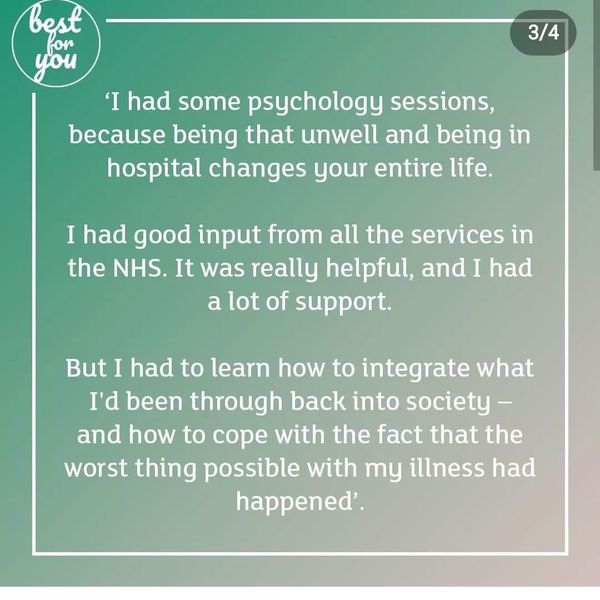
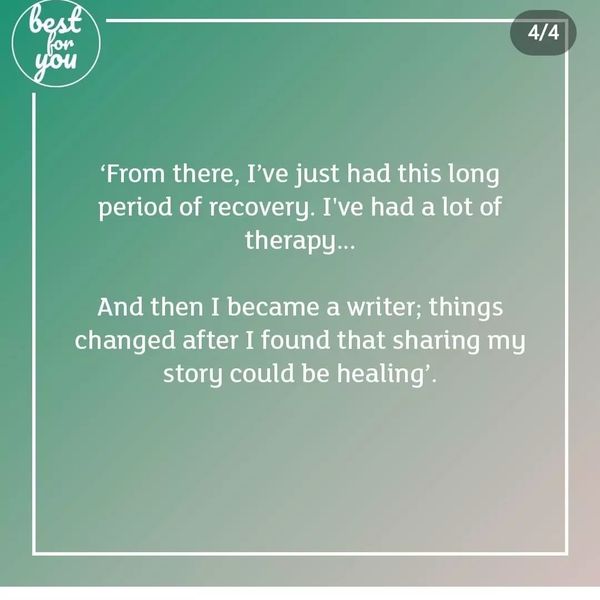
The team at Best For You NHS interviewed me about my life journey with bipolar disorder and anxiety. I hope it helps anyone, particularly young people, who are struggling.

You can read the interview that I did with Annabel here. Trigger warning as discusses suicidal thoughts, being in hospital and sexual assault.!

Thank you Annabel and team!

Best for You is a new NHS programme in London to help young people and their families access mental health support We know many can’t access the support they do desperately need and CAMHS services here in the UK are overstretched. I hope that by sharing my story it helps young people feel less alone, but we desperately need more funding into childrens mental health services too!

(Images by Best for You NHS)

Eleanor x

The Book of Hope- 101 Voices in Overcoming Adversity by Jonny Benjamin MBE and Britt Pfluger. by Eleanor

To readers of my blog,

(image: Pan Macmillan/ Jonny Benjamin)

I don’t really know where to start! I have been keeping this secret for almost two years.

Nearly 2 years ago, my friends, mental health campaigner/author Jonny Benjamin MBE and author and editor Britt Pfluger, approached me to be a part of their second book entitled ‘The Book of Hope: 101 Voices on Overcoming Adversity‘ (published with Bluebird/ Pan Macmillan in April 2021!).

They asked me to write a piece on how I found hope and recovery after being unwell and my (ongoing) journey with bipolar disorder that I wrote about in my own book Bring me to Light.

I won’t give too much away about the piece I wrote, but it does include my Dad’s story too and talks about life after being sectioned for a manic episode in 2014. It talks about hope, healing, recovery and living with mental illness. It talks about being afraid of the future, but finding light in the darkness.

Heres what Macmillan say about the book which is available for pre order on Bluebird Pan Macmillan website and Amazon. It also contains anecodotes from famous faces including Lemn Sissay, Zoella (Zoe Sugg), Joe Wicks and Dame Kelly Holmes.

There is always hope, even when we cannot seem to seek it within ourselves.

The Book of Hope is an anthology of 101 key voices in the field of mental health, who share not only their experiences with anxiety, psychosis, panic attacks and more, but also what helps them when they are feeling low. Compiled by award-winning activist Jonny Benjamin and author Britt Pflüger, the inspirational contributors in this book range from the likes of Lemn Sissay, Frank Turner and Zoe Sugg, to Elizabeth Day, Hussain Manawer and Joe Wicks; from authors, poets and musicians to charity workers, activists and psychiatrists.

Jonny Benjamin is known for his book and documentary film, The Stranger on the Bridge, which fought to end stigma around talking about mental health, suicidal thoughts and schizoaffective disorder. When his campaign to find the man who prevented him from taking his own life went viral, Jonny was one of a wave of new figures lifting the lid on mental health struggles. In this book, he brings together a range of voices to speak to the spectrum of our experiences of mental health and the power of speaking up and seeking help.”

It is a real honour and privilege to be a part of this project. A dream come true and I am so thankful to be able to share my story on this platform with truly important voices! We all have mental health and our voices deserve to be amplified.

The Book of Hope is available to pre order now and published in 2021.


Christmas for CAMHS Campaign to brighten up Children’s Christmas in Mental health wards: Guest post

christmascam

(image: Christmas for CAMHS charity)

Christmas for CAMHS (Children and Adolescent Mental Health Services) are a registered charity providing gifts each year for children and young people who are in mental health units in the UK over the Christmas holiday. They say,

Our aim is to make as many children and young people who are inpatients over the Christmas holidays feel thought-about, special and included.

We have been hugely supported over the past few years by generous donations from the public and have received much gratitude as a result from inpatient units. However, we are only able to provide gifts with your charitable donations. ‘

Christmas For CAMHS was originally set up because volunteers saw a huge disparity in the way CAMHS units were treated over the festive period compared to other NHS services for children and young people. They wanted to do something to change that and say,

‘Children are admitted to CAMHS units to receive support and treatment for mental health issues. There are no official figures for how many children will spend the festive season in CAMHS units across the UK. While many members of the public and corporate donors give Christmas gifts to Children’s hospitals or children’s wards in general hospitals, CAMHS units, which are usually based away from other services, are often forgotten, or not known about.’

Ro Bevan, doctor and founder says,

‘Five years ago I worked in a children’s hospital at Christmas time and there were many presents donated, mostly from corporate donors. There were so many presents that there was enough leftover for patients’ birthdays until June of the following year. A year later, I was working in child and adolescent mental health. We had no presents donated. Our patients had one present each, chosen by the therapy team, paid for out of the ward’s budget – saved from the NHS budget that is meant to cover therapeutic activities, and other expenses. I posted about the inequality on Facebook and before I knew it, my post had goneviral with 1,032 shares and so many supportive comments. It inspired me to start a group the following year and together we have raised over £1,000 to help children who would otherwise be forgotten by the generous public.

‘We don’t know whether this disparity is because people just don’t know that there
are children in mental health hospitals, or whether it’s indicative of the stigma that
society attaches to mental health issues. Regardless, we’re hoping to raise
awareness and address the balance. Although this project started with a simple
Facebook post, it has already gone further than I ever could’ve imagined possible
and reaching units across the UK which is a dream come true.’

This year, a special advent calendar has been designed by Sam Barakat, featuring  positive quotes every day, rather than chocolate. As well as this, there will be 32 windows, one for every day from December 1st to January 1st. 50 will also be donated to mental health units via Christmas for CAMHS. Sam says, ‘For many, Christmas is a joyful time that is spent with friends and family. For others, it can be the hardest time of year. This could be due to past events, trauma,  loneliness  or mental illness. ‘

I (Eleanor) feel this is such an incredible campaign that will touch the hearts of many. I was in a CAMHS unit aged 16 over Christmas and think this will help many people.  

You can donate and buy a calendar here for someone struggling : https://www.gofundme.com/f/a-mental-wellbeing-advent-calendar?utm_source=customer&utm_medium=copy_link&utm_campaign=p_cf+share-flow-1

To donate to Christmas for CAMHS and give presents to ill children click here: http://uk.virginmoneygiving.com/fund/
CAMHS2019

Website and more information: www.christmasforcamhs.org.uk