Children’s Charity ‘Nip in the Bud’ Exposes The Dark Side of Social Media And Mental Illness With Its Film Stolen Childhood.

(image: Unsplash: Lesli Whitecotton)

A new film by the charity Nip in the Bud exposes the hidden dangers of social media and smartphone use among children. A Stolen Childhood provides startling insights from children, headteachers and doctors, shedding light on the everyday harm caused by digital platforms.

Launching today, the film highlights several alarming statistics. A shocking 90% of girls and 50% of boys report receiving explicit pictures or videos they did not want to see. Additionally, 1 in 5 children have experienced online bullying, with 24% of those bullied resorting to self-harm and 22% altering their appearance as a result.

Furthermore, boys as young as 13 have been targeted for sextortion scams, and 80% of teenage girls feel pressured to provide sexual images of themselves.

Emma Robertson, co-founder of Digital Awareness UK, emphasises the hidden nature of these issues: “The thousands of children we talk to in schools tell us that their parents often don’t know how much time they’re spending on their devices overnight, or what they are doing online. This is a new and hidden world which adults can find hard to penetrate.”

MRI scans show screen time reduces brain areas responsible for visual processing, empathy, attention, memory and early reading skills.

In response to these findings, many psychologists, headteachers and GPs are advocating for stricter guidelines:

  • No smartphones until age 14
  • No social media until age 16

These recommendations aim to protect children from various online risks, including increased loneliness, exposure to harmful content, access to strangers, behavioural addiction and cyberbullying.

Watch the film here: https://nipinthebud.org/films-for-parents-carers/smartphones-a-stolen-childhood/

About Nip in the Bud

At Nip in the Bud we produce free, evidence-based films and other resources aimed at parents, carers and teachers of primary-aged who may be struggling with mental illness or unmet neurodiverse needs.

Our mission is to empower families and communities around our children to recognise and respond to early signs of mental illness or challenges in a neurotypical world, with resources made in conjunction with mental health experts, educationalists and families going through similar experiences – facilitating early intervention, so that problems can be “nipped in the bud”, allowing our children to blossom.

Find out more about Nip in the Bud at: www.nipinthebud.org

Building A Stronger Family Together: Benefits Of Family Therapy by Miranda Spears

(image: Pexels)

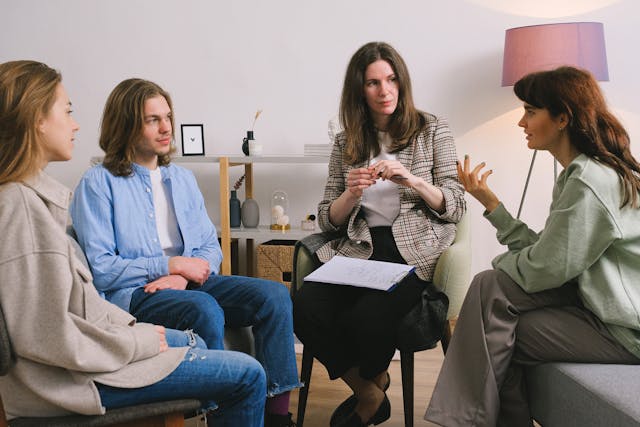
In an environment where life’s hectic pace can strain family relationships, family therapy seems like a ray of hope for preserving relationships and promoting comprehension. Although the phrase “family therapy” can conjure up ideas of resolving disputes, the advantages of this approach go much beyond that, including enhanced relationships, better communication, and emotional healing.

Enhancing Communication Skills for Stronger Connections

Healthy relationships are based on effective communication, and family counseling services are essential for improving this ability. Communication failures are a common cause of miscommunication, conflict, and emotional distancing in families. Families can acquire and hone skills that enhance their capacity for eloquent and sympathetic thinking and emotional expression via counselling. Therapists help family members express their needs and actively listen to one another via various techniques, including role-playing and guided conversations. A family’s ability to communicate better can result in more meaningful and fruitful relationships. For instance, activities aimed at recognising and resolving communication patterns that fuel conflict are often included in counselling sessions. Family members can lessen the number of disagreements and misunderstandings by learning to have talks with more empathy and understanding.

Addressing and Resolving Conflict Effectively

Family life will always include conflict, but if unsolved concerns are not properly handled, they can become serious difficulties. Family therapy offers a neutral, safe environment for discussing and working through issues. Family members can share their opinions and feelings in talks led by therapists without worrying about being judged. Families are better able to resolve disputes in a way that fosters understanding rather than hate in this controlled setting. Families that get treatment concentrate on improving their ability to solve problems and resolve conflicts. Counselors often teach family members conflict-resolution strategies like compromise and negotiation, which help them identify points of agreement and strive toward amicable resolutions.

Strengthening Emotional Bonds and Family Cohesion

Family therapy has a crucial role in strengthening emotional ties and promoting unity within the family. Emotional distance often results from unsolved problems, unfulfilled desires, or traumatic experiences in the past. Family members can examine and resolve these underlying difficulties in therapy, which promotes emotional healing and fortifies bonds between them. Families might better comprehend one another’s experiences and viewpoints by using facilitated conversations and therapeutic activities. Activities intended to improve emotional connection, including telling personal tales or expressing appreciation, are often included in the therapy process. Through deeper connections fostered by these activities, family members can develop empathy and trust.

Improving Family Roles and Dynamics

Redefining and addressing family roles and dynamics is another aspect of family therapy that can have a big influence on relationships and family functioning. Rigid or dysfunctional role structures are a major source of discontent and conflict in many households. For instance, a family member can take on an emotionally taxing caregiver role, or there can be tasks that are not evenly distributed, leading to conflict. The chance to assess and modify these responsibilities to better suit the needs and abilities of each family member is offered by therapy. In order to recognise and treat problematic patterns in roles and dynamics, therapists collaborate with families. Families can investigate and reinterpret roles in a manner that fosters harmony and respect for one another via therapy. As an example, family members might work together to create new rules about who gets what or help each other adapt to new positions within the family.

Fostering Resilience and Coping Strategies

The development of resilience and useful coping mechanisms is yet another important advantage of family therapy. Families often deal with a variety of pressures that might harm their relationships and mental health, such as health problems, financial hardships, or life changes. Families that get therapy are given the skills and techniques to deal with these pressures and keep a good attitude. Therapists assist families in creating coping strategies that improve their capacity to deal with difficulties and adjust to changes. Teaching stress management strategies, developing problem-solving skills, and promoting healthy lifestyle choices are a few examples of therapeutic approaches. Families develop resilience, support one another through trying times, and manage to stay stable in the face of outside challenges.

Finally…

The advantages of family therapy for improving family dynamics and relationships are immeasurable. A family that receives family therapy can become more cohesive, resilient, and supportive—a place where people feel empowered to face life’s obstacles as a unit.

Miranda Spears is a freelance writer.

Gila’s Way: A Charity Set Up To Help Prevent Teen Suicide And Educate On Mental Health. Interview with Rabbi Hammer.

Sometimes, I get emails about stories and they really stand out to me. This was one of them. A friend of mine knew about this suicide prevention charity in Israel, called Gila’s Way. The Hammer family in the Jewish community sadly lost their daughter Gila z’l to suicide when she was just 18. Gila had mental health issues and the family want to save lives in her name and make sure it doesn’t happen to another family. Rabbi Shalom Hammer, Gila’s father and a world renowned lecturer, started sharing his insights from Gila’s tragic story in order to raise awareness, teach empathy, and promote dialogue regarding suicide in order to ensure its prevention.

Gila’s Way is a non-profit organisation which implements, educates and presents programs regarding mental health awareness and suicide prevention in order to save lives.

I asked Rabbi Shalom Hammer a few questions about his life saving mission:

  1. Your charity Gila’s Way has such an important mission. Please can you tell me more about Gila as a person, her mental health struggles and how you as a family coped in the aftermath of her tragic death/ how the charity got set up?

Gila was an unbelievable girl, vibrant, vivacious, social, hilarious and extremely sensitive. She was a leader of her peers socially and she loved to have fun. She also saw the world in a very innocent wholesome way, she was not capable of harming anyone nor did she believe that people would harm her. Tragically she experienced a sexual episode which was obviously extremely traumatising for her. She also did not wish to or know how to openly communicate the degradation she felt and the pain she was experiencing. Consequently, a swell of anxiety and depression built up inside of her and she eventually began to lose hope which ultimately lead to her passing away.

After Gila died, we decided to take the inexplicable pain and the unfathomable loss to as much of a positive place as possible. My wife and I feel that Gila should be alive and the reason she is not is largely because of the lack of knowledge with mental health and certainly suicidal ideation that we had and that so many others have as well. Gila’s Way is an organisation therefore, who’s primary concern is education via seminars, lectures, interactive workshops and presentations, understanding that the more we educate and inform the greater chance we have of lowering the numbers and preventing suicide.

(image of Gila z’l: Gila’s Way and Hammer Family)

2. What would you like people to know about teen suicide and suicide prevention in Israel and globally?

The most important vital point that I cannot emphasise enough, is that the vast majority of people who die from suicide, do NOT want to die. Particularly when we are speaking about adolescents who are experiencing so much pressures and may impulsively make a decision within a few seconds and not realising that it is finite. When people understand that most people who die from suicide, did not want to die, they also understand that this means we are capable of saving that person.

3. What is your message to other parents coping with children with mental health issues or who have also experienced bereavement?

There are a number of very crucial messages for parents. Firstly, don’t be afraid or ashamed to talk and converse, secondly don’t converse with just everyone. Dealing with mental health and a child who is challenged, is very procedural and therefore exhausting. Make sure to speak to the right people and save your energies for those people. Don’t speak to just anyone because you will grow more confused and more exhausted; make sure to find those/that people/person who can be helpful and focus on speaking to them.

In addition, pay attention to what your child is “saying”. A child (or anyone for that matter) who is dealing with mental health challenges or experiencing a crisis, will not necessarily explicitly say “I need help”, but they will often send “cries for help” and share those signs because they really want help. Some of those “warning signs” can be familial/social isolation , spending long hours in their bedrooms and refusing to join the family for activities which they normally enjoyed. In addition, they may be exhibiting exhaustion, or become physically unkempt, and they also might desist from performing normal expectations (like going to school, doing their homework, participating in events etc.)

Finally, and this is something that I consistently emphasise, trust your parental instincts. We were blessed with instincts and often a Dr or professional might suggest something and our instinct is saying “this just does not sit well with me”…trust that instinct and pay attention to it, because it is there for a reason.

(image: Gila’s Way)

4. What do you at Gila’s Way want to achieve through your charity and how are you doing this through programmes/events?

Our primary focus is on education. We don’t want any parent or any significant other, to be in situations where they “don’t know” or “didn’t know enough” because knowledge is power and empowers us with the capacity to be aware, respond and even save a life. We do so through the many programs, presentations, seminars and interactive workshops and exhibitions that we offer for diverse groups (parents, educators, adolescents, leaders, professionals, here in Israel in the army and pre-military academies). Engaging audiences in the conversations breaks stigmas and allows for knowledge and consideration.

Finally, Gila’s Way offers a consultation service (NOT a hotline). Navigating the mental health system, especially in Israel, isn’t simple. If one knows someone struggling with their mental health, they can schedule a consultation with us to help guide them through initial steps towards healing and recovery.

Whoever saves a single life is considered to have saved an entire world’ (the Talmud)

For more about Gila’s Way, please go to their website here.

Creating a Safe Space: Helping Your Adopted Child Heal From Trauma by Brooke Chaplan

(image: Adobe Stock)

As mom/mums, we want nothing more than to provide a safe and nurturing environment for our children. But when it comes to adopted children who have experienced trauma, the task can feel overwhelming. It’s important to understand that healing from trauma is a process that takes time and patience. In this blog post, we will discuss some strategies for creating a safe space for your adopted child to heal and thrive.

Build Trust

Building trust is vital when helping your adopted child heal from past trauma. Trust serves as the foundation for a relationship where your child feels safe and understood. To build trust, start by being a consistent presence in their life, maintain routines and be predictably positive in your interactions. Listen to them with empathy and without judgment, making sure they feel heard and valued. Honoring your promises, no matter how small, also reinforces their sense of security. Offer choices to empower them, showing that their feelings and opinions matter. Through these actions, you create a supportive environment where your child can begin to heal and flourish.

Create Routine

Maintaining a routine can be incredibly beneficial for adopted children who have been through trauma, as it provides a sense of stability and predictability in their lives. A structured daily routine might include waking up at the same time each morning, having breakfast together, and engaging in activities like schoolwork, outdoor play, or reading time. Following a set bedtime ritual, such as taking a warm bath, reading a story, or listening to calming music, can help signal the end of the day and promote restful sleep. These consistent activities provide security and help the child know what to expect, reducing anxiety and allowing them to focus on their growth and healing.

Offer Support

Offering support to your adopted child as they work through past trauma requires patience and understanding. Recognize that healing is a journey, and each child progresses at their own pace. Show your support by being consistently available and approachable, allowing your child to share their feelings when they feel ready. Validate their emotions by acknowledging their pain and expressing empathy, reinforcing that their feelings are normal and understandable. Engage in calming activities together, such as drawing, walking, or simply sitting in silence, which can provide comfort and a sense of connection. Additionally, educate yourself on trauma and its impacts so you can better understand and respond to your child’s needs. Through unwavering patience and a compassionate approach, you create a secure space for your child to navigate their healing journey.

Educate Yourself

When supporting your adopted child through past trauma, it’s crucial to educate yourself on various aspects of trauma, including its emotional, psychological, and physical effects. Learn about attachment theory to understand how early experiences shape a child’s ability to form secure relationships. Explore trauma-informed care practices to provide the best possible support. Resources such as books on child psychology, trauma, and adoption can be invaluable. Online courses, webinars, and support groups for adoptive parents can offer practical skills and community support. Don’t hesitate to seek professional help from therapists who specialize in trauma and adoption, like those at Relevant Connections PLLC. By expanding your knowledge, you can create a nurturing environment that fosters your child’s healing and growth.

Foster Connection

Helping your adopted child foster positive connections while working through past traumas involves creating opportunities for safe and meaningful social interactions. Encourage participation in group activities that align with their interests, such as sports teams, art classes, or music lessons, where they can build friendships in a structured and supportive environment. Facilitate playdates with compassionate and understanding peers to help your child practice social skills and develop trust in others. Encourage involvement in community events or volunteering, which can provide a sense of purpose and belonging. Additionally, reinforcing family bonds through regular family activities and open communication can help your child feel secure and connected. By nurturing these connections, you create a network of support that can bolster your child’s emotional resilience and aid in their healing process.

Creating a safe space for your adopted child to heal from trauma requires patience, understanding, and love. By building trust, establishing routine, offering support, educating yourself, and fostering connections, you can help your child feel secure and supported as they navigate their healing journey. Remember that healing takes time, so be gentle with yourself and your child as you both navigate this process together.

Brooke Chaplan is a freelance writer.

‘Arabella And The Worry Cloud’ Book Cover Reveal!

(image: Arabella and the Worry Cloud by Shelley the Artist and Eleanor Segall)

Shelley the Artist and I are proud to reveal the cover to our first children’s book written by me, ‘Arabella and the Worry Cloud’.

Arabella is a little girl with lots of worries, represented by the Worry Cloud who comes to see her, taunts her and threatens to rain on her.

Can Arabella with the help of happy thoughts of her family and trusted cat Pickles push the Worry Cloud away? Or will he stay and rain on her forever as her worries grow?

As a little girl myself, I had lots of worries which led to anxiety and panic. Through our book, we aim to help children aged 5-7ish to process their emotions around worry, to talk about anxiety and to try and replace them with positive thoughts.

The book has beautiful illustrations by Shelley the Artist and we can’t wait to share the link to buy it as soon as its live! We will have an ebook and paperback version.

Thank you for all the support,

Eleanor x

Mental Health Care In Schools Resources- with Twinkl

(image: Kenny Eliason, Unsplash)

I am delighted to be collaborating with Twinkl on their mental health resources for children in schools.

Twinkl say , ‘We must recognise the need to improve understanding of children’s mental health. A person’s mental health is determined by a complex cocktail of different factors interacting. Some of these factors come from a person’s biology, while others come from external factors. Further complicating things, young children don’t always have a full understanding of why they feel they way they do. They can also be reluctant to talk about it, which only adds to the challenge if you’re a teacher trying to support good mental health care at your school. Ultimately, though, if you have concerns that one of your students is struggling with something related to mental health, you should report your concerns to the appropriate authority.’

Twinkl creates resources for teachers and their students, to provide excellent mental health education. This includes resources such as a morning physical and mental health check in, mental health discussion cards, mindfulness colouring pages, and the emotions iceberg to help children understand their feelings.

(image: Twinkl)

Sometimes children come to school unable to express their emotions or what is going on at home. That’s why its so important for teachers to use these tools to help children at school.

Click here to look at the amazing resources and read this blog by Twinkl.

This is an unpaid collaboration with Twinkl.

Celebrating Small Victories: The Importance of Milestones In Outpatient Rehab by Rianne Hunter

(image: Pexels:)

In the journey of outpatient rehab, recognising and celebrating each small victory plays a pivotal role in both motivation and recovery. These milestones, no matter how small they may seem, serve as important markers of progress, offering encouragement and a sense of achievement to those on the path to recovery. Each step forward, regardless of its size, can significantly impact the overall success of rehabilitation. This philosophy not only fosters a positive environment but also strengthens the resolve of individuals to continue striving for their ultimate goal of full recovery.

The Power of Acknowledgment

Acknowledging and celebrating small victories may seem insignificant in the grand scheme of things, but it can have a powerful impact on one’s outlook and determination. In outpatient rehab, where the recovery journey can be long and challenging, even the smallest progress should be praised and recognized. This acknowledgment serves as a reminder that each step taken is a valuable and meaningful effort towards healing. It also helps individuals to focus on the present moment, rather than dwelling on past struggles or future worries.

Boosting Motivation

In outpatient rehab, motivation is a key factor in achieving successful outcomes. By celebrating small victories, individuals can maintain their motivation and drive throughout the rehabilitation process. Each accomplishment reinforces their determination and propels them forward towards their ultimate goal. When individuals feel recognized and supported, they are more likely to remain committed to the rehabilitation process and push through any difficult moments.

Building Confidence

As individuals progress through their outpatient rehab program, each milestone reached builds confidence in their abilities and strength. These small victories serve as evidence that they are capable of overcoming challenges and making positive changes in their lives. With each success, individuals are encouraged to set higher goals and push themselves further. This confidence boost can have a lasting impact on their recovery journey and beyond.

Celebrating Together

The power of celebrating small victories is not just limited to the individual in outpatient rehab but also extends to their support system. Family members, friends, and healthcare professionals all play an essential role in providing encouragement and recognition for achievements. By coming together to celebrate each milestone, a sense of community and support is fostered, creating a positive and uplifting environment for the individual in rehab.

Celebrating small victories may seem like a simple act, but its impact on outpatient rehab cannot be underestimated. Each milestone reached serves as a stepping stone towards full recovery and should be recognised and celebrated. By acknowledging these small victories, we can create a more positive and empowering experience for individuals in rehabilitation and help them to achieve their goals with confidence and motivation.

Rianne Hunter is a wife, mother of three, and an independent blogger who writes for a broad range of topics and publishers.

What is Trichotillomania and How Can You Treat It?

(image: Unsplash: Tim Mossholder)

Trichotillomania is a condition where you have an uncontrollable urge to pull out your own hair. This is usually hair from your scalp but may also involve other areas of your body such as your eyelashes, eyebrows, genital area, legs, armpits, or face. Pulling out your hair may help to relieve feelings of stress or anxiety. It is also known as “trich” or TTM. 

What are the symptoms of trichotillomania?

Symptoms of trichotillomania vary from person to person. They may be automatic, meaning you pull out your hair without being aware that you are doing it; for example when you are studying, reading, or watching TV, or focused which involves hair-pulling on purpose to relieve anxiety or stress.

Hair-pulling is usually done in private, and many people with trichotillomania feel ashamed or embarrassed about their condition and try to hide it from others. It is commonly accompanied by other behaviours such as biting your nails, picking your skin, or chewing your lips or cheeks.

Symptoms of trichotillomania may include: 

  • Frequent, repeated episodes of pulling out hair from your scalp or other parts of your body 
  • Increased tension before pulling out your hair, followed by a feeling of pleasure or relief afterwards
  • Visible hair loss, thinning or bald areas on your scalp or other parts of your body
  • Irritated or sore skin around the area 
  • Damage to your hair follicles
  • Rituals such as pulling out specific types of hair, following the same steps or pulling out your hair in certain patterns
  • Playing with pulled-out hair, such as rubbing it across your lips or face, biting, chewing, or eating pulled-out hair
  • Repeated failed attempts to stop hair-pulling 
  • Avoiding situations where people might find out about your hair-pulling such as sleepovers, visiting hair salons, swimming, or sexual relationships 
  • Problems or conflict with family and friends as a result of your hair-pulling
  • Pulling fibres from blankets and clothing or hair from pets or dolls

What causes trichotillomania?

The cause of trichotillomania isn’t fully understood. It may be a way of dealing with stress, strong emotions anxiety, a habit, or a hormonal or chemical imbalance. Trichotillomania may also be genetic and often runs in families. 

What should I do if I have symptoms of trichotillomania? 

If you have symptoms of trichotillomania, remember that you are not alone, and help is available. Make an appointment to see your GP. 

How is trichotillomania treated? 

The main treatment for trichotillomania is a type of cognitive behavioural therapy (CBT) called habit reversal training. Habit reversal training aims to replace a bad habit with something that isn’t harmful, and may involve:

  • Keeping a journal of your hair-pulling to identify triggers and learning how to avoid them
  • Learning to replace hair-pulling with another action that isn’t harmful, like squeezing a stress ball
  • Getting support from loved ones and support groups 

Some self-help tips for trichotillomania that may help include: 

  • Relieve stress by squeezing a stress ball or using a fidget toy 
  • Wear something over your hair such as a bandana or a tight-fitting hat
  • Cut your hair short
  • Exercise
  • Practice relaxation techniques, such as deep breathing or meditation or take a soothing bath to ease stress or anxiety
  • Exercise
  • Put plasters on your fingertips

Other possible treatments for trichotillomania may include: 

  • Acceptance and commitment therapy — can help you learn to accept your hair-pulling urges without acting on them
  • Cognitive therapy — works by changing negative thoughts and beliefs, and learning healthy ways to manage your condition
  • Medication — trichotillomania isn’t usually treated with medication, but you may be prescribed medication such as antidepressants to treat an underlying condition like depression or anxiety. 

Further help and support 

Many people with trichotillomania feel isolated and try to hide their condition from others. Talking to people you trust as well as your GP and joining support groups can help you feel less alone and often helps to reduce your anxiety and hair-pulling. 

For further information, advice, and support on living with trichotillomania, contact:

  • Trichotillomania Support
  • OCD UK
  • Anxiety UK
  • Alopecia UK

This article was written by HealthPrem. Features sponsored links.

New Children’s Picture Book Announcement and 8 Year Blog Anniversary

(image: Good Housekeeping)

Hi everyone,

I have been quite quiet on here for a while but in the background, I have been working on my NEW self-published children’s picture book. I can exclusively tell you it is called ‘Arabella and the Worry Cloud‘ and will be illustrated by acclaimed artist (and good friend) Shelley Levy.

Here is our journey with Arabella…

In 2019, shortly after my book Bring me to Light was published, I wrote a short story that came into my mind about a little girl called Arabella (aged around 6/7) who had anxiety about lots of things in her life- her homework, her cat dying for example. Arabella is followed around by the Worry Cloud, a cloud who represents all her negative thoughts and worries, who threatens to rain on her. Can Arabella learn how to be ready for the Worry Cloud and replace him with positive and happy thoughts?

As a little girl, I struggled with anxiety. Some of my earliest memories are of being sick in the school lunch room aged 4 every day because I had bad separation anxiety and didn’t want to be around the bigger children. When I was about 7, I was also bullied at school and Sunday school (I was a very sensitive child) and this caused me to panic and not want to attend Sunday school so I was home schooled for a bit. I always have been a worrier. Then aged 15, anxiety reared its head again and I was diagnosed with bipolar as part of a depressive episode. I have lived with worry and anxiety most of my life…and I was born in the 80s and grew up in the 90s, where it was less understood. Though my family were amazing at supporting me.

My aim through writing Arabella is to help children to process their feelings and emotions around anxiety and to help them feel less alone. I hope that this book can be used in classrooms and therapy clinics to help children struggling with anxiety. It is for 5-7 year olds and explains Arabella’s journey with anxiety through the metaphor of finding the light in the dark storm.

The illustrator of Arabella and the Worry Cloud is my good friend, Shelley Levy. Shelley is an incredible artist and she has drawn the illustrations on her Ipad, using software. My vision to Shelley was to use old fashioned illustration, while making it contemporary and she has truly delivered and brought my characters to life. We can’t wait to show you the finished book once it has been formatted and printed and ready for sale! I am self publishing as I had sent it to various publishers including Welbeck and Pan Macmillan but for various reasons, they couldn’t publish it. However, I truly believe in the story and luckily so do others too 🙂

The sign

I knew Shelley was the right person to illustrate my book (she had given us a painting a a wedding gift) and was so thrilled she has come on board. I asked the Universe for a sign. Shelley is a friend of my dad Mike and they had gone to the theatre. At this time, I had put feelers out to Shelley, that I would like her to illustrate the book. A group of school children were sitting in front of them. They asked one of the girls their name and the girl said ‘Arabella‘. I got tingles hearing this as I had asked for a sign and had already written the title of the book (and Shelley was there)! Also, my late Grandpa Harry kept saying before he passed away in 2021, that I should write a children’s book and be the next Enid Blyton (I wish!).

8 Year Blog Anniversary

As well as this exciting project, this blog turned 8 years old on the 1st March and I just want to thank all of you for sticking with me for this long and to every single writer who has written for Be Ur Own Light this year March 23-24. Too many to list all of you but we have covered so many mental health topics and I’m so proud of all we continue to achieve together, to spread important high quality content about mental health.

There will be more about Arabella and the Worry Cloud coming soon, including images- we hope to sell it on Amazon!

Thanks for all the love and ongoing support,

Eleanor

x

The Subtle Joys Of Escaping City Life And Returning To Nature.

(Image: Simon Godfrey, Unsplash)

Getting out of the city and returning to nature is one of the best ways to improve your mental health – at least, for some people. However, it is also one of the least-discussed options on blogs and by the medical community. There’s an assumption that where you live has little effect on how you feel, but that couldn’t be further from the truth. 

Theories about why cities are so damaging to mental health vary. However, some researchers believe that it stems from a so-called evolutionary mismatch. We evolved in nature, yet cities present us with a radically different environment that changes how we feel by exposing us to excessive light, busyness, and people. 

Here are some of the subtle joys of escaping city life and returning to nature: 

Simplicity

Returning to nature or living a simpler life in a smaller community can give you a sense of simplicity and quietness. It gives you time apart from the endless hustle and bustle of urban life, providing your mind with a break from all the stimulation.

Nature doesn’t rush to do anything, yet harmony and perfection are achieved. As a part of that process, getting away from the city can remind you that you too are a vessel of perfection. 

Belonging

Phoning your conveyancing solicitors and getting them to help you move to a more natural setting can enhance your sense of belonging. Living in a city sometimes makes you feel like you’re an alien visiting from another world, whereas living in nature gives you a sense that you’re going along with everything else, making you feel more connected. 

New Perspectives

Getting out of the city also gives you new perspectives. The bright lights and fast pace disappear, replaced by bucolic scenes and people quietly going about their traditional lives. 

This shift can have a profound effect on your sense of joy immediately. Many people instantly feel happier the moment they move, getting out of the city, and having more space to enjoy their lives and pursue outdoor activities. 

(image: David Stratton, Unsplash)

Personal Growth And Reflection

Getting out of the city also gives you the space you need to grow and reflect on your life. You have the physical and mental space to do more inner work, concentrating on what makes you tick instead of constantly striving to fulfil others’ needs. 

This “quiet time” is something that can also give you new perspectives and help you feel more fulfilled. It gives you the impetus to try fresh and new things in your life, enabling you to experiment and find purpose and meaning where perhaps it might be lacking with a conventional city-based life. 

The Improved Environment

Finally, getting out of the city introduces you to a better environment. While the built-up world can be architecturally stunning, it isn’t always what our bodies and minds need. You can avoid breathing in exhaust fumes linked to brain inflammation and instead, enjoy the clear air every morning. You can also escape the constant din of police sirens and honking horns for a more natural noise environment.

Remember that being in nature, as part of other forms of help, can improve mental health and relaxation. Reach out to your GP or therapist for support too.

This article was written by a freelance writer.