Living With Imposter Syndrome As A Writer by Eleanor

(image: Unsplash)

I wrote about this a little bit a few days ago on my Instagram and Facebook but thought I would write a longer blog here.

So here goes…

In 2016, I started this little blog as a place to share my emotions and feelings around living with anxiety and panic attacks, processing trauma I had been through a few years before and just as a place to vent to family and friends. Nearly 10 years later, I and many contributors have kept this wonderful corner of the internet going and I am very grateful.

From 2016 onwards, I began to write my heart for mental health charities and national publications after sending pitch emails to them about my more unusual story of being diagnosed with bipolar at 16 and hospitalised twice by 25. At the time, bipolar was way less talked about (with psychosis and hospitalisation still a major taboo) and I wanted to be a part of changing that.

Amazingly everything started to click into place after I began online networking with editos… I was writing articles for Metro.co.uk regularly on mental health (Thank you Yvette!), I was featured in Glamour and the Telegraph (thank you editors!), I started writing for Jewish community papers and for a new magazine at the time, Happiful. Then, I decided I wanted to submit my journey with bipolar from 16 onwards to Trigger Publishing as a memoir and signed with them for a book deal in 2018. 2018 was a year of manifestation and synchronicity for me in many areas of my life.

Then, I was asked to write my story to be featured in the Book of Hope by my friends Jonny Benjamin MBE and Britt Pfluger alongside celebrities including Dame Kelly Holmes, Zoella, Alastair Campbell ,Elizabeth Day, Joe Wicks and many others including friends in the mental health writing world. Seeing my name on the cover alongside all these successful people I admired was something else and again my story of hope against adversity was being shared globally to help people who needed it.

My own book Bring me to Light came out in November 2019 just a few months before the Covid Pandemic and so I couldn’t get out there to promote it fully but it still did well on Amazon and was sold in Waterstones and globally. Its something I am hugely proud of despite sometimes feeling shy that my story is out there for all tom read.

Since 2020, I have kept blogging, writing for Metro.co.uk from time to time and I finally self published my children’s book Arabella and the Worry Cloud. However, imposter syndrome has really kicked in, let me explain.

The start of my writing career happened when I was unemployed due to my mental health. I had to leave a face to face teaching job due to my anxiety. I had no idea that this little blog for friends and family would turn into so much. In fact I would say it was a total whirlwind. I was only 30 when I signed my book deal (independently without an agent). I was just 28 when I started writing openly about my mental health and I often feel like an imposter! That little voice that says you’re not good enough because…

I am an independent writer which means I don’t yet have an agent but I have been published before by several publishers and I have also self published my kids book. So I worry that I won’t ever find an agent, that my dream of being a professional author with a team around me (agent, marketing team, earning good money from my craft) seems out of reach. In this industry as well when you pitch to agents to take on your book, it comes with a lot of rejection. My children’s book for example was rejected by Pan Macmillan (although I was fortunate to know someone there who was able to look at my manuscript). I know I need to keep going to help others, but sometimes it feels super lonely and you have to be so resilient. Rejection is normal but its hard.

I chose not to go into journalism full time in a news room for health reasons but I love to write freelance from home and hope to continue to do so.

I guess I feel like an imposter because my career that I did work hard for, came after my former editor Yvette connected with me on Twitter, she liked my blog and commissioned me to write mental health articles (despite at that point never meeting). This was the same for so many incredible editors who gave me their time and knowledge including Naomi Greenaway at the Telegraph , Deborah Joseph (formerly of Glamour) and Rebecca at Happiful. I truly feel blessed these women championed me and my writing.

So I guess what I want to say is that its OK to feel like you aren’t there yet, like you aren’t good enough, like the mountain of where you want to be is too hard to climb. What I have found is when people believe in you, in your ideas, in your story and when you can find that inner confidence and believe in yourself- incredible things can happen. You can manifest your dreams and I do believe one day more will manifest (even if my little imposter voice speaks up).

I want to end this story with something quite relevant that haunts me to this day. I was staying at my Dads when I was writing my first book, in the middle of the Buckinghamshire countryside at the time. I was more ‘high profile’ in the mental health world and very prolific on Twitter back in 2018-19 and so I received an email invitation from a producer at BBC Women’s Hour for a segment they were doing about bipolar. She asked if I would come on the show to talk about it. My fear/ panic about being exposed and too seen (and not worthy) meant I didn’t feel able to do it and I have kicked myself ever since! If anyone from Women’s Hour is reading this (haha) please do get back in touch!

But seriously- sometimes fear and anxiety stops us from doing what we most want to do but are too frightened to do. I still feel scared to give talks about my kids book. I look at others on Instagram who are Sunday Times Bestsellers and have agents and I think to myself….will I ever get there? Unfortunately social media comparisonitis at age 36 (i know I am still young) is still rife.

I think I have to remember that its OK to feel like this, as my friends have told me, so many creatives do. And its ok to take my time, work hard and see where it lands. It’s also OK to take other jobs while being a writer isn’t paying a main income too. I feel imposter syndrome in other areas of my life too but thats a blog for another day.

Do you feel imposter syndrome?

Thanks for reading,

Ellie x
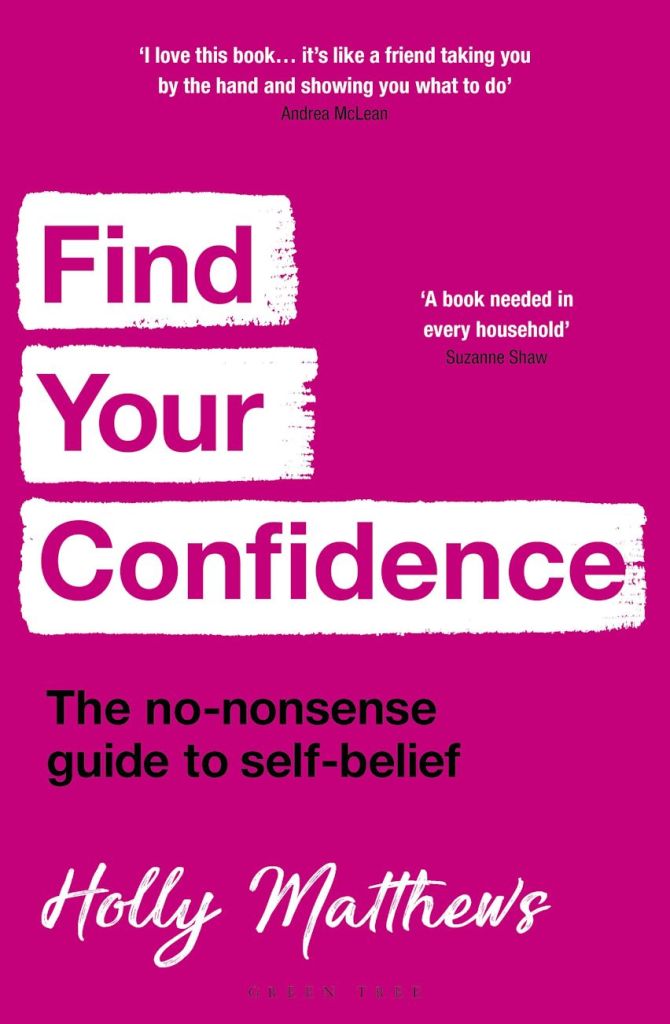
Find Your Confidence: The No Nonsense Guide To Self Belief: New book by Author and Life Coach Holly Matthews.

(image: Green Tree/Bloomsbury and Holly Matthews)

I had the pleasure of reading and reviewing Holly Matthew’s debut book ‘The Happy Me Project’ a few years ago. Holly became a friend when I met her online in 2017 and became one of the first people to sign up to her ‘Happy Me Project’ life reset, which included a workbook and online classes. Holly is one of the most inspirational people I know- not only did she decide to become a life coach and NLP practitioner after the tragic passing of her husband Ross, but she was also an award-winning TV actress and is Mum to two wonderful girls. Holly truly helps people going through difficulties in their lives and so when her new book ‘Find Your Confidence’ came out, I knew I needed to get myself a copy and review it.

The book talks about finding self belief in a wide variety of situations such as in the workplace, at job interviews, at home in every day life. The publisher says,

Each chapter is broken down to focus on a different everyday scenario as Holly provides simple and practical advice for tackling confidence head-on. Learn how to:
– Thrive in social situations
– Develop the tools to be a confident partner and parent
– Ace speaking in public and being assertive in the work place
.’

(image: Green Tree/ Holly Matthews)

The book’s premise is that ‘Everyone can access confidence – it’s just a case of learning how.‘ Holly says, ‘Confidence is not a skill that we’re born with or without but something that can be taught, practised and developed throughout your life. Focusing on both your inner and outer confidence, will help transform your self-belief from the inside out.’

I absolutely love this guide and tips to strengthen self belief at home and in public. Singer and actress Suzanne Shaw has said, ‘ This book is needed in every household for adults and kids. An absolute guide to help you eradicate self-doubt and give you a huge injection of confidence! 

Holly breaks down each chapter into ways to find and build confidence. I truly love the book and know it will be really helpful to me (and others) in specific life situations going forward. Self belief and confidence is something so many people struggle with and having these exercises, links and resources will be invaluable. Working with Holly is very special!

Find Your Confidence: The no nonsense guide to self belief by Holly Matthews is out now in all good book shops (and online).

For links and resources to help alongside the book please see Holly’s website: https://www.iamhollymatthews.com/findyourconfidence/

Coming Home For The Mental Health Awareness Shabbat And Self Care by Eleanor

Happy new year everyone! Gosh its nearly the end of January and I havn’t written a blog for a while so thought I would share some things that have been happening here and talk a bit about mental health stuff too.

Firstly, my mental health is fairly stable at the moment, as has been the case for a number of years. I don’t get typical bipolar depressive or manic episodes on my medications and this year is my 9th year out of hospital , which is always a positive. However, I still suffer with anxiety and stress and get overwhelmed so have to pace myself! I have bad days too where things feel too much but thankfully they don’t escalate into a depression.

So for the positives- I have achieved some huge anxiety wins for me. Since November, I have been on the tube (first time in 3 years), I have gone up to the West End with Rob to the theatre using public transport, my panic attacks have been lessening, I have been able to see more people in person and I also passed my probation at work and have been made permanent (huge win!). I am someone who struggles with agarophobia when I feel more anxious and stressed and going out alone can still be a challenge.

I have been allowing myself to venture into previously anxiety provoking situations- for example, I get cabs alone home from work. I had to start doing this last year and it helped me get back into the world again. It wasn’t easy due to many fears I had but I have been able to do it, slowly. My job is also hybrid so I can work from home too- but getting back out into the world and having kind work colleagues at an office has been such a vital part of my recovery too. My therapist has been so helpful in dealing with the panic attacks and anxiety and I do still get triggered but at the moment on a lesser scale. I still find blood tests, hospitals and general health stuff scary because of what I have been through. I really recommend therapy.

I sometimes do have to cancel arrangements when things feel too much so am sorry to anyone I have had to postpone… its not easy and I hate doing it as I feel bad… but I am learning the balance of looking after me and socialising too. I don’t always get it right but I am trying.

Then, my friend in Bushey, Lee, texted me a few weeks back and asked if I would like to speak in my childhood community for the Jami (Jewish charity) Mental Health Awareness Shabbat. I hadn’t done public speaking about my story since before Covid in 2019, when I spoke with my Dad Mike at Limmud and at Chigwell shul (synagogue, my husbands community). I have had drama training so for me speaking publicly as someone else is OK, but when I have to stand up and share my own story, I get nervous as its so personal. The first time I was asked to speak in a shul at Belsize Square, I made it to the community but my Dad had to give the talk by himself as i was too panicked to attend the service. I managed in time to dip my toe in slowly, always with the support of my Dad and my therapist.

This talk in Bushey felt significant. It’s the Jewish community I grew up in and was a part of until I was 23. I felt like I was going home. The Bushey team told me they had two other speakers, but would I like to speak and share my story with bipolar disorder?

I thought to myself… I am ready, my panic attacks and social anxiety are more under control. To me being asked to come home to Bushey shul was a sign. My Grandpa Harry passed away in 2021 from Covid- and he and Grandma had lived in Bushey since the 1990s, when we were little. Our family lived in both Bushey and Bushey Heath and I studied at Immanuel College, across the road from our home and my grandparents. The area contains so many happy memories for me. I knew the new senior Rabbi and Rebbetzen, as he had officiated at my grandparents funerals and was so kind to our family. My Dad is also still a member of the shul and I still know a lot of people who live in the community too. Its a very special community and one I am proud to be from (and still feel.a small part of despite not being a local anymore).

So, I decided, with my Dad and Rob’s support on the day (and anxiety meds), that I could stand up in shul and speak with the other two speakers on the Shabbat (sabbath) morning. My Mum and step dad were supporting from afar and looking after our guineapigs.

The senior Rabbi and Rebbetzen hosted us for the Friday night which was wonderful as we got to meet lots of new couples and see the Ketts, the other Rabbi and Rebbetzen! For lunch after the service, we went to Lee’s house, which was very special as she was my batmitzvah teacher and is a good family friend.

I was initially told the talk was going to be in a break out room- but on the day it was decided that it would be from the pulpit. Last time I ventured to that pulpit and stood up there was when I was 12 years old, sharing my batmitzva portion of the Torah. The year my Dad was very ill and diagnosed with bipolar. I became ill just 3 years later.

Now, here I was back as a married woman of 34, revealing about the mental illness that had found its way into my family and caused a lot of devastation. However, the main reasons I wanted to stand up and talk about bipolar disorder are because I know that this illness runs in families, many Jewish families struggle with it. I wanted to give the message that you can live with this illness but you can have periods of remission, recovery, you can find hope.

And as I spoke to the audience of people – many of whom I had known since my childhood, who saw me grow up and saw my family eventually leave Bushey for Edgware, I felt humbled. I felt honoured to be asked to speak and I hoped that by sharing my own journey with bipolar (being diagnosed at 16, in hospital twice, the last time in 2014 for a very serious manic episode), that I could touch someone who needed to hear it. My Dad gave me permission to tell his story too.

When I grew up in. the early 2000s, talking about mental illness and particularly in Jewish spaces, was not the norm. I hope that through sharing my own journey and my Dads (he was undiagnosed for 9 years until he was 44), that I will have helped someone.

Most importantly, I felt I had come home. The kindness and warmth shown to me by the members of the Bushey community who I have known since I was a little girl was something so incredibly special and touching. People confided in me after the service about their own struggles. Others thanked me for sharing my story. I was hugely touched by the other two speakers who spoke after me about their own journeys with mental health and their children’s. I won’t name them here in case they want to be anonymous but I learnt so much from them and their experiences.

So I want to say a huge thank you to Lee, to the Rabbis and Rebbetzens and to everyone in Bushey who I have known for years and have loved- for hosting us, for inviting me to talk about something so personal in such a special community. It touched my heart. I really hope it helps.

I genuinely did not know how I stood up there to speak to 90 odd people- what kept me going is knowing I was doing this to help eradicate the stigma of mental illness but also I hope that the words I spoke gave comfort to anyone going through mental illness, that it does get better. It can improve. You won’t be ill forever.

When I was unwell in 2014, Jonny Benjamin MBE was speaking and sharing about mental illness. He taught me that sharing your story to help others is vital. So thanks Jonny for all your support too (whether you knew you gave me the courage or not :).

I also want to thank Jami charity, Laura Bahar and Rabbi Daniel Epstein. I was part of the volunteering team that helped set up the first mental health awareness shabbat. The project has blossomed and is now annual and it is truly wonderful to see.

What I want to clarify is that although I am currently a lot better with my anxiety, it is very much a grey area, day by day thing. That can be hard for people to understand- how one day you can be great with loads of energy and the next you have to stay home and recuperate- self care. But I think knowledge of mental health is increasing now, so do check in with your friends and family and offer a safe space without judgement- its so helpful.

Thank you again for reading this if you got this far. You can do whatever you put your mind too- reach for help from medical teams, medication, therapists and never give up.

With gratitude and love,

Eleanor

x

7 Proven Strategies To Gain Unprecedented Confidence.

(image: Judeus Samson, Unsplash)

Confidence is essential to everyday life, and it can be challenging to find when you need it. But don’t worry – there are simple steps that anyone can take in order to give themselves an instant boost of confidence. So if you want to become more self-assured and feel better about yourself, read on for seven easy tips that will help you build your self-confidence right away. From basic body language tricks to changing your mindset, these tips will help you feel more confident no matter the situation.

1) Understand The Benefits Of Self-Confidence

Understanding the benefits of self-confidence is the first step towards developing it for yourself. There are many advantages to having a healthy level of confidence that can help you overcome challenges, reach goals and enjoy life more fully. People with higher levels of confidence tend to be more successful in their relationships, careers, and academic and financial goals as they are less afraid to take risks.

Self-assured people also have improved mental health, better decision-making skills and a greater ability to trust themselves. They find it easier to cope with negative emotions such as fear and anxiety and feel more in control of their lives. With the right level of self-confidence, you can have the courage to pursue your dreams and live a meaningful life filled with joy, love and fulfillment.

2) Dress To Impress

One of the key things that can give anyone an instant boost in confidence is to dress for success. Clothing can significantly impact how you feel and how others perceive you. Dressing stylishly and with good taste can give you a sense of pride, increasing your self-esteem. The trick is to focus on creating an outfit that makes you feel comfortable and confident – one that best reflects your unique personality, style and essence.

When it comes to picking out an outfit, it’s essential to be aware of colours and patterns that bring out your best features. For example, wear darker or monochromatic colours if you want to draw attention away from certain areas. You may also want to consider accessorising with jewellery or scarves to complete your look, as these items can add texture and dimension to the overall ensemble.

3) Try A New Hairstyle

A new hairstyle can do wonders for your confidence, instantly making you look and feel more attractive. For those looking for a dramatic change, consider going for a bolder cut or colour. If you’re feeling adventurous, try something unique, like an edgy pixie cut or an ombre dye job. You could even wear trendy braids or funky buns if you’re daring.

For those who prefer a subtler approach, simple changes such as adding layers to your hair or tweaking the bangs can give you a refreshed look without drastically altering your appearance. However, no matter what hairstyle you choose, you should make sure that you know how to care for your hair. For example, caring for naturally wavy hair requires different techniques than caring for naturally straight hair. So be sure to do your research before you make any drastic changes.

(image: Alysha Rosly)

4) Improve Your Posture And Body Language

Improving your posture and body language is a great way to exude more confidence. This could be as simple as practising proper posture while walking, sitting or even standing still in place. Standing tall with your shoulders back, chest out and head up will instantly make you appear more confident and assertive. Practising good body language, such as maintaining eye contact, using open gestures and leaning forward when interacting with others, is also essential. Doing this can help you express yourself better and project an air of self-assurance.

Subtle changes in how you interact with people can go a long way in improving your confidence level. For example, instead of crossing your arms defensively when talking to someone, try adopting an open stance with your arms at your sides or folded across the front of your body. Smiling warmly also helps create a sense of trustworthiness and openness which are key elements for establishing connections with other people. These small changes in behaviour can make all the difference when it comes to making a positive first impression and building relationships based on trust and respect.

5) Develop A Positive Mindset

A positive mindset is essential for gaining self-confidence and feeling good about yourself. It’s important to remember that your thoughts have a significant impact on how you feel, so learning to manage and control them can be extremely beneficial. To develop a positive mindset, practising daily affirmations and recognising your past successes is essential. This will help empower you to move forward and tackle any challenges that come your way.

It’s also essential to cultivate a sense of gratitude in order to foster a more positive outlook on life. Practising gratitude means taking the time to acknowledge the blessings in your life, whether big or small. This could be anything from appreciating a beautiful sunrise to recognising family and friends’ support when you need it most. Doing this will create an attitude of positivity and appreciation, which helps build confidence over time.

6) Surround Yourself With Positive People

Surrounding yourself with positive people is an essential part of building your confidence. Positive people can provide you with encouragement, support, and motivation when you need it most. With the right social circle, you can feel more secure and supported in times of doubt and insecurity. Research has also shown that having a strong support system can help with stress relief and improve mental health and emotional well-being.

Seek out those who support your goals and dreams by joining clubs or groups related to your interests. Doing so can open up new friendships that bring out the best in each other. It’s also beneficial to create activities that bring friends together, such as game nights, brunches, and movie marathons—all of which will provide an excellent opportunity to unwind together after a long week. If time or distance prevents meeting up with friends in person, stay connected through video calls, text messages, and even sending surprise packages now and then as small gestures of appreciation for one another’s company.

7) Set Goals And Visualise Success

Setting goals and visualising success is a powerful confidence-building exercise. By setting clear, achievable goals, you can gain a sense of direction and purpose, which helps build your self-esteem. Visualisation has also been shown to be an effective tool for achieving success in life. By focusing on the desired outcomes of a situation or task, you can better prepare yourself mentally for the challenges ahead.

The power of visualisation should not be underestimated because it can help unlock inner resources and hidden potential that remain untapped without this practice. Using mental imagery techniques involves focusing on the end result you desire to achieve, picturing yourself succeeding in each step along the way, learning from any mistakes or missteps that may occur and believing in yourself and your abilities to reach the goal. Additionally, regularly engaging in visualisation allows you to tap into creative problem-solving skills that could lead to innovative solutions you may not have thought of otherwise.

There are many simple things that anyone can do to give themselves an instant boost of confidence. From making physical changes to developing a positive mindset and surrounding yourself with supportive people, practising these daily habits will help increase your self-confidence over time. By setting achievable goals and visualising success, you can unlock inner resources and hidden potential that will open the door for greater opportunities and successes.

This article was written by a freelance writer.

Ready To Boost Your Confidence? Check Out This Guide.

Image Source – Pexels 

When you suffer from low confidence levels, almost every task can seem unachievable. This can have a severe impact on your quality of life, causing you to feel down and miserable at the best of times, so it’s something that you should certainly aim to change in order to enjoy each day to the fullest! Fortunately, this guide contains everything that you need to know to boost your confidence levels like never before, and it couldn’t be simpler to get started today! So, if you’re interested in finding out more, then read on to discover some of the best tips and tricks that you can utilize today to transform the way that you feel about yourself in no time at all. 

Source Some New Clothes 

Is there any better feeling than throwing on a brand new outfit that shows off all of your favourite features? Sourcing some new clothes can be a brilliant way to boost your confidence levels, as wearing a different outfit from your usual comfort zone clothing can help you to feel head and shoulders above your previous self. Stepping outside your comfort zone is where the magic really happens, so spend a day at your favourite shopping mall or online shop and try on/view a variety of different outfits that you love but wouldn’t usually wear. It can be hard to love your body shape and yourself, so take time with this.

You’re bound to find numerous different outfits that you feel more than confident in, especially if you grab those pieces that you wouldn’t usually consider or that you know flatter you! There are so many different places to buy clothing so don’t fret if you don’t have a shopping mall nearby – simply check online and you’ll be able to source countless different shopping platforms filled to the brim with beautiful clothing that you can order for delivery straight to your door! 

Transform Your Smile 

It’s fair to say that your smile is probably one of your most notable features, as it’s a way of greeting someone new, someone you respect or someone you love. Your smile is the first thing that a person is likely to notice about you too, so if you don’t feel confident about your smile, you may choose not to put on a happy expression in any situation.

This can discourage people from wanting to approach you, which will no doubt send your confidence levels even further down, so improving your smile is a sure fire way to feel better about yourself! Invisible braces are one of the easiest and most effective ways to realign your teeth, whereas professional whitening can get rid of discolouration and staining.

No matter what kind of dental treatment that you seek out, make sure you find the best cosmetic dentist to carry out your procedure. You don’t want to risk ruining your smile, so read reviews and check for certifications beforehand.

Practise self love and compassion

Its important to boost your confidence by giving yourself some love too! Work on your mindset, say positive affirmations, learn to love yourself and write a list of your best attributes. Ask friends what nice things they would say about you and keep it in a notebook for those low confidence days! If you find it hard to love yourself or be kind to yourself, reach out to a therapist or coach who can help you to work through confidence and self esteem issues.

This article was written by a freelance writer.

Developing a Newfound Confidence in Yourself this Festive Season.


(image: Pexels)


It’s okay to need to spend some time renewing your confidence now and then. Confidence is often seen as a brick wall that stands the test of time once it’s built, but often, it’s more like a flame, one that must be fed, and felt with quality fuel, in order to keep going. Even the strongest and most audacious people on Earth can be knocked back by life, and they regularly are. This is humbling, because it shows that no matter how good things are, we can always find struggle. However, this also shows an opposite and no less important truth, that no matter how bad things are, we can always improve and come to love ourselves again, building that confidence necessary to moving forward.

This is the essential principle shown by the famous symbol of the yin-yang, the white has a little black in it, and the black a little white. So – if confidence is more of a fire to be kindled than a wall to be built, how can we re-fuel it? Let’s consider that, below:

Finding New Opportunities

It can be worthwhile to find new opportunities in life, even if they’re self-directed, and even if they come straight after an intense experience such as a life setback, trauma, bereavement or a divorce settlement. Taking stock of what your new situation means, how you can use it to your benefit, and what exactly it is that you want can help you move forward with confidence, resilience and a patience that not everyone has. The primary thought to keep in mind is this – new opportunities are always there. You just have to dig for them.

Going For Gold

Going for gold is important, once you have your opportunities or ideals prioritised. It might be that you invest completely in a new hobby or practice, or that you do something you’ve always wanted- a dream, travelling to a new place or something you’d never do normally such as getting a new tattoo. Going for gold- making things a reality , can also help you feel expansive, generating your purpose from one day to the next. No matter if this is getting back in the dating scene, trying to go for a new job, or finally enjoying your freedom, don’t forget to go for gold.

Being Unapologetic

It’s important to be unapologetic about who you are. Why is this? Well, what do you have to apologise for? Your sense of style? Your sexual orientation? Your dreams and desires? Absolutely not, and actually, you should take complete and total pride in these things. This is what makes you, even if, as an individual, you are more than these designated labels. Being unapologetic helps you realize that you have dignity too, and that you’re worth expressing it. Having that mindset can help you curate your best attitude, which may or may not help you become a better, less bitter and more empathetic person. We all need to learn this lesson in life. It’s good to learn it now.

We hope you can develop that newfound confidence in yourself you truly deserve.


This article was written by a freelance writer