5 Risk Factors For Post Partum Depression.

(image: Fat Camera via Unsplash).

During the 2020 COVID season, UK health experts stated that new mothers were twice likely to experience postpartum depression. The report further stated that women with babies younger than six months were the most at risk of developing this mental health condition.

While 47.5% of women may seem on the high side, it is a reality some people have faced in their motherhood experience. While science is still at a loss for the exact cause of postpartum depression, the medical fraternity believes risk factors exist.

  1. Stress associated with new baby care

Without a doubt, baby care is a demanding responsibility. It can take a toll on your physical, emotional and mental wellbeing. Unfortunately, women who are unable to properly manage all these three elements may increase their risks of post partum depression. Feeding, diaper/nappy changes, and constant monitoring can take all your time.

This is why experienced parents believe it is necessary to adopt certain measures to ensure you do not push yourself to the backburner. One of these measures is to sleep when your baby naps. So, how long does it take to sleep train your baby? This question is an issue many new parents struggle with as they streamline their babies’ sleeping patterns.

  1. Preexisting mental health condition

Usually, a female with a preexisting mental health condition is believed to be at a higher risk of postpartum depression. Psychologists believe that the issue of brain chemical imbalances may significantly influence a person’s vulnerability. While the discussion on postnatal and postpartum depression continues to rage on, you may find it helpful to know the subtle difference. Postnatal depression is usually the mental health condition associated with a woman’s depressive mood in the first six weeks after birth. However, postpartum depression (PPD) refers to the period exceeding that.

According to a mayoclinic.org study, women with bipolar conditions may have a higher risk of PPD. Individuals in this category experience more depressive symptoms if the condition is left unmanaged. Additionally, a person with a history of Schizophrenia or Bipolar, may also have an increased chance of experiencing postpartum depression. Usually, women without a prior diagnosis of any preexisting mental health condition can have difficulty understanding why they have PPD.

  1. Family history 

A 2019 report by postpartumdepression.org claims a possible genetic and hereditary disposition to PPD. Although some medical circles believe the findings are inconclusive, there is a strong belief that this mental health condition can run in families. For example, if your mother experienced postpartum depression in her reproductive years, you may have inherited genes that put you at a higher risk. Indeed, this is not the kind of news people want to hear, but it is vital to be armed with this crucial piece of information.

It is worth noting that since specific genes run within biological families, the discussion of genetically inherited PPD cannot be a mere claim. PPD researchers claim that certain genetic alterations during pregnancy could indicate whether a woman would experience postpartum depression. Additionally, these researchers believe that the chances of it happening to a first-time mother may be higher than another who has had multiple births.

  1. A drastic change in image perceptions 

In many instances, women experience weight gain and other image alterations during pregnancy and after childbirth. While some women can bounce back to their former selves within weeks of birth, most take longer. For the latter group, the drastic change in physical appearance can affect their self-confidence and self-esteem. Unfortunately, the inability to embrace these physical body changes could contribute to postpartum depression.

A preemptive measure may be to embrace the fact that a changed appearance is a part of the pregnancy and childbirth journey. If you find that too hard to believe, you may find it helpful to be patient in the ‘waiting period.’ This is the phase when women’s bodies gradually return to the pre-pregnant state. If you can psych yourself up in this period, you can reduce your chances of developing an image-induced PPD.

  1. Absence of social support after birth

Contrary to public perception, single mothers are not the most at risk of absent support. Undoubtedly, the absence of a partner may double up the burden of baby care. However, this issue cuts across both divides. Whether you have a partner or not, the absence of a support group from family or friends can increase your risk of postpartum depression.

Post partum depression can be a difficult struggle, but it is one that can be overcome with support. Reach for help from your doctor or psychiatrist, friends and family and support groups/ other mums too. You may decide to take anti depressants or engage in therapy to help. There are also helplines and charities out there to help new mums with mental health issues, including PPD. You are not alone!


This article was written by a freelance writer and contains affiliate links.

Your Guide To Being Debt Free And With Good Mental Health in 2022

(image: Unsplash)

There is a strong correlation between debt and mental health which is often overlooked. According to the Royal College of Psychiatrists, 1 out of 2 adults with debts, also struggle from mental health and therefore it is something that certainly should be discussed more openly.

Not only can people with mental health such as anxiety or depression face difficulty with managing finances, but parallely, those with debt can often suffer anxiety or depression as a consequence. 

Debt can start with basic credit cards or types of personal loans and get out of control due to shopping online, gambling or by being unable to keep up by losing your job or form of income.

With 1 out of 10 Britons suffering with debt problems, circa 6 million people, it is something that we need to be more conscious about and today we offer some useful guidance and support to be debt free and have good mental health for 2022.

Speak To Your Creditors

The stress of having debt starts with the letters demanding payments and it is remarkable how such a small piece of paper can cause so much stress and anxiety. Also just the feeling of having debt in itself is a painful and uncomfortable feeling.

But one of the worst things you can do is avoid any communication with the creditor. In fact, just speaking to the creditor or company that you owe money to, can ease things. There are always options available to you if you are struggling to pay back a credit card or you are behind on a loan.

For instance, credit card companies can offer you a minimum payment, which is 10% of the balance and you can recur this each month until you want to pay in full. The fees for doing so are very, very small and there is just a tiny negative impact to your credit score – but it offers huge breathing space.

For lenders, they are likely going to be able to freeze interest, delay payment for several weeks and months or spread your repayments over a longer period of time, via something called an arrangement to pay. So whilst you will still owe the repayment, it will certainly help by being able to delay repayment until you can get back on your feet.

And just having some repayment schedule in place can stop any calls, texts or letters coming through the door and take some stress off your shoulders. 

(image: Unsplash: Towfiqu Barbhuiya).

Speak To a Professional 

If you are struggling with debt and are unsure where to turn, consider speaking to a debt professional. Not only are there lots of forums online, but there are charities who will answer you and help you for free, such as StepChange and Citizens Advice Bureau. These establishments will be very used to the types of debts and problems that you are having and they will know very quickly the best ways to calm things down and help limit any further fees and charges being applied.

Speak to Your Family and Friends

Whilst many people are too embarrassed to speak to their close circle of friends and family about their debt or their mental health, you will find enormous strength and support from the loved ones around you.

If you have some debts to pay off, you may find that borrowing money from family and friends can be a simple way to elevate this. It is common for parents to help with any debt problems and not request any interest back. You should always be planning on paying your family back though, because this is always healthy for a relationship. But certainly if you have lost your job and just need some breathing space, this can always be a viable option for you.

Don’t Be Shy to Ask For Help

Being strong in times of mental health or financial problems can sometimes add even greater stress, by just having to hold everything in or still be required to attend birthdays, pay for gifts or go to restaurants with people you love.

But being open and honest with the loved ones around you, can be one step closer to helping with your current problems and getting back on your feet.

Just Realise That Everything is Temporary

You might feel like your debt is taking over, but in reality, it may only be temporary. After all, debt is something that can be wiped out once you have repaid or part repaid.

You may want to avoid selling important things in your life, such as your house and your car, but do not be surprised how much junk is lying around the house that people are willing to pay money for. Whether it is books, CDs, DVDs or clothes, there are people on various apps, Facebook Marketplace or even car boot sales who are interested in buying these things and you could quickly gather a few hundred pounds in very little time.

You will be surprised how quickly you can get your debt sorted – and one step closer to financial freedom and better mental health.


This article was written by a freelance writer and contains links.

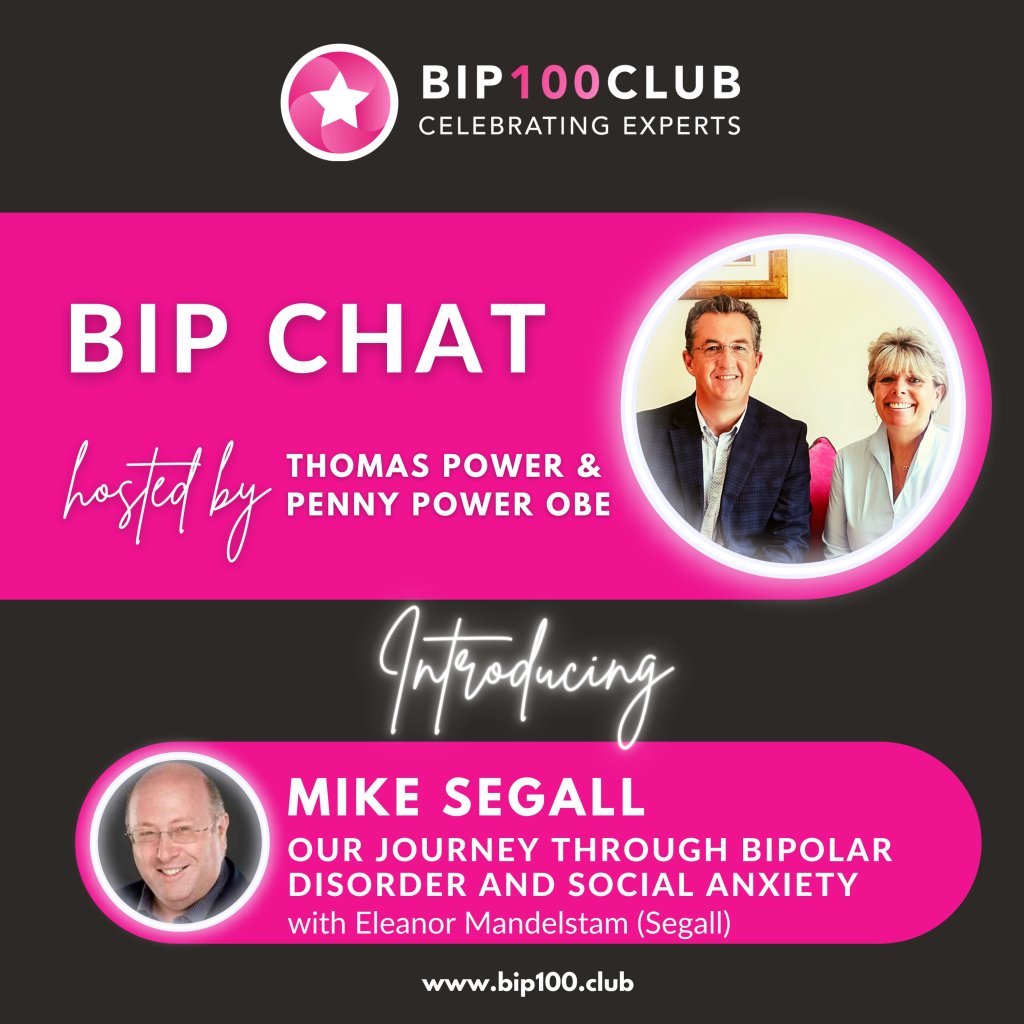
Mental Health Chat With Penny Power OBE and Thomas Power of Business Is Personal with Myself and my Dad Mike Segall. Our Journey With Bipolar Disorder and Anxiety.


Yesterday, 9th Feb, my dad Mike and I were honoured to be interviewed by his friends of many years, Penny Power OBE and Thomas Power of Business is Personal- live on Linkedin, Youtube and Facebook.

They asked us to come on their weekly show to talk about our hereditary journey with bipolar disorder and anxiety and shed light on all things mental health.

It was a real pleasure to talk all about our lives and how my Dad was diagnosed with bipolar just 4 years before me.

Trigger warning: discusses suicidal ideation and psychosis.


Thanks Penny and Thomas! We hope it battles stigma around this much misunderstood illness. Watch here:

https://www.youtube.com/watch?v=Fghp8RNTvX0

Jami Charity See Mental Health Campaign: 36 Hours to Raise £1 Million

(image: Jami)

My dad Mike and I have been fundraising in the past day for a cause which is close to our heart. Jami mental health charity serves our community, the Jewish community here in the UK and beyond.

We have been asking people to donate to Jami’s match funded campaign to raise £1 million to support existing services and also to pilot a new service for secondary school age children. Referrals during the pandemic have risen and mental health support is much needed for under 18’s too.

We are fundraising because we ourselves have been affected by mental health (bipolar disorder) in our family. I was diagnosed at just 16 and had good NHS care in hospital but at the time, there was little support in the Jewish community available for me as a child. Mike was diagnosed at 44, a few years before me, and was thankfully helped to recovery.

We are both great supporters of Jami’s work (I am a Jami volunteer and we have both spoken at the mental health shabbat) and we believe this service will be vital for caring for secondary school children. Services are stretched and children are put on long waiting lists.. this is where Jami would come in to support a child and their family.

Today,, the campaign hit over its £1 million pound target and it is just incredible to see our community funding (badly needed) mental health support ! Its been wonderful to play a small part in this campaign- we have hit over £2000 of funding on our page!

This is so very close to our hearts due to our experiences and those in our community who are struggling. We want to raise as much as we can to support this service- every pound you donate will be doubled so please give as generously as you can. Thank you so much!

Please donate here, we so appreciate it : https://www.charityextra.com/jami/151

Try These Simple Depression Meals When Life Gets Hard by Kara Reynolds

(image: Unsplash)

Being an adult is exhausting.  We’re expected to work, build a career, keep a house, feed ourselves, socialize…the list goes on and on.  When you have kids, that list doesn’t get any shorter — instead, it expands to include keeping small humans alive, healthy, entertained and happy.  Becoming a mom is supposed to be one of the most magical parts of your life, but what they don’t tell you is that it can also be the hardest. Mom life is hard. There’s no point in sugar-coating it.

When that massive list of things that you’re expected to do becomes overwhelming, here are some simple depression meals that can help you eat healthily and keep everyone fed without putting in too much effort or relying on takeout. 

Nutrients That Impact Depression Symptoms

Depression is one of those things that we tend to only talk about in reference to other people, but it’s more common than you might think.  According to the World Health Organization (WHO). around 5% of the global population suffers from depression or around 280 million people. There are a lot of different ways to manage your depression symptoms, all of which should be overseen by a medical professional, but there are some small changes that you can make at home that might have a positive impact.  This includes changing the foods that you eat.

Research has shown that some specific nutrients might help manage depression symptoms include; 

  • Amino acids like tryptophan (found in turkey and chocolate)
  • Omega-3 Fatty Acids (found in oily fish)
  • Selenium
  • Iron
  • Iodine

Switching your diet around to ensure that you’re including these nutrients can help make the job of managing your depression symptoms a little easier. Here are some of my favourite depression meals for those nights when nothing else seems to be helping but you’ve still got a house of little humans to feed.

Charcuterie 

If you were a kid in the 90s, you probably grew up having Lunchables for lunch during the week. They were quick, easy and had most of the nutrients a growing kid might need to get through the day — if you were content to subsist on crackers, deli meat and sometimes cheese. Okay, so they weren’t the healthiest option, but if you make them fancy, put them on a plank of wood and call them charcuterie, they’re one of my favourite depression meals. 

The nice thing about charcuterie is that there is no wrong way to do it.  Pick your favourite meats, crackers, dips, fruits and veggies, and arrange them on a plate or tray.  Then pick and choose what you want to eat. It’s simple, it’s fun, and it’s a great way to make sure that everyone is getting fed when all you have the energy to do is assemble things on a plate.

Fish

Fish might seem like a lot of hassle, but it doesn’t have to be.  It’s also a great option for depression meals because it tends to be high in magnesium which is another nutrient that can help with managing depression symptoms. 

This simple sheet pan haddock bake is a great way to get your nutrients without making a  big mess in the kitchen.   It’s 5 ingredients — haddock, crackers, butter, garlic salt and lemon — and five steps — and one of those steps is preheating the oven and I’m not even sure that counts. If you’re not a fan of haddock, swap it out for your favourite fish. 

Stir Fry

Stir fry is easily one of my favorite meals.  It’s easy, it’s cheap, it’s fast, and you can make it with whatever you have in the kitchen.  Start by picking your protein. Then, pick your stir fry veggies — these can be fresh, canned or frozen. Fry them up in the oil of your choice, top with your sauce, and serve over rice. 

The key to a good stir fry, regardless of your chosen ingredients, is the sauce.  My go-to stir fry sauce only requires a handful of ingredients, most of which you probably already have in your kitchen.: 

  • ½ cup soy sauce
  • ½ cup chicken broth
  • 1-2 tablespoons of cornstarch
  • 1 tablespoon minced garlic
  • 1 tablespoon minced ginger
  • 1 tablespoon brown sugar
  • 1 tablespoon olive oil
  • 1 teaspoon rice vinegar.

Mix and pour, and you’ve got the tastiest stir fry sauce this side of your favourite Chinese restaurant. 

Peanut Butter & Jelly (Jam)

It sounds basic, but that’s because it is.  Peanut butter — and other nut butters, if you have a peanut allergy in the house — are full of healthy proteins and other nutrients that will help you feel full longer.  Pair it with some natural fruit preserves and your favourite whole wheat or multigrain bread and you’ve got a halfway healthy meal that takes almost no time or effort to prepare. 

You can always spice up your PB&J if you have more spoons.  If you’ve got more of a sweet tooth you can add sliced bananas, honey, or even marshmallow fluff.  The possibilities are endless. 

Be Kind To Yourself

As long as you’re eating, it doesn’t really matter what you eat for dinner — but making healthier choices can help to make you feel better in the long run.  Try a couple of my favourite depression meals and see if they make it into your regular meal schedule.

Above all else, be kind to yourself. 


This article was written by Kara Reynolds, editor at Momish.

Reflecting on a New Year 2022: Be Your Own Kind of Beautiful by Eleanor

(image: Neon Filter)

When I was a child, growing up in Hertfordshire, my biggest dream (other than being a wife and mummy one day, because yes even then I dreamt of that) was to be an actress in the West End. I could think of nothing more exciting than standing on a stage, performing and I wanted to go to drama school from age 11. I went in the end at age 23 to do my masters degree at Royal Central in London, after doing a 3 year degree featuring Drama at Goldsmiths. I was so excited to have achieved a dream of mine, even though for many reasons I decided not to act professionally.

However, sometimes, long held dreams, things that are part of the core of our being, of our inner identity, can be a little harder to achieve. Sometimes, we find ourselves on the less travelled path, we feel different from our friends and family because our lives, for whatever reason, are different. We have to consider our health in a unique way. We have to try and surrender our fears to the universe and hope that everything will work out OK.

When I was diagnosed with bipolar disorder at 16, I was still a child and I didn’t know what it would feel like to be an adult, needing a cocktail of medication daily in order to have stable brain chemistry. And how this medication might affect my body and mind- and considering children in the future as a woman with bipolar and all that brings- discussions with psychiatrists, difficult decisions to be made, do I carry my own baby, what will make things safer for me?

As I look ahead to 2022, I know that our dreams are there to be fulfilled. I know that I must trust and have faith that whatever happens, whatever 2022 brings to us, I will always have hope and I know my husband will too.

Wishing you all a happy and healthy 2022 – may all our dreams manifest for the good.

Eleanor x

Sophie Says It’s Okay Not To Be Okay- Esther Marshall Book Review by Eleanor

(image: Esther Marshall/ Sophie Says)

I am absolutely delighted to read and review this incredible childrens book from the Sophie Says series by author and award winning campaigner Esther Marshall (with illustrator Buzz Burry).

Esther’s story is close to my heart as not only is she from my own community but her late sister Rebecca z’l was a doctor who had bipolar disorder and sadly passed away a few years ago, while Esther was writing her second book. Esther has shared that it was her sister who encouraged and inspired her idea to write the childrens books that she couldn’t see for her own child (in terms of positive messages, inspiring rolemodels and diverse characters in terms of both race and gender). Through her sister’s struggles, Esther also began to include positive mental health messages on talking and sharing emotions, self belief and self esteem too.

Esther has said,

“I knew from the second my son was born I wanted to teach him that girls were just as strong and powerful as boys, that people from different backgrounds to him could teach him things and he should listen and be kind to everyone.
The problem was, all the books I could find to read to him had:

  • Mostly male characters (even the animals)
  • Little to no diversity or representation
  • No female role models he could look up to

So I decided that if I couldn’t find the book I wanted to read to my son, I’d better write my own.

I want all children to know and believe that they can achieve their dreams regardless of gender, race, religion or class”,

Esther at Sophie Says has not only thought about what stories she wants to tell through the books, but what messages children reading them will take and absorb. She has partnered with illustrator Buzz Burry and comments, ‘we are helping children bypass harmful stereotypes before they set in by changing the face of children’s literature. Our mission is to enable all children to grow up feeling equipped and empowered to face their futures. To learn more about themselves, others and the world around them. We are helping parents to teach their children positive messages and providing a toolkit to navigate some of the trickier conversations.

These books teach children about:

• Emotional Resilience
• Mental health
• Equal opportunities
• Relatable representation 
• Diversity and inclusion
• Self-belief
• Responsible messaging 

Esther very kindly gifted me copies of her first two books- Sophie Says I Can I will– which is about a little girl Sophie with big dreams and no limits. and Sophie Says It’s Okay Not To Be Okay which focuses on Sophie, Jordyn and Jamie on their journey as they learn that it’s okay to talk about their feelings and it’s okay not to be okay. The books are for children in the early years, ages 3-7 years and reading the books with either parents, carers or teachers is recommended. Esther told me she has ‘tried to create books which cater to both home and school so that it can be embedded in both parts of a child’s life and become the foundation of them building resilience at an early age.’

Sophie Says It’s Okay not to be Okay is a very special book- and one of the first I have seen to address children’s mental health in an age appropriate way, to teach children about their emotions and that it’s OK to feel sad, scared or worried. The book follows Jamie who is looking down and feeling sad but whose best friends Sophie and Jordyn help him through and Sophie tells him ‘its okay not to be okay’. They take him to the zoo to help him feel better and speak to Sophie’s older sister Meghan who is wise and will give good advice. Esther named the character after Meghan, Duchess of Sussex who she met with Prince Harry and other young leaders and was inspired by (she gave them a copy of the book too!)

Meghan (the character) says this important message,

It’s okay to be sad and okay to feel down. Just make sure you have good friends around. There may be days when you feel you’re alone but around us, you’ll always be at home. Its Okay not to be okay”

The book also reinforces self belief and esteem , reiterating that ‘YOU are enough!’ and encourages children to talk about their feelings because it can help. Jamie then says he will speak about his feelings in a place he feels safe in the zoo,

I don’t really know how to describe how I feel
As I can’t work out what’s in my head and what’s real.

He said ‘ a smile may be what you see, but that’s not what I feel inside me

There are times I feel quite alone because these feelings are unknown

Some days I’m happy and some days I’m sad and other days I just feel so bad’

(image: Esther Marshall/Buzz Burry/Sophie Says)

His friends then show him support and love, take him to the funfair, all while reinforcing positive kindness and support- ‘Yes we can!” . The book talks positively about the kindness of friendships always being a safe space to talk. This is so important for children particularly in the early years who are learning to understand their feelings.

Esthers writing is beautiful- on one of the last pages of the book she says ‘Whatever you do, be kind, you never know what’s going on in someone’s mind’.

The book was informed by her sister Rebecca’s struggle with mental illness (bipolar disorder). Esther has said, ‘I had always planned to write another book all around mental health to help children understand their feelings and talk about them more openly, and I sadly lost my sister, Rebecca, to mental illness as I was writing it. So the second book Sophie Says It’s Okay not to be Okay is dedicated to her memory’.

Esther wanted to amplify the message and so it was released on World Mental Health Day. The book provides a toolkit for parents who want to help their children to express their own emotions.

She has been visiting schools and doing zoom readings of her book to share the messages for her. Esther told me, I would love that as a result of children reading the Sophie Says books that children understand these vitally important lessons through a fun way of learning and it helps them build resilience and confidence to go out and achieve their full potential whilst being able to understand and manage both their physical and mental health. .’.

Esther is a true force of nature and someone who inspires me so much. She has just released a third book in the series Sophie Says Be Proud of Who You Are which is about Sophie and the rest of the Sophie Says crew on their exciting seaside adventure as they help their friend Priya build her confidence, as they guide her through believing in herself and being proud of who she is. The perfect book to help your child build their confidence and self esteem!

I would recommend the Sophie Says books to all parents, teachers and carers of young children. I can’t wait to see how this brand grows and what Esther achieves (she has achieved so much already!). She should be rightly proud of her work and all she has created.

To learn more about Sophie Says and buy the books click here

You can read Esthers blog dedicated to her sister here: https://www.sophiesaysofficial.com/blogs/dear-rebecca. (If you are over 18 as contains triggering content)

About Esther

Hi, I’m the founder of Sophie Says and the author of the books within the series. The idea for the first book (Sophie Says I Can, I Will) came to me after having my son, Asher (who is the first and most important reader of all the books!).

I knew I wanted him to grow up understanding that both girls and boys could achieve anything that they set their minds to, but I couldn’t find any books that featured a female lead character (a human one, not an animal one!) that really represented the message I wanted to teach him. So I thought, if I can’t find the story I want to tell, I’d better write it myself.

I was gifted two books in exchange for an honest review. Any links are unpaid. These books are incredible.

5 Ways to Support Mental Health As You Get Older.

Image credit

When you think of older people, what comes to mind? Most likely, you think of a frail older man or woman sitting in a rocking chair on the porch with his or her grandchild. This image is often comforting, but it’s not always accurate. As life expectancy increases, so will the number of seniors needing support as they navigate this time in their lives.

Let’s take a look at the five ways you can support mental wellness for the elderly through compassion and care.

Mental Health: Dementia and Depression

Mental health is defined as a state of well-being in which every person realises their unique potential and can cope with the everyday stresses of life. It encompasses our emotions, beliefs, thoughts, and behaviours related to our physical and spiritual health.

Studies have found that over 50 per cent of older adults with dementia experience depression. This figure becomes even more striking when considering that depression rates are higher in women than men. Depression can lead to loneliness and feeling disconnected from society, which might be exacerbated for those who aren’t familiar with mental health issues.

Depression can also lead to poor self-care behaviours like eating poorly or not taking care of personal hygiene because they cannot enjoy their day-to-day activities such as cooking or cleaning. People may find it challenging to socialise during this time because they’re trying so hard not to feel negative emotions like sadness or anger that might come up unexpectedly during a conversation.

It can be worth discussing how they can get support from a care facility such as Oakland Care where they will have round the clock care and support for their mental and physical wellbeing.

5 Ways to Support Mental Health

  • 1. Be a friend

One of the most important things you can do to support mental health in the elderly is being a friend. It’s easy to think of someone who is elderly as being alone, but they don’t want to be. They rely on friends and family members more than ever before. This can help provide them with some comfort and companionship during difficult times.

  • 2. Have compassion for them

It’s good to show seniors compassion when they need it the most. Not only will this improve their mental health, but it will also give you the chance to see a side of your loved one that you might not know about otherwise.

  • 3. Offer loving care

It’s essential for all people in your life, including elderly family members, friends or caregivers, to remember that every person is different and deserves love on their terms. The elderly need specific forms of care and various types of love depending on their circumstances.

  • 4. Send cards or gifts

Gifts sent with care can help people feel less alone and know they have support. Choosing something special to them.

  • 5 Get help

Sometimes, the best thing you can do is to contact a medical professional such as a GP or hospital doctor who can get them the proper care. 

Above all, make sure they are well supported and cared for.

This article was written by a freelance writer and contains affiliate links.

How to Support Your Spouse with Mental Health Issues: by Kara Reynolds.

(image: Pexels)

Providing support to anyone with a mental health issue is challenging, to say the least. But when that person is your spouse, the situation is even more complicated. At worst, it’s confusing and overwhelming. At best, you might be walking on eggshells. However, being there for your partner during this difficult time will ultimately bring you closer together.

Here are a few ways to support your spouse so you both can emerge from this stronger than you were before. 

1. Help Them Help Themselves 

In the United States, nearly half of those with clinical-level mental health issues don’t seek help. Instead, they try to handle their illness on their own or simply give up hope, both of which can quickly send them into a downward spiral. 

Therefore, if you notice potential symptoms of a mental illness in your spouse, it’s important to encourage them to seek help. Work together to find a therapist, counsellor or physician (doctor) who can provide medical advice or guidance. 

2. Understand the Diagnosis

Once they see a professional and receive a diagnosis, read up on their condition. Maybe you’ve noticed some of the accompanying symptoms but failed to attribute them to their mental illness. Now that you’re more aware, you can stay calm and avoid feeling triggered or attacked when these symptoms show up in everyday life. 

On the other hand, if your partner hasn’t visibly shown signs of depression, anxiety or other issues, you might have been unaware of their suffering. Understanding their diagnosis will help you notice symptoms in the future so they don’t have to go it alone any longer. 

3. Implement Support Tactics

Now that you know what to look for, you might notice more mental health flare-ups, so what should you do when things start going south? Implement support tactics specific to their condition. 

For instance, if your spouse is dealing with depression, you might notice they’ve neglected to wash the dishes or do the laundry. In this situation, consider offering to complete these chores yourself or suggest doing them together.

4. Be a Good Listener

Sometimes, your loved one will want to talk about their experiences or past trauma that may have prompted their mental illness. When they express interest in discussing things, create a safe space for them by being a good listener. 

Pay attention to every detail in an effort to better understand their perceptions and beliefs. Let them talk it out without worrying about how to respond. Then, when you do react, try to do so not from a place of judgment, but of empathy and compassion. Validate their feelings to help them accept their emotions and move on.

5. Be Patient 

It may be difficult to hear, but certain mental illnesses can ebb and flow for years without reaching a resolution. There’s no magic timeframe for recovery.. Therefore, it’s best to let go of idealised timetables and take things day by day. 

This is when love becomes a choice and your commitment to one another carries you through — for better or worse. Instead of running away, resolve to stay steadfast and patient. Instead of holding their illness against them and growing bitter, choose to see it as yet another challenge you can overcome together. No matter how long it takes, you’ll be there to give them support, encouragement and affection. 

6. Practice Self Care

If you’ve ever been on an aeroplane, you know the flight attendant recommends putting on your own oxygen mask before helping others. After all, you can’t assist others if you don’t take care of yourself first. The same is true in your marriage — and every other relationship, for that matter. Therefore, it’s incredibly important that you practice self care and take care of your own mental health before trying to help your spouse with their issues. 

Take time to be alone each day. Revisit an old hobby or pick up a new one like knitting or journaling. Mind-body exercises and autoregulation techniques can also relieve stress and help you tune into sensations you wouldn’t have otherwise noticed. Engaging in these activities will help you stay healthy and better support your spouse during this difficult time. 

7. Keep the Love Alive

Mental health issues and the symptoms that accompany them can become all-consuming. However, it’s important to focus on your relationship apart from this conflict to keep your bond strong and the love alive. 

Spend quality time together, go on dates and continue to communicate openly. Do things that bring you both joy and focus on enjoying each other’s company. Doing so will remind you why you fell in love in the first place and give you more reason to fight for your spouse’s mental health and your relationship as a whole. 

Communication Is Key 

After some time, you and your spouse may begin to resent the patient-caretake dynamic. When these sentiments arise, communication is key. Talking about your feelings will help you understand one another better and may put you on a level playing field again. Once you realise that it’s you two against the world — and not against each other — you can take on mental illness together and emerge on the other side stronger than ever.

This article was written by freelance writer Kara Reynolds, Editor in Chief at Momish.

Christmas For CAMHS- Helping Children in Mental Health Units this Christmas.

(image: Christmas4CAMHS)

Many of you know that I support a charity very close to my heart- Christmas For CAMHS. I volunteered with social media and raising awareness. A few years ago, it got charity status and this is so exciting but it still needs your help and donations, so read on as to why its so important to me and those children in hospital!

In 2004, when I was just 16, i was admitted to an NHS CAMHS (children and adolescent mental health unit) at the Priory Hospital North London for depression and psychosis- part of my bipolar disorder on Christmas Eve. Even though I am Jewish, I remember opening a wrapped present (can’t remember what it was) that the staff had organised for us out of their budget. The other patients also left me notes and cards. But the truth is there was no charity giving us presents and we were away from our families, all very ill- so the staff just did the very best they could under the circumstances.

Then, in 2018, I heard about a charitable enterprise set up by a lovely doctor and trainee child psychiatrist called Ro who wanted to do something about the lack of equality children in mental health units had. She and her volunteers were sending presents to children on CAMHS wards across the UK and asking for donations.

Christmas For CAMHS is a registered charity who provides special Christmas gifts every year for children and young people who are inpatients in child and adolescent mental health (CAMHS) wards across the UK over the Christmas holiday period.

They want to make children and young people who are inpatients over the festive season feel thought-about, special and included – our individual gifts for each young person to keep, as well as gifts for their ward, help us to do this.

They have been hugely supported over the past few years by generous donations from the public and have received much gratitude as a result from inpatient units. However, they are only able to provide gifts with your charitable donations.

To find out how you can donate money or gifts please visit their donations page to see the Justgiving page and Amazon gift list.

They say:

Christmas For CAMHS was originally set up because volunteers saw a huge disparity in the way CAMHS units were treated over the festive period compared to other NHS services for children and young people. They wanted to do something to change that.

Children are admitted to CAMHS units to receive support and treatment for mental health issues, such as psychosis or depression or eating disorders like anorexia. There are no official figures for how many children will spend the festive season in CAMHS units across the UK, though we often give gifts to over 1500 young people. While many members of the public and corporate donors give Christmas gifts to children’s hospitals or children’s wards in general hospitals, CAMHS units, which are usually based away from other services, are often forgotten, or not known about. We don’t think this is right.

Every year they talk to every CAMHS unit in the UK to see what gifts their young people would like. Then, with your generous donations, they buy beautiful and thoughtful gifts for young people in almost every unit across the country.

We also include, where possible, some small fidget toys, a gift for the ward like a board game or sports equipment, some activities to do during the festive period and extra gifts for particularly vulnerable young people who are looked after children or who have a refugee background. We also send them an advent calendar full of inspiring quotes and pictures of cute pets. Sometimes we’re able to include a homemade card or two too.

The gifts are assembled at a packing weekend in Bath by our volunteer elves and then whizzed around the country in plenty of time for Christmas! As a charitable organisation, we rely 100% on fundraising and your generous donations. Each penny goes directly to making the magic happen.

(image: Christmas4CAMHS)

So please, support Christmas For CAMHS- if you can donate a gift or money that would be incredible. As a former child patient, the loneliness you feel is unbearable-lets work together to stop the inequality and forgotten children!

see: https://www.christmasforcamhs.org.uk/