Trigger warning: discussions of FND, illness and mental health.
Hi! My name is Liam Virgo and I’m pleased to share my story with Be Your Own Light blog.
In 2016, at age 13 and after months in hospital, I was diagnosed with severe Functional Neurological Disorder (FND). I was suddenly paralysed and unable to speak. I had all my abilities taken away from me and was left severely disabled. For six months my mind switched off and I didn’t know who or what anything was. I don’t remember the early days of my illness and life before it is a blur. My FND resulted in me being bedridden, unable to walk or talk. I felt trapped inside my own body.
Being a prisoner in my own body felt like my body had completely betrayed me. The psychological impact of being locked inside my own body is still felt to this day. It’s been a long hard battle with FND- painful and very isolating. The doctors aren’t sure what caused my FND. All we know is that it happened and I was severely affected by the condition but without any real explanation as to why this was the case.
However, while I was bed bound I found comfort in a few things and one of them was London. It was my dream to visit the city but because of my FND I wasn’t well enough to go. I was supported by CAMHS (UK NHS child mental health services) for four years and they created London themed progress charts to help motivate me to achieve my wish.
FND hasn’t only affected my physical health but my mental health too. The impact of severe FND left me with difficult feelings and emotional difficulties. The emotional scars of FND are still felt to this day. Over the years I’ve been supported by Psychiatrists and Psychologists. Some of the overwhelming feelings I experienced and still do are anxiety, I felt misunderstood and isolated. I sometimes became tearful and emotional. I was put on different medications over the years but nothing really helped. I also had many other assessments and strategies used to help understand my mental health including a cognitive test and I also had a mood diary.
Because of FND I’ve missed years of schooling as I wasn’t well enough to return to education.
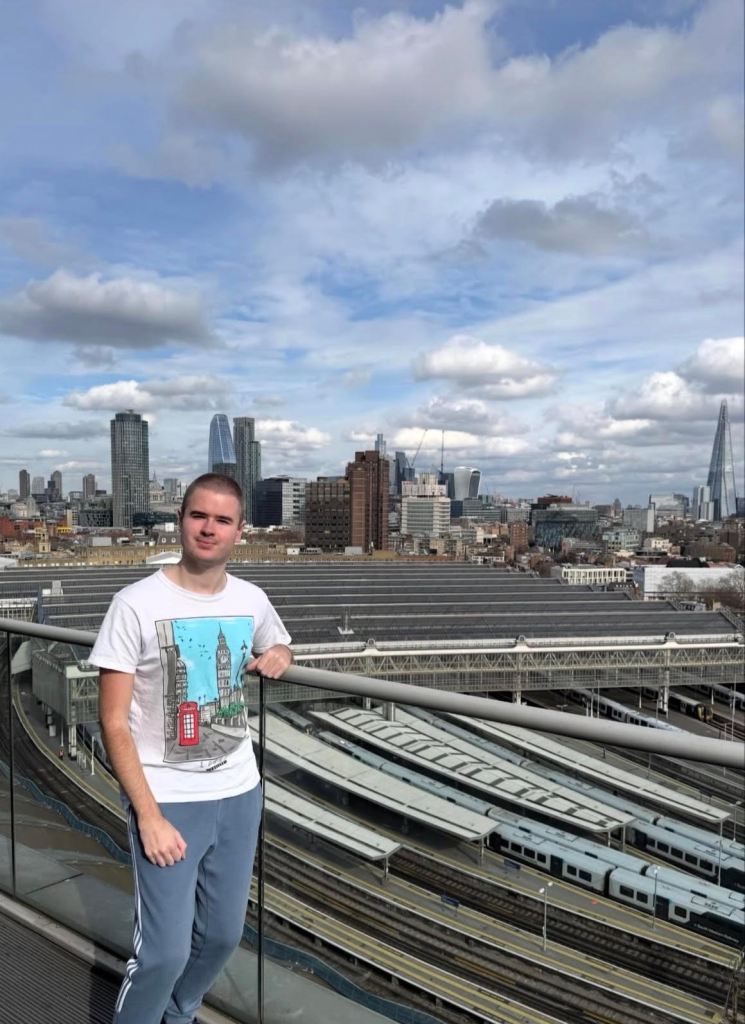
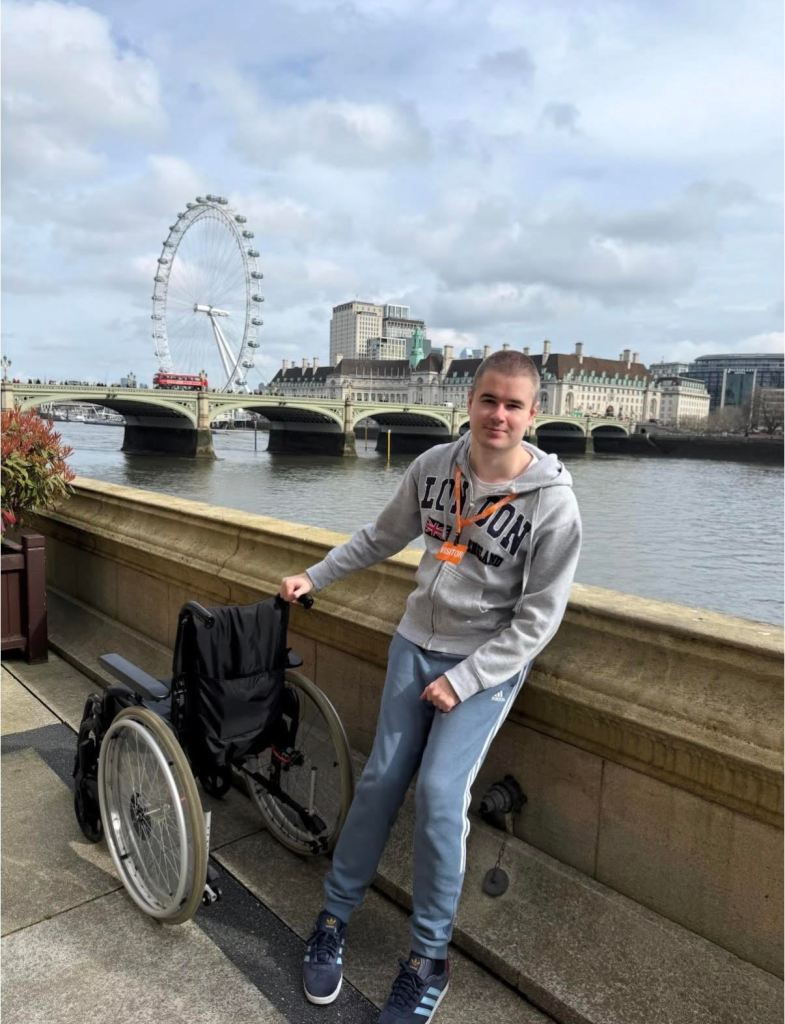
Eventually after three years my physical health started to improve and when I was well enough I made it to London and have been back many times since to my favourite place. I went to London with my parents and I loved visiting Central London. I went to all main sights such as London Eye, Big Ben, Tower of London, Buckingham Palace and lots more.
10 years on, I’m now slowly recovering and learning to walk again. I’m using my voice, the voice that FND stole from me to raise awareness about the condition. I still have very difficult days with FND but I’m learning to live with my new normal and adjusting to life post severe FND. I’ve had a very long journey with FND but I know if I can get through all of that I can get through anything.
At 13, I lost all my abilities to FND but one thing FND could never take from me is my determination.
(image: Liam Virgo)
The medical professionals are unsure if I’ll ever make a full recovery because of the impact of severe FND but I’m now at a stage in my life where I’m able to live with the condition. I’m able to talk and I can move my arms again. I’m no longer bedridden and can walk with support. I still battle with FND daily but I’m determined to never give up hope. I still use a wheelchair but just sitting in a wheelchair is a big achievement for me as I couldn’t tolerate sitting in anything before.
You can follow Liam on his adventures here on Instagram.Thank you Liam for your bravery in using your voice and sharing your story.
On 1st March 2016, I wrote my very first blog about my mental health struggles with bipolar disorder and anxiety. For me, it was an outlet to share with friends and family what I was experiencing after one of the worst bipolar episodes I had faced and after hospitalisation in 2014. I didn’t realise that this traumatic time in my life, would also cause my mental health to dip and struggle further as I developed PTSD symptoms (panic attacks) and sat on a 2 year waiting list for NHS therapy. Professional support was not coming easily during this time, and so this blog became not only a therapeutic outlet but a place to connect with others going through similar things. And to explain to those who had never experienced mental illness, exactly what it can do but just how you can support those experiencing it.
Part of me can’t fully believe that I have been blogging consistently for 10 years. There have been times where I have wanted to give up but this little blog has been my saviour and in truth, helped me to launch a writing career that I did not expect and am so grateful for. It has also helped others to share their mental health stories and products, been a platform for mental health campaigns and charities and I am super proud of the impact we have had. One of our biggest accolades is being a Top 10 UK mental health blog by Vuelio every year since 2018- which means we are having a positive impact and reach!
The blog has published over 800 posts, with hundreds of thousands of views! It is read on every continent with a particularly large readership in the USA (as well as UK and other countries). We have covered so many topics- bipolar disorder, PTSD, anxiety disorders, depression, pre and post natal depression, OCD, BPD, eating disorders, psychosis, mania, schizophrenia, schizoaffective disorder, trichotillomania, addictions (drug, alcohol, gambling), body dysmorphia and mental health topics like child mental health, work stress, emotional burnout, relationships, domestic and sexual abuse, homelessness. We have shared about wellness products and worked with inspiring health and lifestyle brands.
The blog inspired me to share my own story far and wide – writing for mental health charities Mind, Rethink, Time to Change, Bipolar UK, No Panic, SANE and Metro.co.uk, The Telegraph, Happiful, Glamour, Jewish News, Huff Post. Featured in Cosmopolitan, Elle, Yahoo News and other publications. Thank you particularly to the editors at the publications for sharing my story and believing in my mission! This also led to me writing my book ‘Bring me to Light’ which was published in 2019 by Trigger and remains one of my proudest achievements. I then released my children’s book ‘Arabella and the Worry Cloud’ and had some writing featured in ‘The Book of Hope’ by my friends Jonny Benjamin MBE and Britt Pfluger (an amazing experience!). In 2017-18, I was also involved with setting up the Jami mental health shabbat in my community and spoke in several synagogues and at a community festival Limmud with my Dad, about our journey with bipolar. The same year that I started this blog (2016), I also met my now husband, who supports me through all of my writing and mental health work.
As I look back over the past 10 years, to where we were in 2016 with mental health stigma, I am proud to have played a small part in changing the landscape and narrative online around mental illness, particularly bipolar disorder and psychosis. We have many followers on social media platforms and continue to share about mental health and well being and be a resource for all those who need it, so they never feel alone.
(image: Ineffable Living)
Thank you to every single contributor (and every reader) to Be Ur Own Light Blog 2016-2026. Your words and belief in our mission to end the stigma around mental illness have meant the world to me. I hope going forward I can continue to share more real stories, more important information on care and treatment and campaign for better care.
There is still a way to go. NHS waiting lists are too long and care is under funded, leading to not enough beds. Mental health stigma online (and sometimes offline) sadly still remains high. As a society, although we have improved, we still need to fully understand mental health conditions and separate them from the person themselves. I am optimistic that things can and will change.
To everyone reading this going through a period of mental ill health or living with a chronic mental illness, I see you and you are never alone. As a blog community, we can come together to empower each other, so no one ever feels invisible and I hope that I can continue to write too.
Thank you, from my heart, for the past 10 years! Here’s to many more years,
I was hesitant to write this blog as my husband Rob and I have just come back from a truly wonderful holiday in Venice, Italy and I feel so grateful we had that time together. We had been waiting all year to go away properly and we had the best time. We walked over many bridges, saw some beautiful things such as St Marks Square and Basilica, Museo Correr (where I found the most incredible ballroom that was like the one in Beauty and the Beast- see photo below), The Doges’ Palace and we celebrated Robs birthday by going on a day trip by boat to Murano and Burano Islands. Murano is the home of stunning glassmaking and Burano is the island with the colourful houses and its a UNESCO world heritage site, famous for lace making. It was so pretty! We also toured the Jewish quarter- the ghetto in Cannaregio and synagogues, ate lots of delicious food (pasta and tiramisu) and went to Chabad (the Jewish centre) for shabbat, went shopping, took water buses and gondolas and just really enjoyed the time off work and exploring. Venice is a truly beautiful place and at every turn you can see something new and exciting- whether its a boat or gondola going along the canal or towers of meringues in a bakery window, to seeing an old lady shuffling over a bridge carefully with her stick and Italians carrying their dogs in little bags to keep them warm, Venice is full of character and of life. One of my favourite things was seeing the laundry (yes really) being hung out on pulleys over the canal in the Jewish Ghetto area, as they don’t have gardens.
I surprised myself this trip with how much I was able to do exercise wise. My husband loves to keep busy and lives life at a faster pace than I do and there were mornings where I found this hard and felt overwhelmed by the thought of the day, so rested and went out later in the day. But generally, we were able to go and explore some wonderful things together. There were a few days I did 14,000 steps a day! Which for someone who is quite sedentary normally, I was so pleased I could do this. Venice was just a truly beautiful city- we stayed in a lovely hotel that used to be a Palazzo (Palace) and had Murano glass chandeliers, it also was on the Grand Canal and had a Vaporetto (water bus) and Water taxi stop. Exploring the city with my husband gave me such a lovely focus and I was really amazed by how much I was able to do, how much walking I did, which proved to me that I can be active and explore.
(image: E Mandelstam- Museo Correr)
Coming home, I have felt hugely grateful to have had this time with Rob. However, adjusting back to normal life in January is hard anyway, but after a holiday I find my anxiety rises a bit. There have been plans I wanted to do here that I havn’t been able to do. However, I am working on it and on exposure therapy with myself to try and do more things here, go out the house more (as I work from home) and do what I can so that my anxiety doesn’t stop me from living my life.
When you have an anxiety disorder, it can be tough sometimes to go outside, to meet people, to do basic things in your normal environment. The weather is cold and dark early, all you want to do is hibernate. Which I feel is OK! I do notice though that its when I start feeling more anxious and unable to do things and can’t push myself that I have to take a step back and start looking after myself, just plan in a few small things to achieve. Overplanning for me tends to be a disaster! Even on holiday, if there was too much planned in, I found I couldn’t always do it and so we had to adapt plans, but I still did lots so to me, that was a win.
The January blues can be hard whether you have been lucky enough to go away or whether you are here and contemplating a brand new year and what it can bring. Remember to be kind to yourself and make things achievable. Whether you’re looking for a new job or you want to achieve another goal, know it will unfold at the right time. I am not good with being patient, but sometimes we have to be!
If you are struggling with your mental health and you need more support, please reach out to your GP, psychiatrist or therapist if you have one. I find things like taking my medication on time and getting enough rest also help me too. I am also counting the wins of thank G-d being well enough to travel and enjoying that time with my husband. I still achieved things and I have to remember I am capable of more than I think sometimes. The most important thing for me is making I do not spend too much time indoors- as the anxiety can then worsen.
For many people, Christmas time/festive season is a time for happiness, family and bringing people together; however,one in seven UK couples face a hidden grief : infertility..
Research reveals that nearly three in four people battling infertility are burdened with feelings of failure, adding to the hidden grief many already feel during the holidays. In response, mental health platform JAAQ wants to spread awareness around why infertility can be harder during the holidays and what we can do to approach the topic sensitively.
Male fertility coach explains why infertility feels heavier during the festive season
Male fertility coach, Shaun Greenway, who was diagnosed with azoospermia, explains on JAAQ why the holiday season is so difficult: “We got a pregnancy announcement at Christmas, and it took me right back to that place. That hurt. That weird feeling of happiness mixed in with jealousy and anger and pain.” Even after he had twins via donor sperm, the emotions didn’t disappear “It will always be part of me. It’s always there.”
Shaun’s experience highlights a truth many people face – that infertility doesn’t end with treatment or conception; it changes shape, often resurfacing during emotionally charged times like Christmas, a time filled with pregnancy announcements and marketing imagery filled with children and togetherness.
Founder and CEO of Fertility Help Hub, Eloise Edington, knows that pain well. Supporting her devastated husband while navigating her own grief, she recalls when speaking on JAAQ: “Supporting my devastated husband while also equally grieving myself and knowing that we would never have a biological child together meant we were both drowning in separate pain.”
She’s open about the reality of those moments: “Lots of crying, lots of eating chocolate, wine, being together. Not pretty. Not Pinterest-worthy. Just real.” For many couples facing infertility, this is the reality of Christmas – raw, difficult and far from the idealised celebrations we often imagine.
(image: Priscilla Prisceez, Unsplash)
4 dos and don’ts for talking about infertility this holiday season
To make the festive season a little easier, mental health platform JAAQ has revealed four essential dos and don’ts for talking about infertility this Christmas – whether you’re facing it yourself, or want to approach the topic sensitively with others.
Dos:
1. Think before you ask sensitive questions about pregnancy or starting a family and wait for them to bring it up themselves naturally in conversation.
2. Share with someone you trust – If you are struggling, consider speaking openly with someone, whether in person or by message, which can help you to process your emotions. For Shaun, he shared: “Once I did start opening up, that’s when everything got a bit lighter.” Elouise suggests, “Find community, find support, speak to other people who are going through similar struggles. How are they dealing with it? What are they doing to keep the romance alive or to get through this tricky time and enjoy life?”
3. Encourage without imposing your opinion. If someone shares something personal, listen fully before responding. Let them know you are there for them and ask how you can support them, rather than assuming what they need.
4. Create a Christmas/ festive routine that works for you. If traditional celebrations feel overwhelming, permit yourself to do things differently. You might skip the big dinner, start a new ritual like a quiet morning walk with coffee, or find other ways to mark the day that feel manageable.
Dont’s:
Don’t ask personal questions about pregnancy or family plans, especially in social settings
Don’t offer unsolicited advice like ‘just relax’ or ‘it’ll happen when it’s meant to’
Don’t probe with follow-up questions if someone opens up; listen supportively rather than asking questions that might cause unintentional distress
Don’t pressure someone to participate in every activity or ‘get into the spirit.’ Sometimes the kindest thing is simply allowing them to step away
(image: Pereanu Sebastian: Unsplash)
About JAAQ
JAAQ – which stands for Just Ask A Question is a pioneering mental health platform designed to make credible, compassionate support accessible to everyone – especially in the workplace. The platform provides engaging, clinically backed content by connecting users with experts and individuals with lived experience, who answer mental health questions anonymously. This unique, interactive approach empowers people to explore their mental wellbeing in a safe, stigma-free environment.
Sometimes life feels like a constant effort to keep up. We try to do things the “right” way, to make choices that look successful, to follow what others say will make us happy. Yet inside, many of us still feel anxious, confused, or tired. We wonder why it seems easier for others to find peace or purpose.
Human Design offers a different way to understand yourself. It is not about fixing or changing who you are. It is about learning how you naturally work: your energy, emotions, and ways of making decisions. When you understand this, life can start to feel lighter and more peaceful.
You can get a free Human Design Chart online using your birth details. The chart may look unusual at first, but it gives insight into how you are wired, how you connect with others, what drains you, and what supports your wellbeing.
So much of our mental stress comes from trying to be someone we are not. Human Design can help you see that your way of being is not wrong, it is simply different.
For example, some people are made to act quickly and follow their gut. Others are meant to take time and wait until things feel clear. If you are naturally the second type, trying to rush decisions can create anxiety or pressure. Learning your own rhythm helps you slow down and trust yourself. That simple understanding can calm the mind and reduce self-doubt.
Human Design reminds us that there is no single right way to live. Everyone has a different type of energy and purpose. When we stop comparing ourselves to others, something inside us relaxes.
You may begin to notice when your energy feels low and choose rest instead of pushing through. You might stop blaming yourself for needing quiet time or for feeling different. This acceptance helps reduce guilt and stress, which are heavy weights on mental health.
Another quiet gift of Human Design is how it can improve relationships. We often expect others to think, feel, or react the way we do. But when you understand that people have different emotional patterns and decision styles, it becomes easier to give space and kindness.
You may find more patience with your partner or family. You may notice that certain people energize you while others drain you, and you can make choices that protect your peace. Healthier connections grow from understanding, not control.
Human Design is not a quick fix. It is more like a mirror that helps you see yourself clearly. You can explore at your own pace, and you do not have to believe in anything spiritual to find meaning in it. It is simply a way to understand your patterns and give yourself permission to live more gently.
If you want to explore further, you can look into Human Design Software to study your chart more deeply and learn how your energy works day to day. But even just reading your basic chart can spark a lot of reflection and relief.
Good mental health often begins with acceptance. Human Design invites you to stop forcing yourself to fit an idea of how life “should” be and to start listening to what feels right for you.
When you live closer to your true design, life often feels softer. You react less, you rest more, and you start to trust that your own way is enough. There is no competition in that, just a quiet kind of peace.
In the end, Human Design is simply one more way to understand yourself with kindness. And that kindness, over time, becomes the foundation for healing.
This blog post contains sponsored links.Check out more at bodygraph.com
(image: Limited edition Stomp pyjamas by Next, featuring a playful elephant design. 100% of profits support LOROS Hospice’s care for patients and families.)
Now that clocks are going back and its time to get snuggled and cosy, the perfect pyjamas for yourself and little ones have arrived! Teaming up with retail giant NEXT, the LOROS Hospice in Leicester, UK, have come up with some beautiful, stomping elephant pyjamas filled with colourful designs. The designs are inspired by the hand-painted elephant sculptures as part of the famous ‘Stomp Around Leicester’ art trail, which culminated in an art auction.
LOROS Hospice is facing a £2 million shortfall in funding and so NEXT has joined forces with LOROS to encourage the fundraising momentum! 100% profits from the pyjamas go to LOROS., which provides free, high quality compassionate care to terminally ill patients.
Available online now at next.co.uk, with nationwide delivery – every pair sold contributes to LOROS’s vital, compassionate care for over 2,600 patients each year.
There are matching PJ sets for women and children, for family fun! These cosy pyjamas offer more than just warmth and style – they offer a feel-good factor that comes from helping a community lifeline.
Snuggle up for a cause this autumn: by slipping into Stomp PJs, families can stay stylishly warm while making a real difference to LOROS Hospice when it needs it most.
Please note: This post is non-sponsored (no fee taken) so Be Ur Own Light Blog can get entirely behind this wonderful cause!
image: Limited edition Stomp pyjamas by Next, featuring a playful elephant design)
The women’s Stomp PJs are 100% cotton and available in sizes XS – 2XL in regular length, and S – 2XL in tall. The children’s Stomp PJs are also 100% cotton and available in sizes 9-12 months, through to 7-8 years.
Recovery from addiction is a deeply personal and often challenging journey. Each individual faces unique struggles, yet a common thread binds everyone together—the need for healing that nurtures both the body and the mind. Traditional treatments like medical detox and counselling are essential, but recovery extends beyond them. To truly sustain sobriety, many people benefit from incorporating supportive practices that promote physical wellness, emotional balance, and meaningful social connections.
Holistic recovery approaches focus on treating the whole person rather than just the symptoms of substance use disorder. This means addressing the emotional, mental, physical, and even spiritual aspects of health. Within this framework, two practices stand out for their effectiveness and accessibility: yoga as a healing tool and group therapy as a platform for connection and accountability. Together, these methods create a powerful balance, helping individuals not only manage cravings and triggers but also build resilience and long-term stability.
Understanding the Need for Holistic Healing
Addiction impacts far more than just the body. While substances can cause direct harm to organs and brain function, the cycle of dependency often disrupts emotional health and weakens relationships. Recovery programs that focus exclusively on physical detoxification may overlook the importance of mental clarity, emotional regulation, and social support—elements that are equally important in building a healthy life.
Supportive recovery practices go hand in hand with evidence-based therapies to address these needs. By combining structured treatments with holistic methods, people in recovery gain tools to manage stress, regulate emotions, and connect with others who understand their struggles. This integration often leads to improved outcomes and a reduced risk of relapse.
Yoga as a Pathway to Recovery
One of the most effective practices in holistic recovery isyoga for addiction recovery. Yoga provides more than just physical exercise; it is a discipline that strengthens the body, calms the mind, and fosters inner awareness. For people in recovery, yoga offers a constructive way to process emotions, cope with stress, and rebuild confidence.The benefits of yoga extend into multiple dimensions of healing:
Physical strength and resilience: Addiction often leaves the body weakened. Yoga helps restore energy, balance, and flexibility, giving individuals a sense of vitality.
Mental clarity: Breathwork and meditation in yoga reduce anxiety and improve focus, making it easier to navigate triggers and cravings.
Emotional regulation: Yoga encourages mindfulness, helping individuals respond to stress rather than react impulsively.
Spiritual connection: For many, yoga fosters a sense of purpose and inner peace, providing a meaningful counterbalance to past struggles.
Practicing yoga in recovery also creates structure and routine, both of which are essential for maintaining sobriety. Whether practiced individually or in a group setting, yoga can become a safe space to reconnect with oneself and rediscover a healthier way of living.
(image: Unsplash: Helena Lopes)
The Role of Community in Recovery
While practices like yoga are powerful for personal healing, recovery is not meant to be a solitary process. Addiction thrives in isolation, and overcoming it requires connection, support, and accountability. This is where community-based approaches such as group therapy play a vital role.
Human beings are social by nature, and support networks are key to emotional resilience. In group settings, individuals can share their stories, listen to others, and gain reassurance that they are not alone in their struggles. This shared experience often reduces shame and fosters empathy, which are critical for long-term healing.
Group Therapy as a Cornerstone of Support
Group therapy for substance abuse provides a safe and structured environment where individuals can open up about their experiences. Guided by a trained therapist, group sessions encourage honesty, accountability, and peer support. Unlike individual therapy, which focuses on one person’s journey, group therapy highlights the power of collective healing. Key benefits of group therapy include:
Shared understanding: Listening to others with similar struggles helps normalize feelings and experiences.
Accountability: Members often motivate each other to stay on track and celebrate progress.
Skill-building: Sessions may teach coping strategies, communication skills, and relapse prevention tools.
Hope and inspiration: Seeing others succeed in recovery can inspire confidence and determination.
Group therapy also helps individuals rebuild social skills that may have eroded during addiction. By practicing healthy communication and learning to trust again, participants strengthen the foundations of meaningful relationships outside the therapy room.
Balancing Individual and Collective Healing
The combination of yoga and group therapy illustrates how both individual and collective healing practices can work hand in hand. Yoga allows individuals to reconnect with themselves, build strength, and find calm in the face of challenges. Group therapy provides the encouragement and accountability that comes from shared experiences. Together, these practices address both the internal and external dimensions of recovery.
For many, the integration of body-focused and community-based approaches creates a balanced recovery journey. It ensures that healing is not only about overcoming physical dependence but also about cultivating emotional stability and social connection.
The Long-Term Impact of Supportive Practices
Recovery is not a short-term process—it is a lifelong commitment. Supportive practices like yoga and group therapy provide tools that individuals can carry with them long after formal treatment has ended. These practices foster resilience, helping individuals manage stress, cope with setbacks, and continue growing on their path to wellness.
Some people incorporate yoga as part of their daily routine, using it as a grounding practice. Others rely on ongoing group sessions or peer support communities to maintain accountability. The beauty of supportive recovery practices is their adaptability—they can evolve with a person’s needs and provide consistent strength throughout life.
Creating a Sustainable Recovery Lifestyle
The journey to sobriety is about much more than simply avoiding substances. It is about creating a lifestyle that supports health, purpose, and connection. A sustainable recovery lifestyle often includes:
Regular physical activity, such as yoga or other mindful exercises.
Engagement in meaningful work, hobbies, or service.
Building strong, supportive relationships.
When individuals embrace both holistic and therapeutic practices, they are better equipped to live fulfilling lives beyond addiction.
Final Thoughts
Healing from addiction requires more than detoxification or medication—it requires a comprehensive approach that nurtures the mind, body, and spirit. Practices like yoga provide personal healing and inner balance, while group therapy fosters community, accountability, and shared growth. Together, they create a powerful foundation for lasting recovery.
By embracing supportive recovery practices, individuals not only overcome addiction but also rediscover the strength, resilience, and joy needed to build a healthier and more purposeful life.
An award winning nutritionist and beauty therapist who’s helped hundreds of women globally to navigate menopause with wellness in mind is celebrating having climbed the Amazon book charts to become a No.1 Bestselling author, outperforming the likes of Davina McCall, Lisa Snowdon and Dr Louise Newson, with new Menopause manual –‘Have a Magnificent Menopause: A Straightforward Guide to Looking Good and Feeling Great’
Alison Bladh, 56, who is also a clinical supervisor for Nutritional Therapy at the University of West London, splits her time between the UK and Sweden was excited to see the book reach the top 30 bestselling books overall on Amazon Sweden across all genres including fiction and non-fiction, one of the only health titles to break the coveted Top 50, highlighting the demand for evidence-based, practical menopause support.
Offering women over 40 a no nonsense guide to thriving through perimenopause, menopause and beyond with or without Hormone Replacement Therapy, this straight-talking manual is already being praised as “a breath of fresh air in the menopause space”, and described as “like having a wise best friend, nutritionist and beauty therapist rolled into one.”
Sharing practical guides, check lists and real women’s stories alongside clinical research and scientific studies, Alison’s mission is simple – to help women over 40 take back control of their bodies, rediscover their energy, and feel confident and empowered in their skin again, after researching menopause became a passion of hers, having witnessed her mother suffer in silence at a time when the topic was taboo.
“Menopause, though more openly discussed in some countries today, is still stigmatised as something negative”, she said. “Growing up in a strict British household, I remember watching my mother and the women around her, all navigating perimenopause, suffering through what was then simply referred to as “The Change”. Nobody talked about it. It was shrouded in silences, misconceptions and misinformation.”
“While things are improving slowly in some parts of the world, this isn’t the case everywhere and there’s still a lot of work to be done. Women deserve knowledge, support and care during this natural stage of life. Menopause isn’t about fading into the background or becoming less relevant. It’s about stepping into a new kind of power, one where experience, wisdom and purpose shape the next chapter of our lives in ways that extend far beyond motherhood.”
The book tackles common challenges, everything from fatigue, brain fog and weight gain to confidence, skincare and mindset, helping women feel vibrant and in control at every stage of life. The tone is supportive and straight talking, cutting through confusing advice and adresses “menowashing” to deliver clear, evidence based solutions that work.
“Menopause is not something to ‘get through’ it is a wake up call to start putting yourself first” she says. “You deserve to feel in control, strong and beautiful and this starts with understanding your body and taking small yet powerful steps each day”.
“Have a Magnificent Menopause: A Straightforward Guide to Looking Good and Feeling Great” will resonate with any woman who has ever stood in front of the mirror wondering where she went and is now ready to find her again”, she added.
(image: Alison Bladh/ Chocolate PR)
Here she shares 5 practical tips from the book to help women start feeling better today:
Alison’s Top Tips for ‘Thriving, Not Just Surviving’
1. Follow the 90/10 Rule Healthy eating doesn’t have to mean restriction or perfection. The 90/10 rule is about nourishing your body with supportive foods 90% of the time like protein, healthy fats, fibre, leafy greens and slow-release carbs while still leaving room for 10% of the treats that make life enjoyable. Whether it’s a slice of cake with friends or a glass of wine on a special occasion, this balanced approach helps women stay consistent without guilt. It’s realistic, sustainable and removes the all-or-nothing mindset that often leads to frustration. Eating well should be empowering, not punishing.
2. Start the Day with Protein, Not Caffeine Reaching for a coffee first thing in the morning might feel like second nature, but it can actually spike your cortisol and send your blood sugar on a rollercoaster. Instead, start your day with 20–30 grams of protein to support hormone balance, energy, focus and mood. A protein-rich breakfast such as eggs, Greek yoghurt, tofu scramble or a protein smoothie helps stabilise your blood sugar, reduces mid-morning crashes, and keeps cravings at bay. This small shift can make a big difference to how you feel all day long.
3. Keep a Cooling Toolkit in Your Bag Hot flushes and sudden temperature spikes can be distressing, especially in public. That’s why I always recommend keeping a “cooling toolkit” with you. This might include a peppermint facial mist, a mini hand fan, cooling wipes, or essential oil rollers (peppermint or lavender work well). Having something to soothe and cool you down helps you manage symptoms discreetly and confidently. It’s a small act of self-care that reinforces one important truth: you are not powerless, you are prepared.
4. Digital Declutter for Hormonal Health Our devices might keep us connected, but they can also wreak havoc on our hormones. Constant notifications, social media scrolling and screen time raise cortisol levels, interfere with melatonin production and contribute to stress and poor sleep, all of which worsen menopausal symptoms. A daily digital break, even just 20–30 minutes, can calm the nervous system, ease anxiety, and support better emotional balance. Turn off the noise, step away from the screen, and reclaim some stillness. It’s one of the simplest ways to feel more grounded.
5. Swap Wine O’Clock for Magnesium Time It’s tempting to unwind with a glass of wine at the end of a long day but alcohol can disrupt sleep, trigger hot flushes and make anxiety worse. Instead, create a relaxing evening ritual with magnesium. A warm magnesium-rich drink or a magnesium supplement can help soothe your nervous system, relax tense muscles and prepare your body for restful sleep. It’s a healthier wind-down option that supports hormonal balance and helps you wake up feeling restored instead of groggy. You’re still prioritising yourself just without the hormonal backlash.
You need daily habits in your life for mental clarity; these daily habits are often vital for wellbeing. Sometimes your mental health might take a dip, you might feel drained, depressed or feeling like you are left behind and cannot keep up. Here are some daily habits that can help to boost your mental health:
Practice Morning Mindfulness
Mindfulness can include simple tasks such as starting off the day on a positive note and setting good intentions by writing or speaking affirmations or engaging in prayer. Every day after you get up, you should make your bed as this is a small exercise that will only take two minutes of your day and prepare for a good day. As soon as you get up, do some simple, mindful stretches like swinging your arms in circles or doing the cobra pose to prepare your body for a focused day quickly.
Move Your Body
You should move your body and avoid sitting in one place, as moving around ensures that blood flows to your brain better and faster, providing it with oxygen, and activities like taking a stroll, especially early morning strolls when the weather is nice and there is calm in the air, are also good for you. You can breathe in fresh air and it makes you look at things from a new perspective. So, take morning or lunchtime walks so you may be prepared for the day. You can also do activities like yoga which boosts mindfulness and helps you get mental clarity. It can also calm your mood, and you can also do cardio workouts like cycling and running to give your brain the pump of blood it needs and help you think more clearly and better.
Fuel Your Brain
If you want your brain to think clearly, you must provide it with the right type of nutrients, too. You should make a list of foods that are good for your mental health and incorporate them into your daily routine. You can have fruits and vegetables, healthy carbs and proteins as your brain cells need nourishment to think better, too! You should also drink water and get yourself hydrated, as water makes your blood move around the body faster, wakes up your brain, and increases brain function. Also, you can take supplements like chlorella, a high protein plant. Some chlorella benefits include detoxification and improved focus, which are good for mental clarity.
Journalling for Emotional Release
There are some activities, like journalling, that you can do at the end of the day to let go of any stress that your body has. You can write about the things that went wrong in the day and what went well. Take your time to reflect on things so you do not end up overthinking things and overstimulating your brain. You should have a journal by your bed so if you feel like some unprocessed thoughts are coming to you, you can vent them out in your journal, which should help your mental health.
Sleep Better
Establish a bedtime routine for yourself that is unique to you so that you can look forward to it every night, and it helps you sleep better. You can read a book, lower the brightness of the lights in your room, and have decaffeinated tea or water. You should also avoid screens before going to bed, the LED light is not good for your eyes and does not let you sleep well. The use of screens has proven to have a strong link with less sleep time and delayed sleep.
Daily activities for your mental health require you to be consistent and true to yourself if you really want to see the results.. So, start with something small like making your bed and practicing mindfulness and then keep on adding some activities to your routine so by the end of a few days, you meet with a better, improved version of yourself, one with a clear mind and better health.
Self care is so important, so why not try a Magnesium Bath? Magnesium baths rely upon magnesium salts (typically magnesium sulfate or magnesium chloride) dissolved in warm water to create a solution with beneficial qualities. Magnesium ions are absorbed through the skin during your soak through a physical process called transdermal absorption, which relaxes muscles by balancing nerve impulses to muscles, and it also reduces inflammation. Magnesium is also beneficial in the production of cell energy as it helps in the production of ATP and enhances the quality of sleep, due to the control of melatonin release. Here we present five evidence-based ways magnesium baths support physical recovery, skin health, mental clarity,
Deep Absorption of Minerals in Warm Baths to Revitalise Muscles
By soaking in warm water with magnesium bath flakes, you’ll be getting a concentrated dose of this vital mineral that will be absorbed directly into the skin. Magnesium ions penetrate the skin through the flakes, entering the muscles when they disrupt pain transmission and minimise the markers of inflammation. This is selective absorption and initiates recovery of active stress, therefore, heals stiffness as well as increases flexibility. The sources of tensions dissolve, and your previously tensed muscles turn into elastic cords capable of moving in any direction. Habitual soaks enhance soothing properties, so, you can live an active life, without muscle soreness.
Enhancing Mental Clarity with Sensory-Rich Immersion
Warm water helps lighten the burden of daily challenges, and magnesium gratefully taps into neurotransmitters like GABA and tones the impartiality of moods. With every deep breath of subtly scented extra essential oils or plant infusions, every breath is gets a little stronger, until you can relax deeply. You become able to go back into your environment, and you can go and do things in a purposeful manner. Recharging of the mind roots you throughout the day in a state of productivity.
Lifting the Home Spa Atmosphere
More than minerals and water are required to turn a typical bathroom into a sanctuary. You can use soft towels, controllable lights, and adornments that create an atmosphere that welcomes relaxation. Include small-scale candles on the periphery of the tub with flames that provide soft illumination. The slightest bit of greenery helps bring nature inside for relaxation.
Gentle Agents to Boost Skin Health with Nourishment
In addition to relaxing the muscles, a magnesium bath helps to give the skin a glow. The mineral helps to hydrate and repair the cells due to its ability to attract moisture to the epidermal layer. During soaking, scrub a bit with a side brush or natural sponge to scrub off dull cells, and in turn, boost circulation. Pat dry and trap moisture by using a light natural oil or serum, and the skin will absorb the nutrients. As time progresses, you will feel that your skin has become smooth already and has a healthy glow that is a result of constant renewal with the help of minerals, so your skin will feel refreshed too.
Retraining to Have Restful Sleeping Routines
Magnesium soaks in the evenings, prepare you to take a lovely, restorative sleep with the help of balancing various hormones that control your circadian rhythm. The temperature reduction when exiting the bath into cool air is an indication to your body that you should take a rest and relax. You will sleep more comfortably, more deeply, with less anxiety and you should end up waking up in a good mood.
Magnesium baths are refreshing and also spiritually enhancing. Muscles relax, minds can be more focused, skin becomes radiant, and sleep comes as easily as breathing. This habit goes beyond relaxation and becomes a specific gesture of care taken towards yourself, one that re-echoes in all the levels of your life. By doing that, every bath will become the ritual of rejuvenation, a special moment created especially in your favour where the stress of the day is washed away and health prevails.
This article was written by Miranda Spears and contains some sponsored links.













 beurownlight.com