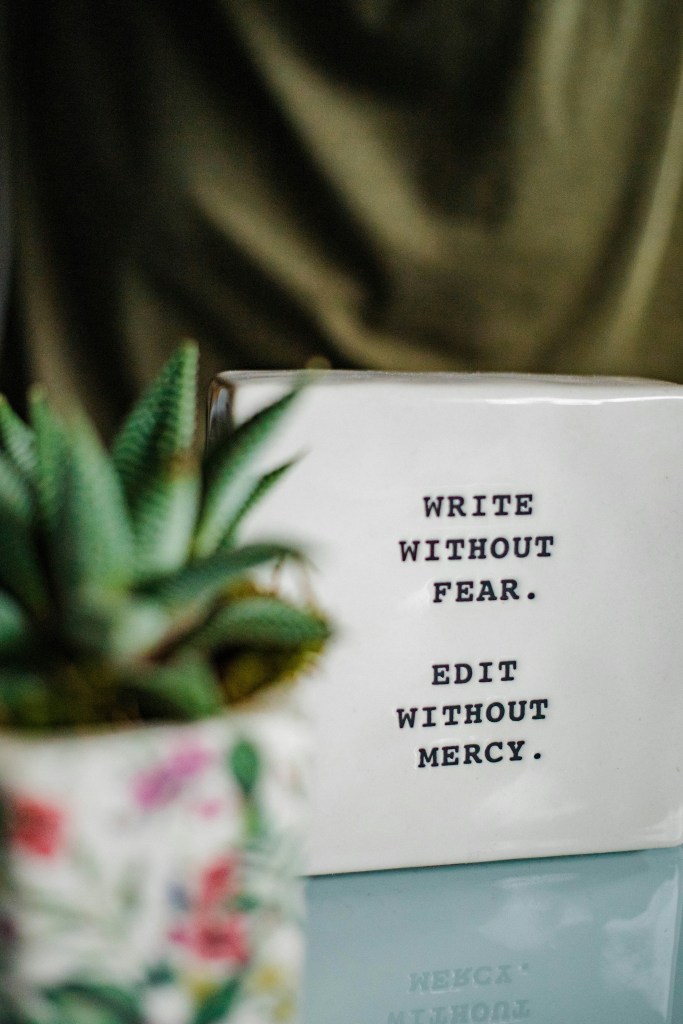
Living With Imposter Syndrome As A Writer by Eleanor

(image: Unsplash)

I wrote about this a little bit a few days ago on my Instagram and Facebook but thought I would write a longer blog here.

So here goes…

In 2016, I started this little blog as a place to share my emotions and feelings around living with anxiety and panic attacks, processing trauma I had been through a few years before and just as a place to vent to family and friends. Nearly 10 years later, I and many contributors have kept this wonderful corner of the internet going and I am very grateful.

From 2016 onwards, I began to write my heart for mental health charities and national publications after sending pitch emails to them about my more unusual story of being diagnosed with bipolar at 16 and hospitalised twice by 25. At the time, bipolar was way less talked about (with psychosis and hospitalisation still a major taboo) and I wanted to be a part of changing that.

Amazingly everything started to click into place after I began online networking with editos… I was writing articles for Metro.co.uk regularly on mental health (Thank you Yvette!), I was featured in Glamour and the Telegraph (thank you editors!), I started writing for Jewish community papers and for a new magazine at the time, Happiful. Then, I decided I wanted to submit my journey with bipolar from 16 onwards to Trigger Publishing as a memoir and signed with them for a book deal in 2018. 2018 was a year of manifestation and synchronicity for me in many areas of my life.

Then, I was asked to write my story to be featured in the Book of Hope by my friends Jonny Benjamin MBE and Britt Pfluger alongside celebrities including Dame Kelly Holmes, Zoella, Alastair Campbell ,Elizabeth Day, Joe Wicks and many others including friends in the mental health writing world. Seeing my name on the cover alongside all these successful people I admired was something else and again my story of hope against adversity was being shared globally to help people who needed it.

My own book Bring me to Light came out in November 2019 just a few months before the Covid Pandemic and so I couldn’t get out there to promote it fully but it still did well on Amazon and was sold in Waterstones and globally. Its something I am hugely proud of despite sometimes feeling shy that my story is out there for all tom read.

Since 2020, I have kept blogging, writing for Metro.co.uk from time to time and I finally self published my children’s book Arabella and the Worry Cloud. However, imposter syndrome has really kicked in, let me explain.

The start of my writing career happened when I was unemployed due to my mental health. I had to leave a face to face teaching job due to my anxiety. I had no idea that this little blog for friends and family would turn into so much. In fact I would say it was a total whirlwind. I was only 30 when I signed my book deal (independently without an agent). I was just 28 when I started writing openly about my mental health and I often feel like an imposter! That little voice that says you’re not good enough because…

I am an independent writer which means I don’t yet have an agent but I have been published before by several publishers and I have also self published my kids book. So I worry that I won’t ever find an agent, that my dream of being a professional author with a team around me (agent, marketing team, earning good money from my craft) seems out of reach. In this industry as well when you pitch to agents to take on your book, it comes with a lot of rejection. My children’s book for example was rejected by Pan Macmillan (although I was fortunate to know someone there who was able to look at my manuscript). I know I need to keep going to help others, but sometimes it feels super lonely and you have to be so resilient. Rejection is normal but its hard.

I chose not to go into journalism full time in a news room for health reasons but I love to write freelance from home and hope to continue to do so.

I guess I feel like an imposter because my career that I did work hard for, came after my former editor Yvette connected with me on Twitter, she liked my blog and commissioned me to write mental health articles (despite at that point never meeting). This was the same for so many incredible editors who gave me their time and knowledge including Naomi Greenaway at the Telegraph , Deborah Joseph (formerly of Glamour) and Rebecca at Happiful. I truly feel blessed these women championed me and my writing.

So I guess what I want to say is that its OK to feel like you aren’t there yet, like you aren’t good enough, like the mountain of where you want to be is too hard to climb. What I have found is when people believe in you, in your ideas, in your story and when you can find that inner confidence and believe in yourself- incredible things can happen. You can manifest your dreams and I do believe one day more will manifest (even if my little imposter voice speaks up).

I want to end this story with something quite relevant that haunts me to this day. I was staying at my Dads when I was writing my first book, in the middle of the Buckinghamshire countryside at the time. I was more ‘high profile’ in the mental health world and very prolific on Twitter back in 2018-19 and so I received an email invitation from a producer at BBC Women’s Hour for a segment they were doing about bipolar. She asked if I would come on the show to talk about it. My fear/ panic about being exposed and too seen (and not worthy) meant I didn’t feel able to do it and I have kicked myself ever since! If anyone from Women’s Hour is reading this (haha) please do get back in touch!

But seriously- sometimes fear and anxiety stops us from doing what we most want to do but are too frightened to do. I still feel scared to give talks about my kids book. I look at others on Instagram who are Sunday Times Bestsellers and have agents and I think to myself….will I ever get there? Unfortunately social media comparisonitis at age 36 (i know I am still young) is still rife.

I think I have to remember that its OK to feel like this, as my friends have told me, so many creatives do. And its ok to take my time, work hard and see where it lands. It’s also OK to take other jobs while being a writer isn’t paying a main income too. I feel imposter syndrome in other areas of my life too but thats a blog for another day.

Do you feel imposter syndrome?

Thanks for reading,

Ellie x

What Makes A Great Hypnotherapist? by Kevin Whitelaw of Perma Hypnotherapy.

(image: Chelsea Gates, Unsplash)

On a regular basis, I speak to people who are set to benefit from hypnotherapy: they have a compelling need to make those changes in their lives, they take responsibility for the outcome and, they’re looking forward to enjoying the benefits. Solution Focused Hypnotherapy is an effective, modern, evidence-based talking therapy. It is designed to support you in making positive changes leading to your sustained wellbeing.

Often, people get a bit stuck when looking for a therapist as they try to find the right therapist for them at that time.

So, what makes a hypnotherapist the right hypnotherapist for you at the moment?

The over-riding factor is your gut instinct: rapport between therapist and client is so important in achieving the best outcomes for wellbeing. What are your feelings as you look through their website and speak to them?

Beyond that, consider the following – any credible hypnotherapist would be happy to confirm the below.

Make sure you consider these when speaking to a hypnotherapist for your mental health:

  • They are open about what certifications they have, from where and what continuous professional development they do. Remember that the term ‘diploma’ is, in itself, meaningless. The key things to look for when assessing a certification are how much work did it take to obtain, who accredited it and what competence does the accreditor have?
  • That they are required to undertake a level of continuous professional development.
  • They are members of recognised professional governing bodies. There are many of these – The key thing to look for is the organisation’s affiliation with the National Council for Hypnotherapy and / or the Complimentary and Natural Health Care Council. Nb – this holds true for the UK. Other countries – especially the USA – have their own arrangements.
  • That they have Professional Indemnity Insurance (PII). This is not to expect anything to go wrong but it does give a degree of assurance as to the quality of their qualifications. Each broker offering PII to hypnotherapists has a list of certifications they accept as being suitable – and they are very shrewd about who they insure.
  • They have lived-experience of the issues you have chosen to resolve. Nb – there is no right or wrong with this one. You will find therapists who both agree and disagree with this point.
  • They are clear about their overall balance between therapy and hypnosis.
  • They allow you to set your own goals and they work to your (rather than their) agenda.
  • They encourage and support you to become proficient in self-hypnosis and managing your wellbeing for the long term.
  • They are happy to share content, resources, and references with you to give a deeper understanding of what they, and you, are doing.
  • They focus on you achieving your goals efficiently – there are no signs of them spinning things out for extra sessions.

(image: Marcel Straub, Unsplash)

 Ready to break free? 

The author Kevin Whitelaw helps adults across the globe overcome anxiety, stress, and self-doubt using Solution Focused Hypnotherapy. Book your free consultation today.

Social Anxiety: Find What Makes You Feel Alive. by Eleanor

(image: yourhappyplaceblog)

For those of you who have read my blogs or book, you will know that I have lived with mental health issues since I was young (diagnosed with bipolar at 16, depression and anxiety at 15 and lots of anxiety as a younger child).

My bipolar is medicated so that my brain functions fairly ‘typically’ ie i don’t get mania or severe depression, but I do get bad anxiety and milder depression.

What started as a teen to protect me from harm, became a full fledged panic disorder and social anxiety. Hiding away became my way to protect myself from the world, from people’s negative judgements, from life.

Even now at 36, I navigate a lot of the same anxious thoughts, behaviours and feelings. I don’t often share this part of my life anymore but I feel it is essential.

Yesterday, after having a particularly bad patch with anxiety where I cancelled many arrangements, stayed inside a lot etc, I spoke to my wonderful therapist because I needed to unpack what was going on for me.

In the course of the discussion about the different issues going on for me that could be causing the social anxiety/agoraphobia element I realised this key truth.

I have built metaphorical walls around myself in many parts of my life (my body, my friendships, my relationships in general), to keep myself safe from trauma I have faced. Part of that comes out as social anxiety as a protection mechanism and there’s time when that worsens. And times when its better.

But what I did realise is this.

I would like to feel properly alive and start taking down some of the walls, so I can live. Sometimes, the walls keep me safe and cosy. Sometimes they are not serving me anymore. I also want to boost my self esteem so that I stop retreating and hiding, or if it happens as it will, to find a way to work with it. I have had EMDR before so it may be returning to that for a while to unpick the knots!

I am very much a work in progress and so, I know I will always live with some level of anxiety. It is about how I learn to live well despite life’s challenges.

Do you find you put up walls or have social anxiety too?

I am sharing because it is therapeutic but I was even anxious sharing this as its so personal.

Love,

Eleanor x

From Farm To Face: The Rise Of Herbal Skincare For Wellness by Amy Jones

(image: Pexels)

Skin care is more than just a simple product in 2025., it’s become a non-negotiable for those hoping to achieve youthful, blemish free skin that looks plump and clear at all times. The makeup gurus have come clean. The key to great looking makeup is great skin. Not only that, chemical free, ‘kind’ skin care is the key to great skin. This level of untoxic, less processed and natural skin care can be best found through the means of herbal skin care.

This type of skin care is great for general self-care and improving wellness in body and mind. If you understand the benefits of herbal teas for your gut health and overall bodily functions, just consider how great herbal skin care might be for your face? 

Let’s get into the ins and outs of what herbal skin care is, and how it’s been the answer to clear skin for perhaps the last few centuries, yet we’ve been marketed to think otherwise!

Is Herbal Skincare Considered ‘New’?

Not at all. In fact, herbal skincare is one of the oldest beauty secrets in existence. Ancient civilisations, from Egyptian royalty to Chinese dynasties, relied on herbs, flowers, and plant oils to maintain their youthful glow. Cleopatra was known for her rose and honey-infused skincare rituals, while Ayurvedic practices have long used turmeric and neem to treat skin concerns.

The real question is why did we ever stop? The rise of mass-produced, synthetic skincare created a shift away from traditional herbal remedies, replacing them with chemicals and preservatives that promised instant results. But fast-forward to today, and we’re circling back. People are finally recognising that natural, plant-based skincare is not just effective but also safer for both our skin and the environment.

How Does Herbal Skincare Differ from Conventional?

The difference is simple: herbal skin care relies on nature, while conventional skin care relies on labs.

Conventional skincare products often contain synthetic ingredients, parabens, sulfates, and artificial fragrances, many of which can be harsh, irritating, or even harmful to long-term skin health. Herbal skincare, on the other hand, harnesses the power of botanical extracts, essential oils, and natural minerals to nourish and heal the skin from within.

It’s not just about what’s in the product but also about what’s not in it. Herbal skincare skips the fillers and preservatives, focusing instead on nutrient-rich ingredients that your skin can actually recognise and absorb. The result? A healthier, more balanced complexion without the risk of toxins.

The Most Common Herbal Ingredients & What They Do

Nature has given us an abundance of skin-loving ingredients. Here are some of the best herbal powerhouses and what they bring to your skincare routine:

  • Aloe Vera – Deeply hydrates, soothes irritation, and speeds up skin healing.
  • Chamomile – Calms redness and inflammation, perfect for sensitive skin.
  • Rosehip Oil – Packed with vitamins A and C, promoting collagen production and skin renewal.
  • Green Tea – A powerful antioxidant that protects against environmental damage and premature aging.
  • Calendula – Known for its antibacterial properties, great for acne-prone and sensitive skin.
  • Turmeric – Brightens skin tone and fights breakouts with its natural anti-inflammatory properties.

These ingredients have been used for centuries, proving that skincare straight from the earth is more than just a trend—it’s a lifestyle. It’s also brilliant if you want to care for yourself and your skin.

The Sustainable Benefits of Herbal Skincare

Beyond its skin-enhancing benefits, herbal skincare is a game-changer for sustainability. Unlike mass-produced products that contribute to pollution and waste, farm-to-face skincare focuses on ethical sourcing, eco-friendly packaging, and minimal processing.

  • Biodegradable ingredients – No microplastics or synthetic chemicals washing into the ocean.
  • Support for small farmers – Many herbal skincare brands work directly with local growers, ensuring fair wages and ethical harvesting practices.
  • Reduced carbon footprint – No heavy industrial processing means fewer emissions and a cleaner planet.

Choosing herbal skincare isn’t just about looking good—it’s about doing good, too.

How to Add Herbal Skincare into Your Routine

Switching to herbal skincare doesn’t have to be complicated. Here’s how to make the transition effortless:

  1. Start with a gentle cleanser – Try a honey-based or aloe-infused cleanser for a refreshing, non-stripping cleanse.
  2. Use herbal toners – Rose water or witch hazel can balance your skin’s pH and tighten pores naturally.
  3. Hydrate with botanical oils – Jojoba, rosehip, and argan oil deeply nourish without clogging pores.
  4. Incorporate herbal masks – Try DIY masks with turmeric, yogurt, and honey for an all-natural glow.
  5. Check your labels – If a product claims to be “natural,” make sure it actually contains plant-based ingredients (and not just clever marketing).

Bottom Line

Herbal skincare isn’t a fad,  it’s a return to what our skin was always meant to thrive on. Boost your self care and mental health today with wonderful, natural ingredients. With cleaner, safer ingredients, sustainability benefits, and centuries of proof behind it, farm-to-face beauty is here to stay, and we’re excited to embrace it!

Amy Jones is a freelance writer.

9th Blog Anniversary of Be Ur Own Light!

(image: Ginger Ray)

Whenever 1st March rolls around, I feel a tremendous sense of pride but also – how has it been so many years since I started blogging on WordPress about my mental health?

Be Ur Own Light Blog started on 1st March 2016 after I had had to leave a face to face job because I was having panic attacks and couldn’t get in to work. I saw blogging as a form of therapy.. and in truth, I was only originally sharing with friends and family because I felt really alone with it. That eventually snowballed into me writing for Rethink Mental Illness and then in the national media, speaking at a few in-person events and recording podcasts. It was also an honour to be included in several books including ‘The Book of Hope’ by Jonny Benjamin MBE and Britt Pfluger, talking about life with bipolar.

There’s times I still feel alone with my health but I also have so much support and understanding from family and friends and readers here too, which helps a great deal.

I just want to thank everyone we have collaborated with in the past year (sponsored or not)- brands, charities, businesses, individuals making a difference in the mental health world. Thank you for writing blogs for Be Ur Own Light and our personal mission of taking a sledgehammer to the stigma of mental illness (or trying to!).

Thank you also to everyone who has promoted or bought my books, especially my recent kids book ‘Arabella and the Worry Cloud’. I am so proud of ‘Bring me to Light’ too and hope sharing my story continues to help people.

If you’ve been following this journey for 9 years (or longer)- thank YOU for being here for the ride and continuing to read, support and show up.

It has been harder for me in the past 2 years to authentically share everything about my mental health and other health things on here but one day I hope that our journey can inspire others. I live in remission from Bipolar due to my medications holding me and I never forget daily how lucky I am to have access to mental health medications (due to living in the UK) and an excellent therapist, plus support from family.

Going forward, I will still be blogging but I am hoping that the sequel to Arabella and the Worry Cloud will manifest soon. I have written it, I just need the funds to secure everything! Shout out to my friend and illustrator Shelley. I hope also that Arabella will continue to reach more children and find it’s way to all who need its message.

Thank you all of you for enabling me to blog and write and hopefully help people with bipolar, depression, anxiety, PTSD, panic attacks etc. Thank you to every person who has read a blog, bought a book, shared an article, commissioned me in the press to write an article on mental health or current affairs and to all who have or continue to believe in me- including my amazing husband and family. and of course G-d who is behind everything.

Love and gratitude,

Ellie x

Cognitive Behavioural Therapy For Perfectionism by NOSA CBT

(image: Kateryna Hliznitsova, Unsplash)

Struggling with perfectionism? Learn how CBT for perfectionism helps challenge self-criticism, set realistic goals, and break free from the pressure to be perfect.

If you ever feel paralyzed by the thought of making mistakes or constantly push yourself to impossible standards, you might benefit from CBT for Perfectionism. At NOSA CBT, we understand how perfectionism can lead to burnout, procrastination, and nonstop anxiety. In this blog, we will explore what perfectionism really is, why it develops, and how Cognitive Behavioural Therapy (CBT) provides practical ways to break out of the perfectionist trap.

What Is Perfectionism?

Perfectionism is not just about wanting to do things well. It usually means aiming for flawless results and feeling that anything less than perfection is a failure. Many perfectionists believe their worth depends on never making mistakes. This can cause chronic stress and harsh self-criticism whenever the outcome is not 100 percent perfect.

Sometimes, perfectionistic habits come from fear of judgment or failure in front of others. This fear creates a cycle: always striving, never satisfied, and relying on achievement for self-esteem. Ironically, trying to be flawless can keep you from getting started on projects, since the fear of messing up becomes more overwhelming than the desire to make progress.

How Perfectionism Develops

Perfectionism can grow from many sources: family expectations, social pressures, or ways of coping you learned over time. You might have grown up in a home where you were praised only when you excelled, making you feel like mistakes were unacceptable. Or maybe you live in a culture where success is linked to being the best, reinforcing the idea that any slip-up equals total failure.

Often, perfectionists tie their self-worth directly to their accomplishments. Rather than seeing an outcome as separate from who they are, they treat any disappointment as a personal shortcoming. Once these ideas take hold, they shape your approach to work, relationships, and even leisure activities. Recognizing why perfectionism developed does not mean it vanishes overnight, but it can help you spot triggers that feed that anxiety about not being “good enough.”

(image: Brett Jordan: Unsplash)

How CBT for Perfectionism Works

CBT for Perfectionism focuses on finding and challenging the thoughts and beliefs that drive unhealthy perfectionism. Instead of telling you how to get perfect results, CBT helps you understand why imperfection feels so scary in the first place. Then, you can test whether those fears are truly accurate and replace them with more realistic, kinder ways of thinking.

  1. Mapping Unhelpful Thoughts
    Early on, you might keep track of moments when you feel overwhelmed or anxious about not doing something “well enough.” This reveals the core thoughts fueling your stress, such as “If I don’t get every detail right, I’m a failure.”
  2. Challenging Distorted Beliefs
    Next, CBT teaches you to question these beliefs. Is it realistic to think one mistake ruins everything? Are you really worthless if you miss a tiny detail? Finding evidence that contradicts these absolutes can weaken their hold.
  3. Encouraging Realistic Standards
    CBT does not say you have to lower your standards across the board. Instead, it prompts you to set challenging but achievable goals. This shift allows you to celebrate progress rather than obsessing over small flaws.
  4. Self-Compassion
    One of the most important parts of CBT is learning to be gentle with yourself when things do not go perfectly. Instead of harsh self-criticism, you practice talking to yourself in a supportive, encouraging way. This approach boosts resilience and motivation, even when you stumble.

By repeating these steps and noticing changes in your thoughts and behaviors, you can develop a healthier mindset that balances striving for excellence with recognizing that mistakes are a normal part of growth.

Key CBT Techniques for Perfectionism

Several CBT techniques help reduce the pressure to be perfect:

  1. Thought Records
    • Write down situations that trigger perfectionistic stress, along with the thoughts and emotions they spark. Then, look for evidence that challenges these extreme conclusions. Over time, seeing flaws in your perfectionistic thinking can loosen its grip.
  2. Behavioural Experiments
    • Sometimes, you might intentionally aim for “good enough” rather than perfect results. Whether it’s a work project or a household task, see how it feels to let go of total precision. Often, you’ll realize minor imperfections rarely lead to disaster.
  3. Graded Exposure
    • Gradually face your fear of imperfection. For example, leave a small mistake in a draft and show it to a friend or colleague, just to prove to yourself that a minor error doesn’t lead to rejection or failure.
  4. Self-Compassion Exercises
    • Through affirmations or mindfulness, you learn to accept that everyone slips up sometimes. Treat mistakes as opportunities to learn, not signs of personal failure.

When practiced consistently, these strategies help you maintain high standards without feeling constantly overwhelmed by the need to be flawless.

Dealing with Setbacks and Ongoing Habits

Real change rarely happens in a straight line, especially if you’ve spent years developing perfectionistic habits. It’s normal to have setbacks when deadlines loom or when life throws unexpected challenges your way. If you catch yourself slipping back into rigid thinking, it doesn’t mean CBT “failed.” It just means it’s time to revisit the strategies and tools that helped you before.

Setbacks can even be helpful. Each time perfectionistic thoughts resurface, you have another opportunity to apply the CBT methods you’ve learned. Over time, these relapses often become less intense and less frequent because you have a more flexible framework for coping.

Who Can Benefit from this Therapy?

Anyone who struggles with all-or-nothing thinking can find CBT useful. High achievers sometimes get stuck in endless cycles of tweaking or revising because they feel nothing is ever “perfect.” Students may push themselves to the limit, convinced that a single slip in grades defines their future. Even in personal settings, the need to appear flawless can drain your energy and enjoyment of everyday life.

It’s also important to remember perfectionism isn’t limited to a certain personality type. You might feel confident in some areas yet be extremely hard on yourself in others. CBT meets you where you are. It offers practical tools for tackling unhelpful beliefs and separating your self-worth from your achievements.

Rounding Up 

Ultimately, CBT for Perfectionism aims to loosen the grip of harsh self-standards and critical inner voices that overshadow day-to-day satisfaction. Striving for excellence can be motivating, but perfectionism can turn into a never-ending burden that undermines your confidence and well-being.

By challenging black-and-white thinking, trying out more balanced behaviours, and learning self-compassion, you can find a healthier mindset that values progress over flawlessness. If you’ve noticed perfectionistic habits affecting your life, consider exploring CBT techniques or reaching out for professional support to build a more flexible and resilient approach to reaching your goals.

National UK Inquiry Reveals 19% Increase In Suicide for People Living With Bipolar- With Bipolar UK

(image: Michelle Henderson: Unsplash)

Trigger warning: discusses suicide

The National Confidential Inquiry into Suicide and Safety in Mental Health (NCISH) released its Annual Report for 2025 last week, revealing that over the past decade, nearly 20% more individuals with bipolar disorder are dying by suicide due to shortcomings in the UK’s mental health system.

According to national charity Bipolar UK, the report provides stark evidence that specialist care is lacking, Lithium (an important mood stabiliser medication) is under-prescribed and suicide prevention measures are falling short.

The report highlights that from 2012 to 2022, there were 1,491 suicides by patients with bipolar, with an alarming 19% increase from 2019 to 2022. Despite Lithium being a clinically proven suicide prevention treatment for people with bipolar, only 39% of those who died were prescribed it and just 12% were receiving psychological therapy​.

This data echoes the findings and lived experience of Professor Tania Gergel, Head of Research at Bipolar UK, in her recent article in The Lancet Psychiatry where she said: “Globally, 15-20% of people with bipolar disorder die by suicide, with 30-60% making at least one attempt. These rates are not decreasing despite an overall decline in global suicide rates.”

According to the Nuffield Trust, there is set to be a £4.8 billion unfunded shortfall in the NHS England revenue budget for 2024/25, raising the prospect that without further funding, service cuts may be inevitable.

With bipolar increasing an individual’s risk of suicide by 20 times that of the general population, Bipolar UK is urging the government to commit to addressing health waiting lists and to invest money in creating a dedicated care pathway for bipolar to reduce suicide rates.

Simon Kitchen, CEO of Bipolar UK, said: “This report is devastating but not surprising. We’ve been shouting from the rooftops that people with bipolar aren’t getting the care they need and now the data lays it bare.

Bipolar carries one of the highest suicide risks of any mental illness, yet specialist services are practically non-existent, and Lithium – the gold-standard treatment for suicide prevention – is underused. The time for excuses is over. We need real action, and we need it now.”

The charity has heard from its community of people living with the condition, who are concerned that they are unable to access psychiatrists, have little to no continuity of care and are not being monitored adequately when at high risk. There is also a lack of bipolar specialists in the UK, leading to people not receiving a correct diagnosis or waiting too long to receive one – all of which add to the risk of suicide.

Professor Gergel said: “Neither bipolar disorder nor suicide in people with bipolar disorder are research priorities, resulting in major knowledge gaps in both. This can and must change. The shocking statistics might well underestimate the prevalence of suicide in people with bipolar disorder, given the probability of death by suicide before treatment or accurate diagnosis.”

Adding to that, Simon Kitchen said: “Suicide prevention in bipolar requires a shift in both research priorities and clinical practice. We know lithium saves lives, but it is still under-prescribed. We know specialist care works, but most services are generic and fail to meet the specific needs of people with bipolar. Bipolar suicide is not inevitable, but without urgent action, people will continue to die.”

(image of Prof Gergel, Bipolar UK)

The NCISH report also revealed broader systemic failures contributing to preventable deaths. Alarmingly, patients with bipolar were more likely to:

  • Die within three months of being discharged from inpatient care, highlighting dangerous gaps in post-discharge support​.
  • Miss vital clinical appointments, often due to social isolation or side effects from medication, with 15% identified as non-adherent before their deaths​.
  • Experience extreme distress without access to psychological therapies, with only 12% receiving talking therapies​.

With more than a million people living with bipolar in the UK, the figures from this latest inquiry represent lives lost and has led Bipolar UK to call for urgent action, including implementing:

  1. Specialist bipolar services in every NHS region to ensure timely diagnosis, access to evidence-based treatments and care tailored to the complexities of the condition.
  2. Increased lithium prescribing, in line with NICE guidelines, ensuring every person with bipolar who could benefit from it is given the opportunity.
  3. Enhanced suicide prevention measures, including better follow-up after hospital discharge and targeted support for those who miss appointments or struggle with medication adherence.

Simon Kitchen concluded: “We need all UK health authorities and departments of health across the nation to act now because lives depend on it. The evidence is undeniable, the solutions are clear, and the cost of inaction is catastrophic. Specialist care, Lithium, and targeted suicide prevention measures can and will save lives.

Bipolar suicide is a national emergency, and the upcoming 10-Year Plan is the critical opportunity to turn the tide. Bipolar-specific services are not optional; they are a lifeline.

“The government and NHS must act now, before more lives are lost to preventable tragedy. It is time to get it right.”

(image: Simon Kitchen, CEO, Bipolar UK)

For more information about suicidal thinking and bipolar, visit: Bipolar and suicide prevention

About Bipolar UK   

Bipolar UK is the only national charity dedicated to supporting people affected by bipolar. Bipolar UK provides a range of services, including information and advice, a network of support groups, an eCommunity, workplace training and telephone and email peer support. Bipolar UK also works in partnership with research organisations and campaigns for change to tackle critical issues. For more information, visit www.bipolaruk.org 

Arabella And The Worry Cloud Article On Parents News UK.

(image: E Segall/Shelley The Artist)

I am delighted to say that our children’s picture book ‘Arabella and the Worry Cloud‘ about a little girl with anxiety and how she manages her worries, is featured on Parents News UK website! Not only is it Children’s Mental Health Week but it is also Time to Talk day, where we share our stories about mental health.

Here’s a snippet of their thoughts:

‘Supporting children with anxiety, London-based author Eleanor Segall has drawn from her own childhood experiences to write Arabella and the Worry Cloud, a heartfelt picture book supporting children aged 5–8 who struggle with anxiety. Eleanor, who has lived with bipolar disorder since her diagnosis at age 16, aims to help young readers understand and manage their worries through relatable storytelling.

Arabella and the Worry Cloud introduces readers to Arabella, a seven-year-old girl who faces daily worries, from small tasks like putting on her socks to bigger fears about her cat or schoolwork. Her constant companion, the Worry Cloud, symbolises her anxious thoughts, teaching children that worries, like clouds, come and go.

Eleanor shares coping tools within the story, inspired by techniques that helped her manage her own anxiety. Through Arabella’s journey, children learn that even when caught in life’s “rainstorms,” the clouds will eventually clear.’

(image: E Segall/Shelley The Artist)

You can read the full article here. Thanks to all at Parents News UK!

Children’s Mental Health Awareness Week with Place2Be: Know Yourself, Grow Yourself.

(image: Place2Be)

Did you know 1 in 5 children face mental health challenges? Let’s make a difference together this #ChildrensMentalHealthWeek by taking part and donating to Place2be if you can.

The theme of this year’s week is ‘Know Yourself, Grow Yourself’, which is about encouraging children and young people across the UK to embrace self-awareness and explore what it means for them.

This year Place2be is partnering with Here4You, supported by the Walt Disney company and the Inside Out 2 characters to explore the theme.

I was diagnosed with anxiety and depression as a 15 year old, and had anxiety from a young age. I was also diagnosed with bipolar disorder at 16 and in a CAMHS unit in hospital in 2004. We know these days that more children are struggling, which is why awareness weeks like this are so important.

Through my kids book, Arabella and the Worry Cloud, I try to help children with their own anxiety to help them process their feelings with a trusted adult.

Check out: https://www.childrensmentalhealthweek.org.uk/ for more information and how you and your family/school can get involved with Childrens Mental Health Awareness Week.

Approach Dry January “With Caution” Says Experts.

(image: Charity Beth Long, Roman Kraft)

With Dry January almost coming to an end, the charity initiative which encourages people to abstain from alcohol for the whole month, should be approached with caution, says an expert.

Dry January was started by Alcohol Change UK in 2014 and challenges Britons to give up alcohol for the month of January. The concept has proven popular and has expanded across the globe, including huge adoption in the US.

But according to addiction specialist, Nicholas Conn of Help4Addiction, the giving up of alcohol for an entire month can lead to further problems down the line.

Some of the heavier drinkers may be on the cusp of needing professional help,” he says. “Similarly you may find that some people start to overdrink in February to make up for lost time.”

“It is almost similar to the adverts that discourage smoking on cigarette packets – they can have an opposite effect.”

The average Briton consumes 14 units of alcohol per week (for women, it is around half of this) and for heavier drinks, it can be multiples of this amount.

“In fact,” he continues, “Dry January is more harmful to some individuals who consume alcohol every day or are more reliant on it. The process of alcohol detox or cold turkey can give people withdrawal and they may not have the resources to cope with it. Such side effects include headaches, irritability and changes in their sleep patterns.”

“In a professional setting or under the supervision of trained staff, someone who consumes too much alcohol might be given exercises or medication to help with withdrawal. But trying Dry January without a real plan in place can lead to complications of relapsing and being in a worse position than when they started.”

Advice For People Doing Dry January

“Dry January is a very positive initiative. Alcohol has some very negative impacts to the brain, liver and general health, let alone a huge cost to the NHS and society in general due to misbehaviour fuelled by alcohol.”

Start by setting realistic goals. Perhaps this means limiting the number of days that you drink or the amount that you drink too.”

Understand why you drink. Do you drink for social purposes or is it habitual? If you consume alcohol to function in the day, to help you get out of bed in the morning or you need it to socialise, you might need to seek professional help from the likes of the NHS or AA.”

Try alternatives. There are several alcoholic alternatives today such as beers, mocktails and gins. You can also consider moving away from the activities that make you drink such as going to a pub or watching football and taking up a new hobby in January.”

“Dry January starts with you acknowledging that you want something to change and taking lifestyle actions to make these changes.” Conn adds.

“Abstaining from alcohol for one month could be a quick fix, but making a longer term plan is more likely to help you and maintain a healthy balance and lifestyle.”