Why People are using Weighted Blankets to cope with Anxiety: by Calming Blanket

weightedblanket1

(image: Calming Blanket)

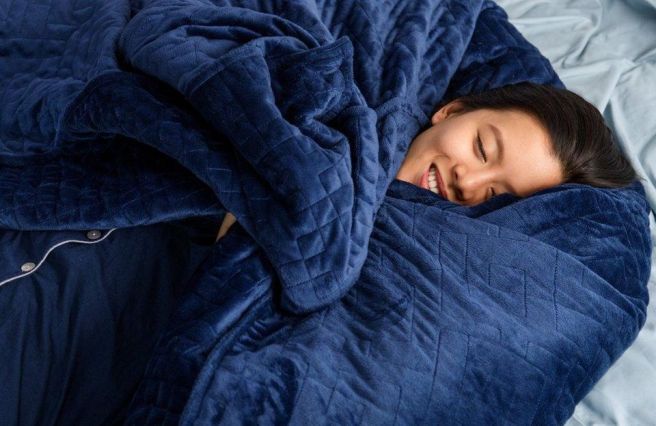
Weighted blankets have been found to have a number of key benefits to those that use them. One of the biggest advantages of using weighted blankets has been its ability to reduce stress and anxiety in users. But how do weighted blankets work, and how does it impact on people’s levels of anxiety? We decided to take a closer look.

How do weighted blankets work against anxiety?

It works in a few different ways, but the main factor it all comes down to is these blankets’ ability to stimulate the body’s proprioceptive input. This input in our body is important, as it helps the body recognise and establish environment awareness.

The awareness trigger is key, as this can help the brain get access to the body’s environment at a much quicker rate than without this type of blanket. This can help the brain to feel more relaxed, having a domino relaxation effect on the rest of the body.

In short, this entire process stimulated by the proprioceptive input, helps to reduce feelings of anxiety, because of the light pressure that is applied to the body.

In addition, for many people suffering from anxiety, lack of sleep unfortunately also goes hand in hand, and weighted blankets also tackle this too. This is because this light blanket pressure helps to release the hormones serotonin and melatonin. The former is known for having a huge impact on mood, while the latter helps with falling to sleep.

Interestingly, it is also believed that the feeling of a weighted blanket has similar emotional benefits to that of a hug or a baby that is swaddled tightly. The main reason for this is the release of the hormone oxytocin, known for helping to make people feel calmer and more relaxed.

Where can I find a weighted blanket?

The best weighted blankets on the market are by the Australian company Calming Blanket – and are recently available to buy in the UK.

Available for adults and children, they provide a range of super comfy weighted blanket options (2.2kg, 4.5kg, 6.8 kg and 9kg) that only use super soft fabric, as well as providing inner ties which do an important job of making sure weight is distributed evenly across the blanket.


This blog was written by Calming Blanket, a weighted blanket company that helps people with anxiety.

Taking a Weekend Break, Finding your Perfect Wellbeing Holiday : by Wellbeing Escapes

euphoria

(image: Wellbeing Escapes, Euphoria Retreat)

It’s cold and wintery here in England and you will be dreaming of relaxation and calm, a retreat away from the stresses of daily life. Thinking about a health and wellness escape in the UK or abroad? Go no further than Wellbeing Escapes who are experts at bringing you the finest wellness holidays.

From yoga and meditation and digital detox retreats to luxury spa holidays in the Maldives, Greece and Morocco, there is something for everyone! Wellbeing Escapes say they offer an award winning service with flexible pricing and discounts to make sure you get the most out of your booking.

Wellbeing Escapes gifted me a wonderful pack of spa products which gave me a flavour of their unique wellbeing holidays, as these are used by their partners. This included various oils and room sprays (with calming scents like lavender) designed to help you relax and recharge.In looking at their holidays, I would like to focus on the weekend spa retreats, as often we just want to take time out at the weekend to revitalise.

Wellbeing Holidays say,
’If you are in need of some rest and relaxation, a weekend spa break is the perfect solution. Hop in the car and be at an idyllic countryside retreat in a few hours or take a short flight over to Europe for some added vitamin D. Spend time with a partner, a best friend or simply take some time for some well earned me-time. We’ve designed our exclusive spa programmes which make weekends that extra bit special. Relax with a selection of massages, facials, body scrubs and get your heart beating fast with the daily group fitness classes and then simply relax by the swimming pool.’


Spa weekend break in Europe:

Euphoria Retreat- Mystras, Greece

wellbeingescapes1

(image: Wellbeing Holidays, Euphoria Retreat, Greece)
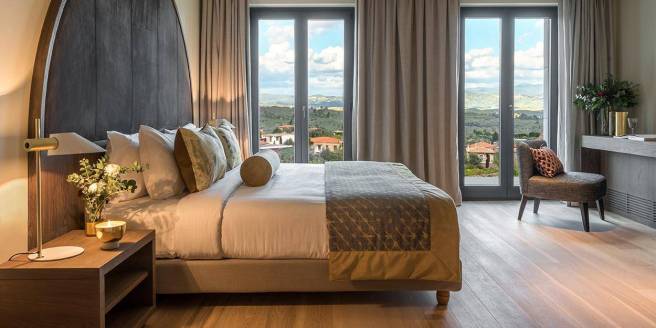
Euphoria Retreat is in a beautiful destination in Mystras, Greece. Euphoria means a state of wellbeing for body and mind, helping you to heal and transform your health. Relax in the beautiful turquoise pools and spa, in idyllic surroundings. This retreat serves to help physical, mental and spiritual balance, with a complete digital detox too (so no phones in the spa). There are personalised treatments , consultations, dietary guidance, exercise and mental coaching to help you achieve the concept of a blissful life (Euphoria).

Facilities include treatment rooms, outdoor pool, sphere pool, relaxation areas, tepidarium, Finnish sauna, infrared sauna, ice fountain, steam room, experiential showers, speleotherapy-salt room, watsu pool, sanctuary deprivation pool, Californian hot tub, gym, Pilates studio and yoga!.

You are also near a UNESCO world heritage site at Mystras, so there is a lot to explore.

For more about this beautiful, calming retreat see:

wellbeingescapes2

(image: Wellbeing Escapes, Euphoria Retreat)

Other weekend breaks abroad include Portgual, Venice, Merano (Italy), Cyprus, Morocco and Spain (Marbella and Alicante). See here: https://www.wellbeingescapes.com/all-hotels/weekend-spa-breaks-t119


UK Weekend Spa Break
Grayshott Health Spa, Surrey, UK

grayshott1

(image: Wellbeing Escapes, Grayshott Spa)

Want to get away but don’t want to go abroad? Wellbeing Escapes have your perfect weekend spa break. They say, ‘Idyllically set in the 47-acre estate of gardens and grounds which used to be home to Alfred Lord Tennyson, Grayshott Spa is brimming with old world charm and elegance. The spa is located close to Guildford in the village on Grayshott which approximately one hour by train from London. Inside the historic country house, Grayshott has been refurbished to combine the best of old and new, creating a relaxing and comfortable atmosphere.’

The house and spa have beautiful grounds and woods to walk peacefully in nature. Just one hour from London, you can escape quickly and easily to this wonderful retreat. Grayshott is renowned for its holistic approach to wellbeing through therapies to alleviate emotional and physical stress. Example treatments include Reiki, Aroma face massage, detox salt baths and more. You can relax in the spa steam rooms and sauna or play golf, tennis and swim in the indoor and outdoor pools.

There are 59 rooms and suites and a delicious balanced menu. Group classes include yoga, aqua fitness, power walks and tai chi, to help restore balance.

What are you waiting for? To get some wellness and calm back into your life, visit this health spa today.

grayshott2

(image: Wellbeing Escapes, Grayshott Spa)


You can contact the award winning Wellbeing Escapes to book your break in the UK or globally now at https://www.wellbeingescapes.com/ . ‘Pioneers in wellness travel since 2005’

Eleanor received a gifted pack of spa products,  in exchange for a blog on wellbeing escapes. 

Looking to the Future and Life Dreams: by Eleanor

Hi friends,

It has been a while since I have written a personal blog as there has been so much going on here that I was just focusing on getting through it all. Robs dad had surgery to remove a second brain tumour and is thankfully recovering well, the surgeon amazingly got all the cancer. Success.

Alongside this, I have been in therapy since November with a wonderful therapist and we are doing EMDR (Eye Movement Desensitisation and Reprocessing therapy). This therapy helps to process trauma that can get ‘stuck’ in the brain if not processed. That trauma can stem from childhood upwards- I was an anxious child from an early age even though I had a good childhood! I have also been through a lot due to my bipolar episodes and hospitalisations. So, I am working with my therapist to process memories and we are doing it slowly.

My therapist will either ‘tap’ on the side of my legs while I recall the memory to help process it or my eyes will follow a light or her finger as we process. Understandably, there has to be a lot of trust in this type of relationship as well as me being protected and not triggered by the therapy. For this, we have developed a ‘safe place’ memory that I go to when we bring up anything too distressing. We have just started to go deeper with this and I will update you with our progress. I am far less anxious than I was and it has been really helpful to build a positive, working relationship with my therapist.

The reason I started therapy was because I was having intense panic attacks and finding it difficult to manage my life due to it. I hope that by working on these triggers that I can react differently and live a healthier and better life. Stay tuned!

A month or so ago, I also went to see my psychiatrist for the first time in 2 years, mainly as I had worries about my weight and physical health. My medications means I have put on a substantial amount of weight and this is worrying me health wise more than anything. I have been advised to diet and exercise and maybe work with a nutritionist. So, this will also be a new journey and I will try my best with this, not easy as the meds may stop me losing weight due to slowing metabolism or encouraging cravings. We considered reducing my Quetaipine, a mood stabiliser and anti psychotic to help but because I have been more mentally stable, I have decided to keep it at the same dose for now.

Rob and I have also started to look at new homes, which has been good. There is a lot happening right now and important that I rest, look after myself and keep calm.

Life with bipolar disorder can be uncertain. I have some fears about the future, which I will talk about in another more detailed post. My medicines thankfully keep me mentally well, but coming off them for future life changes eg pregnancy could be a big risk for me and one I am not sure I should take due to being bipolar 1 (risk of mania and psychosis). This is not currently imminent, but is still a future fear, especially as I love children. A decision for a later date.

Overall though I am hopeful and excited about life and will keep you all updated with my therapy and health journey and news.

Thanks for reading and following Be Ur Own Light as we come up to our 4th anniversary,

With love,

Eleanor x


‘The Meaning of Normal’: Living with a sibling with mental illness : Guest post by Shira

It hasn’t been normal for so long that sometimes I forget what normal should feel like. When I try to think about it, it feels like a glimpse into someone else’s life, and I am an invasive stranger, trying to reach something that doesn’t belong to me.

What is normal?

Sometimes I think I remember it.

Sometimes I think that normal is that time when I was six and you were three and we didn’t fight. When we played hand in hand like every other child, and our entire world was pink and purple, and the most important thing to us was that our dolls had shiny blonde hair.

And we would play every game under the sun, from barbies to dollhouse to the convoluted imaginary ones that only we knew the rules to, and even then did we ever really know the rules?

I was a witch and you were the princess. We were both witches. We were both princesses. I stole your magic time machine but you found another one, and our living room became the entire universe as we ran through it, believing wholly in the pictures we created, the way that only children can.

But did we ever really exist like that? Were we ever those idyllic children, the children that every parent wishes to have?

Maybe our normal is all the times when I was ten and you were seven and we would push and shove and slap. You were my younger sister who could do no wrong and I was the older one, always blamed for both our shares of misdemeanours.

“You should know better!” They would shout

“But she started it!” I would pout.

“It’s not true!” your bottom lip would stick out.

I think we all know that I probably did start it.

We would fight and yell and cry and shout, never giving in, never admitting that we were wrong. Because we weren’t wrong. We were both right, all the time, every time, and the other was always painfully mistaken. And we roared and yelled and scratched each other, but knew only to cry when a parent was looking. And if nobody was looking, well then nobody would see if we punched back just one more time.

But were we ever really like this? Two demonic screaming children who were never silent and never content with just each other? Were we really the children that every parent dreads to have?

Maybe our normal is the way we grew apart as we grew older. When I was 15 and you were 12 and I would pretend not to know you as I walked past you in school. And maybe our normal is the way we would come home from the same school at the same time separately, both of us walking different routes from the bus because being seen with one another would be unacceptable. Maybe that’s what all teenagers do. Maybe that really was our normal.

Maybe our normal was what came next.

Maybe the years we didn’t talk to each other was what we were always heading towards. Because one day we would put down the dolls, and one day we would run out of things to fight about and we would just…exist.

One next to the other.

Sitting in silence.

Neither speaking.

Neither bothering to reach out first.

Because now I’m 18 and you’re 15 and I don’t remember the last time I spoke to you. The house is thick with anger, so thick that it poisons every interaction, and I couldn’t even tell you what I’m angry about. Because the sister I played with, the sister I happily fought with but would jump on anyone else who dared fight with her is in pain. So much palpable pain, and for the first time I couldn’t just make it go away.

Was I angry with you?

Yes.

Was I angry with myself?

Yes.

And so I let this become our normal. A normal where two siblings exist side by side, but don’t even know how to speak without offending. Where everything I say hurts you and everything you say angers me.

So we made this our new normal.

And I don’t care.

I don’t care.

I don’t.

I care.

And now I’m 20 and you’re 17 and I’m 3000 miles away. But this is our normal now. We don’t speak. We can’t speak. But it doesn’t even matter because there’s nothing to speak about anymore. How can I ask how you are when I already know the answer, and I know it’s not an answer I want to hear. How can you ask how I am when you’re too focused on making it through your own day without worrying about mine?

And anyway, it’s been a long time since we told each other how our day was. Not since I was 14 and you were 11 and we would awkwardly walk home from the bus stop together, backpacks moving up and down and up and down as we compared notes about school, neither of us loving it, neither of us willing to admit that out loud.

But we are not those children anymore, and we don’t have any shared experiences to talk about anymore.

I wonder if you miss me like I miss you. I wonder if you count down the days to my birthday too, hoping that we will both make it past 17 and 20, willing time to hurry up even though maybe all I really want to do is turn back the clock.

And then you are 18, and it’s been 18 years since I sat by your tiny cradle in the hospital and cried when we left, maybe because I wanted another chocolate bar from the hospital vending machine, or maybe because secretly I don’t want to leave my baby sister in a cold hospital far far away.

But now you are 18 and I’ve still left you in a hospital far away and it’s still just as hard to leave you there as it was all those years ago. But a 21 year old can’t lie down on the floor and have a tantrum so I keep going and keep going and this is our normal now.

A normal where you’re there and I’m here. A normal where we won’t speak for months on end but then I text you and tell you I miss you and now you answer me too, and I think you miss me too. A normal where we joke and laugh at stupid posts we see on Instagram,  tentatively, both of us till remembering when you were 14 and I was 17 and we ripped each other apart with words until neither of us said anything at all. Is this our normal now?

What is normal?

I looked it up for you.


NORMAL:

  • Conforming to a standard, usual, typical, or expected


But who gets to decide what that standard is? How do we know when something that once wasn’t normal now is, and if what was once normal is now anything but? Do we decide that? Or do others who stand by and watch get to decide that for us?

I’m sure someone could tell you the scientific answer. I’m sure there is a video out there with a detailed and meticulous answer laid out for us to study.

I’m sure somebody could tell us the answer. Maybe we haven’t even been normal, maybe we always were.

Maybe the imaginary games of our childhood were always meant to turn into imagined grievances causing real rifts. Maybe we were meant to grow apart and then come back together again, a little rougher but a little kinder. Maybe none of it was normal, or maybe all of it was.

Sometimes I wish I could change all of it. If I hadn’t said what I said that one day, or if I hadn’t slammed my door that one time, or if you hadn’t called me that name under your breath, things would all be different now.

But sometimes I know I can change none of it. And maybe that’s ok. Maybe if we hadn’t played all those games as children, if we had never walked down the road together from school, if I had never sent the texts you eventually answered, things would all be different now.

Normal isn’t for us to decide, it isn’t for me to determine. All I know is our normal is all we have, and I wouldn’t change us for the world.

About:

Shira is a writer living in Israel, drawing on every day life experiences. Her sibling lives with a diagnosed mental illness and she has bravely shared their story here.




5 Ways Essential Oils can help your Mental Health and Wellness. By Essential Olie

Essential oils have made incredible strides in popularity over the last decade. There are hundreds of people that swear by essential oils as a cure for almost any ailment. That might not be quite accurate, but essential oils do have definite benefits.

One of the benefits of doTERRA essential oils that has some of the most research is with mental health. Because scent is so strongly tied to emotion it makes sense that essential oils would be able to help with your emotional state. Especially if you are using the correct oil and method of inhaling the scent.

Finding the oil that works best for you can be a process but it will certainly smell great. There are a lot of different ways that essential oils can help with mental health difficulties. These are five of the most notable ways essential oils can help your mental health and overall wellness. 


1. Diffusing

Probably the most common way to inhale essential oils is by using a diffuser. A diffuser works when you put a couple of drops of your chosen oil into a diffuser filled with water. The mix of water and oil turns into a vapor that fills your home with a pleasant scent that can help alter your mood.

The diffuser is especially a great method if you are trying to affect your mental health. Because scents are so tightly tied to emotion, surrounding yourself with a pleasing scent can turn your entire mood around. That includes making you calmer or happier on a bad mental health day. 

Great oils to use in your diffuser for a bad mental health day are lemon, grapefruit, bergamot, jasmine, and lavender. Lavender is also a great choice if you want to sleep or need to destress. Finding the oil that makes the most difference for you might take some time but the natural benefits of essential oils are definitely worth the time.


2. Massages

A massage in itself is a great way to help you manage mental health issues. It is not a cure-all but it is certainly helpful and a great resource. Adding essential oils to a massage help increase the health benefits and works double on your mental well-being. 

It has been found that massages do help some people with depression and anxiety. Because a massage is great for releasing toxins and helping you relax it is a natural way to lessen stress and depression. Making it an aromatherapy massage and letting your massage therapist rub oils into your skin that make you feel happier is a wonderful way to improve your mental health.

There are even studies done that show aromatherapy massages can have great benefits for people struggling with their mental health. Allowing your body the healing effects of a massage can help with both your physical and mental health. Adding in the natural benefits of essential oils to help the massage along only helps you feel better faster and for longer.


3. Carrier Oils

Something a lot of people do not realize is how powerful essential oils can be. They are a concentrate that, while natural, can still be harmful if not used properly. Putting essential oils on your skin without a carrier oil can result in reactions and even burns if you are not careful.

Luckily, carrier oils are wonderful and have benefits of their own. Coconut oil is a prime example of carrier oil that allows you to get the most out of your chosen essential oil. You can use the mix of coconut oil and essential oils as a lotion so your skin can absorb the mood-lifting benefits or as a hair product so the calming scent stays with you all day.

Jojoba oil and St. Johns Wort are also excellent carrier oils. Jojoba oil is very similar to coconut oil in its uses and benefits. St. Johns Wort can actually make certain oils digestible if you feel an oil would be more effective ingested. You should always make sure oil is safe to ingest and talk to a doctor before you start trying to take essential oils orally.


4. Spa Day

Giving yourself the time you need to relax and destress is a wonderful thing to allow yourself. It is very common for people to feel they are not allowed mental health days or that they do not have an excuse to be so stressed. Everyone needs a break some days and allowing yourself that break can be of great benefit to your overall wellbeing.

Letting yourself have a small spa day is a great way to relax and also incorporate essential oils into your self-care routine. Putting a few drops of a calming oil into your bath or a diffuser in your bathroom will help you calm down and give you all the benefits of using essential oils. Even just lighting a candle with some essential oils in it before bed is a good way to relax and get better sleep.

Incorporating essential oils into your self-care routine or adding them to a spa day is a great way to make sure you are soaking up all the benefits essential oils provide. Especially the calming and stress relieving oils will be helpful to you during a mental health day or a spa day. Letting yourself enjoy the calming benefits of essential oils while you give yourself a break is a wonderful thing to do for your mental health and overall wellness.


5. On Fabric

Putting oils on fabrics is especially helpful for children. It can also work for adults who need help sleeping or who prefer their clothes to smell a certain way. Putting a few drops of oil onto a fabric allow that piece of fabric to provide the healing benefits of the essential oil while smelling great for quite a while.

Many parents find putting a few drops of a calming oil on their child’s favorite stuffed animal is a good way to help them stay calm and have a better sleep. The same applies to adults who put a little bit of oil on their pillowcase or bath towels. Even a few drops of oil in your laundry can provide a great smell with mental health benefits.

Office workers might find it helpful to have a calming oil on their desk chair or oil to help them concentrate. Students might prefer an oil dotted on their hoodie or scarf to sooth them during tests and classes. Putting a little bit of oil on fabric to allow the soothing health benefits to stay with you all day is a great way to soothe children and adults alike.

Essential oils are an amazing natural way to improve your mental and overall health. They have been proven to have calming benefits as well as mood-altering benefits. Using them as a resource to benefit your mental health is a natural way to make yourself feel better.

Important to note:

You should remember that essential oils are not medicine and should not be the only way you are trying to fix your mental health. Talking to a doctor or therapist is always a good place to start while using essential oils to help. There are a number of ways you can use essential oils to benefit your mental health as well as just your overall state of wellbeing.

Using a diffuser for your home, massages for your body, oils for your skin, and fabric for when you are not in your home will allow you to incorporate beneficial essential oils into every part of your life. 

Remember to give yourself a break and your brain a chance to recuperate so you can always be functioning at your best. Those are just a few of the amazing ways essential oils can help with your mental health and overall wellness.


This sponsored content was written for you. Learn more about Essential Olie- essentialolie.com.au

5 Ways that Spending More Time Outdoors Can Improve Your Mental Health: by Katherine Myers

Self-care is a topic that often comes up when discussing mental health. Whilst taking a bath or reading a good book might provide a short term boost to your mood, a bit of self-care will rarely provide long-lasting improvements to your state of mind. 

Spending time in nature is one of the most effective ways of boosting your mental health. In fact, the benefits of the outdoors for your mental wellbeing have been scientifically proven in a range of different studies. Something to consider if you’ve been suffering from consistent low mood recently is whether you’ve been spending enough time outdoors. 

Especially during the winter months, it’s easy to miss the few hours of daylight whilst in the office or at school. It may not seem like a big deal, however, not getting enough sunlight exposure can be very detrimental to your mental health and over time, you will start to feel the effects. Some common symptoms of Vitamin D deficiency include fatigue, sore bones and muscles and low mood.

Simply getting outdoors for a bit of time every day can have a profound effect on your wellbeing. Here are just some of the ways you’ll see your mental health improve by spending more time outside.

You’ll Feel More Creative

Creativity is often sparked by putting yourself in unfamiliar environments, which is the perfect excuse to get outside the next time you find yourself in a creative rut! Being in the outdoors is a great way to get away from other distractions to your creative process such as TV or social media, so you can properly focus on coming up with those brilliant ideas! In fact, one scientific study showed that being immersed in nature can boost your creative problem-solving abilities by 50%. 

Better Concentration

If you are someone who tends to have your head in the clouds, getting outdoors is a brilliant way to improve your concentration. Science has shown that the effects of a natural environment are huge for concentration. In fact, spending as little  as 20 minutes in residential parks has been proven to help ADHD children focus. 

If you’re ever struggling to concentration on studying or work, maybe consider taking your work outside and see whether it’s easier to get your head down. Not only will there be fewer distractions, but the calming effect of your environment will put you in a more positive state of mind.

Better Memory

Our brains are very receptive to the natural environment, making it easier for us to memorise information. One scientific study showed that participants in a memory assessment who had been in nature prior to taking the test performed 20% better than those who hadn’t. The next time you have a big test coming up or need to memorise something important, spending some time outdoors could be a great way to focus your mind. You’ll be surprised by how much it helps!

Reduces Stress Levels

Being in a stressful environment will increase your blood pressure, anxiety and stress whilst being in a peaceful environment ha the reverse effect. For this reason, a natural setting such as a forest, the beach or park is one of the best places to relax because it completely removes you from the distractions of modern society. Being in nature lowers your blood pressure, heart rate and muscle tension. Studies have shown that even just a view of nature is often linked to lower stress levels and higher job satisfaction. 

Regular Sleeping Pattern

We need natural light and darkness to regulate our circadian rhythm (natural waking and sleeping patterns). Using our phones and computers exposes us to artificial light components that interfere with our ability to sleep. Getting a good night of sleep is critical for your mental health and factors such as stress can quickly make it difficult to maintain a good sleeping pattern. Spending time in nature is the best way to reset your natural circadian rhythm and get a better night of sleep.

If you’ve been feeling down or anxious, it can be even more difficult than normal to find the motivation to get outside. However, here are a few ways that you can fit some time in nature into your schedule without making too much effort. We promise it will make a huge difference!

  • Take a walk on your lunch break
  • Get out for a run in the morning
  • Go hiking with friends
  • Take a book to your local park
  • Try and walk to work or school if you can
  • Try and spend your day in a room with lots of natural light or large windows 
  • Try and incorporate more plants into your living space

This contributed post was written by freelance writer Katherine Myers. 

Christmas for CAMHS Campaign to brighten up Children’s Christmas in Mental health wards: Guest post

christmascam

(image: Christmas for CAMHS charity)

Christmas for CAMHS (Children and Adolescent Mental Health Services) are a registered charity providing gifts each year for children and young people who are in mental health units in the UK over the Christmas holiday. They say,

Our aim is to make as many children and young people who are inpatients over the Christmas holidays feel thought-about, special and included.

We have been hugely supported over the past few years by generous donations from the public and have received much gratitude as a result from inpatient units. However, we are only able to provide gifts with your charitable donations. ‘

Christmas For CAMHS was originally set up because volunteers saw a huge disparity in the way CAMHS units were treated over the festive period compared to other NHS services for children and young people. They wanted to do something to change that and say,

‘Children are admitted to CAMHS units to receive support and treatment for mental health issues. There are no official figures for how many children will spend the festive season in CAMHS units across the UK. While many members of the public and corporate donors give Christmas gifts to Children’s hospitals or children’s wards in general hospitals, CAMHS units, which are usually based away from other services, are often forgotten, or not known about.’

Ro Bevan, doctor and founder says,

‘Five years ago I worked in a children’s hospital at Christmas time and there were many presents donated, mostly from corporate donors. There were so many presents that there was enough leftover for patients’ birthdays until June of the following year. A year later, I was working in child and adolescent mental health. We had no presents donated. Our patients had one present each, chosen by the therapy team, paid for out of the ward’s budget – saved from the NHS budget that is meant to cover therapeutic activities, and other expenses. I posted about the inequality on Facebook and before I knew it, my post had goneviral with 1,032 shares and so many supportive comments. It inspired me to start a group the following year and together we have raised over £1,000 to help children who would otherwise be forgotten by the generous public.

‘We don’t know whether this disparity is because people just don’t know that there
are children in mental health hospitals, or whether it’s indicative of the stigma that
society attaches to mental health issues. Regardless, we’re hoping to raise
awareness and address the balance. Although this project started with a simple
Facebook post, it has already gone further than I ever could’ve imagined possible
and reaching units across the UK which is a dream come true.’

This year, a special advent calendar has been designed by Sam Barakat, featuring  positive quotes every day, rather than chocolate. As well as this, there will be 32 windows, one for every day from December 1st to January 1st. 50 will also be donated to mental health units via Christmas for CAMHS. Sam says, ‘For many, Christmas is a joyful time that is spent with friends and family. For others, it can be the hardest time of year. This could be due to past events, trauma,  loneliness  or mental illness. ‘

I (Eleanor) feel this is such an incredible campaign that will touch the hearts of many. I was in a CAMHS unit aged 16 over Christmas and think this will help many people.  

You can donate and buy a calendar here for someone struggling : https://www.gofundme.com/f/a-mental-wellbeing-advent-calendar?utm_source=customer&utm_medium=copy_link&utm_campaign=p_cf+share-flow-1

To donate to Christmas for CAMHS and give presents to ill children click here: http://uk.virginmoneygiving.com/fund/
CAMHS2019

Website and more information: www.christmasforcamhs.org.uk


How stressed are UK Students in 2019? Guest post by the Natwest Student Living Index


natwest1

(Image: Natwest Student Living Index)

The NatWest Student Living Index 2019 has launched recently,  delving into both stress and mental health for students at university.
https://personal.natwest.com/personal/life-moments/students-and-graduates/student-living-index.html

University-age students are more engaged with mental health and wellbeing than ever, and the study found that 1 in 4 students are very satisfied with their university’s mental health support.

Other noteworthy findings from the survey include:
• 71% of students say that their university offers affordable health and wellbeing programs (gym classes, yoga, meditation, mindfulness)
• 40% of students are concerned about their financial situation following university
• 45% of students find their university degree stressful
• 1 in 4 UK students find managing money stressful

The 2019 NatWest Student Living Index revealed that close to half of all UK students feel
extremely stressed by their degree studies. 1 in 4 students in the UK described managing their money as extremely stressful, while only 6% felt they received sufficient money management support from their university on average.

NatWest’s Student Living Index 2019 asked students from 35 top university cities about all aspects of student life, including the amount of wellbeing and mental health support on offer for students at university in 2019.

Is their degree the cause of the stress? On average, 45% of students in the UK feel extremely stressed by their degree  Cambridge (60%) and Durham (57%) students are the most stressed by their degree studies.
Have Universities supported students with mental health resources?

1 in 4 students are very satisfied with their university’s mental health resources, while 71% said that their university offers affordable health and wellbeing programs.
Interestingly, while students in Poole feel the most stressed by money management, the city also came last when students were asked about the availability of affordable well-being programs:

 53% of students in Poole said their university offers affordable well-being programs, this is the lowest ranked city and 18% below national average.

 Less than 1% of Students in Reading and Stirling feel supported by their university when managing their finances.

 94% of students in Aberystwyth feel their university offers affordable well-being programs

Are you a student in the UK? Read more about the findings here:  https://personal.natwest.com/personal/life-moments/students-and-graduates/student-living-index.html

An Increase in Anxiety: Panic attacks and Therapy thoughts.

Hi friends,

It has been a while since I’ve shared a personal blog and I want to be as honest as possible.

It has been a whirlwind of a time- I got married to my wonderful husband in July- we really had the best day, I have been editing and finishing writing my book Bring me to Light and I also started a new job at a charity in May- which has meant I have been blogging less. I love my new job however I am much busier!

This has meant an increase in my anxiety levels and panic attacks in the mornings at times, related to social anxiety. I worry about the day ahead and sometimes don’t feel able to leave home. I have been trying to combat this but its been really hard and is still ongoing for me.

I have had a lot of CBT and talking therapies but believe my anxiety to be trauma based re what happened to me 5 years ago, being sectioned and in hospital. As such, I would like to have EMDR therapy, a type of therapy that helps to process trauma through focusing on images and rapid eye movement. It is hard to describe but I believe this is what I need in order to keep my anxiety disorder under control- and get rid of most of it.

In the mean time I have been leaning on my support network and have been prescribed beta blockers for when the anxiety is at its highest. I have also been referred back to psychiatry in order to get a referral for EMDR.

Except…. my NHS borough don’t fund EMDR therapy so the only route in is via a service called IAPT. It may be that I have to go privately if the NHS standard of therapy is not good enough but there we are. There is still a 2 year waiting list to even have an assessment for therapy, but via IAPT it is quicker, so I hope I can get some form of help for me. The funding for mental health in the UK is atrocious and I hope this will improve….

Having the support of my parents, Rob and family has been hugely helpful to me and my new amazing colleagues who believe in me and have been very supportive.

But, it has been exhausting.

Panic attacks make me want to sleep, blank out and sometimes you can’t do that. You have to face the day and fight. That’s where the beta blocker meds come in for me right now as they calm the body down when you need to show up to something (deep breathing doesn’t do it for me). Usually, I feel better once I don’t react to the anxiety negatively and try to dig deep and push through, but its not easy.

This week, we are going on honeymoon in Italy and I am looking forward to a relaxed, sunshiney break by and in the pool, beach and spa with Rob and eating lots of delicious Italian food. A break is desperately needed and I hope I won’t have any panic attacks on holiday, but have a restful time!

Here’s hoping I will find something that will help ease the panic. I have tried so many things for so many years and it’s still here.

Eleanor x


Royal family launches Shout UK- a Mental health crisis text line: Guest blog

Be Ur Own Light is supporting the incredible initiative from the Duke and Duchess of Cambridge and Sussex- Shout UK, a new text support line in the UK for people in mental health crisis- anyone who is struggling. They have teamed up with Crisis Text line to reach vulnerable people.

I feel privileged to live in a country where stigma is beginning to fall and where mental health issues are beginning to be understood better. Texting would have helped me as an ill teenager with bipolar!

Shout are looking for volunteers too to man the text lines as crisis counsellors.

Thank you to the Duke and Duchesses for the incredible profile they are giving mental health. #GiveUsAShout