Shame and Psychosis article for Time to Change

My latest article for Time to Change, a campaign in the UK aiming to end mental health discrimination. (name has been changed)

timechange

Three years ago last month, my mind lost touch with reality in a very rapid turn of events that culminated in an acute manic episode of bipolar affective disorder. Having been diagnosed with bipolar in 2004, I had not experienced any mania or hypomania (a lesser manic state) in ten years, although I had fallen into a suicidal depression just six months earlier. So when my brain fell into full blown psychosis – with delusions and grandiose thoughts, fearful thoughts about loved ones and being in danger and a complete change in rational perception – it ripped apart the fabric of my life and all I knew. I am writing this to explain what psychosis is really like.

I was just 25 and although I had experienced a mixed state which left me hospitalised at 16 (and had experienced some psychosis then), this was by far the most challenging, lengthy and painful bout of mania and psychosis that I had experienced. I began to believe that my step father was behind why I was in hospital and wouldn‘t let him see me, I thought that the doctors and nurses were a gang holding me hostage. I was fearful of everything, talking and singing to myself, unable to sit still and became quite agitated at times with the staff and patients, which is completely out of character for me. I simply didn’t know what was real or unreal and I was so frightened of the staff and others while my brain was in this state. Eventually, I recovered after about two months of being given anti-psychotic medication and tranquilisers to help me rest (often I was pacing around due to agitation/ mania), in combination with individual and group therapies. I left hospital after three months.

I rarely talk about my psychotic state, which led me to be sectioned under the Mental Health Act. This is due to shame: I was ashamed of myself even though it wasn’t my fault – rather down to faulty brain chemistry and my medication that had stopped working. There is still a huge amount of stigma about psychosis and anything that makes you lose your sanity. My psychosis is part of my bipolar illness and happened completely out of the blue. My mood stabiliser hadn’t been holding me for some time but no one could have predicted quite how rapid my descent into psychosis and illness could have been (it took only a number of days and escalated at a weekend, leaving me to be admitted via A&E, which proved traumatising).

The shame of losing your mind is great and also acting out of character shatters your self-esteem. When I left hospital, I sunk into a depression due to the shame of how I acted in hospital and how my brain and its chemistry could go so catastrophically wrong. Kindness goes a long way when you are feeling ashamed. If you have a friend or family member struggling with this – be calm, show kindness, and show up for them. They need your support at what is an incredibly painful time. Let the person with feelings of shame about their illness know that they are human, that they are an important friend to you, and stand by them.

What truly helped me in those dark days was the attitude of my psychiatrist in hospital and in the day recovery unit I attended after. Despite being psychotic and unwell in hospital and quite agitated at times, my doctor persevered to get me on the right medication and put up with my changing moods. She knew that if I took anti-psychotics and then agreed to go on lithium carbonate (the main mood stabilising medication for bipolar disorder) that I would recover – even if it took me months to get there. It was a slow recovery but I got there in time. Her patience, perseverance and kindness saved me from a very acute episode of illness. Similarly, the psychiatrist and all the staff at the Day Recovery Unit helped me in my down days starting on lithium and having regular blood tests, recovering from being very unwell and they treated me like a human being, when I had felt so ashamed.

If it wasn’t for the Doctors, nurses, occupational therapists and other staff who looked after me  and helped build me back up, I wouldn’t be here today.

There is no need to feel ashamed, although you may do.

Although I still find it hard to talk about my descent into a psychotic state – I am so grateful to the NHS for all the help I was given and have been well for some time. I hope this article helps others in a similar position – you are not alone and don’t let anyone make you feel ashamed.

https://www.time-to-change.org.uk/blog/there-should-be-no-shame-experiencing-psychosis

Bipolar Slim: Part One, Small steps.

imaynot

And so, the Slimming world diet has begun. Except it doesn’t feel too much like a diet- it isnt hugely restrictive which means I just adapt a lot of what I eat already but make it healthier- so less cheese, smaller portions of certain foods, good lean proteins and some carbs, add more veg and fruit, eat less chocolate and sugar (limited juice, drinking lots of water and low cal squash). Its about eating speed foods to speed up metabolism and burn fat and eat free foods- which you can eat a good amount of as they are healthy.  Free to enjoy essentially.

I am oddly really enjoying being healthier and taking care of myself (I hate exercise and have never been on a diet but its empowering). Its just dealing with the chocolate cravings that are a challenge- chocolate milk/ ice cream cravings. I’ve had some chocolate this week but i’m trying to limit it to maybe once or twice a week and smaller portions/ healthier.

I re-weighed myself and I have lost a pound this week! Which is the start of a long weight loss and health kick journey. I am now going to incorporate exercise into my plan, did a 30 min brisk walk yesterday.

I am on Instagram with my food diary which is helping with support and motivation from other slimmers and have the support of family and friends too. The group process is not for me- but I get support online and from my loved ones.

My aim is to lose 5 stone over time. I remind myself that the biggest journeys start with small steps…. heres to getting healthier!  

The Power of Meditation: Guest Post by Jimmy Vick

med1

Meditation is one of the most preferred activities for all, regardless of gender, age or other factors. People have different opinions about meditation and many consider meditation to be similar to prayer. For others, it is an activity that is meant for relaxation and getting away from their daily hectic lives. In general, meditation is the activity of turning your complete concentration to a single point, concentrating on the breath, on bodily feelings, or on a mantra and affirmation. Meditation is about diverting your thoughts and concentrating on the present.

The main goal of meditation is to achieve an inner state of awareness and strengthen personal and spiritual development. In practice, meditation consists of intense concentration on  sounds, images or emotions. Meditation increases awareness of the present moment, lessens stress, encourages relaxation, and improves personal and spiritual development. The various religious and non religious traditions in the world have given rise to an array of meditative practices. The power and benefits of meditation are many.

Here are some of the notable benefits and the power of meditation:

Healing Power

Meditation promotes healing. People who meditate daily can heal many of their illnesses. In meditation, healing takes place because the mind of the person will be calm, alert and completely contented. Meditation  can be very powerful. To accomplish an ideal state of health, one has to be mentally tranquil which can be attained via meditation. Meditation can  assist and promote recovery from ailments from many chronic health issues.


No Side Effects

Meditation, when used for treating medical complications, has no side effects. It is the main reason why many people enjoy practising it. It is an activity that people regardless of age and gender can follow. Since meditation does not have any negative side effects, it is suitable and safe alongside medical treatment.

Relaxation

One of the main reasons why most of the people follow meditation in their daily life is for relaxation. We live in a chaotic world where everything is moving very fast. People are really tired and need relaxation in order to get away from their chaotic world. Meditation is a perfect way to assist relaxation in ones daily life. It helps you to stop moving around, working, thinking, talking, seeing, hearing, etc and allow you to rest. Meditation can help you create a cool and calm mind and therefore aids relaxation.

Improve Concentration

If you would like to improve your concentration, meditation can help. Meditation is all about sitting in a calm place and focusing on only one thing at a time. Meditation lets you focus intensely on your daily life. It is a perfect means for you to get away from distractions and direct your attention to what you need to focus on.

Other Benefits of Meditation                                           

  • The relaxation response that you get from meditation allows you to reduce metabolism, lessen blood pressure, and get better heart rate, breathing, and brain function.
  • Meditation gives balance to your overall bodily systems.
  • Meditation is very helpful and can assist us to feel happier.
  • Meditation is a practice that assists us to control our own mind and as a result, our own life and find out more about ourselves.
  • Meditation can aid us to get rid of negative thoughts, worries, nervousness, and everything that can stop us from feeling happy.
  • Meditation can provide us with a calm mind and it gives time free from stress and tension.
  • Meditation is a good method to give clarity of perception. It aids to reduce feelings of negative mood, tension, sadness, and anger.
  • Improvements in communication, flourishing of skills and talents, a powerful inner strength, etc can be achievable through meditation.
  • Meditation offers the capability to unite to an inner source of energy and enhances ones self-awareness.
  • Relaxation, transformation, and quality of life are all natural results of meditating frequently. It helps you promote inner peace and feel more alive.


Author Bio

I’m Jimmy Vick.  I have been working as a freelance writer  At present, I work for a best essay writing service online and it allows me to deal with different subjects in which I am an expert. I love writing articles for blogs and other online publications.

9 Proven Ways to Help Build Mindfulness and Meditation: Guest post by Jay Pignatiello

mindful1

This article is about ways to build Mindfulness for a happy and healthier life, by Jay Pigantiello.

At the age of 25, I began to feel the inevitable tides of change turn as they do, dimming the spark of youth I had grown quite accustomed to and cloaked myself with. I had hardly thought of a future to this point, but the reality finally hit me; the truth of which became a monster of sorts, leading me into a dark period of depression that followed. It wasn’t that I lacked confidence as much as it was simply that I hadn’t the slightest clue of what I wished to do for the rest of my life. The “rest of my life,” seemed daunting. I’m not sure to this day that there’s anything I would like to do for the “rest of my life.” But, through the suggestion of a friend turned mentor, I began to accept these feelings rather than trying to flee from them.

Meditation is an incredible tool. I was under the delusion that in order to be more mindful about things, I had to sit like a guru for two hours a day and eat nothing but kale and lentils. This couldn’t have been further from the truth, as it was suggested to start slow in the beginning. Each morning, for five minutes I would sit up in my bed and allow myself to be present. The coldness of the other pillow, the silky sensation of my sheets, and the warmth of the sunshine creeping over the hills began to be my anchors. Instead of fretting over what I needed to do that day, I allowed myself to be present upon waking. Most people are in such a rush that in the haze of their haste they actually make more mistakes and are less productive than if they were to take a few minutes to let their minds stay still.

Here are 9 proven and effective ways to help yourself become more mindful, and hopefully lead to a meditation practice:


  • Allow yourself to feel the feelings. It’s amazing how easily your mind can switch from negative thinking to more positive thinking when you stop fighting what you’re feeling. Humans are supposed to feel other emotions than happy or contentment. Feeling sad, feeling anxious, feeling depressed are actually positive experiences because they allow an insight into what needs to be changed.


  • Listen to your negative thoughts, and try to translate them. Many times when I’m depressed, I’ll start to see through a lens of darkness over everything in my reality, when the truth is that I’m unhappy because she didn’t text me back, or he didn’t tell me that I did a good job at work today. If I can translate these feelings of sadness into thoughts, I can allow them to pass or I can begin to make the proper changes that are necessary for me to grow.


  • Practice makes perfect. For me, there are times where I’ll pick up my guitar after having not played for a while and immediately dismiss myself as awful if I’m not as sharp as I once was. I forget how many hours went into practicing in order for me to reach a point where I was confident in my abilities. When I carry this mindset into other areas of my life, it allows me to accept where I’m at in my skillset and encourages me to practice a little harder. It also allows me to see my strengths and my weaknesses.


  • Strengths and weaknesses. This might not help me to become more mindful, but it’s made me a more confident person. In recovery from addiction, I’ve always been careful not to mention it to employers because I’ve thought of it as a weakness. The same could be said for my depression or anything else I suffer from. It wasn’t until I embraced the struggles I had gone through as a strength that I truly started to flourish in all areas of my life. In fact, most people didn’t see it as a weakness, and I’ve gotten several jobs simply because I’m reliable and trustworthy.


  • Pick one positive thing you experienced in your day and take time to appreciate it. Whether it’s the fact that your boss bought you coffee, or someone smiled at you, find one moment throughout the day and choose to be present for it. Gratitude is a powerful anti-depressant, and also helps to build mindfulness.


  • Pick one negative or uncomfortable experience in your day and take time to appreciate it. There’s a saying that goes something like, “you’ll never know a good day until you’ve had a bad one.” Negative experiences don’t need to define your entire day, but allowing yourself to feel it and be present without resistance can help you to see how many positive experiences there actually are. Discomfort is a catalyst for confidence.


  • Choose a mantra. Mantras can be powerful anchors, helping us to meditate while not traditionally meditating. Sometimes when I’m waiting in line I like to recite, “go with the flow,” which is from a song I like, as well as an appropriate mantra for me to live by. Often times I can be controlling, and so by reciting these words I remind myself that I’m not the most important person in the room, and everyone else had to wait in the same line. Your mantra can be whatever you choose, so find one that works for you.


  • Sit with your eyes closed. Sitting with your eyes closed in a more traditional form can truly help you to be more present throughout the rest of your day. Meditation is an incredibly powerful tool to help us to achieve mindfulness, as well as spiritual, mental, emotional, and even physical growth. When we allow ourselves to sit without judgement of our thoughts, letting them come and go freely without narrating the story of each, we’re allowing our minds to become tranquil; which in today’s day and age of computers and billboard ads, is a must.


  • There’s only one Buddha. I like this saying, because I’m sometimes harsh on myself if I can’t sit for as long as I hoped for. Sitting for five minutes, and gradually building yourself up to sit for longer can help you to form a regular practice. There’s only one Buddha, and so there’s no right or wrong way to meditate, nor is there a right or wrong amount of time to meditate for. Be gentle on yourself, and acknowledge each day when you meditate that you’re taking time to do something positive and helpful for yourself.


I’ve suffered from depression and anxiety for most of my life, as well as recovering from various addictions. Meditation and mindfulness helped me to change my perspective, which in turn actually helped me to become a more hopeful and positive person. These 9 steps are proven to help you not only become more mindful, but to feel better about yourself and the world around you. We’re all in this life together, and I choose to be a more positive person for the world around me.


Jay is a writer and works with Crown View Co-Occurring Institute, a rehab for depression and other co-occurring disorders. He enjoys walking his two dogs, playing music, and being a figure in the recovery community in his freetime.

Mental Health, Social Media and Relationships: Reality vs the Edit

anxietydisorder1

This post has been inspired by a few experiences that have happened to me in my life- regarding relationships with others- be they a friend or otherwise and social media.

I am a self confessed social media lover and addict. I love its ease, I use it as a way to store memories to look back on- photos, places I have been. A kind of virtual diary. I use it to keep in touch with friends, acquaintances who I would never normally see as they are in different countries or regions- and to keep in touch with friends I see regularly. I am always on Facebook, Instagram and Twitter (though not Snapchat- showing my age) and I truly love being online. Most of the time.

The difficult part about having bipolar disorder and anxiety disorder/ social anxiety is that it is not easily visible. Equally, on social media we always tend to present an edited version of ourselves- the good side. The positive side. The places we’ve been and the friends we’ve seen, those close to us. My Facebook profile, when I can achieve things, shows me smiling and being out and about. However, this has the potential to upset people if I have had to cancel arrangements due to anxiety.

The main refrain is often ‘But you were able to do it then- so why can’t you do it now?’.   How come the next day you could go out for dinner (I saw it on your Facebook)?

I understand this reaction. I do post a lot to celebrate achievements to myself and keep memories- happy memories for when I do become unwell again (which I hope won’t be for a long time). Social anxiety means that I want to look back on and remember the good times, the happy times.

The tough part is that relationships can become strained if one overly posts on social media. So its a complete dichotomy.

Do I post my life and enjoy the times I am able to socialise and go out without anxiety? Or do I edit what I upload so as not to hurt feelings of people I have had to cancel due to anxiety attacks? Ultimately- do I take my memories offline and into a private journal or on Instagram rather than Facebook?

All of this has been going through my head. Mental illness is not as straight forward to others as a broken leg. I don’t wear a sign saying I am bipolar or a bandage round my head.

I may look like I am having the time of my life…. but one may not see that:

Yesterday I could have had a panic attack which meant I couldn’t leave the house as I felt overwhelmed and embarrassed, and totally drained from the adrenaline. I got out to socialise now because a family member drove me somewhere as a form of exposure therapy to lessen my anxiety.

OR this scenario…..

My anxiety took over and I felt so frightened I was hyperventilating, crying and beating myself up emotionally, for not being able to see a friend. Because yes, we don’t want to have this and we care deeply about our friends feelings.

OR this scenario….

I have heard you talking negatively about me to someone else because I had to cancel an arrangement. Yet, I have anxiety about travel and socialising and sometimes feel overwhelmed. You know this, yet will still be upset- which I have to take into account.

So no, I am not really having the time of my life all the time. Friends are my priority but equally optimum health and managing day by day is to me hugely important.

I will try my very best not to let you down. If I hurt you through my social anxiety, it is never intentional.

I have learnt the hard way the pitfalls of social media with mental health issues. The large part is that we don’t want to talk about how depressed or anxious or panicked we are on Facebook. So it gets hidden and misunderstandings happen.

I hope one day it comes into the light, through my blog and when I can be more open.

The 365 Challenge: Raising Awareness of PTSD By David Baum with Mind (Guest Post)

davidbaum1

What is The 365 Challenge?  www.the365challenge.org.uk

The 365 Challenge was created by David Baum, a 58 year old business man from Bushey, Hertfordshire. It evolved out of the 22 x 22 x 22 challenge, which started in the US about a year ago, to recognise that 22 ex-service men and women commit suicide every day due to Post Traumatic Stress Disorder.

David worked out that this equated to 8030 ex-service personnel, this however did not take into consideration the thousands of men, women and children who are diagnosed every year with PTSD. So he decided to extend the Challenge from 22 days to 365 days.

What makes The Challenge so important?

Many of the thousands of men, women and children diagnosed with PTSD go untreated. So much so that in addition to the 22 ex-service personnel who commit suicide every day, in the UK a further 473 service personnel are discharged every year through PTSD. However, this doesn’t include life events such as cancer, murder, bullying or other attacks that can bring on PTSD. Unfortunately, the list goes on.

David’s own story is typical of a large number of sufferers own story:
When I was at school I was bullied mercilessly, it could have been because I was Jewish or not very tall or slightly chubby or wore glasses or that I wasn’t brilliant at football. Unfortunately, bullies never tell you why they are physically attacking you, other than they think it is funny or even a bit of banter. When I left school, I thought I would move on, but whenever I saw one of the bullies, I would come out in a cold sweat and want to walk the other way. I then had a number of car smashes, a couple which were my fault, the others I just happened to be in the wrong place at the wrong time. I tried to get on with my life, however, every time I heard the sound of a car smash or saw a fight I would break out into a cold sweat.

It was only after my wife Mel was diagnosed with Breast Cancer 20 years ago – fortunately she is in remission – I realised that I had to tackle the demons that were haunting me. Through counselling I came to realise that the bullying wasn’t my fault and accidents happens. Through a number of sessions, I was able to shake myself free of the traumas of my younger self. However, many are not so lucky. This is the reason why I created the 365 Challenge, and that I ask that people to like and share my efforts, to draw attention to the fact that you don’t have to be a member of the armed forces, a member of the Police or emergency services to develop PTSD, ANYONE CAN.”

Once David decided to create The 365 Challenge he approached MIND and The Gym Group who readily agreed to back the 365 Challenge.

davidbaum2

So how does The 365 Challenge work?
The Challenge is very simple and split in to 4 parts:

– Part 1 is from day 1 to 99 when the participant has to perform 22 reps of an exercise every day, preferably a different one as this adds to the challenge.
– Day 100 to 199 the number of reps increases to 30.
– Day 200 to 299 it’s 40 reps a day.
– For the final 65 days it’s 50 reps.

Unlike other charity challenges or dares, nobody is asked to make any donations or nominate anyone else. The person undertaking the Challenge is asked to commit to spending 1 to 2 minutes a day for 365 days film the session and post films on social media asking their connections to ‘like’ and ‘share’ – the most effective way to increase awareness of PTSD.

Since David launched The 365 Challenge, it has been taken up by people in the UK and the US, each has their own reasons for taking part and each is finding that spending 1 to 2 minutes a day very therapeutic. However you don’t have to go in to a gym or perform a physical exercise to take part a number of people are just walking 22 paces. To date the uploaded videos are being viewed around 10,000 times a month!

Now we are looking for more people to take up The 365 Challenge. Are you up for a Challenge?

Once you have made the decision to take up the Challenge, it is very simple to take part. The first thing to know is you can take part anywhere, in the gym, at home, at work or in the park. There are only two rules, the first is the Challenge in four parts:

– Part 1 is from day 1 to 99 the participant performs 22 reps of an exercise every day, preferably a different one as this adds to the challenge.
– Day 100 to 199 the number of reps increases to 30.
– Day 200 to 299 it’s 40 reps a day.
– For the final 65 days it’s 50 reps.

The second part is to upload the film you have taken on to social media. You should say in the film “Today is (whatever number day) of The 365 Challenge in association with MIND & The Gym Group, raising awareness of the effects of PTSD. Now that I’ve completed my 22 reps (or 30 or 40 or 50) can I please ask that you like and share my video.” When you upload the film you should also write the same.

If you are unable to upload the film on to social media then please email it to me & I will upload to Facebook & Twitter, as well as to the 365 Challenge website.

For more information contact:
David Baum Tel: 07985 991773 Email: busheybaums@ntlworld.com
www.the365challenge.org.uk

The 365 Challenge can be followed on: Facebook: http://www.facebook.com/The365Challenge/PTSD or Twitter: @Bogfather & @Bimbom

Guest post by Karen: Being a Mental Health Professional with Anxiety, my Recovery

strengthblog

Working in an outpatients’ mental health service in the NHS I was well-placed to recognise the signs and symptoms of a mental health problem. I have seen most ends of the spectrum from working in a secure men’s forensic unit, treating people experiencing psychosis in a clinic and in their homes, to treating outpatients with mild to moderate depression and anxiety. Yet none of this prepared me for my own mental health crisis that crept up on me suddenly and unexpectedly last year.

I have experienced anxiety in my life on many occasions before. I developed a fear of panicking and losing control going on the tube and was starting to avoid taking tubes and trains and places I felt I could not escape from easily. Later on I realised this was panic and agoraphobia and since I was considering dropping out of my Masters degree because it involved travelling long routes by tube, I knew I had to get some help. I had a course of CBT privately using graded exposure therapy which I had to get on board with and be committed to, and was incredibly effective for me. My CBT therapist was a real lifeline for me and we had an effective rapport which really helped.

I have since moved out of London and abroad. In September last year I started a number of new part-time teaching roles (not in mental health) in my relatively new European city. I was really worried about my ability to speak the language and to be able to communicate if there was a problem. In fact, I had pretty much spent my entire summer holiday dreading, worrying and catastrophising about all the things that could go wrong, and didn’t really tell anyone exactly how I was feeling.

I started in one of my jobs and it seemed to be going just fine the first week. I did experience a lot of worry after each class and before the next one. I was really concerned about how other people would perceive and judge me, particularly as I was not yet fluent in the language and could not understand 100%. I continued to be anxious about how other people thought I was doing my job for the next few days and had consistently negative thoughts that would not go away which were concerning as they seemed to upset me more and more. I remember that on the last day of that first week, I had been introduced to my new colleague, a really lovely lady who seemed really helpful. She was really experienced and obviously had a lot of knowledge and I started to feel inadequate in that moment. That was the moment everything spiralled out of control.

I went home and over the weekend I experienced constant racing thoughts of things going wrong and worst case scenarios. My husband and I were watching TV in the evening and I just could not focus on anything as my mind was racing so much. What surprised me the most was how physically I felt the anxiety this time and how different it was to any anxiety I had before this. I felt hot and cold every few minutes, had the sweats and could not sleep for days. I could not seem to regulate my emotions and rationalise them. I retreated to bed to warm up and calm down and called my mum for moral support. I lost my appetite and could physically not put anything in my mouth apart from forcing some sugar down me.

This pattern continued the closer it came to Monday. I found it really hard to get out of bed – I was heavy, anxious and tired due to lack of sleep. It was hard to sit up straight and I forced myself to have breakfast. I have never felt before the way I felt that day. I was inconsolably crying, paralysed with terror, and curled up on the sofa. I called in sick to work and spent the best part of the entire day on the phone to my parents who flew out the next day to be with me. All of this was entirely alien to my husband. He knew I worked in mental health but I guess I never realised that he totally didn’t understand what I did and what mental health looks like. He had no idea what was going on with me and had to learn how to support me.

I am really lucky to have found a supportive and really competent GP when it comes to managing mental health. I wanted to be put on a course of medication as I know that medication is a key part of the treatment equation and the SSRIs I am on have helped tremendously. My GP also gave me a temporary course of benzodiazepine very closely monitored by her to help me with the initial stage of going to work, coping with the anxiety and helping me sleep initially.

All in all, this was a really acute depressive/anxious episode and I did go back to work the following week with a LOT of positive self-talk, support from husband and family, and a chill pill. My recovery was gradual and I guess I realised that we are all vulnerable at one time or another. My parents have both experienced anxiety and depression over their lives and I know that having a depressive episode makes it more likely that we will experience further episodes.

Recovery means making your mind your priority and this is what I’ve tried to do. I have regular follow-ups with the GP every few weeks as I’m still taking medication. I am concerned about how coming off the medication might affect me but I have a good relationship with my doctor and trust that she will manage that process with me in the next few months. When I’m feeling anxious and restless I know I need to up my exercise to channel my adrenaline elsewhere. I try to facetime friends and family more often and say what I’m feeling more. My friends have been so supportive and didn’t judge or change their behaviour towards me when I told them- I found it really hard to tell them though. Having a good night’s sleep helps too- going to bed and waking up at regular times. I have also found Acceptance and Commitment Therapy (ACT) self- help reading to be extremely helpful too and highly recommend “The Happiness Trap” by Russ Harris- a refreshingly easy way of managing difficult emotions and learning to live with them.

The biggest piece of advice I can give anyone who is struggling with negative thoughts, depression, anxiety, stress, is to tell the people closest to you what helps you. Sometimes it’s the fact that our family’s, partners, friends don’t know what helps or what to say which causes more stress or potential conflict. Tell them what you would like them to do or say to you when you are feeling a certain way. I told my husband that every time I start to feel anxious, inadequate and catastrophising about my work, to remind me of how much enjoyment I have had at work and the positive things I say when I get home from work.

I don’t believe that a cardiologist should have experienced a heart attack to make them more capable of treating a patient effectively, but as a Mental Health Professional, I do have that bit more compassion and understanding of the vulnerability that we all have, no matter which chair you are sitting in.


On Pacing Myself

pace1I am very much enjoying my work at the moment- however one thing has come to the forefront and that is balancing my work and social life. I have learnt how important it is to pace myself and take things at a slower pace in order to achieve what I would like. Also, my anxiety becomes triggered if I do too much and all at once and so its really important for me to have down time to balance out the other parts of my life.
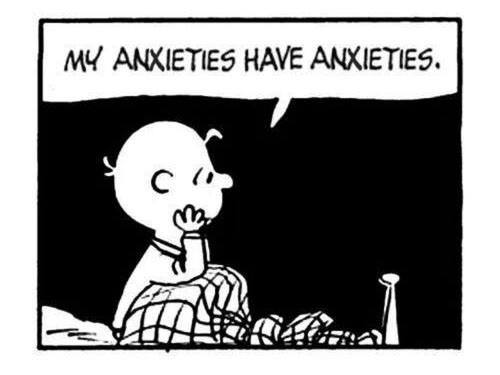
My anxiety can strike randomly and I have to cancel arrangements, which I hate doing, but is sometimes essential. I try and do too much- so this is a reminder for me to be kind to myself and take things at the right pace for me.

I think this should be applied as a general rule. I can’t be everything to everyone. I must take time to breathe and slow down and appreciate. For only then can I be truly and optimally happy.

Guest Post: The Efficacy of Online Cognitive Behavioural Therapy- CBT by Dr Stacey Leibowitz- Levy

We are delighted to have Dr Stacey Leibowitz-Levy, psychologist writing about Cognitive Behavioural Therapy for us. As with any therapeutic practice, it is very much individual as to whether it will work for you and CBT will not work for everyone- but has been proven to work for many. Here Dr Leibowitz-Levy explains how it can work online.                        

CBT1

Online counselling is a growing field with more and more people turning to the internet to seek out counselling help. Counselling services offered online incorporate the range of therapeutic approaches that have been developed within the field of psychology. Approaches to understanding mental ill health and treatment include therapeutic approaches such as logo therapy, psychodynamic therapy, systemic therapy, psychodynamic therapy and Cognitive Behavioral Therapy (CBT). How do these therapeutic modalities translate to the online environment? This article will address the compatibility of CBT in particular as an online counselling approach.

CBT is a widely-utilised mode of therapy that focuses on an awareness of the relationship between thoughts, feelings and behaviour. The aim of CBT is to address difficulties through modifying distorted thoughts, unhelpful behaviour and unpleasant emotions. In order to achieve this end, the client works collaboratively with the therapist in building awareness and understanding of his/her condition, and an accompanying skill set for evaluating and changing distorted beliefs (as well as modifying dysfunctional behavior). The therapist develops clear objectives and a treatment plan that requires active participation from the client during sessions, and follows through on homework assignments between sessions.

This form of therapy is characterized by a structured, time limited and outcome focused approach to managing mental health challenges. Often CBT is focused on a specific issue such as anxiety or managing depressive thoughts and, as such, many CBT interventions are available in a protocol format. CBT offers a delineated and clearly defined intervention that is largely directed by a clearly defined process and structure. This is in contrast to many other therapeutic approaches that have less defined parameters and take their cue on a session to session basis from the client.

The format and approach of CBT lends itself to an online format in that the structure and process are not only defined and constrained by the relationship between therapist and client but are also defined by a clearly delineated therapeutic procedure. This procedure offers a framework within which to deliver support which can easily be translated to an online process. CBT follows a set format. It is driven by the imperative of building an understanding of the issues the client is experiencing and imparting a certain skill set to assist the client in managing his/her mental health issues. CBT is thus based on specific content and has a strong psychoeducational aspect, which means that delivery online can be located in tangible and clear cut content and outcomes for the client.

This also allows for versatility in the delivery of CBT online. While face to face time with a therapist may be desirable for some clients, the option of online delivery of psychoeducational as well as skills based elements in other formats also works well. For instance, the psychoeducational aspect could be communicated very effectively through a video delivery. CBT lends itself to the format of online courses where clients are guided through a process of identifying and understanding their particular issues and developing the skills to manage them. Interspersing this with face to face time or the opportunity to clarify or ask questions in a chat or e-mail format makes for a very effective online intervention.

While many of the issues addressed in CBT are personal to the client, the possibility of locating these issues within a more general format is very much part of the CBT approach. There is a set way of getting information from, and accessing and understanding the client’s experience, with the client having to act on this information between sessions. This more “scientific” process also makes for an approach that lends itself to an online format.

The efficacy of CBT as an online intervention is borne out by the number of sites specifically offering online CBT in a variety of formats (for some examples, see here and here). The online availability of this well researched and well-verified approach to managing mental health problems offers increased affordability, accessibility and greater choice for mental health consumers.

Dr. Stacey Leibowitz-Levy is a highly-experienced psychologist with a Master’s Degree in Clinical Psychology and a PhD in the area of stress and its relation to goals and emotion. Dr. Stacey has wide ranging skills and expertise in the areas of trauma, complex trauma, anxiety, stress and adjustment issues. Stacey enjoys spending time with her husband and children, being outdoors and doing yoga.

The Anxiety Wave: On waking up with anxiety

anxiety123

In previous posts about my mental health journey, I have mentioned having an anxiety disorder. Anxiety disorders are triggered in the brain and can be very hard to keep under control. Thankfully, most of the time, I can function at optimum health. Yet, sometimes stressors come along and throw me a little off course.

The main anxiety issue I have is usually morning anxiety. This is when you wake up and almost freeze from fear- you feel like you can’t do anything or enjoy the day, panic floods the body. Sometimes, after a few hours this form of terror dissipates. You can distract yourself and it goes – but sometimes it takes a little longer for it to go and it causes exhaustion. This is due to the hormones adrenaline and cortisol which are triggered pre or during a panic attack.

I am still learning to ride the anxiety wave- it can make you feel very tired and far less productive. For me, it often happens after I have had time away from work or a disruption to my routine, the anxious thoughts and feelings will flood back, making life that little bit harder again.

It is not easy nor straightforward dealing with this. I have to be kind to myself and know it will pass. Breathe, and distract my mind. Try and use meditation techniques to keep it under control.