
Dopamine Decor: How Your Interior Design Choice Influences Mental Wellbeing by Amy Jones

(image: Unsplash: Maiar Shalaby)

More and more people are putting time and effort into looking after their mental wellbeing, and rightly so. Most of these efforts focus on stress-reducing hobbies and social activities, but have you ever wondered if your interior design choices are influencing your mental health?

If the answer is no, it might be time to start considering how your home decor can be altered to achieve peak wellness. If you’ve no idea where to start when trying to turn your home into a sea of tranquillity, we’ve picked out a few areas of your home that could contribute towards your mental wellbeing.

Colour

(image: Unsplash: Marc Jodoin)

Blue 

As the colour of the sea and sky, blue is seen as a calm, soothing colour. It’s also an easy colour to incorporate into your home if you’re trying to make your home have a more relaxed vibe.

Darker shades of blue work perfectly for a feature wall and allow the colour to be the main focal point of the room. If you want to paint your whole room blue, lighter shades of blue work great and can promote an airy, outdoorsy feeling.

Purple

In some cultures, purple represents royalty whilst in others it is associated with peace and spirituality. However you see purple, it’s important to note that it’s becoming an increasingly popular colour in the interior design world.

When it comes to incorporating purple into your home, it’s often a case of less is more. Consider ways in which you can add a touch of purple rather than creating a fully purple room. Rugs, lampshades and cushions are a great way to introduce purple without overdoing it.

Green

Green is similar to blue in the sense that it can help bring the outdoors to your home, due to how we associate the colour with nature and greenery. Forest green and jungle green are great options if you want to go overboard on the green interior as they are less subtle shades.

Brighter greens should be reserved for kids’ bedrooms or playrooms. Alternatively, shades like lime can be used for smaller decorative ornaments that aren’t the main focal point of your home.

Nature

Nature and wellness go hand in hand. In fact, most mental health therapists would agree that spending time outdoors is great for our mental wellbeing. According to studies, there is a positive correlation between happiness and our connection to nature.

Obviously, we can’t spend all of our time outdoors so it’s important to consider ways we can bring nature into our homes. Adding plants throughout our home can improve style but can also improve air quality. Improving the air quality in your home can have positive implications for your mood, stress levels and sleep quality – all of which contribute to healthy mental wellbeing.

When choosing plants to add to your home, there are a number of factors to consider including how much sunlight and water different types of plants require. In addition, you’ll want to decide what size of plant works for your home. Larger plants work great in the corner of a room while smaller plants should be added to coffee tables and shelves.

Layout

A clear home can lead to a clear mind so it’s important to stay on top of your home’s cleanliness levels. It can be a good idea to focus on minimalism and create large open spaces in your home that are easy to keep on top of in terms of tidiness.

Be careful of adding too many items that only serve decorative purposes as this simply gives you more things to keep on top of and could easily be the start of your home becoming cluttered.

Our home can affect our wellbeing, so for positive mental health, its good to implement calming colours and layouts for a wonderfully relaxing home.

Amy Jones is a freelance writer.
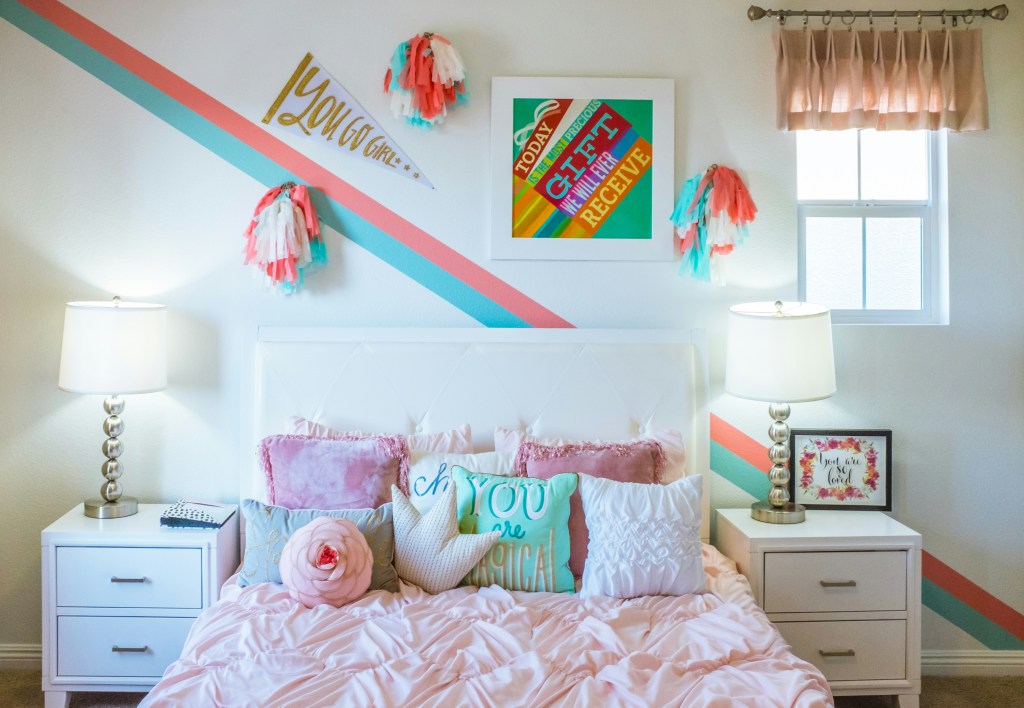
Transforming Bedrooms Into Anxiety-Reducing Spaces For Kids by Amy Jones

(image: Kenny Eliason: Unsplash)

There is nothing more heartbreaking than to see your child suffering. What’s more, when their mind is playing tricks on them, and they’re experiencing spells of anxiety, it can leave you feeling helpless as the parent/carer. While you may be doing all the right things such as taking them to therapy and encouraging them to talk about their feelings, sometimes their environment can play a huge role in their emotions. Children spend a lot of their time in their bedrooms, especially when they’re feeling anxious about the outside world. Transforming their bedroom into an anxiety-reducing space could be the key to allowing them an environment to disconnect from ruminating thoughts completely.

Be sure to listen to what your children want for their bedrooms before taking the design into your own hands. If they believe a Minecraft bedroom will make them feel happy and give them a sense of security in their space, listen! Otherwise, consider the following tips for designing your bedroom into an anxiety-reducing space. 

Colour schemes 

Starting with the room’s backdrop, consider painting your child’s room a colour that inflicts a sense of calmness and serenity. There are a number of colours that are proven to create this mood, for example, cool colours such as blue, green and lavender grey are known to create a relaxing feel. Also, pastel shades of favourites such as pink and green are perfect for creating a sense of tranquillity. 

Connections to nature 

Nature has shown to have immense benefits for reducing anxiety, from going for walks to playing in the park, if your child is struggling to face the great outdoors, consider bringing it to them. For example, add touches of greenery in the space. There can be faux versions of vines winding round their bed, or perhaps give them real plants to take care of and give them a greater sense of purpose. If your child has been begging for an animal, why not start small and get them a fish? It has been proven that watching fish swim back and forth can relax the mind and ease muscle tension.

Blue LED lighting 

Lighting can be a hard element of the bedroom to influence. If your child’s bedroom is currently brightly lit with fluorescent light this may not be helping their state of mind. Blue light therapy has been raved for its ability to influence mood and the body’s biological clock. Dimming their bedroom lighting with blue lighting may support their night of rest. Several sensory light appliances can create this experience, in addition to adding texture to the projection that mimics ocean waves. 

Create “safe spots”

Sometimes, your child just wants to be alone, and that’s okay. Creating a safe space away from the world can be simple with the addition of a children’s teepee, or if your child has a bunk bed with underspace, make this area more private with curtains. Fill this space with comfy seating, pillows, and games for your child to play. It can be tempting to buy them an Xbox or PlayStation to enjoy in their bedroom, but this can worsen your child’s anxiety and keep their mind active when it’s time for rest. Keep technology away from their bedroom, and keep it comforting and quiet. 

Keep schooling separate 

Another mistake parents make with their child’s bedroom is adding a desk for them to complete school work. When your child is suffering from anxiety, school can often inflict feelings of discomfort or remind them of unpleasant experiences. Allow your child to do their school work downstairs where you can support them and be there for them. Allocated places for different activities can help them feel a sense of security. Reserve the bedroom for sleep. Having a small table and chair for your child to do artwork can act as a place to explore their creativity. 

Encourage rest & relaxation

Encouraging relaxation is essential when transforming your child’s bedroom into an anxiety-reducing space. This involves creating an atmosphere that promotes comfort and signals to your child that their room is a sanctuary for winding down and recharging. Start by investing in high-quality, soft bedding and cosy blankets that make your bed an inviting haven. Add plush pillows or weighted blankets, which are known to provide a sense of security and calmness.

(image: Pexels: Vika Glitter)

An anxiety-reducing space

Transforming your child’s bedroom into an anxiety-reducing space can have a profound impact on their emotional wellbeing. By focusing on calming colours, natural elements, thoughtful lighting, and creating safe and comforting zones, you’re helping to create a sanctuary where they can decompress and feel at ease. Remember, every child is unique, so it’s important to involve them in the process and tailor the space to their individual needs and preferences.

Small changes in their environment can make a big difference in their ability to manage anxiety and feel secure. While this is just one piece of the puzzle, pairing it with emotional support, therapy, and open communication can empower your child to navigate their emotions with greater resilience. A cosy, peaceful bedroom can become their haven—a place to relax, recharge, and truly feel at home.

Author Bio

Amy Jones is a freelance writer and enjoys writing a range of topics, from mental wellness to home renovation and loves researching the latest news and updates. Having worked with a number of different businesses, including Petite Lumeire, Amy is now a freelance writer looking to specialise in children’s mental and physical wellness.

5 New Interior Design Ideas to Boost Wellbeing

(image: Pexels)

The Novelty Cave Design

The novelty cave design is a unique idea that will make your home more exciting and memorable. It’s not easy to find something like this because you have to create it, but the results are excellent. Decluttering to create the space can also increase feelings of wellbeing.

The novelty cave design creates an underground space that you can use as a bedroom, bathroom, or just any function you want. Naturally, therefore, it’d be necessary to declutter areas you wish to redesign ahead of time. Consider moving boxes or anything you deem clutter to a storage – learn more about reliable movers near you.

The main thing here is to create the illusion of being in a natural cave, and it’s not that hard at all. It can help to have a space where you feel cosy.

Sauna Style Design

When moving houses, you may experience overwhelming feelings but moving in a house with a sauna style design will instantly improve your mood with its timeless and functional beauty. It’s not only about being cosy but also getting many health benefits while enjoying some time with your family and friends.

You can also include some cosy elements in the bathroom – your home will become more beautiful than ever if you take care of the minor details. You want your home to feel calm.

Pod Styles for Specific Rooms 

With their drawers, shelves, and cabinets for storage or display, pod-style furniture pieces are a great addition to any room. They take up less space than traditional shelving units but still provide many options for displaying favourite items.

Pod styles work well in bathrooms, where they serve as both countertops and extra storage areas. If you’re looking to transform your master suite, consider a pod-style countertop to replace the standard vanity. It will add storage and create an elegant focal point. It can also help to promote feelings of calm in the space.

Twilight Lighting Design

It’s no secret that a well-lit room is essential for any interior design. However, what if you’re trying to create more of an atmospheric experience? If so, then twilight lighting might be the perfect fit. Twilight lighting works by adjusting your lights in such a way as to cast shadows across the floor and walls – resulting in an ethereal feeling room. This can boost wellbeing if it helps you to relax and switch off too.

Minimalistic Designs

If you like more natural-looking designs, then this might be the style for you. This design is great because no matter what kind of decor your living space features, it will look good with a minimalistic design. The most common thing that people do when they use a minimalist approach to interior design is use light colours such as grey and white throughout the space. This can feel more relaxing.

This is a great design idea for people trying to sell their homes because the neutral colour palette makes your house more attractive and appealing. The best way to make sure this style works well in your living room would be using a fireplace as an accent piece or adding one large focal point in the room.

Conclusion

Interior design possibilities are endless, and it is up to you how far you want to go with the designs to make them interactive, attractive, and timeless. Make sure you create a home with lots of space and light, so it feels calm and promotes feelings of wellness and cosiness.

This article was written by a freelance writer

How to make your surroundings more comfortable if you have Anxiety: by Daniel Tannenbaum

freecalm1

(image: 123RF.com)

Your environment has a huge impact on your mood, and this is especially the case when it comes to anxiety.

For example, many believe that your surroundings can often be a direct reflection of your current state of mind – for example, lots of clutter may suggest you feel overwhelmed.

Alternatively, it can make existing feelings feel worse such as lots of mess being a key trigger for depression.

However, your surroundings can also make you feel better, if you do it right. Here are some tips to help you to make your surroundings more cozy and comfortable, to help reduce anxiousness and make you feel calmer.


Soft lighting

Using soft lighting, especially in the evenings, can help you to feel more relaxed than harsh, bright, white lighting. Aesthetically, things like fairy lights draped along a wall or from ceiling to ceiling or lanterns, can also be nice to look at, which can be a great way of boosting morale. After all, if you are happy in the environment you are in, this will also have a positive impact on your mood.


Hygiene

For those that panic over clutter and messiness, having a home or workplace built with the right surfaces in mind can help you alleviate this. With companies specializing in hygienic surfaces, you can optimize your home or workplace to have doors, walls and floors which are easier to clean and reduce the spread of germs.

Simple examples include the role having blank walls and cladding over individual tiles in the bathroom or kitchen which can get grimy and hard to clean.


Cushions

After a long day at work, you want to feel that when you come home you can completely unwind. For many, this might mean tuning into an hour of TV or watching a film to help alleviate the stresses and strains that may have accumulated during the day, causing anxiety. Make this cozier and an altogether far more pleasant experience by having lots of cushions in different textures.


Rearranging furniture

You don’t necessarily need to purchase anything to change your surroundings and make them more comfortable. It could be as simple as rearranging furniture. It can help change your perspective, and also increase the visual appeal of the space you are in, making you feel calmer.


Plants

A number of studies have shown the mood boosting impact of having plants in the home. This tends to be one of the most cost effective ways to make your surroundings better, whilst also adding a pop of colour too.


Turn off electronics in the evening

Never completely unwinding and mentally checking out of looking at emails and social media can have a harmful impact on your overall levels of anxiety. To make you feel more at ease in your surroundings, it is highly recommended that you allocate times where you completely switch off your electronic devices, especially at night. Instead, why not look at more relaxing activities to do such as reading or having a hot bath?


This article was written by freelance blogger Daniel Tannenbaum