Guest Post: Learn How to cope with Postpartum Depression by Kayla Clough at ourstart.com

After having a baby, there are many women who find themselves suffering from postpartum depression. Postpartum depression can cause feelings of sadness, lethargy, anxiety, and hopelessness. It’s important to do everything that you can to treat the symptoms of postpartum depression as much as you can so that you can build an amazing bond with your baby and rest assured that you are being the best mother that you can possibly be. The following guide walks you through a few ways you can handle postpartum depression effectively.

kayla2.jpg

(image: Kayla Clough)

Talk About the Way That You Are Feeling

There are many women who feel ashamed of the way that they are feeling and try to hide it from their friends and family. This is not a good idea because it can lead to isolation and cause the sadness and feelings of hopelessness to become exasperated. It’s best to be upfront and honest with your friends and family about the way that you are feeling so that they can help you battle the feelings as much as possible.


Take a Break from Time to Time

Being a new mother can be overwhelming. There is so much to do, and it often feels as though everything you do is not good enough. Take a break from time to time to unwind and allow your emotions to reset. Taking a long bath or simply enjoying a cup of tea alone on the porch while reading a great book can help you to be able to feel less anxious and allow your body and mind time to relax so that you can go back to caring for your baby with less stress.


Get Plenty of Sleep

When you are not getting enough sleep, it can be hard to regulate your emotions. It’s best to get as much sleep as you can when you have a little one. Take naps when they take naps and realize that the house, laundry, and the dishes can all be taken care of during the day. You can lay your baby down next to while you fold clothes or carry them against your chest in a carrier while you wash dishes or clean the house.


Get Up and Move

After having a baby many women feel lethargic and do not realize that they need to get up and move around to make themselves feel better. Getting regular exercise has been shown to lift moods and can help you to lose some of the weight that you may have put on during your pregnancy. It’s important to realize that the better you feel about yourself, the better mother you can be with your little one.


Don’t Be Afraid to Get Professional Help

There are times when overcoming postpartum depression on your own is too difficult to do. You can seek professional help from a psychiatrist to get advice and medication to help treat the symptoms that you are experiencing. Being able to be less stressed, anxious, and sad can help you to be able to live a more fulfilling life.

Postpartum depression does usually go away over time. If you have suffered from postpartum depression before, there is a good chance that you will suffer from it with future pregnancies. Be sure to properly prepare for the situation so that you can treat it from the start so that you do not have to suffer from the feelings associated with postpartum depression for any longer than you have to.


kayla

Kayla Clough is the email specialist at OurStart. Kayla is a recent graduate of Eastern University in PA, USA where she majored in Marketing and Human Resources. Kayla loves all things fashion, her golden retriever Max, and coffee. When she is not working, you can find her binge watching Sex in the City and baking her latest find on Pinterest.

Facebook: https://www.facebook.com/OurStart

Blog: https://ourstart.com/

Extract from my Metro article on Homelessness and Mental health issues

homeless
(image: concordhomeless.org)

This is an extract from a Metro.co.uk article that our founder Eleanor wrote and researched on rough sleeping, homelessness and mental health issues. To read the full article click here: http://metro.co.uk/2018/04/10/homelessness-and-mental-health-whats-being-done-to-help-7421391/

The ‘Beast from the East’ put homelessness under the spotlight in February and March as rough sleepers faced freezing conditions. But a more persistent problem among homeless people, which is little talked about, is the prevalence of mental health issues. As someone with bipolar disorder, who has never been homeless, I wanted to investigate what support there is out there for homeless people with mental health conditions.

Anyone can be affected by homelessness, regardless of age, race or sex. Among homeless people, 44% have been diagnosed with a mental health condition, according to Homeless Link. Homeless link points out that homelessness is a stressful, lonely, traumatic experience, which has a major impact on mental health.

In summarising some of its research into homelessness and mental health, Crisis says: ‘Serious mental health issues, such as schizophrenia, bipolar and post traumatic stress disorder are more common among homeless people. ‘Suicide rates are nine times higher, demonstrating the very real need of effective support’

Homeless people with mental health issues, particularly rough sleepers, often have less access to mental health professionals due to their lack of address or their complex needs. Being homeless is extremely overwhelming. Treatment may be the last thing on the mind of a homeless person with a mental health condition when they are focused on finding a way to get food and a place to sleep. The prevalence of drug and alcohol addictions is an added problem.

According to Crisis: ‘Homeless people are more vulnerable to alcohol and drug use. ‘Multiple diagnosis of substance and mental health issues can be a barrier. Rates of alcohol and drug use are four times higher than in the general population.’

Understandably, addiction can get worse when someone is homeless, due to the stress. St Mungo’s is charity that has conducted research into this area and affected change in legislation. Its investigation ‘Stop the Scandal’, looks at mental health and rough sleeping. The charity called for a national strategy to end rough sleeping and changes to the law.

Following St Mungo’s campaign, in 2017 the government backed the Homelessness Reduction Act. This legislation, which came into force on 3 April, is designed to prevent people becoming homeless and to give councils more power to tackle the issue. The government also committed to halve rough sleeping by 2022.

St Mungo’s is leading the way on this. It said: ‘Our experience is that homeless people are treated poorly and often labelled and judged. ‘People see drink or drugs behind rough sleeping, but rarely think about mental health. ‘Mental ill-health can affect anyone, but people sleeping rough face adverse weather conditions, fear and isolation’.


Read more: http://metro.co.uk/2018/04/10/homelessness-and-mental-health-whats-being-done-to-help-7421391/?ito=cbshare

Twitter: https://twitter.com/MetroUK | Facebook: https://www.facebook.com/MetroUK/

What happens during a Manic episode: Bipolar One Disorder Tales by founder Eleanor

healthyplace1.jpg

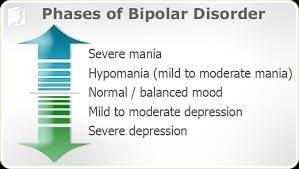
When most people think of bipolar disorder, they may think of the two opposing poles that make up the illness. High and low. Manic and depressed. Many also believe that all people with bipolar flit between these moods constantly and that the illness is severe or alike in everyone who has it. This is not the case.

There are two types of bipolar disorder. I have the first one – Bipolar affective One disorder, which means that I have serious manic episodes which include psychosis (loss of touch with reality). This has happened to me twice in my life and both times I have needed hospitalisation. Bipolar two is characterised by lesser manic episodes (hypomania) and more mixed states.

mania2

(image: https://www.34-menopause-symptoms.com/mood-swings.htm)

Being Bipolar One is very challenging. When I get ill, I get really really sick. Loss of insight, loss of reality, needing anti psychotic medicines now- ill. Ill to the point of being sectioned under the mental health act due to lack judgement and insight. Believing that my family are out to get me and people are going to harm me – ill.  Really unwell.

When one of these serious manic episodes strikes for me, my thoughts begin racing and I can’t concentrate. I don’t sleep, I am more creative in the short term but a gibbering wreck in the long term. I start believing I can do things that I can’t rationally. I am super vulnerable and I speak much faster. I may not make much sense and when the delusions begin, I start believing I am going to be harmed.

Luckily, these episodes are kept at bay by a host of excellent medications including Lithium and Quetaipine. I also take anti depressants to keep the low periods at bay in my life.

Full blown psychosis and mania for me are very rare but they do happen. In 10 years, from 2004-2014 I did not have a hospitalisation. I was depressed and anxious but I was able to recover at home.

I had no hypomanic or manic episodes for a decade! No psychosis. One therapist even questioned my diagnosis, before my 2014 hospitalisation.

Mania for me means danger. That danger means I am more vulnerable. I have to be very careful who I surround myself with during those times. I don’t drink alcohol to excess or take drugs, but some with this kind of mania do. Or they spend lots of money or engage in risk taking behaviours such as sexual activity.

I have learnt that as long as I take my medication regularly, get enough sleep, eat well (and don’t engage in long haul travel) that I can keep my symptoms at bay. If my medicines work! (this is always a fear.. that they could stop working).

Mania for me strikes out of the blue sometimes. I also have to be careful that my mood stabiliser medicine is holding me- as with high doses of anti depressants, mania can be triggered without it.

When in psychosis in hospital I have thought the following untrue delusions

– I am being harmed by my family
– There are CCTV cameras watching and filming me in my bedroom/ hospital room
– I have been abused in some way (my mind convinces itself)
– I am being held by a criminal gang (in hospital)

These delusions have always disappeared over time, with excellent care from psychiatrists and psychologists, anti psychotic medicine and good support from family.

I don’t get these when well, and rarely have to go through them. I am learning to accept that my brain chemistry is not the same as other people and having bipolar, a chronic illness, is not my fault. I just do the best I can to manage symptoms and keep myself as well as possible.
If you want to share your story of mania and bipolar, please do write below.

There is hope and recovery after mania. Thank you to all on the Facebook group who voted for this one.  

Love, Eleanor x


Guest Post: Making the Climb: 4 Tricks to begin the fight against Drug Addiction by Kara Masterson

Making the Climb, 4 Tricks to Beginning the Fight Against Drug Addiction (1).png

It all started at a party you attended a few months ago. You were feeling down after the big break up, and you just wanted to feel good again. Someone at the party offered you some pills, and they made you feel better than you had felt in a long time. Before you knew it, you were a regular user. At first the confidence and the euphoria were too irresistible to pass up.

Once hooked, you always knew how to get ahold of your drug of choice. It was always just a phone call away. Unfortunately, one thing lead to another and now the pills are not having the same effect they used to provide you with. In fact, you need more to get the same feelings, but coming down has been much more difficult on you than you ever imagined it could be. In a particular low moment, you started to think that it might be time to fight your drug addiction, but where do you begin?

Admitting Your Problem

As with most problems, fighting a drug addiction begins with admitting to yourself that you definitely have a problem with drugs. If you are not committed to this being the truth, then you will find it is difficult to see a commitment to overcome the addiction through to the end. When you are certain that you want to give up your addiction and will do anything to make that a reality, then you are ready to take the journey necessary to reclaim your life back from drug addiction.

Disassociate from Your Connection

As long as you can call someone to enable you to continue in an addiction, you will be driven by the addiction to do so. To fight and overcome a drug addiction, you must break all ties with the people who enable you. By making this commitment, you are getting rid of the source of your addictive behavior.

Build a Support Network

To give yourself the best chance at overcoming addiction, you need to identify the people you can trust that have your best interests in mind to confide in about your drug addiction. This could be friends, family members or even someone like a pastor or teacher.

The important thing is that you gather people around you who love you and are willing to help you see your recovery all the way through. Sure, some of these people may be disappointed to learn about your addiction at first, but ultimately those who have your best interests in mind will want to help you reclaim your life and will be there for you in times of weakness.

Get Professional Help

The next step in your treatment is to locate and visit a rehab facility that can help you to get clean from drugs. Detoxing from narcotic substances can sometimes be a difficult path to walk down, but it is best dealt with by working with professionals like Kick Recovery Coaching or someone similar who have helped countless people through this process. They will not only be able to help you know what to expect, but they can provide you with ways to get through the detox phase that are rooted in the latest drug addiction treatment options.

The road ahead may not be an easy one, but it is definitely better than not seeking any help at all. The simple reality is that drugs ruin lives, but you do not have to be a statistic or a willing victim. By taking up the fight to reclaim your life from a drug addiction, you will come out the other end of this journey a much stronger person for it.

Kara Masterson is a freelance writer based in the USA.

Guest Post: 5 Tips for Boosting Your Immune System by Michelle Hannan, Nutritionist

Hannan (2).jpg

Do you get sick and cough and sneeze a lot? You could have a weakened immune system. In this article, Michelle Hannan, Nutritionist shares her tips to improve your overall health, including within the mind. 

A weak immune system allows viruses and bacteria in your body to make you unwell. A strong immune system ensures that the body has the power to fight it all as best it can. Your physical health can also affect your mental health and make you feel low, despondent and not at your best.  

Here are some factors that weaken the immune system.

  • Harmful radiation
  • Smoking
  • Unhygienic lifestyle
  • Stress
  • Too much alcohol
  • Dehydration
  • Lack of sleep
  • Poor diet
  • No or little exercise
  • Obesity
  • Excessive medication

These are my tips for boosting the immune system:


  • EATING HEALTHILY


Most immune problems are due to unhealthy lifestyle or illness. Make yourself your priority and you will see the changes that occur in your life.

Unhealthy eating (high fat foods) can damage your immune system and affects your mental health  People consider healthy food as dull and complicated, but in fact, it is not. Check out some recipes for healthy yet delicious and easy food and stick to it to see the results.


  • EXERCISING


I understand that people have a hard time exercising due to many reasons. I was one of those people who hated exercising and opted for dieting whenever in need but a friend made me exercise for a month, and now I can’t think of a day without it.

When you exercise in adequate amounts, your immune system improves. Exercising also helps in making your memory stronger.

According to a Ph.D. candidate at the University of Canberra Research Institute for Sport and Exercise in Australia.

There is now a wide body of research showing that the benefits to the body with exercise also exist for the brain, when older adults undertake aerobically, we see changes to the structure and function of areas of the brain responsible for complex mental tasks and memory function.

-Joe Northey

He further said.

Each type of exercise seems to have different effects on the growth factors responsible for the growth of new neurons and blood vessels in the brain that may indicate why doing aerobic is of benefit to cognitive function.

-Joe Northey

http://time.com/4752846/exercise-brain-health/


  • RELAX MORE

When we worry more and relax less, our body`s immune system gets beaten up, and our mental health suffers.

Try to concentrate on the present rather than the future. This quote of Meredith grey from grey`s anatomy inspired me a lot.

We spend our whole lives worrying about the future, planning for the future, trying to predict the future, as if figuring it out will cushion the blow. But the future is always changing. The future is the home of our deepest fears and wildest hopes. But one thing is certain when it finally reveals itself. The future is never the way we imagined it.


  • VITAMIN D

 Sunshine is important for your immune system, promoting uptake of Vitamin D. Be careful to wear sun protection but get out a little every day into the light. This will help your mood too.


  • HOME REMEDIES

Home remedies are often misunderstood. People tend to think that home remedies do no good but in reality, the remedies below can give you long-lasting results. 

  • Avoid tobacco and alcohol
  • Drink as much water as possible to flush toxins
  • Eat garlic
  • Eat nuts and seeds as they contain healthy fats
  • Include more and more vegetables and fruits in your diet


Author bio: Michelle Hannan is a nutritionist, and she’s on a mission to give you all the information you need to lose weight successfully. She also blogs regularly at https://www.hcgdietinfo.net/


Guest Post: How and Why Sport Can Help Your Mental Health- Sara Whitehouse at Stadia Sports

exercise.jpg

Mental health has become a strongly discussed topic in today’s world and rightly so. With more and more people vocalising their struggles with mental health, it’s the perfect time to make sure you’re looking after yours.


The How and Why of Mental Health

You’ll be pleased to know, that when indulging in physical activity, you’re bringing a whole array of benefits to your body – many of which you may not have realised.

1. Reduces Depression, Anxiety and Stress

Although there’s growing awareness that exercise helps to improve depression, anxiety and stress, it’s still not a dominant reason why people choose to be active. In many cases, people tend to turn to medication and other remedies to treat their stresses, not realising how great a gentle run or yoga session can be too.

Depression

Studies show that exercise can be used to treat mild to moderate depression as effectively as antidepressant medication. It is important though to speak with a Doctor and find out the best plan for you.

Reasons why exercise helps fight depression:

  • Promotes changes in the brain including neural growth, reduced inflammation and promotes feelings of calm and well-being.
  • Releases endorphins that energise you, making you feel happy and positive.
  • It acts as a distraction from depressed thoughts and gives you opportunities to socialise and meet new people, all of which help to boost spirits.

Anxiety

Exercise is known to help with anxiety. Through fully-focusing on your fitness sessions you can tune your body to be mindful about your exercise, receiving more health benefits.

Reasons why exercise helps fight anxiety:

  • By concentrating on the sensations that happen during exercise, you can interrupt the flow of worries in your mind and improve physical condition quicker. For example, you can workout to the beat or rhythm of the music or focus on the sensation of your feet hitting the ground.
  • Relieves tension and stress through performing stretches that loosen tight muscles.
  • Boosts physical and mental energy through the release of endorphins.


Stress

When you are stressed more often than not, your body tenses up. Your muscles begin to tighten particularly in your face, neck and chest area, which can lead to headaches, chest pains, a pounding pulse and muscle cramps. Experiencing these stress-related symptoms can lead to you worrying more which brings on a whole array of other symptoms. These include heartburn, insomnia, and stomachache. The more pains you get, the more stressed you become and sadly, you’re found battling a vicious cycle between your mind and body.


Reasons why exercise helps fight stress:

  • Exercise helps to break the cycle of worrying by mixing up your routine.
  • Releases endorphins in the brain that help the muscles to relax and relieve the built up tension in your body.
  • Makes sleeping easier which reduces any sleep-related stress from your mind.

Remember: When your body feels better, so will your mind.


2. Helps Sharpen Memory and Thinking

The same endorphins that work to boost your mood also improve your concentration. This makes you mentally ‘sharp’ when completing tasks. Physical activities that require hand-eye coordination such as tennis, badminton or squash, are particularly beneficial for brain building.


Reasons exercise helps the brain stay sharp:

  • Increases the level of oxygen to your brain improving circulation.
  • Breaks the mental fatigue and slumps often experienced during a day’s work. Short walks at lunch time or even a few jumping jacks can help reboot your brain for an afternoon of learning.
  • Stimulates the growth of new brain cells, reducing the risk for disorders that lead to memory loss and enhancing the effects of helpful brain chemicals.

Whatsmore, the birth of new brain cells also fight against age-related decline. That means by doing daily fitness activities, you can keep your body looking and feeling like your younger, healthier self. Perfect!


3. Gives Your Immune System A Boost

Catching a cold can leave you feeling blue mentally as well as physically. As you feel groggy from a blocked nose and sore head, you tend to act groggy too. Though we’re not suggesting exercising whilst you’re ill is a good idea, frequently exercising when healthy can help to combat illness, boost your immune system and make you feel happier.


Reasons why exercise improves your immune system:

  • Getting active helps to flush bacteria out of the lungs and airways, reducing your chances of developing a cold, flu or other illness.
  • Exercise causes your white blood cells (WBC) to circulate quicker helping you to detect illnesses earlier than before. White blood cells are the body’s immune system cells that fight disease.
  • Slows down the release of stress hormones making your mind a more peaceful place.


4. Improved Self-Esteem And Energy

Regular activity is an investment in your mind, body and soul. 

Along with the feelings of conquering your fitness goals, finding a healthy, balanced routine will also work to give you an energy boost. 

Getting Into A Routine

  1. Start easing yourself into exercise with a 10 minute home workout, walking the dog or quite simply having a dance around your room.
  2. Increase your workout by extending the time you are active for or start going to more fitness classes.
  3. Establish a routine of which days you will exercise.
  4. Even on your days off, making simple changes to your fitness routine like taking the stairs instead of a lift or going for a short walk instead of sitting on the sofa can keep your brain active and stresses at bay.


Remember: The key to unlocking improved mental health through exercise is to do it regularly. The more you workout and get active, generally, the healthier and happier you will feel.

 
exercise2.jpg

Family-Friendly, Mixed Gender Sport Ideas

Having looked at six reasons why and how sport helps mental health, let’s take a look at some ways you can adapt sports into your daily routine.
Exercise doesn’t have to be boring, gender-specific or child-unfriendly. Here are some great ideas to incorporate some moderate exercise into your daily routine:


  • Taking daily 20 to 30 minute walks during work breaks, after dinner to walk the dog and so on. Develop this by joining hiking clubs and take to trekking through the wilderness. You’ll soon be saying ‘the bigger the hills the better!’
  • Go cycling with your children a few times a week. Particularly if you live on a quiet road, going up and down the street and having races, can be super fun as well as tiring! Or, make the most of cycling clubs and enjoy a group venture to the hundreds of mountain bike trails out there.
  • There’s plenty of male and female football clubs knocking about. Join a team and enjoy the competitive side to sports whilst making new friends. Some clubs also offer family-friendly football games for parents and children to play together, so ask if your club does or organise it yourself!
  • Family swimming sessions every other weekend. Take advantage of your local leisure centre or make it a fun, family-bonding activity, venturing to the swimming baths every so often.
  • Play social, leisurely sports like golf. Done regularly can help you build friendships with other players, which contributes to boosting your mood and confidence, improving your mental health.
  • Fit some physical activity in your evenings by joining the local gym and taking part in fitness or yoga classes. See some awesome yoga tutorials here for use at home.


Ultimately, if there’s one thing you should’ve learnt from this article, it’s any exercise is better than none when taking care of your mental health.

By improving circulation of important cells in the body, loosening tight muscles from built up stress and distracting yourself from worrying thoughts, you can make yourself into a happier, healthier you. So, go forth and fitness!
Sara Whitehouse, SEO and Content Editor at Stadia Sports

Stadia Sports are a leading UK manufacturer and supplier of sports equipment, offering a wide range of products including football goals, football nets and accessories.


We are 2 Years Old! Blog Anniversary of Be Ur Own Light!

Cupcake mit Kerze und die Zahl 2
(image: Michelle Leigh writes)

Wow! I can’t believe that Be Ur Own Light has turned 2 years old! We celebrated our second blogiversary on 1st March so I am a few days late but it doesn’t matter.

This blog has provided me with so many amazing opportunities so far. I have met more and more people who are like minded and want to speak about their own mental health to battle stigma. I have met some incredible people online too and such wonderful contributors. I love also finding and telling untold stories.

The blog  has really grown this year into a good mental health resource. We have had lots of contributors which has been fab. I (Eleanor, founder of blog) have also started a new career as a mental health writer and journalist. That is largely down to the success of the blog and I have truly found a niche. Be Ur Own Light is also a shortlisted finalist in the Health and Social care individual category of the UK Blog Awards 2018! Thank you for all your support of the blog and what we do.

I have written this year for Metro.co.uk, Glamour Magazine (online), No Panic, Happiful Magazine and Happiful.com, Counselling Directory, Mind, SANE, Time to Change, STOP Suicide,  Jewish News, Equilibrium Magazine, World Union of Jewish Students,
and been featured in Cosmopolitan UK, Elle UK and Prima.

Thank you to all these amazing people who have provided guest blogs this year. I have been humbled to work with experts and people with lived experience, to provide information and tell others stories to help end the stigma and provide a resource on mental health.

So thank you to these guest bloggers who gave me such wonderful content. There is more to come. This year March 2017-18 thanks to:

Hannah Brown- Recovery from Anorexia
Time With-  Therapy queries
Charlotte Underwood- Recovery from depression/ suicide
Trysh Sutton- Pure Path Essential Oils

Ariel Taylor- Trichotillomania guide
Jon Manning- Mental health in schools
Channel 4 and Lloyds Bank- Get the Inside Out campaign
Stephen Galloway- Inspirational lyrics
Eugene Farell AXA PPP- Loneliness tips
Peter Lang- PTSD and recovery
Kaitlyn W- Light beyond self harm
Jess Harris- Organ donation
Sam- Recovery from bipolar disorder
Ryan Jackson- Reasons for drug and alcohol addiction stigma
Redfin.com- Seasonal Affective disorder
United Mind Laughter Yoga- Job and wellbeing
Christina Hendricks- on PTSD
Reviews Bee- Child Mental Health
Consumer Money Worries- Mental Health and money
Stephen Smith- OCD and nOCD app
Arslan Butt- University students and mental illness
Tony Weekes- Unity MHS
Ellie Miles- Fighting Health Anxiety
Hope Virgo- Anorexia and recovery
Ann Heathcote- Government and mental health
Jasmine Burns- Strategies to help Binge eating
Bill Weiss- Surviving Opiate withdrawal
Jessica Flores- Bipolar 2 – depression
Jay Pigmintiello- Mindfulness and Meditation
David Baum- 365 Challenge for PTSD awareness
Karen- Mental health professional with anxiety
Dr Stacey Leibowitz Levy- CBT
Lucy Boyle- Burnout Syndrome
Diamond G Health Informer- Technology and mental health
Juno Medical- Anxiety Disorders

Thank you to everyone! This year we aim to cover even more mental health issues and disorders in our quest to provide information and be a home for all.

This year I have also written personal posts about my fight with my anxiety disorder, bipolar disorder, mental health and dating, mental health and weight gain, NHS waiting lists and therapy,  book reviews for Trigger Press for Hope Virgo and Karen Mantons books, Workplace and mental health stigma, Reading as therapy and more! Time to Talk Day and Eating Disorder Awareness Week marked and many conversations had eg stigma about psychiatric medication.

We have won various awards from other bloggers- Liebster, Sunshine, Mystery and Top 30 social anxiety blog and Top 100 bipolar blog from Feedspot.com.

I am so excited that we have over 4,000 followers on Twitter, almost 600 on WordPress, over 2000 on Instagram and of course my loyal Facebook followers too.

Thank you friends and supporters! Heres to a great year talking about all things mental health and normalising it to all.

Eleanor x

Extract from Cosmopolitan UK Article by Olivia Blair on Anti Depressants- featuring our founder Eleanor

I was so excited to be featured in Olivia Blair’s article for Cosmopolitan UK on anti depressants- 6 women share what its really like to be on Anti depressants.

I am so thrilled to be in this article with 4 other brave women. My first time in Cosmo! Thank you Olivia.

Below is my part of the article but please click here to read the others experiences too:  https://www.cosmopolitan.com/uk/body/health/a18720313/women-on-antidepressants-working/

cosmogetty

(image: Getty Images/ Cosmopolitan)

I become suicidal when depressed, it’s vital I take medication for my health”

Eleanor Segall, 29, mental health blogger

“I started taking antidepressants when I was 15 after an acute depressive episode where I had to take time off school. A year later I was diagnosed with bipolar disorder and was hospitalised so I was prescribed a mood stabiliser as well to keep me on an even keel.

I was concerned about some of the side effects but the positives for my mind and brain chemistry outweighed the negatives. Over the years, I have been on different antidepressants including fluoxetine, duloxetine and now sertraline. I also continue to have psychodynamic therapy and have tried CBT, art therapy and meditation.

There is a big stigma around anti depressants, particularly against bipolar and other chronic conditions. But I think this new study offers proof that, for some of us, they are vital.”

Extract from my latest Metro.co.uk article: 6 people share their experiences of friendship during Mental Illness

metrofriends

(image: Ella Byworth for Metro.co.uk)

I have bipolar disorder and four years ago I was hospitalised for a severe manic episode.

Without the love, kindness and support of my friends, I definitely would not have recovered as well.

Their support reminds me I am not alone and helps me to feel loved and safe. But mental ill health can be frightening for those who do not understand it, and sometimes friendships can be lost when one person experiences a mental health condition.

Some people may find it hard to cope with symptoms of a friend’s illness and, as such, cut ties or back away.

Jessica Valentine, psychologist at the Brighton Wellness Centre spoke to Metro.co.uk. She says: ‘Sometimes having a friend with a mental health illness can be draining. ‘On the other hand, it’s good to experience the journey of mental health; the ups and the downs, from a personal level. ‘You really get to ‘feel’ your friend come out of the depression. And, it somewhat makes you feel that you are living it too, side by side, helping them.’

The Mental Health Foundation explains that friendship can ‘play a key role in helping someone live with or recover from a mental health problem and overcome the isolation that often comes with it.

It advises that many people who manage to hold onto friendships while experiencing a mental health condition can see those friendships become stronger as a result.

I wanted to see the role of friendships in other peoples’ lives, either when they were coping with a mental health condition, or when they had witnessed a friend in crisis.

Here six people explain their experiences:

Read their experiences and rest of article: http://metro.co.uk/2018/03/01/6-people-share-their-experiences-of-friendship-during-mental-illness-7343290/?ito=cbshare

Twitter: https://twitter.com/MetroUK | Facebook: https://www.facebook.com/MetroUK/

Dispelling the Online stigma: Twitter, Antidepressants and #MedsWorkedforMe

happytruth
(image: amyransom.com)

I wasnt going to write a blog on this because it might feed the Twitter trolls. But I have decided that its really important that I speak out about whats been going on this week on there, in realm of mental health on social media. Theres been a lot of stigma against medication as well as much support for it.

This week, a study by Oxford University and published in the psychology medical journal the Lancet, found that anti depressants work and are effective in a large number of cases. It was hailed as the first major study to prove this. Some medications were found to be more effective than others, but it provided a fantastic proof- that anti depressant medications do help relieve depression in many cases. They are not just a placebo pill.

However, of course, there are a large number of people who have had bad experiences with anti depressants and want to make their voices heard- yet often at the expense of those of us who it works for.

On Twitter, using the trending hasthtag #antidepressants and #medsworkedforme, I shared that anti depressants coupled with my mood stabilisers, have very much helped my bipolar disorder. My brain chemistry and illness is such that unmedicated I can have episodes of suicidal depression, psychosis and mania. My medication keeps my moods balanced and well, so I can function and live a normal life. I have been on anti depressants for almost 15 years now. I have been on fluoxetine, duloxetine and now sertraline.

The only bad experience I ever had with them is when my previous mood stabiliser stopped working and due to an increased dose of duloxetine to relieve my depression (which it did), I tipped over into a fast and unpredictable manic episode. This is the risk that those of us with bipolar run.

Yet, by and large my experiences with meds have been hugely positive. They keep me stable and well.

Unfortunately, on Twitter, I got trolled for the first time by people sharing the following ‘helpful’ opinions (they were not helpful and highly stigmatised):

1) You should reduce your sugar intake as sugar causes highs and lows and is addictive as cocaine. If you reduce your sugar, your bipolar will improve.

(To this I had to reiterate that no medication and less sugar will make my illness worse… and that excess sugar does not cause bipolar 1 disorder.. i.e. it does not have that impact on my mood swings.. bipolar is a real illness in the brain. Reducing sugar may help with overall health but seriously you are going to tell me this?)

2) Others asked what alternative therapies I had tried- eg exercise instead of medication. I reiterated the above re psychosis and suicidal ideation. Which unfortunately cant be treated with exercise alone.

3) People shared their own stories eg the man who had multiple severe illnesses and takes no medication because ‘it shortens life span’ and its a medical fact apparently that these medications cause psychosis. (Some psychiatric meds cause side effects but psychosis- really? Also why would you tell me it will shorten my life?)

There was a lot of what I would call militant stigma against medication, either by people who fear it or have experienced negative effects.

While medication is not for everyone, we shouldn’t be shaming people for taking it. I shouldn’t be shamed for keeping my brain healthy and well through taking meds. And neither should any of you.

Make sure you fight this stigma (and the block button is always useful).

Love,

Eleanor