Blog for No Panic on Living with Social Anxiety: by our founder Eleanor

I am delighted to collaborate and write a blog with No Panic, an amazing mental health charity for people with anxiety disorders. You can read it here on their website:   https://www.nopanic.org.uk/living-social-anxiety-story/  and also below:

I have lived with my anxiety disorder for most of my life, but it really started at aged 15, when I was so acutely anxious I had to take six weeks off school during my GCSE year. I was suffering from an agitated depression, an episode that left me reeling. I was so young and so unwell. It was partly triggered by stressful life events but what I didn’t know at that time was that my anxiety and depression was part of a wider illness- bipolar disorder.

After several episodes of depression and mania, I was hospitalised at aged 16 at the Priory North London and diagnosed with bipolar affective disorder. Bipolar is a mood disorder where you fluctuate between episodes of depression, hypomania (a lesser manic state) or mania. It can run in families and can be triggered by life events. I am now 29, so have lived with this for almost 14 years.

I was hospitalised due to a severe depression that featured psychosis, where your mind loses touch with reality and can cause bad anxiety. I had delusions- false beliefs about the world and a lot of fear. Luckily, I recovered after four months of treatment, left and started taking regular medication which began to help, however, the anxiety seemed to be ever present.

As I had been so ill as a teenager with a whole host of symptoms due to my bipolar, I developed social anxiety and panic attacks. I was desperate to fit in and appear ‘normal’ as most teenagers are. I felt different, I was facing life with a chronic illness. There was so much uncertainty, they couldn’t just scan my brain to see what was going on. Taking medication was trial and error for me, some worked and some didn’t. The same with therapies.

The social anxiety was about feeling judged by other people, because I was judging myself wrongly for what had happened during my episodes. It impacted my self esteem- I felt low about myself and didn’t know why I had been given this illness and why it caused me so much embarrassment and shame at the time. There was a stigma back in 2004, that has lessened today

My social anxiety manifested a few years after I had left hospital. I began to fear attending parties, dates and social events with friends, in case I was judged negatively. As a teenager, there was a lot of stigma from other teenagers about my illness. This made me feel depleted, sad and angry. I didn’t choose my brain chemistry- so why were they spreading false rumours about me and making me feel worthless? It was a difficult time for me. I did also have a lot of love and support.

However, my heart would race and the event eg a birthday party in a club or bar, would trigger an absolute state of panic. What if I looked awful/ wore the wrong clothes? What if everyone was judging me when I got there and thinking badly of me? I often would cancel on friends and not attend, for fear of having to show up, however I felt. I felt so vulnerable and I didn’t want anyone to see it.

Part of the anxiety was because when you have bipolar episodes of mania and depression (particularly mania) it leaves you feeling ashamed of your behaviour. For me there was a certain sense of shame, especially with the manic episodes. However, I knew it wasn’t my true personality and I could not control my brain chemistry at the time it happened. Yet, my subconscious mind continued to trigger panic in social situations.

I was lucky and am still lucky to have a group of very supportive friends (and family) who helped me to get out more, through exposure therapy. My Mum or Dad would take me out in the car, or friends would come to the house and coax me slowly out into the world again. Exposure therapy, moving slowly to expose myself to the feared situations is so helpful to me, even today.

Aged 20, I began my first course of cognitive behavioural therapy (CBT) for the anxiety. I worked out with my therapist what the limiting beliefs holding me back were- fear of judgement, fear of being exposed negatively (as my illness made me feel so out of control) and I was asked to keep thought records of my negative thoughts at the time of a panic attack.

For me, panic attacks manifested themselves as feeling clammy, sick, tight chest, overwhelming negative thoughts about a situation and the fight or flight desire to run away and cancel the arrangement, removing myself from the feared trigger. Although the CBT did not stop the anxiety and panic, it gave me some tools at the time to understand it.

Over the years, I have completed three courses of CBT with a psychologist and another therapist, until I gave up on it, because my anxiety was so emotionally rooted and based in the subconscious that the cognitive approach was not working. For me a combination of the following helps.

Firstly, talking therapy about any past traumas (psychodynamic) with my current therapist is so helpful and makes me feel so grounded and safe. Secondly, when very stressed, I find meditation, particularly the Yoga Nidra meditation or apps like Headspace so helpful for breathing. Taking deep breaths can help relieve stress. Thirdly, exposure therapy is key to recovery. I find the more I go out accompanied, the more I feel able to do- it’s a slow process but helpful.

In 2014, after ten years out of hospital, I was hospitalised for a severe manic episode with psychosis. This hospitalisation caused a lot of trauma and anxiety and in hospital, I found art therapy incredibly helpful. Making a picture, collage or painting focused and calmed my mind. Even colouring in a book helped me to filter out the stress of being in hospital and kept my mind calm. I suppose this is a form of mindfulness too and I still love art today.

I very much support the work of No Panic and am so thrilled to write here. Since 2016, I have made a really good recovery from my bipolar and am now stable on medication. My anxiety is still there but I now have a career writing freelance for Metro Online, Happiful Magazine, Glamour and mental health charities such as Mind, Rethink Mental Illness and Time to Change. I have also written my mental health blog www.beurownlight.com, which is about my journey with bipolar and anxiety and those of others. It is currently nominated for a UK Blog Award.

Just know that if you currently experience anxiety and panic attacks, whatever triggers it- there will be something out there to help you- whether its therapy, medication, mindfulness, exercise, meditation, art or exposure to the feared situation in small doses. You are not alone.

For more on No Panic please see: https://www.nopanic.org.uk/

4 Things Holding You Back from Therapy and Why They’re Not True: Guest Post by Time With

Taking a leap into the unknown always requires bravery. Now think of that ‘unknown’ as yourself. All those dark, niggly or somewhat strange parts of ourselves we keep buried away in the hope that they might just disappear if we keep pushing them away for long enough. Yup, therapy is totally exposing – and frankly, terrifying. So it’s little wonder we find ourselves coming up with a million and one excuses to explain why it’s not for us. Avoidance runs through our veins – it’s human nature. But it also holds us back, and at its very worst, avoidance can stall us from moving forward and reaching our potential.


Sometimes it’s worth digging a little deeper to properly explore our reasoning. That way we can be sure we’re not standing in the way of our own progress. Below we’ve listed some of the most common excuses we hear when it comes to therapy (and why we think they’re mostly rubbish!)


I don’t know where to start”

It’s true, in the past finding a therapist has been anything but easy. Sifting through directories packed full of conflicting approaches and unfamiliar terms… It’s hardly surprising we’re left scratching our head wondering what any of it means. But fortunately, those days are now firmly in the past. Searching for a therapist online is quick and easy. There’s no need to get carried away in lots of research, now you can just work your way through a few simple questions and be connected directly with the right therapists nearby. If you’re interested in finding a therapist best matched to your needs, TimeWith’s online questionnaire matches you with suitable therapists in minutes.


“I can’t afford it”

This is valid- there’s no two-ways about it, therapy isn’t cheap. But in reality, it’s a small price to pay when weighed up alongside its many benefits. Good therapy has the potential to completely transform your life. Whether you want to learn how to relate better in your relationships, manage stress and flourish in your career, or you simply want shed light on recurring behaviours or patterns… Therapy has the potential to do all those things (and more).


Also, it’s important to remember that therapy isn’t forever. It’s not about making a lifetime commitment. It’s an investment, and there’s a really wonderful feeling that comes with the decision to invest in your own mental and emotional wellbeing. If money’s an issue, never be afraid to ask your therapist about concessions. Lots of therapists offer what’s known as a sliding scale meaning they can offer a discount according to your financial situation.


What can a stranger offer me that my friend’s can’t”

To think of therapy as a friendly heart-to-heart is to misunderstand it completely. There’s no doubt in the value of having a good, solid support system in our friends and family. But your therapist isn’t your friend – in fact, there are very strict rules around that in therapy. Your therapist will always remain neutral allowing them to take a uniquely objective standpoint. It can be easy to get so wrapped up in our own story that we don’t see the broader picture. By extension, friends and family are part of our story. They can be happy or sad for us, but they will always have something at stake in our life. It’s only inevitable that this colours their advice and approach, whether they mean to intentionally or not.


Habits, patterns, thoughts… Whether we like to admit it or not, we’re more alike than we think. Whilst our experiences in life will be completely different, the coping mechanisms we adopt to deal with what happens to us in life very often follow similar patterns. Therapists are trained to recognise these signals and guide us towards coming to our own realisations. The best moments in therapy are those a-ha moments – the kind that friends and family struggle to provide us with, no matter how much they love us.


What’s going to change”

Everything, potentially. But of course, what you get out of therapy comes down to what you’re prepared to put into it – as with most things in life. Film depictions of therapy have done us a disservice for the most part. Despite appearances, therapy isn’t about rambling on Woody Allen-style about our neuroses. Don’t get us wrong, the talking part’s great! But what therapy’s really good at is finding solutions.

It’s all too easy to bulldoze our way blindly through life living out the same patterns time and time again. Good therapy is about taking accountability for the way we are. But that can only happen when we dig deeper and understand the whys. Far from self-blame, this process actually allows us to forgive ourselves for thoughts or behaviour we haven’t liked. To understand that it was the only way we knew how. But with this new awareness also comes the responsibility to change… There aren’t any excuses anymore.

This is the heart of therapy – we slowly peel back the layers to see ourselves in the clear light of day, no pretences. It might seem scary at first, but in reality, it’s liberating.

TimeWith is a service dedicated to helping people reach the right therapist. Run through a quick online questionnaire and connect with suitable therapists in your area.

Dispelling the Online stigma: Twitter, Antidepressants and #MedsWorkedforMe

I wasnt going to write a blog on this because it might feed the Twitter trolls. But I have decided that its really important that I speak out about whats been going on this week on there, in realm of mental health on social media. Theres been a lot of stigma against medication as well as much support for it.

This week, a study by Oxford University and published in the psychology medical journal the Lancet, found that anti depressants work and are effective in a large number of cases. It was hailed as the first major study to prove this. Some medications were found to be more effective than others, but it provided a fantastic proof- that anti depressant medications do help relieve depression in many cases. They are not just a placebo pill.

However, of course, there are a large number of people who have had bad experiences with anti depressants and want to make their voices heard- yet often at the expense of those of us who it works for.

On Twitter, using the trending hasthtag #antidepressants and #medsworkedforme, I shared that anti depressants coupled with my mood stabilisers, have very much helped my bipolar disorder. My brain chemistry and illness is such that unmedicated I can have episodes of suicidal depression, psychosis and mania. My medication keeps my moods balanced and well, so I can function and live a normal life. I have been on anti depressants for almost 15 years now. I have been on fluoxetine, duloxetine and now sertraline.

The only bad experience I ever had with them is when my previous mood stabiliser stopped working and due to an increased dose of duloxetine to relieve my depression (which it did), I tipped over into a fast and unpredictable manic episode. This is the risk that those of us with bipolar run.

Yet, by and large my experiences with meds have been hugely positive. They keep me stable and well.

Unfortunately, on Twitter, I got trolled for the first time by people sharing the following ‘helpful’ opinions (they were not helpful and highly stigmatised):

1) You should reduce your sugar intake as sugar causes highs and lows and is addictive as cocaine. If you reduce your sugar, your bipolar will improve.

(To this I had to reiterate that no medication and less sugar will make my illness worse… and that excess sugar does not cause bipolar 1 disorder.. i.e. it does not have that impact on my mood swings.. bipolar is a real illness in the brain. Reducing sugar may help with overall health but seriously you are going to tell me this?)

2) Others asked what alternative therapies I had tried- eg exercise instead of medication. I reiterated the above re psychosis and suicidal ideation. Which unfortunately cant be treated with exercise alone.

3) People shared their own stories eg the man who had multiple severe illnesses and takes no medication because ‘it shortens life span’ and its a medical fact apparently that these medications cause psychosis. (Some psychiatric meds cause side effects but psychosis- really? Also why would you tell me it will shorten my life?)

There was a lot of what I would call militant stigma against medication, either by people who fear it or have experienced negative effects.

While medication is not for everyone, we shouldn’t be shaming people for taking it. I shouldn’t be shamed for keeping my brain healthy and well through taking meds. And neither should any of you.

Make sure you fight this stigma (and the block button is always useful).

Love,

Eleanor

Guest Post: Charlotte Underwoods Story: How I lost my loved one to Suicide and Recovery from my own Mental Health Issues.

Charlotte Underwood, writer and mental health campaigner, shares her courageous story with us. Trigger warning: discussions of suicide and substance abuse.

Life has not been especially easy for me. I’ve got more layers than an onion due to this, though my mental health really took a turn for the worst when my father went missing for over a month. He was found, suicide was confirmed.

It was hard to process, suicide was supposed to be for movies, not for real life, right? I went through a lot of things after that, blaming others, blaming myself, creating conspiracy theories, just so I didn’t have to accept that my best friend, my daddy, was gone.

Losing a loved one to suicide is so hard because it’s often sudden and leaves a lot of questions and nuclear damage that domino effects into every single person who knew and loved the victim. I’m all reality, it is no ones fault for a suicide, not even the victims.

There are so many possible causes and things that can trigger a suicidal episode that it is impossible to always know that someone is at risk, we often miss signs even when they are right in front of us.

My dads death led me to substance abuse and my own suicide attempt, I didn’t want to live without him, I was a daddy’s girl and he was the only one who helped me with my own mental health. For three years I refused to grieve and my life was looking to be pretty similar to my fathers demise, a life of hiding my feelings because I didn’t want to upset anyone or cause a problem.

It wasn’t until I met my husband and learnt to think about myself that I realised through it all, I had lost track of who I was. I decided then and there to start being selfish (without being mean) and to love myself and fight back and work with my own mind.

It’s been a rollercoaster since, recovery isn’t linear, my mood changes in seconds and each day is a battle, I may look fine but there’s always so much going on inside my head and body (mental health has physical effects too!).

What I have learnt though is to not be ashamed of who I am, to demand the help and support I need and to not let my mental health limit me because it does not define me, I am Charlotte, plain and simple.

It’s important to remember that all your feelings are valid, it’s ok to hurt and be angry and to have all this going on because it’s your body responding to trauma or something in your environment eg stressors.

That’s why it’s so important to talk and to be reminded that it’s ok not to be ok and that you are not alone!

Charlotte is an author, is on Twitter and can be found at https://charlotteunderwoodauthor.wordpress.com/

Extract from my article for Metro UK: How to Improve on-screen depictions of Mental Illness

metrodepiction

This is an extract from an  article our founder Eleanor Segall wrote for Metro.co.uk. To read the full article click here:

http://metro.co.uk/2018/02/21/how-to-improve-on-screen-depictions-of-mental-illness-7315828/

As someone with bipolar disorder, I am often intrigued by depictions of mental illness on TV and film. For many years, mental illness has been stigmatised, and this has been reflected on screen. Thankfully, this stigma is beginning to be broken down, but it is still present.

In her award-winning article, Mental Illness in the Media, for the International Bipolar Foundation, Hosana Tagomori, who was a high school student when she worked on the piece, wrote: ‘The media often portrays characters with mental illness as incomprehensible, tortured and convoluted… the entertainment value often gets in the way of an accurate portrayal. ‘Patients are perceived as dangerous or insane, due to the inaccurate portrayals in media, where the character is almost always hopeless, deranged, and dangerous.’ ‘It is quite easy to subconsciously absorb these misconceptions.’

Indeed, this is a challenge that those of us with mental health issues face. We want our illnesses to be portrayed correctly and accurately on screen, without having to watch stereotypes. Depictions of mental health can be disappointing

Tagomori wrote: ‘In the television series Homeland, the bipolar character always seems to be the pop-eyed, insane mess who is constantly going ballistic: ranting, drinking and screaming’. While this can be true for some people with bipolar in the middle of a manic episode, it is not a balanced approach to the illness. We know that people with bipolar disorder can often be stable and well on medication and that a long time can elapse between episodes.

Portrayals of those with mental illness as ‘insane messes’ raises dangerous misconceptions, including that people with mental health problems will never get well. For me, a brilliant representation of bipolar disorder and postpartum psychosis appeared on EastEnders in 2015.

This centered around a story line for pregnant character Stacey Fowler (played by Lacey Turner), who has the disorder and experiences a psychotic episode after giving birth. Before watching the scenes in which Stacey has psychosis, I was concerned how it would be shown on screen, but I needn’t have worried. Sensitive, accurate portrayals of mental illness on screen can help to educate viewers EastEnders worked directly with the charities Mind and Bipolar UK to create the story line, so the script and performance were as accurate as possible.

In 2015, Dominic Treadwell Jones, producer of the story line spoke to the Radio Times, he said: ‘EastEnders have worked closely with Mind, Bipolar UK, other experts in the field and women with personal experience to show a story that is true and painful, while also filled with the usual twists and turns viewers have come to expect from EastEnders. Lacey is one of the most raw and intuitive actresses on TV.’

Also speaking to the Radio Times about the EastEnders story line, Clare Dolman, vice chair of Bipolar UK, said : ‘As the national charity supporting people with bipolar, we’ve been glad to work closely with the BBC on Stacey’s storyline. ‘There is a very high risk that women with bipolar will become ill when they have a child and 20-25% of them will have a postpartum psychosis, so it’s fantastic that EastEnders are raising awareness of this devastating condition.’

In the scenes where Stacey is experiencing psychosis, the character believes she is the Virgin Mary and that her baby is Jesus. She experiences delusions and auditory hallucinations. I was concerned about how I would feel watching it, but what I most felt was a sense of pride that British television was portraying bipolar correctly, sensitively and appropriately.

Read more: http://metro.co.uk/2018/02/21/how-to-improve-on-screen-depictions-of-mental-illness-7315828/?ito=cbshare

Twitter: https://twitter.com/MetroUK | Facebook: https://www.facebook.com/MetroUK/

Tips to Relieve Social Anxiety for Happiful Magazine (March 2018 Issue)

Our founder Eleanor is published in this months Happiful Magazine, talking about social anxiety and tips to help. Below is a short part of the article- you can read the full article in the link:   https://happiful.com/tips-to-relieve-social-anxiety/

For some of us, it’s butterflies in the stomach. But for others, it’s a crippling fear of even leaving the house. Social anxiety can feel overwhelming, but you can take back control. Here, Eleanor Segall (founder of this blog) gives advice on overcoming social anxiety:

I have bipolar disorder – a mood disorder – and experience anxiety as part of this. When I was about 20, I started to have intense anxiety and panic attacks before social situations – so much so they would stop me from leaving the house.Anxiety has a large impact on so many people’s daily lives. Whether it’s anxiety about a job interview, dating, meeting new people, travelling, health, work or whether you suffer from a diagnosed anxiety disorder and have panic attacks, it can be incredibly overwhelming.

I was fearful of being judged negatively by other people, and this caused the physical symptoms of social anxiety – a racing heart, clammy and sweaty skin, negative and fearful thoughts, low mood and wanting to hide from situations by cancelling them to stay at home. The result was that I’d then feel guilty about upsetting others.

The difficulty is that anxiety can often be triggered by something you’re not conscious of. It took time for me to realise that my limiting beliefs about social situations were due to my reaction to being diagnosed with a mental illness as a teenager. Although I still have to work with anxiety in my life, together with my family and friends, I’ve found how to make the social anxiety more manageable – here are my four top tips to hopefully help you too:

I’ve learned that anxiety does pass, if you sit with it and let it be – for me, it takes about 45 minutes. Even five minutes of sitting with it can be incredibly difficult and takes practice, but knowing it will pass and can’t harm you is important. The anxiety symptoms are often worse than the event itself. I’ve learnt with social anxiety that if I can face the event, I can lean on my support network to help me through it.Remember it will pass

Use your support network – exposure therapy:

READ FULL ARTICLE:  https://happiful.com/tips-to-relieve-social-anxiety/

What to do if you think you have Depression: a Guide.

christy
(image: Christy Ann Martine)

This blog was voted for in my  Facebook group online poll and so I have decided to write it, with my advice from personal experience and more.

So firstly- what is Depression? Depression is more than just low mood. It can affect your entire ability to function. Depression symptoms include your mind slowing down, poor concentration, lack of sleep or too much sleep (when depressed I sleep too much), more tearful than normal/ prolonged low mood, loss of motivation and ability to go to work/ socialise, not wanting to do activities you enjoy, feeling lost and/or hopeless about life.

Some people who are depressed will self medicate with alcohol, drugs, food, gambling, spending money- anything to make them feel a bit better. Some may start expressing suicidal thinking and ideation or make plans to end their own lives. For others, depression can be part of a wider mental health disorder. I have bipolar disorder for example and depressive episodes are part of my illness. So its a big topic and one which is different for each person (due to brain chemistry and environment).  Anxiety and self harm can also be part of depression.

So what to do if you think you are depressed?

1) Make an appointment to see your GP/ Doctor immediately. If you can get an urgent appointment, do. Tell them how you are feeling and they may suggest medication such as anti depressants which help lift mood and get you back to normal functioning and/or recommend you to a therapist. NHS waiting lists in the UK are ridiculously long for therapy, but just speaking to a doctor and taking medicine should help. Note that anti depressants do have a side effect- and can make you more anxious/ depressed within the first two weeks so talk about this with your doctor. If you have a psychiatrist and medical team (like I do), go and see them and discuss how they can help your care.

Getting better can take months and is a combination of factors. If your depression was triggered by an event, it may be good to go and see a counsellor to discuss any trauma.

2) If you are feeling suicidal and feel like self harming, disclose this to someone you trust. You may not need to be in hospital if you have a good support network, but if you are really really ill, you may need to be. However, do not be afraid for asking for help from medical professionals- especially your GP and/or psychiatrist. They are there to help you get well.

3) If you get a first time psychiatry referral- this is what will happen. You will get asked lots of questions so the doctor can ascertain what is going on. I found that being as honest as I could was more helpful. Take a loved one with you to the appointment. They may ask you to complete questionnaires on your health too and/or refer you to psychology.

4) Use your support network- friends, family, partner. If you have a loving person who understands depression in your life- lean on them. Support from others is very helpful. Depression can be stressful for all involved and some may not understand or may tell you to ‘pull yourself together’. This is just stigma and remember depression is an illness that needs treatment.

If you feel able, see friends you love and trust. When I am depressed, I find it hard to leave the house.. but love and support from others is vital- even if theyre just bringing you chocolate and magazines. Acts of kindness really help.

5) Other holistic methods can really help depression. Whether its:

*Gentle exercise
*Meditation
*Prayer if you want to pray
*Journalling and writing down your achievements however small (eg I washed the dishes)
*Colouring a picture and making something beautiful
* Good sleep regime (when depressed this can be harder)
*Eating healthy food/ foods you love
* Taking care of yourself
*Watching a funny film
* Texting a friend
This can be hard when you are depressed but I would recommend Yoga Nidra meditation for anxiety as well as Headspace meditations….

6) Be Kind to Yourself

Depression is not your fault. Its an illness and a natural part of life. You don’t have to deal with it alone and you don’t have to beat yourself up because you are feeling lower than normal.

Reach out for help but ultimately be kind to yourself. 

Eleanor Segall is the blogger and editor behind this blog Be Ur Own Light.

Guest Post: An Introduction to Trichotillomania- Hair Pulling Disorder by Ariel Taylor at trichstop.com

trichot
(image: eleMINT)

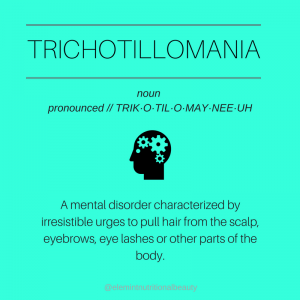
Trichotillomania is a hair pulling disorder that affects millions, though many are not even aware of the fact that they suffer from this condition. It’s a well-known emotional illness and if you punch in the keyword Trichotillomania on the Internet, you’ll be bombarded with blogs, journals, and, essays discussing this hair-pulling habit.

However, when it comes to analyzing this disorder, it’s more than just a case of perpetual hair-pulling. This urge to tug or pluck hair defines Trichotillomania but one needs to know the warning signs and instances that could lead to this emotional upheaval.

Trichotillomania comes under the obsessive-compulsive spectrum and is akin to Obsessive Compulsive Disorders – OCD. When it comes to OCD, Trichotillomania too is defined by compulsions i.e. the sudden need to pull or pluck out hair. Nonetheless, Trichotillomania stems more from an impulsive side while OCD is a repetition of a particular habit – more along the lines of obsession.  The main area that’s most affected is the scalp however, people don’t shy away from tearing out their eyelashes, eyebrows or other hair for that matter. A person feels at ease after hair is uprooted or successfully pulled from the skin. Chronic Trichotillomania can lead to hair loss resulting in bald patches. It’s a source of great concern to people who have family members dealing with this condition especially if they have never encountered or been familiar with an issue before.


Early Signs Of Trichotillomania


Sense Of Comfort

In times of stress and agony, individuals pull their hair inadvertently which is followed by a feeling of relief and comfort. For instance, Sally, a fifteen-year-old, starts pulling her hair when she hears her parents get into a verbal altercation with each other. For some kids, parents who quarrel often can be a reason of great discomfort. Many aren’t aware of ways to deal with such situations and resort to things or activities that give them temporary solutions. Trichotillomania happens to be one of them. The intense tugging and twisting of hair is a sign of silent suffering and pain. Somehow, that very pain turns into relief until the awkward moment of distress has passed.

Perpetual Pulling

The urge gets the better of an individual and they pull away not realizing the pain it would cause. There’s a lot of embarrassment and shame that comes with Trichotillomania. Initially, there’s denial and quite a few take a while to come to terms with accepting the fact that yes, there’s a problem. They resort to covering their bald patches by donning a hat or wearing scarves. Any unevenness on legs or hands is covered with extra layers of clothes or tattoos. People dealing with this problem either pull their hair for brief or long periods of time.  The impulsive behavior cannot be controlled and hair is pulled, no matter what.

Comparatively more than men, women are prone to get diagnosed with Trichotillomania. It brings with itself other emotional problems such as bipolar mood disorders and depression. Uneven patches of hair on the body makes many wary of social interaction since the fear of being bullied or ridiculed tends to seep in.


What Causes Trichotillomania?

There isn’t a specific reason that leads to Trichotillomania but there are several biological, psychoanalytical and behavioural theories associated with this disorder. For instance, neurochemical imbalance, as well as trauma connected with childhood or stressful events. Trichotillomania that occurs under psychoanalytic model denotes an unconscious unsettled past – an unfortunate incident of abuse by an acquaintance or a complete stranger.

The behavioural model for Trichotillomania stresses on painful events. For example, loss of a parent, or constant family skirmishes precedes the onset of hair pulling. An attempt to release tension is caused by such distressing instances and moments. This behavior becomes perpetual and later turns into a habit. The person may not even be aware of any initial triggers. However, it only has to be one event in response to what someone may perceive as the urge for pulling hair. The biological model for Trichotillomania purports neuro-chemical imbalance, mostly with serotonin. Levels of altered dopamine too play a vital role in aggravating Trichotillomania. It still isn’t sure if genetics need to be taken into consideration. Although some studies do suggest a rise in the percentage of Trichotillomania in people whose relatives suffer from different psychiatric disorders.


Plan Of Action

Continuous tugging of hair needs to be reported medically and if Trichotillomania seems an underlying cause then psychiatric as well as a medical treatment has to be initiated. Not many are aware that the earlier the intervention, the better the probability of the behavior being in control. However, it is essential to note that a person – child or an adult, sometimes do not present for treatment for Trichotillomania until two years since hair-pulling takes place. Psychological behaviour therapy and medication help with treatment for this condition. Habit reversal training as well has done wonders to people who have been suffering from this emotional ordeal.

Lastly, acceptance and patience are key factors in addressing this psychological disorder. With time along with medical help and the support and love of family and friends, Trichotillomania can surely be managed.

For more please see http://trichstop.com

Guest Post: Mental Health in Schools- Support, Goals and Prevention by Jon Manning at Arthur Ellis: School Enterprise

arthurellis

Last year, 916 children per day in the UK were referred to the Child and Adolescent Mental Health Service. In some areas of the UK, there are mental health appointment waiting times of up to 2 years.

As with everything, we need to learn from this, adapt and solve. Many of our children are subject to a huge amount of information through a variety of channels including social media, news, peers etc, much, much more than if you look at only ten years ago. With these added pressures, we need to ensure they have a more robust support system in place that is ready to react when they need it.

Arthur Ellis: School Enterprise is a non-profit organisation solving mental health issues. Founded through the real life experience of Jon Manning who suffers with Bipolar Disorder. With the help from Medical Professionals, Teachers and Local Authorities, AEforSchools was created, a support system that embeds itself in schools and mentors pupils on those waiting lists and provides empowering workshops for those within school counselling.

Like many things, a mental health issue snowballs, it doesn’t always go away, it may get worse. With the numbers rising, our young people need to understand and be able to differentiate between good mental health and mental illness and know how to take control of their lives to minimise the effects of it. The more children that can take this control at a young age, the more resilient they will become and be able to live fuller lives as they grow.

One thing that I have learnt from my journey to gaining a diagnosis, is that a support network is key. You need to be able to feel comfortable enough to open up to someone who can listen and work with you to support you. Not everyone will be able to help with everything. Personally, my Mum and Dad had different approaches, I would approach one for certain things and the other for something else.

Another main task I took on was exercise, no matter how small. Some days, I didn’t feel able , which is okay. I would however, make sure I did three lots of exercise per week. I found that setting an achievable goal helped so much with giving me a purpose, I could relate that back to how I felt after a jog or a few press ups and it began feeling better…with that, I added a day. This sometimes took so long I felt there was no progress at all but I knew the most important thing was that I was doing it. I found that my Mum was the part of my support network to help push me to not to forget those press ups! You tend to do it when a strong, female is telling you to!

Making little goals and having a support network to help push you to strive towards goals is a great way of tackling issues. You may need medical intervention but this is a good way to help without it (or with it depending on what you need). It is easier to stop a snowball rolling down a hill while it’s still small. The further down it gets, the more help you will need- and that is OK. Be open. Those that are close to you often understand, tell someone you trust.

When I first told people about my diagnosis I often got the reaction ‘Well that makes sense’. We had all been thinking the same thing but hadn’t spoken about it. I was shaking at the thought of telling people, not knowing how they would react, what they would say and what they wouldn’t say- but how they might look. However, because it was the right people, it was fine, liberating in fact to disclose my bipolar!

So use that network you have around you, talk about how you’re feeling and think about something you love, do it in small doses and get your network to help you complete those goals.

Teach your children the same and they will grow up more resilient, more confident and able to handle the ups and downs of life.

Jon Manning, Founder, Arthur Ellis: School Enterprise  https://www.arthurellisltd.com/

This post was featured by Twinkl in their Mental Health in Schools Blog‘.

Life Whirlwind: Mental Health Writing, Blogging and Speaking, Bipolar Disorder and a trip to Romania.

michelle1

(image: Pinterest)

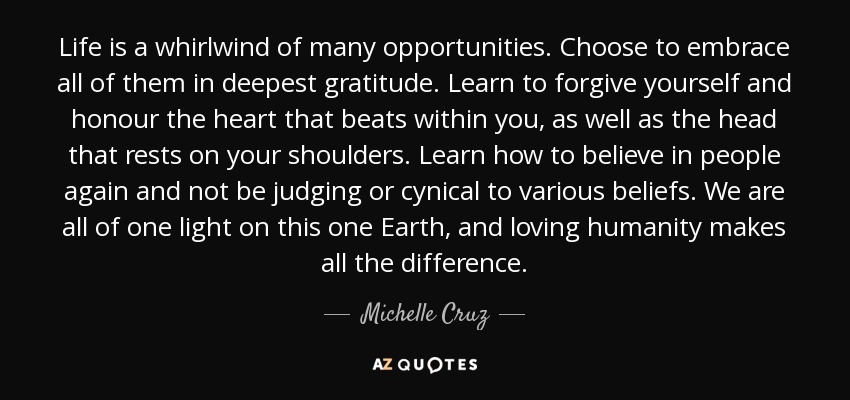
The past few weeks have been incredibly busy- but exciting. This month has been a bit of a rebirth in many ways. My writing and blogging have truly taken off and been published in various different places- this month my story is in Happiful Magazine, two articles for Metro on mental health (www.metro.co.uk), I shared my story in the Jewish News here in the UK and online at STOP Suicide. It has been Time to Talk Day (about mental health), Childrens Mental Health Awareness Week and I have also volunteered this month with Jami (Jewish Association of Mental Illness) Mental Health Awareness Shabbat, which this year came to around 97 Jewish communities in the UK. I attended the panel event at a local community centre and discussion was had on mental health here in the UK, by experts including my friend Jonny Benjamin.

This month, I have also been asked by a friend to come in and talk to his work place about living with anxiety and what it means. So that is hugely exciting for me! I am also writing a mental health article for a top womens magazine- which is a dream of mine. I hope to share that with you when its published.  I have been writing sample chapters for a book too and am in the limbo phase of waiting to hear what editors think.

So, its been a total whirlwind really as I have also been running my blog here and sharing peoples stories (and last month this blog was nominated as a finalist for a UK Blog Award). I was also asked last week if a social media editor could turn my story into a video for her 200 thousand followers so that is in process too. I had not ascertained how much interest there would be in my story.

Professionally, a lot is changing and I have to be very much aware to look after my mental health, to get enough sleep and rest, to make sure I take my tablets on time, to eat well and do some gentle exercise and to see and speak to my friends (and boyfriend of course). I have to keep grounded and rested in order to function effectively. Last week, the Jewish News article came out and I know it has had a positive ripple effect in my community- as my Mum was stopped in the pharmacy for people to talk to her about it. So thats exciting.

I am a shy person at heart and I have written extensively on having social anxiety. When my JN article came out, i actually felt very anxious at first and wanted to hide away. Mental health stigma is still present in my community and I felt scared. But I needn’t have worried as the reaction has been very positive!

michelle2

I am still processing all thats going on and I am lucky to have a really good therapist and family/ boyfriend support network to help me deal with the changes going on. I am still adjusting to the financial side of being a freelance writer and pitching to editors at different places. My latest Metro article on child grief came out on Friday and you can read it here: http://metro.co.uk/2018/02/02/children-often-get-sidelined-when-a-family-experiences-loss-why-its-important-we-talk-to-pupils-in-schools-about-grief-7270002/

Over the weekend, I went with my Dad to Iasi, Romania (on the border with Moldova) which is where my great Grandpa and his family were from. It was an eye opening trip- the city is grand and full of culture. However, as Jews we had relatives who died in the Holocaust and found this out using the Yad Vashem Holocaust database when we came back. It was great seeing Iasi but also sad as some of our relatives were taken from there to be killed – but an eye opening trip.

Today, I am feeling thankful and grateful for all thats going on and thankful for you who are reading and following and commenting- and enjoying my work.

With love, Eleanor x