A Guide to Mood Disorders: Guest blog By Ellie Willis

Mood disorders encompass many disorders of how you feel from day-to-day, whether that is abnormally elevated (mania) or depressed and in low mood. They can include depressive illness such as major depressive disorder, dysthymia, postnatal depression and the bipolar spectrum disorders. They also feature anxiety and panic disorders. These are often down to brain chemistry and sometimes environment.


Major Depressive Disorder

Major depression is defined as a depressive illness where you experience a significantly lowered mood and a loss of interest in activities that you would normally enjoy. While it is normal to feel sadness and grief when your life significantly changes, such as when a loved one passes away, when it doesn’t go away or gets worse, it may evolve into major depression. Some of the symptoms of depression are:

• Feelings of helplessness or hopelessness • Feeling guilty over insignificant things • Withdrawing from family and friends • Drinking alcohol or taking drugs as a coping mechanism • Having problems with concentration • Being unproductive • Having a lack of confidence • Feeling irritated or frustrated • Having a lack of interest in sex.

While sometimes a depressive episode seems to come out of the blue, there are often things that can trigger them. These may include: Genetic risk factors • Alcohol or other substance abuse • Medical problems such as thyroid issues or chronic pain • Certain medications such as steroids • Sleeping problems • Stressful life events 

Studies have shown that there appears to be a genetic component to depression. That is, if one of your parents has a depressive illness, you may end up suffering from depression yourself.

Dysthymia is a chronic form of depression that occurs when you suffer from a mild to moderate depression for at least two years. Although dysthymia causes problems in everyday life, dysthymia is often not severe enough to warrant hospitalisation. The chronic nature of the disorder means that you may believe that you have always felt like this.

The good news is that there are a wide range of medications to treat major depressive disorder, such as antidepressants. There are many kinds of medications around, and you may have to try a few until you and your psychiatrist find the perfect one with little to no side effects.

As of the time of writing, the antidepressants most commonly used are SSRIs and SNRIs (selective serotonin reuptake inhibitors and serotonin-norepinephrine reuptake inhibitors). These refer to the types of neurotransmitters (chemicals in the brain that affect mood, among other things) that they affect.

With antidepressants, it is extremely important not to stop medication all at once, unless there are serious side effects and even then, only under medical advice. This is because of discontinuation syndrome. Simply put, this means that your body gets used to the medication being in your system (different to addiction where you crave the drug) and you experience symptoms such as nausea, dizziness and insomnia, to name a few.

Another important way to treat depression is psychotherapy in one form or another. This can help you by learning coping skills to deal with depressive thoughts and negative thinking, as well as having someone to speak to with complete privacy. There are a few other ways for you to combat depression in adjunct to medications or therapy.

These are: • Maintaining good sleeping habits • Exercising more • Seeking out activities that bring you pleasure • Being around caring and supportive people

Postnatal Depression

Postnatal depression is a depressive illness where a new mother experiences depression in the first few months after giving birth to a child.

Some of the symptoms of postnatal depression include:

• Feeling sad or empty • Lowered self-esteem • Changing appetite (usually a decrease) • A loss of enjoyment in everyday activities • Changes in sleep patterns such as insomnia • Not being able to concentrate • Feeling cut off from the baby • A loss of interest in sex • Feeling ashamed, guilty or inadequate • Withdrawing from family and friends • Mood swings • Thoughts of harming yourself or the baby

There are a number of factors that make postnatal depression more likely. Some of these may include: • A history of depression, especially postnatal depression in the past • If the baby is sick or colicky • If you are in an abusive relationship • If you are suffering from stress • If you have little support from family and friends •

Treatment for postnatal depression is essentially similar to that for major depression, such as antidepressants and therapy and in some cases intervention from a psychiatrist or hospital team is required.


Bipolar Disorder Spectrum

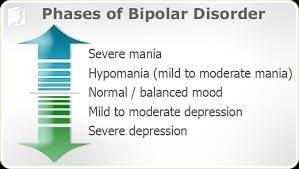
Bipolar disorder is a mental illness characterised by periods of extreme mood states known as mania and depression. It is one of the most serious mental illnesses and is the sixth most disabling condition in the world at the time of writing. It is chronic and potentially life threatening. However, those with it can go on to recovery and live happy and fulfilled lives between episodes. 

According to some studies, one in fifty people may suffer from a form of bipolar disorder. In many cases, there is a family history.

Mania is one pole of bipolar disorder – an extremely elevated or depressed mood, sometimes accompanied by psychosis. You may have racing thoughts or speak so quickly it is difficult for others to understand. You may also have trouble getting to sleep at night or suffer from insomnia. There is a danger of reckless behaviour such as overspending, unsafe sexual activity or aggression. You may feel a sense of grandiosity, making unrealistic plans. Despite mania feeling great at the time, the consequences of mania can be destructive.

Some of the signs of depression include a lowered mood, self-esteem or interest in enjoyable activities, pessimism, reduced energy and changes in appetite. Suicidal thoughts are also possible and must be monitored closely. As bipolar disorder is a recurrent illness and there isn’t any known cure, you may need to take medications to maintain your mood at a normal level.

Hypomania is the hallmark of bipolar II where the patient might feel euphoria or agitation. Hypomanic episodes are similar to manic episodes except they are less severe and sometimes pleasurable to you. There is never psychosis in a hypomanic episode. Despite hypomania increasing productivity, or making you feel increased self-esteem, the consequences can be major, especially as your mood goes down to depression.

A mixed state is a combination of manic and depressed symptoms. In a mixed state you may feel very sad or hopeless while feeling extremely energised. These can be dangerous, because of the suicide risk from being depressed as well as impulsive. If you feel you are heading into a mixed state, you should contact your psychiatrist as soon as possible.

Bipolar disorder type I is characterised by at least one episode of full-blown mania as well as depressive episodes. There is also a chance of psychosis (delusions/ hallucinations)  accompanying a manic episode. Bipolar type II features only hypomania and never mania or psychosis. While these manias are less destructive, the depression tends to be worse, and there is often a high suicide risk.

Cyclothymia is a bipolar spectrum disorder where you may have long periods of minor depression lasting at least two years alternating with hypomania. These depressive periods tend to be irritable and agitated rather than melancholic and lacking in energy.

Bipolar NOS (not otherwise specified) simply refers to bipolar disorders that do not strictly meet the criteria of any of the previously mentioned types of bipolar disorder.

The treatment of bipolar disorder involves medications such as Lithium carbonate, lamotrigine, sodium valporate, and quetiapine, as well as psychotherapy to help overcome negative thoughts that exacerbate depression or after effects of mania. 

As bipolar disorder is a recurrent illness and there isn’t any known cure, you may need to take medications for life to maintain your mood at a normal level. Despite this, many patients continue to do well as long as they stay compliant with treatment and keep aware of their changing mood states.


Anxiety Disorders

The term anxiety disorder covers a wide range of illnesses from panic disorder to post-traumatic stress disorder (PTSD). Despite the wide range of diseases, many share similar treatment options. There is a stigma affecting some anxiety disorders due to stereotypes in the media.


Generalised Anxiety Disorder

It is normal for people to feel some anxiety over normal life events such as exams, work problems or family issues. However, when it causes problems in your everyday life or is particularly severe you may have an anxiety disorder. Generalised anxiety disorder involves having irrational fears, such as being afraid harm will come to you or your loved ones, financial issues, health, relationships and work.

Physical symptoms when experiencing anxiety may include: • Light-headedness • Becoming tired easily, or being unable to sleep properly • Feeling tense or restless, or losing your temper easily • Nausea • Shortness of breath • Headaches • Trembling • Muscle tension Treatment generally involves medications or therapy.

Psychological treatments may involve: • Learning relaxation techniques such as muscle relaxing exercises or meditation • Therapy to teach you how to solve problems that cause anxiety with anxiety disorders, psychological treatments are generally more effective than medication, however it can still be useful.

The most common treatments are antidepressants or benzodiazepines such as alprazolam or diazepam. Generally, benzodiazepines shouldn’t be taken long-term, as there is a risk of becoming dependent on them.

Anxiety disorders are relatively common in the population, with statistics that approximately 25% of the people suffer some kind of anxiety disorder that may warrant treatment in their lifetime. Anxiety is treatable, and therapy or medication may minimise the effects on your life and relationships.

Panic Disorder

Panic disorder is a mental health condition where you experience a feeling known as a panic attack recurrently.

Some of the symptoms of a panic attack include: • Shortness of breath • Dizziness or light-headedness • Tightness or pain in the chest • Trembling or shaking • Dry mouth • Muscle tension • Difficulty gathering thoughts or speaking • Tingling fingers or feet • A choking or smothering feeling • Hot or cold flushes • Nausea or butterflies • Blurred vision • Fear of dying, losing control or going mad

When you have panic disorder, you may also worry about the implications of a panic attack such as humiliation or feeling of going crazy.

You may try and flee from the situation hoping the panic attack will stop. Panic disorder is generally treated via therapeutic methods rather than medications. This may involve your doctor teaching you about panic disorder, for example, that a panic attack is distinguishable from other mental illnesses such as other anxiety disorders or psychosis – this is known as psycho education.

A therapist may instruct you not to avoid any situations where a panic attack may occur. This may be unpleasant at first, but slowly you will not feel anxious in the situation. This will help prevent agoraphobia and the disability it causes.

A common treatment for anxiety disorders is CBT – but there are many types too including exposure therapy and talking therapies. They can be incredibly helpful for you to overcome feelings of anxiety.

This guest blog was written by Ellie Willis, an expert in mental health.
 

On Selfie Day: Is social media bad for our health? Guest post by AXA PPP Healthcare

Today’s world is dominated by social media and it seems to be playing an ever increasing role in our lives.

Dr Mark Winwood, Director of Psychological Services at AXA PPP healthcare acknowledges that social media can give young adults a certain perception of life, that isn’t always reality.

 “Social media is a window where people choose what they want to present to the world – whether this real or altered – and in many ways it can be a ‘false reality’.

 It’s natural for an onlooker to make assumptions about others based on what they see online, but often those who are vulnerable cannot make this distinction, which can have a negative affect both on their mental health and their body image.” comments Dr Winwood.

For some, being online is their main source of social interaction and, over time, this can turn out to be an isolating and lonely experience. And, whilst the ‘rewards’ of communicating online are instantaneous, this isn’t necessarily a good thing” he says.

Social media website Instagram has been rated as having the worst effects on teenagers’ sleep, body image and fear of missing out.

 Ultimately with four of the five most popular forms of social media found to be harming young people’s mental health, it is important for young adults to realise that there is a world outside of the screen.

In 2016, seven young people who switched off from social media told the Guardian about the positive results they experienced. One said “I can live my life instead of trying to shape it into one that looks good online. I also have a lot more time now, and it’s easy enough to keep in touch with my friends in other ways.

If you decide to have a social media holiday, here are Dr Winwood’s observations:

 Suspend your accounts – suspending them for a week means you can take a break without the temptation to check for any new notifications.

Make an effort to meet up with friends face to face – you may find that cutting down on your social media time leaves a temporary void, so arrange to see friends and family personally and you’ll feel in touch when you’re off-line.

Enjoy the gift of renewed focus – think of all the occasions when your attention was split between checking social media and having a conversation or watching TV or walking along and just tune in to the moment of what you’re doing without the distraction.

Get an alarm clock – using your phone as an alarm can make it tempting to automatically check the online scene the minute you’re getting up. Having a separate alarm clock removes that temptation from arm’s reach.

If you find you crave social media try checking out apps designed to block certain sites at certain times of the day. This approach helps avoid that mindless checking and re-checking we all fall victim too.

This guest post was written by AXA PPP Healthcare.  If you think you might be addicted to social media, find more tips and advice at AXA PPP healthcare’s Mental Health Centre or speak to one of its help at hand nurses online.

How Love Island helps my mental health.

I first discovered the reality dating show Love Island back in 2016, when it returned for its second series.

At first, I didn’t expect a great amount of entertainment, but what I found is that among the frivolity and fake tans, there’s a wonderful exploration of human relationships. Each night at 9pm, you can lose yourself in the dating lives of others.

I suffer from anxiety and have bipolar disorder, and this element of escapism has helped with my mental health issues.

In the past I’ve suffered from panic attacks linked to social anxiety and, at times, stress in the workplace. A distracting outlet like Love Island allows me to shake off the adrenaline highs and the depressive lows that follow.

Instead of feeling anxious or having negative thoughts swirling around in my brain, I can watch Love Island and occupy my mind, while also connecting with other fans online.

Whether its watching someone get ‘pied off’ (rejected) or couples getting together, there is always something going on.

That’s what makes Love Island so addictive and calming, I often feel less anxious once I’ve watched an episode.

There are many humourous elements on the show including bromances (last years one between Kem and Chris and their rapping was a sight to behold) and people form tight friendship groups and attachments very quickly.

Instead of thinking about my daily worries, I’m wondering what’s going on in the contestants’ lives. Whether like last year we followed the ups and downs of Chris and Olivia, or Camilla finally finding her man, watching them build relationships, go on dates and play games is truly fascinating.

Of course, escapism doesn’t replace the support you get from a doctor, counsellor or family and friends.

While personally I’ve had a positive experience watching Love Island, the show has been criticised for exacerbating mental health issues for viewers and for its contestants, too.

Where vulnerability is concerned, all reality TV can influence people, for good or for bad,’ explains Jo Hemmings, a behavioural media and celebrity psychologist.

While it is very often real people in real time, it isn’t in fact a reflection of true reality at all and so it’s important to distinguish that what we are watching is a made-for-entertainment TV series, which may or may not bear any similarity to real life as we live it.

‘My advice would be if it brings you pleasure, enjoy it – but if it makes you feel uncomfortable or unhappy, it’s best to watch something else.

‘The Love Island contestants are well-cared for psychologically – assessed before the show and supported throughout. As a reality TV series, it is known for a few enduring relationships and friendships, so again I think they are treated with care and compassion off screen.’

At times, the show promotes a body image that can feel unrealistic, especially for someone like myself, having had a lot of therapy to improve my self-esteem.

Due to the perfect body image presented in can impact peoples self esteem especially if they have an eating disorder.

I asked my Twitter followers whether Love Island was good for our mental health? The most striking issue they presented to me was body image.

Edward Clements  ‘ I can see how it will maybe affect people who are less confident with their body image and cause them to feel worse. This is mainly because most of the men are always shirt less and very fit’.

Sarah TDefinitely makes me body check & compare myself to girls on programme. I wouldnt want to eat whilst watching. I am in a good place at the moment in terms of my eating disorder but if I wasn’t could be triggering. The show encourages placing value of the person in the way they look rather than their personality values too.’

So, body image is a real concern for many watching the show. This state of perfection promotes a negative body image and could harm self esteem.

Ben Edwards, relationship coach and self confidence expert agrees with this,

Reality TV shows like Love Island can of course affect our mental health both positively or negatively. Some people may find that this reignites their belief in love as unlikely couples find romance on screen, providing hope. Reality TV does not always reflect reality. It  might seem like harmless, light entertainment, we often compare ourselves because we feel something is missing. Confide in a loved one or seek professional advice if needed.’

The Love Island team said to us in a statement,
The duty of care towards all of our Islanders is always of paramount importance. Our islanders have ongoing access to an on site psychologist as well as show producers should they need it.’

I can’t wait for the next eight weeks of Love Island 2018.

It brings me joy each summer and I hope it will for you, too.

With thanks to Jo Hemmings, Ben Edwards, Love Island Press Team, Edward Clements and Sarah Tayleur for their expert comments.

Can Alcohol raise stress levels and affect our mental health?: Guest post by Tomas Sanchez

This guest post was written by Tomas Sanchez and talks about Drinkaware, the UKs top alcohol education charity. For more and help and support, view their website at : https://www.drinkaware.co.uk/

Highly demanding jobs, family duties, money worries, relationships issues, they can all add up to make our stress levels go through the roof. The truth is, it can sometimes feel like we’re sat on a roller coaster, led by a high-pressure lifestyle that is ruining our health and happiness.

According to the Mental Health Foundation, 16 million people experience a mental health problem each year, and stress is a key factor in this. Which is why this year’s Mental Health Awareness Week is focused on understanding the impact stress has on our lives and how to tackle it effectively. The week took place last week between 14th and 20th May.

When it comes to coping with stress, reaching for booze might seem like a good idea to help you lift your spirits and relax. However, in the long run, alcohol can have the opposite effect and contribute towards raising your stress, affecting your mental health and wellbeing.

Wine, beer, cider or spirits, whatever your tipple of choice, the alcohol in your drink is a depressant, which means it can disrupt the delicate balance of chemicals your brain relies on for good mental health – especially when you drink above the alcohol unit guidelines.

In fact, while a pint or two may cheer you up, this is only a short-lived effect that will quickly wear off. But, in the long run, drinking too much too often can exacerbate your stress and contribute towards the development of mental health issues such as anxiety and depression.

Alcohol can also impact your sleep. You might think that drinking can help you nod off a stressful day at work, but in reality, alcohol can alter your sleep cycle and make it harder for you to get the rest you need to tackle the stress in your life.

If you’re struggling to deal with stress, there are more effective ways to cope with it than reaching for alcohol, such as:

Exercise, a great way to de-stress. Go for a run, swim or to a yoga class – or even a brisk walk can help clear your head of the day’s worries.

Talk to a friend about what’s worrying you. If you don’t feel comfortable talking to your friends or family, look for professional help – talk to your GP or an accredited counsellor. They will be able to help you manage your feelings and point you to the right resources to help you restore your wellbeing.

Take a hot bath or do some gentle stretches to relieve tension from your body.

If you do decide to have a drink, follow the UK Chief Medical Officers’ (CMO) advice – it’s safest not to drink more than 14 units of alcohol a week and spread your drinking evenly over three or more days.

If you’re drinking too much too often, cut back on it by:


  • Keeping track of what you’re drinking – use Drinkaware’s App to help you monitor your alcohol intake and change the way you drink.


  • Choosing low-alcohol drinks or mocktails.


  • Giving alcohol-free days a go. If you drink regularly, your body starts to build up a tolerance to alcohol. This is why many medical experts recommend taking regular days off from drinking to ensure you don’t become dependent on alcohol.

Guest Post: Interview with Dr Janina Scarlet, author of new book ‘Therapy Quest’

I have got to know Dr Janina Scarlet, psychologist as I have written more across the media. Janina writes about therapy and mental health in an approachable and meaningful way. She also loves superheroes and fantasy and incorporates them into her work!

This week for Mental Health Awareness Week, I spoke to her as she launches her  new book ‘Therapy Quest’.

bloggertour.png
(image: The Book Publicist/ Dr Janina Scarlet)


What is your new book Therapy Quest about?

Therapy Quest is an interactive fantasy book in which YOU (the reader) are the main character. You are transported to a magical world of Here and are the Chosen One to stop an evil sorceress, Mallena, from destroying the world. Only you don’t feel like a hero. Not at all. Your anxieties and insecurities nearly lead you to abandon your quest altogether. However, if you decide to partner up with some new friends, such as a vampire with an eating disorder, and an Ogre who struggles with obsessive-compulsive disorder, you just might be able to become a hero after all.

The book is written in a game-like format, which allows you to make choices along the way. Each choice you make will change the rest of your journey and can either allow you to earn or lose points. Some choices can kill your friends or your character, so you have to be careful.

Each time you make a choice, you will also learn a mental health skill, and you will need all the skills you can learn along the way to help you in your final battle.

What was your inspiration for writing it?

I knew I wanted to write a fantasy book with self-help elements in it, in which the reader could learn these skills through the characters they were reading about. My editor, Andrew McAleer, had the brilliant idea of having a similar format to “Choose Your Own Adventure” fighting fantasy books. This sounded like a very interesting challenge to me, and I am extremely honoured to have been able to work on it.

Could you explain a bit about what Superhero Therapy is and how it works in the book?

Superhero Therapy refers to incorporating elements of popular culture, such as fantasy and science fiction books, movies, TV shows, as well as video games, comic books (Superhero or otherwise) into evidence-based (research-supported) therapy to help clients to become their own version of a superhero in real life (IRL).

In Therapy Quest, the reader is the Chosen One, the Hero of their own journey even if they question their ability to do so. Through learning skills such as mindfulness, self-compassion, acceptance, and following their own core values, the readers are invited to take their own superhero journey and develop their own superhero skills, which can be utilized in their every day life as well.

Who could you recommend the book to?

I would recommend this book to anyone age 12 and up who might enjoy fantasy books and would like to learn skills to manage depression, anxiety, trauma, or other mental health struggles.

drjanina

Dr Janina Scarlet is a clinical psychologist and the author of Therapy Quest, a revolutionary self-help book which combines therapy with an interactive fantasy quest.

Guest Post: 5 Steps to control Anxiety and help Panic attacks by Katie Rose

My name is Kate and just over 2 years ago I had my first panic attack. It was without a doubt, the scariest moment in my life and to think I’m at the point where now I can somewhat control my anxiety, feels like a miracle. Anxiety is not something that you can “just get over” which I’ve often heard those who don’t suffer from it, say. (So don’t worry if you’re struggling!) Though I’m a lot more stable now, I still experience mild anxiety every now and again. This post will tell you how I managed to tame my anxiety and help prevent my panic attacks.

#1 Stop Drinking Alcohol

Whether you agree alcohol is the reason for your panic attacks or not, it’s a proven cause to why people suffer from anxiety. Sadly for me, alcohol is the number one cause of why I would experience panic attacks and get myself into such an unstable state. As a result, I will no longer drink even a drop of alcohol and since, I haven’t experienced a panic attack. This is not the same for everyone- some people don’t drink but still experience high panic. It’s not that I don’t want to drink alcohol or that I don’t enjoy myself when I am drinking because I really do. However, the aftermath of it all just isn’t worth it.

In spite of that, it doesn’t mean I haven’t felt anxious since stopping drinking because I have and it’s still an ongoing battle. I’ve quite simply stopped having major panic attacks.

What Happens When I Drink Alcohol?

When I drink alcohol I end up going to bed with a racing mind (how on earth I end up sleeping I have no idea) and wake up in the early hours of the morning with major heart palpitations and breathlessness. It makes me feel like I’m about to die. Due to being tired from waking up early, I always feel extremely frustrated that my body has woken me up. No doubt that makes my anxiety worse and stops me from relaxing and calming down. So, what do I do?

Solution: Talk To Someone

Instead of going on my phone and surfing the internet to try and distract myself, I’m lucky enough to be able to wake my dad and sit and talk to him. I find that it helps me get back to sleep so much quicker than staring at a bright screen which actually makes me feel more awake. After all, it’s unlikely you want to be awake at 4 AM watching YouTube or scrolling through Instagram, instead of sleeping. By closing my eyes, yet having someone there to talk to, I’m able to slowly drift off back to sleep and thankfully not wake up again until the morning. It takes me an hour or two  to fall back asleep but compared to trying to cope alone, it’s a lot shorter. Try it – it might just work for you.

Don’t have someone at home to talk to? Perhaps you live alone and I assume for sufferers in an empty home it will feel a million times worse. Maybe it is time to take out your phone but instead of staring at the screen, call someone, even if its a helpline. That way you can lie with your eyes closed making you more likely to fall asleep and still be able to talk to someone for help.


#2 Breathe Using Your Stomach

It may sound slightly strange but after having the ambulance out to me on several occasions, I’ve learn that it’s my breathing that plays a huge part in being able to calm down or not. Breathing quickly and inhaling small amounts of air at a time can cause you to hyperventilate. Stop. Sit back and assess your situation. Think about how you’re breathing:

Are you breathing quickly? Are you breathing in through your nose? When I’m feeling breathless, instead of trying to take lots of little breaths that cause my chest and shoulders to move quickly, I take big, deeper breaths that’ll push my stomach out.

By concentrating on feeling my stomach move, I can focus my attention elsewhere from my racing heart and help me calm down. Use the below ‘calm breathing’ technique from Anxieties for more help:


  • Take a long, slow breath in through your nose, first filling your lower lungs, then your upper lungs. (You should feel your stomach push out slightly before your chest starts feeling full of air.)
  • Hold your breath to the count of “three.”
  • Exhale slowly, while you relax the muscles in your face, jaw, shoulders and stomach.


Remember: Listen to your body and analyse what you’re doing. Are your teeth clenched? How are you sitting? Give your body a little shake to relax yourself and even close your eyes if you wish and practice your breathing.

#3 Thought Journal

I think one of the main things that has helped me to conquer my anxiety was analysing the potential cause and the feelings I had, during the panic attacks. Sometimes it was going to bed with too much on my mind, sometimes eating too late. Even from doing absolutely nothing and other times from being rushed off my feet. It’s hard when there are so many different factors that can trigger panic attacks but trying to figure out what that cause is can help you to overcome your negative feelings.

Write them down. Making a note of the time you had your panic attack, what you were doing before, perhaps the foods you ate that day and so on, will help you to figure out if there is a pattern. Over time I began to learn that the main cause of mine was from alcohol and going to bed when I still had things to do. Ensuring I made time for cleaning my room, making my dinner for work and sorting my outfit for the following day, meant I could go to bed without worrying. I wouldn’t feel rushed and I gave myself peace of mind to improve my sleep which is so important for coping with anxiety.

#4 Do Some Exercise

One of the key factors in helping me beat my anxiety was a lifestyle change that involved getting active and eating healthy. By going to a fitness class or doing a home workout, I was able to relieve all of my built up stress and found trying to get to sleep or relax, a lot easier. I started by going the gym 2-3 days a week and currently go 3-4 times a week. I also realised that since getting a FitBit back in July 2017, it’s helped push past my panic attacks even further, by distracting me from feeling anxious with fun fitness challenges with my friends and family. What’s great with having a FitBit is, even if you don’t have friends or family who have one, there’s a whole community you can get involved with.

Not Interested In Exercise?

If you’re not into doing full-on fitness classes, why not aim to do a certain number of steps a day? My goal is 8,000 and find that whilst working 7AM to 4PM Monday to Friday, this is pretty achievable as long as I go for a stroll at dinner and again in the evenings. Doing this every day is keeping both me and my brain active and it’s these small changes that have helped me to channel my anxious thoughts, elsewhere. Here are some more tips on exercising to beat anxiety.

#5 Don’t Feel Ashamed

No matter how hard it is, you must not feel like a failure. Anxiety can affect anyone and everyone and when you least expect it. Before my panic attacks I was out partying all of the time, drinking copious amounts of alcohol and not having a care in the world. As unfortunate as they were, having panic attacks helped to show me that my body needed to be taken care of. Yet, for the troubles I have gone through, I wish I knew that sooner. I realised that during the time my anxiety was at its worst, I had an extremely negative approach to everything and often found myself using negative words a lot.

Solution: Take a time out to evaluate your attitude. As much as you may think you’re world is coming to an end, I found changing my mindset to try and think of even the worst times in a positive way, made me channel a stronger side to myself. This has been a major contributor to helping me get over my panic attacks. Replace words and phrases like “bad”, “I can’t”, “never” and “not now”, with “good”, “I can”, “always” and “yes”. You never know what good could come from it.

Alternatively, The Calm Clinic suggest something similar to a thoughts journal: a positivity journal. Fill it with positive things that have happened to you that day. Aim for at least 10 things so that no matter how bad the day may seem, you always have 10 great things to reflect back on.

Here’s their example:

Examples of good entries:


  • The barista gave me my coffee for free today because I was nice to her.
  • My boss complimented me on the project I finished.
  • I received a phone call from an old friend just because she wanted to catch up.


Examples of the types of entries you should avoid:


  • I woke up.
  • My mum didn’t call me which is good because I didn’t want to hear from her.
  • I didn’t screw anything up too badly.


Remember: If this seems too much of a chore to do, stop. Put the pen down and try something else instead, like yoga, listening to music or an audio book or reading a book yourself. If you feel pressure to write in the journal, it may make your anxiety worse. Yet by trying different methods of coping with anxiety you can find what works for you.

Why Medication Isn’t Always Right For You

I ended up being consumed by my anxiety and fears and feeling like the only way to get through it was to take medication. The doctors weren’t keen on prescribing me with any tablets at the time and I didn’t really want to take them anyway. Though, after a while I felt it all became too much. Me and my boyfriend went to Holland & Barrett to buy some calming pills.

I don’t want to promote the tablets I took in this post because I only used them once or twice. I think that trying to control my anxiety without medicine was a better solution for me and although was a challenge, made me feel strong and as though I was capable of anything. For others, taking medicine may work best for them and it really is down to the individual.

No matter how you deal with anxiety, just remember not to give up. I felt like my world was collapsing and I was so scared. Though with perseverance and time, I can now say I’m coping well with my anxiety, though the battle is still on.

This article is by Katie Rose, Lifestyle Blogger at ok Kate

ok Kate is a lifestyle blog about my life as a “normal”, young adult and the steps I’m taking to try and change my life from being boring and rather basic, to make the most of the world around me.

Guest Post: On Sexual Abuse by Anonymous Woman

The writer of this article is an anonymous woman who wanted to speak out to share her story of being sexually abused as a child and teen. She also has mental health issues as a result.

Trigger warning: please read with care 


I have been abused twice, both times were at the hands of people I knew and respected, once when I was 8 and once at around age 17/18.

A lot of the memories were lost due to the extent of the trauma, but having EMDR has opened up the box, broken the chain that was firmly fixed around it and let all the memories out.

It has been horrendous, reliving the abuse, the detail of my memory, almost physically feeling I am back, as a child in that bed, remembering the details .  The family friend was a women, who was so trusted by all of us, growing up I adored her, admired her, almost wanted to be her, and now, all of those feelings have vanished replaced by to many emotions to specify one.

When I was a teenager I was abused by a well known Rabbi, thankfully the abuse this man carried out has come out in to the community.

I have written this letter in the hope that more people in the community may feel more able to step forward to talk about this.

If someone would like my e mail address please ask the blog owner for it.  

Dear my abuser (s) 

This letter will never get sent , but I want you to know what impact you had on my life, how those actions which may have only lasted 15 -30 minutes , actions which you probably have forgotten about, shaped the person I have become. 

In a strange way I am grateful for the memories of what you did, as not having the memory, yet knowing that something happened was worse. When the memories savaged my brain, invading my mind with your face, your hands and your body I believed that the shock and horror would never pass, everything I had ever thought of you, all my memories of you changed from seeing you as a positive, supportive influence to a monster who had harmed me in the worst way possible.

Your actions, made me aware from such a young age of my body .For years I knew, that from the age of around 9 my body was an immensely complicated thing in my mind, at such a young age being so aware of my body affected my confidence, self esteem and self love . 

At age 8 you took away the most precious thing, you helped yourself to my innocence, you took away from the person I could have become and began my journey to becoming the person I have been.

That knowledge made me in to a pretty messed up person.

My child is around that age . I look at my child  and see a happy future, a future filled with love and self confidence. The thought of something similar happening to my child  is to painful to contemplate.

By the time I was in my teens, my journey of self destruction was well on its way. I had learned by that time how to hide things, how to keep secrets, how to come across as confident and well adjusted and to this day my public persona and the person I am inside are two very different people. My life, for so many years was about seeking physical pleasure in order to reassure myself that I was a loveable, attractive person, that having sex was the self affirmation I needed to survive, lowering myself, giving my body freely, whilst hating myself for doing it, gave me the tools to breath, to live. Even today, if I do not feel my husband desires me it destroys me for days.

There were so many questions, mostly WHY, and HOW, how could I have let this happen to me twice, and why did it happen twice ( I know now that is was BECAUSE it happened once it happened again ) , how could I have stood as an older teen -when I let the pictures overtake my mind I am screaming silently why, why, why.

It is like being at a movie, a never ending movie, you can not leave the screening, you are on the screen, you try to yell, you try to reach out to the girl in the movie, but she can not hear you, you see her at 8, you see her at 17 you see her life unravelling, and you can not do anything to stop it, you want to beg her to tell, you want to beg her to be strong.

You see the girl grow, you see the way she lived her life, and you understand how the girls journey began, it makes sense to you that the girl ends up with severe mental health issues , you see how mental health issues are worsened by no self esteem, how other tragic events  could tip her over the edge and compel her to seek comfort in the arms of any man who would take her, and you understand her.  

 I understand now that cause and effect would dictate that the reason I ended up in your office, was a direct result of what she did to me at age 8, that she was the one who started the chain of events.

You taught me, you guided me to the mind-set that “the way to get love and care is to do what a man wants”.

My whole self worth was wrapped up in a package labelled, please sleep with me.

I feel so much sadness, sadness for the girl you both violated, sadness that the girl whose body you choose to fulfil your sick desires was mine, sadness that I am constantly questioning everything, why was I there, how could I have let you, why didn’t I tell anyone, when will I be able to go a day, an hour, 10 minutes without one of you pushing your way in to my thoughts.

There is nothing I can do to turn back time, there is no way I can ask you why, or sit with you and show you the movie of my life, the one which you started, I pray that there will come a time I can accept what you both did, I hope with all my heart a day will come when you will not mean anything to me.

All I can do is wait, sit with these constant overwhelming thoughts, trying to untangle them like a necklace with those annoying knots in the chain that are impossible to open, yet I will persevere.

I will continue to pick at the chain until all those knots have gone and you both become dust that is blown away from my mind


If you need support with sexual abuse and you live in the UK please contact:

The Survivors Trust

Safe Line

Night Time Anxiety and Panic: by (our founder) Eleanor

anx

(image: http://chrisdblog.com/12-tips-to-stop-nighttime-anxiety/)
Hi everyone,

I am writing this post because I wanted to talk about something that I experience frequently, night time anxiety and panic.

I know these aren’t rational. Its often to do with a social event trigger, having to be around lots of people or if I have a work event and it feels too overwhelming. I fear being judged or crowds of people. These days, I tend to keep busy during the day and I know I am anxious if I am procrastinating about going to bed. As thats when the anxiety kicks in, my chest feels tight, I feel hot or clammy and my negative thoughts race.

Consciously, I know the fear of the triggered event is not real. However, subconsciously my body goes into fight or flight mode, pumps me with adrenaline and worry so I cannot sleep. My thoughts start racing and the only relief I can get when I am really heightened is to cancel the feared situation or tell myself I may cancel it in the morning.

Which is not always good. For me, its so important to have exposure to the triggers to lessen my anxiety. Some nights though, this is impossible.

People should also know that I and other anxiety sufferers don’t want to cancel our plans and don’t want to feel like this. I don’t want to be flooded with adrenaline and other horrible anxiety symptoms and left feeling so exhausted and alone.

Its worst at night when everyone is in bed asleep too because there is no one to talk to at that time. Sometimes, I try meditation or talking to myself kindly (‘its Ok nothing bad will happen you are safe’). Often, I am able to eventually get to sleep.

However, when I wake in the morning, the anxiety is still there and often at its height about ten minutes after I wake, leaving me feeling depleted, shaky, vulnerable and unable to face the day,

Most days I am OK, but if something new comes up that triggers me I am sucked back into the anxiety spiral. I have had extensive therapy and take medication but am starting to think Ill need anxiety meds for my night time anxiety.

Anyone else have this? Its so debilitating at times. I am still trying to find the answer that works for me. You are not alone.

Love,

Eleanor   x 

Extract from my Metro article on Homelessness and Mental health issues

This is an extract from a Metro.co.uk article that our founder Eleanor wrote and researched on rough sleeping, homelessness and mental health issues. To read the full article click here: http://metro.co.uk/2018/04/10/homelessness-and-mental-health-whats-being-done-to-help-7421391/

The ‘Beast from the East’ put homelessness under the spotlight in February and March as rough sleepers faced freezing conditions. But a more persistent problem among homeless people, which is little talked about, is the prevalence of mental health issues. As someone with bipolar disorder, who has never been homeless, I wanted to investigate what support there is out there for homeless people with mental health conditions.

Anyone can be affected by homelessness, regardless of age, race or sex. Among homeless people, 44% have been diagnosed with a mental health condition, according to Homeless Link. Homeless link points out that homelessness is a stressful, lonely, traumatic experience, which has a major impact on mental health.

In summarising some of its research into homelessness and mental health, Crisis says: ‘Serious mental health issues, such as schizophrenia, bipolar and post traumatic stress disorder are more common among homeless people. ‘Suicide rates are nine times higher, demonstrating the very real need of effective support’

Homeless people with mental health issues, particularly rough sleepers, often have less access to mental health professionals due to their lack of address or their complex needs. Being homeless is extremely overwhelming. Treatment may be the last thing on the mind of a homeless person with a mental health condition when they are focused on finding a way to get food and a place to sleep. The prevalence of drug and alcohol addictions is an added problem.

According to Crisis: ‘Homeless people are more vulnerable to alcohol and drug use. ‘Multiple diagnosis of substance and mental health issues can be a barrier. Rates of alcohol and drug use are four times higher than in the general population.’

Understandably, addiction can get worse when someone is homeless, due to the stress. St Mungo’s is charity that has conducted research into this area and affected change in legislation. Its investigation ‘Stop the Scandal’, looks at mental health and rough sleeping. The charity called for a national strategy to end rough sleeping and changes to the law.

Following St Mungo’s campaign, in 2017 the government backed the Homelessness Reduction Act. This legislation, which came into force on 3 April, is designed to prevent people becoming homeless and to give councils more power to tackle the issue. The government also committed to halve rough sleeping by 2022.

St Mungo’s is leading the way on this. It said: ‘Our experience is that homeless people are treated poorly and often labelled and judged. ‘People see drink or drugs behind rough sleeping, but rarely think about mental health. ‘Mental ill-health can affect anyone, but people sleeping rough face adverse weather conditions, fear and isolation’.


Read more: http://metro.co.uk/2018/04/10/homelessness-and-mental-health-whats-being-done-to-help-7421391/?ito=cbshare

Twitter: https://twitter.com/MetroUK | Facebook: https://www.facebook.com/MetroUK/

What happens during a Manic episode: Bipolar One Disorder Tales by founder Eleanor

When most people think of bipolar disorder, they may think of the two opposing poles that make up the illness. High and low. Manic and depressed. Many also believe that all people with bipolar flit between these moods constantly and that the illness is severe or alike in everyone who has it. This is not the case.

There are two types of bipolar disorder. I have the first one – Bipolar affective One disorder, which means that I have serious manic episodes which include psychosis (loss of touch with reality). This has happened to me twice in my life and both times I have needed hospitalisation. Bipolar two is characterised by lesser manic episodes (hypomania) and more mixed states.

mania2

(image: https://www.34-menopause-symptoms.com/mood-swings.htm)

Being Bipolar One is very challenging. When I get ill, I get really really sick. Loss of insight, loss of reality, needing anti psychotic medicines now- ill. Ill to the point of being sectioned under the mental health act due to lack judgement and insight. Believing that my family are out to get me and people are going to harm me – ill.  Really unwell.

When one of these serious manic episodes strikes for me, my thoughts begin racing and I can’t concentrate. I don’t sleep, I am more creative in the short term but a gibbering wreck in the long term. I start believing I can do things that I can’t rationally. I am super vulnerable and I speak much faster. I may not make much sense and when the delusions begin, I start believing I am going to be harmed.

Luckily, these episodes are kept at bay by a host of excellent medications including Lithium and Quetaipine. I also take anti depressants to keep the low periods at bay in my life.

Full blown psychosis and mania for me are very rare but they do happen. In 10 years, from 2004-2014 I did not have a hospitalisation. I was depressed and anxious but I was able to recover at home.

I had no hypomanic or manic episodes for a decade! No psychosis. One therapist even questioned my diagnosis, before my 2014 hospitalisation.

Mania for me means danger. That danger means I am more vulnerable. I have to be very careful who I surround myself with during those times. I don’t drink alcohol to excess or take drugs, but some with this kind of mania do. Or they spend lots of money or engage in risk taking behaviours such as sexual activity.

I have learnt that as long as I take my medication regularly, get enough sleep, eat well (and don’t engage in long haul travel) that I can keep my symptoms at bay. If my medicines work! (this is always a fear.. that they could stop working).

Mania for me strikes out of the blue sometimes. I also have to be careful that my mood stabiliser medicine is holding me- as with high doses of anti depressants, mania can be triggered without it.

When in psychosis in hospital I have thought the following untrue delusions

– I am being harmed by my family
– There are CCTV cameras watching and filming me in my bedroom/ hospital room
– I have been abused in some way (my mind convinces itself)
– I am being held by a criminal gang (in hospital)

These delusions have always disappeared over time, with excellent care from psychiatrists and psychologists, anti psychotic medicine and good support from family.

I don’t get these when well, and rarely have to go through them. I am learning to accept that my brain chemistry is not the same as other people and having bipolar, a chronic illness, is not my fault. I just do the best I can to manage symptoms and keep myself as well as possible.
If you want to share your story of mania and bipolar, please do write below.

There is hope and recovery after mania. Thank you to all on the Facebook group who voted for this one.  

Love, Eleanor x