How to Maintain Mental Health at Work: Guest blog by EM Training Solutions

workplacementalhealth1

(image: EM Training Solutions)

This article written by EM Training Solutions introduces some simple yet effective steps you can take in order to ensure your health and wellbeing remain a priority in the workplace.

There’s no ignoring the fact that as adults, we spend the majority of our time and lives at work. It’s where we make friends, earn our income and spend day to day so it’s no surprise that a massive 89% of workers with mental health problems reported an impact on their working life and nearly half of the people surveyed also admitted that they had considered leaving a job role because it negatively impacted their mental health.

These shocking statistics show that there is a clear correlation between mental health and our working lives, making it crucial that we take the necessary steps to maintain our mental health and wellbeing in the workplace. Here are some tips on keeping a positive and healthy mental attitude in work:

Keep Organised

One of the simplest things you can do to help you remain focused and stress-free in work is to try and be as organised as possible. When you feel on top of your tasks and are working in an organised environment, this make you feel calm and in control.

When you’re in control, you’re much less likely to panic or feel overwhelmed. Keeping your diary up to date with commitments and important reminders will allow for your days to run smoothly. Also try taking small steps such as arriving to work 15 minutes early to give yourself plenty of time to set up for the day ahead, make yourself a hot drink and tidy your email inbox.  Having this head start can help you clearly plan out your day and it also gives you a few extra minutes to yourself.

Speak up

Communication is key in any working environment. Whether it’s voicing your opinion on a situation that is negatively impacting you, or admitting when your workload is too much; speaking up to someone that is able to offer help and support is a great way to deal with any form of stress before it builds up into an even bigger issue. Although this may be daunting, especially if you suffer from anxiety it will bring a great sense of relief once you have got your feelings and thoughts off your chest. Your employer should also respect you for your honesty and will be able to come up with a plan on how to help you.

Practise Self Care

Self care comes in many different forms, and it can be something as little as taking your full lunch break and spending it alone in your favourite coffee shop in order to get some time to yourself. If you suffer from anxiety or depression in general, then recognising your limits and when you need a day off is also incredibly important.

Having a day off work to focus on your mental health is just as valid as having a day off when you have a sickness bug. Both require time to rest and recover and you don’t need to feel guilty for putting yourself and your mental health first.

Be Realistic

Constant demands, deadlines and pressure in the workplace can leave us feeling overwhelmed and stressed to say the least. Try your best to be realistic about the work you can cope with and don’t try and take on more than you can handle.

If your boss is giving you ridiculous amounts of work to do in a short space of time, or is asking too much from you then try and speak with them, or if they aren’t approachable book in a chat with a member of the HR team to explain and try to find a solution. You will feel better for being honest and getting the extra support you need.


This article was written by: 

EM Training Solutions are a Pearson Vue approved training provider for a number of different compliance and health and safety courses. They boast over 10 years of experience within the industry and specialise in first aid training as well as traffic and fire marshal courses.

World Bipolar Day: Extract from my blog for the Centre for Mental Health by Eleanor


worldbipolar1

(image: Centre for Mental Health)

‘Like so many sharing their stories this World Bipolar Day, I have lived experience of bipolar disorder. I am now 30, but was just 16 when I was diagnosed with bipolar 1 (the most severe form of the mood disorder) as an inpatient at the Priory Hospital North London. It was hard to deal with this diagnosis at such a young age and I didn’t know then what my future would hold. I was hospitalised due to having three episodes of illness: mania and depression in one year, which led to psychosis, where my mind lost touch with reality.

Bipolar is a serious mental illness that causes a change in mood states to either big manic highs or devastating depressive lows, with a normal state of functioning between episodes. As someone living with this, I also have experienced psychosis during my mania which needs quick hospitalisation as my mind spirals wildly out of control. I have been hospitalised twice for my bipolar (in 2004 and 2014), both times due to an extreme episode of mania and psychosis.

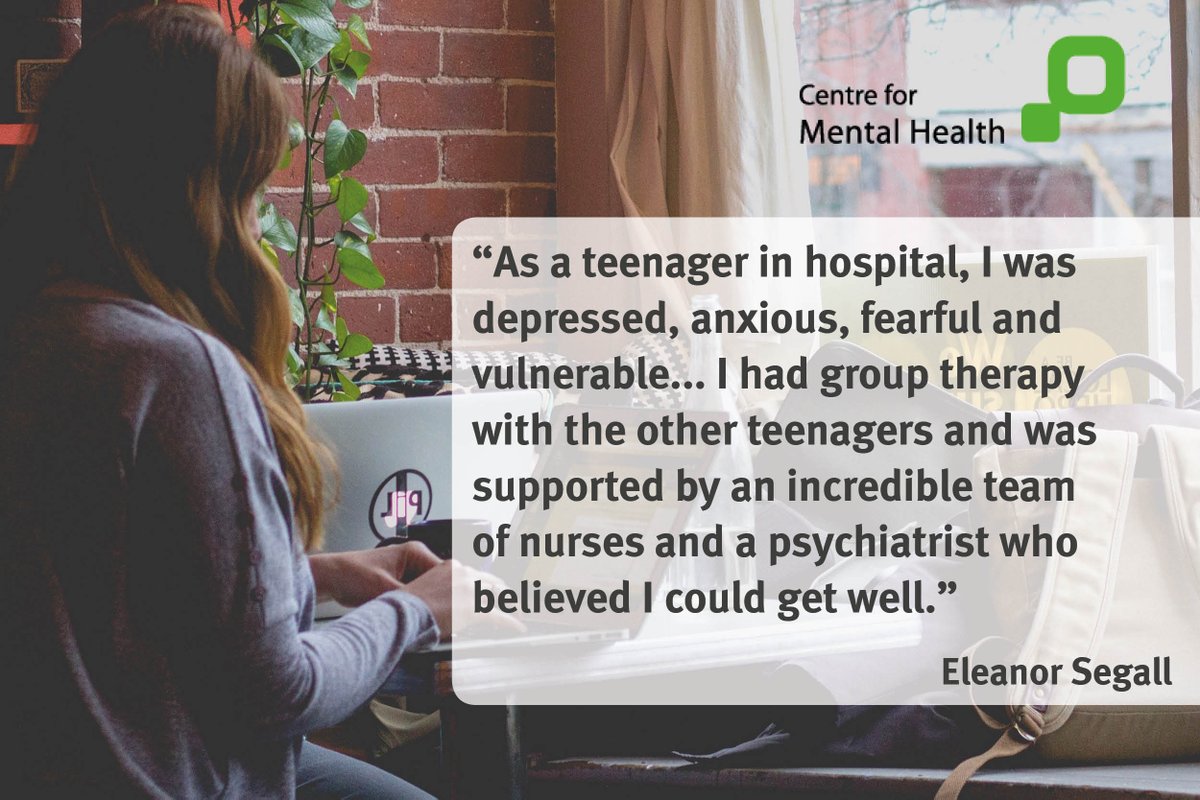
As a teenager in hospital, I was depressed, anxious, fearful and vulnerable. I believed (falsely) that I had been sexually abused and my reality became based on this false belief (delusions). The doctors got me back to full health through a combination of starting on new medicine (mood stabilisers) and giving me anti-psychotic medication to bring me down from the mania. Over four months I also had one to one therapy, group therapy with the other teenagers in the adolescent unit and was supported by an incredible team of nurses and a psychiatrist who believed I could get well. I eventually went home once my mind was stable and started a long process of counselling and recovery.

I was able to go to university and get my degrees, travel, make friends, date and live my life. However, in 2013, after some life stressors, I began to experience a depression which featured suicidal thinking. It was very scary and we believe it is because my medicine Carbamazepine wasn’t working any more as I got older.

Depression of this kind is incredibly hard to deal with. I stayed in bed all day most days with breaks for meals. I had no energy, no hope, no reason to get up. I was unmotivated and couldn’t cope with life. I barely washed or spoke to friends. Luckily, due to my fears about the suicidal thoughts, I shared this with my family and medical team. I didn’t want to act on it, just escape from the pain my mind was in.

Unfortunately, a few months later, the depression turned into a period of mania, possibly caused by my mood stabiliser not working and taking anti-depressants. This is always a risk with bipolar, that medicine can send you high. I was agitated, speaking very fast, with racing thoughts, raised libido and was vulnerable as a result. The psychosis then started, with my mind starting to believe falsely that I was being held by a criminal gang orchestrated by my family. It was so scary. I was sectioned, treated with medication again and over several months engaged with therapy in hospital, while they tried to bring my mood and mind back to lucidity.’

Read full blog here: 

https://www.centreformentalhealth.org.uk/blog/centre-mental-health-blog/bipolar-disorder-eleanor


World Bipolar Day is Tomorrow!

worldbpday

Tomorrow, join in and learn what you can about bipolar disorder.

As many of you know, I have bipolar 1 disorder and when not on medication, have episodes of high mood- mania/ psychosis and low mood- severe depression. Thankfully I am in recovery but it affects so many people and is thought to run in families.

Remember you are not alone.

Bipolar UK-  https://www.bipolaruk.org/

Bipolar in USA: http://www.mentalhealthamerica.net/conditions/bipolar-disorder

Loving Yourself: 4 Tips for Living a Body Positive Life: Guest blog by Emma Sturgis

bodypos

(image: Emma Sturgis)

Starting to live a body-positive life all begins with you, the individual. It can be challenging with so much pressure from society trying to dictate our lives. It becomes easier when you block out all negative forces and decide to start loving yourself and your body no matter what others have to say.

Loving yourself no matter what will increase your happiness and your overall peace in life. Here are four tips to help you down the body-positive life and feel total peace of mind about your body and physical appearance.

Work on Self-love

A significant number of girls have been through the trauma associated with body shaming, especially in high school. Some have taken the weight of the shame to our adult life where we lose our confidence and tend not to love ourselves as we should.

Many women and girls suffer from poor body image for years, or even through their entire life. The first step into living a body-positive life is by loving yourself first. We all come in different shapes and sizes, and no one is perfect. You just have to own your flaws and flaunt your strengths.

This can often be easier said than done, especially with years of social conditioning. You can achieve self-love through daily practices that make you feel your best physically and emotionally. Tell yourself every day that you appreciate your body and all it does for you.

Eat Instinctively and Respectfully

You don’t have to starve yourself to fit into that wedding dress within an unrealistic time-frame. Diets don’t work and neither does overfeeding any time you are stressed, sad or angry. Stop for a moment and ask yourself what your body desires to look great.

If you feel that you are struggling to keep an eating routine and your mental health is worsening, accept the problem and seek inpatient eating disorder treatment. under a psychiatry team or your local doctor.  


Change Your Perspective on Exercising

Most of us quit taking exercise and going to the gym because we hate working out. Exercise can be fun when we redirect the focus from it being a weight loss challenge to treating your body correctly and healthily.

You don’t have to attach any pressure or targets to your daily workout routines. Do exercises that are fun to you and even make it a social event with your friends. Once you start viewing exercise as healthy for your body , you will begin to love it. You will enjoy exercising because of how it makes you feel, endorphins from it will make us feel happy. You may even feel proud after a work out!


Pamper Your Body

After all the stress and pressure that your body endures, it deserves to be pampered and treated right. Get some good fitting outfits, wear the best lotions, go for therapeutic massages and take frequent hot tub baths. Fall in love with every curve while you look straight into the mirror.

This will allow you to connect with your body instead of feeling detached and negative toward it. You can make these things part of each day. Carve out some time from your busy schedule to pamper yourself, even if it includes simply putting on your favorite perfume. It will give you a simple confidence boost to carry through your day. Always take time for yourself and don’t let your daily tasks take priority over caring for your physical and mental health.

Once you change your mindset, the journey to living a body-positive life will be so much easier. You don’t have to lose 20 pounds to start loving yourself and your body. You are much more than your physical body.

Knowing your worth is a gift to yourself and your body. Eventually, it helps you rediscover your true self. You will be able to go forward in the world with confidence and give your amazing gifts and what you have to offer, to the universe.

This blog was written by freelance writer Emma Sturgis from the USA 

We are a Top Bipolar Disorder Motivation Blog from Mytherapyapp.com

bipolarblog1
Lovely news today.
 
Thank you to Dan at MyTherapyApp for awarding Be Ur Own Light as a Top Bipolar Disorder Blog for Motivation– helping motivate those with the condition and providing information.
 
Dan said: ‘Eleanor’s own ‘darkest night’ may have occurred in 2014 when she was hospitalized with an episode of severe mania. She began her blog a couple of years later and has continued to write about her ongoing recovery in a manner that is upbeat, but that does not marginalize the realities and difficulties posed by both bipolar disorder and anxiety disorder.’
 
 
Read here for the full list of amazing bloggers : https://www.mytherapyapp.com/blog/top-bipolar-bloggers

How Walking and Audiobooks have helped my Anxiety and Depression: Guest blog by Tan at BooknerdTan

audiobooks1

(image: BetaNews)

For most of my life I have had relatively good mental health and considering the rather…’turbulent’ upbringing I had I’d say that was pretty much a miracle. All came to a head in June 2018.

I was in a job that was incredibly stressful for minimum wage, I had a toxic boyfriend who did nothing but make me feel worse about myself and I had an abuser resurface into my life completely unexpectedly. All this happening at once lead to some kind of mental breakdown and I couldn’t function for around 4 months. I couldn’t go out, I couldn’t go to work – I could barely eat or string a sentence together. Everything I heard was white noise, everything I saw was in slow motion and I was just completely numb.

I went to seek help with my doctor and was prescribed medication (which I am not currently taking as of the New Year) and was referred to Birmingham Healthy Minds service. This is a service which I cannot recommend enough – I was really scared of counselling after previously having a bad experience when I was younger, however I’m really glad I went ahead and gave this a go.

The best thing about this was that my counsellor was not passive (unlike my previous experience), in fact he gave me so much advice that will stay with me forever. I relied heavily on my friends during this time and they were an amazing help, but sometimes it is nice to offload some of your worries on to someone who is essentially a stranger. It allowed me to say things which I may not necessarily feel comfortable telling my family or friends.

Ever since I went and spoke to someone about my condition, I have been looking for the best ways in which to cope on a daily basis. The main way I keep my anxiety at bay is with a combination of walking and audiobooks. This has done wonders for my anxiety. I have always been a big book nerd; I read every day, manage to polish off on average 100 books a year and run my own book blog so it’s safe to say that I am a major bookworm!

I’ve constantly heard and read about exercise being an amazing coping mechanism for people dealing with depression. I have close family members who also suffer with depression and confirmed to me that exercise is one of the main things that relieves some of their symptoms. Having this information only told me one thing – get to exercising!

I live in a really pretty village so I decided to put my headphones in, pick an audiobook and walk. Walk until I couldn’t feel my legs. 3 hours later I came home and was elated. Body numb, blood pumping and feeling a tiny bit more positive than when I left the house.

My anxiety got to such a point that I wasn’t able to breathe properly. I was always taking short, sharp breaths and it never felt like I was in control which exacerbated my anxiety. Walking allowed me to think about and control my breathing therefore lowering my anxiety somewhat. Combining walking and my favourite hobby (devouring books) helped me so much more than I ever expected and am so thankful for it.

I recently wrote a blog post about how audiobooks helped me control my anxiety and was overwhelmed by the response it got when I shared it on my blog. Not only by the amount of people who are dealing with anxiety themselves, but how happy they were that they found the post and are willing to try it out to see if it helps them too. It’s that kind of response that reminds me of why I love blogging and sharing my experience! I hope someone read about my experience and it was able to help them.

Every day is still a learning curve but I’m definitely getting there. Going forward, I hope that everything I have learned in the past 9 months will aid me in keeping my anxiety and depression at bay and be able to handle it as best possible when/if it arises again with a vengeance.

I am always hopeful that if I ever feel the same way again, I will be able to see the signs a lot earlier, implement the coping mechanisms I’ve acquired and nip it in the bud before it manifests even further. I hope that somehow my experience can help someone else out there cope a little better and make them realise that it is possible to come out the other end even when you’re at your darkest.


This guest blog was written by UK book blogger and writer Tan at https://booknerdtan.wordpress.com/

Understanding PTSD by Gender: Guest blog by Dale Vernor

ptsdim

(image: Kennington Osteopaths)

Post traumatic Stress Disorder, better known as PTSD can occur in a person who has experienced or been a witness to an event that is traumatic enough to affect their lives in a negative way. Witnessing a death, a serious accident, war, abuse, being a victim of a crime, natural disasters and childhood trauma can all be causes of PTSD. Many people only associate PTSD with war and veterans, but the truth is an estimated 3.5 percent of the US population suffers from PTSD.

Research has shown that there are differences in the brain when it comes to how men and women process and deal with PTSD. Science is admittedly behind on truly understanding the gender differences when it comes to PTSD and how it is expressed, but there have been some findings.

Men and women respond to stress differently. Men are more likely to respond with a fight-or-flight response in a stressful situation and women are more likely to use a more calming response known as tend-and-befriend.

This is an emotion-focused coping mechanism. It should be noted that there is so little data that stereotypes should not be formed, however, there is enough data to support differences in the genders.

PTSD in Men

Men are more likely to have PTSD due to combat trauma, trauma from natural disasters and disasters caused by human force, some sort of violence and accidents. Based on studies and research men actually suffer more traumatic life events than women on average, however, only 5-6% of men will experience lifetime PTSD. Lifetime PTSD is less prevalent in men than in women. Double the rate of women will experience lifetime PTSD at 10-12%.

PTSD in Women

Women are at a substantially higher risk for PTSD than men. Biology and psychology play a part in why those differences exist. Women are more likely to experience what is considered “high-impact trauma” at a younger age than men.

Women are more likely to experience sexual abuse, domestic violence and sexual assault that leads to their PTSD. It is sexual trauma that puts women at a higher risk for PTSD than men.

Women who suffer from PTSD will also tend to do so longer in comparison to men; on average 4 years to 1. When it comes to seeking help for PTSD women are more likely to seek support for their illness amongst a group. They tend to look for social support.

Symptoms of PTSD Same in Men and Women

The women and men who have this condition often express similar symptoms. Men may display their symptoms in a more aggressive expression where women have shown to retreat internally and avoid the outside world.

Some of the symptoms of someone suffering from PTSD are:

Re-experiencing nightmares, having flashbacks and frightening thoughts that appear real, avoiding people, places and things that may remind a person of the trauma and avoiding feelings and thoughts to cope with the trauma, signs of heighten anger and anxiety expressed physiologically, being hyper-vigilant against threats, difficulty sleeping, experiencing an onslaught of negative feelings, thoughts and judgments, unreasonable blaming of yourself, excessive guilt and a negative perception of yourself in the world, and disinterest in regular every-day activities.

PTSD and Substance Abuse

According to the U.S. National Library of medicine 50-66 % of people who have PTSD simultaneously suffer from addiction. What begins as a means to cope with the symptoms of PTSD, which are distressing, usually turns into a full-blown addiction.

Substances like drugs and alcohol can decrease anxiety in the moment, escape the pain , distract from negative emotions and increase pleasure in the short term. The coping mechanism of substance abuse affects both women and men. There are dual diagnosis treatment centers for people who are suffering from PTSD and substance abuse.

Post traumatic stress disorder, wherever you live in the world and whatever gender you are, can be hard to cope with. Please seek support if you need it and know you are not alone.

This post was written by Dale, a freelance writer specialising in mental health, based in the USA.  He can be found on Twitter https://twitter.com/DaleVernor

The Anxiety Rollercoaster : Going beyond my Comfort Zone. by Eleanor

morganharper1

(image: Pinterest)

I don’t really know where to start with this blog except I have needed to write this one  for several weeks. As many of you know, I struggle with an anxiety disorder (alongside/ part of the bipolar) which when triggered can make life quite difficult. This includes things that anyone would find anxiety provoking, such as job interviews.

I have had to dig deep, leave the house and use every ounce of strength to attend face to face job interviews in the past few weeks. This is not an exaggeration. My body floods with adrenaline and cortisol (stress hormones) and I feel overwhelmed. All my energy becomes consumed around preparing for the interview, attending the interview or NOT attending the interview because I wake up in a panic not wanting to go out- and having to try and reschedule it. Which just adds more stress as I fear I will lose the chance to interview.

This is really hard for me. There is still such a stigma to mental health issues that disclosing it early on without someone knowing you fully, means you are still less likely to be hired. Having to reschedule an interview also floods me with fear that the employers will think I am just flaky, even if I say I am unwell.

I am very proud of my achievements in the past month. Last week, I went to an interview and did well- travelled alone, was fine throughout. I even got a second interview. However, I woke this morning at 7am in anxiety and am seeing if I can reschedule it.

Essentially, this is one big test of exposure therapy. Reaching outside my comfort zone and going out into the world to use my skills. Its scary and exhausting. But it can also be validating and exhilarating too.

Today I feel a bit of an exhausted, worried mess. However, I refuse to let my panic disorder beat me. Next week, I have some positive things happening too re work.

For anyone else going through this- you aren’t alone. I take medication on time, I have had years of therapy and I still have panic attacks at times and struggle with the debilitating anxiety. I am searching for a new form of therapy (maybe EMDR- rapid eye movement) as I am concerned that my disorder mimics some PTSD symptoms, although that will need to be determined by a psychiatrist . I went through a lot in 2014 when in hospital and just before in a manic state and when I came home after and got back to work.  I wonder if this is what is behind the panic.

This is an honest assessment of whats going on. Despite the anxiety attacks, I have been able to see some friends. I am also still writing my book – deadline fast approaching.

Thank you to all my online twitter ‘cheerleader’ friends who sent me so many messages of love and support, of cute animals and inspiring quotes. You helped give me the strength to go to my interview and be ok. And to my friends and family in ‘real life’ too.  

If you are also struggling, keep fighting. I am always here for you to talk too.

Love,

Eleanor x


Happy Third Blog Anniversary! : On Our Third Birthday by Eleanor

pink3

(image : etsy)

Earlier this week, on the 1st March, Be Ur Own Light turned 3 years old! I still remember starting this blog as an outlet for my fears, thoughts and emotions after leaving a job in 2016 due to acute anxiety and panic ( part of my bipolar) . Writing the blog and sharing thoughts has been so therapeutic and it has taken me on  a journey that I could not have imagined when I started writing. As many of you know, this blog led to me writing for big media outlets and to my book deal (book hopefully will be out in November) and I am so grateful for the confidence it has given me too- and the chance to connect with people all over the world.

However, this year (as with the past 2), the blog has attracted a horde of talented writers wanting to spread their messages about mental health and wellness. Some have shared their personal stories of hope and recovery, others have given useful tips on health and wellness  and we have covered topics as wide ranging as Borderline Personality Disorder (BPD), Post Traumatic Stress Disorder (PTSD) and addictions to drugs and alcohol. We have talked about pet therapy, writing therapy, mindfulness and yoga, amongst other therapies.

My guest bloggers have written about their recovery from mental illnesses like anorexia and bipolar disorder. National campaigns like the Diana Award also got in touch with us to discuss bullying and LGBT issues too and Jami charity asked us to cover their mental health awareness campaign (which I helped set up). Furthermore, Be Ur Own Light has also covered World Mental Health Day and Time to Talk Day this year, featuring personal mental health stories as a way to raise awareness and fight misconceptions.

Thank you to my amazing guest bloggers March 2018-2019 for your fantastic content:   

Donna at Wildwoman Book Club for Self care

Lynn Crilly- Hope with eating disorders (book)

Cordelia Moor- Living with Quiet BPD for Time to Talk Day

Sarah- On Depression for Time to Talk Day

Peter McDonnell-  Managing anxiety and psychosis for TTD

Cara Lisette- Recovery from anorexia and bipolar disorder for TTD

David Welham- Depression and Recovery/  Being a parent of children taking exams

Rachelle Wilber- Treatment for PTSD (post traumatic stress disorder)

Brandon Christensen- What is mental health stigma?

Charlotte Underwood- Overcoming Adversity/ The Saviour Complex

Ralph Macey- Managing Bipolar in the workplace

Manmohan Singh- Benefits of Yoga

Alex Sabin- Enjoying the Holidays after Addiction

Spela Kranjec- How to Accept Yourself/ My Journey in surviving Anorexia

Jami charity- Mental Health Awareness Shabbat campaign

Brookman- Avoiding a relationship crisis at Christmas

Sarah Cardwell-  Womens health awareness

Anti Bullying Week, the Diana Award and Everyones Talking about Jamie

Allen- Recovery from alcoholism and mental illness

Lizzie Weakley- How to combat your eating disorder

Posy and Posy- Flowers for wellness

N- Poem on depression- Copy of my Mask

Dan Brown at My Therapy- Suicide prevention on social media- World MH Day

Lydia- On complex PTSD and recovery

Ashley Smith- how Physiotherapy helps with stress and anxiety

Amy Hutson- How Writing Therapy helps

Christine H- What family therapy is really like

Meera Watts- How Yoga enhances your lifestyle

Dawn Prime- How can Animal and Pet therapy help

Bill Weiss- Mental Health Stigma and Drug addiction

Dr Nancy Irwin- Signs your loved one is abusing drugs

Eve Crabtree- The MIND diet for Dementia

James Kenneth- Overcoming mental health challenges

Ellie Willis- A guide to mood disorders

AXA PPP- is social media bad for our health?

Lori Longoria- How baths and spas help relaxation

Tomas Sanchez- can alcohol raise stress levels and affect mental health

Dr Janina Scarlet- Therapy quest book

Cloe Matheson- tips to reduce stress

Paul Matthews- fitness and how it helps depression

Katie Rose- How to help anxiety and panic attacks

Anonymous- on sexual abuse

Kayla Clough- coping with post partum depression

Kara Masterson- 4 tips to begin the fight against drug addiction

Michelle Hannan- 5 tips to boost your immune system

Kevin Morley- Satori Mind- Tips to boost mindfulness

Sara Whitehouse at Stadia Sports-How sport can help mental health

Amy Boyington- How holistic medicine helps mental health


Thank you so much to all of you and I am excited to see what 2019 brings for the blog!

2018 was a very special year for me and my writing- being published in Metro.co.uk, Glamour, The Telegraph, Happiful magazine, the Jewish News and several other media outlets. I was featured in articles in Cosmopolitan, Elle, Prima, Yahoo News, Prevention magazine and Refinery29 and guest blogged on other mental health blogs too.

This year on the blog I wrote about my life with social anxiety and work anxiety, winter blues and SAD/ depression, I shared my articles about being plus size and a bride and about my recovery from bipolar disorder. Furthermore, I wrote about the Twitter hashtags I started #mydepressionmeans and #myanxietymeans, to help people feel less alone and share their own experiences online.

On the blog I also reviewed the brilliant book ‘Love and Remission‘ by Annie Belasco by Trigger Publishing, about breast cancer and mental health. Triggers mental health books are great and I read so many that I was unable to review due to time constraints including Depression in a Digital Age by Fiona Thomas and books by Paul McGregor and Ruth Fox.

This year we were given the accolade of being a Top 10 UK Mental Health Blog by Vuelio and were a shortlisted finalist in the 2018 UK Blog Awards (Health and Social Care category). I was also invited to the Mind Media Awards which was an incredible experience and this year, we have been nominated for Blogger of the Year in the Mental Health Blog Awards.

Be Ur Own Light continues to be read globally and I love receiving your messages about the blogs and finding new writers too.  Blogging makes me happy and I hope it helps so many of you too and you love what we do here.

Heres to a productive, wonderful, fun and exciting year of educating and battling mental health stigma too 🙂

Happy 3rd birthday Be Ur Own Light!  ❤ May this be a special year for us

Love and gratitude,

Eleanor    

xxx

eleanortwit


Hope with Eating Disorders (2nd Edition): Book by Lynn Crilly

HOPE WITH EDs - Instagram (2)

Writer of Hope with Eating Disorders : A Self Help Guide is Lynn Crilly, a trained counsellor and also a carer to her daughter who developed Anorexia and OCD at aged 13.

Conventional treatment didn’t help her daughter and so Lynn did all she could to learn about eating disorders and mental illness, in order to help her daughter recover. She trained in NLP techniques and became a counsellor, slowly assisting her daughter back to health.

Lynn has said,

‘I  have experienced and learnt first-hand how hard it is to support a loved-one through to recovery from Anorexia Nervosa and OCD, and the effect living with mental illness can have on not only the sufferer but everyone involved, particularly the rest of the family.

I was keen to go on to give others the benefit and support of my knowledge and experience both personally and as a counsellor. Over the years I have had the privilege of working with some wonderful people and their families, each and every one unique, whilst I have been able to support them through their journeys. I too have learnt from them.’

I found the book very easy to read and incredibly informative. The first edition of Hope with Eating Disorders was published in 2012. Since that time, awareness of eating disorders have grown. Lynns website says about the book,

In this second edition, which maintains Lynn Crilly’s warm, non-judgemental, family-friendly approach, the more recently recognised eating disorders have been included, the range of treatment options – both mainstream and alternative – has been fully reviewed and revised, and the impact of social and technological change has been fully accommodated, with the role of social media for good and ill to the fore. New case histories highlight key issues, and throughout all references to research and stats have been reviewed and updated. Men’s eating disorders are now addressed by contributing author Dr Russell Delderfield. Since originally writing Hope with Eating Disorders, Lynn has experienced seven years of counselling practice and seven years of her own daughter’s recovery from an eating disorder and Obsessive Compulsive Disorder, underpinning her realistic insight into what recovery actually is and means.

Hope with Eating Disorders is a practical, supportive guide for anyone helping someone with an eating disorder be they a family member, teacher, sports coach, workplace colleague or friend.

You can find out more about Lynn and buy a copy of her book at www.lynncrilly.com/my-books