I don’t really know where to start with this blog except I have needed to write this one for several weeks. As many of you know, I struggle with an anxiety disorder (alongside/ part of the bipolar) which when triggered can make life quite difficult. This includes things that anyone would find anxiety provoking, such as job interviews.
I have had to dig deep, leave the house and use every ounce of strength to attend face to face job interviews in the past few weeks. This is not an exaggeration. My body floods with adrenaline and cortisol (stress hormones) and I feel overwhelmed. All my energy becomes consumed around preparing for the interview, attending the interview or NOT attending the interview because I wake up in a panic not wanting to go out- and having to try and reschedule it. Which just adds more stress as I fear I will lose the chance to interview.
This is really hard for me. There is still such a stigma to mental health issues that disclosing it early on without someone knowing you fully, means you are still less likely to be hired. Having to reschedule an interview also floods me with fear that the employers will think I am just flaky, even if I say I am unwell.
I am very proud of my achievements in the past month. Last week, I went to an interview and did well- travelled alone, was fine throughout. I even got a second interview. However, I woke this morning at 7am in anxiety and am seeing if I can reschedule it.
Essentially, this is one big test of exposure therapy. Reaching outside my comfort zone and going out into the world to use my skills. Its scary and exhausting. But it can also be validating and exhilarating too.
Today I feel a bit of an exhausted, worried mess. However, I refuse to let my panic disorder beat me. Next week, I have some positive things happening too re work.
For anyone else going through this- you aren’t alone. I take medication on time, I have had years of therapy and I still have panic attacks at times and struggle with the debilitating anxiety. I am searching for a new form of therapy (maybe EMDR- rapid eye movement) as I am concerned that my disorder mimics some PTSD symptoms, although that will need to be determined by a psychiatrist . I went through a lot in 2014 when in hospital and just before in a manic state and when I came home after and got back to work. I wonder if this is what is behind the panic.
This is an honest assessment of whats going on. Despite the anxiety attacks, I have been able to see some friends. I am also still writing my book – deadline fast approaching.
Thank you to all my online twitter ‘cheerleader’ friends who sent me so many messages of love and support, of cute animals and inspiring quotes. You helped give me the strength to go to my interview and be ok. And to my friends and family in ‘real life’ too.
If you are also struggling, keep fighting. I am always here for you to talk too.
Massage therapy, which is often sought by people for relaxation, is not only offered by luxurious spas but it’s also becoming a mainstream treatment technique for boosting mental and physical health. Nowadays, healthcare professionals especially physical (physio) therapists are using this age-old and unique healing technique to relieve pain that stems from a wide range of physical and mental health issues.
Yes, massage therapy is not only essential for improving the mood and offering relaxation to those who live an utterly busy life where they have to deal with tight deadlines all the time, but it’s also beneficial for people struggling with conditions like stress, anxiety disorders, depression and post-traumatic stress disorder apart from musculoskeletal injuries and illnesses.
Yes, the mental health benefits of massage therapy are endless, so you shouldn’t hesitate to seek it. Divided into several sub-categories such as Swedish massage, deep tissue massage, sports massage, prenatal massage, and infant massage, etc., massage therapy is one of the most crucial techniques that make it easier for you to live a pain-free and fulfilling life.
If you talk specifically about anxiety disorders which include generalized anxiety disorder, phobias, social anxiety disorder, panic disorder, separation anxiety disorder, and selective mutism, they can interrupt your life completely.
Characterised by common symptoms like sweating, trembling, sadness, restlessness, excessive worry, fatigue, insomnia, fear, and nausea, etc., an anxiety disorder makes it difficult for you to focus on both your personal and professional life. For example, if you are struggling with a panic disorder, you will keep on experiencing frequent episodes of intense anxiety and fear that prevent you from concentrating on your work. And when your fear reaches a peak, you encounter a panic attack.
Similarly, if you talk about Generalised Anxiety Disorder, you will keep on worrying about day-to-day activities.
According to The National Institute of Mental Health (NIMH), people who suffer from Generalised Anxiety Disorder (GAD) experience excessive worry for a minimum of 6 months about various areas of their life like activities of daily living, interacting with people, and personal health, etc. And this fear makes it difficult for them to do good in these areas.
Experiencing anxiety is normal; the problem comes when you suffer from an anxiety disorder. Yes, there is a vast difference between experiencing anxiety and suffering from an anxiety disorder; the former is quite healthy for you, but the later is a mental illness. That’s true. Normal anxiety helps you prepare for future events and situations, whereas an anxiety disorder like panic disorder and social anxiety disorder, make it difficult for you to face those events.
The fear that stems from normal anxiety disappears soon; however, the worry that attacks you due to an anxiety disorder stays with you until you recover from your problem. And what’s concerning is it can worsen with the passage of time in the absence of professional help.
Yes, seeking professional help is the only way to recover from this mental illness.
According to Anxiety and Depression Association of America (ADAA), “Anxiety disorders are the most common mental illness in the U.S., affecting 40 million adults in the United States age 18 and older, or 18.1% of the population every year.” It further states that “Anxiety disorders are highly treatable, yet only 36.9% of those suffering receive treatment.“
So, here is how massage therapy can help you battle an anxiety disorder.
In Reducing Stress
The stress that stems from facing tough situations can lead to further health complications if you fail to take professional help for it at the right time. You should take corrective steps to minimise your stress levels if you can. Consulting a licensed physical (physio) therapist to seek massage therapy can bring tremendous change in your health.
I believe that since people struggling with an anxiety disorder also experience high-level of stress, they should seek massage therapy to address anxiety, alongside other methods.
When you are stressed out, your body releases a hormone called Cortisol, which affects several areas in your life such as public speaking, social interactions, performance at work, and happiness.
Since you always feel stressed out, you can’t experience happiness in your life. Therefore, to deal with the problems that you face in different areas of your life, it’s essential that you work on improving your mental health, and one of the best ways to start in this direction is to control your stress levels and promote relaxation by seeking massage therapy.
Your therapist might use Swedish massage to reduce your stress level. According to Gulf Shore Physical Therapy Center, “Swedish massage is more gentle and targets more superficial tissues, perfect for anyone looking to relax and relieve mental as well as physical stress. As the best-known type of bodywork performed today, one of the primary goals of the Swedish massage technique is to relax the entire body.“
In Minimising Muscle Tension
Muscle tension and muscle pain are the symptoms of elevated stress level, and hence, people living with an anxiety disorder also experience them. Seeking massage therapy, wherein your massage therapist uses hand techniques to reduce muscle tension and pain, can have significant benefits for your mental health.
Since it offers relaxation, it not only helps in improving your performance at work but also allows you to spend quality time with your loved ones at home.
In Improving Sleep
Sleep problems are one of the most common signs of an anxiety disorder, and massage therapy is in our opinion, the best way to address it. Whether you stay awake the whole night because you find it difficult to fall asleep or you are someone who wakes up frequently from your sleep, massage therapy will deal with these issues by offering relaxation and addressing the problem of muscle tension and pain.
When you enjoy a good night’s sleep, you will wake up feeling fresh and energetic in the morning, which plays a crucial role in improving your entire day.
In Enhancing Your Emotional Well-Being
People with an anxiety disorder often struggle with their mental health and some have depression alongside it. Massage therapy can promote relaxation and boost wellbeing. Experts believe that it has several benefits for mental health, you shouldn’t underestimate its potential to improve your emotional well-being.
Since it reduces stress and anxiety, it eventually stabilises your mind which improves your emotional well-being.
In Reducing Chronic Pain
If you are also living with pain due to an injury or illness apart from an anxiety disorder, massage therapy can help reduce your pain. Since it helps in enhancing circulation, you will see a tremendous improvement in the reduction of pain after a massage therapy session.
It will also accelerate the natural healing process by supplying nutrients to injured tissues.
Massage therapy will also help in enhancing your mind-body connection, which is extremely useful for your overall well-being. It can be used alongside conventional therapies, to support relaxation and good mental health. Try it today.
This article was written by Ashley Smith, freelance writer in the USA
Earlier this week, on the 1st March, Be Ur Own Light turned 3 years old! I still remember starting this blog as an outlet for my fears, thoughts and emotions after leaving a job in 2016 due to acute anxiety and panic ( part of my bipolar) . Writing the blog and sharing thoughts has been so therapeutic and it has taken me on a journey that I could not have imagined when I started writing. As many of you know, this blog led to me writing for big media outlets and to my book deal (book hopefully will be out in November) and I am so grateful for the confidence it has given me too- and the chance to connect with people all over the world.
However, this year (as with the past 2), the blog has attracted a horde of talented writers wanting to spread their messages about mental health and wellness. Some have shared their personal stories of hope and recovery, others have given useful tips on health and wellness and we have covered topics as wide ranging as Borderline Personality Disorder (BPD), Post Traumatic Stress Disorder (PTSD) and addictions to drugs and alcohol. We have talked about pet therapy, writing therapy, mindfulness and yoga, amongst other therapies.
My guest bloggers have written about their recovery from mental illnesses like anorexia and bipolar disorder. National campaigns like the Diana Award also got in touch with us to discuss bullying and LGBT issues too and Jami charity asked us to cover their mental health awareness campaign (which I helped set up). Furthermore, Be Ur Own Light has also covered World Mental Health Day and Time to Talk Day this year, featuring personal mental health stories as a way to raise awareness and fight misconceptions.
Thank you to my amazing guest bloggers March 2018-2019 for your fantastic content:
Donna at Wildwoman Book Club for Self care
Lynn Crilly- Hope with eating disorders (book)
Cordelia Moor- Living with Quiet BPD for Time to Talk Day
Sarah- On Depression for Time to Talk Day
Peter McDonnell- Managing anxiety and psychosis for TTD
Cara Lisette- Recovery from anorexia and bipolar disorder for TTD
David Welham- Depression and Recovery/ Being a parent of children taking exams
Rachelle Wilber- Treatment for PTSD (post traumatic stress disorder)
Brandon Christensen- What is mental health stigma?
Charlotte Underwood- Overcoming Adversity/ The Saviour Complex
Ralph Macey- Managing Bipolar in the workplace
Manmohan Singh- Benefits of Yoga
Alex Sabin- Enjoying the Holidays after Addiction
Spela Kranjec- How to Accept Yourself/ My Journey in surviving Anorexia
Jami charity- Mental Health Awareness Shabbat campaign
Brookman- Avoiding a relationship crisis at Christmas
Sarah Cardwell- Womens health awareness
Anti Bullying Week, the Diana Award and Everyones Talking about Jamie
Allen- Recovery from alcoholism and mental illness
Lizzie Weakley- How to combat your eating disorder
Posy and Posy- Flowers for wellness
N- Poem on depression- Copy of my Mask
Dan Brown at My Therapy- Suicide prevention on social media- World MH Day
Lydia- On complex PTSD and recovery
Ashley Smith- how Physiotherapy helps with stress and anxiety
Amy Hutson- How Writing Therapy helps
Christine H- What family therapy is really like
Meera Watts- How Yoga enhances your lifestyle
Dawn Prime- How can Animal and Pet therapy help
Bill Weiss- Mental Health Stigma and Drug addiction
Dr Nancy Irwin- Signs your loved one is abusing drugs
Eve Crabtree- The MIND diet for Dementia
James Kenneth- Overcoming mental health challenges
Ellie Willis- A guide to mood disorders
AXA PPP- is social media bad for our health?
Lori Longoria- How baths and spas help relaxation
Tomas Sanchez- can alcohol raise stress levels and affect mental health
Dr Janina Scarlet- Therapy quest book
Cloe Matheson- tips to reduce stress
Paul Matthews- fitness and how it helps depression
Katie Rose- How to help anxiety and panic attacks
Anonymous- on sexual abuse
Kayla Clough- coping with post partum depression
Kara Masterson- 4 tips to begin the fight against drug addiction
Michelle Hannan- 5 tips to boost your immune system
Kevin Morley- Satori Mind- Tips to boost mindfulness
Sara Whitehouse at Stadia Sports-How sport can help mental health
Amy Boyington- How holistic medicine helps mental health
Thank you so much to all of you and I am excited to see what 2019 brings for the blog!
2018 was a very special year for me and my writing- being published in Metro.co.uk, Glamour, The Telegraph, Happiful magazine, the Jewish News and several other media outlets. I was featured in articles in Cosmopolitan, Elle, Prima, Yahoo News, Prevention magazine and Refinery29 and guest blogged on other mental health blogs too.
This year on the blog I wrote about my life with social anxiety and work anxiety, winter blues and SAD/ depression, I shared my articles about being plus size and a bride and about my recovery from bipolar disorder. Furthermore, I wrote about the Twitter hashtags I started #mydepressionmeans and #myanxietymeans, to help people feel less alone and share their own experiences online.
On the blog I also reviewed the brilliant book ‘Love and Remission‘ by Annie Belasco by Trigger Publishing, about breast cancer and mental health. Triggers mental health books are great and I read so many that I was unable to review due to time constraints including Depression in a Digital Age by Fiona Thomas and books by Paul McGregor and Ruth Fox.
This year we were given the accolade of being a Top 10 UK Mental Health Blog by Vuelio and were a shortlisted finalist in the 2018 UK Blog Awards (Health and Social Care category). I was also invited to the Mind Media Awards which was an incredible experience and this year, we have been nominated for Blogger of the Year in the Mental Health Blog Awards.
Be Ur Own Light continues to be read globally and I love receiving your messages about the blogs and finding new writers too. Blogging makes me happy and I hope it helps so many of you too and you love what we do here.
Heres to a productive, wonderful, fun and exciting year of educating and battling mental health stigma too 🙂
Happy 3rd birthday Be Ur Own Light! ❤ May this be a special year for us
Post-traumatic stress disorder (PTSD) is a serious mental health condition that affects people who’ve experienced major trauma events. Common among military service members who’ve fought in combat zones, PTSD can also affect people who’ve lived through other terrifying episodes that have resulted in physical and/or mental harm. If you believe that you suffer from PTSD, you can work with a therapist and try any of these four different treatment methods to overcome the condition.
Cognitive Behavioural Therapy (CBT)
This type of therapy works to alter thought patterns that often cause people to relive the traumatic events in their minds. As Mayo Clinic states, the goal of cognitive behavioural therapy is to make you more aware of negative or inaccurate thoughts so that you can adopt a healthier perspective of challenging situations and respond in a better way. Undergoing this therapy may also help prevent relapses that could jeopardise your mental health.
Exposure Therapy
Your therapist may also try exposing you to things that trigger traumatic thoughts as a way to alleviate them. This is done in a safe way, and your mental health care provider will be there to help you process your thoughts and feelings and give you tools to overcome your anguish. You may be shown pictures, see writings or even revisit a place where the traumatic episode occurred. Gradually, these negative thoughts should lose their power and cause you less mental grief the more that you’re exposed to them.
Eye Movement Desensitizing and Reprocessing (EMDR)
Also known as EMDR therapy, this treatment method involves recalling distressing thoughts while a therapist’s fingers move in front of your face. You’ll be asked to follow these finger movements with your eyes while discussing your feelings, however, you generally won’t be required to talk about your thoughts in great detail.
Some therapists use foot or hand tapping or musical notes instead of finger movements in front of the face. This more active approach to therapy is intended to minimise the effects of bad thoughts.
Medication
Medication is sometimes prescribed by mental health professionals to work in conjunction with other types of therapy. Prozac, Zoloft and similar antidepressant medications are formulated to boost serotonin levels in the brain to alleviate negative thoughts and emotions. Your doctor may also prescribe Depakote to stabilize your moods. Prazosin often works well in stopping nightmares.
You don’t have to continue letting PTSD dominate a large part of your life. Seeking professional help and undergoing any of these therapies will likely give you positive results.
This article was written by freelance writer Rachelle Wilber from San Diego, California
Stigma is a mark of disgrace that sets a person apart from others. When a person is labelled by their mental illness they are often no longer seen as an individual, but as part of a stereotyped group. Negative attitudes and beliefs toward this group create prejudice, which can lead to negative actions and discrimination.
The sad truth is that mental illness is widely misunderstood. Those who suffer have been called names, been blamed for their condition, and isolated. Stigma, and the feeling of shame that it brings, often prevents people from seeking help and treatment for their disorder, even when it is desperately needed. It is crucial that all of us in the mental health community raise our voices and fight to eliminate stigma. If you are not sure where to get started, here are some of the best ways you can work towards reducing stigma in your community.
Ways to Reduce Stigma
1. Become educated and teach others about mental health
Educate yourself about mental health needs so that you are best equipped to discuss them openly! By learning the facts instead of the myths, you will be able to educate others. As you learn more, keep an eye out for opportunities to pass on the facts with friends, family members, or coworkers. If you see someone struggling, encourage them to seek the help of a professional therapist.
2. Encourage equality between physical and mental illness
Unfortunately, not everyone sees mental illness as important as it is, which is why it is so widely misunderstood. People would never shame someone who has the flu, so why does this happen with mental illness? Reminding people of the equality between physical and mental illness is a great way to reduce the stigma and find parity of esteem!
3. Show compassion and get involved
Always remember to treat people who have mental health problems with dignity and respect. Think about how you’d like others to act towards you if you were in the same situation. A simple act of asking a friend or family member how they are doing can make their day and remind them that you care. One of the best ways to show compassion within your community is to get involved with a local non-profit organization that’s working on Stigma Free initiatives!
4. Fight stigma when you see it
You probably see and hear stigma in the public more than you realize. Start paying attention to situations that might be perpetuating this. For example, if you see something online or out in your community that sheds negative light on mental illness, take action and say something rather than turning the other way. Make sure your words and language come from a place or caring and concern, rather than confrontation.
It is so important to the mental health community that progress is made in eliminating the stigma that still surrounds something everyone deals with in one way or another – mental health.
By coming together to fight this common cause, we can make a global impact on how disorders are perceived in society. No matter how you contribute to the movement, you can make a difference by following just one of the tips above and committing to live stigma free!
Author Bio
(image: Brandon Christensen)
Brandon Christensen is a passionate business leader and mental health advocate who is on a mission to leave the world a better place than he found it. Brandon is the co-founder of Modern Therapy, a tele-mental health company. Brandon has been featured as a keynote speaker onmental health topics at colleges like NYU, Skidmore College, and Columbia University. He holds a bachelor’s degree in Business Administration from Ramapo College of New Jersey.
It was googling the official term of ‘adversity’, it’s one of those words that I know exactly what it means, but it is hard to put into words. The Oxford dictionary defined adversity as “a difficult or unpleasant situation.”. It made me think, that is exactly how people see me when I talk about my life with mental illness. Because living with any mental health disorder is seen as ‘difficult’ or ‘unpleasant’ by those who maybe do not understand and who are afraid.
I have certainly been treated differently due to the way I am affected by my anxiety and depression. I was bullied for being introverted, judged for being worried and insulted for things that were deemed ‘lazy’. I was being defined by an illness that I did not understand fully myself, but one thing I have learned today, is that I have never and should never be defined by my mental illness.
I still have to battle adversity in my day to day life, when I explain that I cannot work because I am still dealing with trauma from my previous job. I deal with the adversity that comes with being a person who attempted suicide and who also lost her dad to suicide. I have to constantly challenge the adverse responses that come when I talk about my mental health to a doctor, to a professional and most of all, to the world.
I am an open book today, you can google me and find so many different stories about my mental health. I try not to hide the way that I feel inside because I know that I am only human. For the most part, I am met with support and my heart even flutters each time someone tells me that my openness has helped them; because that kind of thing is priceless.
However, I get a fair amount of hate from people who have never met me, or who just haven’t taken the time to understand me. I am still being forced into this box where I am seen as this monster, or this ‘snowflake’ (one of the more horrendous terms used to attack people with mental health recently).
I have days where I want to delete my Twitter account, remove my blog and change my name, on the worse days I even consider leaving my own country so that I can go completely off-grid. Unfortunately for the people who feed the stigma and adversity, the trolls of today’s world, there is a bigger part of me that feels almost inspired by the judgement I get.
Because each time a person judges my mental health, I am given a reason to fight.
Overcoming adversity is not easy, and it is so hard to break free from the labels that attach to living with a mental health condition. I may always be anxious and depressed but that isn’t a problem, it doesn’t make me a problem. It’s overcoming the responses to said conditions and fighting the stigma, because the stigma is where the problem lies.
I am no idol on how to challenge stigma and adversity, but I do try my best. All I have learned is that people will judge you, no matter what you do. But what the way you decide to judge and define yourself is what will limit the amount of negative stigma that exists around your lifestyle.
The only advice I can really give, if you want to overcome adversity, is to find the confidence to raise your voice, share your opinions, but always, always, be kind and considerate. If you decide to keep your feelings to the confines of your diary or your loved ones, that is okay because you are making positive changes in your home. If you share it with your community or around the world, that’s ok too because one more voice only adds to the group of people who are fighting for your same belief; there is power in unity.
I know that the one thing that has helped me the most, and has kept me fighting for my right to be treated with the dignity and respect that every person deserves, is the support I get from my own online community.
Thanks to all who voted for this article on Facebook and who have supported me these past 5 years and beyond. I love you all.
I cannot believe that this year (in March) is 5 years since I was hospitalised as a 25 year old for my bipolar disorder. For those of you who know my story, I became unwell with an episode of severe mania within a number of days, which featured psychosis-losing touch with reality and agitation. Its likely that my old medicines stopped working and I started believing delusions that werent real.
When I was hospitalised, I eventually went to the QE2 hospital in Welwyn, Hertfordshire (which has now been knocked down and now based in Radlett!). The support I had from the psychiatrist, nursing team, OTs, ward manager and all the staff was incredible and they really believed that I would get well again. I cannot have been easy to deal with, due to the mania and the fact I was pacing around all the time, singing and in my own little world. Their kindness and help really helped me recover properly- as did the visits and love from family and friends.
I spent 4 months as an inpatient at Welwyn and then a further 4 months in outpatient treatment at a Day Hospital unit in Watford. The day hospital was very beneficial to me and helped me to start on my new medication and process all that had happened. I had help from a very special care coordinator and support worker once I had been discharged from day hospital. My care coordinator helped me so much and was so kind and caring.
Recovery is never linear and its something I have to work at every single day. There will always be life stresses that can trigger my anxiety and depression (and potentially a lesser manic episode, although the mania hasn’t happened yet thank g-d). I still struggle with my anxiety disorder and panic attacks in the mornings sometimes. I believe this is as a result of all the trauma that is involved with being sectioned, being an inpatient and having to rebuild my life after. I had social anxiety anyway, as part of the depressive part of the bipolar, but I still believe that even though I have had talking therapy, that my brain is still processing the trauma. Mental health wards are not fun places to live, as you can imagine and despite the staff trying to make it as calm as possible.
I will get triggered with my panic by certain things- like social events or job interviews and I may not always know fully why- it could be subconscious, or I realise it after. I am still rebuilding my self esteem and the love for myself. Anyone who goes through a severe episode of mental illness will tell you that its hard to separate the illness from yourself. Bipolar from Eleanor.
I have incredible friends, my fiance and family who can separate it. Yet, there are times where we all don’t feel good enough. Where we want to hide even though we are capable of more than we know.
So in these 5 years I have been learning to love me, to think and act on hope, recovery and the future. I have learnt to build self care tools and relaxation into my days if I feel overwhelmed or to stop me from getting too stressed. I have been blessed to have found my life partner and developed my career- although my illness has put my career on hold many times and I have had to reinvent myself. However, I am starting slowly to find the light in the dark.
This is where the phrase ‘Be Ur Own Light’ comes from- to find the inner strength to carry on.
There have been many times when I have wanted to give up. Where I have been hurting and have felt inadequate. When I felt no one would want to date me or that I wasn’t good enough for a career. Because how could I tell people what had happened to me without them thinking I was a ‘fruitloop’? That was my logic.
Thats why I started to write. I write to heal. I write to explain, educate and battle stigma. I write to make sense of my own mind. I write as a job but also to make a difference in the world and I hope I will do that through my book and blogs/ articles.
In the past 5 years, aside from work and my mental health advocacy, I have been travelling again which always brings me joy. I have been to Rome (Italy) , Prague (Czech Republic), Madeira (with Charlotte), Israel (with Rob), Portugal and Romania. I have stayed at my Dads and explored the Cotswolds and gone on holiday to the beach at Broadstairs with Anna and family. I have seen theatre shows, amazing movies and read some fantastic books. I have found a life partner. I have secured a book deal, volunteered for Jami to launch their mental health shabbat, worked with the Judith Trust and my blog is growing. Being published in Glamour, Metro, Happiful, the Telegraph and the Jewish News were major highlights and finding an incredibly supportive community on Twitter too.
Life is not all hard and sad. Yes, there are times when I have found it a nightmare with my anxiety disorder. I am 100% still a work in progress- recovery isnt easy.
I have had to work on my self esteem in therapy. I have had 6 months of psychodynamic therapy. I read self help books. I should exercise and go out more (working on this).
But:
I am not severely depressed or manic. I can hold down part time work, often from home. These 5 years have taught me that I may always have some degree of anxiety- particularly about past events which effect how I react currently. I need to learn how to heal from this and I hope in time I will.
If you had told me 5 years ago I would be writing a book of my life story and been published in national newspapers I would have laughed at you. I am getting married in July and I can’t wait (and also would have probably laughed at you too).
Anxiety is horrible by the way. Your heart races, you get flooded with adrenaline, you fixate on the fear and want it to go away. You feel sweaty and clammy and you may shake. You need to rush to the toilet. It stops you from sleeping. It stops you from living your best life. So I don’t want to trivialise it here. Its a struggle at times and its disruptive to life.
The pain of anxiety, depression and bipolar is matched by my hope and my belief that I will still achieve despite it. Yes there will be difficulties and bumps along the way, but today I am choosing to look towards the sun.
When I look back at this year, 2018, I don’t fully know where to start. It has been one of the most meaningful, eventful, and wonderful years of my life so far, but there have also been sad times.
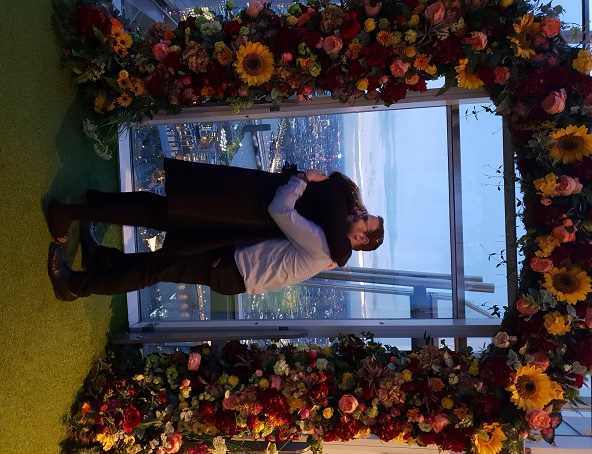
Outside of work, this year was a very special one as back in April, my fiance Robert proposed to me at the Shard, overlooking London. I said yes and 8 months later we are in the middle of wedding planning and planning for our future (and I found my wedding dress!). The proposal was the most amazing thing to happen this year. Also, two of my best friends got engaged and for one we were involved in the proposal and got to see him propose so that was fantastic! I am looking forward to the weddings 🙂 We also celebrated other friends 30th birthdays, engagements and weddings this year as well as many births of their children which was so wonderful.
Sadly this year, we lost my beloved Grandma in June to Parkinsons disease and I miss her every single day- we were very close. A month ago, my Grandpa (on the other side of family) passed away after a short battle with cancer, but I was able to fly to Portugal where he lived and see him before he passed and give him a hug, so that was very important. There is also family illness occurring, my father in law to be is very unwell with cancer and mid treatment- and this is very hard for us all but trying to be a positive as possible!
Back in February, My Dad and I went to Romania to the town of Iasi, to explore where our ancestors lived. There was a lot of snow and walking around palaces and churches and finding the synagogues. When we came back, we discovered that my Great grandpas sister and family died in Moldova across the border, at the hands of the Nazis (via the Yad Vashem online database) A very bittersweet trip but we were pleased to see Iasi.
In happier news, after celebrating our engagement with those we love, in July, my fiance Rob and I went on holiday to Israel which was really wonderful. We stayed with close friends and family and also in hotels and had a really special, meaningful, fun and sunshine filled trip! A personal highlight – the swimming pool at the InterContinental hotel in Tel Aviv and of course, walking through the Old City while sipping iced coffee (it was so hot) and visiting the Kotel. When we came back, we spent a weekend in the Cotswolds at my dad with family- a lovely escape. This year too, I also read some great books (like Michelle Obamas autobiography) and watched some fab films/ theatre shows.
In July, I celebrated my 30th birthday with friends and family (thanks Katie for my delicious birthday cake) and then this December, we celebrated Robs 30th birthday at London Zoo light trail.
This year work wise, has been a blessing- I managed (somehow) to secure a book deal which has been a lifelong dream and am working with the fab team at Trigger Publishing and my patient editor Stephanie- thanks to her, Katie and James for their support as I continue to tap away at my keyboard.
Before 2018 began I was in touch with Naomi Greenaway at the Telegraph (Stella Magazine). Thank you Naomi for helping me to tell and share my story in a sensitive way. It was an honour for me to be featured online at the Telegraph and for my story to reach new readers.
Back in January, I met a wonderful editor on Twitter, Yvette Caster, who was looking for new writers for Metro Blogs (as it was then). She looked at this here blog after I sent her a pitch email and commissioned me to write my first ever article for Metro.co.uk on mental health, weight gain and medication. From there, she and her colleagues continued to commission me to write and when she and they left in the summer, I have continued to pitch articles and be published. Thank you to Ellen Scott, Aimee Meade and the current team at Metro too. Being published online by Metro has been an amazing journey and I am proud to write for them on lifestyle topics and mental health, my favourites this year being about the Royal wedding, homelessness and mental health and sharing my Grandpas story.
Thanks also to Bianca London for commissioning my two Glamour articles, this was another amazing bucket list dream ticked. The one on dating and mental illness, bipolar and how I met my fiance (when I wrote the article, he was my boyfriend) was something very close to my heart and it was a genuine honour to be featured in a magazine I had a read as a teenager and one of the biggest womens magazines in the UK. Still can’t believe it.
Thanks to Rebecca Thair, editor of first ever mental health magazine, Happiful magazine for not only being first to publish my story with bipolar back in January (which was so important to me) but also publishing my later articles on social anxiety and a guide to bipolar. I love working with you and the Happiful team and hope to write more for you. Thanks also to Sonja at UIO Podcast and Sarah Cardwell for interviewing me.
Thanks to Francine Wolficz, Richard Ferrer and Jack Mendel at the Jewish News for all the articles and positive support of my mental health work in and outside of the Jewish community this year. And to Rabbi Ari Kayser at Aish for including my story in Perspectives Magazine with the Jewish Weekly newspaper.
Thanks to writer Olivia Blair at Cosmopolitan/ Hearst for featuring my thoughts on bipolar in several articles which were also published across Hearst publications like Elle Magazine, Prima Magazine and Netdoctor.co.uk . Thanks also to the team at Refinery 29 for featuring me in an article on Seasonal affective disorder and to the fantastic charity No Panic for publishing my personal story with bipolar disorder.
This year I was also a shortlisted finalist for a UK Blog Award for the Health and Social Care Category in March (thank you Lauren and team) and invited to come to the Mind Media Awards as a highly commended journalist in my category. (This was incredibly magical).
Going to the Mind Media Awards in November with my Dad at the Queen Elizabeth Hall and hearing peoples stories of mental health across the UK media was just incredible. It was also a fun night of celebrity spotting- Fearne Cotton, Bryony Gordon, Dame Kelly Holmes, Kim-Joy from Bake Off, Stacey Solomon and Loose Women team, Frankie Bridge and many more. Stephen Fry presented the awards and was just remarkable, humble and funny as always. I was so pleased I managed to attend, it was a privilege to meet people. I met Yvette, Ellen and their producer at Mentally Yours podcast and fellow blogger Katie Conibear. My Dad and I were honoured to attend.
This blog has been a joy at times alongside the hard work. Thank you to all my guest bloggers and all sending submissions- you’ll get a proper individual thank you at our 3rd anniversary in March, but I couldn’t run the blog without your articles and careful attention. Thanks To Vuelio and Feedspot for awards too. Heres to a 2019, our third year of Be Ur Own Light! Thanks also to my Twitter followers who make it so easy for me to share thoughts and ideas with them- and for all the online friendships I have made- you know who you are!
This year has been hard at times but there has been SO much beauty and I feel so grateful and thankful for it all. My mental health has taken a hit at times, but I have found a really good therapist for talking therapy- who has helped me so much and I have also spoken to my GP. Its OK to reach out for support. Thankfully I have a good support network. I have been a little more anxious and battling mild depression but I am slowly getting better again and starting to see the light :).
I just want to wish you all a happy and healthy new year 2019- this will be the year that I please God get married and my best friend Katie (as well as my fiances cousin too!). May it be a year of better health, wellness and joy for us all. And heres to keep fighting stigma!
May the new year be one of dreams coming to fruition and love and laughter.
Today I got an email from the lovely people at Vuelio to say they have listed us as Top 10 UK Mental Health Blog.
We are number 8, alongside some incredible blogs and organisations such as the Mental Elf and Mental Health Foundation as well as blogger friends of mine- check them all out .
Thanks so much Vuelio! This award is important as it is about being influential in our industry so am so happy to recieve it.
I remember wanting to start my periods when I began secondary school. I had no idea what to expect, but it just felt like it would be the first step in growing older, becoming an adult. Within 6 months of starting I hated it. I had horrifically heavy & painful periods since the age of 13 and my mum always suspected I had endometriosis, the same condition she had been diagnosed with.
I never struggled to get pregnant with either of my two children, but with a heavy first natural baby of 10lb 7oz, it was decided after many scans that I would have a planned caesarean with my second daughter. She was only 7lb 11oz. When my periods returned after my second baby, I knew I had to do something.
After months of pursuing issues, and aged just 30, I eventually took my mum along to my appointment and was referred for a laparoscopy. It was then that my mums suspicions were confirmed & they found signs of endometriosis.
On average it takes 7.5 years from onset of symptoms to get a diagnosis, according to Endometriosis UK (https://www.endometriosis-uk.org/endometriosis-facts-and-figures). It has taken almost 17 years for my diagnosis. The cause of endometriosis is unknown and there is no definite cure.
It was then I asked for a hysterectomy (removal of the womb) & was rejected.
Hysterectomies are known to treat endometriosis well:
• With mild endometriosis, the chance of needing further treatment is 4 out of 100 women
• For severe endometriosis, the chance of needing further treatment is 13 out of 100 women within three years and 40 out of 100 women within five years.
And I’m in good company, with many celebrities having hysterectomies for many reasons, Angelina Jolie and Michelle Heaton to be two of them. Lena Dunham too had her hysterectomy due to endometriosis.
I was told I was too young and was offered a range of treatments from the coil to the pill, I even was treated with hormones to replicate the feelings of the menopause to see how my body would react, gonadotrophin-releasing hormone (GnRH) analogues.
After six months it reacted brilliantly, no periods, no pain. I thought I was cured, but they said I couldn’t continue on the treatment due to risks of osteoporosis . I was in pieces and soon back to having periods spending days of my month in bed unable to move.
It was another 2 years of trialling medications & eventually changing my gynaecologist, before I was finally booked to have a hysterectomy operation. I was ecstatic. It was booked in February for the June of 2015 following my family holiday, I couldn’t wait.
However, things were about to take a turn for the worse. In March (the following month), my mum was informed that they had found a tumour where her ovaries had previously been, and within six short weeks she had passed away. It was the most awful time of all our lives, although thankfully she was surrounded by her family as she passed away. She had made me promise to go through with the hysterectomy, but to request and ensure they removed both my ovaries, even though they were healthy. So I did. In June 2015 I had a Bilateral total hysterectomy.
I knew I was very young at 32 to lose everything that made me a woman, but this was more than pain relief now, it was about survival and securing my future with my children.
The procedure went well and I recovered quickly, I was back at work part-time within 2 weeks, probably due to being a younger patient, but it didn’t have the same impact on my menopause symptoms. I suffered and still do, with every possible symptom, night sweats, hot flushes, weight gain, moodiness, although I think those closest to me would say that had always been there it just worsened.
Whether it was connected, it was then that the rest of my health deteriorated. I was never super fit or thin since my teens, but over the next year I gained almost 3 stone, started with severe anxiety and following an asthma attack after a serious lower chest infection, I was finally diagnosed with adult onset asthma. These of all could also have contributed to my recent spiral in mental health illnesses, but I still believe it was the right decision.
At 35 years old, I am on HRT and more medication than most pensioners, but I’m still here. I’ll be on most of my medication for life, but my HRT for a minimum of 20 years until I’m the average age for a natural menopause.
I wish my mum was here, as she too went through early menopause after her hysterectomy and I’m sure she’d have some tips that beat ice cubes down my top and lining my bed with ice packs to keep me cool in the night.
She’d hopefully have some advice on last summers rare heatwave in the UK, but sadly she was only 54 when she passed away and she inevitably saved my life and helped preserve my life so I can live beyond that she and be there for my children. And this hysterectomy added another layer of protection!
For more information please check out the resources above.
This article was written by writer Sarah Cardwell- who also experiences anxiety alongside her other health conditions. Check out her blog here: www.sarahsthinkingagain.blog




 beurownlight.com