I was delighted to collaborate with JTeen mental health support helpline and service for Jewish teens and young adults aged 11-24, on a podcast talking about my journey with bipolar disorder and social anxiety. I did this to help others and encourage people to seek help, and show its OK to talk about mental illness.
You can watch the podcast here, please watch with care: Trigger warning: discusses suicidal ideation, psychosis, mania, being sectioned under the mental health act and depression. Suitable for 18+
I decided to do this podcast to fight stigma in the Jewish community in London and worldwide and educate people about bipolar, especially parents as it started for me at the age of 15.
Thank you to Yaakov, Tehilla and Michal for making this such a relaxed but important conversation.
Last week, acclaimed chef, restauranteur and mental health advocate, Heston Blumenthal OBE starred in the BBC documentary ‘Heston: My Life with Bipolar’ which explored his fairly recent bipolar disorder diagnosis. Heston subsequently became an ambassador for national charity Bipolar UK, and has been actively supporting the charity’s mission to help reduce the average 9.5 year delay to diagnosis and end the stigma surrounding the condition.
In 2023, Heston began experiencing both depressive and manic episodes, hearing voices and seeing hallucinations, as well as depression with suicidal thoughts. Mania can also cause you to have intense creativity, speak faster and not listen to others as well as causing delusions and psychosis. Heston’s wife Melanie could see that his health was deteriorating rapidly and that he was a danger to himself. Despite the trauma of sectioning and hospitalisation, this set Heston on the path of not only a bipolar diagnosis, but medicine, therapy and ongoing treatment to help him live a healthy and happy life again.
Heston said to Bipolar UK, “I was living with undiagnosed bipolar for many years, so it’s been an extraordinary journey to get where I am today, and I’m delighted to have had the opportunity to talk to others living with the condition and find out more about their experiences.
“There is still a lot of stigma regarding bipolar, and mental health support is still lacking, but it is vital to be able to talk openly about the condition. I know this isn’t always easy, but I hope by sharing my experience, people will gain a greater understanding of bipolar and an insight into how I’m managing it.”
The documentary was extremely powerful to watch and sad in places, but inspiring. As someone who faced a similar situation to Heston in terms of a manic episode with psychosis/delusions that led to being sedated, sectioned by psychiatrists and hospitalised, my heart went out to him as I know how traumatising this can be. I found the needle being shown as a reenactment for sedation quite challenging to watch! However, the documentary was more than just showing what happened to Heston, who didn’t know he had bipolar til 2023, when he was in his 50s.
I found the discussion that Heston had with his son Jack, about how he was during a manic episode to be really enlightening. A lot of children of parents with bipolar find it challenging when their parents personality is almost hijacked by the episodes. Mania can lead to quickened speech, manic and grandiose ideas, lack of sleep and risky behaviour. You could see how much love Heston and Jack had for each other and how special is family is to support him through this and appear on camera. This includes his wife Melanie, who has been Heston’s rock!
The documentary ended with Heston visiting the mother of Rebecca McLellan, a young woman with bipolar who died by suicide due to neglect from mental health services. Rebecca had raised the alarm with the crisis team at her local hospital various times but was not treated with respect and dignity. The pressure of her illness and lack of support led her to take her own life.
Heston wants to highlight the suicide risk that bipolar brings and how much more mental health support is needed from the government. He is now working as an ambassador with Bipolar UK to raise awareness. Bipolar UK is on a mission to ensure people with bipolar get a quicker diagnosis so they can access effective treatment, support, and self-management, enabling them to live well and fulfil their potential.
Simon Kitchen, Bipolar UK CEO, added: “Heston is such an incredible ambassador for everyone in the UK living with, or affected by, bipolar. We could not be prouder to be working with him. His willingness to be so vulnerable on camera and to share such personal details about his experiences has resonated with many people in our community – and will help people who don’t know much about bipolar to begin to understand this complex and much-misunderstood condition. Heston is living proof that despite the sometimes severe and fluctuating nature of the condition, living with bipolar should not be a barrier to following your ambitions”
As one of the million people in the UK living with bipolar, I know how much more funding is needed in the NHS and a new bipolar pathway with more mental health support needs to be set up. Early prevention and support is key to stop bipolar escalating into suicide or mania.
Although it was a very personal watch for me, due to having been diagnosed with bipolar since aged 16 and my Dad having bipolar too, I thought that Heston’s documentary was so inspiring. He has only been living with the condition for two years and is using his platform for the good. Heston is now on Lithium medication to stabilise his moods as well as an anti psychotic medication.
Bipolar UK say that according to the stats, someone with bipolar takes their own life every day. Hopefully Heston’s documentary will act as a reminder and catalyst to our government to begin change. Thank you Heston and Melanie for being vulnerable and sharing your important story.
(image: Bipolar UK)
Heston: Life with Bipolar is out now on BBC Iplayer.
Living with bipolar disorder can often feel like your emotions are swinging between two extremes. The highs (mania) can be energising but risky, and the lows (depression) can be draining and isolating. As a doctor, I’ve worked with many patients who face this condition—and I’ve seen firsthand how the right tools, treatments, and habits can lead to a more stable and fulfilling life.
What Is Bipolar Disorder?
Bipolar disorder is a mental health condition marked by episodes of depression and mania or hypomania. These mood shifts can affect how a person thinks, feels, and acts. It’s more than just having a bad day or being in a good mood—it can seriously impact relationships, work, and daily functioning.
According to the World Health Organisation, bipolar disorder is one of the top causes of disability for people between 15 and 44 years old.
Medications: The Backbone of Treatment
Most people with bipolar disorder need medication to help manage their symptoms. Lithium, for example, has been used for decades and is one of the most reliable treatments to prevent manic episodes and reduce the risk of suicide. Other options include other mood stabilisers and certain antipsychotic medications.
It’s really important to stick with your medication plan. Stopping suddenly—even if you feel better—can cause serious setbacks. Never adjust or stop medications without medical supervision—even if you’re feeling better, as this significantly increases the risk of relapse, especially into mania. If you have side effects, don’t stop on your own—talk to your doctor about switching or adjusting your dose.
How Therapy Helps
Therapy can help you understand your thoughts, manage emotions, and build better habits. One helpful option is Cognitive Behavioural Therapy (CBT). It teaches people to recognise unhelpful thought patterns and replace them with healthier ones. CBT is especially useful for managing depression and maintaining stability between episodes, though it is less effective during manic phases.
Another type of therapy, called Interpersonal and Social Rhythm Therapy (IPSRT), focuses on keeping your daily schedule steady—especially your sleep and social routines. Why does this matter? Because disruptions to your daily rhythm can trigger mood episodes.
Family-focused therapy also makes a big difference. When your loved ones understand your condition and know how to respond, you’re more likely to stay on track. If you face trauma around your condition, then EMDR therapy can also help with any PTSD or anxiety symptoms.
These therapies don’t replace medication, but they add valuable tools for coping, improving communication, and building resilience.
Everyday Habits That Make a Difference
Beyond medication and therapy, lifestyle habits have a huge effect on mood. Here are a few evidence-based strategies:
Stick to a regular sleep schedule. Going to bed and waking up at the same time helps stabilize your mood.
Get moving. Exercise—even walking—has been shown to lift mood and reduce stress.
Eat well. Omega-3 fats (like those found in fish or flaxseed) may support brain health. While the evidence is mixed, some studies suggest they could help support mood as part of a healthy diet.
Manage stress. Mindfulness, breathing exercises, or journaling can help you stay grounded.
Avoid alcohol and drugs. These can interfere with treatment and trigger episodes.
It’s worth remembering that lifestyle changes work best alongside—not in place of—medication and therapy. These small, daily actions help support long-term stability and overall well-being.
Pay Attention to Early Warning Signs
Everyone’s symptoms are different, but common early signs of mania include less need for sleep, racing thoughts, and impulsive decisions. Signs of depression may include feeling hopeless, withdrawing from others, or sleeping too much.
Keeping a mood diary or using an app can help track how you’re doing. You might also ask a trusted friend or family member to gently point out changes you might not notice.
Build a Strong Support System
Having a support system—whether friends, family, or a support group—makes a real difference. Research shows that people with strong social support tend to manage bipolar disorder better and have fewer hospitalisations.
It also helps when your loved ones are informed and involved. When people understand what you’re going through, it’s easier for them to support you in ways that actually help.
Final Thoughts
Living with bipolar disorder isn’t easy, but it’s manageable. With the right treatment, daily routines, emotional awareness, and a good support network, it’s absolutely possible to live a meaningful and empowered life.
You are more than your diagnosis. And there are tools—backed by science—that can help you thrive.
About the Author
Dr. Antti Rintanen is a licensed physician from Finland and founder of The Internet Doctor, where he shares reliable, accessible health advice. He writes about both physical and mental well-being with a focus on evidence-based care.
Today is World Bipolar Day and its a day where we raise awareness globally about living with bipolar disorder and battling social stigma
When I had my first depressive and manic episodes in 2004; I was a teenager and had no idea what was happening to me. I was helped not only by family support (my dad was diagnosed 4 years before me) but also by some amazing psychiatry health professionals (shout out to Dr Mark Berelowitz at the Royal Free and the team at the Priory North London).
Bipolar changed my life as a young person in both good and difficult ways. It made me stronger; more resilient and more empathetic. But it also made me depressed, manic; anxious and fearful. There were times where I was scared of my own brain and didn’t know where bipolar started and Eleanor ended.
20 years later, I take daily medicines and engage in therapy and I go long periods between episodes due to finding the right medications. This is my own experience and some people with bipolar rapid cycle or have more regular episodes.
Remember it’s ok not to be ok but reach for support and never give up. There is a future and a way forward. I will keep talking about bipolar to help others and raise vital awareness and funds for our condition. Please also support charities like Bipolar UK and have a read of my book Bring me to Light.
I wrote it to explain how I turned the darkness that bipolar episodes can bring, into light. And so people reading feel less alone, so stigma can fall. So important to talk about our illnesses once we are better, so that it isn’t so hard to understand.
Living with severe mental illness like bipolar psychosis. mania or suicidal depressions can be very challenging. However, they do not have to be your entire life. For me, medication and therapy over time have helped me. Its different for everyone.
If you would like to read my story or gift it to a friend to help them, please see Amazon or other well known bookshops.
And remember- we are never truly alone although being ill can feel unbearable- hold on to hope if you can:
On Monday 11th September, I am looking forward to being on a webinar on Bipolar and Suicide prevention for Bipolar UK charity, with their CEO Simon Kitchen and a police officer, Ashley Brice (pictured), who specialises in suicide prevention for people in crisis in Wales. This is a difficult topic to discuss and one that will be tackled with empathy.
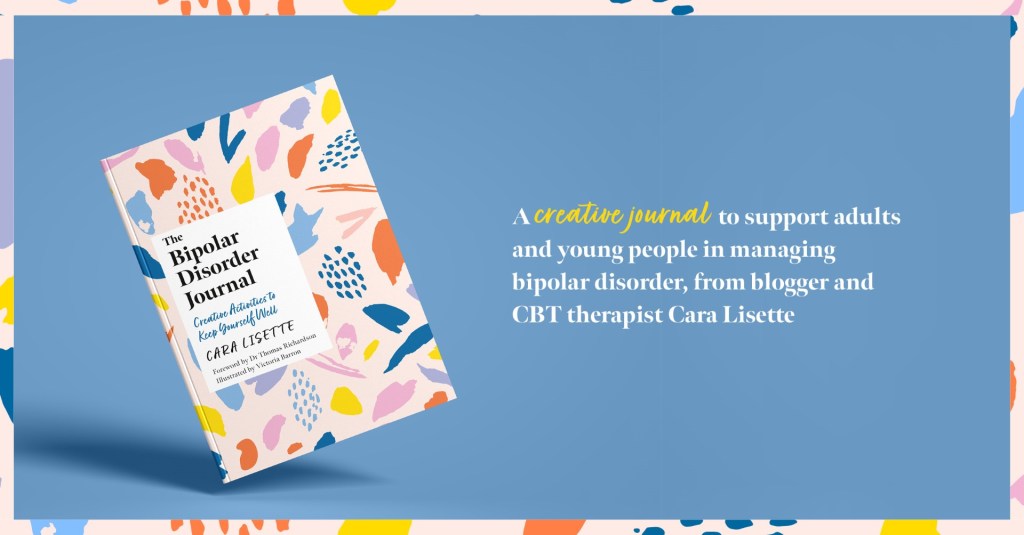
(image: Jessica Kingsley Publishers and Cara Lisette)
I have followed the work of friend Cara Lisette for quite some time. Cara is not only a fellow mental health blogger, author (of the Eating Disorder Recovery Journal and Recovery Journal series) and advocate, but she lives with bipolar disorder and an eating disorder in remission. Cara is also a trained CBT Therapist and uses techniques that have worked for her and many others, to help people.
She created the Bipolar Disorder Journal: Creative Activities to Keep Yourself Well (with Jessica Kingsley Publishers) using evidence based techniques such as CBT and mindfulness with journalling prompts, creative activities, colouring pages and motivational quote pages to help you stay well and keep on track. It is designed to help those with bipolar disorder to understand and manage our condition, from someone with lived experience, who has learnt how to manage her condition.
Cara and the publisher say, ‘The techniques in this journal support those with bipolar in recognising and coping with episodes of depression, mania, and psychosis, understanding their triggers, and finding ways of seeking support. This journal is intended for those who want to learn more about themselves and live a full and happy life.’
Cara and Jessica Kingsley Publishers have very kindly gifted me a journal of my very own to use, thank you! It looks amazing and I will be using it and reviewing it very soon!
If you would like to get a copy of this amazing creative journal click here. and it can be found in all good bookshops.
Note: This is not a paid ad, I was gifted a journal and wanted to share about it as I believe in Cara’s mission to help others with bipolar disorder.
Today is World Bipolar Day and for those of us living with bipolar disorder we know that living with it every day, year round is more accurate. However today is our day to talk about life with mental illness and to try and eradicate the stigma around the illness… ‘crazy lady’ ‘nuts’ ‘drama queen’.
World Bipolar Day is designed to raise awareness worldwide of bipolar conditions and to work to eliminate social stigma whilst providing information to educate and help people understand the condition.
Even though I live in remission/recovery with the illness, I am medicated daily to be this way, and I have undergone years of therapy and learnt coping methods too, with support from family.
Well, before I found medication that stabilises my bipolar highs and lows, life looked very different.
There were times I couldn’t work. I was so depressed I lay in bed in all day, only getting up to eat. I was scared to have a shower and wash my hair.
Life looked bleak. All I wanted was my duvet and oblivion. I had intrusive thoughts about ending my life, I was in a lot of emotional pain and this would last for weeks, sometimes months on end.
Bipolar isn’t just a bit high or a bit low…. its depression and mania, suicidal ideation and psychosis, self harm thoughts, hypersexuality, hyper activity, believing delusions that aren’t real…..SO much. Its episodic but it can ruin your life. Some turn to drugs, alcohol, sex to cope. Some hear voices too.
I have been in hospital twice for fairly long stays. I have been sectioned under the mental health act and held in a hospital unit against my will. I have been injected with sedatives to calm my mind and body when I couldn’t consent. I have met people in hospital who were suicidal, anxious, depressed, high on drugs, in psychosis. I lived on a ward where I heard people being restrained.
So, not much fun really. Luckily this month I am celebrating 9 years of remission out of hospital! I also came out of hospital as a nervous wreck and thankfully, therapy has helped.
(Image: speakingbipolar.com)
This blog is inspired by one of my followers who asked me what was my ‘Aha’ moment in recovery.
As well as finding the medicine Lithium, a salt that controls the mood fluctuations, the biggest thing I did for my own healing was go through therapy for my panic attacks and PTSD like symptoms. This was done with the support of my husband and family and because I has been on an NHS waiting list for 2 years, I needed help. My therapist and I have done EMDR trauma therapy which has helped me to process things.
In fact, I still do get anxiety attacks – just less. I have been in a very good place generally in the past year. Finding support at home, at work and from friends and family has been the most stabilising part.
I have had bipolar since I was 15, I am 34 and can tell you that this has not always been the case and my mental health has and will fluctuate.
I learnt recently that bipolar brains are neurodiverse, meaning our brain chemicals act differently to a neurotypical brain. Always good to understand the biology behind it too as this illness can be inherited and run in families- my Dad and I and other relatives have it.
On World Bipolar Day I hope:
-Employers adhere to the disability act and make reasonable adjustments to help those of us with bipolar to work in a better way for them, including hybrid working.
-People with mental illness aren’t fired because they can’t get to a physical workplace.
-Mental health services need better funding, so that people with bipolar can get a correct diagnosis sooner and get the help they need.
-People not in the Western world will get access to mental health medication and therapies that they desperately need.
On the 1st March 2016, I started this blog as a way to provide therapy for myself- as I was going through panic attacks, (caused by trauma). Can you believe that was 7 years ago?! I can’t! Since then I have had several years of therapy and my life changed so much too for the better- I met my husband, we got married and moved to our first home.
The blog has turned into a book Bring me to Light (with Trigger), writing for Metro.co.uk, Glamour, the Telegraph, Happiful, Rethink Mental Illness, Mind and other incredible organisations, I have partnered with large and small brands, charities, businesses, writers to create content that battles stigma on mental health. We have been awarded as a Top 10 UK blog by Vuelio since 2018 (thank you) and I love to share my story to help others and educate people about bipolar, anxiety, panic disorders, psychosis, mania and mental health in the workplace (amongst other mental health topics!). I have also recorded podcasts and have begun speaking in the community about bipolar with my Dad.
I cannot believe it has been 7 years since I opened up my computer to write- I was struggling. a lot. Writing has been such a therapy and a saviour to me.. and I hope this blog helps you too!
As always, I want to thank all my contributors and brands (sponsored or not), as well as the digital agencies and freelance writers who provide content too.
This year March 22- 23 we have featured (where it says my name, I wrote it!)