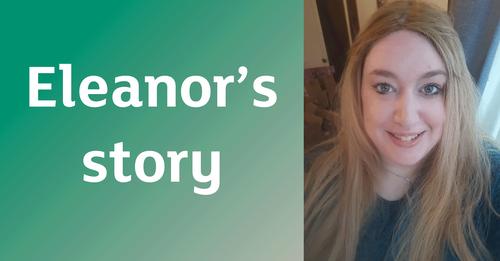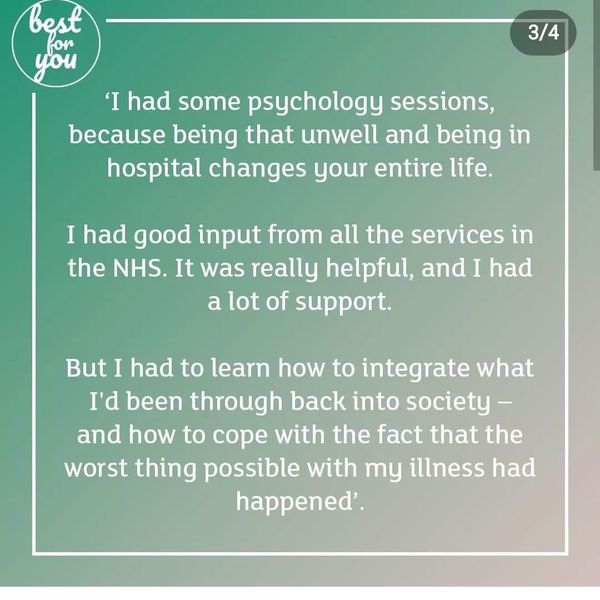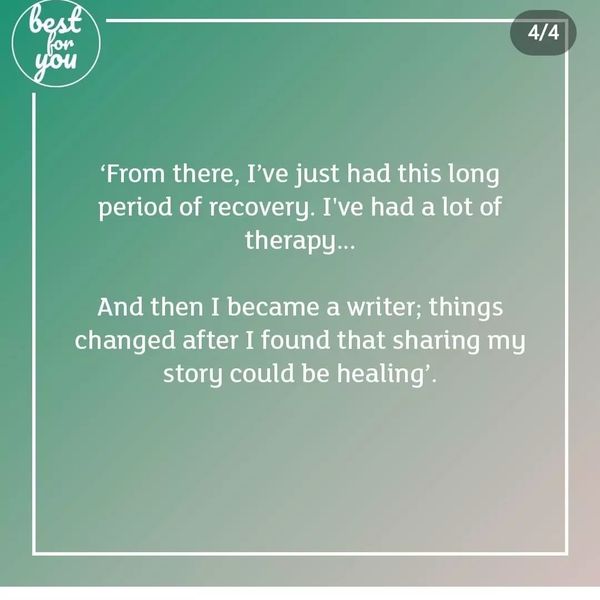
The team at Best For You NHS interviewed me about my life journey with bipolar disorder and anxiety. I hope it helps anyone, particularly young people, who are struggling.
You can read the interview that I did with Annabel here. Trigger warning as discusses suicidal thoughts, being in hospital and sexual assault.!
Thank you Annabel and team!
Best for You is a new NHS programme in London to help young people and their families access mental health support We know many can’t access the support they do desperately need and CAMHS services here in the UK are overstretched. I hope that by sharing my story it helps young people feel less alone, but we desperately need more funding into childrens mental health services too!
The other day I was contacted over on Twitter by a senior mental health nurse who had read my book ‘Bring me to Light.: embracing my bipolar and social anxiety’. She felt that it should be read by her colleagues at Norfolk and Suffolk mental health trust, here in England, and so donated a copy to the staff library for them to read- and they shared this photo.
This was by far one of the most touching and special things to have happened on my book journey- while it may seem small, to me it means the world.
I wrote my book, my memoir about living with bipolar disorder and social anxiety to help other people going through it (and their families) feel less alone. However, to see it being used by mental health hospitals- where I have been twice in my life, though in London- brings me hope.
Hope that professionals will read it and learn from it (there were times in hospital that I wasn’t fully happy with my care but most staff were amazing).
Hope that we can make a change and help the stigma around mental illness to fall.
Hope that by sharing my story, it will encourage others to feel comfortable to share theirs without fear of shame or embarrassment.
So thank you to Dawn💕 and Norfolk and Suffolk mental health trust. If you’d like a copy of my book : https://lnkd.in/e3cheTw
Your mental attitude often influences your altitude. People who are happy and successful don’t get there by chance alone. To go where you want to go, you need to take deliberate action, practice self care, and bring energy to everyday activities.. To live the life you want, here are some good ideas to follow, if you are able:
1. Get Out of Bed Early
Even if you don’t have to get up at the same time as the sun every day, it’s still important to get up at a reasonable (early) time so your body can function at its best. The human body and brain have evolved to follow a circadian rhythm, which helps to regulate sleep and wake patterns set by our natural environment, specifically the sun’s rising and setting. This rhythm was set by the natural environment millions of years ago and passed down through generations of humans. This natural circadian rhythm also aligns with the natural cortisol levels inside the body.
Cortisol is a hormone widely recognized for its function in our metabolism, immune system, stress response, and overall energy levels. Cortisol levels start to increase 2-3 hours after the start of sleep and continue to climb until the early morning, which helps wake us up. This rise in cortisol levels occurs in a balanced condition. The cortisol levels in the body will reach their highest point between 8:30 and 9:00 in the morning, and then they will fall as the day progresses slowly. As a result, optimizing one’s energy levels, level of productivity, and general health may be accomplished by the simple practice of adhering to one’s natural circadian cycle and cortisol levels. Note: cortisol can also increase anxiety, which can explain why you may feel more anxious upon waking.
2. Establish a Set Morning Routine
Find out what gets your day off to a roaring start and make it your priority every morning. For instance, if you like to reflect before starting your day give self guided meditation a try. This is a surefire method to help relieve tension, quiet a buzzing mind, and delve deeper inside yourself. Meditation can improve overall health and wellbeing. Doing a meaningful activity first thing in the morning will help you get off to a good start and be more proactive throughout the day. Rather than racing through the morning to make up for a lost time, beginning your day with a routine may help reduce stress, improve mental tiredness, and boost productivity. If you have no idea where to start then you may find it helpful to examine others morning routines and see what works for you.
3. Read
Reading books is one of the most effective ways to expand one’s horizons intellectually and creatively. Reading in a state of immersion enhances attention and has a relaxing impact similar to meditation. Moreover, reading before bed might help you sleep better. Books that are not works of fiction, in particular, are a great instrument for expanding one’s horizons, developing new ideas, and looking for inspiration. In addition, they give real-life examples of how to deal with a variety of tough situations and give advice on how to get through them.
4. Go on a Stroll
Step outside for some exercise and taking in some oxygen can lift your spirits immediately, help you think more clearly, and give you a break from working on your computer. It is also a very underappreciated exercise that may make your heart and lungs stronger, lower the risk of cardiovascular disease and stroke, alleviate high blood pressure and high cholesterol levels, soothe joint discomfort, and much more. It is an easy way to enhance your general health that is entertaining and has a minimal effect, to put it another way.
5. Fuel Your Body with Healthy Food
It is becoming more common practice for medical professionals to suggest plant-based diets to all their patients, not only those suffering from conditions such as high blood pressure, diabetes, and heart disease. If one cannot wholly commit to a vegan or vegetarian diet, even making an effort to consume more plant-based foods whenever it is practical to do so may cause a significant improvement to one’s overall health.
If you make it a point to concentrate on developing wholesome routines that are manageable for you on a day-to-day basis and that you look forward to doing, you will have a better chance of sticking with them over the long run. Creating healthy routines for one’s daily life will require an investment of time, energy, and focus, but this does not indicate that it is impossible to do so.. Instead, steer clear of drastic solutions, focus on developing good habits, and take your time to help guarantee that your health and success will be long-lasting.
The 11 most effective ways for people to protect their mental health are revealed in a guide launched today by the Mental Health Foundation.
The free guide, Our Best Mental Health Tipsis based on the Foundation’s own ground-breaking study on what protects people from common problems such as anxiety and depression.
Dr Antonis Kousoulis, who led the research and is a Director of the Foundation, said: ‘Our new guide encourages us to take care of the fundamentals of life – our relationships, our experiences, our bodies and our finances.
‘The evidence shows that this is far more likely to keep us mentally healthy than the gimmicks and miracle cures promoted by some in the ‘wellness’ industry, who prey on our vulnerability.
‘The truth is, there are no quick fixes for good mental or physical health. What works is developing healthy habits in our daily lives, that help us to feel OK and able to cope with everything.
‘For example, in our new guide we talk about getting more from our sleep, learning to understand and manage our feelings, planning things to look forward to and getting help with money problems.’
The full list of mental health-promoting actions suggested by the new guide is as follows:
Get closer to nature
Learn to understand and manage your feelings
Talk to someone you trust for support
Be aware of using drugs and/or alcohol to cope with difficult feelings
Try to make the most of your money and get help with problem debts
Get more from your sleep
Be kind and help create a better world
Keep moving
Eat healthy food
Be curious and open-minded to new experiences
Plan things to look forward to
Most members of the public involved in the study had experienced their own, or family members’ problems with mental health, so had the benefit of hindsight when assessing what helps most with prevention.
The new guide (and the research on which it is based) acknowledges that people may be unable to follow some of its suggestions, for instance because the place they live makes it impossible to sleep well or spend time close to nature.
Dr Kousoulis added: ‘Enjoying good mental health should be an equally accessible goal for all of us, yet it is often out of reach for many. Government action is needed to create the circumstances that solve problems that are beyond individuals’ reach, and help prevent people having problems with mental health in the first place.’
You can download the new guide free of charge from the Mental Health Foundation website.You can also order hard copies by post, with a small charge.
About the Mental Health Foundation
Our vision is of good mental health for all. The Mental Health Foundation works to prevent mental health problems. We drive change towards a mentally healthy society for all, and support communities, families and individuals to lead mentally healthy lives with a particular focus on those at greatest risk. The Foundation is the home of Mental Health Awareness Week www.mentalhealth.org.uk
This is a non sponsored article written by the Mental Health Foundation.
Whether it is addiction to alcohol or drugs, deciding to seek treatment for substance abuse is never an easy decision. If it is a family member or yourself who has a problem with substance abuse, there are certain signs that will indicate it’s time to seek treatment at a qualified facility. Though it may be hard to admit, here is how you will know the time has come to admit professional help is needed.
Changes in Personality
If you have major personality changes eg you were once very outgoing but now are withdrawing from those closest to you, this can indicate you may need treatment for a substance abuse problem- you could also be struggling with depression . Another indication is if you lie about your addiction to those you love and try and keep it secret.
Financial Problems
If you are addicted to drugs, it won’t take long for this problem to result in you having severe financial problems. Whereas in the past you always had money to pay your bills, you now find yourself having to ask others to help you out financially. Eventually, you may lose your car and even your home. Seek help for your finances when you are able to- perhaps a friend of family member could help you.
Incidents with Law Enforcement
As you live with addiction, you may find that you commit crime or do things you wouldn’t normally do. This may include getting arrested for drunk driving, possession of drugs, or even more serious crimes such as theft or assault and battery. Once this cycle begins, it will worsen very quickly, which is why you should seek out substance abuse treatment as soon as possible. Drugs and alcohol can change your behaviour.
Physical Problems
When you are drinking or doing drugs regularly, this will ultimately take quite a toll on your physical health. While the most common signs may be relatively minor such as nosebleeds or eyes that are constantly red, you may also start to notice other signs. Look for signs of liver damage, increased blood pressure, or trouble breathing. Once these signs become evident, you need to get medical treatment as well as substance abuse treatment for your mental health. Look after your body as it can take a battering when you are addicted to substances.
Losing Your Job and Marriage
When substance abuse problems get very bad, your job and marriage may be at risk of being lost to you forever. You may find yourself suddenly being faced with the prospect of being unemployed and possibly divorced due to your ongoing battle with drugs or alcohol. Addiction can sadly strain relationships and make you unreliable at work too, because you are unwell and can’t get better. At that point, if you hit rock bottom, you may admit you need help for your addiction.
Taking that initial step in seeking treatment will be tough. However, doing so will enable you to get your life back on track and overcome your addiction to drugs or alcohol.
There are many places that offer specialised drug and alcohol treatment in the UK and globally. Check out Alcoholics Anonymous, Mind and Action on Addiction.
This article was written by freelance writer Rachelle Wilber.
Your mental health matters a great deal when it comes to your overall wellbeing. There may be days or times you feel low or maybe you’re someone who is managing a mental health or mood disorder currently.
Regardless of who you are, it’s important that you take positive steps in the right direction to take good care of yourself. Consider making and incorporating these changes and then notice how much better you feel overall. Here are four effective ways to boost your mood and be well so that you can get back to living fully and have a smile on your face while you do it.
1.Exercise & Move More
One effective way to boost your mood and be well is to exercise. Not only workout and break a sweat regularly but also commit to moving more throughout the day. Exercising is great for your mental health and can instantly put you in a better mood. Make working out fun by engaging in activities you enjoy and that get your body moving and making a playlist that keeps you motivated.
2.Get Organised & Declutter
Another effective way to boost your mood and be well is to get organised and reduce the clutter in your home, office, and life. You’ll feel less stressed daily and will be able to easily find what you’re looking for. Go through old boxes and get rid of or donate items you no longer use or want sitting around. As for anything you decide you want to keep but don’t want in your home, it would be useful to look into securing a storage unit with https://www.storagearea.com for the overflow.
3.Stay Social & Connect with Others
If you want to effectively boost your mood and be well then it’s in your best interest to build relationships with others, if you are able. Stay social when you can and make connections that are meaningful and rewarding. Keep a social calendar and be sure to get out and about once in a while so that you’re not always sitting around the house or feeling lonely. Sometimes this can be more difficult, so be kind to yourself.
You may want to join clubs or orgnaisations in your area, volunteer, or play group sports to help you stay better connected, if you want to. Otherwise, take up a hobby or two and make new friends this way as well. If you struggle with making friends or have social anxiety, you aren’t alone and there is a lot of support out there for you too!
4.Eat A Healthy Diet
What you put in your body for fuel can also impact your mood and mental health. Feel better fast by eating a healthy diet and cutting back on sugar, alcohol, and processed and fried foods. Some foods can also cause anxiety and make you feel uneasy. Stick to a healthy and well-balanced diet filled with fruits, vegetables, and leafy greens, nuts, and lean proteins. It might help to get in the habit of cooking for yourself at home so you have more control over the ingredients you use and what you’re eating. Also, always drink plenty of water to make sure you stay hydrated and have more natural energy to get you through the day.
Keeping well is something you can do for yourelf- go at your own pace and look after your mental health and overall wellbeing. This article was written by a freelance writer.
I sat in A&E on a Wednesday morning trying to control my breathing.
My day began normally with a rushed breakfast and a sweaty commute on the Northern Line. I got to work and started to feel lightheaded and slightly panicky. My chest hurt and I found an empty office to try and calm down. It didn’t work. My brain was screaming ‘heart attack’. A kind colleague put me in a taxi with directions to the hospital.
Of course, I wasn’t having a heart attack. It was a swift diagnosis and then I had hours to wait before seeing the on-call mental health specialist. My panic turned to shame. Especially as I watched ‘real’ sick people come and go from A&E.
It wasn’t my first panic attack, but it was my first one at work.
I was diagnosed with anxiety years earlier in Canada by my GP. I managed it through talking therapies, medication, and support from family and friends. I didn’t have to tell anyone at work and outwardly I always looked like a confident professional. I have what is commonly referred to as ‘high-functioning anxiety’.
My stress levels had been building since I moved to the UK. New country, new job, lots of work travel with more responsibilities, and missing my regular support systems. I felt uncomfortable in my own body; it ached all the time, my memory was unreliable, my hands shook, and my stomach always hurt.
I ignored all the signs and pushed through. It wasn’t one thing, anything specific, or even the building pressures at work. I stopped taking care of myself and I was scared to ask for help. Deep down, I knew it was my fault that I ended up in A&E.
I turned on my phone and scrolled through concerned messages from my team. Excuses raced through my mind: migraine, food poisoning, allergic reaction. Anything but admitting the state of my mental health. How could they, or anyone at work, respect me if they knew my truth?
One of my team members sent a private message asking if I needed a toothbrush. Even now, I can’t explain why it was their simple message that gave me the courage to tell the truth. Perhaps I sensed their kindness and concern? Perhaps because it was ‘normal’ when everything else felt out of control? Whatever the reasons, I decided to be honest with my team and my colleagues from that moment.
I am not unusual. The Mental Health Foundation cites a 2013 study with 8.2 million cases of anxiety in the UK. All my life I had been told I was ‘stressed’, ‘a worrier’, and ‘a perfectionist’. These characteristics make me successful, but they often cost me my mental health.
I recognise that being able to speak out is a privilege and that my seniority made it easier. It was still a risk, but I could no longer afford to be silent about my mental health. My main concern was that I would lose credibility at work. I didn’t want others to see me as weak, unreliable, or incapable.
Senior leadership, my team, and my closest colleagues were immediately supportive and sharing my story changed from being scary to empowering. Speaking out gave me some control over my anxiety and I became a better leader because I could bring my whole self to work. I started to see my anxiety as, if not a strength, something that allowed me to engage honestly with others and with my work.
I would like to share that as a white, middle class Canadian women working in reputable organisations with access to support, I feel that I have had some level of privilege at being able to access this support. Additionally, anxiety as a mental health disorder, is also relatively understood and more accepted.
No matter anyone’s background, including mine, talking about your mental health can be scary and make you feel vulnerable.
There is no one way to support mental health at work and everyone copes differently. It’s not about online yoga classes, taking deep breaths, or flexible working policies. I think it’s about awareness, inclusion, and having difficult conversations. Often when I am struggling, the only thing I want from my employer or a loved one is to be heard.
As a leader with anxiety, I think some of the most important things I can do is speak openly about my experience, help others to do the same, and listen to their stories. I took every opportunity to do these things while working at Imperial College London Business School and I continue to do so in my new role at Cambridge Judge Business School. Instead of just asking my team ‘How are you?’, I ask questions like ‘Are you getting enough sleep?’ or ‘What can I be doing to support you?’.
When I interviewed last year for my role at Judge, I intentionally spoke about my anxiety and how it influenced my leadership and working styles. I felt it was a risk worth taking.
I want organisations, employers, and employees to understand, and to see through my example, that having a mental health disorder doesn’t mean you can’t be successful or ambitious. Everyone faces challenges. Our organisations need to be a place that talking openly is encouraged and supported. Anxiety has taught me to be kinder, more empathetic, and that bringing these qualities to work are beneficial for me, my colleagues, an organisation’s healthy culture.
Erin Hallett is a mental health writer, advocate and speaker, originally from Canada- she now lives in the UK.Erin works at Cambridge judge business school.
Trigger warning: discusses sexual violence and mental illness.
I have known about the incredible speaker, author and advocate Madeleine Black for a while, through my Dad Mike. She is an outstanding and powerful advocate of courage after adversity, of hope after despair and of resilience despite intense pain. For me personally, coming from the same community, I feel that Madeleine is a shining light to so many- as sexual violence has historically not been talked about openly.
Please note the rest of the article will discuss Madeleine’s journey with sexual violence and how she was able to move forward.
Used, Beaten but Never Broken.
”I remember wishing they would kill me to make it all end.”- Madeleine Black
It takes courage to speak the unspeakable. But for many years, Madeleine Black felt too afraid and too ashamed to utter a word of what happened to her. Violently attacked at the age of thirteen, her story is one of pain – but also of healing, resilience and forgiveness. Madeleine uses her personal and moving story to show us that it’s not the events in our life that define us, but by how we choose to reclaim our lives after them. How we become unbroken.
Madeleine grew up in Glasgow, Scotland and London into a loving Jewish family. At the age of 13, she went out with a friend in a group to a cafe in London, drank alcohol for the first time (like a normal teenager) and met two male international students that night, acquaintances of her friend. They took advantage of her age and vulnerability. Instead of dropping her home safely as she was drunk and could not consent, they carried her to a nearby flat and violently gang raped her, leaving her with terrible injuries. Her friend was sleeping in the next room. Madeleine talks of seeing herself floating above her body as if she wasn’t really there – dissociation as a trauma response. She was told by one of the men that if she told anyone about the gang rape, they would come and kill her.
Madeleine has said, ‘For many years after that night, my memories of what happened after he held the blade to my throat and threatened my life were fragmented… difficult to piece together. It was too extreme, too violent for me to understand.’
Madeleine struggled with her mental health following this trauma at such a young age. Living in a state of shock and self-loathing, it took her years of struggle to confront the buried memories of that first attack and begin to undo the damage it wrought, as men continued to take advantage of her fragility in the worst possible way. Madeleine was raped three more times before the age of eighteen, experiencing more trauma in her life than most ever will. Due to the aftermath of the trauma she faced, Madeleine used drugs and alcohol to numb the pain and developed phobias and an eating disorder. While she couldn’t remember lots of details of that night, it left her feeling ‘worthless, dirty and contaminated’. She had a suicide attempt by overdose, hoping to end her life and had her stomach pumped. She was then admitted to a childrens psychiatric unit struggling with suicidal depression and self harm.
After a few years, she eventually found the courage to tell her parents what really happened to her. After growing up with burdens no teenager should ever have to shoulder, she found the heart to carry out the best revenge plan of all: leading a fulfilling and happy life. She met her husband, a loving and kind man, who helped her to heal from the traumas she faced with men and they are happily married and have children together, three daughters. Madeleine learnt through this that she is loveable and she is loved.
(image: Forgiveness Project/Madeleine black)
However, piecing her life back together was long and painful. Forgiveness was the key for her to move forward- not to forgive the act of rape- but to understand what led the rapist to do so. It takes a real desire to understand those who have done us so much harm. It is the ultimate act of courage.
Madeleine has said,
‘I want to end the shame, stigma and silence surrounding sexual violence enabling others to find their voice, whatever their story is. I want people to know that it’s not what happens to us that is important but what we do with it. I will show how changing my mindset tapped into my resilience and transformed my life, making people question their own thinking and encouraging them to see that there are always choices to make, and if we choose to, we can get past anything that happens to us in life both professionally and in our personal life. I wants to encourage others to live their life courageously too; but ultimately, I want to inspire hope and show people that we are all so much stronger than we think we are.’
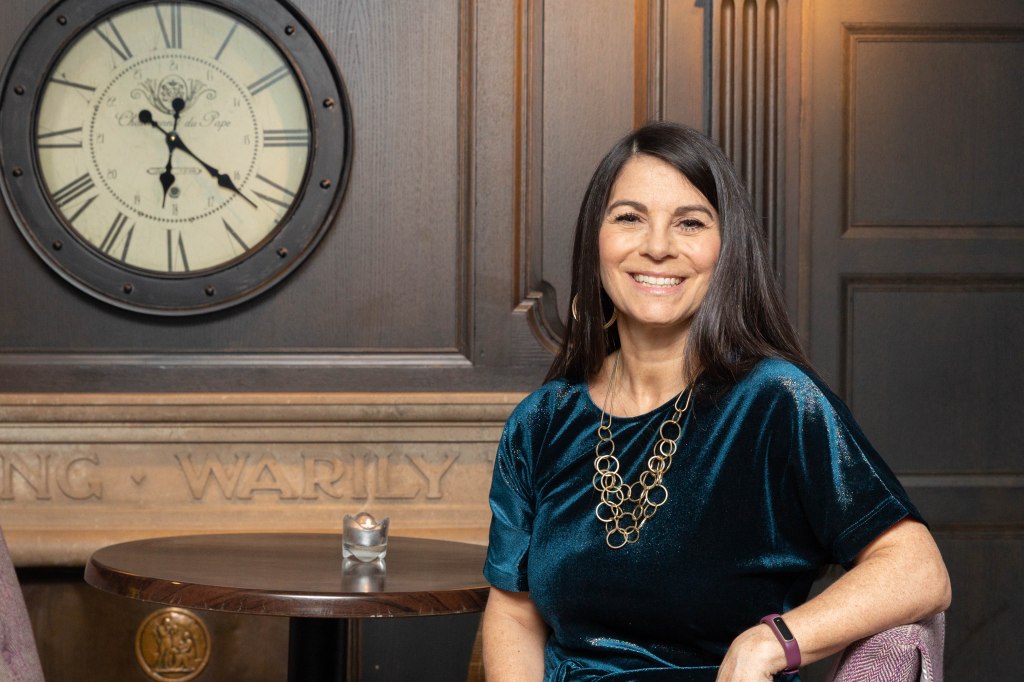
(image: Madeleine Black)
Madeleine found that since the attack, she had been burying memories and started to experience flashbacks when her daughter turned 13, the same age as when she was raped. This can be a part of PTSD- post traumatic stress disorder. She learnt that she must let go of her anger and make peace with her past, as her personal journey.
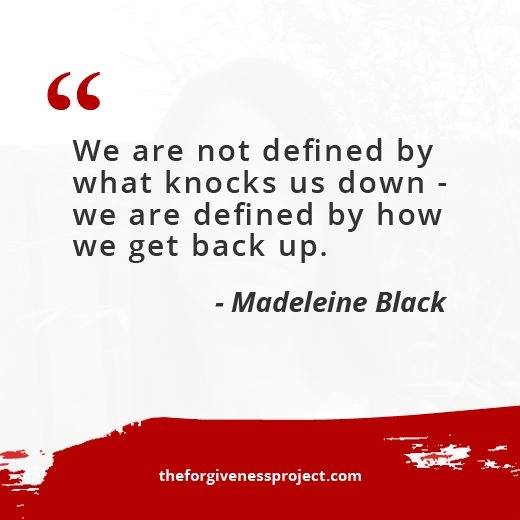
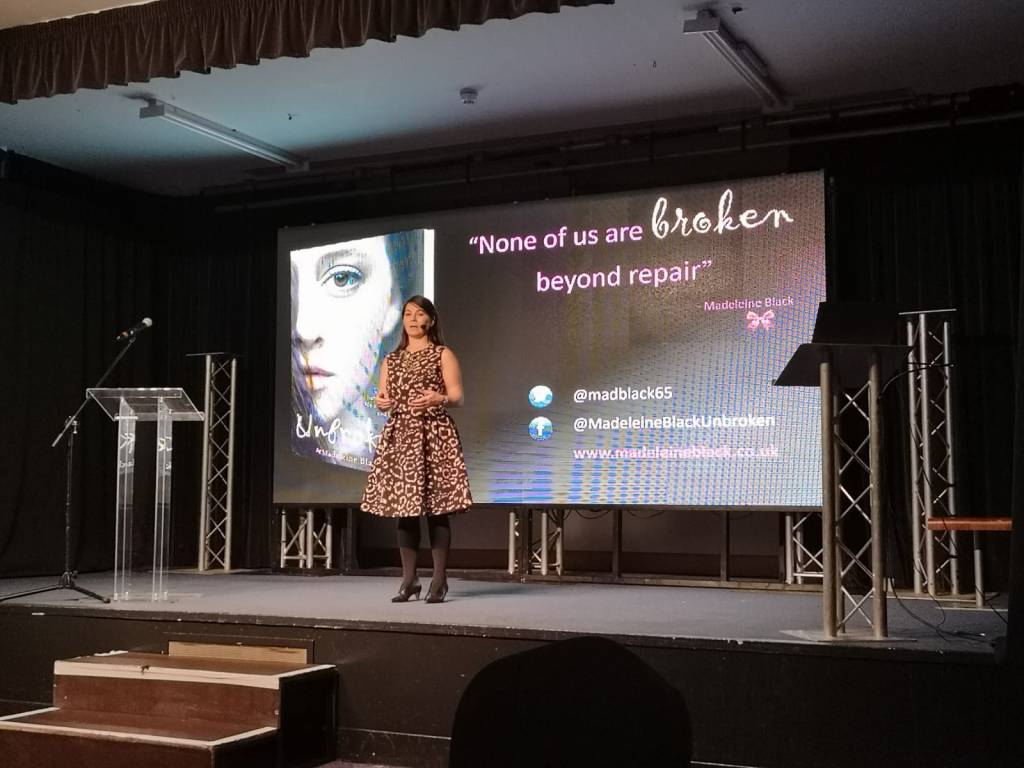
In her debut book Unbroken, Madeleine tells her deeply moving and empowering story, as she discovers that life is about how a person chooses to recover from adversity. We are not defined by what knocks us down – we are defined by how we get back up. She also hosts the Unbroken podcast where she has guests sharing their own stories of hope and courage.
Madeleine is also a TEDX Speaker sharing her journey to end the shame around sexual violence , works with the Global Resilience project and is the Patron for Say Women which helps rape and abuse survivors. She currently also works as a psychotherapist.
(image: Madeleine Black)
I will leave you with Madeleine’s words:
‘I am not my body or the things that were done to me. I am so much more than the sum of one night’
Thank you to Madeleine for giving me a copy of her book Unbroken to read and for all you do. You can get your copy here
Yesterday was the first NHS meeting with the Perinatal (pre conception/birth) Psychiatrist. I didn’t know what to expect from it, though a few weeks ago I had the non NHS meeting with a very good consultant psychiatrist. They were both lovely women who are very good at their jobs- I had had to initially try for a private referral due to NHS waiting lists, but then managed to get an NHS appointment.
I was a bit nervous to see how the NHS would handle it, as they will be who I have care with going forward, so I was pleasantly surprised to be treated with respect and insight and kindness. I know that sounds weird, but those of you who know what my hospital admission in 2014 was like, will know that it wasn’t all plain sailing. Due to lack of insight, decisions happened about me and not always with me and so to feel empowered for me and my husband is very important.
Essentially these meetings now I have been well for a long time, are to plan ahead and discuss psychiatric history, what medications are needed, how it can be managed and what this would mean for a foetus and baby too. Birth carries a strong risk of relapse with the bipolar disorder, including the risk of psychosis and depression and so medication particularly for me needs to be planned carefully. I will need to be monitored once pregnant.
I am on 3 different types of psychiatric medication and also a contraceptive pill. Before we start trying to have children, I will need to have a time of withdrawal from the pill, which could send my hormones all over the place (i used to have PMDD symptoms where I felt very depressed and suicidal on periods so this is a slight concern). Then I may need to taper down one of my medicines (possibly sertraline) with the assistance of the mental health team, to reduce the effect on a baby. As baby will have a time of withdrawal from medications after birth while in hospital- which scares me too that they will be affected temporarily so want to make sure any baby is safe, as do the team I will work with.
The Dr also mentioned I would need to be in hospital for 5 days after birth so my Lithium level can be monitored (too high it can be toxic to humans) and I will need regular blood tests also- which are a source of anxiety, I hate hospitals due to past trauma. There was also a mention of needing to stop Lithium pre Labour and my Lithium levels as a result being quite high from birth too. So this information is good, knowledge is power but its also a bit terrifying to factor this all in.
I am scared but its also…. exciting in a weird way. Despite not yet trying to fall pregnant for a number of reasons so far- (which include possible bipolar relapse and changing meds/ time frames and starting a new job role), I have wanted to be a mother my whole life and I have more challenges than most due to the psychiatric and hormonal changes and how the baby would be. I question whether I am doing the right thing too by trying for a natural pregnancy in future and thats really hard. But egg harvesting and surrogacy is not easy either.. and its like going between a rock and a hard place at times with the best thing to do.
The doctors also mentioned I should visit a mother and baby hospital unit during my pregnancy to see what its like and what support is given- as my worries about it being like a severe psychiatric ward are high. Apparently, its a much calmer, supportive and therapeutic environment. I don’t want to be in hospital but these are the types of things one has to factor in with the bipolar being biological with mood changes.
Rob is endlessly supportive – we are embarking on a somewhat unknown journey – but are now armed with way more information from both psychiatrists and are very thankful to live in the UK.
So, this will be the last update from me on this for a while but knowledge truly is power and I know that with the help of our healthcare system- mental health teams and perinatal psychiatry/ obstetrics, my family, medication, self care etc I should be safeguarded and cared for well.
When the time is right, we pray our miracle will manifest.
Thanks for reading,
Eleanor x
PS shout out to my parents, Rob and family for their constant support.
Fashion is a powerful force. It has the ability to make people feel confident, empowered, or at its worst horrible about themselves. It can have a positive impact on mental health and self-esteem if you find something pieces that make you feel good about yourselves. On the other hand, fashion can also have a negative impact on self-esteem and mental health if you’re constantly exposed to images and messages that make you feel inferior or unhappy with who you are. Especially with the inward turn of the pandemic, its hard for people to feel happy and confident about themselves.
The Psychology of Fashion
Fashion is a multi-billion-dollar industry and a big part of many people’s daily lives. It’s a subculture that’s easy to invest in. And, like any other trend, fashion comes and goes, so you’re always in control of how much you invest in it. The psychology of fashion reveals the different aspects of how fashion impacts people’s self-esteem. From the way people perceive others based on the way they’re dressed, to how people present themselves to the world by choosing outfits, fashion has a strong psychological effect on everyone.
Body Image
Our bodies are such an important part of life, and it’s normal to have some insecurities about them. Still, as you grow older, many people struggle with body dysmorphia or an unhealthy obsession with one’s appearance. Constant exposure to images of other people’s bodies that are unrealistic and unattainable can be harmful to your self-esteem, especially in young people who are still forming their self-image. This can lead to eating disorders, body dysmorphia, low self esteem and depression and anxiety. Looking at images of gorgeous models wearing clothes you can’t afford or fit in can makes you feel left out or confused. It’s fun to keep up with trends, but try to avoid getting stuck in a rut of hype culture.
(image: Hannah Morgan at Unsplash)
So what should I do?
You can’t ignore fashion and societal trends- but it’s important to not let fashion (or what is popular to wear) become something that defines who you are. It’s a fun accessory, something you should do for enjoyment, creativity, and confidence. For people who have found themselves struggling with their mental health due to the psychological effects on body image, it’s important to seek help. Talk to your friends and family members, or seek professional help if you need it. There are many ways to find happiness in style- whether you’re into vintage clothing, a specific designer, or a particular style like athleisure. You can read blogs with good recommendations, and wear things that you love, like that pair of perfect trainers or Men’s Off-White Hoodies. There’s something for everyone, and it’s important to have fun with it!
Fashion and societal expectations of how one should look can have a big impact on mental health, so it’s important to be mindful of it. It is also hard to be bombarded with negative messages on body image via social media. The body positive movement has sprung up because of this narrative- showing curvier models and embracing your flaws as beautiful.
There are also many ways to wear your favourite clothes in a way that makes you feel good about yourself, without negatively impacting your mental health. Focus on what makes you feel like the best version of yourself!
This article was written by a freelance writer and contains do follow links.