Taking a Mental Health Day: Retriggering the Anxiety Cycle by Eleanor

‘Sometimes you’ve got to face the darkness to step into the Light again’– James Arthur ‘Sermon’
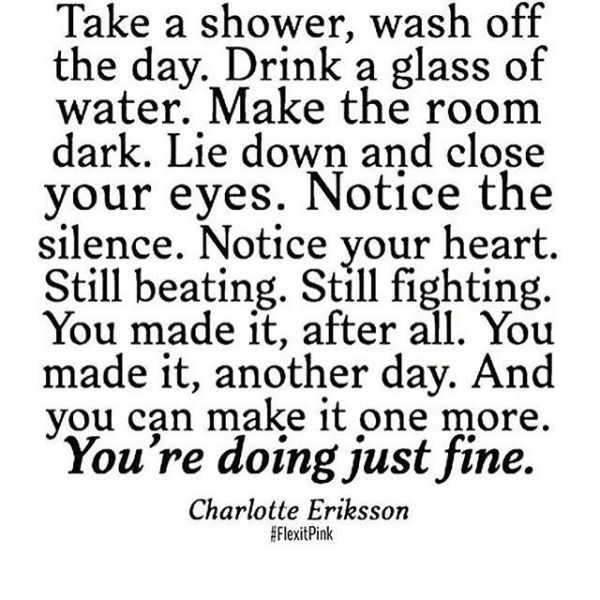
I just want to start this post by saying that I am doing alright- I just have moments of bad anxiety or panic when triggered by specific issues. This week, I have been feeling more anxious than normal and when this happens I often have to take a step back, take a mental health day to rest and relax and recover.

As many of you know, I have social anxiety and this manifests in various ways. At the moment, I have issues with body image as I have put on a lot of weight over the past 5 years- partly due to medication and partly to lifestyle (I love sugar and don’t move as much). However, this means that in some situations,  my anxiety gets a bit heightened.

Early mornings are also the worst time for me in terms of anxiety so I try and do things later in the day now.

So what do my mental health days look like?

Sometimes they can involve:

– Sleeping or resting if needed for a few hours
– Watching something funny- today I watched the Windsors Royal Wedding special
– Speaking to a friend
– Eat something healthy that I love (and sometimes eating chocolate.. which I am trying to stop)
– Taking space and time from work to breathe. As I am self employed, I make my own hours so I know this isn’t the same for everyone.

Listening to relaxing music, taking a bath, doing something mindful eg colouring or going for a walk if I feel able are also good.

I am looking forward to a more restful weekend and taking care of my mental health. Once I’ve had a mental health day I usually feel better, more rested, calmer and centred.

Overwhelm is hard but it doesnt have to rule everything.

I’d love to hear about what you do when overwhelm sets in, to help ease the tension?

Love,

Eleanor x 

Can Alcohol raise stress levels and affect our mental health?: Guest post by Tomas Sanchez

This guest post was written by Tomas Sanchez and talks about Drinkaware, the UKs top alcohol education charity. For more and help and support, view their website at : https://www.drinkaware.co.uk/

Highly demanding jobs, family duties, money worries, relationships issues, they can all add up to make our stress levels go through the roof. The truth is, it can sometimes feel like we’re sat on a roller coaster, led by a high-pressure lifestyle that is ruining our health and happiness.

According to the Mental Health Foundation, 16 million people experience a mental health problem each year, and stress is a key factor in this. Which is why this year’s Mental Health Awareness Week is focused on understanding the impact stress has on our lives and how to tackle it effectively. The week took place last week between 14th and 20th May.

When it comes to coping with stress, reaching for booze might seem like a good idea to help you lift your spirits and relax. However, in the long run, alcohol can have the opposite effect and contribute towards raising your stress, affecting your mental health and wellbeing.

Wine, beer, cider or spirits, whatever your tipple of choice, the alcohol in your drink is a depressant, which means it can disrupt the delicate balance of chemicals your brain relies on for good mental health – especially when you drink above the alcohol unit guidelines.

In fact, while a pint or two may cheer you up, this is only a short-lived effect that will quickly wear off. But, in the long run, drinking too much too often can exacerbate your stress and contribute towards the development of mental health issues such as anxiety and depression.

Alcohol can also impact your sleep. You might think that drinking can help you nod off a stressful day at work, but in reality, alcohol can alter your sleep cycle and make it harder for you to get the rest you need to tackle the stress in your life.

If you’re struggling to deal with stress, there are more effective ways to cope with it than reaching for alcohol, such as:

Exercise, a great way to de-stress. Go for a run, swim or to a yoga class – or even a brisk walk can help clear your head of the day’s worries.

Talk to a friend about what’s worrying you. If you don’t feel comfortable talking to your friends or family, look for professional help – talk to your GP or an accredited counsellor. They will be able to help you manage your feelings and point you to the right resources to help you restore your wellbeing.

Take a hot bath or do some gentle stretches to relieve tension from your body.

If you do decide to have a drink, follow the UK Chief Medical Officers’ (CMO) advice – it’s safest not to drink more than 14 units of alcohol a week and spread your drinking evenly over three or more days.

If you’re drinking too much too often, cut back on it by:


  • Keeping track of what you’re drinking – use Drinkaware’s App to help you monitor your alcohol intake and change the way you drink.


  • Choosing low-alcohol drinks or mocktails.


  • Giving alcohol-free days a go. If you drink regularly, your body starts to build up a tolerance to alcohol. This is why many medical experts recommend taking regular days off from drinking to ensure you don’t become dependent on alcohol.

Fitness and how it can help Depression: Guest Post by Paul Matthews

Dark times can come. When you reach your darkest days, the ones in which your thoughts are controlling you and you can barely do anything, you should try and keep yourself busy, if this is possible. Its not always possible for people who are unwell- but distractions and exercise are always helpful, especially if they benefit your overall health.

These are the top 3 reasons why taking exercise could help you if you’re suffering from depression:

1: Engage your mind and keep it busy

Last year was one of the worst periods of my life: I broke up with my girlfriend, changed my job and lost one of my best friends. I was that sad and my mind was not properly functioning, all my thoughts were invading me all day and I was barely able to do anything.

One day, I went for a 5 mile run, because it was sunny, right after work. During this time, no negative thought hit me. That was when I opened my eyes: if you don’t dwell on depressive thoughts, then you will be able to see the light at the end of the tunnel. I decided to get a gym membership and I started working out for an hour after work. It has really helped me manage my depression. I am happy right now: my life is busy, but I have plenty of energy every day and less dark clouds.

Keep active and you should hopefully see the benefit!


2: Your lifestyle can affect your mental health

One of my friends who had depression loved junk food. He was constantly sad and depressed. He also did hardly any exercise. I encouraged him to exercise more and go to the gym if possible. The exercise helped him feel more positive and like he was taking good steps back to wellness. 
3. Help Your Self Esteem and Do it for you 

Many people told me that they were embarrassed to do exercise and particularly going to the gym as they felt “ugly, insecure, overweight and not fit” and so on. The best advice I can give is: get yourself some good fitness clothing you feel comfortable in. This might sound a bit weird, but properly fitting exercise wear can boost confidence and promote positive mental health.

Its also important to note that you aren’t the only one feeling this way and most people feel the same about themselves. Take that leap today.

When you are approaching fitness, whether if it’s in the gym or outside, or even at home, you must not forget about why you are doing it, why it’s important for you and how this could help you with your mindset.

Gentle exercise includes swimming, walking and yoga. There is something for everyone.

Try and see over the wall and remember: after the storm, the sun will rise again. Keep it up!


paulm

(image: Paul Matthews)

Paul Matthews is a freelance business writer in Manchester, who has headed up several campaigns. His aim is to better inform business owners and professionals on the hidden dangers of the workplace. You can often find him mountain biking or at the local library.

You can contact him at : https://twitter.com/paulwritesalot

Guest Post: 5 Steps to control Anxiety and help Panic attacks by Katie Rose

My name is Kate and just over 2 years ago I had my first panic attack. It was without a doubt, the scariest moment in my life and to think I’m at the point where now I can somewhat control my anxiety, feels like a miracle. Anxiety is not something that you can “just get over” which I’ve often heard those who don’t suffer from it, say. (So don’t worry if you’re struggling!) Though I’m a lot more stable now, I still experience mild anxiety every now and again. This post will tell you how I managed to tame my anxiety and help prevent my panic attacks.

#1 Stop Drinking Alcohol

Whether you agree alcohol is the reason for your panic attacks or not, it’s a proven cause to why people suffer from anxiety. Sadly for me, alcohol is the number one cause of why I would experience panic attacks and get myself into such an unstable state. As a result, I will no longer drink even a drop of alcohol and since, I haven’t experienced a panic attack. This is not the same for everyone- some people don’t drink but still experience high panic. It’s not that I don’t want to drink alcohol or that I don’t enjoy myself when I am drinking because I really do. However, the aftermath of it all just isn’t worth it.

In spite of that, it doesn’t mean I haven’t felt anxious since stopping drinking because I have and it’s still an ongoing battle. I’ve quite simply stopped having major panic attacks.

What Happens When I Drink Alcohol?

When I drink alcohol I end up going to bed with a racing mind (how on earth I end up sleeping I have no idea) and wake up in the early hours of the morning with major heart palpitations and breathlessness. It makes me feel like I’m about to die. Due to being tired from waking up early, I always feel extremely frustrated that my body has woken me up. No doubt that makes my anxiety worse and stops me from relaxing and calming down. So, what do I do?

Solution: Talk To Someone

Instead of going on my phone and surfing the internet to try and distract myself, I’m lucky enough to be able to wake my dad and sit and talk to him. I find that it helps me get back to sleep so much quicker than staring at a bright screen which actually makes me feel more awake. After all, it’s unlikely you want to be awake at 4 AM watching YouTube or scrolling through Instagram, instead of sleeping. By closing my eyes, yet having someone there to talk to, I’m able to slowly drift off back to sleep and thankfully not wake up again until the morning. It takes me an hour or two  to fall back asleep but compared to trying to cope alone, it’s a lot shorter. Try it – it might just work for you.

Don’t have someone at home to talk to? Perhaps you live alone and I assume for sufferers in an empty home it will feel a million times worse. Maybe it is time to take out your phone but instead of staring at the screen, call someone, even if its a helpline. That way you can lie with your eyes closed making you more likely to fall asleep and still be able to talk to someone for help.


#2 Breathe Using Your Stomach

It may sound slightly strange but after having the ambulance out to me on several occasions, I’ve learn that it’s my breathing that plays a huge part in being able to calm down or not. Breathing quickly and inhaling small amounts of air at a time can cause you to hyperventilate. Stop. Sit back and assess your situation. Think about how you’re breathing:

Are you breathing quickly? Are you breathing in through your nose? When I’m feeling breathless, instead of trying to take lots of little breaths that cause my chest and shoulders to move quickly, I take big, deeper breaths that’ll push my stomach out.

By concentrating on feeling my stomach move, I can focus my attention elsewhere from my racing heart and help me calm down. Use the below ‘calm breathing’ technique from Anxieties for more help:


  • Take a long, slow breath in through your nose, first filling your lower lungs, then your upper lungs. (You should feel your stomach push out slightly before your chest starts feeling full of air.)
  • Hold your breath to the count of “three.”
  • Exhale slowly, while you relax the muscles in your face, jaw, shoulders and stomach.


Remember: Listen to your body and analyse what you’re doing. Are your teeth clenched? How are you sitting? Give your body a little shake to relax yourself and even close your eyes if you wish and practice your breathing.

#3 Thought Journal

I think one of the main things that has helped me to conquer my anxiety was analysing the potential cause and the feelings I had, during the panic attacks. Sometimes it was going to bed with too much on my mind, sometimes eating too late. Even from doing absolutely nothing and other times from being rushed off my feet. It’s hard when there are so many different factors that can trigger panic attacks but trying to figure out what that cause is can help you to overcome your negative feelings.

Write them down. Making a note of the time you had your panic attack, what you were doing before, perhaps the foods you ate that day and so on, will help you to figure out if there is a pattern. Over time I began to learn that the main cause of mine was from alcohol and going to bed when I still had things to do. Ensuring I made time for cleaning my room, making my dinner for work and sorting my outfit for the following day, meant I could go to bed without worrying. I wouldn’t feel rushed and I gave myself peace of mind to improve my sleep which is so important for coping with anxiety.

#4 Do Some Exercise

One of the key factors in helping me beat my anxiety was a lifestyle change that involved getting active and eating healthy. By going to a fitness class or doing a home workout, I was able to relieve all of my built up stress and found trying to get to sleep or relax, a lot easier. I started by going the gym 2-3 days a week and currently go 3-4 times a week. I also realised that since getting a FitBit back in July 2017, it’s helped push past my panic attacks even further, by distracting me from feeling anxious with fun fitness challenges with my friends and family. What’s great with having a FitBit is, even if you don’t have friends or family who have one, there’s a whole community you can get involved with.

Not Interested In Exercise?

If you’re not into doing full-on fitness classes, why not aim to do a certain number of steps a day? My goal is 8,000 and find that whilst working 7AM to 4PM Monday to Friday, this is pretty achievable as long as I go for a stroll at dinner and again in the evenings. Doing this every day is keeping both me and my brain active and it’s these small changes that have helped me to channel my anxious thoughts, elsewhere. Here are some more tips on exercising to beat anxiety.

#5 Don’t Feel Ashamed

No matter how hard it is, you must not feel like a failure. Anxiety can affect anyone and everyone and when you least expect it. Before my panic attacks I was out partying all of the time, drinking copious amounts of alcohol and not having a care in the world. As unfortunate as they were, having panic attacks helped to show me that my body needed to be taken care of. Yet, for the troubles I have gone through, I wish I knew that sooner. I realised that during the time my anxiety was at its worst, I had an extremely negative approach to everything and often found myself using negative words a lot.

Solution: Take a time out to evaluate your attitude. As much as you may think you’re world is coming to an end, I found changing my mindset to try and think of even the worst times in a positive way, made me channel a stronger side to myself. This has been a major contributor to helping me get over my panic attacks. Replace words and phrases like “bad”, “I can’t”, “never” and “not now”, with “good”, “I can”, “always” and “yes”. You never know what good could come from it.

Alternatively, The Calm Clinic suggest something similar to a thoughts journal: a positivity journal. Fill it with positive things that have happened to you that day. Aim for at least 10 things so that no matter how bad the day may seem, you always have 10 great things to reflect back on.

Here’s their example:

Examples of good entries:


  • The barista gave me my coffee for free today because I was nice to her.
  • My boss complimented me on the project I finished.
  • I received a phone call from an old friend just because she wanted to catch up.


Examples of the types of entries you should avoid:


  • I woke up.
  • My mum didn’t call me which is good because I didn’t want to hear from her.
  • I didn’t screw anything up too badly.


Remember: If this seems too much of a chore to do, stop. Put the pen down and try something else instead, like yoga, listening to music or an audio book or reading a book yourself. If you feel pressure to write in the journal, it may make your anxiety worse. Yet by trying different methods of coping with anxiety you can find what works for you.

Why Medication Isn’t Always Right For You

I ended up being consumed by my anxiety and fears and feeling like the only way to get through it was to take medication. The doctors weren’t keen on prescribing me with any tablets at the time and I didn’t really want to take them anyway. Though, after a while I felt it all became too much. Me and my boyfriend went to Holland & Barrett to buy some calming pills.

I don’t want to promote the tablets I took in this post because I only used them once or twice. I think that trying to control my anxiety without medicine was a better solution for me and although was a challenge, made me feel strong and as though I was capable of anything. For others, taking medicine may work best for them and it really is down to the individual.

No matter how you deal with anxiety, just remember not to give up. I felt like my world was collapsing and I was so scared. Though with perseverance and time, I can now say I’m coping well with my anxiety, though the battle is still on.

This article is by Katie Rose, Lifestyle Blogger at ok Kate

ok Kate is a lifestyle blog about my life as a “normal”, young adult and the steps I’m taking to try and change my life from being boring and rather basic, to make the most of the world around me.


Night Time Anxiety and Panic: by (our founder) Eleanor

anx

(image: http://chrisdblog.com/12-tips-to-stop-nighttime-anxiety/)
Hi everyone,

I am writing this post because I wanted to talk about something that I experience frequently, night time anxiety and panic.

I know these aren’t rational. Its often to do with a social event trigger, having to be around lots of people or if I have a work event and it feels too overwhelming. I fear being judged or crowds of people. These days, I tend to keep busy during the day and I know I am anxious if I am procrastinating about going to bed. As thats when the anxiety kicks in, my chest feels tight, I feel hot or clammy and my negative thoughts race.

Consciously, I know the fear of the triggered event is not real. However, subconsciously my body goes into fight or flight mode, pumps me with adrenaline and worry so I cannot sleep. My thoughts start racing and the only relief I can get when I am really heightened is to cancel the feared situation or tell myself I may cancel it in the morning.

Which is not always good. For me, its so important to have exposure to the triggers to lessen my anxiety. Some nights though, this is impossible.

People should also know that I and other anxiety sufferers don’t want to cancel our plans and don’t want to feel like this. I don’t want to be flooded with adrenaline and other horrible anxiety symptoms and left feeling so exhausted and alone.

Its worst at night when everyone is in bed asleep too because there is no one to talk to at that time. Sometimes, I try meditation or talking to myself kindly (‘its Ok nothing bad will happen you are safe’). Often, I am able to eventually get to sleep.

However, when I wake in the morning, the anxiety is still there and often at its height about ten minutes after I wake, leaving me feeling depleted, shaky, vulnerable and unable to face the day,

Most days I am OK, but if something new comes up that triggers me I am sucked back into the anxiety spiral. I have had extensive therapy and take medication but am starting to think Ill need anxiety meds for my night time anxiety.

Anyone else have this? Its so debilitating at times. I am still trying to find the answer that works for me. You are not alone.

Love,

Eleanor   x 

Dating with a Mental Illness: for Glamourmagazine.co.uk by our founder Eleanor

Here is an extract from an article I wrote for Glamour UK Magazine (online) which was a dream come true. It is my true story about what dating with bipolar and social anxiety is like. I hope it helps you. For full article see link at the end:

glamour
(image: from stock and Glamour)

According to the mental health charity, Mind, 1 in 4 people in the UK will experience a mental health problem each year. In England alone, 1 in 6 people report experiencing depression or anxiety every single week. Eleanor Segall is one of those six, having lived with bipolar disorder for 13 years. Here, she shares her candid account of what so many millennials struggle with every single day: finding love while secretly battling a mental health disorder. Eleanor reveals in honest detail the judgement she faced in her quest for “The One” and how she finally learnt to open up about the taboo illness and let herself fall in love.

“I sat on my bed with tears running down my face. ‘I have something to tell you’, I said to my boyfriend, two months into dating.

“It isn’t easy and I wanted to tell you sooner but I didn’t want to share it too soon. Three years ago, I was hospitalised for my bipolar disorder. I didn’t want to tell you, in case you saw me differently or thought I was ‘crazy’. I wanted you to get to know me for me and see my personality and who I really am without it.”

He looked at me with genuine care and said, “Eleanor it doesn’t matter. I want to be with you for you, the fact you have an illness doesn’t bother me in the slightest. I want to be educated on it. Tell me more.”

So, for two hours, I told him everything. I told him how I had been diagnosed at 16 with bipolar affective disorder and how it may run in my family. I told him there could be times when I would be unwell with severe depression or mania and would have to stop working, that I had had psychosis in the past – but that I was medicated with Lithium and anti depressants to hold my moods.

I told him I had been hospitalised as a teenager and, at aged 25, my life had been far from easy, but that the love of my family and support from my medical team, had saved my life. He listened, supported and held no stigma towards me or my illness. It was a revelation after many years of dating men that may not have always understood how best to support me or for whom I was not ‘the one’.

With disclosure of a mental health condition and because I was diagnosed so young, there were many years of dating fear for me. I feared others judgement of the fact I had bipolar and at times this turned into anxiety prior to going on dates.

I was worried that people would think I was different or not worthy enough and when I look back, that is because I was struggling to deal with how I saw myself. As a teenager, you don’t want to be different, you want to fit in and as I reached my early 20’s, I began to be very anxious about dating. My self esteem had taken a battering as well as I had had my heart broken in a past relationship, which led to depression and anxiety.

I survived the heartbreak, however, I knew that I wanted to settle down with someone and have a family, but I didn’t know if it would ever be possible. Particularly after I was in hospital, I had no idea whether there would be a man who could deal with my illness and all it can entail.

There were so many times when I cancelled dates (often blind ones set up through well meaning friends or family) because I would get so nervous, my heart would race and I would be terrified that they would see through the well cultivated veneer. On first and second dates particularly I always felt I was hiding something: my mental health past.

But I wasn’t alone. According to the mental health charity, Mind, 1 in 4 people in the UK will experience a mental health problem each year. In England alone, 1 in 6 people report experiencing depression or anxiety each week.

Celebrities including Stephen Fry, Britney Spears, Catherine Zeta Jones, and Demi Lovato have all talked about their struggles with bipolar disorder.

A year and a half after I left hospital and had recovered, I began to date again and signed up to an online dating website to meet new people, set up through acquaintances. The social anxiety was at its height and I often had to cancel dates two or three times before meeting. Some men gave up on me due to this, but some understood.

A year and a half after being fully back on the dating scene, I met my current boyfriend. We clicked from our first date in a coffee shop and our second date (drinks at a lovely local pub).

Read more and full article here: http://www.glamourmagazine.co.uk/article/dating-with-a-mental-illness

Extract from my latest Metro.co.uk article: 6 people share their experiences of friendship during Mental Illness

metrofriends

(image: Ella Byworth for Metro.co.uk)

I have bipolar disorder and four years ago I was hospitalised for a severe manic episode.

Without the love, kindness and support of my friends, I definitely would not have recovered as well.

Their support reminds me I am not alone and helps me to feel loved and safe. But mental ill health can be frightening for those who do not understand it, and sometimes friendships can be lost when one person experiences a mental health condition.

Some people may find it hard to cope with symptoms of a friend’s illness and, as such, cut ties or back away.

Jessica Valentine, psychologist at the Brighton Wellness Centre spoke to Metro.co.uk. She says: ‘Sometimes having a friend with a mental health illness can be draining. ‘On the other hand, it’s good to experience the journey of mental health; the ups and the downs, from a personal level. ‘You really get to ‘feel’ your friend come out of the depression. And, it somewhat makes you feel that you are living it too, side by side, helping them.’

The Mental Health Foundation explains that friendship can ‘play a key role in helping someone live with or recover from a mental health problem and overcome the isolation that often comes with it.

It advises that many people who manage to hold onto friendships while experiencing a mental health condition can see those friendships become stronger as a result.

I wanted to see the role of friendships in other peoples’ lives, either when they were coping with a mental health condition, or when they had witnessed a friend in crisis.

Here six people explain their experiences:

Read their experiences and rest of article: http://metro.co.uk/2018/03/01/6-people-share-their-experiences-of-friendship-during-mental-illness-7343290/?ito=cbshare

Twitter: https://twitter.com/MetroUK | Facebook: https://www.facebook.com/MetroUK/

Why Wait: Eating Disorder Awareness Week and My story with Anorexia: Guest post by Hannah Brown

Please read with care: Trigger Warning: Eating disorder Discussion

As Eating Disorder awareness week progresses, it has really got me thinking about my own journey and the symptoms that I experienced as part of my anorexia.

The hashtag #WhyWait is being used this week as we all come to terms with the fact that according to Beat 34% of UK adults cannot name a symptom of an eating disorder, and that even more shockingly sufferers wait 3 years before seeking any sort of treatment.

Aged 19,I started the diet that I thought would give me a wealth of happiness, how wrong I was. What I also started was my gradual decline into anorexia. There were warning signs, there were behaviours that were obsessive and out of control, my physical appearance was changing, becoming weaker and I was almost translucent in colour-  but most strikingly was the change to my personality.

Extreme calorie restriction causes a massive reduction in personal motivation and general apathy. Studies have shown how thoughts become obsessed on food and their behaviours around meals soon turns slightly absurd.

This was absolutely my experience, it crept up on me scarily, without warning. As my diet became more and more refined, my thoughts were turning more and more to food, how I could further restrict, avoid the meal time or alter plans in order to exercise more.

There were so many signs, so many warning lights that for some reason I chose to ignore. I brushed them under the carpet, and kept up with the pretence of “I’m fine”.

Ignoring the issue, or refusal to acknowledge that a problem was developing was a symptom of my perfectionism and the denial that I was experiencing was concurrent with my theme of being the strong one, both within my peer groups and within my family unit.

But why was I waiting, what was I waiting for?

What I didn’t realise was that by waiting to act on my symptoms with any sort of conviction and determination, I was simply prolonging the agony that I would face in the initial stages of my recovery, making those first few months even more difficult. As the behaviours became more entrenched, they became habitual in nature. Personality traits that were once alien and unrecognisable soon become my identity.

There came a time, that I decided to reach out to my GP and unfortunately I didn’t quite get the support that I thought I was going to- whilst I wasn’t turned away, my weight certainly wasn’t critical enough to cause any sort of concern from the medical profession and the advise was to add a dessert into my meal plan, perhaps the occasional spread of butter.

In hindsight, perhaps if I had listened to this very basic advice I wouldn’t have gone on to lose more weight. However, there was no attention given to the mental battles that I was starting to have with my intuition and my fear of food- or the the fear of losing control over it.

Visiting my GP had taken a great deal of courage, as I said I’m always the one that is simply fine, is there for everyone else, often at the expense of myself. To get this quite flippant advice left me feeling slightly desensitised. I left wth their advice- put it in a box and chose to ignore it, my mental health not addressed.

But I don’t want my experience to stop you, or your loved ones reaching out to your GP, because for many they can be the most valuable resource available. Go in, if you can with a loved one and don’t leave that room until you have been given care that you totally deserve.

Alternatively use the Beat help finder page to find that source of support that will be right for you, grab it and don’t let go.

It is OK not to be OK, it is OK to struggle, and it is OK to ask for help. The term “admitting” has slightly negative connotations, like we are owning up to something, a crime. But please, please do not think of it like this. You wouldn’t ever wait after discovering a lump, or if feeling constantly unwell- the same should be said for your mental health.

My journey continued and things didn’t get better until they had got much much worse. I ended up in hospital, but even then I was naive at just how unwell I had become. Hospital was an experience that I will never forget, it was difficult and lonely but undoubtedly it did save my life.

I know, deep down though, that it could have been avoided, I could have saved myself and prevented all the heartache that I endured as part of my recovery.

In reading this, please ask yourself the question: Why Wait?

And take it from me, i might not know you, but you absolutely deserve to receive support and help.

You’re not weak but wholesome and rich, go to my website https://aneartohear.co.uk/- because you deserve to be heard. We can help you.

Blog for No Panic on Living with Social Anxiety: by our founder Eleanor

I am delighted to collaborate and write a blog with No Panic, an amazing mental health charity for people with anxiety disorders. You can read it here on their website:   https://www.nopanic.org.uk/living-social-anxiety-story/  and also below:

I have lived with my anxiety disorder for most of my life, but it really started at aged 15, when I was so acutely anxious I had to take six weeks off school during my GCSE year. I was suffering from an agitated depression, an episode that left me reeling. I was so young and so unwell. It was partly triggered by stressful life events but what I didn’t know at that time was that my anxiety and depression was part of a wider illness- bipolar disorder.

After several episodes of depression and mania, I was hospitalised at aged 16 at the Priory North London and diagnosed with bipolar affective disorder. Bipolar is a mood disorder where you fluctuate between episodes of depression, hypomania (a lesser manic state) or mania. It can run in families and can be triggered by life events. I am now 29, so have lived with this for almost 14 years.

I was hospitalised due to a severe depression that featured psychosis, where your mind loses touch with reality and can cause bad anxiety. I had delusions- false beliefs about the world and a lot of fear. Luckily, I recovered after four months of treatment, left and started taking regular medication which began to help, however, the anxiety seemed to be ever present.

As I had been so ill as a teenager with a whole host of symptoms due to my bipolar, I developed social anxiety and panic attacks. I was desperate to fit in and appear ‘normal’ as most teenagers are. I felt different, I was facing life with a chronic illness. There was so much uncertainty, they couldn’t just scan my brain to see what was going on. Taking medication was trial and error for me, some worked and some didn’t. The same with therapies.

The social anxiety was about feeling judged by other people, because I was judging myself wrongly for what had happened during my episodes. It impacted my self esteem- I felt low about myself and didn’t know why I had been given this illness and why it caused me so much embarrassment and shame at the time. There was a stigma back in 2004, that has lessened today

My social anxiety manifested a few years after I had left hospital. I began to fear attending parties, dates and social events with friends, in case I was judged negatively. As a teenager, there was a lot of stigma from other teenagers about my illness. This made me feel depleted, sad and angry. I didn’t choose my brain chemistry- so why were they spreading false rumours about me and making me feel worthless? It was a difficult time for me. I did also have a lot of love and support.

However, my heart would race and the event eg a birthday party in a club or bar, would trigger an absolute state of panic. What if I looked awful/ wore the wrong clothes? What if everyone was judging me when I got there and thinking badly of me? I often would cancel on friends and not attend, for fear of having to show up, however I felt. I felt so vulnerable and I didn’t want anyone to see it.

Part of the anxiety was because when you have bipolar episodes of mania and depression (particularly mania) it leaves you feeling ashamed of your behaviour. For me there was a certain sense of shame, especially with the manic episodes. However, I knew it wasn’t my true personality and I could not control my brain chemistry at the time it happened. Yet, my subconscious mind continued to trigger panic in social situations.

I was lucky and am still lucky to have a group of very supportive friends (and family) who helped me to get out more, through exposure therapy. My Mum or Dad would take me out in the car, or friends would come to the house and coax me slowly out into the world again. Exposure therapy, moving slowly to expose myself to the feared situations is so helpful to me, even today.

Aged 20, I began my first course of cognitive behavioural therapy (CBT) for the anxiety. I worked out with my therapist what the limiting beliefs holding me back were- fear of judgement, fear of being exposed negatively (as my illness made me feel so out of control) and I was asked to keep thought records of my negative thoughts at the time of a panic attack.

For me, panic attacks manifested themselves as feeling clammy, sick, tight chest, overwhelming negative thoughts about a situation and the fight or flight desire to run away and cancel the arrangement, removing myself from the feared trigger. Although the CBT did not stop the anxiety and panic, it gave me some tools at the time to understand it.

Over the years, I have completed three courses of CBT with a psychologist and another therapist, until I gave up on it, because my anxiety was so emotionally rooted and based in the subconscious that the cognitive approach was not working. For me a combination of the following helps.

Firstly, talking therapy about any past traumas (psychodynamic) with my current therapist is so helpful and makes me feel so grounded and safe. Secondly, when very stressed, I find meditation, particularly the Yoga Nidra meditation or apps like Headspace so helpful for breathing. Taking deep breaths can help relieve stress. Thirdly, exposure therapy is key to recovery. I find the more I go out accompanied, the more I feel able to do- it’s a slow process but helpful.

In 2014, after ten years out of hospital, I was hospitalised for a severe manic episode with psychosis. This hospitalisation caused a lot of trauma and anxiety and in hospital, I found art therapy incredibly helpful. Making a picture, collage or painting focused and calmed my mind. Even colouring in a book helped me to filter out the stress of being in hospital and kept my mind calm. I suppose this is a form of mindfulness too and I still love art today.

I very much support the work of No Panic and am so thrilled to write here. Since 2016, I have made a really good recovery from my bipolar and am now stable on medication. My anxiety is still there but I now have a career writing freelance for Metro Online, Happiful Magazine, Glamour and mental health charities such as Mind, Rethink Mental Illness and Time to Change. I have also written my mental health blog www.beurownlight.com, which is about my journey with bipolar and anxiety and those of others. It is currently nominated for a UK Blog Award.

Just know that if you currently experience anxiety and panic attacks, whatever triggers it- there will be something out there to help you- whether its therapy, medication, mindfulness, exercise, meditation, art or exposure to the feared situation in small doses. You are not alone.

For more on No Panic please see: https://www.nopanic.org.uk/

What to do if you think you have Depression: a Guide.

christy
(image: Christy Ann Martine)

This blog was voted for in my  Facebook group online poll and so I have decided to write it, with my advice from personal experience and more.

So firstly- what is Depression? Depression is more than just low mood. It can affect your entire ability to function. Depression symptoms include your mind slowing down, poor concentration, lack of sleep or too much sleep (when depressed I sleep too much), more tearful than normal/ prolonged low mood, loss of motivation and ability to go to work/ socialise, not wanting to do activities you enjoy, feeling lost and/or hopeless about life.

Some people who are depressed will self medicate with alcohol, drugs, food, gambling, spending money- anything to make them feel a bit better. Some may start expressing suicidal thinking and ideation or make plans to end their own lives. For others, depression can be part of a wider mental health disorder. I have bipolar disorder for example and depressive episodes are part of my illness. So its a big topic and one which is different for each person (due to brain chemistry and environment).  Anxiety and self harm can also be part of depression.

So what to do if you think you are depressed?

1) Make an appointment to see your GP/ Doctor immediately. If you can get an urgent appointment, do. Tell them how you are feeling and they may suggest medication such as anti depressants which help lift mood and get you back to normal functioning and/or recommend you to a therapist. NHS waiting lists in the UK are ridiculously long for therapy, but just speaking to a doctor and taking medicine should help. Note that anti depressants do have a side effect- and can make you more anxious/ depressed within the first two weeks so talk about this with your doctor. If you have a psychiatrist and medical team (like I do), go and see them and discuss how they can help your care.

Getting better can take months and is a combination of factors. If your depression was triggered by an event, it may be good to go and see a counsellor to discuss any trauma.

2) If you are feeling suicidal and feel like self harming, disclose this to someone you trust. You may not need to be in hospital if you have a good support network, but if you are really really ill, you may need to be. However, do not be afraid for asking for help from medical professionals- especially your GP and/or psychiatrist. They are there to help you get well.

3) If you get a first time psychiatry referral- this is what will happen. You will get asked lots of questions so the doctor can ascertain what is going on. I found that being as honest as I could was more helpful. Take a loved one with you to the appointment. They may ask you to complete questionnaires on your health too and/or refer you to psychology.

4) Use your support network- friends, family, partner. If you have a loving person who understands depression in your life- lean on them. Support from others is very helpful. Depression can be stressful for all involved and some may not understand or may tell you to ‘pull yourself together’. This is just stigma and remember depression is an illness that needs treatment.

If you feel able, see friends you love and trust. When I am depressed, I find it hard to leave the house.. but love and support from others is vital- even if theyre just bringing you chocolate and magazines. Acts of kindness really help.

5) Other holistic methods can really help depression. Whether its:

*Gentle exercise
*Meditation
*Prayer if you want to pray
*Journalling and writing down your achievements however small (eg I washed the dishes)
*Colouring a picture and making something beautiful
* Good sleep regime (when depressed this can be harder)
*Eating healthy food/ foods you love
* Taking care of yourself
*Watching a funny film
* Texting a friend
This can be hard when you are depressed but I would recommend Yoga Nidra meditation for anxiety as well as Headspace meditations….

6) Be Kind to Yourself

Depression is not your fault. Its an illness and a natural part of life. You don’t have to deal with it alone and you don’t have to beat yourself up because you are feeling lower than normal.

Reach out for help but ultimately be kind to yourself. 

Eleanor Segall is the blogger and editor behind this blog Be Ur Own Light.