
Living With Severe Functional Neurological Disorder (FND), My Mental Health And Determination To Thrive by Liam Virgo

(image: Liam Virgo)

Trigger warning: discussions of FND, illness and mental health.

Hi! My name is Liam Virgo and I’m pleased to share my story with Be Your Own Light blog.

In 2016, at age 13 and after months in hospital, I was diagnosed with severe Functional Neurological Disorder (FND). I was suddenly paralysed and unable to speak. I had all my abilities taken away from me and was left severely disabled. For six months my mind switched off and I didn’t know who or what anything was. I don’t remember the early days of my illness and life before it is a blur. My FND resulted in me being bedridden, unable to walk or talk. I felt trapped inside my own body.

Being a prisoner in my own body felt like my body had completely betrayed me. The psychological impact of being locked inside my own body is still felt to this day. It’s been a long hard battle with FND- painful and very isolating. The doctors aren’t sure what caused my FND. All we know is that it happened and I was severely affected by the condition but without any real explanation as to why this was the case. 

However, while I was bed bound I found comfort in a few things and one of them was London. It was my dream to visit the city but because of my FND I wasn’t well enough to go. I was supported by CAMHS (UK NHS child mental health services) for four years and they created London themed progress charts to help motivate me to achieve my wish. 

FND hasn’t only affected my physical health but my mental health too. The impact of severe FND left me with difficult feelings and emotional difficulties. The emotional scars of FND are still felt to this day. Over the years I’ve been supported by Psychiatrists and Psychologists. Some of the overwhelming feelings I experienced and still do are anxiety, I felt misunderstood and isolated. I sometimes became tearful and emotional. I was put on different medications over the years but nothing really helped. I also had many other assessments and strategies used to help understand my mental health including a cognitive test and I also had a mood diary. 

Because of FND I’ve missed years of schooling as I wasn’t well enough to return to education.

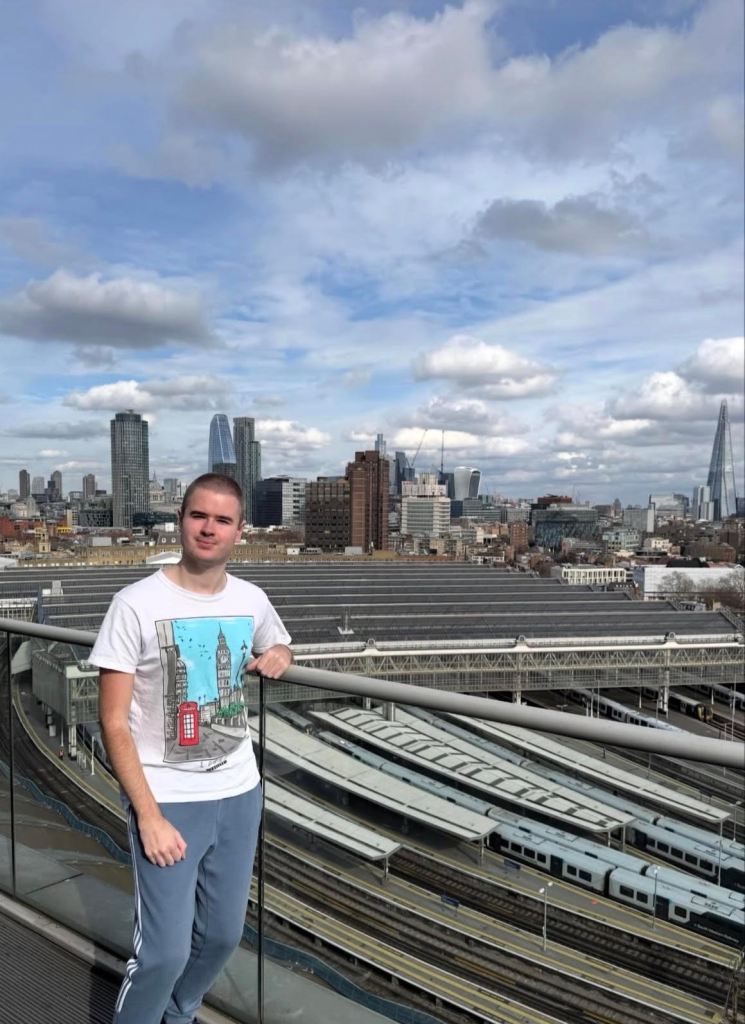
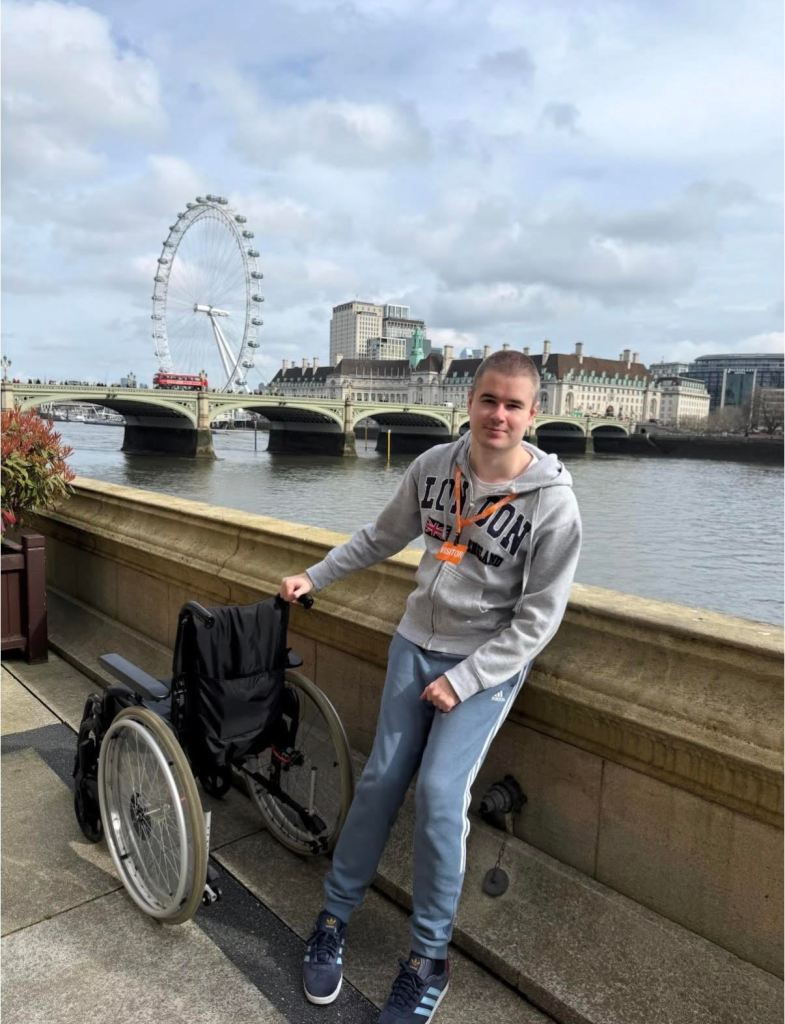
Eventually after three years my physical health started to improve and when I was well enough I made it to London and have been back many times since to my favourite place. I went to London with my parents and I loved visiting Central London. I went to all main sights such as London Eye, Big Ben, Tower of London, Buckingham Palace and lots more. 

10 years on, I’m now slowly recovering and learning to walk again. I’m using my voice, the voice that FND stole from me to raise awareness about the condition. I still have very difficult days with FND but I’m learning to live with my new normal and adjusting to life post severe FND. I’ve had a very long journey with FND but I know if I can get through all of that I can get through anything.

At 13, I lost all my abilities to FND but one thing FND could never take from me is my determination.
(image: Liam Virgo)

The medical professionals are unsure if I’ll ever make a full recovery because of the impact of severe FND but I’m now at a stage in my life where I’m able to live with the condition. I’m able to talk and I can move my arms again. I’m no longer bedridden and can walk with support. I still battle with FND daily but I’m determined to never give up hope. I still use a wheelchair but just sitting in a wheelchair is a big achievement for me as I couldn’t tolerate sitting in anything before. 

You can follow Liam on his adventures here on Instagram. Thank you Liam for your bravery in using your voice and sharing your story.

How to Spot Signs of a Traumatic Brain Injury by Lizzie Weakley

(image: Pexels- Karolina Grabowska)

Suffering a traumatic brain injury can completely change a person’s life. Your brain is the primary organ that controls everything else in your body, and any injury to your brain has the potential to impact almost every other aspect of your body, your health, and your overall wellbeing. While most severe brain injuries can be quickly spotted, more minor or moderate traumatic brain injuries can sometimes go undetected. Although some injuries may heal on their own, others can cause serious issues days, months, or even years down the road. For this reason, it is essential that you understand the possible signs of traumatic brain injuries to ensure you get proper medical help whenever it is needed.

Types of Traumatic Brain Injury

Traumatic brain injuries are categorized in several ways, depending on both the severity and type of injury. They can range from mild to moderate and severe, and this is determined by whether a person loses consciousness as a result of the injury and for how long. Mild brain injuries result in a loss of consciousness or a dazed feeling that lasts less than 30 minutes, while severe injuries are those that result in unconsciousness for more than 24 hours.

Traumatic brain injuries are also categorized based on whether they are open or closed. Closed injuries are the most common type, and this categorisation refers to any injury that affects the brain without penetrating the skull. An open brain injury results when any foreign object penetrates the skull and directly damages the brain tissue.

How to Spot Signs of a Concussion or Other Brain Injury

Moderate to severe brain injuries and open brain injuries are obviously fairly easy to spot. However, it is often much more difficult to determine if you’ve suffered a mild concussion or less severe brain injury. Still, there are a number of signs you can watch out for. The most obvious sign is losing consciousness, but feeling confused or having problems concentrating or remembering can also be indicators of a brain injury. Nausea, vomiting, and dizziness are also signs you should watch out for.

How it Can Affect Your Mental Health

Soon after a traumatic brain injury, it’s common to have feelings of frustration, loss, and sadness. These feelings tend to appear after the injury, during, or soon after recovery. These emotions can be brought up earlier or later, depending on the person, and how severe the injury is. If these feelings are not recognised early enough, depression can be a long-lasting emotion, which can be detrimental to your mental health.

What to Do If You Suspect You Have a Brain Injury

Even milder or moderate concussions can potentially lead to other issues down the road. Therefore, it is essential that you seek professional medical attention if you suspect you or someone you know has experienced a brain injury. Depending on where the accident or injury occurred, it may also be a good idea to contact an attorney. This is especially true if the injury happened as a result of a car accident or at work. In these cases, an auto injury attorney or a job site accident lawyer can help ensure everything is properly documented and that you don’t do anything that could harm your chances of getting properly compensated for your injury.

Concussions and other traumatic brain injuries are much more common than you might think. Brain injuries can also occur from seemingly minor accidents. Therefore, it is vital that you know what signs to look for, so you can immediately get whatever help you need.

Lizzie Weakley is a freelance writer.