Why I Wrote Arabella And The Worry Cloud, A Little Girl With Anxiety On Thoughts of Life And Love Blog (with Mandy Kloppers)

(image: Shelley the Artist/ E Segall)

Exciting times! Thank you so much to my fellow mental health blogger Mandy Kloppers at Thoughts of Life and Love blog for hosting my blog on why I wrote Arabella and the Worry Cloud– to help children with anxiety. I know Shelley illustrated it for the same reason. I had so many worries as a child and young adult- I definitely had my own Worry Cloud!

When I was a little girl and well into my teen years and beyond, I had a lot of anxieties. As a self-confessed empath and worrier, I could feel when something was wrong. This led to separation anxiety with symptoms including nausea at school. Children who have anxiety need to feel safe, settled and above all, heard by parents/carers and the adults in their life at school.

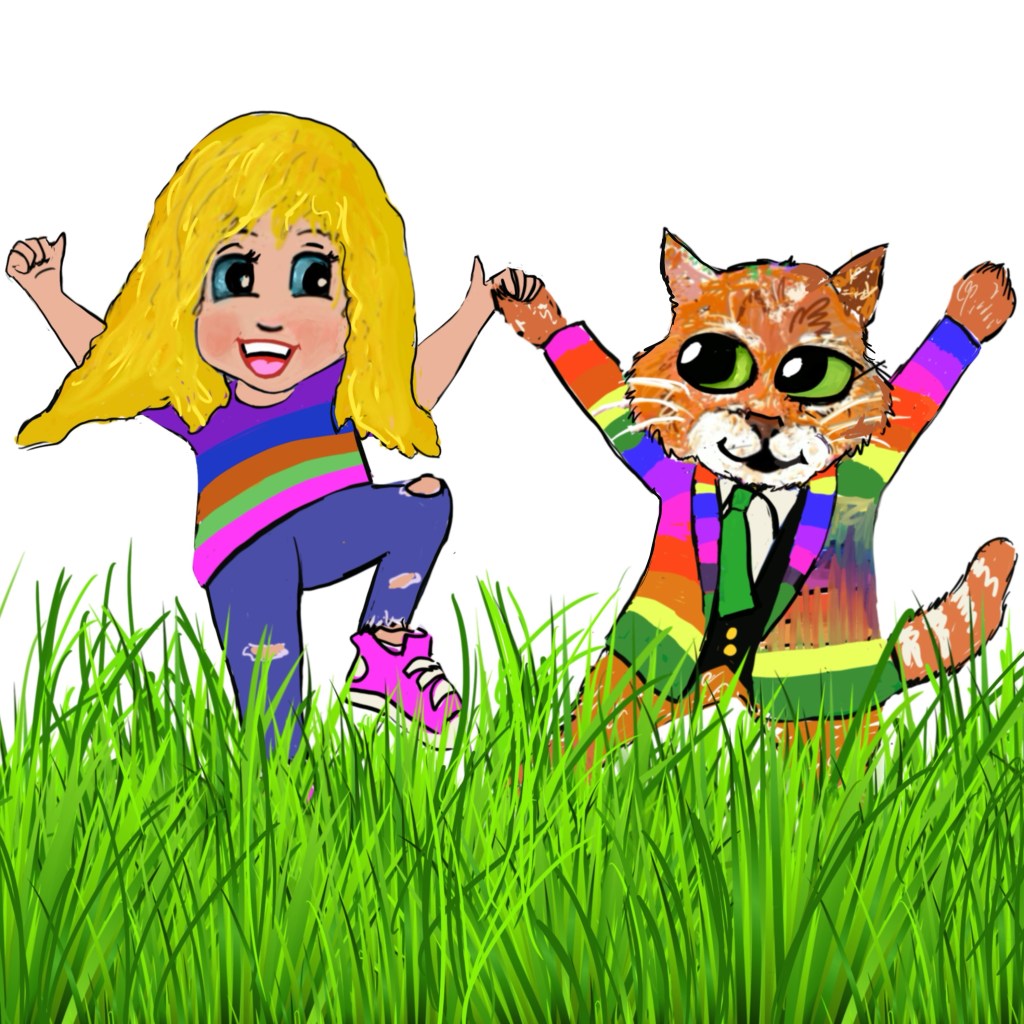
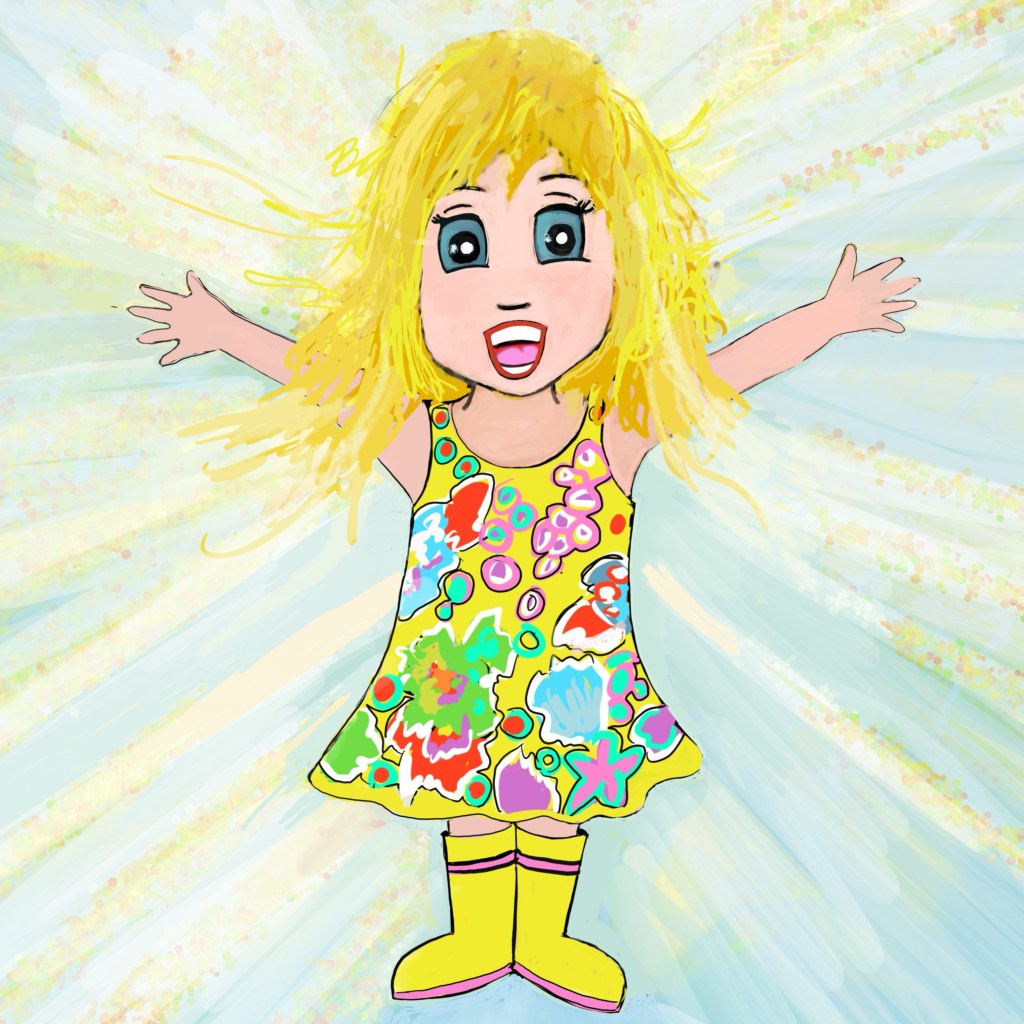
I wrote my first children’s picture book, Arabella and the Worry Cloud, in 2019 and published it last year. It is based on me as a young 7-year-old girl who had a lot of anxiety. In the book, Arabella worries about her socks not fitting on her feet, losing her shoes in a muddy puddle, the rain soaking her and cold freezing her toes, the rainbow in the sky losing its colour, her cat Pickles getting lost, the plants in the garden dying, losing her homework, failing a test and being blown away by the wind. These worries are partly represented by a Worry Cloud that comes down to see her from the sky and threatens to rain on her with all her worries.

Eventually, Arabella realises that if she thinks jolly, happy, sunny thoughts in place of the worries, she can push the Worry Cloud away with the joyous light beams of positive thinking. Arabella unlocks happy memories with her family, visualising wonderful times with them and it gives her confidence to face the Worry Cloud head on, so it can go away and leave her in peace.

So many children will have their own version of the Worry Cloud.

(image: Shelley the Artist/ E Segall)

Read the full blog here about how my experiences informed me writing Arabella and how it can help you:

https://thoughtsonlifeandlove.com/why-i-wrote…/95242/

Arabella and the Worry Cloud is out now on Amazon, for 4-8 year olds.

Arabella And The Worry Cloud Article On Parents News UK.

(image: E Segall/Shelley The Artist)

I am delighted to say that our children’s picture book ‘Arabella and the Worry Cloud‘ about a little girl with anxiety and how she manages her worries, is featured on Parents News UK website! Not only is it Children’s Mental Health Week but it is also Time to Talk day, where we share our stories about mental health.

Here’s a snippet of their thoughts:

‘Supporting children with anxiety, London-based author Eleanor Segall has drawn from her own childhood experiences to write Arabella and the Worry Cloud, a heartfelt picture book supporting children aged 5–8 who struggle with anxiety. Eleanor, who has lived with bipolar disorder since her diagnosis at age 16, aims to help young readers understand and manage their worries through relatable storytelling.

Arabella and the Worry Cloud introduces readers to Arabella, a seven-year-old girl who faces daily worries, from small tasks like putting on her socks to bigger fears about her cat or schoolwork. Her constant companion, the Worry Cloud, symbolises her anxious thoughts, teaching children that worries, like clouds, come and go.

Eleanor shares coping tools within the story, inspired by techniques that helped her manage her own anxiety. Through Arabella’s journey, children learn that even when caught in life’s “rainstorms,” the clouds will eventually clear.’

(image: E Segall/Shelley The Artist)

You can read the full article here. Thanks to all at Parents News UK!

5 Reasons Why Your Child Needs To Read ‘Arabella and the Worry Cloud’ Picture Book By Eleanor and Shelley The Artist

(Image: Eleanor Segall/ Shelley The Artist)

Note: Arabella is written for 4-8 year olds. Every child is different and some children younger than 4 have enjoyed this book, but it is largely a Key Stage One book.

When I was a little girl, I had a lot of anxieties. As a self confessed empath and worrier, I could feel when something was wrong and sometimes this led to child anxiety. This included separation anxiety with symptoms such as nausea at school. Children who have anxiety need to feel safe, settled and above all, heard by parents/carers and the adults in their life at school.

I wrote Arabella and the Worry Cloud based on me as a young 7 year old girl who worried a lot. In the book, Arabella worries about her socks not fitting on her feet, losing her shoes in a muddy puddle, the rain soaking her and cold freezing her toes, the rainbow in the sky losing its colour, her cat Pickles getting lost and the plants in the garden dying, losing her homework, failing a test and being blown away by the wind. These worries are partly represented by a Worry Cloud who comes down to see her from the sky and threatens to rain on her with all her worries.

Eventually, Arabella realises that if she thinks jolly, happy, sunny thoughts in place of the worries, she can push the Worry Cloud away with the joyous light beams of positive thinking. Arabella unlocks happy memories with her family, visualising wonderful times with them and it gives her confidence to face the Worry Cloud head on, so he can go away and leave her in peace.

So many children will have their own version of the Worry Cloud. Here’s 5 reasons why you should read Arabella and the Worry Cloud with them:

  1. It is a hopeful story– Arabella never loses sight of hope even when the Cloud tells her life is scary, saying ‘If I can see the sun and smell the passing rain, everything will be alright. The storm will not last forever’. This is the key message of our story- all thoughts will pass, you are safe and fear will not stay forever. This is particularly helpful for children who feel stuck with anxiety.

2. It can help children to process their emotions about worries safely, with help of parent or carer- The Worry Cloud represents Arabella’s thoughts and the book shows how Arabella sends him away with help of positive thinking and visualising happy memories. Some children may need further intervention from a team of professionals, but the book introduces worry/anxiety in such a way that it can be read to assist children when they worry (and distract them from negative thought patterns).

3. It is a positive, age appropriate book about child anxiety and worries with an uplifting message, filled with rhyming prose and beautiful, vibrant illustrations by renowned artist Shelley The Artist. Shelley combines old fashioned art with work on her ipad and the result is a beautiful array of illustrations your child will love.

4. It is a book about mental health in a child appropriate metaphor – As an author with a background in mental health writing and lived experience, I understand the needs of having books which discuss mental health issues in a safe and supportive way. As this book is aimed at 4-8 year olds, it slowly introduces worries some children may face at this age.

5. It has had some lovely reviews from children, parents and readers:

“I really enjoyed the book and really liked Arabella and I found the cat funny. I learnt to not worry about things and that we should only think happy things.” Matilda, aged 8

“A stunningly beautiful book with such important mental health and wellbeing messages. Suitable for primary school age children: I recommend adults read it too as it’s incredibly special and meaningful! Thank you for writing this and inspiring us all.” Mrs Davies, parent

“Arabella and the Worry Cloud conveys a wonderful message, is written with lovely imagery and is beautifully illustrated. The cloud is a really good way to portray anxiety – children will be able to relate to this and feel encouraged to overcome their worries with positive thinking like Arabella does.” Dr DF

“This book is perfect if you have a young child who is a bit anxious or worries easily as it’s relatable and puts anxiety in simple terms that a young child can easily understand.” Diary of Lydia

“Beautifully written and illustrated, this book will appeal to children and parents/guardians alike. More importantly, it’s going to help kids overcome their anxiety from an early age and understand that they are not alone. Highly recommended.” Britt Pfluger

This is my favourite book ever ever ever. The words of my 4-year-old son who is a bit of a worrier himself! He had lots of questions and was very engaged throughout. Have already read it three times with him. Well done on a lovely debut kids’ book!” Joanna Gutkin, parent

To get your copy of Arabella and the Worry Cloud, go to Amazon here. I can’t wait for you to read it with your child/niece/nephew/grandchild and to share it with them and their friends too!

Thank you,

Eleanor x

Reaching Out For Help: How To Support Your Child’s Behavioural Issues by Brooke Chaplan.

(Image: Adobe)

Parenting is a journey filled with countless moments of joy, laughter, and pride. However, it also comes with its fair share of challenges, especially when you encounter behavioural issues in your child. Seeing a child struggle can be a source of stress and worry for any parent. It’s essential to remember that you are not alone; many parents face similar obstacles and there are resources available to help both you and your child navigate these challenging times. In today’s blog post, we’ll explore practical steps you can take to support your child through behavioural issues effectively.

Understanding the Situation

The first step in addressing behavioural issues is understanding that they are often a part of normal development. Children go through various stages as they grow, each accompanied by different behaviours. It’s crucial to recognise the difference between typical developmental behaviour and behaviour that might signal an underlying issue. Observing patterns over time—such as frequency, intensity, or duration—can provide valuable insights into whether a child’s behaviour is part of their growth or indicative of something more complex.

Patience

Once you’ve identified that your child may need additional support beyond typical parenting strategies, it’s essential to approach the situation with empathy and patience. Open lines of communication can make all the difference in understanding what might be causing certain behaviours. Encourage your child to express their feelings and thoughts without fear of judgment or punishment. This open dialogue not only helps build trust but also provides you with clues about any underlying issues such as anxiety, bullying at school, or difficulties with academics.

Professional Help

After establishing communication, it’s beneficial to seek professional guidance, like that offered by Infinite Healing & Wellness, if needed. Consulting with paediatricians or mental health professionals who specialise in children can offer clarity on whether there are specific needs requiring attention. These professionals can conduct assessments to determine if there are psychological or neurological factors contributing to the behaviour changes in question. They may suggest therapy sessions tailored specifically for children which could include play therapy, cognitive-behavioural therapy (CBT), or family therapy sessions.

Effective Techniques

In addition to seeking professional help for your child, consider equipping yourself with effective parenting techniques specifically designed for managing challenging behaviours. Parenting classes or workshops often provide valuable strategies for positive reinforcement and setting consistent boundaries while maintaining a nurturing environment at home. Learning how best to respond during difficult situations helps minimise stress for both parent and child alike while fostering an atmosphere where constructive change is encouraged.

Self-Care

Lastly but vitally important is self-care for parents during this process; supporting a child through behavioural challenges requires emotional resilience from caregivers themselves! It’s easy sometimes amid caring duties to neglect one’s own needs. However, taking time out regularly ensures you’re not just physically present but mentally equipped to handle whatever comes along the next day together stronger than before!

Supporting a child through behavioural issues is no small feat but rest assured knowing every step taken towards understanding them better brings hope closer within reach! Remember being proactive makes all the difference; stay informed, communicate openly, lean upon experts, adopt new strategies whenever necessary, and don’t forget to look after yourselves along the way too.

A happy, healthy, balanced family dynamic benefits everyone involved in a long-term success story worth striving toward together!

This article was written by Brooke Chaplan, freelance writer.

Author Of ‘Sophie Says’ Ground-Breaking Children’s Book Series, Esther Marshall, Launches ‘Feelings And Affirmations Cards’ Encouraging Children To Communicate Their Feelings.

(image: Sophie Says)

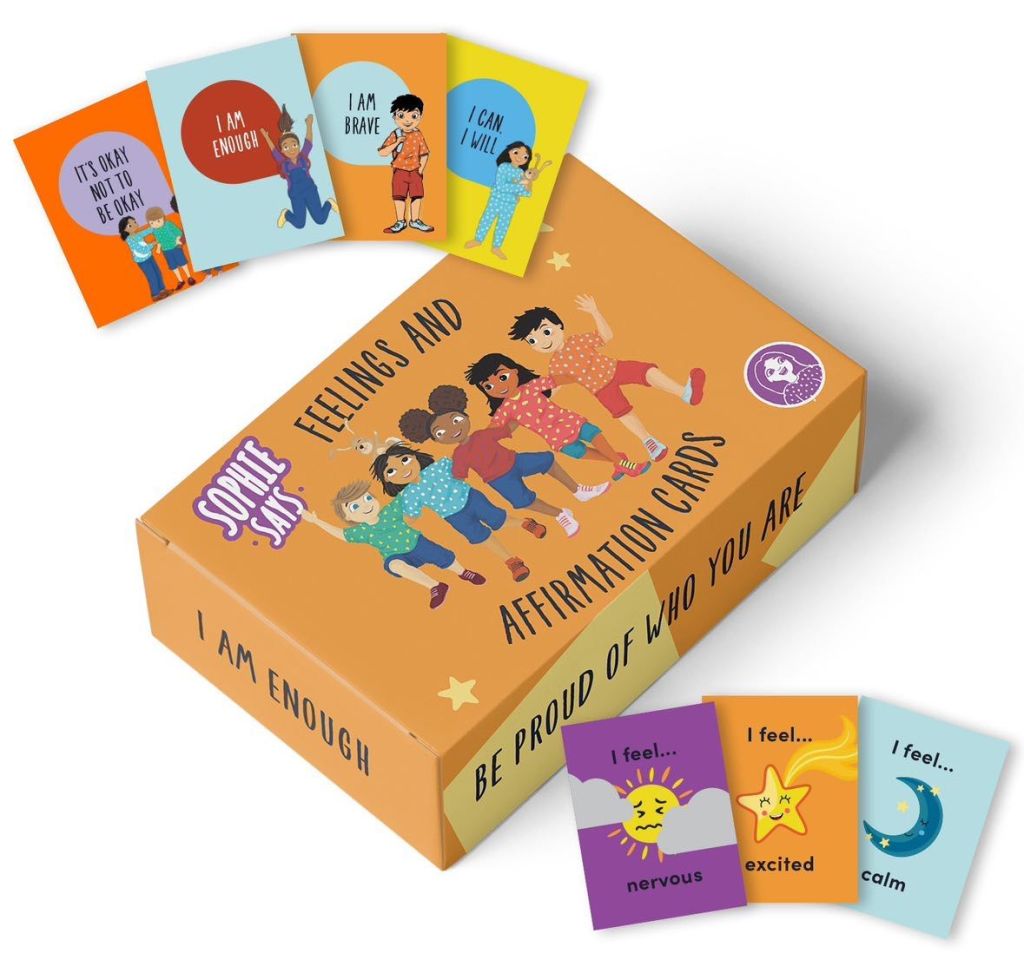
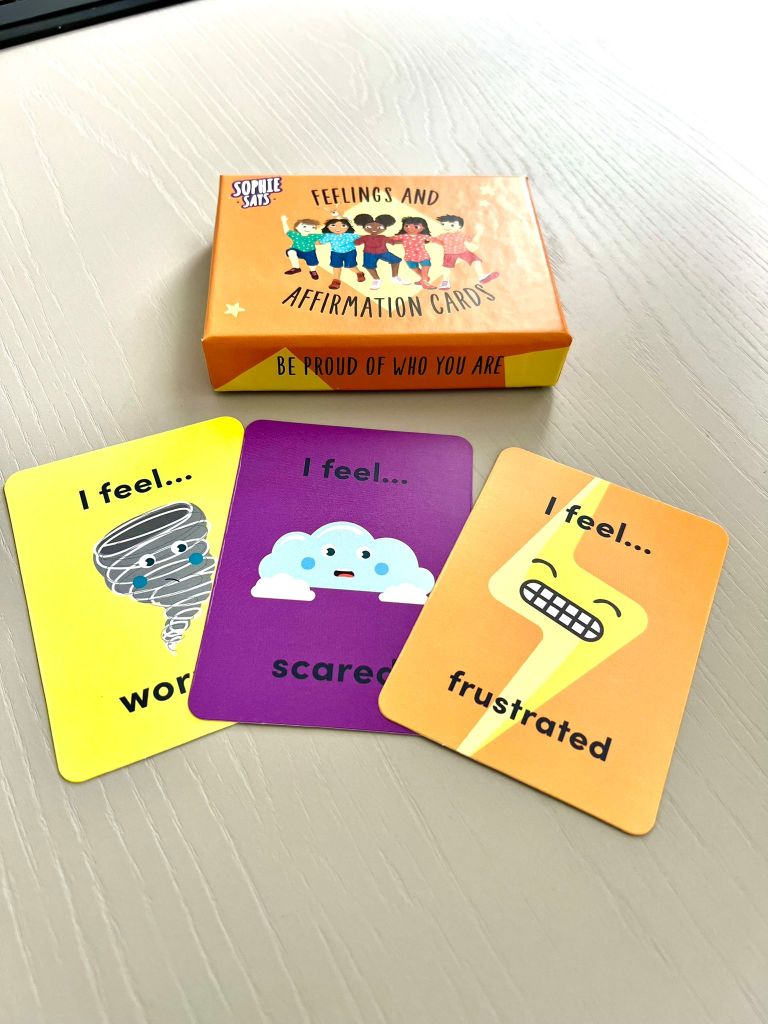
I have followed Esther Marshall’s journey for a while as a children’s author, speaker and mental health advocate for the next generation. On World Mental Health Day, Esther released a surprise and wonderful new product- Feelings and Affirmation cards to help children to communicate their feelings and emotions (and understand them).

420,000 children and young people in England are treated for mental health problems every month. Mum of three and author of the Sophie Says children’s book series is on a mission to make a positive impact on the world specifically for the next generation. The empowering children’s book series ensure critically important lessons in self-belief, mental health and gender equality are shown in an authentic and fun way.

Sophie Says Feelings and Affirmations Cards have been made specifically to help a parent or carer and child talk about their feelings together in a fun way through the much-loved Sophie Says characters.  Affirmations and feelings cards are a proven tool for developing positive thinking, The Sophie Says affirmations cards have been designed to make exploring feelings a fun and interactive experience for children, parents, and carers, to empower self-belief and to help children believe they can achieve their dreams.

(image: Sophie Says)

Esther began her writing career with her debut book Sophie Says “I Can, I Will”, she wrote this during night feeds with her firstborn son as she wanted to teach him that girls were just as strong and powerful as boys, that people from different backgrounds to him could teach him things and he should listen and be kind to everyone.

The second book Sophie Says It’s Okay Not To Be Okay was written in memory of Esther’s younger sister Rebecca, who tragically took her life after her battle with mental illness at the all too young age of 28. The passion and driving force behind Sophie Says is to keep Rebecca’s legacy alive, teach young children about the importance of mental health, and talk about their feelings from a young age. The Sophie Says series now includes three books ‘I Can, I Will’, ‘It’s Okay Not To Be Okay’, and ‘Be Proud Of Who You Are’.

Esther Marshall says: “My mission is to help create a world where all children grow up feeling equipped and empowered to face their futures. Our new Sophie Says affirmations cards will help parents and carers communicate with their children and encourage them to express their feelings from an early age to help children, avoid harmful stereotypes before they set in.”

I love these cards and can’t wait to use them too!

To explore the new cards and full Sophie Says range visit www.sophiesaysofficial.com

This is not an ad or paid, I loved the cards and chose to review them.

Children’s Charity ‘Nip in the Bud’ Exposes The Dark Side of Social Media And Mental Illness With Its Film Stolen Childhood.

(image: Unsplash: Lesli Whitecotton)

A new film by the charity Nip in the Bud exposes the hidden dangers of social media and smartphone use among children. A Stolen Childhood provides startling insights from children, headteachers and doctors, shedding light on the everyday harm caused by digital platforms.

Launching today, the film highlights several alarming statistics. A shocking 90% of girls and 50% of boys report receiving explicit pictures or videos they did not want to see. Additionally, 1 in 5 children have experienced online bullying, with 24% of those bullied resorting to self-harm and 22% altering their appearance as a result.

Furthermore, boys as young as 13 have been targeted for sextortion scams, and 80% of teenage girls feel pressured to provide sexual images of themselves.

Emma Robertson, co-founder of Digital Awareness UK, emphasises the hidden nature of these issues: “The thousands of children we talk to in schools tell us that their parents often don’t know how much time they’re spending on their devices overnight, or what they are doing online. This is a new and hidden world which adults can find hard to penetrate.”

MRI scans show screen time reduces brain areas responsible for visual processing, empathy, attention, memory and early reading skills.

In response to these findings, many psychologists, headteachers and GPs are advocating for stricter guidelines:

  • No smartphones until age 14
  • No social media until age 16

These recommendations aim to protect children from various online risks, including increased loneliness, exposure to harmful content, access to strangers, behavioural addiction and cyberbullying.

Watch the film here: https://nipinthebud.org/films-for-parents-carers/smartphones-a-stolen-childhood/

About Nip in the Bud

At Nip in the Bud we produce free, evidence-based films and other resources aimed at parents, carers and teachers of primary-aged who may be struggling with mental illness or unmet neurodiverse needs.

Our mission is to empower families and communities around our children to recognise and respond to early signs of mental illness or challenges in a neurotypical world, with resources made in conjunction with mental health experts, educationalists and families going through similar experiences – facilitating early intervention, so that problems can be “nipped in the bud”, allowing our children to blossom.

Find out more about Nip in the Bud at: www.nipinthebud.org

Why I Wrote ‘Arabella And The Worry Cloud’ And the Self Publishing Process With Shelley The Artist by Eleanor

(image: Copyright: Eleanor Segall and Shelley the Artist)

In 2019, not long after I wrote my first book ‘Bring me to Light‘ , I had an idea for a story about a little girl, aged 7, who had worries- Arabella and the Worry Cloud.

As a child, I was a big worrier! I remember feeling anxious from about aged 4. I don’t know if its just my personality/ genetics or what was going on, but I was always a worrier.

So, I decided that I wanted to use my experiences to help children with their mental health too. Poor mental health often starts in childhood. For me, I was diagnosed with bipolar disorder at 16 , and was off school with intense anxiety as part of a depressive episode at 15. It runs in my family and I know there are families now who were like mine or children living in more difficult environments. Children in loving, supportive homes (like mine was) can still experience anxiety around nursery, school, after school clubs and friendship issues, bullying and something I did not have contend with.. social media bullying. Other children have special educational needs or disabilities that impact them day to day. The spectrum is huge and I wanted to create a positive book to help.

Arabella is 7 years old and her special talent is worrying. In the book, her worries are represented by a cloud, known as the Worry Cloud, who comes down to see her from the sky. He reminds her of all her worries and she tries to run away from him. However, once she begins to think of positive thoughts and memories with her family like eating ice cream at the beach or swimming with her brother, her mind becomes lighter and happier. These positive thoughts are represented as light beams of positive energy and she finds she can put her worries into perspective. The book also serves as a reminder that the storm does not last forever!

(image copyright: Eleanor Segall and Shelley the Artist)

I am very blessed that my Dad has a close friend who is a renowned artist- Shelley. Shelley’s art work and illustrations are beautifully drawn, colourful and were perfect for how I wanted Arabella to be. She is an esteemed digital artist, mural maker, painter and sketcher. She really brought Arabella to life! So the process began….

Once Shelley came on board, we met every few weeks online for about 5/6 months so she could show me the illustrations she had created and I could give my input as the author. We had lots of fun while Shelley sketched the characters on her ipad for me over Zoom and we really love working together. Shelley is super talented and I am so thankful she is the illustrator of Arabella! You can see her work at www.shelleytheartist.com

So self publishing… why did I self publish? I had sent the manuscript to agents and had meetings with my old publisher and another famous publisher I had worked with on another book. They for different reasons eg budget and having a similar type of children’s book, did not want to take it on. Submitting books to agents means constant rejections and so I felt that it was slowing down time to get the book out there and thought why not self publish through Amazon instead? I could have submitted to more places as didn’t submit to as many as I could have. I would still love to be represented one day by an agent and major publisher so I will need to send out more manuscripts- watch this space!

Once Shelley and I had finalised the illustrations and pages, she resized them for me and then (through an author friend, Joanna Gutkin) I had the recommendation to Abid Hussain via Fiverr, who formats books! Abid then formatted (laid out) the pages for me and created the PDF files for the ebook and paperback. Once this was finalised and looked at by me, he then put it on Amazon KDP for us. I also spoke to a printer friend (of my Dad again as he has an amazing network) Hak Huseyn of Absolute Print printers who helped me to size it, choose the right paper and printed copies of the paperback for us too. As I am new to self publishing, Hak reminded me I would need an ISBN, so once that was paid for and barcode put on, we were good to go! Thanks Hak and Abid!

(image copyright: Eleanor Segall and Shelley the Artist)

This entire process was not as quick as I describe… it took us 9 months .. oh and I also forgot the trip to the bookshop I took with my Dad to find the right size of children’s book when we were about to format. The bookseller even got a tape measure to size it for us in inches, so thank you to Books on the Hill St Albans.

I also want to thank author friends Joanna Gutkin , Esther Marshall, Lauren Posner and Shani Singer who answered my queries about their books and self publishing and the Empowered Author Group on Facebook too.

Thanks also go to my Dad who believed in this book and helped me so much with it! And to the friends and family who read early copies. Rob, my husband has also been so supportive. And to Shelley for working with me!

If you buy a copy for your child, niece or nephew, cousin, friend’s child or your class at school I hope you love reading it and that it helps your child to understand that worrying happens, but we can talk about it, process it and find healthy ways to cope.

Arabella and the Worry Cloud is out now on Amazon

‘Arabella And The Worry Cloud’ Book Cover Reveal!

(image: Arabella and the Worry Cloud by Shelley the Artist and Eleanor Segall)

Shelley the Artist and I are proud to reveal the cover to our first children’s book written by me, ‘Arabella and the Worry Cloud’.

Arabella is a little girl with lots of worries, represented by the Worry Cloud who comes to see her, taunts her and threatens to rain on her.

Can Arabella with the help of happy thoughts of her family and trusted cat Pickles push the Worry Cloud away? Or will he stay and rain on her forever as her worries grow?

As a little girl myself, I had lots of worries which led to anxiety and panic. Through our book, we aim to help children aged 5-7ish to process their emotions around worry, to talk about anxiety and to try and replace them with positive thoughts.

The book has beautiful illustrations by Shelley the Artist and we can’t wait to share the link to buy it as soon as its live! We will have an ebook and paperback version.

Thank you for all the support,

Eleanor x

9 Tips on Prioritising Your Mental Health While Raising Children.

Photo by Pixabay: 

It’s no secret that parenting is hard. But what many people don’t realise is just how hard it can be on your mental health. Juggling the demands of work, children, and a household can be overwhelming – and it’s easy to let your mental health take a backseat. But this isn’t good for you or your children. In this blog, we will discuss nine tips on prioritising your mental health while raising children!

1) Make time for yourself.

One of the best ways to prioritise your mental health is to make time for yourself. This might mean setting aside a few hours each week to do something you enjoy or simply taking some time out each day to relax and rejuvenate. You must make this time for yourself, as it will help you recharge and be more effective when dealing with the demands of parenting. Your mental health is extremely important and and a part of taking time for yourself. It’s essential for you to seek out the help that you need when you feel as though you are struggling. If you would like to talk get in touch with Psymplicity

If finding time for yourself seems impossible, start small. Even five minutes of relaxation can help clear your mind and improve your mood. And if you have older children who can look after themselves for a little while, use that extra time to focus on YOU.

2) Accept that you’re not perfect.

One of the biggest traps parents fall into is the belief that they have to be perfect. This is simply impossible, and trying to achieve it will only lead to frustration and stress. Accepting that you’re not perfect is essential in taking care of your mental health.

It’s OK to make mistakes. It’s inevitable! What’s important is that you learn from them and move on. Don’t dwell on your mistakes, as this will only aggravate your mental health. Instead, focus on what you can do to improve things going forward.

3) Don’t be afraid to ask for help.

Asking for help is another sign of strength, not weakness. If you’re struggling with your mental health, don’t be afraid to ask for help from friends or family members. They may not be able to solve all your problems, but they can offer support and understanding.

If you feel like you need more assistance, consider seeking professional help. Many qualified therapists can help you manage your mental health. Don’t be ashamed to ask for help – it’s one of the best things you can do for yourself and your children.

Asking for help is not only good for you, but good for your children. When you ask for help, you are telling your children it is okay to do so, and you will model excellent behaviour that will support them in their own lives and battles. It can also be important to seek support for your children if they need it. When your whole family is getting the support they need, then you can all live happier, more fulfilling lives. Seeking support for your children can help you. Many parents feel like they have to be the ones supporting their children. But you can only do so much. There comes a point where your children may need outside support. For example, if your children are neurodivergent or have learning disabilities, then specialised learning disability support from a professional will be able to tailor help to their individual needs.

4) Set realistic expectations.

One of the leading causes of stress for parents is unrealistic expectations. We often expect ourselves to be able to do everything, and this can lead to a lot of frustration and unhappiness. It’s important to set realistic expectations for yourself and your children. This means acknowledging that you won’t always be able to meet everyone’s needs, and that’s OK.

It’s also important to remember that children are individuals and will develop at different rates. Don’t compare your child to others – this will only lead to dissatisfaction on your part and potential mental health issues for your child. Instead, accept your child for who they are, and work with their strengths and weaknesses.

5) Take care of your physical health.

Your physical health is just as important as your mental health. When you’re feeling stressed and overwhelmed, it’s easy to neglect your well-being. But this is a mistake! If you want to take care of your children effectively, you need to take care of yourself first.

Ensure you’re getting enough sleep, eating healthy foods, and exercising regularly. These things will improve your physical health, but they will also boost your mental wellbeing. And when you feel good physically, it’s easier to deal with the stresses of parenting.

6) Set boundaries.

It’s important to set boundaries with your children, as this will help them learn how to respect your time and space. As parents, we often put our children’s needs before our own, but it’s essential that you take care of yourself too. Otherwise, you’ll quickly become overwhelmed and stressed.

Set clear boundaries for yourself and your children – make sure they know when to stop playing and start doing their homework, for example. It can be challenging to enforce boundaries sometimes, but it’s crucial that you do so to maintain your mental health.

7) Monitor your children digitally.

With the rise of technology, it’s more important than ever to monitor your children’s digital habits. Screens can be addictive and damaging to a child’s mental health, so it’s essential to set rules and limits on how much time they spend in front of them.

If you’re unsure where to start, try setting a timer and limiting screen time to a certain number of hours per day. You can also install parental control software on your child’s devices to help limit their access to harmful content. You can also keep an eye on them by using innovative new technology, you can click this link to buy it at Family Orbit. Finally, remember that it’s OK to unplug every once in a while – get out into nature, read books together, and have conversations without screens!

8) Spend quality time as a family.

One of the best ways to improve your mental health as a parent is to spend quality time with your children. This doesn’t mean spending hours watching TV or playing video games – it means being engaged and present with your kids.

Spend time talking, laughing, and simply enjoying each other’s company. Play games, go for walks, cook dinner together – do whatever feels fun and natural. When you take the time to connect with your children on a deeper level, it strengthens the bond between you and helps improve your mental well-being too!

9) Use meditation to release stress.

Meditation is a great way to deal with stress and anxiety. When you’re feeling overwhelmed, take a few minutes to yourself to meditate. This can be done in any quiet space, and there are many different types of meditation to try. If you’re not sure how to get started, plenty of guided meditation apps and YouTube videos are available online. Or, if you prefer, find a local meditation class or workshop. With regular practice, meditation can help you manage your stress levels more effectively and improve your overall mental health.

Mental health is just as important as physical health, and you must take care of ourselves as a parent or carer. These eight tips are an excellent place to start, but remember that everyone is different. So find what works best for you and your family, and don’t be afraid to ask for help when you need it.

This article was written by a freelance writer and contains affiliate links.

Taking care of your child’s mental health: Guest blog by Chloe Walker

childmh1

(image: Power of Positivity)

Mental health is extremely important and has a significant impact on a person’s overall health and wellbeing. According to a recent survey by the NHS, one in eight 5 to 19 year olds had at least one mental health disorder when assessed. As a parent, you play a crucial role in your child’s mental health. Fortunately, you can help improve your child’s mental health by creating a supportive family environment at home and learning the early warning signs of common mental health disorders, for example. With this in mind, here are some top ways to care for your child’s mental health. 

Develop a good bedtime routine 

Sleep plays a vital role in a child’s mental health. Research shows that there is a strong link between sleep problems and an increased risk of developing certain mental illnesses. In fact, one study found that four-year olds with sleep disorders have a much higher risk of developing symptoms of mental health conditions as six-year olds, when compared with children without sleep problems. Experts at Little Lucy Willow add – “Sleep keeps you calm, your mind alert, and recharges your body to enable you to get up and face each day.” For that reason, you must try and get your child into a good bedtime routine from a young age. Here are some top tips to help your child sleep better:

  • Create an ideal sleeping space by providing a comfortable bed, installing blackout curtains, and minimising any outdoor noise. 
  • Encourage your child not to use electronics like smartphones before bed. 
  • Get your child into a consistent routine where they go to sleep and wake up at the same time each day. Try to keep this the same on school days and weekends. 
  • Make sure that your child avoids any caffeine in the afternoon or evenings. 
  • Visit your GP if your child has been experiencing sleep problems for more than two weeks, or if the symptoms are interfering with their daily life. 

Exercise as a family 

Exercise plays an important role in a child’s overall health. Along with the physical benefits, regular exercise can greatly improve mental wellbeing. This is because physical activity releases endorphins in the brain which creates feelings of happiness and alleviates stress and anxiety. According to advice on the NHS website, children should get at least 60 minutes of moderate intensity exercise every day.

To give you an idea, examples of moderate intensity exercise include walking to school, riding a bicycle, and playground activities. Exercising as a family is an excellent way to encourage your child to be active. It also allows you to spend quality time together as a family and build closer bonds. Playing games in the garden, going for a walk in the park, or going on a bike ride, are all fun ways to exercise together as a family. You could also encourage your child to start playing a team sport they’re interested in, such as football, rugby, or hockey. 

Encourage open communication

You must create a welcoming family environment that is built around trust and understanding. This will help your child feel comfortable telling you about any issues surrounding their mental health. Encourage open communication in your family and make sure you check on your child if you notice any changes in their behaviour i.e. they become distant or their eating habits change.

Remember that children tell people how they are feeling in several ways, not always verbally. A sudden change in behaviour may signal that your child is struggling and needs support. Always listen to your child and empathise with their feelings. Let them know that it’s natural to feel down from time to time and offer support in any way you can.

If you’re still worried about your child’s mental health, then speak with your GP or contact a mental health specialist for further advice. 

Final thoughts 

Mental health illnesses in children are becoming increasingly common and can lead to several serious long-term effects. Fortunately, there are plenty of ways for you to care for your child’s mental health. Encouraging healthy habits is a simple yet effective way to improve your child’s mental well-being. This should include exercising regularly, getting enough quality sleep, and following a nutritious diet. Along with this, you should also educate yourself on the symptoms of common mental health conditions in children and create a warm, trusting home environment that encourages open communication. Speak to a medical professional if you need to.

This guest blog was written by professional writer Chloe Walker.