Dopamine Decor: How Your Interior Design Choice Influences Mental Wellbeing by Amy Jones

(image: Unsplash: Maiar Shalaby)

More and more people are putting time and effort into looking after their mental wellbeing, and rightly so. Most of these efforts focus on stress-reducing hobbies and social activities, but have you ever wondered if your interior design choices are influencing your mental health?

If the answer is no, it might be time to start considering how your home decor can be altered to achieve peak wellness. If you’ve no idea where to start when trying to turn your home into a sea of tranquillity, we’ve picked out a few areas of your home that could contribute towards your mental wellbeing.

Colour

(image: Unsplash: Marc Jodoin)

Blue 

As the colour of the sea and sky, blue is seen as a calm, soothing colour. It’s also an easy colour to incorporate into your home if you’re trying to make your home have a more relaxed vibe.

Darker shades of blue work perfectly for a feature wall and allow the colour to be the main focal point of the room. If you want to paint your whole room blue, lighter shades of blue work great and can promote an airy, outdoorsy feeling.

Purple

In some cultures, purple represents royalty whilst in others it is associated with peace and spirituality. However you see purple, it’s important to note that it’s becoming an increasingly popular colour in the interior design world.

When it comes to incorporating purple into your home, it’s often a case of less is more. Consider ways in which you can add a touch of purple rather than creating a fully purple room. Rugs, lampshades and cushions are a great way to introduce purple without overdoing it.

Green

Green is similar to blue in the sense that it can help bring the outdoors to your home, due to how we associate the colour with nature and greenery. Forest green and jungle green are great options if you want to go overboard on the green interior as they are less subtle shades.

Brighter greens should be reserved for kids’ bedrooms or playrooms. Alternatively, shades like lime can be used for smaller decorative ornaments that aren’t the main focal point of your home.

Nature

Nature and wellness go hand in hand. In fact, most mental health therapists would agree that spending time outdoors is great for our mental wellbeing. According to studies, there is a positive correlation between happiness and our connection to nature.

Obviously, we can’t spend all of our time outdoors so it’s important to consider ways we can bring nature into our homes. Adding plants throughout our home can improve style but can also improve air quality. Improving the air quality in your home can have positive implications for your mood, stress levels and sleep quality – all of which contribute to healthy mental wellbeing.

When choosing plants to add to your home, there are a number of factors to consider including how much sunlight and water different types of plants require. In addition, you’ll want to decide what size of plant works for your home. Larger plants work great in the corner of a room while smaller plants should be added to coffee tables and shelves.

Layout

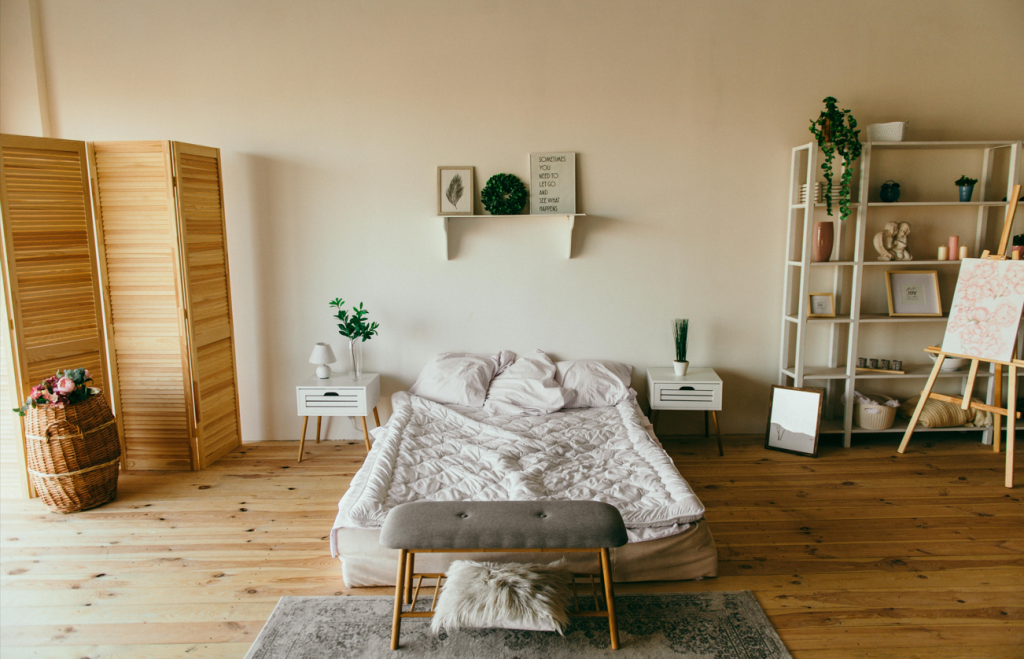
A clear home can lead to a clear mind so it’s important to stay on top of your home’s cleanliness levels. It can be a good idea to focus on minimalism and create large open spaces in your home that are easy to keep on top of in terms of tidiness.

Be careful of adding too many items that only serve decorative purposes as this simply gives you more things to keep on top of and could easily be the start of your home becoming cluttered.

Our home can affect our wellbeing, so for positive mental health, its good to implement calming colours and layouts for a wonderfully relaxing home.

Amy Jones is a freelance writer.
5 Ways You Can Transform Your Space for Personal Growth by Addy Reeds

(image: Roberto Nicks, Unsplash)

Have you ever noticed that your environment has a direct impact on your mood, productivity, and overall well-being? Creating a space that fosters personal growth and self-improvement is essential in creating a positive mindset and achieving your goals. Fortunately, there are plenty of ways to transform your space for your personal development and positive mental health. In this post, we’ll explore some practical tips and tricks to help you create a space that nurtures personal growth and inner transformation.

Create Inspiring Zones

Designate specific areas in your space for different activities that align with your personal growth goals. Whether it’s a cozy reading nook, a meditation corner, or a home office for pursuing your passion projects, having designated spaces for different activities can help you stay focused and motivated. Personalize these zones with items that inspire you, such as motivational quotes, artwork, or plants that bring a sense of calm and positivity to the space. In addition to personalizing these spaces, incorporating elements of nature can further enhance your inspiring zones.

Natural light, for instance, not only improves mood but also increases productivity and creativity. If possible, position your dedicated spaces near windows or in well-lit areas. Adding indoor plants to these areas can also boost air quality while providing a tranquil and refreshing ambiance. For a more dynamic and versatile space, consider using movable dividers or curtains. These can help in delineating your zones without committing to a permanent layout, allowing you the flexibility to adapt your space as your personal growth journey evolves.

Incorporate Natural Elements

Bringing the outdoors in can have a profound impact on your mental and emotional well-being. Consider adding plants, natural light, and earthy tones to your space to create a soothing and grounding environment. Plants not only improve air quality but also have been shown to reduce stress and improve concentration. Open up your curtains during the day to let in natural light, or invest in a light therapy lamp to mimic the benefits of sunlight on cloudy days. Integrate water elements into your space to foster a tranquil and healing environment conducive to personal growth.

A small desktop fountain or an aquarium can introduce the calming sound of moving water, creating a serene atmosphere that enhances focus and mindfulness. Furthermore, selecting furnishings or decor made from natural materials like wood, stone, or bamboo can add texture and warmth to your surroundings, further rooting your space in the calming beauty of nature. These elements, when thoughtfully incorporated, work harmoniously to not only beautify your environment but also to support your mental and emotional well-being, making it a fertile ground for personal development and growth.

(image: free image)

Clear the Clutter

One of the most important steps in transforming your space for personal growth is decluttering. Clutter can create chaos and overwhelm, making it difficult to focus and be productive. Start by going through your belongings and getting rid of anything that no longer serves you or brings you joy. Consider donating items you no longer need or use, and organize the remaining items in a way that is visually appealing and functional. Investing in climate controlled storage can be a great option for storing seasonal items or sentimental belongings that you want to keep but don’t need on a daily basis.

After tackling the physical clutter, addressing digital clutter is equally critical in creating a space conducive to personal growth. Digital clutter, including unorganized files on your computer, unused apps on your phone, and a cluttered email inbox, can be just as overwhelming as physical clutter. Set aside some time to organize your digital life by deleting unnecessary files, unsubscribing from unwanted emails, and organizing your digital documents into clearly labeled folders. A clean digital workspace can significantly boost your focus and productivity, making it easier for you to concentrate on your personal growth goals.

Cultivate a Mindful Routine

Establishing a mindful routine in your daily life can help you stay grounded and present, even amidst the chaos of daily life. Create a morning and evening ritual that includes activities like meditation, journaling, yoga, or reading that nourish your mind, body, and soul. By dedicating time each day to self-care and reflection, you can cultivate a sense of inner peace and clarity that will support your personal growth journey. Your physical environment can play a crucial role in facilitating these routines, so make sure to curate your space with intention and purpose.

Embrace Minimalism

Simplifying your space and your life can have a transformative effect on your mental and emotional well-being. Embrace the principles of minimalism by focusing on quality over quantity, decluttering regularly, and being mindful of your consumption habits. By simplifying your surroundings, you can reduce distractions, increase your focus and productivity, and create a sense of calm and harmony in your space. Additionally, minimalism can cultivate a sense of gratitude and contentment, leading to greater self-awareness and personal growth.

Transforming your space for personal growth is a powerful way to create a supportive environment that nurtures your goals and aspirations. By decluttering, creating inspiring zones, incorporating natural elements, cultivating a mindful routine, and embracing minimalism, you can foster a sense of peace, balance, and inspiration in your space. Remember that personal growth is a journey, and your environment plays a crucial role in supporting your growth and self-improvement efforts. By taking intentional steps to create a space that aligns with your values and aspirations, you can create a sanctuary that empowers you to be your best self!

Addy Reeds is a freelance writer.

Best Ways to Redecorate your Bedroom to improve Mental Health: Guest blog by Rosette.

rosette2

(image: Pinterest)

In recent years, mental health has been in the spotlight because society has been starting to learn about how important it is. This is welcomed progress, as more people are now educating themselves and looking for ways to help themselves achieve good mental health. Amidst your search, you will find that small things can help, such as redecorating your room.

Creating your own space is a good opportunity to check on your well-being. Your environment has an effect on your mood and emotions. Arranging and fixing what surrounds the place where you spend most of your time at home is a simple way of focusing on yourself especially in times when you need to do so.

In times where you need to take a break and rest your mind, your room is the nearest place you can go to. If you’ve been feeling down, mentally exhausted, or feeling some unrest, how about you tweak your own space a little?

Here are the best ways to redecorate your room to improve mental health:


Declutter

If your room is messy, it’s highly likely that you haven’t done some organising in a while. I know some people like the way their room is arranged, but let’s face it, it’s a good feeling when clutter is taken away from your own space. A simple step to take to reorganise your thoughts is to reorganise your room. At times when you feel confused, try decluttering. Get rid of the stuff that you don’t need and save your brain from the distraction that a mess creates.


Let the light in

The amount of light inside your room also affects your mood. Research suggests that sunlight is thought to reduce stress and to relax the body. Keeping your space in tune with the natural rhythms of the day aids the body in maintaining the circadian clock, our internal 24-hour clock that keeps our sleep and wake cycles running regularly and smoothly. 

So move your curtains aside and open your windows to allow some natural light in your room. In addition, make sure that your curtain set lets you see the sun and if not, you can search for a DIY hardware store around your area where you can purchase the parts that you need.

Display a centerpiece that will lighten up your mood

There is something about seeing something as a centerpiece of a room that affects how you feel. A focal point inside your own space gives off the vibe that you would want to feel once you enter it. According to author Stephanie Roberts, creating a focal point that makes you happy will help you feel relaxed from the get-go. Display something that does that in your bedroom where you tend to always tend to look so you can always see it.


Get plants

Houseplants have been linked to many psychological benefits including reduced anxiety and lower blood pressure. In addition to that, plants also remind you of self-care and can give you an appreciation of the little things. Watering plants is like a reminder to take good care of yourself, while watching it grow makes you feel a sense of accomplishment and that the simple stuff that you do matters.


Make a useful layout

You should not feel lost in your room. It should be easy to navigate and see where everything is. Moreover, designate space for the stuff that you do. Declutter to find space for a desk where you can use your electronic devices at. Using your phone or laptop on your bed can interrupt your sleep cycle. Design everything to optimise your hours of rest separated from the other activities that you do inside your room and place items where it needs to be.

Wrapping up

Redecorating your room benefits your mental health and helps you feel calmer, while you are decorating and with the finished result. It’s a great way to build positive thought patterns and reduce stress. It also proves that we should not overlook the simple and normal tasks for they can serve as a form of  small therapy for when we need it the most.


rosette1

Author’s Bio:

Rosette has a knack for anything DIY. She spent her younger years learning about the different hardware tools and equipment in the hopes of establishing a hardware business in the future. Her career options may have changed, but today, she continues to write so passionately about her first love.

How Managing my Space helps my Mental Health: Guest blog by Poppy Duffree at Organise with Poppy

poppy

(image: Poppy Duffree)

Hi everyone, my name is Poppy and I’m a Professional Organiser and Declutterer based in Bristol. 

It’s been a tricky time for a lot of people forced to stay inside unexpectedly and our home environment is playing such an important role in supporting us during this period. 

Clutter and an unorganised space intensifies feelings of chaos, being out of control and stress. It’s more important than ever that we do everything we can to keep our spaces calm so that we feel safe and can relax inside.   

A little about my story and how I got to where it was today. Seven years ago I found myself with severe anxiety and many of the triggers were work-related. After a round of effective CBT, I handed my notice in. I needed a fresh start, to feel ‘free’ again and to take some time to find what I wanted and needed out of life. At the time, that came in the form of deciding to go travelling around the world, with no set plan and no return date. 

That decision forced me to look at ALL my stuff. In the midst of my anxiety and unhappiness I had bought so many things to try and mask those feelings, to give me moments of excitement and distract myself from the real problems I was facing. Moving out of a shared flat in London with no plans to move elsewhere, I had no choice but to drastically cut back what I owned to place in storage.

I went from being able to pretty much being able to fill a Luton Van with a tail lift, to about six small boxes and four suitcases. I’d never felt so liberated, free and felt physically lighter. That really taught me the value in having fewer possessions – having so much stuff around me had been contributed to my anxiety. When we start to think about it, we realise that possessions take up our time; they need looking after, moving around, re-organising, fixing and then ultimately – disposing of. This can be stressful and often why these things feel so overwhelming. 

I love working as a Professional Organiser and Declutterer because I get to help people gain control of their environments and feel freer and lighter, which is incredibly rewarding. I still have to manage my own mental health carefully and I know that having an organised physical and digital space is something that supports me. As many of us know, sometimes it’s hard to control how we feel and so anything that we can do to support us and makes things easier when we are having days that are harder than others, is invaluable.  

Decluttering and organising physical items is now a very ‘on trend’ thing to do and the mental health benefits are widely recognised. It’s great that there’s so much help and information out there on this topic and the majority of the clients that I work with are primarily seeking assistance with physical items. However, what is often left out of the narrative is decluttering and organising your digital space. 

Let’s say we have our physical surroundings organised and it’s helping to support us in feeling calm and in-control. We’re sitting at home and we open our laptops and phones and are met with a barrage of unorganised files, unnecessary content, emails we’ve left unread for months and notifications everywhere. All of a sudden, our environment is actually our digital space, as that is where our focus is. It can be very overwhelming, draining and cause us anxiety and stress.

Given how much time we spend in our digital spaces, it’s so important we declutter and organise them  like we would our physical environments so that they also support us. 


Some top tips for digital organisation:


  • Phone Apps: Delete phone apps you no longer use. This reduces notifications and means less app to have to update. 
  • Social Media: Declutter your social media feeds. Be in control of the content you are seeing and unfriend/unfollow those accounts that do not provide you with content that is useful or positive. 
  • Desktop: Clear your desktop of all documents and folders. Opening up your computer to be met with clutter can be an instant stressor, before you’ve even begun working on anything. 
  • Newsletter Emails: Reduce unnecessary newsletters. Search for the word ‘unsubscribe’ in your inbox and it will bring up any newsletters you’ve subscribed to. This allows you to start going through those that you no longer want and unsubscribing to them, meaning less emails coming in in the first place. 


I’d recommend doing a deep-dive into all things digital so that all your clutter is cleared and you have organised documents so you can remain focused on your priorities, rather than having to fight off distractions. 

Not everyone can afford the services of a Professional Organiser and so during lockdown, I’ve been creating some resources and workbooks that are more budget friendly, to help people get organised and clear out their spaces (physically and digitally) from the comfort of their own home. 

I’ve created a 25 page step by step workbook to help you with this called ‘The Ultimate Digital Declutter and Organisation Workbook’. It’s broken down into four key areas; desktop, emails, phone and social media. There are a variety of tasks with step by step instructions to help you get organised with ease.

The link between our environment and our mental health is very real and so I’d love to offer you 25% off with the code ‘BEUROWNLIGHT25’ to help you tackle this area. 

If you do decide to put any of these into action, I would LOVE to see your before and after pictures, screenshots or figures. Please feel free to tag me in them @organisewithpoppy if you’d like me to share them with my followers too! 

Happy Organising! ☺


Poppy | Organise with Poppy

Instagram – regular tips: https://www.instagram.com/organisewithpoppy/ 

Workbooks – downloadable PDFs: https://www.etsy.com/uk/shop/OrganiseWithPoppy 

Website – in-person services: http://organisewithpoppy.co.uk 


Poppy Duffree is a professional organiser and declutterer, based in Bristol UK, with her business Organise with Poppy. She is a guest blogger for us and is offering all readers 25% off her services. 

clutter2