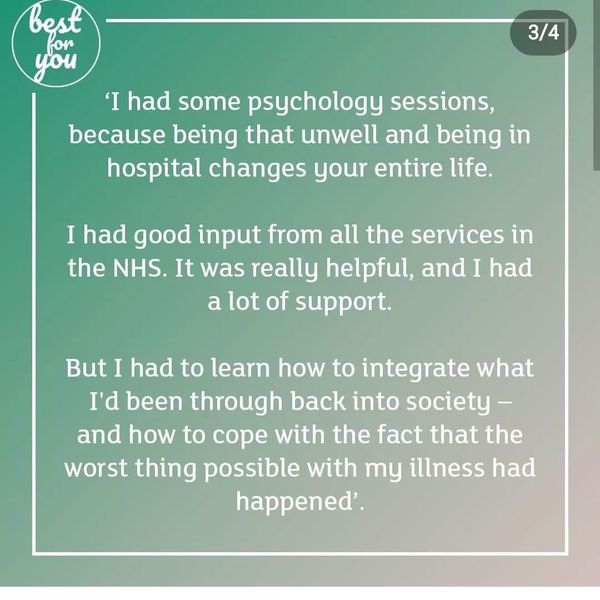
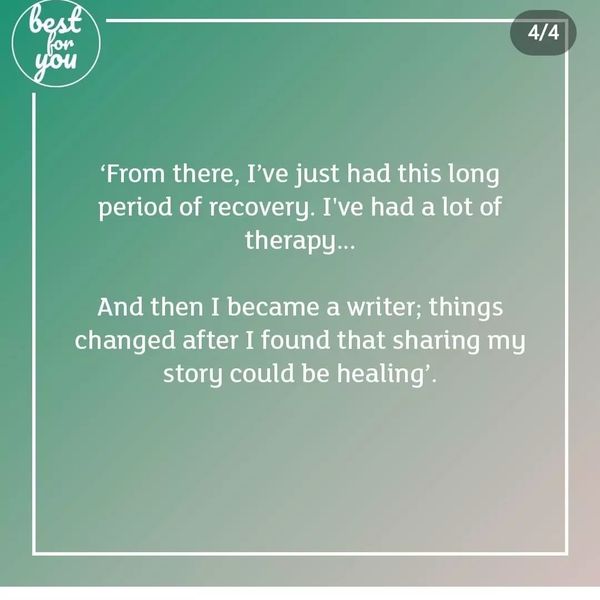
The team at Best For You NHS interviewed me about my life journey with bipolar disorder and anxiety. I hope it helps anyone, particularly young people, who are struggling.
You can read the interview that I did with Annabel here. Trigger warning as discusses suicidal thoughts, being in hospital and sexual assault.!
Thank you Annabel and team!
Best for You is a new NHS programme in London to help young people and their families access mental health support We know many can’t access the support they do desperately need and CAMHS services here in the UK are overstretched. I hope that by sharing my story it helps young people feel less alone, but we desperately need more funding into childrens mental health services too!
The other day I was contacted over on Twitter by a senior mental health nurse who had read my book ‘Bring me to Light.: embracing my bipolar and social anxiety’. She felt that it should be read by her colleagues at Norfolk and Suffolk mental health trust, here in England, and so donated a copy to the staff library for them to read- and they shared this photo.
This was by far one of the most touching and special things to have happened on my book journey- while it may seem small, to me it means the world.
I wrote my book, my memoir about living with bipolar disorder and social anxiety to help other people going through it (and their families) feel less alone. However, to see it being used by mental health hospitals- where I have been twice in my life, though in London- brings me hope.
Hope that professionals will read it and learn from it (there were times in hospital that I wasn’t fully happy with my care but most staff were amazing).
Hope that we can make a change and help the stigma around mental illness to fall.
Hope that by sharing my story, it will encourage others to feel comfortable to share theirs without fear of shame or embarrassment.
So thank you to Dawn💕 and Norfolk and Suffolk mental health trust. If you’d like a copy of my book : https://lnkd.in/e3cheTw
‘Just like a heatwave Burning in my heart Can’t keep from cryin’ It’s tearing me apart’
Temperatures yesterday here in the UK reached 40 degrees celsius, the hottest day here on record ever! Some people love the heat- ‘Oh it reminds me of being on the beach on holiday’, ‘It’s not that hot- just put a cold flannel on your face’ and ‘Why are people moaning, we go abroad to get this weather?’ are things i have heard this week. However, for people like myself who take strong mental health medication, in a country not used to these temperatures, this weather is quite literally no picnic.
Firstly, my parents and sister are redheads with pale skin. I am the same and am not built for the heat or humidity. Then, we can add in the fact that I have bipolar disorder and take daily medication- which if not managed correctly can send my blood and body toxic. This has never happened as I stay indoors, don’t do strenuous exercise and drink constantly (and eat enough) in the heat. Yesterday though was a big risk as it became SO hot.
(image: Karolina Grabowska: Pexels)
The risks of Lithium, a mood stabilising medicine, in the heat are fairly well known. It is a natural salt, dehydrating the body so if you don’t drink enough water or eat enough salt, the level of Lithium in the blood saturates and becomes too high- toxic.
Signs of lithium toxicity include: nausea and vomiting, abdominal pain and diarrhea, confusion, drowsiness, slurred speech, increased thirst and lack of coordination of muscles. Severe toxicity signs are: blurred vision, severe muscle spasms, seizures and coma. It is no joke. So trying to cope with Lithium in 40 degree weather and in most places, lack of air con, meant I was confined to my home as I didn’t want to feel like I was melting or run out of water. Thankfully, I didn’t go toxic!
Additionally, I take the anti psychotic Quetaipine which stops me developing mania and psychosis. This and another such medications can impair the body’s ability to regulate it’s own temperature. I am therefore at risk of developing hyperthermia- excessive body temperature- which can be fatal. (scary right??)
So you can imagine that when I hear we are having a heatwave, I instantly think ‘stay indoors, cool showers, ice lollies, sit by air con unit, drink lots and lots’ . I worry about commuting or travelling in the heat. I still can be out in some heat- but 40 degrees was too much!
Something that has troubled me as i wrote this blog is this. My employers have been amazing and let me work from home yesterday. I am able to hydrate myself and eat and keep myself cool. But for those who are ill and unable to, I imagine many were rushed to A and E with the above symptoms yesterday. As a vulnerable adult, my GP didn’t even call to check on me or highlight the side effects of my meds… I only know all this from Dr Google!
There is still a long way to go with proper care for those of us living with (as termed by my doctor) ‘severe mental illness’ whether we live in remission/recovery or whether we have a support network…..I may be 34, not 94- but I could be at risk and they wouldn’t know.
I hope by writing this blog and highlighting these side effects that more people will be aware of this too- which affects people with bipolar, schizophrenia/ schizoaffective disorder, psychosis, depression and other illnesses where anti psychotic meds are used.
One positive- when the heat broke last night and the summer rain fell as Rob and I watched on our balcony.. it reminded me of being in India during monsoon season and in Ghana having a shower in the rain so I suppose not all bad! I admitted I cheered when I saw the rain.
Lastly, I can’t finish this blog without highlighting we had a family bereavement yesterday- a cousin (but more like an uncle) passed away after illness. I will miss him terribly but learnt so much from him- kindness, humility and faith.
Accepting help for mental health issues is an undeniably courageous step in the healing process. Individual counseling can provide you with many helpful tools for coping with your issues, but so can group counselling. Here are a few reasons why group therapy might be the next step in your healing journey.
Groups Are a Sounding Board
One of the most beneficial aspects of group counselling is that the group can act as a sounding board. Whatever dilemmas you are facing, whatever you’re struggling with in your mind, you can voice it to your group and get helpful feedback. Your group mates will likely come from diverse backgrounds and have had their own unique experiences. Their outside perspectives can give you insight into how to handle difficult situations and emotions. Whether it is, a group can give you guidance based on their own experiences, which can help yours.
Group Therapy Can Be More Cost-Effective Than Individual Therapy
Group therapy can be more budget-friendly than individual therapy. And, just because group therapy tends to cost less, that does not mean it lacks any of the quality you would get from individual counselling. Group counselling can be empowering and helpful in the same way individual therapy is, and it is a great option for those who will have to pay out-of-pocket costs.
Groups Help You Learn About Yourself
Each of your group’s members will figuratively hold up a mirror so that you can take a deeper look at yourself. You can only learn so much about yourself on your own; having those outside perspectives can make your self-introspection all the more intensive and meaningful. There are things about yourself you might not be able to see that others can help you uncover.
Groups Can Help You Develop Social Skills
Social skills are something many of us adults haven’t fully developed, especially as we struggle with our own psychological issues. In a group, you might feel less isolated, plus you will have the opportunity to engage with other people. Here you can learn how to better get along with others and express yourself in a group setting. Studies have found that adventure-based group therapy can particularly help people develop their social skills.
Whether you choose to do group therapy due to finances or because you want to build your social skills, it is an option that works well for most people. You get a new support network of people who are going through similar things and are also looking for reciprocal support. Allow them to hold up the mirror so you can look in and see who is really there.
This article was written by freelance writer Lizzie Weakley
Do you ever feel like your past is holding you back from being happy in the present? If so, you’re not alone. Many people find it difficult to let go of hurtful memories, especially if they’ve experienced a traumatic event. However, carrying around these negative memories can be incredibly damaging to your mental health and wellbeing. That said, this blog post will discuss how to let go of hurtful memories and lead a happier life!
Acknowledge your hurtful memories
The first step to letting go of hurtful memories is acknowledging them. This may seem like a difficult task, but it’s important to face your demons head-on. Once you’ve acknowledged your hurtful memories, you can begin the process of healing. If you’re not sure how to start this process, consider talking to a therapist or counsellor. They can help you work through your feelings and start the journey to recovery.
Understand that your past does not define you
One of the most important things to remember when trying to let go of hurtful memories is that your past does not define you. Just because you’ve experienced trauma or pain in your life doesn’t mean that’s all there is to you. You are so much more than your hurtful memories! Allow yourself to see the good in yourself and know that you deserve happiness.
Also, don’t forget that your hurtful memories don’t have to control your present or future. Just because something bad happened in your past doesn’t mean it will happen again. You have the power to create a bright future for yourself, no matter what your past may hold.
Focus on the present and build a positive future
Once you’ve acknowledged your hurtful memories and accepted that they don’t define you, it’s time to focus on the present. What makes you happy right now? What are your goals for the future? Start spending your time and energy on things that make you feel good. Fill your life with positivity and watch as your hurtful memories start to fade away.
It’s also important to forgive yourself for what happened in the past. Forgiving yourself doesn’t mean forgetting what happened or downplaying its importance. It simply means letting go of the negative feelings associated with the event and moving forward with your life. Remember, you deserve happiness!
Seek professional help if needed
If you find yourself struggling to let go of hurtful memories, don’t be afraid to seek professional help. There’s no shame in admitting that you need assistance to deal with your past. A therapist or counsellor such as from The Awareness Centre, can help you work through your feelings and develop healthy coping mechanisms. They can also provide support and guidance as you begin the process of healing.
Letting go of hurtful memories is a difficult but necessary task if you want to lead a happier life. However, by following the tips outlined above, you can start on the path to recovery and begin living the life you deserve!
The 11 most effective ways for people to protect their mental health are revealed in a guide launched today by the Mental Health Foundation.
The free guide, Our Best Mental Health Tipsis based on the Foundation’s own ground-breaking study on what protects people from common problems such as anxiety and depression.
Dr Antonis Kousoulis, who led the research and is a Director of the Foundation, said: ‘Our new guide encourages us to take care of the fundamentals of life – our relationships, our experiences, our bodies and our finances.
‘The evidence shows that this is far more likely to keep us mentally healthy than the gimmicks and miracle cures promoted by some in the ‘wellness’ industry, who prey on our vulnerability.
‘The truth is, there are no quick fixes for good mental or physical health. What works is developing healthy habits in our daily lives, that help us to feel OK and able to cope with everything.
‘For example, in our new guide we talk about getting more from our sleep, learning to understand and manage our feelings, planning things to look forward to and getting help with money problems.’
The full list of mental health-promoting actions suggested by the new guide is as follows:
Get closer to nature
Learn to understand and manage your feelings
Talk to someone you trust for support
Be aware of using drugs and/or alcohol to cope with difficult feelings
Try to make the most of your money and get help with problem debts
Get more from your sleep
Be kind and help create a better world
Keep moving
Eat healthy food
Be curious and open-minded to new experiences
Plan things to look forward to
Most members of the public involved in the study had experienced their own, or family members’ problems with mental health, so had the benefit of hindsight when assessing what helps most with prevention.
The new guide (and the research on which it is based) acknowledges that people may be unable to follow some of its suggestions, for instance because the place they live makes it impossible to sleep well or spend time close to nature.
Dr Kousoulis added: ‘Enjoying good mental health should be an equally accessible goal for all of us, yet it is often out of reach for many. Government action is needed to create the circumstances that solve problems that are beyond individuals’ reach, and help prevent people having problems with mental health in the first place.’
You can download the new guide free of charge from the Mental Health Foundation website.You can also order hard copies by post, with a small charge.
About the Mental Health Foundation
Our vision is of good mental health for all. The Mental Health Foundation works to prevent mental health problems. We drive change towards a mentally healthy society for all, and support communities, families and individuals to lead mentally healthy lives with a particular focus on those at greatest risk. The Foundation is the home of Mental Health Awareness Week www.mentalhealth.org.uk
This is a non sponsored article written by the Mental Health Foundation.
Your mental health matters a great deal when it comes to your overall wellbeing. There may be days or times you feel low or maybe you’re someone who is managing a mental health or mood disorder currently.
Regardless of who you are, it’s important that you take positive steps in the right direction to take good care of yourself. Consider making and incorporating these changes and then notice how much better you feel overall. Here are four effective ways to boost your mood and be well so that you can get back to living fully and have a smile on your face while you do it.
1.Exercise & Move More
One effective way to boost your mood and be well is to exercise. Not only workout and break a sweat regularly but also commit to moving more throughout the day. Exercising is great for your mental health and can instantly put you in a better mood. Make working out fun by engaging in activities you enjoy and that get your body moving and making a playlist that keeps you motivated.
2.Get Organised & Declutter
Another effective way to boost your mood and be well is to get organised and reduce the clutter in your home, office, and life. You’ll feel less stressed daily and will be able to easily find what you’re looking for. Go through old boxes and get rid of or donate items you no longer use or want sitting around. As for anything you decide you want to keep but don’t want in your home, it would be useful to look into securing a storage unit with https://www.storagearea.com for the overflow.
3.Stay Social & Connect with Others
If you want to effectively boost your mood and be well then it’s in your best interest to build relationships with others, if you are able. Stay social when you can and make connections that are meaningful and rewarding. Keep a social calendar and be sure to get out and about once in a while so that you’re not always sitting around the house or feeling lonely. Sometimes this can be more difficult, so be kind to yourself.
You may want to join clubs or orgnaisations in your area, volunteer, or play group sports to help you stay better connected, if you want to. Otherwise, take up a hobby or two and make new friends this way as well. If you struggle with making friends or have social anxiety, you aren’t alone and there is a lot of support out there for you too!
4.Eat A Healthy Diet
What you put in your body for fuel can also impact your mood and mental health. Feel better fast by eating a healthy diet and cutting back on sugar, alcohol, and processed and fried foods. Some foods can also cause anxiety and make you feel uneasy. Stick to a healthy and well-balanced diet filled with fruits, vegetables, and leafy greens, nuts, and lean proteins. It might help to get in the habit of cooking for yourself at home so you have more control over the ingredients you use and what you’re eating. Also, always drink plenty of water to make sure you stay hydrated and have more natural energy to get you through the day.
Keeping well is something you can do for yourelf- go at your own pace and look after your mental health and overall wellbeing. This article was written by a freelance writer.
I first heard about Lithium carbonate, a natural salt and the ‘gold standard’ medicine for bipolar disorder, when I was in my teen years. My dad was taking it to help his bipolar episodes- Lithium is known to stabilise mood and stop mania and depression from occurring or lessening their impact. I knew then that it was quite a strong drug, that you would need blood tests and that it caused weight gain. But it really helped my dad with his illness.
Fast forward to 2004, I was just 16 and had been diagnosed with bipolar in hospital. My brain was still growing and both I and my psychiatrist were reluctant to try Lithium at that stage, so I was started on Carbamazepine, another mood stabiliser. It was only when this medicine stopped working about 10 years later in 2014, when I was struggling with suicidal depression and anxiety (which then turned into a manic episode that I was hospitalised for), that I seriously considered taking Lithium to help me, like it helped my dad.
Lithium was first found to have benefits for patients with bipolar disorder in the 1950s, with a discovery by psychiatrist John Cade. Even today, we still don’t know what causes the disorder, but it is believed that Lithium stabilises mood – particularly mania. The psychiatrist.com notes this,
‘The real breakthrough in lithium therapy came in 1952, when Erik Stömgren, a Danish psychiatrist and head of the Aarhus University psychiatric clinic in Risskov who had read Cade’s article, suggested to a staff psychiatrist at the hospital, Mogens Schou, that he undertake a randomly controlled study of lithium for mania. Random controls were just being introduced to psychiatric drug trials at that time, and Schou randomly assigned patients to lithium or placebo by the flip of a coin. His results were published in a British journal with the article concluding, “The lithium therapy appears to offer a useful alternative to [electr[electroconvulsive therapy] since many patients can be kept in a normal state by administration of a maintenance dose.”
For me personally, Lithium treatment has changed my life in a number of ways- both good and not so good. Lets start with the good, I havn’t had an episode of mania and psychosis or suicidal severe depression in 8 years, which is largely down to medication helping my bipolar brain chemistry. It has worked for me- which is amazing- and I never thought I would find an effective treatment to help me. I have bipolar 1, the most severe type and although Dad has the same and was helped, I never thought it would lead me to remission. In fact, in 2014 when I was under the home treatment team after hospital, one of the nurses asked me to consider whether Lithium might not work for me and I might have to live with episodes… needless to say I cried as was very fragile and asked her to leave! She was wrong, thankfully.
On to the bad things: Lithium in combination with an antipsychotic Quetaipine has caused me to put on a lot of weight, as it slows metabolism. I also have to have 3 monthly blood tests to check my lithium level is within the correct range as too much is toxic to the body. Thankfully, I drink enough water and eat enough salt so I have never had a toxic reading but its a very careful balance..I have to always look after myself. Another bad side effect is skin sensitivity and acne- Lithium causes spots- so I have had to adapt my skincare regime and diet accordingly. Sometimes certain foods plus Lithium can trigger this too. Again, I have to pay more attention to my physical health as a result of taking Lithium and Quetaipine
The weight gain in particular has been a worry for me and is something I am working on., especially as diabetes runs in my family. Then there is the Lithium thirst…
Lithium as mentioned is a salt, and as it metabolises in the body, makes you incredibly thirsty. You have to be careful not to get dehydrated. Hence my love affair with Robinsons squash and the occasional ice cold fruit juice. No matter how much I drink, I can never fully quench my thirst, even if well hydrated. Lithium thirst is not the easiest… but Robinsons is my friend as its lower in calories and more delicious than plain water! And now I am thirsty again… haha
So I have a love-hate affair with Lithium. Brilliant for my mental health, not so great for my physical health at times. There is also a concern because over time Lithium can cause kidney and thyroid issues, which is why I have blood tests too. So its not perfect, but it really helps me to live my life and have stable mental health. Over time, its important i am monitored. I have been on it 8 years, but it could start causing problems at some point.
Additionally, when I please G-d get pregnant one day, my lithium levels will need to be monitored (but thats a blog for another time).
I don’t have nausea or trembling on Lithium which is good, but the other side effects (particularly weight) have not been so pleasant. I am so grateful though to have a medicine that keeps me well and out of hospital, able to live a life that some others take for granted.
Thanks to all who voted for this blog. If theres anything else you’d like to know, just ask a question and I will respond.
When a loved one suffers from addiction, it can have just as much of an influence on your life as it does on the addicts. This is especially true if the loved one is a parent or a close relative. Children of addicts within a family are undoubtedly the most affected by addiction. This is particularly true if the addict’s children are still growing up. Unless you’re young or elderly, it’s difficult to cope as the child of an addict. Addiction has the potential to destroy a family. A parent is a glue that ties a family together; if they are addicts, the children must mature and become the house’s adults. This can have a significant negative impact on children’s mental health.
What are the Feelings of an Addict’s Children?
Children look up to their parents as role models. Parents who become addicted to drugs or alcohol, on the other hand, are only concerned with their addiction. Understanding that addiction is an illness is crucial for children of addicts. This is because long-term substance misuse changes the chemistry of an addict’s brain. As a result of this, an addict’s brain is rewired over time as a result of their substance misuse. As a result of their addiction, addicted parents can exhibit poor judgment and decision-making, a lack of self-control, and deviant behaviour choices.
What Can Children Do to Assist Parents Who are Battling Addiction?
Drug and alcohol addiction can have both short- and long-term impacts. Substance misuse can disrupt even the calmest and most loving relationships. When family members quarrel, it becomes commonplace. The level of trust begins to erode. If a relative who consumes illegal substances acts angrily or hides their condition in secrecy, relatives may grow concerned.
Marriages may disintegrate as a result of addiction-related changes. Communication gets more difficult as displeasure is highlighted. In addition, children often take a step back from their parents to separate themselves from them. Family members may observe their loved ones endure the negative effects of drugs or erupt into rages while inebriated. Others may notice that their relatives have lost weight and are no longer recognizable.
How Can I Help an Alcoholic Parent?
Parents are blessings, so if they are addicts you can try to help them recover- but ultimately they must accept help. Here are some of the things you can do to help them.
Be Supportive
A person suffering from drug or alcohol addiction needs the support and love of family members. They need someone who will understand what they are going through. As a child, one should make sure that you are fully aware of the supportive needs of your parent- but equally you can’t fix everything.
Talk to them
Talking helps a lot. An addict thinks that everyone is trying to distance themselves from them and if your parent feels like someone is trying to talk to them- they may appreciate it. Children of addicts should make sure to spend some time with their parents, where possible and if able. It can be very difficult to see your parent struggling with addiction and can be harmful also, so you will need to weigh this up.
Encourage Addiction Treatment
Addiction treatment is the only way to treat drug and alcohol addiction. Children of addicts should be aware that to help their parents they should suggest an addiction treatment program near them. Here are some addiction treatments that you can recommend to your parents:
Dual-diagnosis treatment for co-occurring disorders
Medicated-assisted treatment (MAT)
Inpatient
Outpatient or Intensive Outpatient addiction treatment
Telehealth addiction treatment is a new form of treatment where a patient can receive treatment while being in their own homes. So if your parent avoids or doesn’t want to leave home for addiction treatment, suggest they get Telehealth addiction treatment.
Avoid Fighting with them
There is no need to fight with your parents. They are already going through a very tough time. Try to avoid any sort of confrontation with them.
Make them Feel Wanted
Addicts need their children to make them feel wanted. Spend some time with them. Take them out and have a nice dinner every once in a while.
In The End…
An addict’s brain is rewired, and quitting addictive substances is more difficult than it appears. When a person becomes addicted to drugs or alcohol, his or her brain becomes fully reliant on them to function. As a result, when addicts cut back or stop taking opioids, they may experience uncomfortable withdrawal symptoms. Because they are terrified of experiencing withdrawal symptoms, addicts are sometimes discouraged from attempting sobriety.
As much as you may despise your parent for acting the way they do and refusing to seek treatment, you must respect their decision. Simply take a deep breath and recognise that your parent is afflicted with an ailment over which they have no control.
This article was written by Chaye McIntosh. You can see more about treatment here
I sat in A&E on a Wednesday morning trying to control my breathing.
My day began normally with a rushed breakfast and a sweaty commute on the Northern Line. I got to work and started to feel lightheaded and slightly panicky. My chest hurt and I found an empty office to try and calm down. It didn’t work. My brain was screaming ‘heart attack’. A kind colleague put me in a taxi with directions to the hospital.
Of course, I wasn’t having a heart attack. It was a swift diagnosis and then I had hours to wait before seeing the on-call mental health specialist. My panic turned to shame. Especially as I watched ‘real’ sick people come and go from A&E.
It wasn’t my first panic attack, but it was my first one at work.
I was diagnosed with anxiety years earlier in Canada by my GP. I managed it through talking therapies, medication, and support from family and friends. I didn’t have to tell anyone at work and outwardly I always looked like a confident professional. I have what is commonly referred to as ‘high-functioning anxiety’.
My stress levels had been building since I moved to the UK. New country, new job, lots of work travel with more responsibilities, and missing my regular support systems. I felt uncomfortable in my own body; it ached all the time, my memory was unreliable, my hands shook, and my stomach always hurt.
I ignored all the signs and pushed through. It wasn’t one thing, anything specific, or even the building pressures at work. I stopped taking care of myself and I was scared to ask for help. Deep down, I knew it was my fault that I ended up in A&E.
I turned on my phone and scrolled through concerned messages from my team. Excuses raced through my mind: migraine, food poisoning, allergic reaction. Anything but admitting the state of my mental health. How could they, or anyone at work, respect me if they knew my truth?
One of my team members sent a private message asking if I needed a toothbrush. Even now, I can’t explain why it was their simple message that gave me the courage to tell the truth. Perhaps I sensed their kindness and concern? Perhaps because it was ‘normal’ when everything else felt out of control? Whatever the reasons, I decided to be honest with my team and my colleagues from that moment.
I am not unusual. The Mental Health Foundation cites a 2013 study with 8.2 million cases of anxiety in the UK. All my life I had been told I was ‘stressed’, ‘a worrier’, and ‘a perfectionist’. These characteristics make me successful, but they often cost me my mental health.
I recognise that being able to speak out is a privilege and that my seniority made it easier. It was still a risk, but I could no longer afford to be silent about my mental health. My main concern was that I would lose credibility at work. I didn’t want others to see me as weak, unreliable, or incapable.
Senior leadership, my team, and my closest colleagues were immediately supportive and sharing my story changed from being scary to empowering. Speaking out gave me some control over my anxiety and I became a better leader because I could bring my whole self to work. I started to see my anxiety as, if not a strength, something that allowed me to engage honestly with others and with my work.
I would like to share that as a white, middle class Canadian women working in reputable organisations with access to support, I feel that I have had some level of privilege at being able to access this support. Additionally, anxiety as a mental health disorder, is also relatively understood and more accepted.
No matter anyone’s background, including mine, talking about your mental health can be scary and make you feel vulnerable.
There is no one way to support mental health at work and everyone copes differently. It’s not about online yoga classes, taking deep breaths, or flexible working policies. I think it’s about awareness, inclusion, and having difficult conversations. Often when I am struggling, the only thing I want from my employer or a loved one is to be heard.
As a leader with anxiety, I think some of the most important things I can do is speak openly about my experience, help others to do the same, and listen to their stories. I took every opportunity to do these things while working at Imperial College London Business School and I continue to do so in my new role at Cambridge Judge Business School. Instead of just asking my team ‘How are you?’, I ask questions like ‘Are you getting enough sleep?’ or ‘What can I be doing to support you?’.
When I interviewed last year for my role at Judge, I intentionally spoke about my anxiety and how it influenced my leadership and working styles. I felt it was a risk worth taking.
I want organisations, employers, and employees to understand, and to see through my example, that having a mental health disorder doesn’t mean you can’t be successful or ambitious. Everyone faces challenges. Our organisations need to be a place that talking openly is encouraged and supported. Anxiety has taught me to be kinder, more empathetic, and that bringing these qualities to work are beneficial for me, my colleagues, an organisation’s healthy culture.
Erin Hallett is a mental health writer, advocate and speaker, originally from Canada- she now lives in the UK.Erin works at Cambridge judge business school.








 beurownlight.com