Bipolar and Perinatal Mental Health: Part One by Eleanor

I havn’t been sure for many months whether I was ready or wanted to share about the many issues I have been grappling with for a number of years. However, writing for me is therapeutic and so I wanted to share about the reality of mood disorders and thinking about starting a family.

To begin with, this is such a personal and complex issue for anyone with what is termed ‘severe mental illness; ie bipolar disorder, schizophrenia, psychosis. Our illnesses mainly have to be managed on daily medication and for some people with severe mental illness, they may still live with daily symptoms which can cause difficulties for them.

So this article is my personal experience of living with Bipolar 1 disorder and anxiety. To note, I was started on Lithium in 2014 after my last hospitalisation- which has stabilised the bipolar episodes into remission (it does something to the seretonin in the brain). I still live with some anxiety, but the combination of Lithium, Quetaipine (an anti psychotic) and anti depressants has meant that I do not become manic or psychotic and nor do I suffer from severe depression or suicidal depression. I feel more stable and I have engaged in therapy for the trauma I went through, for 2 years. So, thankfully at the moment my illness is very much controlled well and I have support from Rob and my family.

One side effects of my medicines has been weight gain and I aim to lose weight over the next year. This is important to me because it can sometimes impact on fertility and also makes a pregnancy more high risk (physical side effects such as blood clots etc). I will also be 34 in July and so this has become more pressing for me in terms of wanting to try for a baby. However, there are many risks in choosing to do this and going ahead, without speaking to a perinatal psychiatrist or mental health team.

Today, I got my referral letter to the mental health team to discuss planning a pregnancy and am on an NHS waiting list til June. For me, because my type of bipolar can be dangerous with the mania and psychosis- and having had several psychotic episodes in my life to date that have ended me up in hospital- a pregnancy where I carry a baby myself, has to be carefully planned in terms of my medication. For many reasons, I want to stay on my medicines for the entire pregnancy- so that I don’t end up relapsing during or straight after pregnancy (with bipolar there is a greater risk of relapse and post partum depression/psychosis due to the hormonal changes straight after birth).

I have been terrified for a number of years over what to do in order to keep me and a potential baby safe. I have researched surrogacy so I don’t risk making myself unwell, but this comes with a whole host of legal challenges around who is the parent, high financial costs (of treatment and paying expenses for surrogate/agencies) etc and the wait for the right surrogate. Surrogates can also pull out before giving. birth, you have to put your trust in them if you don’t know them- and you are trusting them with something hugely important! We also thought about adoption but with my mental health history and the potential issues that a child in care may be facing, I just didn’t want to put myself through the stress of being scrutinised.

So, please God even if we are blessed with a healthy child- the pregnancy may be as a friend of mine has termed ‘high risk’. This scares me and it scares me about potentially ending up in hospital again, on a mother and baby unit. I want to stay on my mood stabiliser and anti psychotic so the bipolar doesn’t cause this- however, I have decided that as long as I can stay on my medication and have the support of an experienced perinatal psychiatrist and mental health team (as well as my therapist),- plus regular monitoring and scans… and of course a proper plan put in place in case of relapse, this is what I will do (again, no one knows until you start trying for a baby and there can be many hurdles but I am trying to think positively).

I have also been asked whether I am worried about passing bipolar on. This is a worry as it does run in my family- however, I believe the risk of this with one parent is only about 10% (I got unlucky). Sometimes, I sit and question- am I being selfish for wanting to be a mother? And I realise, no I am not selfish. I don’t want my potential child to get bipolar disorder but equally if they do, we will deal with it. We also both want to get tested by Jnetics as we are both Ashkenazi (East European) Jews so may be carriers for certain illnesses.

Some women don’t want to be mothers, but I always have done since I was a little girl and I can’t imagine never having a family with my husband. I want to be the best Mum I can be and reduce my illness risk as much as possible to remain stable and well.

Do I wish things were different and I didn’t have this illness? Yes. but the reality is that I do but that I have been stable for a long time. I know we will make good parents whatever way it happens and I just hope the road ahead won’t be paved with challenges… it is never easy. I write this because its not often talked about… and I know there will be more to come on this subject but I wanted to share- if you yourself are going through something similar, you aren’t alone.

It took a lot to share this because its so personal and I worry about sharing too much- but this blog has been years in the making really! There is never a right time to open up- but maybe now I can allow myself to a bit and release the burden.

People sometimes ask me if I have children (as im mid thirties and married) and my answer is always, I hope to one day soon but leave it in Gods hands.

With love,

Eleanor x

9 Tips on Prioritising Your Mental Health While Raising Children.

Photo by Pixabay: 

It’s no secret that parenting is hard. But what many people don’t realise is just how hard it can be on your mental health. Juggling the demands of work, children, and a household can be overwhelming – and it’s easy to let your mental health take a backseat. But this isn’t good for you or your children. In this blog, we will discuss nine tips on prioritising your mental health while raising children!

1) Make time for yourself.

One of the best ways to prioritise your mental health is to make time for yourself. This might mean setting aside a few hours each week to do something you enjoy or simply taking some time out each day to relax and rejuvenate. You must make this time for yourself, as it will help you recharge and be more effective when dealing with the demands of parenting. Your mental health is extremely important and and a part of taking time for yourself. It’s essential for you to seek out the help that you need when you feel as though you are struggling. If you would like to talk get in touch with Psymplicity

If finding time for yourself seems impossible, start small. Even five minutes of relaxation can help clear your mind and improve your mood. And if you have older children who can look after themselves for a little while, use that extra time to focus on YOU.

2) Accept that you’re not perfect.

One of the biggest traps parents fall into is the belief that they have to be perfect. This is simply impossible, and trying to achieve it will only lead to frustration and stress. Accepting that you’re not perfect is essential in taking care of your mental health.

It’s OK to make mistakes. It’s inevitable! What’s important is that you learn from them and move on. Don’t dwell on your mistakes, as this will only aggravate your mental health. Instead, focus on what you can do to improve things going forward.

3) Don’t be afraid to ask for help.

Asking for help is another sign of strength, not weakness. If you’re struggling with your mental health, don’t be afraid to ask for help from friends or family members. They may not be able to solve all your problems, but they can offer support and understanding.

If you feel like you need more assistance, consider seeking professional help. Many qualified therapists can help you manage your mental health. Don’t be ashamed to ask for help – it’s one of the best things you can do for yourself and your children.

Asking for help is not only good for you, but good for your children. When you ask for help, you are telling your children it is okay to do so, and you will model excellent behaviour that will support them in their own lives and battles. It can also be important to seek support for your children if they need it. When your whole family is getting the support they need, then you can all live happier, more fulfilling lives. Seeking support for your children can help you. Many parents feel like they have to be the ones supporting their children. But you can only do so much. There comes a point where your children may need outside support. For example, if your children are neurodivergent or have learning disabilities, then specialised learning disability support from a professional will be able to tailor help to their individual needs.

4) Set realistic expectations.

One of the leading causes of stress for parents is unrealistic expectations. We often expect ourselves to be able to do everything, and this can lead to a lot of frustration and unhappiness. It’s important to set realistic expectations for yourself and your children. This means acknowledging that you won’t always be able to meet everyone’s needs, and that’s OK.

It’s also important to remember that children are individuals and will develop at different rates. Don’t compare your child to others – this will only lead to dissatisfaction on your part and potential mental health issues for your child. Instead, accept your child for who they are, and work with their strengths and weaknesses.

5) Take care of your physical health.

Your physical health is just as important as your mental health. When you’re feeling stressed and overwhelmed, it’s easy to neglect your well-being. But this is a mistake! If you want to take care of your children effectively, you need to take care of yourself first.

Ensure you’re getting enough sleep, eating healthy foods, and exercising regularly. These things will improve your physical health, but they will also boost your mental wellbeing. And when you feel good physically, it’s easier to deal with the stresses of parenting.

6) Set boundaries.

It’s important to set boundaries with your children, as this will help them learn how to respect your time and space. As parents, we often put our children’s needs before our own, but it’s essential that you take care of yourself too. Otherwise, you’ll quickly become overwhelmed and stressed.

Set clear boundaries for yourself and your children – make sure they know when to stop playing and start doing their homework, for example. It can be challenging to enforce boundaries sometimes, but it’s crucial that you do so to maintain your mental health.

7) Monitor your children digitally.

With the rise of technology, it’s more important than ever to monitor your children’s digital habits. Screens can be addictive and damaging to a child’s mental health, so it’s essential to set rules and limits on how much time they spend in front of them.

If you’re unsure where to start, try setting a timer and limiting screen time to a certain number of hours per day. You can also install parental control software on your child’s devices to help limit their access to harmful content. You can also keep an eye on them by using innovative new technology, you can click this link to buy it at Family Orbit. Finally, remember that it’s OK to unplug every once in a while – get out into nature, read books together, and have conversations without screens!

8) Spend quality time as a family.

One of the best ways to improve your mental health as a parent is to spend quality time with your children. This doesn’t mean spending hours watching TV or playing video games – it means being engaged and present with your kids.

Spend time talking, laughing, and simply enjoying each other’s company. Play games, go for walks, cook dinner together – do whatever feels fun and natural. When you take the time to connect with your children on a deeper level, it strengthens the bond between you and helps improve your mental well-being too!

9) Use meditation to release stress.

Meditation is a great way to deal with stress and anxiety. When you’re feeling overwhelmed, take a few minutes to yourself to meditate. This can be done in any quiet space, and there are many different types of meditation to try. If you’re not sure how to get started, plenty of guided meditation apps and YouTube videos are available online. Or, if you prefer, find a local meditation class or workshop. With regular practice, meditation can help you manage your stress levels more effectively and improve your overall mental health.

Mental health is just as important as physical health, and you must take care of ourselves as a parent or carer. These eight tips are an excellent place to start, but remember that everyone is different. So find what works best for you and your family, and don’t be afraid to ask for help when you need it.

This article was written by a freelance writer and contains affiliate links.

Looking After Your Mental Health While Working from Home.

Photo by Andrea Piacquadio

When you work from home, it can be challenging to maintain a healthy work-life balance. You may find yourself working all hours of the day and night and not getting enough exercise or social time. This can lead to problems with your mental health. Here we will discuss some tips for looking after your mental health when working from home.

1) Make Sure To Take Breaks Throughout The Day

When you work from home, it is essential to make sure that you take breaks throughout the day. This will help you to avoid burnout and will allow you to recharge your batteries. Make sure to step away from your work every few hours, even if it is just for a few minutes. If you work from home and you notice that your mac is hot, go for a walk, make yourself a cup of tea, or call a friend while you wait for it to cool down.

Doing something that takes your mind off of work will help you return to your tasks feeling refreshed and ready to tackle them.

If possible, try to take a longer break in the middle of the day – this will give you something to look forward to and will help break up the monotony of working from home.

2) Set A Schedule And Stick To It

One of the best ways to stay on top of your mental health when working from home is to set a schedule and stick to it. Having a routine will help you to feel more in control of your work, and it will make it easier to take breaks when you need to.

If possible, try to start and end your workday simultaneously each day. This will create a sense of structure in your day, and it will give you something to look forward to.

In addition, make sure to schedule time for lunch and other breaks. Putting these into your schedule will ensure that you take them, and they will help you to avoid working straight through the day.

3) Make Sure Your Workspace Is Comfortable

When you work from home, your workspace is likely to be in your house. This can make it difficult to separate your home life from your work life. To help with this, it is essential to make sure that your workspace is comfortable and inviting.

Your workspace should be somewhere that you enjoy spending time, so make sure to personalize it with things that make you happy. If possible, try to set up your workspace near a window with natural light. This will help you to feel more energized and will reduce eye strain.

In addition, make sure that your workspace is free of distractions. Turn off the television, put away any toys or games, and close the door to any other rooms in the house. This will help you to focus on your work and will minimize distractions.

In conclusion, working from home can affect your mental health. However, by following these tips, you can make sure that you stay on top of your mental health and avoid burnout.

Make sure to take breaks throughout the day, set a schedule and stick to it, and create a comfortable and inviting workspace. By following these tips and looking after your health, you will be able to maintain a healthy work-life balance and will be able to enjoy working from home.

This article was written by a freelance writer and contains links.

Does Retail Therapy Help your Mental Health?

Photo by Andrea Piacquadio from Pexels

We all have been through it or at least heard about the term ‘retail therapy’ before. To many, retail therapy is the act of shopping to relieve stress. It is a coping mechanism that can be used to deal with emotional issues.

A study by the University of British Columbia found that people who shopped when they were feeling sad or angry were more likely to feel better afterward. Shopping may be a way for people to temporarily forget about problems and focus on something else. For many, getting over a bad day could be as easy as going to the online shop adidas offers or visiting your local retail store. 

Retail Therapy does not work for everyone, and some may find it counterproductive because it can lead to feelings of guilt and shame after spending money on items that are not needed or wanted. So, what benefits can we get from retail therapy, and is it something that can work for you?

What are the Benefits of Shopping as Therapy?

Shopping is a great way to improve mental health. It can be a form of physical and emotional therapy. Shopping in store can be a form of physical therapy as it allows people to get up, walk around and explore new places.

 It also provides an opportunity to take care of oneself by indulging in self-care. Shopping can be an emotional therapy as it allows people to express themselves through buying things they want or need, while getting rid of the things they don’t want or need anymore.

Relaxation

There are many ways to improve your mental health. Many people choose retail therapy as a way to relieve their stress and improve their mood. Retail therapy is an effective way to unwind because it helps people to change the focus of their thoughts from negative thoughts, such as worry or anger, towards positive thoughts, such as excitement or anticipation.

Sleep Improvement

It is important to note that retail therapy has been shown to have positive effects on mental health, but it should not be used as a replacement for professional help. There are different types of sleep deprivation, and insomnia is one of them.

 Sleep deprivation can lead to mood swings, irritability, trouble concentrating, and more serious problems like obesity or diabetes. In a similar way, Insomnia can lead to depression or anxiety disorders, which can lead to other problems such as substance abuse or an eating disorder.

Improved Mood and Happiness

There are many reasons why retail therapy can help you improve your mood. One of them is that it makes you feel like you have accomplished something, which boosts your self-esteem. Another reason is that retail therapy is seen as self-care and an easy way to distract yourself from negative thoughts or feelings. 

Self Control 

Retail therapy provides you with a sense of control and relief. You can use it to distract yourself from your negative thoughts and feelings. While retail therapy is not always a good idea, it can be helpful in some situations. For example, if you are feeling frustrated or lonely, retail therapy might provide you with the joy and excitement that you need to feel better about yourself. It’s important to remember that the benefits of retail therapy are temporary and that this technique should be approached with care.

Disadvantages of Retail Therapy

While there are many advantages and benefits to retail therapy, there are many ways that it could have a negative effect on you. So, it’s essential to remember that retail therapy is not for everyone. It has been proven to be helpful for people who have depression and anxiety, but it also has its downsides. People who have a shopping addiction can find themselves in a difficult situation when they feel the need to buy something new every time they are feeling down or sad.

The person will not be able to control their shopping habits because of their addiction and wants the feeling of gratification from buying something new. They may also buy things impulsively without thinking about what they need or even if they have the money for it. When this happens, the person might start making poor financial decisions which could lead them into debt or bankruptcy.

It’s important that you lookout for signs of shopping addiction while taking part in retail therapy. 

Signs of Shopping Addiction

Shopping addiction is a serious problem that is becoming more and more common. It can lead to numerous mental health issues, such as anxiety, depression, and stress. It’s important to be able to tell the difference between the occasional shopping spree and a full-blown addiction. Signs of shopping addiction include:

  •  Spending too much money on clothes or other items for yourself or others
  • Having difficulty controlling your spending
  • Spending hours at a time looking for things to buy
  • Feeling guilty or ashamed after shopping
  • Putting off, paying bills, saving money, or doing other important tasks in order to spend money on things you don’t need

Once you find yourself showing signs of your addiction, it is important to get help because it can lead to mental health issues. It can also lead to a lack of self-control, which in turn can lead to other problems.

Knowing When To Getting Help

So, to answer the question: Can retail therapy help with your mental health? The answer is yes, but that yes comes with a warning beside it.  

While retail therapy can be great for helping your mental health. It’s important for you to remember that everything should be taken in moderation. Retail therapy is great for helping you to get over a bad day today. However, when it starts to have a negative effect on your mental health instead of helping, it’s time for you to get professional help.

Don’t ever spend more than you have and if you find that you are regularly. support is available for you. You are not alone.  


This article was written by a freelance writer and contains affiliate links.

Starting The Conversation: 5 Tips On How To Talk To Your Boss About Your Mental Health

Image by Andrea Piacquadio via Pexels

According to new data from Mental Health Statistics, during 2020, 58% of workers experienced some kind of work-related stress, while 63% were experiencing moderate levels of anxiety. 

Health experts have warned, that if these mental health issues are left untreated, it can impact our day-to-day lives, including the ability to do our jobs. 

That’s why the team of experts at Delamere, have shared five ways to open up the conversation about mental health with your employer: 

  1. Find the Right Time and Place to Talk  

When approaching the conversation of mental health with your employer, one thing that will help is finding the right time to talk. Talking to your boss on a day when they seem overwhelmed might result in you not getting the best response, so make sure to schedule a call or an in-person conversation with them ahead of time.

As well as the right time, it’s also important to find an appropriate place to have the conversation. Find a place that will allow you to talk in a professional and calm way, and is a quiet space in your workplace. If somewhere suitable isn’t available you could also suggest meeting outside the office or even going for a walk. 

  1. Plan what you are going to say ahead of your meeting

Before speaking to your manager one of the best ways you can prepare is by planning what you want to discuss ahead of time. This will not only calm any nerves you might be having ahead of the conversation but will also ensure that you are only sharing what is needed to frame how your mental health is impacting your work.

Points you can prepare in advance could include, identifying tasks within your current role and workload that is making you stressed, reminding your boss of your achievements so that they remember you are more than capable, explaining what factors might need to change in order to help you.

  1. Decide Who To Speak To 

If you decide to open up to your employer about your mental health, consider who you will feel most comfortable having the conversation with. 

If you have a good relationship with one of your managers, it might be helpful talking to them about what you are going through. However, if you find that they aren’t very approachable, consider speaking to someone within your HR department that will be able to help you.

  1. Consider That Your Boss May be More Receptive Than You Think

Though talking about your mental health with your employer may feel like an uncomfortable situation, they may actually be more understanding than you anticipate them to be. 

Mental illness is very common illness and a lot of people, unfortunately, suffer from this in the workplace. So when you start the conversation, the chances are your boss or employer will have already had direct experience with dealing with it or even experienced it themselves. 

  1. Focus on Your Productivity and Ability to Work

To get the most out of your conversation with your employer, think beforehand about how your mental health is impacting your productivity and ability to work.

If you go into the meeting with this already prepared, the chances are you will have greater success coming up with solutions on how your employer can support you and what you need to get better. Whether it’s more flexible working hours or a lighter workload.

This article was written by Delamere residential addiction care.

She is Messy, But She’s kind. Performance of ‘She Used to be Mine’ Sara Bareilles by Nicolina Bozzo on American Idol 2022.

To anyone that needs a song to inspire them, pick them up, that they can relate to.. see this beautiful performance by Nicolina Bozzo, an American idol contestant, covering the Sara Bareilles song She Used to be Mine.

This gives me goosebumps as it builds.. the lyrics are beautiful but Nicolina puts even more emotion into it…

She’s imperfect but she tries

She is good but she lies

She is hard on herself

She is broken and won’t ask for help

She is messy but she’s kind

She is lonely most of the time

She is all of this mixed up

And baked in a beautiful pie

She is gone but she used to be mine

……..

For the girl that I knew

Who be reckless just enough

Who can hurt but

Who learns how to toughen up when she’s bruised

And gets used by a man who can’t love

And then she’ll get stuck and be scared

Of the life that’s inside her

Growing stronger each day

Til it finally reminds her

To fight just a little

To bring back the fire in her eyes

That’s been gone but it used to be mine

Remember you are a survivor and you can do anything you want in life. Thank you Nicolina for this performance.

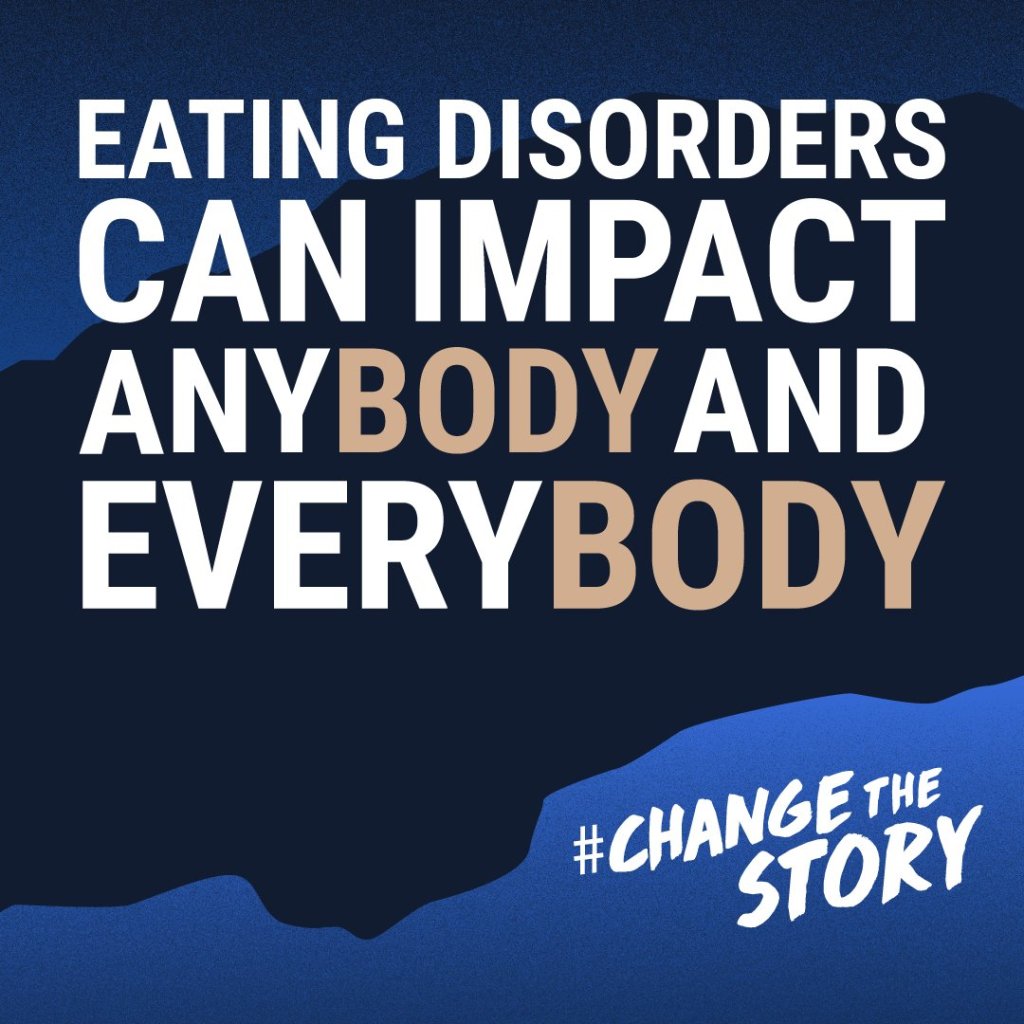
New #ChangetheStory Campaign by Hope Virgo and The Hearts Minds and Genes Coalition shows rise in Eating Disorder Stereotypes.

(image: Change the Story Campaign)

#ChangeTheStory and Anybody and Everybody is a new campaign launched this month by The Hearts Minds and Genes Coalition which is chaired by Multi-Award winning campaigner and Author, Hope Virgo. Hope is a friend of mine who has campaigned for years for help for those with eating disorders and she is a force to be reckoned with and an amazing woman!

Eating disorders are serious, biologically based mental illnesses deserving of equal clinical and research funding to that given to other complex diseases. They want to ensure that no-one with an eating disorder need experience shame or guilt, and everybody should have timely access to specialist services.

Author and Multi-Award winning campaigner, Hope Virgo who chairs the coalition says;“When we think of eating disorders we often immediately think of a white teenage, emaciated girl and fail to realise that eating disorders are so often hidden in plain sight amongst all ages, genders races, ethnicities, body shapes and weights, sexual orientations and socio-economic statuses. The campaign is working to remove the stigma and misunderstanding that surrounds these illnesses, ensuring that nobody should experience shame or guilt for suffering from an eating disorder and to make sure that everybody has prompt access to specialist services.”

(image on Twitter: Change the Story campaign, Hope Virgo and FEAST outside the Houses of Parliament)

Eating disorders are not new illnesses, but there has been a massive rise in cases during the pandemic. Unacceptable delays before treatment means we are also seeing a rise in avoidable chronic long-term illness and loss of life. We need to ensure that we are no longer hiding behind the global pandemic but ensuring that the right support is in place for everyone because no one should be dying of an eating disorder in 2022. They are working to remove the stigma and misunderstanding that surrounds these illnesses, ensuring that nobody should experience shame or guilt for suffering from a biologically based illness and everybody should have timely access to specialist services.

To raise awareness of the campaign they have created a video supported by Instagram. For a long time, people have used Instagram to challenge stereotypes about body size, share their journeys with overcoming body image issues, and celebrate different body types. 

 Renee McGregor, leading Sports and Eating disorder specialist dietitian said;“We need to change the images, narrative and practices presently associated with eating disorders in order to ensure that no further lives are lost to this illness in 2022 or beyond.” 

Suzanne Baker, CarerRepresentative for F.E.A.S.T. (www.feast-ed.org)in the UK, said;“timely access to sustained, specialist treatment is key to recovery from an eating disorder at any age or stage. Currently too many people are not able to access this treatment often due to misconceptions about what an eating disorder ‘looks’ like. There is no one look – eating disorders are serious biologically influenced illnesses and are often hidden in plain sight.

Dr Agnes Ayton, chair of the Eating Disorders Faculty at the Royal College of Psychiatrists, said: “No one chooses to have an eating disorder. An eating disorder can affect anyone at any age and can be caused by a range of factors including genes, mental or physical health conditions and social pressure. The stigma around having an eating disorder prevents many people from asking for help when they need it. No one should feel embarrassed to ask for help. An eating disorder can have very serious long-term effects on the body, but with treatment, people can fully recover. Raising awareness of this issue is an important first step in helping people to get the help they need. If you think you may have an eating disorder, speak to your GP who can refer you to a specialist counsellor, psychiatrist or psychologist. You can also visit the NHS Choices website to find out what additional support is available, including confidential helplines.”

Gerome Breen, Professor of Psychiatric Genetics at King’s College London says: “Research and its dissemination are essential to dispelling the unhelpful myths and stigma that surround eating disorders and compound their long-lasting and devastating impacts. By understanding more about why and how eating disorders develop we can improve society’s conceptualisation of these conditions and hopefully enable more people to seek and receive the support they need.”

(image on Twitter: Jeremy Hunt MP with Hope Virgo)

You can help by posting a selfie to support this campaign with the hashtag #changethestory.

Watch the video here to discover more about the campaign:

Our Blog is 6 Years Old Today!

On the 1st March 2016, I started this blog as a way to provide therapy for myself- as I was going through panic attacks, (caused by trauma due to a hospitalisation for a bipolar manic episode). Since then I have had several years of EMDR trauma therapy and my life changed so much too- I met my husband, we got married and moved to our first home. I also found a career I love after many twists and turns due to mental illness. Life is never plain sailing especially with mental health and I still live with panic attacks/ social anxiety at times but am learning to manage them.

The blog has turned into a book Bring me to Light (with Trigger), writing for Metro.co.uk, Glamour, the Telegraph, Happiful, Rethink Mental Illness, Mind and other incredible organisations, I have partnered with large and small brands, charities, businesses, writers to create content that battles stigma on mental health. We have been awarded as a Top 10 UK blog by Vuelio since 2018 (thank you) and I love to share my story to help others and educate people about bipolar, anxiety, panic disorders, psychosis, mania and mental health in the workplace (amongst other mental health topics!). I have also recorded podcasts – most recently with Dr Rosena Allin Khan MP, shadow minister for mental health, Daniel Rosenberg at SodsPod and was also interviewed by Penny Power OBE with my Dad Mike (who is a mental health speaker).

When I started this blog I had no idea where it would lead and its been the most special, humbling and amazing journey- with so much more to do so watch this space!. I really want to help more people this year and also have a childrens book I would love to get out there to help kids with anxiety.

As always, I want to thank all my contributors and brands (sponsored or not), as well as the digital agencies and freelance writers who provide content too. I hope to keep it going for the next year at least! Let me know what you want to see.

This year heres what we have been talking about (and big thank you to everyone. If it doesnt have a name by it, content has been written by a writer):


How social distancing is affecting social anxiety in the pandemic- Anita Ginsburg

Book Review of the Smart Girls Handbook by Scarlett Clark- me (Eleanor)

Being kind to myself, social anxiety and life in recovery- me (Eleanor)

Self care ideas for positive change in 2021

How to cope with top 4 challenging life events

The Book of Hope launchme

Sending self care packages- a guide to sending gifts

Feel less trapped with these powerful ideas

6 Tips to stay positive and help mental health

Moving to our First Home and mental health- me

How to reach for help and not be ashamed

Whats the connection between mental health and addiction- Jennifer at Mandala Healing

We are a top UK mental health blog 2021- thanks Vuelio- Me

Can you still get health insurance cover if you have a history of mental illness?

The benefits of seeking mental health support and help

The link between debt and mental health

Start Up founders are 50% more likely to suffer from a mental health condition- Daniel Tannenbaum

How can mental health workers cope with the new normal?

Easing the burden of divorce- Brooke Chaplan

Stress and Panic Attacks Part two- Me

How to remain independent and look after your health as you get older

How selfie changed my life and mental health- Kathryn Chapman

The benefits of personal training for your mental health- Life Force Fitness

Recovery from alcohol or substance abuse: benefits of a sober living home

6 Ways Fathers can Assist New Mothers- Jess Levine

Work in progress- healing from trauma to find the light- me

Is stress affecting your skin? heres how to tell

Prioritising mental health on the world stage, Simone biles- me

Why privacy is critical for our mental health

Goal setting for mental health

Moving house? 5 tips to deal with moving stress

4 Ways to make mental health a priority in your life- Emma Sturgis

What you need to know about post Partum Depression- Kara Reynolds

The Midnight Library book review- me

5 interior design ideas to boost wellbeing

Steps to help aging and wellbeing

How to keep your children in mind during a divorce-Brooke Chaplan

Bryony Gordons mental health card collection for Thortful.com

The Inquisitive-a film on mental health and suicide- Kelvin Richards

Being self compassionate when I have anxiety- me

Keeping things stress free when selling an elderly family members home

7 Bipolar disorder facts everyone should know- Ronnie Deno

Recovering from an eating disorder- Kara Masterson

Wellbeing tips and activities for children- collaboration with Twinkl resources

Building trust in a relationship

How sleep patterns affect your mental health

Choosing life and freedom- my therapy journey- me

Dealing with imposter syndrome

Confidence on return to the office

lifestyles and mental health- Anna Witcherley at Head Hacks

Stress and mild anxiety formula- Nu mind wellness

Mental health problems in the pandemic- Webdoctor.ie

Patient transport helps anxious travellers- EMA Patient transport

How to stop signs of traumatic brain injury- Lizzie Weakley

Looking after mental health in a tense office environment

Dealing with anxiety as a mom/mum- Kara Reynolds

5 Self help books for 2022

Winter mental health and anxiety update- me

Tips to fight addiction- Lizzie Weakley

Lockdown, sleep, anxiety and mental health- collaboration with TEMPUR mattresses (ad)

Helping elderly people to live independently

Getting your loved one help for their addiction- Emma Sturgis

How to support your spouse with mental health issues- Kara Reynolds

Battling co occurring mental health and substance addiction- Holly

Festive season- me

Its Okay not to be Okay by Esther Marshall book review- me

The difference between a therapist and life coach- Lizzie Weakley

Managing mental health over christmas/ festive time- me

Reflecting on a new year 2022- me

Surviving trauma makes relationships difficult- self compassion helps- Taylor Blanchard

Window to the womb launches avocado app for perinatal wellbeing

Where to start when battling addiction- Rachelle Wilber

Mental health new year resolutions

Book review- Pushing through the cracks- Emily J Johnson- me

Depression meals when life gets hard- Kara Reynolds

Jami see mental health campaign blog

Recovering from cancer- the mental health aspect- Rachelle Wilber

Outdoor activities to improve your mental health- Elizabeth Howard

Mental health and eating disorder recovery journey- Emily J. Johnson

Fitness and mental health

Interview with Penny Power MBE, Thomas Power and Mike Segall on bipolar disorder

Self love for Valentines Day- with Kalms (ad)

Being debt free and in good mental health for 2022

Mental health medication- fighting the stigma- me

Overcoming alcohol addiction- Rachelle Wilber

Spiritual tips for helping mental health

Risk factors for post partum depression

Wow! Thank you for supporting me and the blog, for continuing to read and share it and to help battle the stigma around not only bipolar disorder and anxiety- but every mental illness.

Love,

Eleanor x

5 Risk Factors For Post Partum Depression.

(image: Fat Camera via Unsplash).

During the 2020 COVID season, UK health experts stated that new mothers were twice likely to experience postpartum depression. The report further stated that women with babies younger than six months were the most at risk of developing this mental health condition.

While 47.5% of women may seem on the high side, it is a reality some people have faced in their motherhood experience. While science is still at a loss for the exact cause of postpartum depression, the medical fraternity believes risk factors exist.

  1. Stress associated with new baby care

Without a doubt, baby care is a demanding responsibility. It can take a toll on your physical, emotional and mental wellbeing. Unfortunately, women who are unable to properly manage all these three elements may increase their risks of post partum depression. Feeding, diaper/nappy changes, and constant monitoring can take all your time.

This is why experienced parents believe it is necessary to adopt certain measures to ensure you do not push yourself to the backburner. One of these measures is to sleep when your baby naps. So, how long does it take to sleep train your baby? This question is an issue many new parents struggle with as they streamline their babies’ sleeping patterns.

  1. Preexisting mental health condition

Usually, a female with a preexisting mental health condition is believed to be at a higher risk of postpartum depression. Psychologists believe that the issue of brain chemical imbalances may significantly influence a person’s vulnerability. While the discussion on postnatal and postpartum depression continues to rage on, you may find it helpful to know the subtle difference. Postnatal depression is usually the mental health condition associated with a woman’s depressive mood in the first six weeks after birth. However, postpartum depression (PPD) refers to the period exceeding that.

According to a mayoclinic.org study, women with bipolar conditions may have a higher risk of PPD. Individuals in this category experience more depressive symptoms if the condition is left unmanaged. Additionally, a person with a history of Schizophrenia or Bipolar, may also have an increased chance of experiencing postpartum depression. Usually, women without a prior diagnosis of any preexisting mental health condition can have difficulty understanding why they have PPD.

  1. Family history 

A 2019 report by postpartumdepression.org claims a possible genetic and hereditary disposition to PPD. Although some medical circles believe the findings are inconclusive, there is a strong belief that this mental health condition can run in families. For example, if your mother experienced postpartum depression in her reproductive years, you may have inherited genes that put you at a higher risk. Indeed, this is not the kind of news people want to hear, but it is vital to be armed with this crucial piece of information.

It is worth noting that since specific genes run within biological families, the discussion of genetically inherited PPD cannot be a mere claim. PPD researchers claim that certain genetic alterations during pregnancy could indicate whether a woman would experience postpartum depression. Additionally, these researchers believe that the chances of it happening to a first-time mother may be higher than another who has had multiple births.

  1. A drastic change in image perceptions 

In many instances, women experience weight gain and other image alterations during pregnancy and after childbirth. While some women can bounce back to their former selves within weeks of birth, most take longer. For the latter group, the drastic change in physical appearance can affect their self-confidence and self-esteem. Unfortunately, the inability to embrace these physical body changes could contribute to postpartum depression.

A preemptive measure may be to embrace the fact that a changed appearance is a part of the pregnancy and childbirth journey. If you find that too hard to believe, you may find it helpful to be patient in the ‘waiting period.’ This is the phase when women’s bodies gradually return to the pre-pregnant state. If you can psych yourself up in this period, you can reduce your chances of developing an image-induced PPD.

  1. Absence of social support after birth

Contrary to public perception, single mothers are not the most at risk of absent support. Undoubtedly, the absence of a partner may double up the burden of baby care. However, this issue cuts across both divides. Whether you have a partner or not, the absence of a support group from family or friends can increase your risk of postpartum depression.

Post partum depression can be a difficult struggle, but it is one that can be overcome with support. Reach for help from your doctor or psychiatrist, friends and family and support groups/ other mums too. You may decide to take anti depressants or engage in therapy to help. There are also helplines and charities out there to help new mums with mental health issues, including PPD. You are not alone!


This article was written by a freelance writer and contains affiliate links.

Taking Mental Health Medication Doesn’t Make You ‘Weak’: Fighting the Stigma by Eleanor

(image: Matthew Ball for Unsplash)

Disclaimer: All medication must only be prescribed by a psychiatrist or GP dealing with you individually. Advice from medical professionals must be sought before taking any medication., Never take someone elses medication or try to cure yourself!

This week, I had a conversation with someone about being on mental health medication, in this case, anti depressants for clinical depression. We reminisced that as teenagers, we just weren’t taught properly by school or in society about mental illness. It wasn’t talked about here in the UK back in the 2000s and everything was really hushed up, cloak and dagger, as if you had to be ashamed of it. As if anything to do with our mind was shameful- no one really had much education, unless it happened in your family.

I know that for many people, even in 2022, taking medication for their mental health carries this sense of shame.

For me personally, I was so ill that there really was no choice for me as a 15 year old, but to be started on medication. My symptoms of bipolar disorder first appeared at the age of 15 with depression and anxiety episodes, followed by mania and psychosis. So, I was on anti psychotic medications as well as what is known as a mood stabiliser, a medicine for mood disorders that stabilises moods (in this case, the bipolar poles). I also took regular anti depressants and anti anxiety medications and still do daily. My medicine regime is pretty intense but it means that my bipolar is well controlled and in remission- and that I am stable. My family has a hereditary illness that can be severe- so medication was the right choice for me.

However, for those without a severe mental illness like bipolar or schizophrenia, you may be recommended to try anti depressants first. There are varying different types which work on seretonin reuptake in the brain and help to balance brain chemistry.(although scientists cannot pinpoint the cause for depression fully yet). These can be used in combination with therapy and exercise to help treat depression and anxiety.

Some families and cultures hold great shame to be seen taking mental health medication and so hide it from loved ones. Others stop taking it, believing they are stable and well because the medication has balanced them out- and then crash into depression. For some though, anti depressants are a shorter term thing. The point is, its all so individual and there is no one size fits all medicine- you must do what is right for your recovery but definitely do not suddenly stop them.

In my family, my Dad was already on mental health medication- Lithium for bipolar, when I became ill. So, I was lucky that I had a loving supportive and accepting family, including plenty of medical professionals who understood. It was a steep learning curve for everyone though. And yes, as a teenager, I did hold some shame for taking medicines because I just wanted to ‘fit in’ and be a ‘normal’ teen. Coupled with the fact no one openly talked about mental illness at school or in general (this was just before social media!) and I felt this overwhelming sense of shame that my brain chemicals had let me down. I never once skipped taking medication though.

The thing is with mental health is that you can’t see it. But, you can absolutely feel when something is wrong and when you feel chemically depressed or other mental illness. This is usually depression unlinked to a life event- you wake up with it and you know its back, you feel despondent and unable to cope.

Yet, because you can’t see it- shame is even greater because how do you explain it to others? And are you ‘weak’ or ‘crazy’ to need medication to function?

The answer is No. To have to take the correct prescribed medication for you daily is an effort. You have to commit to it and to seeing how some medicines go. To go through episodes of mental illness makes you stronger and more resilient, surviving each day. You are not weak, your brain just needs help (like helping diabetes or a heart problem) and the words ‘crazy’ or ‘unhinged’ just serve to reinforce stigma. There is no need to be afraid or filled with shame or self loathing- but it is valid to feel this way as you are human!

In 2017, it was estimated that 792 million people worldwide lived with a mental health disorder (one in 10 globally). 46 million of those had my disorder, bipolar. However, this is the tip of the iceberg because mental illness is often underreported due to stigma. So- you are not alone. There is treatment out there to help you.

Remember not to be ashamed of needing medication to cope with life’s challenges (alongside therapy etc). The stigma is slowly falling and I will continue to write and share to this end.

You are not weak! You are powerful beyond comprehension .

Do you take medication? Does it help you?


Love,

Eleanor x