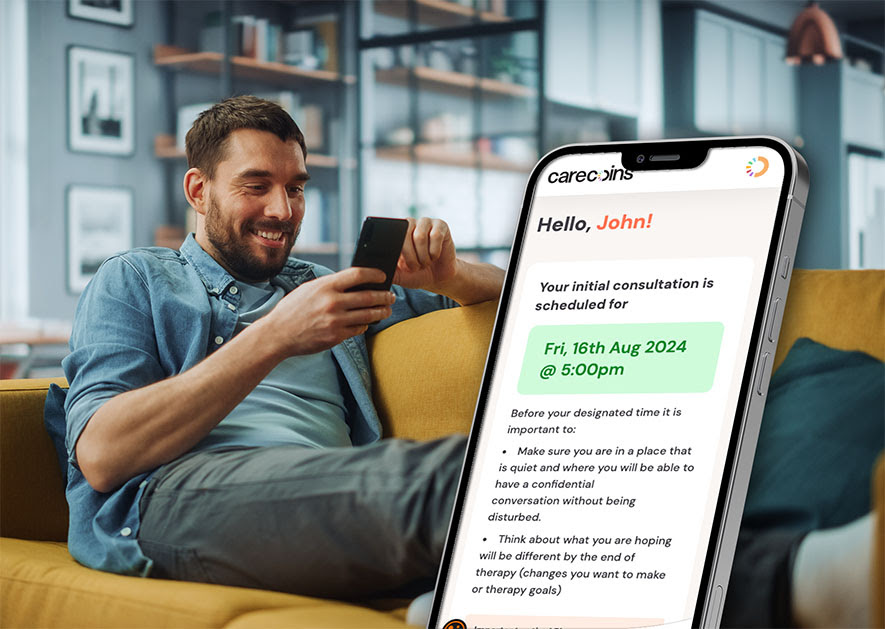
New Online Therapy Platform CareCoins Revolutionises Access to Mental Health Support for Employees This World Mental Health Day 2024.

(image: Carecoins)

This World Mental Health Day 2024, the focus is on mental health at work- it’s time to prioritise mental health in the workplace. As the Mental Health Foundation say, ‘Work can have a huge impact on our mental health. It can be good for our mental health, giving us a sense of purpose, boosting our self-worth, and providing opportunities to connect with others. But it can also be a source of stress and anxiety and contribute to developing or worsening mental health problems. ‘

Introducing Carecoins, a pioneering new mental health platform, which is set to transform the landscape of employee mental wellbeing, offering employers a unique support system for their staff this World Mental Health Day 2024 and beyond.

Designed to connect individuals with qualified mental health therapists in an entirely flexible, hassle-free way, Carecoins ensures efficient and reliable access to professional care, Carecoins brings a unique proposition to the market.

Commenting on this exciting venture, managing director and founder, Tim Ladd, said:

Put simply, Carecoins gives employees access to the support they need to become a happier, healthier version of themselves.

We are all acutely aware of the growing mental health crisis in the nation, and the difficulty in accessing resources through the NHS. This means employers need to step up to provide that all-necessary support to staff.

Mental health is now a significant challenge for a large portion of the UK workforce, with surveys showing at least 63% of employees exhibit signs of burnout, and 91% have experienced high or extreme levels of pressure and stress in the past year.

Finding effective support structures to help combat these trends can be challenging for employers. Providing access to a large pool of BACP accredited therapists, comprehensive mental health and suicide prevention services, specialised support for trauma and bereavement and a number of other resources, Carecoins is a holistic solution for employers

Offering full flexibility, the platform gives access to multiple formats of therapy, ensuring services fit around the user’s life and work schedule and suit their individual needs. As part of its groundbreaking offering, Carecoins supplies every new user an innovative human-to-human consultation to assess their needs and preferences and then allocate a therapist that best matches those requirements.

“The element of personalisation is one that is of vital importance to us – everyone’s mental health journey is different and we wanted to build a platform that could honour that,” added Ladd.

We also understand that confidentiality is a key concern for many employees. Carecoins can be purchased and utilised anonymously, giving employees the freedom and peace of mind they need to take this important step.”

But the platform does not limit organisations to buying therapy services. It enables access to a wide range of mental health and wellbeing services including Mental Health First Aid training provided by Carecoins’ sister company Red Umbrella.

Using Carecoins is much more than just a means to an end. It showcases a visible commitment from employers to protect the mental wellbeing and resilience of their employees, making them happier, more engaged and more productive.

“More than that, it encourages a much-needed positive attitude towards mental health in the workplace, which benefits businesses and employees alike.”

So, this World Mental Health Day, definitely check out this platform!

Me And My Bipolar.. Forever Together Book by Brigid Sheehan.

(image: Brigid Sheehan/Trigger Publishing)

Brigid and team very kindly gifted me a copy of her wonderful book for review. Although I have not yet finished it, I have found it very inspiring and such an important read. Here’s what Brigid and her publisher have to say:

Brigid Sheehan didn’t receive her bipolar diagnosis until early adulthood but, looking back, she realises how the condition may have affected her in so many pivotal moments. By writing this memoir and sharing her highs and lows, she hopes that her journey into the past will help others in the same position – and show them that they, too, can live full lives in spite of their bipolar diagnoses.

Brigid says, “I have chosen to tell the story of my lifelong experience as a bipolar sufferer because I think another person’s lived experience can help access knowledge, although no two situations are the same… Bipolar has not become a friend, but I have simply got to know it better and found the means to cope.”

Living with bipolar is never easy and Brigid documents the many highs and lows and how she lives with it.

You can read more about Brigid’s journey in her interview here: https://worldequal.com/brigid-sheehan/

Brigid’s book is available here on Amazon and in all good book shops.

Children’s Charity ‘Nip in the Bud’ Exposes The Dark Side of Social Media And Mental Illness With Its Film Stolen Childhood.

(image: Unsplash: Lesli Whitecotton)

A new film by the charity Nip in the Bud exposes the hidden dangers of social media and smartphone use among children. A Stolen Childhood provides startling insights from children, headteachers and doctors, shedding light on the everyday harm caused by digital platforms.

Launching today, the film highlights several alarming statistics. A shocking 90% of girls and 50% of boys report receiving explicit pictures or videos they did not want to see. Additionally, 1 in 5 children have experienced online bullying, with 24% of those bullied resorting to self-harm and 22% altering their appearance as a result.

Furthermore, boys as young as 13 have been targeted for sextortion scams, and 80% of teenage girls feel pressured to provide sexual images of themselves.

Emma Robertson, co-founder of Digital Awareness UK, emphasises the hidden nature of these issues: “The thousands of children we talk to in schools tell us that their parents often don’t know how much time they’re spending on their devices overnight, or what they are doing online. This is a new and hidden world which adults can find hard to penetrate.”

MRI scans show screen time reduces brain areas responsible for visual processing, empathy, attention, memory and early reading skills.

In response to these findings, many psychologists, headteachers and GPs are advocating for stricter guidelines:

  • No smartphones until age 14
  • No social media until age 16

These recommendations aim to protect children from various online risks, including increased loneliness, exposure to harmful content, access to strangers, behavioural addiction and cyberbullying.

Watch the film here: https://nipinthebud.org/films-for-parents-carers/smartphones-a-stolen-childhood/

About Nip in the Bud

At Nip in the Bud we produce free, evidence-based films and other resources aimed at parents, carers and teachers of primary-aged who may be struggling with mental illness or unmet neurodiverse needs.

Our mission is to empower families and communities around our children to recognise and respond to early signs of mental illness or challenges in a neurotypical world, with resources made in conjunction with mental health experts, educationalists and families going through similar experiences – facilitating early intervention, so that problems can be “nipped in the bud”, allowing our children to blossom.

Find out more about Nip in the Bud at: www.nipinthebud.org

No Panic Charity Blog for my ‘Arabella and the Worry Cloud’ book on World Suicide Prevention Day by Eleanor

(image: Eleanor Segall and Shelley the Artist)

Yesterday was World Suicide Prevention Day. This awareness day is so important as the rate of suicides in the UK and globally is increasing. About 10 years ago, I devastatingly lost a family member I loved dearly to suicide 💔- mental health treatment, awareness and support is so important. Often, even with these, people are still dying. I know myself the power of medicines, therapy and kindness from loved ones.

One of the reasons I wrote my children’s picture book ‘Arabella and the Worry Cloud’ (illustrated by Shelley the Artist) is because I believe that mental health education and understanding our feelings from a young age is so important. My book focuses on teaching children the power of positive thinking to relieve anxiety. So maybe it can do a bit of good in the world! I definitely didn’t have a book like this as a child.

So, I am so thankful today for the No Panic charity team who have shared this blog about my book today.

📚 Read here:

https://nopanic.org.uk/arabella-and-the-worry-cloud/

Eleanor x

The Imperative for Mental Health First Aid Training in Leadership Teams by Nathan Shearman at Red Umbrella

(image: Unsplash)

We’ve all heard the phrase ‘change starts at the top’. And when it comes to building safe and secure work environments, this notion becomes vitally important. Employees are the ones who bear the brunt of a lack of strong, skilled leadership teams. Leaders, managers and HR teams have a duty to look after staff, and wellbeing is a crucial piece of the puzzle.

With appointing physical first aiders being a legal requirement, more and more businesses are beginning to recognise the need for mental health support to be given the same significance – and Mental Health First Aid training is the solution.

Nathan Shearman, director of training and therapy at Red Umbrella, explores the indispensable role of MHFA training for businesses’ leadership teams.

Why is Mental Health First Aid becoming indispensable to business culture?

Mental Health First Aid is a powerful resource that allows certain individuals to become qualified with a basic understanding of how to provide mental health support – much like physical first aiders do for physical health issues,” explains Nathan.

Overall, it’s an incredibly reliable solution to building happier and safer work environments. Most of us would hesitate to join a business without physical first aiders, so why would a lack of mental health support be any less concerning?

Through MHFA, individuals are trained to identify early signs of mental health issues, and how to act in response. Knowledge and education are instrumental when it comes to mental health, and mental health first aiders can ensure individuals who are struggling are guided towards the right resources.

Appointing MHFAiders can also help prevent issues from escalating, leading to individuals needing to take time off work, or experiencing a full-blown crisis.”

Why is MHFA vital for leadership teams in particular?

Recent research shows that 31% of employees feel uncomfortable discussing mental health with their managers, which means that employees are less likely to come forward and start that discussion..We’re all familiar with the culture of stigma that dictates that if someone comes forward to voice their mental health struggles, they may be out of a job. This is extremely detrimental for a business.

By being MHFA trained, leaders can recognise the signs that someone is not okay, and step in to start those conversations. It enables that vital early intervention that can be the difference between someone recovering to their normal levels of functioning and wellbeing quickly, and someone taking extensive time off, or suffering serious mental health issues.

It also means leadership teams can be better equipped to manage their own mental health. There are significant pressures on leaders and managers, and often the more senior someone becomes in an organisation, the less likely they are to discuss their own wellbeing, or seek support if they need it. The more informed they are, the more equipped they are to respond.”

(image: Unsplash)

How does MHFA equip leadership teams to handle mental health issues within staff?

Firstly, it’s about awareness. Being able to spot when someone isn’t okay, when they’re struggling, or just noticing when there are additional risks or stresses associated with a task, role or project.

For example, having a leader say to their team ‘I know this project has tighter deadlines than usual and that might make some of us feel higher levels of stress, what can we do to support you?’ can go a long way to having employees feel seen, heard and supported.

It also means when they do notice someone isn’t okay, that they know how to respond. They feel empowered to have those difficult conversations, they don’t worry about saying the wrong thing, and they feel confident that they can be the supportive leader they wish to be.

Being MHFA trained doesn’t mean that issues won’t arise within a team, but if leaders know how to respond well, their team will have more confidence in them and the organisation itself.”

(image: Unsplash)

What are the short-term vs long-term benefits of implementing MHFA for leadership teams?

Short-term benefits for leadership are greater awareness and therefore visibility of issues within their teams, which enables them to respond quicker to potential issues. It also allows them to immediately check in with their own wellbeing, and make adjustments to their lives so they are able to be the most effective and healthy version of themselves.

“In the long term, employees will feel more supported, will be more engaged and as a result more productive, creative and loyal to the organisation.

The biggest benefit is if leaders in an organisation are MHFA trained, the culture around mental health shifts massively. It enables more people to come forward when they’re struggling and to access support, and it makes the company more attractive to current and potential employees, driving talent retention and acquisition.”

For more information on MHFA training and how it can benefit your organisation, please get in touch with Red Umbrella: https://red-umbrella.co.uk/contact

About Nathan Shearman

Nathan Shearman is the director of therapy and training at Red Umbrella, an organisation that’s improving the mental wellbeing of the UK workforce by working in partnership with large employers to deliver bespoke mental health training and support solutions. 

Nathan is a qualified psychotherapist and counsellor with a background in private practice and 10+ years of experience in the field.

Mindfulness Techniques for Stress Reduction While Receiving At Home Hospice Care.

(image: Lesley Juarez: Unsplash)

When dealing with the challenges of at home hospice care, finding ways to reduce stress can make a significant difference in both the patient’s and the caregiver’s experience.

Mindfulness is one such technique that has gained attention for its ability to help individuals manage stress and maintain a sense of peace during difficult times.

This approach is especially valuable when navigating the emotional complexities that come with end-of-life care.

Understanding the Role of Mindfulness in Hospice Care

Mindfulness is about being present in the moment.

It’s a practice that encourages awareness of thoughts, feelings, and sensations without judgment.

For those in at home hospice care, mindfulness can be a tool to manage the anxiety and fear that often accompany serious illness.

One caregiver I spoke with shared how mindfulness helped her mother, who was receiving hospice care at home.

They would sit together, practicing deep breathing exercises and focusing on the simple act of being together.

This small routine became a comforting ritual that eased her mother’s anxiety and brought them closer.

Techniques to Practice Mindfulness

Mindfulness doesn’t have to be complicated.

In fact, it’s often the simplest techniques that are the most effective.

Here are a few methods that can be incorporated into a daily routine:

1. Deep Breathing

Deep breathing is one of the most straightforward mindfulness practices.

Encourage the patient to take slow, deep breaths, focusing on the rise and fall of their chest.

This can be done while lying in bed or sitting comfortably in a chair.

A friend of mine used this technique with her father during his hospice care.

She found that starting the day with a few minutes of deep breathing helped him remain calm and focused throughout the day.

2. Guided Imagery

Guided imagery involves visualizing peaceful and calming scenes.

It could be a favorite vacation spot, a serene beach, or a quiet forest.

This technique allows the patient to mentally escape from their physical discomfort.

A family I know used guided imagery with their loved one who was receiving at home hospice care. They would describe their favourite memories of trips they had taken together, creating a mental journey that brought comfort and joy.

3. Body Scan Meditation

Body scan meditation is a technique where attention is focused on different parts of the body, from the toes to the head.

This practice can help in releasing tension and promoting relaxation. One of my neighbours found this practice particularly helpful for her husband. He would close his eyes and slowly focus on each part of his body, which helped him manage pain and find a sense of peace.

(image: Unsplash)

Integrating Mindfulness Into Daily Care

Incorporating mindfulness into at home hospice care doesn’t require drastic changes to a routine.

It’s about finding moments in the day where mindfulness can be naturally integrated.

For instance, during meal times, caregivers can encourage mindful eating, where the patient focuses on the flavours and textures of their food.

This not only helps with digestion but also turns a mundane activity into a mindful practice.

Another example is during personal care routines, like bathing or dressing.

Caregivers can encourage patients to focus on the sensations of warm water or the feel of soft fabric against their skin.

These moments, though brief, can provide a sense of normalcy and comfort.

Real-Life Impact of Mindfulness in Hospice Care

The real impact of mindfulness is seen in the quality of life it brings to both patients and caregivers.

A close friend of mine shared a touching story about her aunt who was in at home hospice care. Her aunt had always been a worrier, but mindfulness helped her find peace in her final days.

Through guided meditation and deep breathing, she learned to let go of her fears and focus on the present moment.

This not only eased her anxiety but also brought a sense of calm to her family.

The caregivers also found that these mindfulness practices helped them cope with the emotional toll of caring for a loved one in hospice.

They were able to be more present, less overwhelmed, and more connected to their aunt during this difficult time.

Practical Tips for Caregivers

If you’re a caregiver looking to incorporate mindfulness into at home hospice care, here are a few practical tips:

  • Start small: Begin with just a few minutes of mindfulness each day.
  • Be patient: Mindfulness is a practice that takes time to develop.
  • Create a routine: Incorporate mindfulness into daily activities to make it a natural part of the day.
  • Focus on the positive: Encourage the patient to focus on what they are grateful for in the present moment.

The Healing Power of Presence

Mindfulness in at home hospice care is not about eliminating pain or discomfort; it’s about finding moments of peace amidst the challenges.

By focusing on the present moment, patients can experience a sense of calm that transcends their physical condition.

For caregivers, mindfulness offers a way to connect more deeply with their loved ones, creating meaningful moments that can be cherished long after they are gone.

One patient I knew, who was in the final stages of hospice care, found immense comfort in the simple act of sitting quietly with her daughter.

They would hold hands, breathe together, and share stories from the past.

These moments became a source of strength for both of them, demonstrating the profound impact of mindfulness on the human experience.

Lastly…

Incorporating mindfulness into at home hospice care can provide both patients and caregivers with tools to manage stress, find peace, and create meaningful connections.Whether it’s through deep breathing, guided imagery, or body scan meditation, these practices offer a way to navigate the emotional complexities of end-of-life care.

For those providing care, mindfulness can be a source of comfort and strength, helping them remain present and connected during this difficult journey.

And for patients, mindfulness can offer a sense of peace, allowing them to focus on the moments that matter most.

This article was written by a freelance writer and contains do follow link.

How to Get the Most Out of Therapy by Elizabeth Howard

(image: Kateryna Hliznitsova: Unsplash)

As the world gets more concerned and more appreciative of mental health and its impact on life, therapy has become more of a viable option for many. Whether you’re trying to cope with trauma or just work on some aspects of your personality and lifestyle, therapy is a great tool, but before you’re ready to jump in, you’ll need to know how to get the most out of your therapy. 

Be open 

The first and most important thing to keep in mind about therapy is that before you even sit in the office, you should have an open and comfortable attitude about the entire process. Much therapy gets stagnant as clients wait for breakthroughs just because they’re not ready for uncomfortable conversations or for sharing intimate details about your life. Withholding crucial information like that of your family members or crucial events in your life will only slow down the progress you’re able to get out of therapy. Instead, trusting the professional you’ve partnered with and really internalising their advice will allow you to get acclimated to the process much faster, and you’ll get more out of it as a result.  

Get ready for uncomfortable conversations  

As previously mentioned, another thing you’ll need to ensure is that you’re mentally prepared for the uncomfortable conversations you may have in the therapist’s office. This is because a lot of the trauma people carry throughout their lives is tied to a few incidents earlier in life, and talking about those incidents is the first step to truly healing. That means you’ll have to eventually vocalize your deepest fears and insecurities and the issues you’ve been going through, both to allow your therapist to better understand your psyche and to help yourself make important breakthroughs throughout your journey. 

Find the right therapist 

Another part of getting the most out of your therapy is finding the right therapist to guide you on your journey because the person you’re working with will eventually be entrusted with the deepest parts of your personality and subconscious. This means finding someone you’re fully comfortable with and one that is easy to visit; in your own country. Chicago residents (USA), for example, should look for an experienced therapist in Chicago. Finding a professional that you’re comfortable with and someone who’s nearby will only make it easier to regularly make your appointments and make time for therapy, pushing yourself towards more progress. 

Be consistent 

Consistency is the most important part of any major life goal you’re trying to achieve, and that includes therapy because of how unique the experience of therapy is for most people. If you’re not making it to your therapist’s office week after week for your regularly scheduled appointments, you won’t be able to make those important breakthroughs because each appointment will mostly be concerned with you and your therapist getting used to each other again. If you feel that your therapy isn’t working in its earliest stages, you shouldn’t let that discourage you since different people make progress over different periods.  

Do the homework 

Most therapists out there know the importance of daily self-improvement habits for their clients, and that includes things like journalling or keeping a dream diary. This can be tiring at first, but this homework is crucial to the entire process since your therapist will get a better idea of your underlying fears and the thoughts that take control of your unconscious mind most often. This will help your own progress, so you get the most out of therapy you possibly can. You can communicate all of your fears if you’re writing them down regularly for therapy.  

Like most aspects of self-improvement, therapy has the capacity to change your life and can even cause you to have a major shift in perspective about key moments in your life. However, before you’re ready to embark on the phase of your life that will inevitably have a giant impact on you, it’s important to prepare yourself for what’s next so that you can get the most out of the therapy you’re participating in. 

Elizabeth Howard is a freelance writer. (this article contains sponsored links)

How Counselling Can Help You Manage Your Anxiety by Buick Hamblin, Therapist.

(image: Unsplash)

Anxiety affects millions of people worldwide, impacting their daily lives and overall well-being. Counselling offers a supportive and effective way to manage your anxiety, helping you regain control and improve your mental health.

Understanding Anxiety 

Anxiety is a common mental health condition that manifests in various forms, including social anxiety disorder, generalised anxiety disorder (GAD), and panic disorder. Symptoms often include excessive worry, panic attacks, and constantly feeling anxious. These symptoms can interfere with daily activities, making it crucial to seek appropriate help.

How Counselling Helps with Anxiety 

Counselling for Anxiety

Counselling provides a safe space to explore and understand your anxiety. A therapeutic counsellor works with you to identify the root causes of your anxiety and develop strategies to manage it effectively.

Therapy for Anxiety 

Different types of therapy can be used in counselling to address anxiety. Cognitive Behavioural Therapy (CBT) helps reframe negative thoughts, while exposure therapy gradually reduces fear responses. Both are proven methods in managing anxiety and improving mental health.

Types of Counselling for Anxiety 

Cognitive Behavioural Therapy (CBT) 

CBT is a widely used approach that helps you understand and change negative thought patterns contributing to anxiety. It focuses on developing practical skills to manage anxiety symptoms and anxious thoughts. 

For example, if you often experience negative thoughts like “I can’t handle this situation,” CBT can help you reframe this thought to something more constructive, like “I can take small steps to manage this situation.”

Exposure Therapy

Exposure therapy is particularly effective for phobias and social anxiety. It involves gradual exposure to anxiety-provoking situations, helping you build tolerance and reduce avoidance behaviours. For instance, if you have a fear of public speaking, exposure therapy might start with speaking in front of a small group and gradually working up to larger audiences.

Talking Therapies

Alongside private talking therapy practices, NHS talking therapies service provides a space to express your feelings and gain insights into your anxiety. Whether through face-to-face sessions, group therapy, or online counselling options, talking therapies offer valuable support. These sessions can help you feel heard and understood, which is a crucial step in managing anxiety.

How Therapy Sessions Work 

Therapy sessions are tailored to your specific needs. During these sessions, you and your counsellor will create a treatment plan focused on your goals. Regular sessions build a therapeutic relationship, essential for effective treatment. 

The consistency of therapy sessions helps reinforce strategies to manage anxiety. For example, your counsellor might help you track your anxiety levels and identify what can trigger anxiety, which can be discussed and addressed in each session.

Benefits of Counselling for Different Types of Anxiety 

Generalised Anxiety Disorder (GAD)

Counselling helps manage chronic worry and stress, providing tools to cope with daily life. Techniques such as mindfulness and relaxation exercises can be incorporated into your daily routine to reduce overall anxiety levels.

Panic Disorder

Techniques like CBT are used to cope with panic attacks, reducing their frequency and intensity. Learning breathing exercises and grounding techniques can help you regain control during a panic attack, and if CBT doesn’t work for you there are other options of therapy available.

Obsessive-Compulsive Disorder (OCD)

Counselling aids in managing obsessive thoughts and compulsions, promoting healthier coping mechanisms. For example, a counsellor might use exposure and response prevention (ERP) therapy, a type of CBT specifically designed for OCD, to help you resist the urge to perform compulsive behaviours. This approach is effective in treating anxiety associated with OCD.

Post-Traumatic Stress Disorder (PTSD)

Counselling addresses trauma, helping reduce PTSD symptoms through therapeutic approaches like CBT and Eye Movement Desensitization and Reprocessing (EMDR). These therapies can help you process traumatic memories and reduce their impact on your daily life.

Social Anxiety Disorder

Strategies in counselling help overcome social fears, improving social interactions and confidence. Role-playing and social skills training can be part of your therapy to help you feel more comfortable in social situations. By learning to manage your anxiety, you can gradually overcome social anxiety disorder and improve your quality of life.

Addressing Specific Concerns 

Health Anxiety

Counselling helps those who constantly worry about their health by addressing underlying fears and developing coping strategies. Techniques like CBT can help you challenge and reframe catastrophic thinking related to health concerns.

Stress and Anxiety

Techniques to manage stress are integrated with anxiety treatment, offering comprehensive support. Learning time management and relaxation techniques can help reduce the overall impact of stress on your anxiety levels.

Seeking Additional Support

While counselling is a crucial component in managing anxiety, there are other resources available to complement your treatment. Organisations like Anxiety UK offer additional support, information, and resources for individuals struggling with anxiety disorders. 

These organisations can provide helplines, support groups, and educational materials to further assist you in your journey towards better mental health.

Accessing Mental Health Services If you’re struggling with Anxiety

It’s important to know that help is available (although there can be waiting lists for therapy). The mental health service in your area can provide access to counselling and other forms of support. Your general practitioner (GP) can refer you to appropriate services, or you may be able to self-refer to local mental health teams. 

Remember, seeking help is a sign of strength, not weakness, and taking this step can be the beginning of your journey to managing your anxiety effectively.

Embracing a Healthier Future 

Counselling offers effective strategies to manage your anxiety, tailored to your specific needs. By working with a counsellor, you can gain control over your anxiety and improve your mental health. 

Whether it’s through CBT, exposure therapy, or talking therapies, counselling provides the tools and support needed to navigate your anxiety and lead a more fulfilling life. Understanding the types of anxiety disorders and how they can be managed through therapy is crucial in overcoming anxiety.

If you’re struggling with anxiety, consider exploring counselling services. Taking the first step towards seeking help can make a significant difference in managing your anxiety and enhancing your quality of life.

Buick Hamblin is an experienced counsellor and psychotherapist with over 20 years in the field. Specialising in person-centred therapy and cognitive behavioural therapy (CBT), she offers compassionate, non-judgmental support to clients dealing with a range of issues, including depression and relationship problems. Accredited by the BACP since 2007, Buick provides flexible counselling options both in Grantham, UK and online.

Building A Stronger Family Together: Benefits Of Family Therapy by Miranda Spears

(image: Pexels)

In an environment where life’s hectic pace can strain family relationships, family therapy seems like a ray of hope for preserving relationships and promoting comprehension. Although the phrase “family therapy” can conjure up ideas of resolving disputes, the advantages of this approach go much beyond that, including enhanced relationships, better communication, and emotional healing.

Enhancing Communication Skills for Stronger Connections

Healthy relationships are based on effective communication, and family counseling services are essential for improving this ability. Communication failures are a common cause of miscommunication, conflict, and emotional distancing in families. Families can acquire and hone skills that enhance their capacity for eloquent and sympathetic thinking and emotional expression via counselling. Therapists help family members express their needs and actively listen to one another via various techniques, including role-playing and guided conversations. A family’s ability to communicate better can result in more meaningful and fruitful relationships. For instance, activities aimed at recognising and resolving communication patterns that fuel conflict are often included in counselling sessions. Family members can lessen the number of disagreements and misunderstandings by learning to have talks with more empathy and understanding.

Addressing and Resolving Conflict Effectively

Family life will always include conflict, but if unsolved concerns are not properly handled, they can become serious difficulties. Family therapy offers a neutral, safe environment for discussing and working through issues. Family members can share their opinions and feelings in talks led by therapists without worrying about being judged. Families are better able to resolve disputes in a way that fosters understanding rather than hate in this controlled setting. Families that get treatment concentrate on improving their ability to solve problems and resolve conflicts. Counselors often teach family members conflict-resolution strategies like compromise and negotiation, which help them identify points of agreement and strive toward amicable resolutions.

Strengthening Emotional Bonds and Family Cohesion

Family therapy has a crucial role in strengthening emotional ties and promoting unity within the family. Emotional distance often results from unsolved problems, unfulfilled desires, or traumatic experiences in the past. Family members can examine and resolve these underlying difficulties in therapy, which promotes emotional healing and fortifies bonds between them. Families might better comprehend one another’s experiences and viewpoints by using facilitated conversations and therapeutic activities. Activities intended to improve emotional connection, including telling personal tales or expressing appreciation, are often included in the therapy process. Through deeper connections fostered by these activities, family members can develop empathy and trust.

Improving Family Roles and Dynamics

Redefining and addressing family roles and dynamics is another aspect of family therapy that can have a big influence on relationships and family functioning. Rigid or dysfunctional role structures are a major source of discontent and conflict in many households. For instance, a family member can take on an emotionally taxing caregiver role, or there can be tasks that are not evenly distributed, leading to conflict. The chance to assess and modify these responsibilities to better suit the needs and abilities of each family member is offered by therapy. In order to recognise and treat problematic patterns in roles and dynamics, therapists collaborate with families. Families can investigate and reinterpret roles in a manner that fosters harmony and respect for one another via therapy. As an example, family members might work together to create new rules about who gets what or help each other adapt to new positions within the family.

Fostering Resilience and Coping Strategies

The development of resilience and useful coping mechanisms is yet another important advantage of family therapy. Families often deal with a variety of pressures that might harm their relationships and mental health, such as health problems, financial hardships, or life changes. Families that get therapy are given the skills and techniques to deal with these pressures and keep a good attitude. Therapists assist families in creating coping strategies that improve their capacity to deal with difficulties and adjust to changes. Teaching stress management strategies, developing problem-solving skills, and promoting healthy lifestyle choices are a few examples of therapeutic approaches. Families develop resilience, support one another through trying times, and manage to stay stable in the face of outside challenges.

Finally…

The advantages of family therapy for improving family dynamics and relationships are immeasurable. A family that receives family therapy can become more cohesive, resilient, and supportive—a place where people feel empowered to face life’s obstacles as a unit.

Miranda Spears is a freelance writer.

Why Unplugging More Often Could Be The Best Thing For Your Mental Health.

(image: Brooke Cagle, Unsplash)

If you think about it, it’s unusual how overly connected we are to everyone and the world. A decade ago, if you sent a text message to someone and then a “Hello??” minutes afterward, you’d look desperate or rude, but nowadays, it’s a whole 180 degrees, and instead, if you’re not the one responding back in minutes, you’re the rude one! From the moment we wake up to the time we fall asleep, our lives are dominated by screens.

Whether it’s checking emails, scrolling through social media, or binge-watching the latest series, our digital devices have become constant companions. Now, everyone knows how dangerous it can be to use phones and screens too much. There are limits for kids, but not too much pressure to limit children, right?

Generally speaking, this interconnectedness can be way too negative. There’s doom scrolling, contact misinformation online, full-on rude people, trolls, and questionable hostility overall. It’s not good. The Internet can be an escape from reality, but nowadays, real life feels more like an escape from the internet.

So, why not unplug more often? Here’s why you should!

You Have to Keep in Mind There’s a Mirage to Social Media

It’s no secret that platforms like Instagram, Facebook, TikTok, and Twitter are filled with picture-perfect snapshots and videos of people’s lives. Some of these people seem to have perfect lives, like the perfect job, the perfect family, the perfect house, the perfect friends, and everything in their lives is absolutely perfect.

Their lives are just perfect, and you can’t help but feel sad and jealous to the point you’re probably thinking, “Do I have depression” right? But here’s the kicker: what you see is often just a highlight reel. Sure, what you see appears perfect, but chances are, it’s the furthest thing from perfect.

It’s easy to fall into the trap of comparing ourselves to these seemingly flawless lives. This comparison can seriously dent our self-esteem. It makes you feel like there’s inadequacy, right? Well, you’re constantly seeing everyone’s best moments; it’s hard not to feel like you’re falling short in your own life.

Doom Scrolling is Dangerous

Social media isn’t the only reason to unplug. Are you scrolling and seeing an endless stream of bad news? Maybe it’s political turmoil, natural disaster, or something else that’s overwhelmingly bleak. This constant negativity is going to lead to stress and anxiety in some people so make sure you look after yourself and monitor how much you watch.

It’s Best to Reconnect with the Real World

The real world is an escape from the internet, and honestly, it can be a fairly good escape. When you unplug, you have the opportunity to engage with the world around you. It usually gives you a better chance to spend time with loved ones, go for a walk in nature, or pick up a hobby that doesn’t involve a screen. Overall, these activities can help ground you and remind you of what truly matters.

Unplugging Improves Your Sleep

Screen time, especially before bed, can interfere with your sleep. The blue light emitted by our devices can mess with our sleep patterns, making it harder to fall asleep and stay asleep. Unplugging in the evening can lead to better, more restful sleep.

It’s All About Boosting Your Mood

Being connected all the time is stress-inducing, and engaging in offline activities can boost your mood and reduce stress. Reach out to your Dr or therapist if you need help boosting your mood.

This article was written by a freelance writer,