

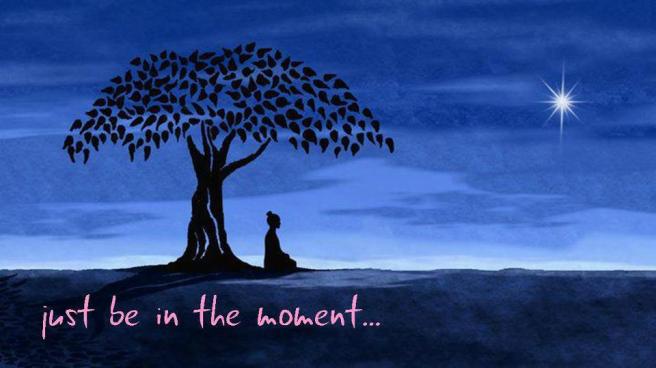
This article is about ways to build Mindfulness for a happy and healthier life, by Jay Pigantiello.
At the age of 25, I began to feel the inevitable tides of change turn as they do, dimming the spark of youth I had grown quite accustomed to and cloaked myself with. I had hardly thought of a future to this point, but the reality finally hit me; the truth of which became a monster of sorts, leading me into a dark period of depression that followed. It wasn’t that I lacked confidence as much as it was simply that I hadn’t the slightest clue of what I wished to do for the rest of my life. The “rest of my life,” seemed daunting. I’m not sure to this day that there’s anything I would like to do for the “rest of my life.” But, through the suggestion of a friend turned mentor, I began to accept these feelings rather than trying to flee from them.
Meditation is an incredible tool. I was under the delusion that in order to be more mindful about things, I had to sit like a guru for two hours a day and eat nothing but kale and lentils. This couldn’t have been further from the truth, as it was suggested to start slow in the beginning. Each morning, for five minutes I would sit up in my bed and allow myself to be present. The coldness of the other pillow, the silky sensation of my sheets, and the warmth of the sunshine creeping over the hills began to be my anchors. Instead of fretting over what I needed to do that day, I allowed myself to be present upon waking. Most people are in such a rush that in the haze of their haste they actually make more mistakes and are less productive than if they were to take a few minutes to let their minds stay still.
Here are 9 proven and effective ways to help yourself become more mindful, and hopefully lead to a meditation practice:
- Allow yourself to feel the feelings. It’s amazing how easily your mind can switch from negative thinking to more positive thinking when you stop fighting what you’re feeling. Humans are supposed to feel other emotions than happy or contentment. Feeling sad, feeling anxious, feeling depressed are actually positive experiences because they allow an insight into what needs to be changed.
- Listen to your negative thoughts, and try to translate them. Many times when I’m depressed, I’ll start to see through a lens of darkness over everything in my reality, when the truth is that I’m unhappy because she didn’t text me back, or he didn’t tell me that I did a good job at work today. If I can translate these feelings of sadness into thoughts, I can allow them to pass or I can begin to make the proper changes that are necessary for me to grow.
- Practice makes perfect. For me, there are times where I’ll pick up my guitar after having not played for a while and immediately dismiss myself as awful if I’m not as sharp as I once was. I forget how many hours went into practicing in order for me to reach a point where I was confident in my abilities. When I carry this mindset into other areas of my life, it allows me to accept where I’m at in my skillset and encourages me to practice a little harder. It also allows me to see my strengths and my weaknesses.
- Strengths and weaknesses. This might not help me to become more mindful, but it’s made me a more confident person. In recovery from addiction, I’ve always been careful not to mention it to employers because I’ve thought of it as a weakness. The same could be said for my depression or anything else I suffer from. It wasn’t until I embraced the struggles I had gone through as a strength that I truly started to flourish in all areas of my life. In fact, most people didn’t see it as a weakness, and I’ve gotten several jobs simply because I’m reliable and trustworthy.
- Pick one positive thing you experienced in your day and take time to appreciate it. Whether it’s the fact that your boss bought you coffee, or someone smiled at you, find one moment throughout the day and choose to be present for it. Gratitude is a powerful anti-depressant, and also helps to build mindfulness.
- Pick one negative or uncomfortable experience in your day and take time to appreciate it. There’s a saying that goes something like, “you’ll never know a good day until you’ve had a bad one.” Negative experiences don’t need to define your entire day, but allowing yourself to feel it and be present without resistance can help you to see how many positive experiences there actually are. Discomfort is a catalyst for confidence.
- Choose a mantra. Mantras can be powerful anchors, helping us to meditate while not traditionally meditating. Sometimes when I’m waiting in line I like to recite, “go with the flow,” which is from a song I like, as well as an appropriate mantra for me to live by. Often times I can be controlling, and so by reciting these words I remind myself that I’m not the most important person in the room, and everyone else had to wait in the same line. Your mantra can be whatever you choose, so find one that works for you.
- Sit with your eyes closed. Sitting with your eyes closed in a more traditional form can truly help you to be more present throughout the rest of your day. Meditation is an incredibly powerful tool to help us to achieve mindfulness, as well as spiritual, mental, emotional, and even physical growth. When we allow ourselves to sit without judgement of our thoughts, letting them come and go freely without narrating the story of each, we’re allowing our minds to become tranquil; which in today’s day and age of computers and billboard ads, is a must.
- There’s only one Buddha. I like this saying, because I’m sometimes harsh on myself if I can’t sit for as long as I hoped for. Sitting for five minutes, and gradually building yourself up to sit for longer can help you to form a regular practice. There’s only one Buddha, and so there’s no right or wrong way to meditate, nor is there a right or wrong amount of time to meditate for. Be gentle on yourself, and acknowledge each day when you meditate that you’re taking time to do something positive and helpful for yourself.
I’ve suffered from depression and anxiety for most of my life, as well as recovering from various addictions. Meditation and mindfulness helped me to change my perspective, which in turn actually helped me to become a more hopeful and positive person. These 9 steps are proven to help you not only become more mindful, but to feel better about yourself and the world around you. We’re all in this life together, and I choose to be a more positive person for the world around me.
Jay is a writer and works with Crown View Co-Occurring Institute, a rehab for depression and other co-occurring disorders. He enjoys walking his two dogs, playing music, and being a figure in the recovery community in his freetime.

 beurownlight.com