Maaglei Nefesh Mental Health Fundraising Campaign for Jewish New Year

I am honoured to be an Ambassador for Maaglei Nefesh מעגלי נפש with Rav Yoni Rosensweig, an organisation that is close to my heart. In recent years, it has provided support to those who are struggling with mental illness, yet still wish to find a way to live their life in accordance with Halacha (Jewish Law) to the best of their abilities. Maaglei Nefesh saves lives, helping people with bipolar disorder, depression, anxiety, OCD, PTSD, eating disorders, schizophrenia, psychosis and many kinds of mental illness. Maaglei Nefesh does groundbreaking work globally and has been at the forefront while helping to break stigmas and silence that can surround those suffering. The organisation contributes to literally saving lives, as well as vastly improving the quality of life for many.

This Rosh Hashana, please partner with me if you can to help ensure that Maaglei Nefesh can continue to provide such important assistance to all who request it. During this campaign any sum you donate will be matched so that your impact and the positive effect your donation has will be doubled.

You can donate whatever you can afford to my page here: https://causematch.com/mnefesh/eleanormandelstam

Thank you so much for supporting this important cause. May we all be blessed with a sweet, happy, peaceful and secure new year.

Love, Eleanor

Book Review: Emily Katy – ‘Girl Unmasked: How Uncovering Autism Saved My Life’.

(image: Emily Katy)

Trigger warning: discussion of self harm/suicide attempts.

I was so excited when I saw my online friend Emily Katy’s brand new book coming out! Emily was one of the first reviewers of my book Bring Me to Light and had taken photos of her reading it with her dog and some horses :). I followed her on social media and saw that she was writing her own memoir on what it was like to live as a teenager with undiagnosed autism and mental ill health. This review is not gifted or sponsored- I just wanted to read Emily’s story.

I want to congratulate Emily and her team as this week it has become a Sunday Times Bestseller which is an incredible feat for any author, especially for their first book!

Emily says,

“Far too many autistic people – women and girls especially – fly under the radar, unseen and unsupported. Many of us reach crisis point and only then (if we are lucky) do we find out that we are autistic. I hope this book can add to the collection of autistic voices demanding change in how autism is understood and recognised”.

I bought this book because I wanted to understand what it was like to live as someone with autism undiagnosed and how that affected Emily’s overall mental health, leading her to be sectioned on a psychiatric unit as her health deteriorated. Although autism is not a mental illness and many see the positives living with a neurodiverse brain, it does impact on mental health, especially when it is undiagnosed by a system not set up to understand it in women.

To the outside world, Emily , who is from the UK like me, looks like a typical girl, with a normal family, living an ordinary life. But inside, Emily does not feel typical, and the older she gets, the more she realises that she is different. As she finally discovers when she is 16, Emily is autistic.

Girl Unmasked is the extraordinary story of how she got there – and how she very nearly didn’t. Still only 21, Emily, writes with startling candour about the years leading up to her diagnosis. How books and imagination became her refuge as she sought to escape the increasing anxiety and unbearable stresses of school life; how her OCD almost destroyed her; how a system which did not understand autism let her down; and how she came so close to the edge that she and her family thought she would never survive. We see how family and friends became her lifeline and how, post-diagnosis, Emily came to understand her authentic self and begin to turn her life around, eventually becoming a mental health nurse with a desire to help others where she herself had once been failed.

(image: Emily Katy)

Emily bravely navigates how being undiagnosed with her autism led to her struggling with OCD, anxiety, self harm and depression -which led to suicide attempts. Thankfully, once Emily was able to get a proper diagnosis of all her symptoms that felt right for her (autism and OCD), she found herself able to recover from her depression. In the book, Emily also discusses ways to help you if you are self harming or feeling suicidal. She talks about how being on a psychiatric unit was extremely distressing and as someone with autism, she found that things like loud noises, unpredictability, lack of normal routine or a schedule and new people coming, were just some of the things she struggled with. While at the unit, Emily was also misdiagnosed as having a personality disorder, as well as an anxiety disorder.

It is clear from reading this important book, that Emily feels one of the reasons she was misdiagnosed was because she was a girl. Autistic females tend to fly under the radar for longer due to assessment methods being developed for males, masking to try to fit in with others socially and their special interests being more socially accepted. As someone with bipolar, I have often been called ’emotional’ or ‘drama queen’ and Emily mentions these labels were given to her and other women with autism too. I found reading the lists of autism myths and facts really helpful to further my understanding.

What stands out to me in Girl Unmasked is Emily Katy’s courage. Not just in telling her own story of the perils of living with undiagnosed autism and how it impacted her mental health, but the fact that after surviving multiple self harm and suicide attempts and being sectioned on a psychiatric unit, she has now become a mental health nurse at just 21 (and now bestselling author) to help others. Emily has managed to move forward with her life and achieve huge things, despite living with the trauma she has faced and she has amazing friends and family too, who are there to support her.

I loved this book and read it in 2 days. Girl Unmasked is not an easy read – it is a meaningful, powerful real story of someone’s life. Please do read with care as it discusses mental health themes alongside autism. On the front of Emily’s book is a rainbow and to me that symbolises the hope with which she lives her life and is now bringing to others.

Girl Unmasked: How Uncovering My Autism Saved My Life is out now, published with Monoray.

Emily Katy, 21, lived as an undiagnosed autistic girl for nearly seventeen years. After completing her degree in 2022, she qualified as a mental health nurse. She has a large, highly engaged following on social media: @ItsEmilyKaty X (formerly Twitter) 68.4k followers, 21k Instagram followers and a blog www.authenticallyemily.uk, where she talks about autism and mental health. Emily is a Trustee of the charity ‘The Autistic Girls Network’


What Causes OCD To Get Worse? by Sandra Hernandez

(image: free image)

Obsessive-Compulsive Disorder (OCD) is a mental health condition characterised by intrusive thoughts and repetitive behaviours that can significantly impact a person’s daily life. While the exact cause of OCD is still unknown, it’s important to understand the factors that can worsen the symptoms. By exploring these triggers, we can gain insight into how to effectively manage and improve the lives of individuals with OCD.

1. Environmental Triggers

Stress and Anxiety

Stress and anxiety play a significant role in exacerbating OCD symptoms. The heightened levels of stress can activate the brain’s fear response, triggering obsessions and compulsions. The constant worry and apprehension experienced by individuals with OCD can further fuel their anxiety, leading to a vicious cycle of escalating symptoms.

Life Transitions and Major Events

Life changes, such as moving to a new place, starting a new job or school, or going through significant life events like marriage, childbirth, or divorce, can trigger or worsen OCD symptoms. These transitions disrupt familiar routines and introduce new stressors, increasing the likelihood of obsessive thoughts and compulsive behaviors.

Lack of Social Support

Social support plays a crucial role in managing OCD. The absence of a strong support system can contribute to feelings of isolation and loneliness, which can worsen OCD symptoms. Having understanding and empathetic individuals who can provide encouragement and help during challenging times is essential for individuals with OCD.

2. Maladaptive Coping Mechanisms

Avoidance and Safety-Seeking Behaviors

Individuals with OCD often develop avoidance strategies to steer clear of triggers that provoke anxiety. However, this avoidance only provides temporary relief and reinforces the anxiety response in the long run. Similarly, safety-seeking behaviors, such as repetitive checking or seeking reassurance, can intensify OCD symptoms by reinforcing the belief that the obsessions are truly threatening.

Rituals and Compulsions

The compulsive behaviors characteristic of OCD provide temporary relief from obsessive thoughts. However, relying on rituals and compulsions as coping mechanisms can inadvertently strengthen the association between the obsessions and the need to perform these behaviors. This perpetuates the cycle of obsessions, anxiety, and compulsions, leading to a worsening of OCD symptoms over time.

3. Biological Factors

Genetic Predisposition

Research suggests that genetics plays a role in the development of OCD. Individuals with a family history of OCD are more likely to develop the disorder themselves. Genetic factors can influence the severity of symptoms, making individuals more susceptible to experiencing a worsening of OCD symptoms.

Neurochemical Imbalances

Neurotransmitters, such as serotonin, play a crucial role in regulating mood and anxiety. In individuals with OCD, there may be imbalances or dysregulation in the neurotransmitter systems, particularly serotonin. These imbalances can contribute to the intensity and persistence of obsessions and compulsions, leading to a worsening of symptoms.

4. Lack of Treatment or Inadequate Treatment

Delayed or Ineffective Diagnosis

OCD can often be misdiagnosed or undiagnosed for an extended period, delaying the initiation of appropriate treatment. Without a proper diagnosis, individuals with OCD may struggle to understand their symptoms and may not receive the necessary support and interventions, which can contribute to the worsening of their condition.

Inadequate Therapy or Medication

Effective treatment for OCD often involves a combination of evidence-based therapy approaches, such as Cognitive-Behavioral Therapy (CBT) and medication, particularly selective serotonin reuptake inhibitors (SSRIs). However, finding the right therapy and medication that works for an individual can be challenging. Inadequate therapy or medication can impede symptom management and lead to a deterioration of OCD symptoms.

5. Lifestyle Factors

Lack of Sleep and Fatigue

Sleep deprivation and fatigue can significantly impact mental health, including OCD symptoms. The lack of quality sleep disrupts cognitive functioning and emotional regulation, making it more difficult for individuals with OCD to manage their symptoms effectively. Fatigue can intensify obsessive thoughts and decrease resilience, contributing to a worsening of OCD symptoms.

Substance Abuse and OCD

Substance abuse, such as alcohol or illicit drugs, can worsen OCD symptoms. Substance use can disrupt neurochemical balance, exacerbating anxiety and compulsive behaviors. Additionally, individuals may turn to substance abuse as a maladaptive coping mechanism, further worsening their overall mental health and OCD symptoms.

Understanding the factors that contribute to the worsening of OCD symptoms is crucial for effective management and improvement of individuals’ lives with this disorder.With the right interventions and support, individuals with OCD can lead fulfilling lives despite their challenges.

This article was written by freelance writer Sandra Hernandez.

Tips On Coping With Borderline Personality Disorder And Obsessive Compulsive Disorder by Dr Joann Mundin.

(image: Unsplash)

Borderline personality disorder (BPD) affects people’s thoughts about themselves and others. People with borderline personality disorder experience extreme emotions. A person with this disorder is likely to have intense relationships with many ups and downs. Other signs of borderline personality disorder include impulsivity and changes in one’s self-image. Anger management issues and mood swings can both be symptoms of BPD. They could also fear being left behind or abandoned.

Sometimes, people with borderline personality disorder are also affected by obsessive-compulsive disorder or OCD. The person and their loved ones may find it challenging to cope with a borderline personality disorder. But borderline personality disorder is something that can be learned to manage. You can learn to manage borderline personality disorder with the proper professional care, self-help techniques, and coping skills and have a happy and successful life.

Coping mechanisms for borderline personality disorder

A borderline personality disorder is a condition that affects each person differently. Find out what works for you by taking your time. Everyone’s situation may be different, but by taking the actions listed below, you can cope with borderline personality disorder :

1. Engage in physical activities

Exercise may help you stabilize and regain emotional control if you have problems coping with BPD. Exercises like yoga, boxing, running, and cycling may be beneficial.

2. Take some time off for yourself

Although social isolation has adverse effects, occasionally removing yourself from other people might be a healthy coping mechanism for BPD. Spend some time alone, and rejuvenate yourself without the influence of others. Reflecting alone might assist you in readjusting if you are experiencing intense anger or feeling emotionally out of control.

3. Write emails or letters to people but don’t send them

This is a great way to express feelings and decompress. The effects are similar to keeping a journal, making it possible to express yourself without having your words negatively affect your relationships. By delaying sending the message, you can go back and read what you said after the initial emotions have subsided.

4. Take breaks

Feelings of rage and anger might be reduced temporarily by leaving a stressful setting and looking after yourself.

5. Keep yourself occupied as much as you can

Keep yourself occupied to divert your attention from your current feelings. Holding a fidget toy such as a slinky, helps keep your hands engaged and allows your mind to concentrate on the recent activity.

(image: Unsplash)

Is obsessive-compulsive disorder related to borderline personality disorder?

BPD is thought to be fundamentally linked to obsessive-compulsive symptoms. These symptoms are intense, and BPD patients who experience them often exhibit poor insight, resistance, and sometimes obsessive control in interpersonal interactions.

A 5% prevalence of borderline personality disorder (also known as BPD) has been seen in OCD patients. Additionally, these patients with BPD and OCD had greater rates of anxiety, mood, and eating problems. These examples of co-occurring BPD and OCD have been linked to motor impulsivity, mental compulsions, and compulsions involving interpersonal domains.

How is OCD treated?

Treatment for obsessive-compulsive disorder may not provide a cure, but it can help keep symptoms under control so they don’t interfere with your everyday life. Some patients may require long-term, continuous, or more extensive treatment depending on how severe their OCD is. Psychotherapy and medicines are the two essential OCD treatments, and treatment is frequently most successful when these are used in conjunction.

How can you cope with OCD?

Below you’ll find mechanisms that will help you cope with obsessive-compulsive disorder:

1. Acknowledge your OCD’s existence

Like the monster you used to think lived beneath your bed as a child, OCD can seem like an uncontrollable power waiting to strike. Give your OCD a name and a shape rather than letting it be a faceless villain. It might benefit kids and adults to view OCD as a distinct condition. Remember, OCD is not your fault, and there is no need to feel ashamed.

2. Maintain an OCD journal

An OCD journal serves the same purpose as the food journals that some people use to record their daily dietary intake when on a diet. You can keep note of your triggers in an OCD journal, discover new ones, and evaluate the general state of your OCD. Keep an OCD journal with you at all times, and write down what happens when you perform a compulsion. After reading through your diary entries at the end of the day, ask yourself the following questions.

● Why did these circumstances make me OCD-prone?

● What would have occurred if my resolutions hadn’t been carried out?

● What proof is there that what I feared would occur?

3. Use Exposure and Response Prevention (ERP) techniques

ERP is a popular method for addressing and maybe easing OCD. When adopting ERP, a person exposes themselves to a circumstance that causes an obsession and then refrains from acting on their compulsion. Try creating an OCD ladder by ranking your triggers and associated anxieties on a ten-rung ladder from 1 to 10 in terms of their seriousness. You should start with a low-level trigger when you initially start ERP, and after you’ve faced it, wait 10 seconds before acting on your urge. Increase the amount of time you go without gradually employing your compulsion until you can handle the task or scenario without it. As you master your triggers, climb the OCD ladder.

4. Redirect your focus

If you have OCD compulsions or obsessions or feel one coming on, try diverting your attention from the problem. You can either mentally or physically refocus your attention. Try repeating the program if, after the period of refocusing, you still feel the need to finish your obsession.

5. Keep your stress levels down

OCD is difficult to live with, and stress can make these tasks even more difficult. Keeping your stress level low is essential because it has been demonstrated that stress dramatically increases OCD in people. Make sure to arrange some time each day to relax. Finding an hour each day to decompress, watching some TV, reading a book, or going for a run, can be pretty helpful.

Final thoughts

You can learn coping methods and healthy lifestyle choices without allowing the illnesses and symptoms to define you. Finding strategies that work for you is critical. You should also be open and honest with close family members about your needs. For example, you should tell family members how to help you if you feel angry or emotional. You are not defined by your illness and you can learn to cope- reach for support.

About the Author: Dr. Joann Mundin is a board-certified psychiatrist who has been in practice since 2003. She is a Diplomate with the American Board of Psychiatry and Neurology and a Fellow with the Royal College of Physicians and Surgeons of Canada. Currently associated with Mindful Values, she provides assessments and treatment for patients with severe mental illness.

From Denial, To Acceptance and Recovery: My Mental Health and Eating Disorder Journey by Emily J. Johnson

(image: Jasmin Chew at Pexels)

Trigger warning: discusses eating disorders and OCD

It has taken me almost thirty-five years to acknowledge that I have struggled with mental illness myself. I’ve spent a lifetime in denial. It wasn’t until writing my memoir Pushing Through The Cracks in 2021 that I observed my life objectively. I witnessed the experiences I’d gathered since childhood and how they had shaped me into the woman I am today.   A woman of strength, but also one diagnosed with a mental health disorder – Binge eating disorder. A label I neither wanted nor could accept. Not until now.

This isn’t my first experience with mental illness. In my teens, my life was in turmoil. After my parents’ unexpected divorce, my mother remarried a gambler with a volatile temper within two years. My father moved to Australia, and with the upheaval of my home life and the onslaught of puberty, I felt lost. My body was changing, and I’d become uncomfortable with my new shape. What began as a diet to slim my blossoming body developed into anorexia. In the 1980s, treatment was non-existent, at least for me. Instead, my GP gave me a telling-off and threatened to put me in a hospital and force-feed me via a drip. His threats petrified me, and I gradually increased my food intake again. It took me two years to recover. Ultimately, my anorexia was untreated, so it left me with a legacy of disordered thoughts about my body and food throughout my adult life.

A few years after my father’s death in my mid-thirties, I became fixated on turning electrical items off – the cooker, iron, hair straighteners, television – anything that was plugged in. I would touch the switches whilst talking out loud to myself, repeatedly, trying to confirm they were in the ‘off’ position. I knew they were off, but somehow, I couldn’t accept that they were off. Additional obsessions snuck in gradually. I began checking the fridge door was closed, then every door and window in my home. What started as checking became an arduous set routine every night to ensure the doors and windows were locked multiple times. I was terrified someone was going to break in. Checking the doors eased that terror, temporarily.

It continued for several months, and I couldn’t stop the thoughts no matter how hard I tried. I moved back to the UK in 2010 and it appeared the huge disruption to my life interrupted the intrusive thoughts and checking behaviours, and they stopped. As the mother of a child with severe Obsessive-Compulsive Disorder (OCD), I now recognise what I experienced back in my thirties may well have been OCD.

Fast forward to my late forties, a divorce behind me, and a period of depression to follow, I remarried and began a new life with a blended family. But within a couple of years, both of my sons and my new husband began struggling with their mental health. Mental illness filled our once happy home with depression, anxiety, alcoholism, OCD, and gambling, and it turned my entire world upside down whilst I tried to care for them all. I was under immense stress and turned to something to help me cope – food.

It began with me ‘rewarding’ myself with chocolate bars late at night when everyone else had settled. Over time, the ‘reward’ became a buffet of junk — mostly heavily processed carbs and sugar. All eaten quickly, in secret, and shrouded in shame. Within a few months, I was eating around 5000 calories during a night-time binge. In-between the binges were days of restricted food intake. I gained a large amount of weight, which I hated myself for. The self-loathing was overwhelming.

I realised I had a problem in late 2019 and went to my GP, who referred me to an eating disorder clinic. They diagnosed me with Binge eating disorder (BED), and I began a recovery programme, which I stuck to until the Covid pandemic interrupted my sessions, and I threw in the towel. As a result, I slipped back into bingeing again when life overwhelmed me.

In 2021, I self-referred myself back to the ED clinic. I’m still on a waiting list, however, I’ve taken steps to get support and am in recovery now. I am 24 days binge-free at the time of writing this, which feels like such a huge personal triumph after a long period of relapse.

I think the toughest part for me has been accepting that I had a mental health disorder. I also felt overwhelming guilt that I had perhaps somehow genetically gifted my son’s mental illness to each of them. It’s taken me a long time to accept my diagnosis and our family’s situation. But from that place of acceptance, I have finally found peace….and recovery.


Emily J. Johnson is the author of Pushing Through The Cracks, her memoir of her family’s struggles with mental health. She lives in the UK and this is her first blog on this subject!

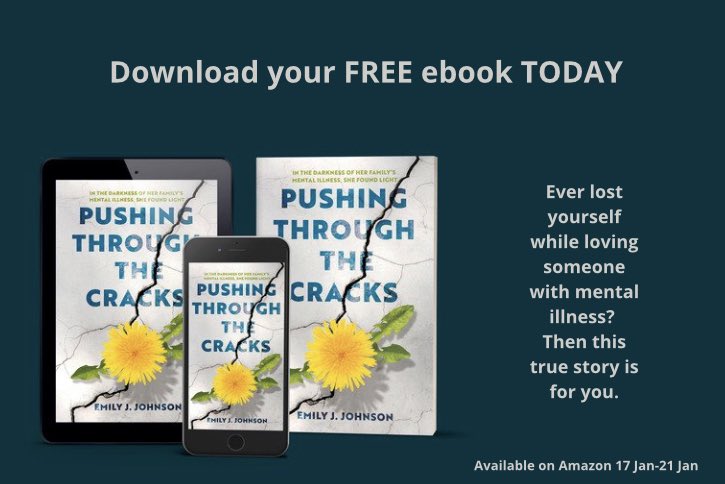
Book Review: ‘Pushing Through The Cracks: In the Darkness of Her Family’s Mental Illness She Found Light’- Emily J. Johnson by Eleanor

(image: Emily J Johnson)

Pushing Through The Cracks: In the Darkness of Her Family’s Mental Illness She Found Light by Emily J. Johnson is an incredible book. It is a story that I don’t believe has ever been written about before in such a way in the mental health space, I have certainly never come across it. Its a true memoir that occurred here in the UK during lockdown.

Emily wrote to me and kindly sent me a free copy of her book. I was hooked from the first page- this is a story of survival against the odds, of how mental illness can rip a family apart but how healing and hope are possible. Of strength through immense difficulty. Of light winning over darkness.

Four years ago, in the UK, Emily, a divorced mother of two, was living her best life with a new partner and blended family of six. But then addiction and mental illness entered her home uninvited, threatening to tear the whole family apart.

With an alcoholic husband and two teenage sons – one a depressed gambler and the other with chronic obsessive-compulsive disorder (OCD)– Emily is left to cope alone. And when the Covid pandemic hits, Emily, a ‘serial people-pleaser, enabler and born rescuer’, almost breaks too.

This true story delves into the darkest sides of mental illness and addiction with raw, often harrowing honesty. It shines a light on taboo subjects including self-harm, suicidal feelings, gambling, alcoholism, depression, severe OCD and eating disorders, all exacerbated by an unprecedented global pandemic and dwindling support services.

This is a story of remarkable strength, self-realisation and reclamation of a lost identity. This is a story of finding hope, pushing through the cracks in the darkness. It is also a story that touches on the difficulties of accessing UK NHS mental health services at times, especially CAMHS.

I found Emily’s strength through such severe adversity – dealing with a husband and two sons with severe mental illness, whilst carrying on with her own life when mental illness permeated every part, to be so inspiring. Her marriage falls apart, her children are unable to attend work and education, the family embarks on several different recovery journeys- navigating NHS mental health care and all its difficulties. Her sons addictions and acute OCD worsen and add to the pressures for Emily. How does she as a mother fix it all? She realises.. she can’t fix anyone and its not her job too.

The front cover features a dandelion pushing through the cracks of the ground. Emily describes the moment she hits rock bottom but then saw a dandelion poking through- which symbolised hope and light for her,

‘(image: Emily J. Johnson)

‘I pick up my phone and call a crisis support line…I desperately want someone to listen to me, to ease my pain, to hear my stories…(of mental illness at home)

I throw my phone across the path in frustration… something catches my eye, a beautiful yellow dandelion is growing through a crack in the concrete. Its golden yellow petals cut through the greyness of the broken path and it overshadows the filth and discarded cigarette butts around it. Despite its surroundings, it has found ways to push up through that crack, to have life. it is. not complaining or giving up, it’s surviving and it will go on to finish flowering. One day soon, the wind will carry its dainty seeds somewhere else to carry on the cycle of its life.

Just like that dandelion, I have pushed through adversity and survived. …I close my eyes and raise my face to the sunshine… Even in the midst of all this chaos, this darkness, there is warmth and light. There is hope.” (from chapter Dandelion) (Emily J. Johnson)

This is also a book which exposes the difficulties and realities of living with mental illness. I will add a trigger warning- it doesn’t hold back on the reality of mental illness including self harm, addiction, alcoholism, suicidal thoughts etc- so please read with care.

Thank you Emily for letting me read and follow the journey of your family. I hope your husband and sons are able to fully battle their demons and recover or stay in remission.

Pushing Through the Cracks by Emily J. Johnson can be bought from Amazon and good book shops.


(image: Emily J. Johnson)

Living with OCD during a global pandemic by Impulse Therapy

(image: Pinterest)

Managing OCD without the stress of a global pandemic is challenging enough. COVID-19 has presented some unique challenges for many OCD sufferers, forcing people to be restricted to their homes, encouraging obsessive behaviours like handwashing and limiting access to in-person therapy. 

In this article, we’re going to break down the challenges OCD sufferers face in the times of COVID, along with how to support loved ones and how to access support. 

What are the new challenges for OCD sufferers?

People with OCD typically have behaviours that fall into the following categories:

  • Checking: Repeatedly checking tasks that have already been done, such as locking a door or turning off the tap. Checking behaviours can also include believing you have a medical illness and repeatedly getting medical exams or visiting the doctor. 
  • Contamination: A compulsion to repeatedly clean yourself and the surrounding areas. Being in a dirty environment can cause feelings of fear or anxiety. 
  • Symmetry and Ordering: The need for things to be in order and/or symmetrical. Behaviours related to symmetry and ordering can be triggered if things are not organised. Some people with OCD may experience hoarding behaviours which also fall into this category. 
  • Ruminations and Intrusive Thoughts: These are common for people with OCD. Intrusive thoughts experienced by OCD sufferers can sometimes be disturbing and violent, directed towards themselves or loved ones.

New behaviours and triggers are being experienced by OCD sufferers in all of the above categories since COVID-19. 

New Checking Behaviours

With OCD sufferers being confined to their homes, they may be experiencing more frequent checking triggers, repeatedly turning off lights before bed, locking doors, even repeatedly checking the news for updates. People with OCD checking behaviours may also convince themselves they have COVID-19, with a desire to repeatedly get tested while also experiencing paralysing anxiety around leaving the house through fear of infecting others.

New Contamination Behaviours

As you can imagine, experiencing contamination behaviours and triggers as an OCD sufferer during a global pandemic is a complete nightmare. 

OCD sufferers who experience contamination triggers likely already experience anxiety soothing behaviours such as repeatedly washing hands, cleaning themselves and their surroundings. COVID-19 will only be worsening these triggers and behaviours for OCD sufferers. 

With more emphasis being placed on how we wash our hands, the frequency of handwashing and using hand sanitiser, OCD contamination sufferers will likely be triggered whenever they are reminded of COVID-19 to do these behaviours compulsively. 

New Symmetry and Ordering behaviours

Spending more time at home in lockdown and isolation may be triggering symmetry and ordering behaviours for some OCD sufferers. They are constantly surrounded by their triggers, resulting in more frequent behaviour indulgences to ease anxiety. Frequent changes in COVID regulations could become a new trigger for OCD sufferers with symmetry and ordering behaviours. 

During lockdown, a lot of people have been inspired to ‘Marie Kondo’ their homes, organising and discarding items that no longer ‘bring joy’. Many OCD sufferers will be organising and reorganising their homes compulsively to ease anxiety. 

New Ruminations and Intrusive Thoughts

During a global pandemic, OCD sufferers could start to have intrusive thoughts about loved ones being infected with COVID-19. These thoughts can quickly spiral, with sufferers believing they are the cause of their loved one being infected, even if they are not showing symptoms or have tested negative.

People with COVID-19 can be asymptomatic, meaning they can have COVID and be infectious without showing any symptoms. Due to this fact, many people with OCD will convince themselves that they have COVID and are asymptomatic, causing them to isolate themselves possibly unnecessarily. 

How to support loved ones during these challenging times

As unfortunate and uncomfortable as it is, one of the best treatments for OCD is exposure and response prevention, a type of therapy that exposes the patient to the situations that make them anxious as a way of normalising these moments and learning ways to cope with the anxiety without resorting to the usual anxiety soothing behaviours. 

For the OCD sufferer, this means facing a lot of discomfort throughout treatment. If you’re living with an OCD sufferer who is struggling with frequently being triggered, possibly even by things you are doing, it may be tempting to stop what you’re doing that is triggering your loved one. However, it could be more beneficial long-term to behave normally, continuing whatever action you are doing that may be triggering, as a way of exposing your loved one to their trigger to normalise it. If you live with someone with OCD and are triggering them and don’t know how to behave around them, it could be worth speaking with a therapist to get some advice. 

Talking things through can always be helpful for anyone suffering from any mental health issue. If you can talk to your loved one about their OCD struggles in a patient, calm and empathetic way, this is a great way to support. 

How to access support as an OCD sufferer

Access to in-person therapy is currently limited worldwide due to COVID. If you’re looking for a way of accessing support, either for yourself or a loved one, there are online options. 

Online therapy is becoming more and more popular, with users enjoying the ease and accessibility without having to leave their homes.

The best form of treatment for OCD is therapy treatment using CBT (Cognitive Behavioural Therapy) and ERP (Exposure and Response Prevention). This type of treatment can be done in-person or online. 

Alongside therapy, there are many other tools that someone suffering from OCD can use to reduce and manage symptoms, such as worksheets, meditation, journaling and more. Each OCD sufferer is individual and has a unique experience. One person with OCD may struggle with contamination behaviours, while another could only ever experience ruminations. This is why everyone’s treatment plan will look a little different. 

When speaking with a loved one about getting help, remember to approach the conversation with patience and empathy. Seeking help for OCD is tough, and the person struggling may need time to come around and ask for the help they need. Discuss options with them in an open-minded way without any expectations. 

This blog was written by Impulse Therapy

How to deal with a Breakup when you have OCD: Guest blog by Brooke Chaplan

iamenoughnew

(Image: )

Your OCD symptoms may be triggered by situations that feel out of your control, and breakups can easily throw your life into a tailspin. On top of dealing with the hurt that comes with ending a relationship, you may also be dealing with serious anxiety about what your future holds. This is especially true if you find yourself blaming yourself for your flaws and inadequacies and holding yourself solely responsible for the breakup. These tips will help you begin to heal by dealing with your breakup in healthy ways that allow you to see this as an opportunity for growth.

Stick to Your Wellness Plan

The first thing that you need to do is practice self-care. Although your heart may be too broken to want to get out of bed, it is important to follow your normal daily routine. Exercise helps to release endorphins that make your symptoms more manageable. Eating a healthy diet also helps to reduce the symptoms of anxiety and OCD. Following your wellness plan sends signals to your brain that you will overcome this temporary life event. It’s important to know that while exercise and self-care will not cure either your mental illness or your broken heart, it will strengthen your body and give you the tools you need to handle the strain.

Seek Advice About the Future

When you have OCD, the realization that you have no idea of what will happen next can make your symptoms worse. Seeking relationship advice that addresses your current circumstances along with how they influence your future gives you a sense of control. Talk to a therapist, counselor, spiritual guide, religious leader, or family member. This advice can then be used to begin putting together a new life plan that helps you feel confident and mentally strong.

Find Healthy Distractions

Once you know that the future is bright, you can begin finding ways to overcome your pain in the present moment. Explore new hobbies and set goals that help you build for your better future while also avoiding the tendency to obsess over the past. Try taking a class or doing an activity that you’ve always wanted to explore. You’ll feel stronger and more excited about what the future has in store.

Take Note of Your Progress

During your breakup, you can expect to experience some high and low moments. When you feel down, try to recognize how much progress you’ve made. For instance, you might have made a new friend who helps you get through this rough patch. You might have managed to avoid checking your ex’s social media pages. These little signs of progress mean that you are moving forward, and recognizing them helps you see that the breakup truly is a chance to grow. Remember to not beat yourself up over slipping up. It is likely that an emotional moment like this could bring up past compulsions and obsessions you thought you had gotten over. This does not mean you have failed or somehow destroyed your past progress, because progress is not linear.

Your relationship might be over, but you can use this moment as an opportunity for personal growth. When you feel like your OCD symptoms are taking over, reach out to people who care. Soon, you’ll have this whole painful event behind you and be looking at the future with a positive perspective.

If you need further support, speak to your therapist doctor or psychiatrist.


Brooke Chaplan is a freelance writer and blogger. She lives and works out of her home in Los Lunas, New Mexico. She loves the outdoors and spends most of her time hiking, biking, and gardening. For more information, contact Brooke via Facebook at facebook.com/brooke.chaplan or Twitter @BrookeChaplan

We are 4! On Be Ur Own Light’s Fourth Blog Anniversary by Eleanor

fourcandle

Its Today- 1st March 2020 and Be Ur Own Light is 4 years old! (cue the streamers!)

I still remember starting this blog as an outlet for my fears, thoughts and emotions dealing with my bipolar and anxiety. The blog started as a way to tell my friends and family how I was feeling and has evolved into working with guest bloggers and now brands/ partners on sponsored wellness posts too! Writing the blog and sharing thoughts has been so therapeutic and it has taken me on  a journey that I could not have imagined.

In November 2019, I published my first book Bring me to Light with Trigger Publishing which is the book of my life story with bipolar disorder, anxiety and my life in general (travelling, going to drama school, starting a career as a writer). The blog has also grown so much this year and is currently nominated in the Mental Health Blog Awards for Blogger of the Year, thank you to our nominee!

Additionally, Vuelio awarded us as a Top 10 UK Mental Health Blog for the second year running and interviewed me (Eleanor) about working as a blogger!  Thanks also to Feedspot.com and My Therapy App for listing us in their mental health blog lists too for social anxiety and bipolar!

This year, I have written about World Bipolar Day for the Centre of Mental Health, about my search for EMDR therapy on the NHS, living with depression in winter, about writing my book and new life changes (getting married) and 2020 new year round up with hopes for the future. We also promoted mental health campaigns such as Shout UK text line (founded by the Duke and Duchess of Cambridge and Prince Harry and Meghan),  Christmas 4 CAMHS, Time to Talk Day and Mental Health Awareness Week. Additionally, I spoke in Essex with my Dad about our joint story with bipolar for the Jami Mental Health Awareness Shabbat and we also spoke at Limmud Conference in Birmingham!

This winter I did some interviews for the book which can be seen on the Book tab above and also received some lovely reviews. It was amazing to appear in Happiful Magazine’s bonus wellness Mag this January (edited by campaigner Natasha Devon) and to write for Glamour and Bipolar UK. I also enjoyed being interviewed for the Jewish News and Jewish Chronicle! Hopefully at some point I will do podcasts about it too and more interviews.

From March 2019-2020, the blog has attracted wonderful and talented guest bloggers wanting to spread their messages about mental health and wellness.

We have also worked with the following brands on sponsored and gifted posts and hope to work with many more this next year :  YuLife, Nutra Tea, Essential Olie, Loveitcoverit on mental health apps, I-sopod floatation tanks, Core Wellness Maryland, Wellbeing Escapes Holidays.

My guest bloggers have written about their recovery and living with mental illnesses, as well as advice on how to improve your mental health. There a posts for whether you are going through a divorce, a bereavement, are stressed or have anxiety. We also had posts with people’s first hand experiences of mental illness including a brave post about being a sibling of someone with mental illness and one of living with an eating disorder. Furthermore, Be Ur Own Light has also covered World Mental Health Day and Time to Talk Day this year, featuring personal mental health stories as a way to raise awareness and fight misconceptions.

We have also covered new books coming out, a mental health fashion brand and a song about social anxiety, as well as posts about different therapies to help you.

bloglogo

Thank you to my amazing guest bloggers (non sponsored) March 2019-2020 for your fantastic content:   

Ashley Smith- How Massage Therapy helps Anxiety Disorders

Emily Bartels- 5 tips for a mental health emergency plan

Dale Vernor- Understanding PTSD by Gender 

Tan at Booknerd Tan- How audio books and walking has helped anxiety

Emma Sturgis- Loving yourself, tips for a body positive life

EM Training Solutions- How to maintain mental health at work

David Morin- On social anxiety and talking to others

Lyle Murphy- How equine therapy can help those with mental health issues

Charlie Waller Memorial Trust- Best of Musicals event

A Time to Change Hypnotherapy-  Hypnotherapy for self esteem

Nu View Treatment Center- The connection between anxiety and substance abuse

Shout UK- Royal family launches mental health text line

Mental Health Foundation – Mental Health Awareness Week  May 2019 Body Image

Emerson Blake- Coping with the stress of becoming a single parent

The Worsley Centre- A guide to therapies and finding the right one for you

Byron Donovan at Grey Matter – How I recovered from depression to form a fashion brand 

Luci Larkin at Wooley and Co Law- How to reduce stress and maintain mental health during a divorce

Nat Juchems- How to keep your loved ones memory alive after bereavement

Emily Ilett- on her book ‘The Girl who Lost her Shadow’

Mark Simmonds- an interview about his book ‘Breakdown and Repair’ with Trigger Publishing

Curtis Dean- 5 facts about music for stress relief

Robert Tropp- How quitting illegal drugs helps anxiety in the long term

Aaron James- the difference between psychotherapy and counselling

Dr Justine Curry- 4 ways to help a friend with bipolar disorder

Christmas 4 CAMHS campaign for children in childrens mental health wards

Ani O- 4 ways to ease the fear of doctors appointments

Katherine Myers- Ways that spending time outdoors can improve your mental health

Anita- 5 ways to lift you out the slump of seasonal depression

Chloe Walker- taking care of your child’s mental health

CBT Toronto- how to deal with social anxiety and depression

Katy- a true story with anorexia and OCD

Vanessa Hill- Life changing habits to bring into the new year

Rachel Leycroft- Expressing social anxiety through songwriting

Shira- Living with a sibling with mental illness: the meaning of normal

Capillus- 10 signs you may have an anxiety disorder

Brooke Chaplan- When therapy isn’t enough 

Jami Mental Health Awareness Shabbat 2020 

Mike Segall- Time to Talk Day- 9 years undiagnosed, my story with bipolar disorder

Jasveer Atwal- Living with PCOS and managing mental health

Leigh Adley at Set Your Mind Free- How CBT helps children with anxiety

Lizzie Weakley- How to heal and move forward when you have an eating disorder

Sofie- Living with an eating disorder

Thank you so much to all of you and I am excited to see what 2020-21 brings for the blog!

Be Ur Own Light continues to be read globally and I love receiving your messages about the blogs and finding new writers too.

Heres to a 2020 of positive mental health, of fighting the stigma against mental illness and creating a positive and supportive community here. 

Happy 4th birthday Be Ur Own Light!  ❤ May this be an enlightening year of growth for us.


Love and Light always,

Eleanor    

xxx

Guest post: How nOCD App helps thousands with OCD- Obsessive Compulsive Disorder by Stephen Smith

stephensmith
In the summer of 2014, I was tired of struggling with OCD, Obsessive compulsive disorder, so I decided to do something about it and begin my app, nOCD. nOCD, standing for “No OCD”, is an online platform that I believe would have helped me during the worst of my struggles and that currently is already helping thousands of others with OCD today. The platform is designed to help people with OCD during all four phases of treatment: 1) coping with the onset of OCD symptoms, 2) selecting a care team, 3) actively managing OCD treatment, and 4) maintaining OCD treatment progress.

My team and I at nOCD are able to address each phase of treatment using a unique combination of highly vivid content and 21st century technology. For instance, people with OCD can view our content on Instagram or Twitter at @treatmyocd and download nOCD for free on the App Store (m.treatmyocd.com/saveslives).

People with OCD say the app has been a major difference maker. It gives people guidance in the moment of OCD episodes, a structured platform to do Cognitive Behavioural Therapy (CBT) exercises, a community to talk with others (in beta), and real-time data 24/7. Here is more information about how it works:

  1. SOS Guidance: nOCD offers members clinically effective guidance in the moment of any OCD episode, using OCD specific Cognitive Behavioural Therapy. During an episode, members can hit the button “SOS” on their phone, which tells the app to immediately provide Mindfulness Based Cognitive Therapy and Acceptance Commitment Therapy (Response Prevention). For instance, if the member is obsessing, nOCD will ask questions such as: “Are you experiencing an Obsession or a Compulsion?”,  “What Obsession are you experiencing?”. “What triggered the Obsession?” And “How intense is your anxiety?” Then, based on the answers, nOCD will offer specific Acceptance Based Therapy guidance, to help the member effectively respond to the obsession without doing a compulsion. We believe the SOS feature can empower people with OCD to live their lives fully, knowing help is always in their pocket.

  2. Structured ERP ExercisesnOCD provides members with the tools and organization needed to consistently do planned OCD treatment exercises regularly and effectively, acting like a mental gym. The main challenge with doing these planned mental exercises is that they instigate anxiety. Since the anxiety alone can reduce OCD treatment adherence rates, the app attempts to remove all pain point. It offers members the ability to create loop tapes, scripts, and drawings. It also has built in exercise reminders and educational tips.

  3. Custom Therapy : nOCD customizes the entire treatment process to each member, helping augment therapy with licensed clinicians. Patients can customise their hierarchies, their compulsion prevention messages (acceptance based messages), their ERP schedule, and more.

  4. 24/7 In-App Support Group :Inside the nOCD app, people with OCD can join different support groups and anonymously post to each groups wall. We’ve created a platform where people can support each other through treatment and learn quickly that they are, in fact, not alone.
  5. Real-Time Data Collection: It collects real-time data about every aspect of the patient’s condition and treatment. It also longitudinally displays the data for every patient and clinician to see at any time. nOCD protects each users PHI data to the highest degree possible. For example, it uses a dedicated (encrypted) Ec2 instance on Amazon Web Services, SSL connection, Touch ID login access, LastPass Password security, and new, monthly, VM keys. nOCD is a HIPAA compliant commercial enterprise.