It is so important to look after your mental health. Many people struggle with their mental health and with illness that feels beyond their control and often they will need medication or therapy to help them. However, there can be other issues that need to be addressed if they are harming your mental health.
Learning to appreciate the issues that you may have overlooked is the first step to success. If any of the following are relevant to you, address them ASAP. you should find that your mental health reaches a far more stable place.
Untreated PTSD
If you have tried fixing a mental health issue without getting to the root cause, the benefits will be restricted. So, finding the right PTSD therapies that get to the bottom of poor mental health could be the greatest decision you make. It will provide significant direct rewards. Working with a therapist and understanding your personal situation is essential if you want to improve it.
Almost everyone has experienced at least one traumatic experience. So, it’s could be likely that mental health issues you experience will have PTSD, or a similar issue, linked to them.
Worries Behind The Wheel
The knowledge that you are in a potentially vulnerable position can be the biggest cause of anxiety. A car that has experienced problems or required frequent trips to the garage could be causing anxiety if you rely on it to get to work and travel independently. There may also be finanical worries for you.. A professional service like Edmunds can help you appraise your current car and upgrade to a better model. This could make you feel more comfortable and reduce anxiety.
Financial Worries
Money problems are the most common source of stress. So, it could be the underlying reason why your mental health continues to hit hurdles. While there is no magic spell to suddenly make the problems fade, you can at least feel a weight is lifting from your shoulders. Good organisational skills are the key. Learn to trim the fat from your ongoing expenses, and you’ll see a big impact.
Not Enough Daylight
Spending more time outside in the fresh air can work wonders for your physical and mental wellness. Experts like Raleigh Bikes can help you find a new hobby that encourages more time outside. The fitness benefits are also supported by enjoying improved air quality. As well as vitamin D, serotonin, and experiencing life. It’s an issue that many people struggle with. Thankfully, you no longer need to!
It’s especially important in the colder months when it gets darker to try and get some exercise to help your wellbeing.
The Wrong Network
Your support network can have an impact on your life, in relation to your mental health. The right people will build you up and guide you through tough times without leading you to poor decisions. Sadly, the wrong friends cause you to make regrettable choices. Likewise, they may pressure you to support them, potentially financially. This could drag you down even when you’re in a good place.
So make sure you look after each aspect of your life and self care, in order to improve your health and overall wellbeing.
Mental health issues are very common and you may be dealing with anxiety and depression or past traumas. Whether you are worried about your finances, family problems, or other issues, anxiety can sometimes feel overwhelming. To cope with this, more people are turning to EMDR (Eye movement desensitisation and processing) therapy and getting surprisingly effective results. If you are searching for answers as to how to deal with anxiety, here are four ways EMDR therapy may help.
Verbalise Less About Trauma
If you are a person who does not like to talk about your anxiety, EMDR can be very beneficial in that it does not rely on you having to talk about painful memories or situations. Instead, it lets you use your imagination to focus instead on happier thoughts and feelings, helping to reduce your anxiety- although you will have to face your fears at the right time too, in order to heal.
Reduces Physical Problems
When you feel anxious and depressed, your body suffers as much as your mind. As a result, you may find yourself experiencing stomach cramps, headaches, a rapid heartbeat, and other similar problems. EMDR therapy has been shown to provide relief from what are known as somatic symptoms. When used regularly, these symptoms are greatly reduced or eliminated, helping to ease your mind even more.
Helps You Regain Control
When you are anxious, you generally feel as if you have no control over your situation. EMDR therapy changes that by helping you regain control of your emotions. To do so, it reduces the intensity associated with negative emotions and past trauma, and also helps lessen the intensity of any negative or disturbing images you may be replaying over and over in your mind.
Improves Processing of Information
EMDR therapy helps you improve how your brain processes information related to traumatic events. Instead of talking about the events that trigger your anxiety over and over, you instead are encouraged to use your imagination to process your thoughts, feelings, sensations, and emotions. By doing so, your therapist can help you create a mindset that is more tranquil, calmer and less stressful to you. It can take time to heal from trauma and to process it, so you will need to stick with the sessions to get the full benefits.
Rather than let anxiety rule your life day after day, consider speaking to a therapist about how EMDR therapy may be beneficial to your life.
This article was written by writer Rachelle Wilber.
When you are in the midst of getting divorced, you may be surprised at just how much it will drain you emotionally. Whether you have been married only a short period of time or perhaps for decades, knowing you will soon be divorced can be a scary thought that may leave you very depressed, which can result in you making poor decisions as your divorce moves forward. If you want to emerge from your divorce with some emotional health, here are some steps you should take along the way.
Don’t Stay Isolated
As your divorce process moves forward, don’t make the mistake of staying isolated. Instead, stay in touch with your family and friends. If your social network is now cut in half due to your divorce, make new friends by perhaps attending church/synagogue or learning a new hobby- whatever feels right for you.
Don’t Blame Yourself
When couples divorce, it is not unusual for one spouse to blame themselves for the marriage breaking up. Even though there is usually fault to be found on both sides in most divorces, this does not mean you should continually beat yourself up emotionally day after day about your marriage ending. Instead, you need to accept that it happened, plan your future, and try to move forward as best you can. You should reach for support if you need it.
Write Down Your Thoughts
During your divorce, you will be having plenty of meetings with your divorce lawyers and others as well. Needless to say, you may feel a bit drained at the end of the day. If you have plenty of thoughts running through your mind, take some time to write them down in a journal. By having the chance to express your innermost thoughts in this manner, it can be a great way to relieve stress and keep your emotions in balance. Another option would be to talk about your feelings with a therapist when you are ready.
Take Care of Yourself
Last but not least, taking care of yourself physically will play a big role in keeping you feeling ok emotionally. Therefore, you should eat healthily, exercise regularly, and treat yourself to something special now and then, such as dinner at your favourite restaurant, a relaxing vacation, or getting pampered at a day spa. By doing so, you will find many things that were eating away at you will suddenly not seem nearly as important. Self care is vital in the aftermath of a relationship breakdown.
Though you may wonder what the future will hold for you after your divorce is final, looking after yourself and your mental health will pave the way for a new chapter in your life.
Lizzie Weakley is a freelance writer, based in the USA.
Going to college or university is one of the most exciting life events we experience, but it can also be one of the most daunting. This is a period of upheaval and change, which often triggers a mixture of emotions. If you’re preparing to start a new course or move to a different town or city, here’s a handy guide to managing mental health.
Make your new base feel like home
One of the best ways to settle into a new area and adjust to a different routine and environment is to make your new base feel like home. Whether you’re living in student accommodation or you’re renting a flat or a house, try to be proactive in creating a homely, welcoming feel. Decorate your bedroom and turn it into a sanctuary that makes you feel relaxed and calm. Put photographs up on the walls, use soft furnishings to add a cosy feel and choose colours that you love. Create a space that celebrates your style and personality and makes you feel safe and comfortable.
Socialise
Making friends is one of the biggest challenges for students. Some people are naturally very sociable and they’ll start conversations and build relationships without even thinking about it, but for others, creating bonds is more difficult. Try to socialise and meet people through activities, lectures, classes and group sessions and societies and clubs. Use your hobbies and interests to find people with shared passions and don’t panic if you don’t click with the people in your flat or on your course immediately. Keep putting yourself out there and you’ll find your crowd. It’s important to be yourself and to find friends who make you feel confident and valued. You shouldn’t feel like you have to change or put on an act.
Look after yourself
Going to university is synonymous with partying, staying up late and embracing the experience of living in student halls. It’s fun to go out and enjoy a few drinks with new friends, but try to look after yourself as best you can. Get enough sleep, stay hydrated, keep an eye on how much you drink and try to follow a healthy diet. Exercise daily, spend time outdoors, hang out with friends and keep in touch with family members.
(image: Pexels Pixabay)
Don’t be afraid to talk
It can be incredibly stressful to start a new life at university, especially if you’ve never been away from home before, or you find it hard to make friends. If you’re struggling with your mental health, or you feel anxious or low for a prolonged period, don’t be afraid to talk. Open up to friends you trust or relatives, speak to your GP, or research resources you can access through your college or university. It may also be helpful to speak to others who are in the same boat via online communities and social media groups. There are also free helplines you can call such as Samaritans 116 123 (UK).
Going to college or university is an adventure, but it can also be an upheaval. It’s crucial to look after yourself and manage your mental health. Socialise and make friends, create a happy, calming home environment and take care of your body and mind. Talk to people and seek advice if you are finding life tough.
I had been amazed over the summer by how much better I was doing with certain aspects of my anxiety and panic. I had a few panicky moments/ days but I was able to pick myself up and feel better quite quickly after.
At the moment though I can feel myself dipping back into anxious patterns. I had a panic attack in bed a few weeks ago, triggered by certain life stressors. Since then, I wake up flooded with anxiety and not feeling able to face the day/ feel like a doormouse and want to hibernate or hide. Sometimes this happens if I get triggered by something eg life stress or it can happen as the fluctuating rhythms of bipolar disorder. I am usually OK by late afternoon/evening but the mornings can be hard.
Change in seasons with less light, feeling extra pressures can lead my mind to try and protect me from a perceived fear due to past traumas (fear of judgement, fear of feeling exposed). This can mean that seeing people. going out a lot etc can become very difficult- welcome to social anxiety again. However, I know that this will not last forever.
This week, I had a good session with my therapist who advised me to try and take more time in the mornings to write, practise breathing and think about whats going on for me, with the aim of reducing anxiety. I do find this really hard as my default can be to shut down to look after myself (and hide away/sleep)- as my brain (subconscious) perceives a threat somewhere…
I have been through this before and come out the other side- and so I know I will be OK (and ironically, there is no need to panic over it) but its still stressful… and I just wish it wasn’t like this.
I am a person who loves routine and when I get out of a routine or pause, anxiety can flood in too.
I call it the anxiety train because it feels a bit like riding a fast train/ a roller coaster of ups and downs. It doesn’t stop fully but it can suddenly hurtle me and I have to calm myself. Its based on previous behaviour patterns that served me at a time when my brain thought it needed to protect me as a teenager and although I have had years of therapy and take medication, it can sometimes come back.
I will be alright in the end, you’ll see (Mrs Potts- beauty and the beast). I have lots of support but wanted to be honest about where I am.
We are approaching a Jewish New Year, and I pray that I will be blessed with better health and less anxiety coming (as well as good things and health for my loved ones).
Thanks for reading and allowing me to be honest,
Shana tova and only happiness. If you’re struggling, please reach out to someone you trust/love or Samaritans helpline. My DMs are open too,
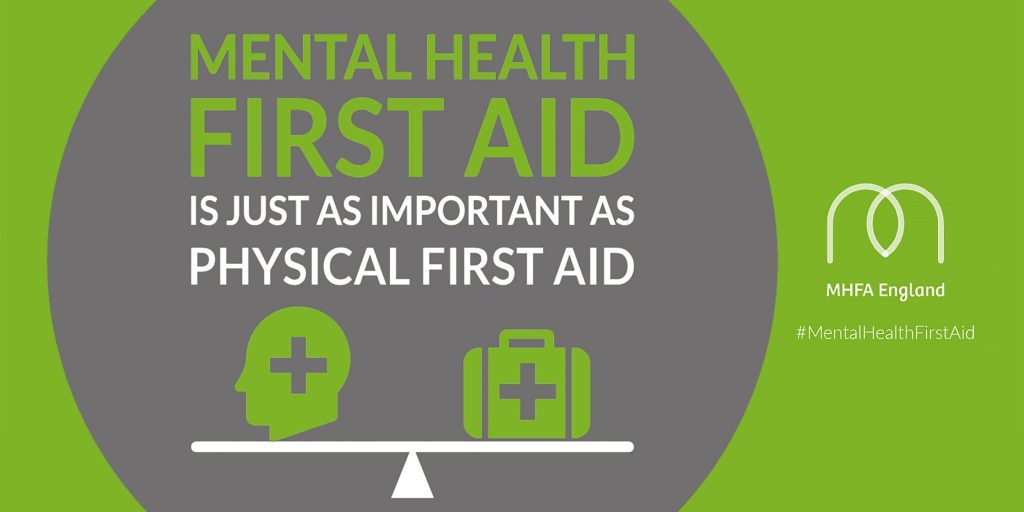
Awareness days, weeks and months have helped to familiarise people all over the world with the term “Mental Health First Aid”. Now, first aid retailer FirstAid.co.uk reports a 260% uplift in interest for MHFA products on their site, noting that an increase in work-related stress, depression and anxiety cases each year is the most likely driving force.
The retailer has now sold more Mental Health First Aid items this year so far than everyday travel and motoring first aid kits.
Data from the Health and Safety Executive shows that cases of work-related ill health (of which 50% are stress, depression and anxiety) have risen almost 28% since 2015, despite physical injuries being in decline since 2000.
Their data also shows that 820,000 people in Great Britain suffered from work-related stress, depression and anxiety in 2021, compared to 441,000 people who sustained a physical injury at work.
“According to Mental Health First Aid England, one in six people of working age in the UK is experiencing symptoms of mental ill health at any given time.” Says Mike Thakoordin, MHFA Instructor and Suicide First Aid Associate at FirstAid.co.uk. “We know that around 81% of employers have increased their focus on employee mental health since the pandemic began, and it is fair to say that awareness days and events are doing their part to sustain that focus.
“During the first week of Stress Awareness Month in April we had an 85% increase in the number of people visiting our stress-related products compared to 2021, and we’re anticipating a similar surge between Suicide Prevention Day in September and World Mental Health Day in October as individual and business shoppers research items and guidance that can support those who are struggling.”
(image: Unsplash)
While events and awareness days like these play a big part in the ongoing rise in interest around mental health-related products online, it’s the persisting growth in the number of people struggling with poor mental health that is likely the bigger factor at play. Despite several years of employers saying they’re taking mental health more seriously, the reality is that a huge number of people each year still find themselves with too much work, not enough rest, workplace politics issues and concerns over job security – among other things.
“For several years running now, the HSE has reported an increase in the number of people taken ill by work-related stress, depression and anxiety.” Thakoordin goes on to say. “Poor workplace mental health has knock-on effects in many other areas, and we hope that this increase in people shopping for MHFA materials translates into a greater number of workplaces offering meaningful, consistent support.
“With the 2-day Mental Health First Aid course recently being updated, now is the time to get enrolled and play your part in making workplaces safer from a mental health perspective.”
Borderline personality disorder (BPD) affects people’s thoughts about themselves and others. People with borderline personality disorder experience extreme emotions. A person with this disorder is likely to have intense relationships with many ups and downs. Other signs of borderline personality disorder include impulsivity and changes in one’s self-image. Anger management issues and mood swings can both be symptoms of BPD. They could also fear being left behind or abandoned.
Sometimes, people with borderline personality disorder are also affected by obsessive-compulsive disorder or OCD. The person and their loved ones may find it challenging to cope with a borderline personality disorder. But borderline personality disorder is something that can be learned to manage. You can learn to manage borderline personality disorder with the proper professional care, self-help techniques, and coping skills and have a happy and successful life.
Coping mechanisms for borderline personality disorder
A borderline personality disorder is a condition that affects each person differently. Find out what works for you by taking your time. Everyone’s situation may be different, but by taking the actions listed below, you can cope with borderline personality disorder :
1. Engage in physical activities
Exercise may help you stabilize and regain emotional control if you have problems coping with BPD. Exercises like yoga, boxing, running, and cycling may be beneficial.
2. Take some time off for yourself
Although social isolation has adverse effects, occasionally removing yourself from other people might be a healthy coping mechanism for BPD. Spend some time alone, and rejuvenate yourself without the influence of others. Reflecting alone might assist you in readjusting if you are experiencing intense anger or feeling emotionally out of control.
3. Write emails or letters to people but don’t send them
This is a great way to express feelings and decompress. The effects are similar to keeping a journal, making it possible to express yourself without having your words negatively affect your relationships. By delaying sending the message, you can go back and read what you said after the initial emotions have subsided.
4. Take breaks
Feelings of rage and anger might be reduced temporarily by leaving a stressful setting and looking after yourself.
5. Keep yourself occupied as much as you can
Keep yourself occupied to divert your attention from your current feelings. Holding a fidget toy such as a slinky, helps keep your hands engaged and allows your mind to concentrate on the recent activity.
(image: Unsplash)
Is obsessive-compulsive disorder related to borderline personality disorder?
BPD is thought to be fundamentally linked to obsessive-compulsive symptoms. These symptoms are intense, and BPD patients who experience them often exhibit poor insight, resistance, and sometimes obsessive control in interpersonal interactions.
A 5% prevalence of borderline personality disorder (also known as BPD) has been seen in OCD patients. Additionally, these patients with BPD and OCD had greater rates of anxiety, mood, and eating problems. These examples of co-occurring BPD and OCD have been linked to motor impulsivity, mental compulsions, and compulsions involving interpersonal domains.
How is OCD treated?
Treatment for obsessive-compulsive disorder may not provide a cure, but it can help keep symptoms under control so they don’t interfere with your everyday life. Some patients may require long-term, continuous, or more extensive treatment depending on how severe their OCD is. Psychotherapy and medicines are the two essential OCD treatments, and treatment is frequently most successful when these are used in conjunction.
How can you cope with OCD?
Below you’ll find mechanisms that will help you cope with obsessive-compulsive disorder:
1. Acknowledge your OCD’s existence
Like the monster you used to think lived beneath your bed as a child, OCD can seem like an uncontrollable power waiting to strike. Give your OCD a name and a shape rather than letting it be a faceless villain. It might benefit kids and adults to view OCD as a distinct condition. Remember, OCD is not your fault, and there is no need to feel ashamed.
2. Maintain an OCD journal
An OCD journal serves the same purpose as the food journals that some people use to record their daily dietary intake when on a diet. You can keep note of your triggers in an OCD journal, discover new ones, and evaluate the general state of your OCD. Keep an OCD journal with you at all times, and write down what happens when you perform a compulsion. After reading through your diary entries at the end of the day, ask yourself the following questions.
● Why did these circumstances make me OCD-prone?
● What would have occurred if my resolutions hadn’t been carried out?
● What proof is there that what I feared would occur?
3. Use Exposure and Response Prevention (ERP) techniques
ERP is a popular method for addressing and maybe easing OCD. When adopting ERP, a person exposes themselves to a circumstance that causes an obsession and then refrains from acting on their compulsion. Try creating an OCD ladder by ranking your triggers and associated anxieties on a ten-rung ladder from 1 to 10 in terms of their seriousness. You should start with a low-level trigger when you initially start ERP, and after you’ve faced it, wait 10 seconds before acting on your urge. Increase the amount of time you go without gradually employing your compulsion until you can handle the task or scenario without it. As you master your triggers, climb the OCD ladder.
4. Redirect your focus
If you have OCD compulsions or obsessions or feel one coming on, try diverting your attention from the problem. You can either mentally or physically refocus your attention. Try repeating the program if, after the period of refocusing, you still feel the need to finish your obsession.
5. Keep your stress levels down
OCD is difficult to live with, and stress can make these tasks even more difficult. Keeping your stress level low is essential because it has been demonstrated that stress dramatically increases OCD in people. Make sure to arrange some time each day to relax. Finding an hour each day to decompress, watching some TV, reading a book, or going for a run, can be pretty helpful.
Final thoughts
You can learn coping methods and healthy lifestyle choices without allowing the illnesses and symptoms to define you. Finding strategies that work for you is critical. You should also be open and honest with close family members about your needs. For example, you should tell family members how to help you if you feel angry or emotional. You are not defined by your illness and you can learn to cope- reach for support.
About the Author: Dr. Joann Mundin is a board-certified psychiatrist who has been in practice since 2003. She is a Diplomate with the American Board of Psychiatry and Neurology and a Fellow with the Royal College of Physicians and Surgeons of Canada. Currently associated with Mindful Values, she provides assessments and treatment for patients with severe mental illness.
Therapy can be a great way to work through personal issues, improve your mental health, and make positive changes in your life. But with so many different types of therapy available, it can be hard to know where to start. Many people find that a kind of therapy works well for them, while others may benefit from a combination of different approaches. This overview will help you learn about four of the most common types of therapy to make an informed decision about what might work best for you.
Cognitive Behavioural Therapy
Cognitive behavioural therapy (CBT) is a type of psychotherapy that helps some people change negative thinking and behaviour patterns. CBT is based on the idea that our thoughts, feelings, and behaviours are interconnected. Changing our thoughts and beliefs can change our behaviour and emotions. CBT is effective in treating a wide range of mental health conditions, including anxiety and depression, so its worth a shot to see if its right for you.
Group Therapy
Group therapy is a type of psychotherapy that involves meeting with a group of people who are dealing with similar issues. Group therapy can be helpful because it allows you to share your experiences and feelings with others who understand what you’re going through. It can also help you learn new coping skills and gain insight into your thoughts and behaviors. Many people find group therapy to be a supportive and helpful experience- but see how it goes for you as an individual too.
Interpersonal Therapy
When we have issues with our relationships, it can be challenging to know how to make things better. Interpersonal therapy (IPT) is a type of psychotherapy that helps people improve their relationships with others. IPT focuses on the here and now, helping you to understand and change patterns of behaviour causing problems in your relationships. Several studies have shown that IPT is an effective treatment for depression- so this could be one to try.
Family Therapy
Family therapy is a type of psychotherapy that involves meeting with a therapist along with your family members. Family therapy can be helpful because it allows you to address problems within your family system. It can also help improve communication and relationships within the family. Research by experts found family therapy to be a supportive and helpful experience. However, some have said that it wasn’t the right experience for them and their family, so it is trial and error too.
These are just a few of the many therapy types available. If you’re considering starting therapy, talk to your doctor or mental health professional about what might be right for you. Also, remember, there is no “right” type of therapy. What matters most is finding a therapist you feel comfortable with and who can help you achieve your goals. You may also try a few therapies before finding the correct one to help yourself, your relationships and your family.
This article was written by freelance writer, Rachelle Wilber, living in the San Diego, California area, USA. She graduated from San Diego State University with her Bachelor’s Degree in Journalism and Media Studies. Follow her on Twitter and Facebook: @RachelleWilber; https://www.facebook.com/people/Rachelle-Wilber/100009221637700/
Sometimes, you receive amazing book reviews on the internet and don’t realise they are there!
Yesterday, I stumbled upon Deb Wilk’s blog Living Bipolar – Deb has lived with bipolar disorder for many years and very kindly reviewed my book last year. She lives in the USA and is a talented blogger, sharing about her life living with bipolar.
I don’t always know what to expect with reviews, but this was so positive so thank you Deb for reading, enjoying and recommending my book Bring me to Light: Embracing my Bipolar and Social Anxiety. Heres some quotes from the review:
“Every word, paragraph and chapter of Bring Me to Light was utterly mesmerizing. Eleanor Segall’s account of her battle with bipolar 1, panic attacks, and crippling social anxiety is so vibrant that the reader feels as though they are experiencing it right alongside her.
I would love to describe the book in detail, but I am not going to give anything away because this book is an absolute must-read. Anyone who is bipolar or loves someone who is, should read this story. It is a moving narrative that anyone, even those who do not suffer with mental illness, should read. …
She is now an extremely forceful voice in the mental health community, and this accolade is incredibly well deserved. Please read this book. You will find it well worthwhile and, I am certain, as enthralling as I did.” (Deb Wilk, living bipolar blog)
This summer has been one of the hottest on record. August has been no exception, with the Met Office predicting the hot weather will continue. As Britons all over the country look to stay cool at night, experts at Bed Kingdom share their advice to prevent overheating and to get a good night’s sleep throughout the warmer months. If you’re trying – and struggling – to keep your body temperature under control at night, try these tips:
Avoid strenuous exercise, alcohol and spicy food
Strenuous exercise before bed gets your blood pumping and keeps your heart rate and body temperature up. Doing this before bed will keep your body feeling warm and will prevent you from staying cool as you try to nod off. Instead it’s best to exercise in the morning when temperatures tend to be cooler.
Alcohol will make you feel hot. Remember the ‘beer blanket’? It’s the warmth your body feels as it tries to manage alcohol consumption. While your body is not actually heating up, it will feel like it and may prevent you from feeling cool and comfortable at night.
Spicy food often contains capsaicin, which can increase your body temperature and interrupt your sleep. Also, eating spicy food before you go to bed may give you indigestion, making it difficult to feel able to drift off as your body battles discomfort.
Practice mindfulness and meditation
Anxiety can cause your fight-or-flight response, which can lead to night sweats in bed, which is a common stress symptom. Setting aside ten minutes for a mindfulness exercise before bed, such as meditation or journalling can relieve some worries and prime your mind for a good night’s sleep, helping you to stay cool throughout.
Turn off unnecessary electronics before bed
Electronic devices such as computers, games consoles and TVs can get hot after use, leaving rooms, especially smaller ones, feeling stuffy and trapped with heat. It’s best to switch these devices off an hour before you go to bed to let the room cool down. This also has the added benefit of preventing the blue light from devices interfering with your sleep cycle, letting you drift off to sleep easier at night.
(image: Sincerely media via unsplash)
Switch to breathable bedding – and avoid these
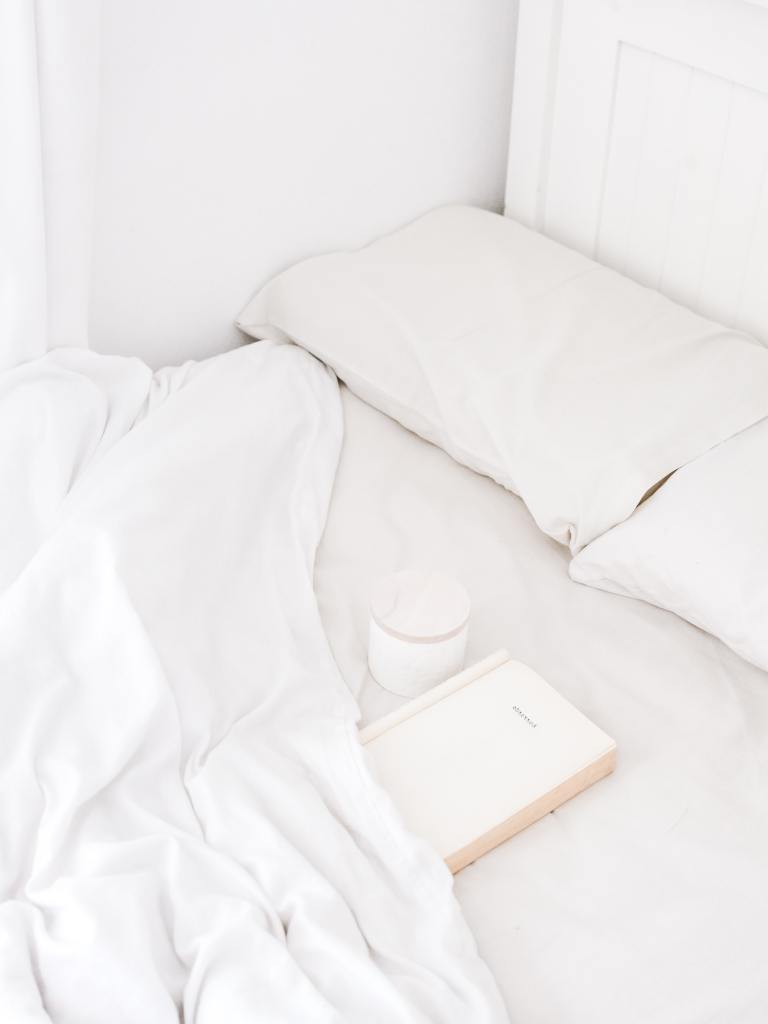
You may be using bedding that is not breathable enough for the summer months. Cooling bed sheets should wick moisture away from you and help you to regulate your core body temperature.
Cotton is one of the more popular fabrics for bedding as it is breathable and versatile. It can keep you cool on hot summer nights and warmer in winter, depending on the weaving and thread count. Cooling cotton sheets are typically between a thread count of 250 and 300, and should not be more than 500. Cotton is also durable enough to last years of use.
Linen fabrics can keep you cool at night. Bed linen can absorb a fifth of its weight before beginning to feel damp, making it an effective choice to keep the fabric fresh if you often get hot at night. This fabric type can be less likely to stick to your body.
Bamboo fabric has become popular over the years as it is an eco-friendly alternative to synthetics. It can be more breathable than cotton, and the natural, soft and durable material is a good choice for those that have allergies.
Eucalyptus sheets, like bamboo, are another eco-friendly option made of natural materials, which can effectively wick moisture and stay breathable all night. It can dry quickly, deter dust mites and is hypoallergenic.
Many people choose microfibre bedding as it is a low-cost option. However, it is made from synthetic fibres that aren’t very breathable. Other fabrics to avoid during the summer are polyester, nylon, rayon and silk.
Have a light meal for dinner – avoid heavy fats and carbs
Eating a meal too close to your bedtime can be harmful to your sleep. The more food you eat, the more uncomfortable you may feel. Heavy meals tend to be high in fats and carbohydrates, which takes more energy for your body to break down. This could lead to feeling bloated and uncomfortable when trying to sleep at night.
The recommended space between your last meal of the day and your bedtime is about three hours, which gives time for your body to process any food eaten. Opting to eat fats and carbohydrates earlier in the day, and eating a light meal at night, will require less from your body while you drift off, as it has done the work to break food down earlier in the day.
Take a shower before bed
It’s a great feeling to wash the day away and then climb into fresh bed sheets at night. Showers can help to regulate our body temperature, which can ease us into a peaceful sleep. When it’s hot, a lukewarm shower can cool your core temperature down. A cool shower can be more beneficial than a hot shower to help you fall asleep faster. However, a hot shower can still help as your body temperature will change as you dry off. Whether you prefer to take a hot or cold shower, try to avoid extreme temperatures, as they can negatively affect how you sleep.
The heat can cause stress both physically and mentally, so make sure you look after your health.
This article was written by a freelance writer and contains a link.












 beurownlight.com