
Gila’s Way: A Charity Set Up To Help Prevent Teen Suicide And Educate On Mental Health. Interview with Rabbi Hammer.

Sometimes, I get emails about stories and they really stand out to me. This was one of them. A friend of mine knew about this suicide prevention charity in Israel, called Gila’s Way. The Hammer family in the Jewish community sadly lost their daughter Gila z’l to suicide when she was just 18. Gila had mental health issues and the family want to save lives in her name and make sure it doesn’t happen to another family. Rabbi Shalom Hammer, Gila’s father and a world renowned lecturer, started sharing his insights from Gila’s tragic story in order to raise awareness, teach empathy, and promote dialogue regarding suicide in order to ensure its prevention.

Gila’s Way is a non-profit organisation which implements, educates and presents programs regarding mental health awareness and suicide prevention in order to save lives.

I asked Rabbi Shalom Hammer a few questions about his life saving mission:

  1. Your charity Gila’s Way has such an important mission. Please can you tell me more about Gila as a person, her mental health struggles and how you as a family coped in the aftermath of her tragic death/ how the charity got set up?

Gila was an unbelievable girl, vibrant, vivacious, social, hilarious and extremely sensitive. She was a leader of her peers socially and she loved to have fun. She also saw the world in a very innocent wholesome way, she was not capable of harming anyone nor did she believe that people would harm her. Tragically she experienced a sexual episode which was obviously extremely traumatising for her. She also did not wish to or know how to openly communicate the degradation she felt and the pain she was experiencing. Consequently, a swell of anxiety and depression built up inside of her and she eventually began to lose hope which ultimately lead to her passing away.

After Gila died, we decided to take the inexplicable pain and the unfathomable loss to as much of a positive place as possible. My wife and I feel that Gila should be alive and the reason she is not is largely because of the lack of knowledge with mental health and certainly suicidal ideation that we had and that so many others have as well. Gila’s Way is an organisation therefore, who’s primary concern is education via seminars, lectures, interactive workshops and presentations, understanding that the more we educate and inform the greater chance we have of lowering the numbers and preventing suicide.

(image of Gila z’l: Gila’s Way and Hammer Family)

2. What would you like people to know about teen suicide and suicide prevention in Israel and globally?

The most important vital point that I cannot emphasise enough, is that the vast majority of people who die from suicide, do NOT want to die. Particularly when we are speaking about adolescents who are experiencing so much pressures and may impulsively make a decision within a few seconds and not realising that it is finite. When people understand that most people who die from suicide, did not want to die, they also understand that this means we are capable of saving that person.

3. What is your message to other parents coping with children with mental health issues or who have also experienced bereavement?

There are a number of very crucial messages for parents. Firstly, don’t be afraid or ashamed to talk and converse, secondly don’t converse with just everyone. Dealing with mental health and a child who is challenged, is very procedural and therefore exhausting. Make sure to speak to the right people and save your energies for those people. Don’t speak to just anyone because you will grow more confused and more exhausted; make sure to find those/that people/person who can be helpful and focus on speaking to them.

In addition, pay attention to what your child is “saying”. A child (or anyone for that matter) who is dealing with mental health challenges or experiencing a crisis, will not necessarily explicitly say “I need help”, but they will often send “cries for help” and share those signs because they really want help. Some of those “warning signs” can be familial/social isolation , spending long hours in their bedrooms and refusing to join the family for activities which they normally enjoyed. In addition, they may be exhibiting exhaustion, or become physically unkempt, and they also might desist from performing normal expectations (like going to school, doing their homework, participating in events etc.)

Finally, and this is something that I consistently emphasise, trust your parental instincts. We were blessed with instincts and often a Dr or professional might suggest something and our instinct is saying “this just does not sit well with me”…trust that instinct and pay attention to it, because it is there for a reason.
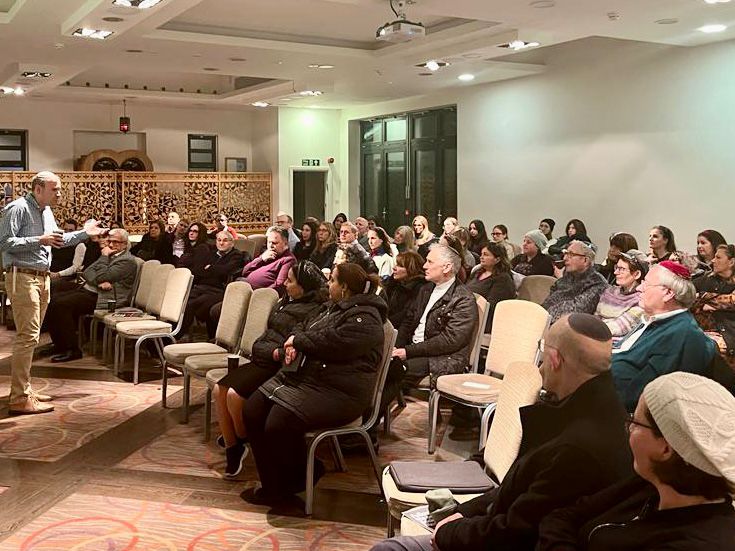
(image: Gila’s Way)

4. What do you at Gila’s Way want to achieve through your charity and how are you doing this through programmes/events?

Our primary focus is on education. We don’t want any parent or any significant other, to be in situations where they “don’t know” or “didn’t know enough” because knowledge is power and empowers us with the capacity to be aware, respond and even save a life. We do so through the many programs, presentations, seminars and interactive workshops and exhibitions that we offer for diverse groups (parents, educators, adolescents, leaders, professionals, here in Israel in the army and pre-military academies). Engaging audiences in the conversations breaks stigmas and allows for knowledge and consideration.

Finally, Gila’s Way offers a consultation service (NOT a hotline). Navigating the mental health system, especially in Israel, isn’t simple. If one knows someone struggling with their mental health, they can schedule a consultation with us to help guide them through initial steps towards healing and recovery.

Whoever saves a single life is considered to have saved an entire world’ (the Talmud)

For more about Gila’s Way, please go to their website here.
5 Ways a Relationship can Hurt your Mental Health by Miranda Davis

(image: free image)

The Adverse affects of relationships on mental health

Relationships have the power to affect mental health negatively. If you don’t know how they can affect you, it’ll be hard to lay down a great foundation to ensure you don’t fall victim. Take a step to lay down the rules for a positive relationship.

What if we told you that your relationships have the power to affect mental health? It’s true; your relationship status can affect mental health. But, finding out how relationships affect mental health isn’t a simple mathematical equation. There’s a lot more that has to go into it, and to be honest, it’s complicated. 

Relationships Have The Power To Affect Your Mental Health

Fact: We all desire to have real connections through stable, long-term relationships with our “ideal partners.” Whether you meet a potential partner after checking out the best dating sites review or through a mutual friend doesn’t matter. What we think about most is the optimism and the excitement we feel once we click with someone else. We never stop to consider what can affect the mental health of the people in a relationship.

Unfortunately, even the most glamorous relationships come with associated risks and can affect mental health. To affect mental health positively, there have to be some previously laid out rules that lay the groundwork for a great relationship.

Without knowing what these boundaries are and the risks associated with a relationship, we are prone to unknowingly affect our mental health. So, what relationship factors affect mental health negatively? Read on to find out.


Lack Of Sex Can Increase Stress Levels
Well, well, this shouldn’t be so surprising. If you’re wondering, “can loneliness affect your mental health?” here’s your answer. When you have an intimate partner within your vicinity, chances are, you will have frequent sex. The bonds created during the act of bonding are so outstanding that they have the power to affect your mental health. 

Frequent sex can lead to greater satisfaction with your relationship. If there’s less sex, then other aspects of the relationship are affected too. The less sex you have, the more prone you are to affect mental health.

Stress levels will soar, and you’re more likely to exaggerate aspects such as financial disagreements, responsibilities over chores, and parenting disputes. While there may be other underlying issues, lack of sex and intimacy is an undeniable factor that can affect both partners’ mental health.

Relationship Difficulties Can Cause Anxiety

Whenever couples are having relationship difficulties, there’s bound to be full-blown anxiety. Unfortunately, the converse is also true. Anxiety can lead to marital problems. Surprisingly, some research suggests that marriage can protect you against anxiety. Confusing, right?

Well, it depends on how you look at it. For marital issues to affect mental health negatively to the point that they cause anxiety, there have to be underlying issues that aren’t resolved. Problem-solving in a relationship has to be done in a way that allows both parties to express their feelings to deal with matters conclusively.

Once an issue is dealt with, both parties become anxiety-free and display better mental health. On the other hand, married people have potential “shoulders to cry on,” and this kind of emotional support is a great way to affect mental health positively.

Sleeping Problems

Unless your partner snores and keeps you awake through the night, sleeping next to them can help you fully relax during the night. But it isn’t that simple. If there are conflicts or insecurities in the relationship, you will have a more inadequate sleep because of thinking through issues during the night.

This, in turn, escalates problems such as insomnia or daytime fatigue. As a result, there’s a vicious cycle with leeway to affect the mental health of both parties negatively.


Social Pursuits Affect Mental Health

Many people wonder, “why does quarantine affect mental health?.” Couples in healthy relationships have to socialise. Socialising is a great way to boost mental health positively. Leisure time may include meeting family and friends, visiting their favorite restaurant together, or even spending the weekend sampling the latest nightclubs.

However, since there are limited opportunities to get so involved during quarantine, spending more and more time without socialising with other people can take a toll on the relationship. When couples spend time socialising, there’s more opportunity to improve their mental health positively.

Since humans are social creatures, we feel better when we make connections with others. But, even this shouldn’t be excessive. Too much can result in alcohol dependency and self-destructive behavior, which has the potential to affect mental health negatively.


Toxic Relationships Can Lead To Physiological “Fight Or Flight” Responses

Toxic relationships can lead to physiological responses that may urge you to either run from the stressor or fight it. These are common reactions that stem from mental, physical, or emotional abuse. Regardless of the stressor we face, we condition our minds to respond. These kinds of reactions leave us feeling drained and have the potential to create poor mental health. 

Conclusion

Whether we like it or not, relationships can affect mental health either positively or negatively. Their effects are worse if they’re negative. To ensure that relationships don’t have a platform to affect mental health negatively, you have to take the necessary precautions to safeguard yourself against negative repercussions.

What do you think is the COVID effect on mental health? What precautions would you put in place to protect your health?

Author’s bio:  

Miranda Davis is a freelance writer in the relation and psychology area. Miranda is interested in such topics as building healthy relationships between people, love/sex compatibility, and how to find the right balance in life in general. She is currently doing specific research on the topic. Miranda loves cooking and long-distance walking.


Understanding PTSD by Gender: Guest blog by Dale Vernor

ptsdim

(image: Kennington Osteopaths)

Post traumatic Stress Disorder, better known as PTSD can occur in a person who has experienced or been a witness to an event that is traumatic enough to affect their lives in a negative way. Witnessing a death, a serious accident, war, abuse, being a victim of a crime, natural disasters and childhood trauma can all be causes of PTSD. Many people only associate PTSD with war and veterans, but the truth is an estimated 3.5 percent of the US population suffers from PTSD.

Research has shown that there are differences in the brain when it comes to how men and women process and deal with PTSD. Science is admittedly behind on truly understanding the gender differences when it comes to PTSD and how it is expressed, but there have been some findings.

Men and women respond to stress differently. Men are more likely to respond with a fight-or-flight response in a stressful situation and women are more likely to use a more calming response known as tend-and-befriend.

This is an emotion-focused coping mechanism. It should be noted that there is so little data that stereotypes should not be formed, however, there is enough data to support differences in the genders.

PTSD in Men

Men are more likely to have PTSD due to combat trauma, trauma from natural disasters and disasters caused by human force, some sort of violence and accidents. Based on studies and research men actually suffer more traumatic life events than women on average, however, only 5-6% of men will experience lifetime PTSD. Lifetime PTSD is less prevalent in men than in women. Double the rate of women will experience lifetime PTSD at 10-12%.

PTSD in Women

Women are at a substantially higher risk for PTSD than men. Biology and psychology play a part in why those differences exist. Women are more likely to experience what is considered “high-impact trauma” at a younger age than men.

Women are more likely to experience sexual abuse, domestic violence and sexual assault that leads to their PTSD. It is sexual trauma that puts women at a higher risk for PTSD than men.

Women who suffer from PTSD will also tend to do so longer in comparison to men; on average 4 years to 1. When it comes to seeking help for PTSD women are more likely to seek support for their illness amongst a group. They tend to look for social support.

Symptoms of PTSD Same in Men and Women

The women and men who have this condition often express similar symptoms. Men may display their symptoms in a more aggressive expression where women have shown to retreat internally and avoid the outside world.

Some of the symptoms of someone suffering from PTSD are:

Re-experiencing nightmares, having flashbacks and frightening thoughts that appear real, avoiding people, places and things that may remind a person of the trauma and avoiding feelings and thoughts to cope with the trauma, signs of heighten anger and anxiety expressed physiologically, being hyper-vigilant against threats, difficulty sleeping, experiencing an onslaught of negative feelings, thoughts and judgments, unreasonable blaming of yourself, excessive guilt and a negative perception of yourself in the world, and disinterest in regular every-day activities.

PTSD and Substance Abuse

According to the U.S. National Library of medicine 50-66 % of people who have PTSD simultaneously suffer from addiction. What begins as a means to cope with the symptoms of PTSD, which are distressing, usually turns into a full-blown addiction.

Substances like drugs and alcohol can decrease anxiety in the moment, escape the pain , distract from negative emotions and increase pleasure in the short term. The coping mechanism of substance abuse affects both women and men. There are dual diagnosis treatment centers for people who are suffering from PTSD and substance abuse.

Post traumatic stress disorder, wherever you live in the world and whatever gender you are, can be hard to cope with. Please seek support if you need it and know you are not alone.

This post was written by Dale, a freelance writer specialising in mental health, based in the USA.  He can be found on Twitter https://twitter.com/DaleVernor

Guest Post: On Sexual Abuse by Anonymous Woman

childab.jpg

(image: JPMS Medical blogs)


The writer of this article is an anonymous woman who wanted to speak out to share her story of being sexually abused as a child and teen. She also has mental health issues as a result.

Trigger warning: please read with care 


I have been abused twice, both times were at the hands of people I knew and respected, once when I was 8 and once at around age 17/18.

A lot of the memories were lost due to the extent of the trauma, but having EMDR has opened up the box, broken the chain that was firmly fixed around it and let all the memories out.

It has been horrendous, reliving the abuse, the detail of my memory, almost physically feeling I am back, as a child in that bed, remembering the details .  The family friend was a women, who was so trusted by all of us, growing up I adored her, admired her, almost wanted to be her, and now, all of those feelings have vanished replaced by to many emotions to specify one.

When I was a teenager I was abused by a well known Rabbi, thankfully the abuse this man carried out has come out in to the community.

I have written this letter in the hope that more people in the community may feel more able to step forward to talk about this.

If someone would like my e mail address please ask the blog owner for it.  

Dear my abuser (s) 

This letter will never get sent , but I want you to know what impact you had on my life, how those actions which may have only lasted 15 -30 minutes , actions which you probably have forgotten about, shaped the person I have become. 

In a strange way I am grateful for the memories of what you did, as not having the memory, yet knowing that something happened was worse. When the memories savaged my brain, invading my mind with your face, your hands and your body I believed that the shock and horror would never pass, everything I had ever thought of you, all my memories of you changed from seeing you as a positive, supportive influence to a monster who had harmed me in the worst way possible.

Your actions, made me aware from such a young age of my body .For years I knew, that from the age of around 9 my body was an immensely complicated thing in my mind, at such a young age being so aware of my body affected my confidence, self esteem and self love . 

At age 8 you took away the most precious thing, you helped yourself to my innocence, you took away from the person I could have become and began my journey to becoming the person I have been.

That knowledge made me in to a pretty messed up person.

My child is around that age . I look at my child  and see a happy future, a future filled with love and self confidence. The thought of something similar happening to my child  is to painful to contemplate.

By the time I was in my teens, my journey of self destruction was well on its way. I had learned by that time how to hide things, how to keep secrets, how to come across as confident and well adjusted and to this day my public persona and the person I am inside are two very different people. My life, for so many years was about seeking physical pleasure in order to reassure myself that I was a loveable, attractive person, that having sex was the self affirmation I needed to survive, lowering myself, giving my body freely, whilst hating myself for doing it, gave me the tools to breath, to live. Even today, if I do not feel my husband desires me it destroys me for days.

There were so many questions, mostly WHY, and HOW, how could I have let this happen to me twice, and why did it happen twice ( I know now that is was BECAUSE it happened once it happened again ) , how could I have stood as an older teen -when I let the pictures overtake my mind I am screaming silently why, why, why.

It is like being at a movie, a never ending movie, you can not leave the screening, you are on the screen, you try to yell, you try to reach out to the girl in the movie, but she can not hear you, you see her at 8, you see her at 17 you see her life unravelling, and you can not do anything to stop it, you want to beg her to tell, you want to beg her to be strong.

You see the girl grow, you see the way she lived her life, and you understand how the girls journey began, it makes sense to you that the girl ends up with severe mental health issues , you see how mental health issues are worsened by no self esteem, how other tragic events  could tip her over the edge and compel her to seek comfort in the arms of any man who would take her, and you understand her.  

 I understand now that cause and effect would dictate that the reason I ended up in your office, was a direct result of what she did to me at age 8, that she was the one who started the chain of events.

You taught me, you guided me to the mind-set that “the way to get love and care is to do what a man wants”.

My whole self worth was wrapped up in a package labelled, please sleep with me.

I feel so much sadness, sadness for the girl you both violated, sadness that the girl whose body you choose to fulfil your sick desires was mine, sadness that I am constantly questioning everything, why was I there, how could I have let you, why didn’t I tell anyone, when will I be able to go a day, an hour, 10 minutes without one of you pushing your way in to my thoughts.

There is nothing I can do to turn back time, there is no way I can ask you why, or sit with you and show you the movie of my life, the one which you started, I pray that there will come a time I can accept what you both did, I hope with all my heart a day will come when you will not mean anything to me.

All I can do is wait, sit with these constant overwhelming thoughts, trying to untangle them like a necklace with those annoying knots in the chain that are impossible to open, yet I will persevere.

I will continue to pick at the chain until all those knots have gone and you both become dust that is blown away from my mind


If you need support with sexual abuse and you live in the UK please contact:

The Survivors Trust

https://migdalemunah.org.uk/

Safe Line