A year or two ago, I recorded this webinar with Bipolar UK talking about our family story (mine and my Dads) with bipolar disorder, suicidal ideation, depression and both of us finding recovery.
Suicide is a terrible but common outcome of bipolar and acute mental health episodes. I also know what it is like to lose a loved one to suicide and mental illness and the pain that brings.
I share this webinar today to raise awareness, but also to encourage people to go to their GP/psychiatrist/ family/ spouse and talk, if safe, about what is going on for you.
Watch here, with care, trigger warning : discusses bipolar episodes, suicidal ideation
In this webinar, Bipolar UK CEO Simon Kitchen shares the findings of the Bipolar Commission on the critical link between bipolar and suicide. He is joined by Ashley Brice, an experienced crisis negotiator with the British police specialising in suicide prevention, and Eleanor Mandelstam, author and freelance writer who lives with bipolar. Together, they explore the risk factors, warning signs, and practical strategies to prevent suicide, offering crucial insight for anyone living with bipolar, supporting someone with bipolar, or wanting to better understand how bipolar impacts mental health and suicide risk.
With everything going on in the world today, some stories can get missed in the flurry of competing news. However, when I saw a post by the Oli Leigh Trust, a charity in my community dedicated to suicide prevention, that suicide prevention lessons are going to be made compulsory in secondary schools, I was so happy. Department for Education (DfE) announced on Tuesday that lessons discussing suicide prevention would be compulsory in secondary schools from September 2026.
Growing up, when I had my own issues with depression and suicidal ideation as part of my bipolar disorder, mental health was not spoken about openly in schools. We know that sadly, the suicide rate in the UK and worldwide has been rising. A group of Dads, Andy Airey, Mike Palmer and Tim Owen, 3 Dads Walking, who lost their daughters Sophie, Beth and Emily to suicide came together to campaign to Sir Keir Starmer and the UK government. Heres what they told the BBC,
‘Lives will be saved. Our Voices have finally been heard. ‘ He said the trio began campaigning shortly after their first walk to raise awareness in 2021 and admitted it had at times felt “like we were swimming through treacle uphill”, but now their “voices have been heard”.
“We have covered a lot of ground, literally and figuratively, over the last few years, but to come to a point where a significant change is going to happen still feels quite unreal. I’m stunned.”
“We are really proud of what we have achieved.”
Suicide is the biggest killer of under 35’s in the UK. In their first walk, they raised nearly 1 million pounds for Papyrus charity. In their second, they walked to all 4 UK parliaments to ensure every child was taught the skills to cope with suicidal thoughts. They then met with MPs to discuss how suicide prevention could be embedded in the curriculum.
“If this is the biggest killer of our young people, why aren’t we talking about it?”
So today I say thank you and congratulations to Andy Airey, Mike Palmer and Tim Owen- three courageous men spreading light and goodness in memory of their beloved daughters. Suicide prevention is so sadly needed.
Last week, acclaimed chef, restauranteur and mental health advocate, Heston Blumenthal OBE starred in the BBC documentary ‘Heston: My Life with Bipolar’ which explored his fairly recent bipolar disorder diagnosis. Heston subsequently became an ambassador for national charity Bipolar UK, and has been actively supporting the charity’s mission to help reduce the average 9.5 year delay to diagnosis and end the stigma surrounding the condition.
In 2023, Heston began experiencing both depressive and manic episodes, hearing voices and seeing hallucinations, as well as depression with suicidal thoughts. Mania can also cause you to have intense creativity, speak faster and not listen to others as well as causing delusions and psychosis. Heston’s wife Melanie could see that his health was deteriorating rapidly and that he was a danger to himself. Despite the trauma of sectioning and hospitalisation, this set Heston on the path of not only a bipolar diagnosis, but medicine, therapy and ongoing treatment to help him live a healthy and happy life again.
Heston said to Bipolar UK, “I was living with undiagnosed bipolar for many years, so it’s been an extraordinary journey to get where I am today, and I’m delighted to have had the opportunity to talk to others living with the condition and find out more about their experiences.
“There is still a lot of stigma regarding bipolar, and mental health support is still lacking, but it is vital to be able to talk openly about the condition. I know this isn’t always easy, but I hope by sharing my experience, people will gain a greater understanding of bipolar and an insight into how I’m managing it.”
The documentary was extremely powerful to watch and sad in places, but inspiring. As someone who faced a similar situation to Heston in terms of a manic episode with psychosis/delusions that led to being sedated, sectioned by psychiatrists and hospitalised, my heart went out to him as I know how traumatising this can be. I found the needle being shown as a reenactment for sedation quite challenging to watch! However, the documentary was more than just showing what happened to Heston, who didn’t know he had bipolar til 2023, when he was in his 50s.
I found the discussion that Heston had with his son Jack, about how he was during a manic episode to be really enlightening. A lot of children of parents with bipolar find it challenging when their parents personality is almost hijacked by the episodes. Mania can lead to quickened speech, manic and grandiose ideas, lack of sleep and risky behaviour. You could see how much love Heston and Jack had for each other and how special is family is to support him through this and appear on camera. This includes his wife Melanie, who has been Heston’s rock!
The documentary ended with Heston visiting the mother of Rebecca McLellan, a young woman with bipolar who died by suicide due to neglect from mental health services. Rebecca had raised the alarm with the crisis team at her local hospital various times but was not treated with respect and dignity. The pressure of her illness and lack of support led her to take her own life.
Heston wants to highlight the suicide risk that bipolar brings and how much more mental health support is needed from the government. He is now working as an ambassador with Bipolar UK to raise awareness. Bipolar UK is on a mission to ensure people with bipolar get a quicker diagnosis so they can access effective treatment, support, and self-management, enabling them to live well and fulfil their potential.
Simon Kitchen, Bipolar UK CEO, added: “Heston is such an incredible ambassador for everyone in the UK living with, or affected by, bipolar. We could not be prouder to be working with him. His willingness to be so vulnerable on camera and to share such personal details about his experiences has resonated with many people in our community – and will help people who don’t know much about bipolar to begin to understand this complex and much-misunderstood condition. Heston is living proof that despite the sometimes severe and fluctuating nature of the condition, living with bipolar should not be a barrier to following your ambitions”
As one of the million people in the UK living with bipolar, I know how much more funding is needed in the NHS and a new bipolar pathway with more mental health support needs to be set up. Early prevention and support is key to stop bipolar escalating into suicide or mania.
Although it was a very personal watch for me, due to having been diagnosed with bipolar since aged 16 and my Dad having bipolar too, I thought that Heston’s documentary was so inspiring. He has only been living with the condition for two years and is using his platform for the good. Heston is now on Lithium medication to stabilise his moods as well as an anti psychotic medication.
Bipolar UK say that according to the stats, someone with bipolar takes their own life every day. Hopefully Heston’s documentary will act as a reminder and catalyst to our government to begin change. Thank you Heston and Melanie for being vulnerable and sharing your important story.
(image: Bipolar UK)
Heston: Life with Bipolar is out now on BBC Iplayer.
The National Confidential Inquiry into Suicide and Safety in Mental Health (NCISH) released its Annual Report for 2025 last week, revealing that over the past decade, nearly 20% more individuals with bipolar disorder are dying by suicide due to shortcomings in the UK’s mental health system.
According to national charity Bipolar UK, the report provides stark evidence that specialist care is lacking, Lithium (an important mood stabiliser medication) is under-prescribed and suicide prevention measures are falling short.
The report highlights that from 2012 to 2022, there were 1,491 suicides by patients with bipolar, with an alarming 19% increase from 2019 to 2022. Despite Lithium being a clinically proven suicide prevention treatment for people with bipolar, only 39% of those who died were prescribed it and just 12% were receiving psychological therapy.
This data echoes the findings and lived experience of Professor Tania Gergel, Head of Research at Bipolar UK, in her recent article in The Lancet Psychiatry where she said: “Globally, 15-20% of people with bipolar disorder die by suicide, with 30-60% making at least one attempt. These rates are not decreasing despite an overall decline in global suicide rates.”
According to the Nuffield Trust, there is set to be a £4.8 billion unfunded shortfall in the NHS England revenue budget for 2024/25, raising the prospect that without further funding, service cuts may be inevitable.
With bipolar increasing an individual’s risk of suicide by 20 times that of the general population, Bipolar UK is urging the government to commit to addressing health waiting lists and to invest money in creating a dedicated care pathway for bipolar to reduce suicide rates.
Simon Kitchen, CEO of Bipolar UK, said: “This report is devastating but not surprising. We’ve been shouting from the rooftops that people with bipolar aren’t getting the care they need and now the data lays it bare.
“Bipolar carries one of the highest suicide risks of any mental illness, yet specialist services are practically non-existent, and Lithium – the gold-standard treatment for suicide prevention – is underused. The time for excuses is over. We need real action, and we need it now.”
The charity has heard from its community of people living with the condition, who are concerned that they are unable to access psychiatrists, have little to no continuity of care and are not being monitored adequately when at high risk. There is also a lack of bipolar specialists in the UK, leading to people not receiving a correct diagnosis or waiting too long to receive one – all of which add to the risk of suicide.
Professor Gergel said: “Neither bipolar disorder nor suicide in people with bipolar disorder are research priorities, resulting in major knowledge gaps in both. This can and must change. The shocking statistics might well underestimate the prevalence of suicide in people with bipolar disorder, given the probability of death by suicide before treatment or accurate diagnosis.”
Adding to that, Simon Kitchen said: “Suicide prevention in bipolar requires a shift in both research priorities and clinical practice. We know lithium saves lives, but it is still under-prescribed. We know specialist care works, but most services are generic and fail to meet the specific needs of people with bipolar. Bipolar suicide is not inevitable, but without urgent action, people will continue to die.”
(image of Prof Gergel, Bipolar UK)
The NCISH report also revealed broader systemic failures contributing to preventable deaths. Alarmingly, patients with bipolar were more likely to:
Die within three months of being discharged from inpatient care, highlighting dangerous gaps in post-discharge support.
Miss vital clinical appointments, often due to social isolation or side effects from medication, with 15% identified as non-adherent before their deaths.
Experience extreme distress without access to psychological therapies, with only 12% receiving talking therapies.
With more than a million people living with bipolar in the UK, the figures from this latest inquiry represent lives lost and has led Bipolar UK to call for urgent action, including implementing:
Specialist bipolar services in every NHS region to ensure timely diagnosis, access to evidence-based treatments and care tailored to the complexities of the condition.
Increased lithium prescribing, in line with NICE guidelines, ensuring every person with bipolar who could benefit from it is given the opportunity.
Enhanced suicide prevention measures, including better follow-up after hospital discharge and targeted support for those who miss appointments or struggle with medication adherence.
Simon Kitchen concluded: “We need all UK health authorities and departments of health across the nation to act now because lives depend on it. The evidence is undeniable, the solutions are clear, and the cost of inaction is catastrophic. Specialist care, Lithium, and targeted suicide prevention measures can and will save lives.
“Bipolar suicide is a national emergency, and the upcoming 10-Year Plan is the critical opportunity to turn the tide. Bipolar-specific services are not optional; they are a lifeline.
“The government and NHS must act now, before more lives are lost to preventable tragedy. It is time to get it right.”
Bipolar UK is the only national charity dedicated to supporting people affected by bipolar. Bipolar UK provides a range of services, including information and advice, a network of support groups, an eCommunity, workplace training and telephone and email peer support. Bipolar UK also works in partnership with research organisations and campaigns for change to tackle critical issues. For more information, visit www.bipolaruk.org
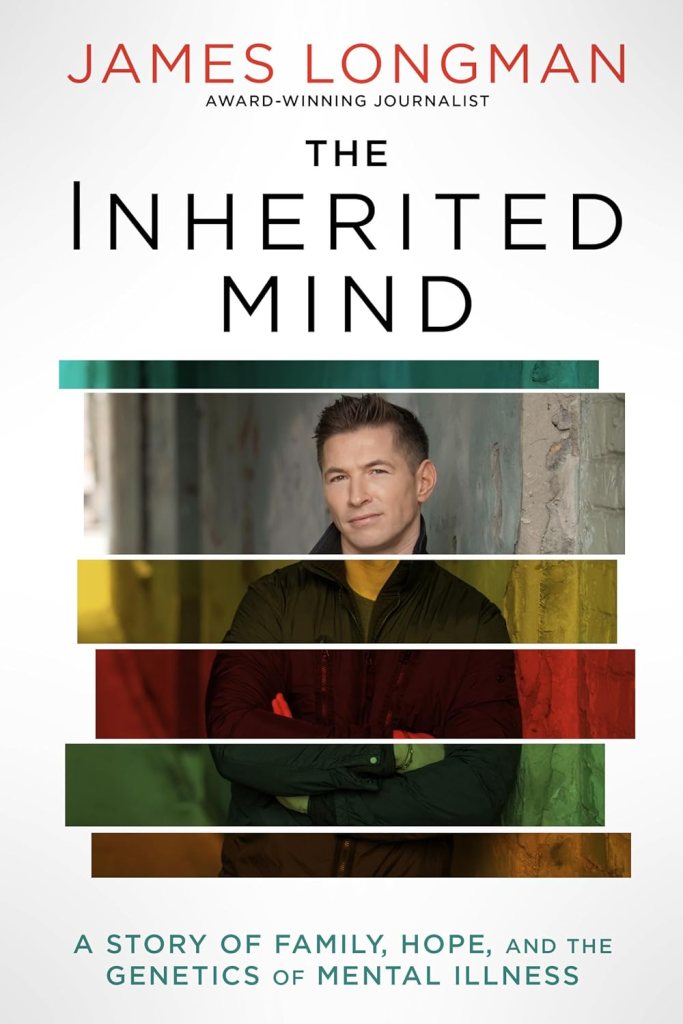
A couple of years ago, an intriguing email landed in my inbox. It was from the award- winning journalist James Longman (of ABC News). He told me he was writing a book investigating his own father’s illness and how much of mental illness is inherited. His father died by suicide when he was just a child and had a diagnosis of schizophrenia and depression, but James did not know a huge amount about this mental health history at the time.
James wanted to delve deeper into the family and genetic side of mental illness. As he got older, James’s own bouts of depression spurred him to examine how his father’s mental health might have affected his own. He engaged with experts to uncover the science behind what is inherited, how much environmental factors can impact genetic traits, and how one can overcome a familial history of mental illness and trauma.
James had seen my own story of family illness with bipolar disorder, as my Dad and other relatives also have the same condition and so he reached out to interview me. With permission from my Dad, I had a wonderful chat over Zoom with James, talking about the links with certain types of mental illness in families and how these types of illness can cause suicidal thoughts and sadly in James’s fathers case, suicide. We also discussed the hopeful journey that can occur if you have access to the right support networks, medications and therapy. Medication in particular has helped to keep us well over the years as bipolar has a definite biological link too.
In The Inherited Mind, James invites readers to reflect on their own stories as he shares his quest to better understand himself and his family. Through speaking to mental health experts, to those who have had similar familial experiences, and about his own life stories, James shows us, with heart and humour, how much our bodies can empower and inform us about our own personal mental health histories.
We are honoured to have our story featured in James’s informative and essential book. Thanks again to him for featuring us as a case study. It will be out in January and you can pre order your copy here
Sometimes, I get emails about stories and they really stand out to me. This was one of them. A friend of mine knew about this suicide prevention charity in Israel, called Gila’s Way. The Hammer family in the Jewish community sadly lost their daughter Gila z’l to suicide when she was just 18. Gila had mental health issues and the family want to save lives in her name and make sure it doesn’t happen to another family. Rabbi Shalom Hammer, Gila’s father and a world renowned lecturer, started sharing his insights from Gila’s tragic story in order to raise awareness, teach empathy, and promote dialogue regarding suicide in order to ensure its prevention.
Gila’s Way is a non-profit organisation which implements, educates and presents programs regarding mental health awareness and suicide prevention in order to save lives.
I asked Rabbi Shalom Hammer a few questions about his life saving mission:
Your charity Gila’s Way has such an important mission. Please can you tell me more about Gila as a person, her mental health struggles and how you as a family coped in the aftermath of her tragic death/ how the charity got set up?
Gila was an unbelievable girl, vibrant, vivacious, social, hilarious and extremely sensitive. She was a leader of her peers socially and she loved to have fun. She also saw the world in a very innocent wholesome way, she was not capable of harming anyone nor did she believe that people would harm her. Tragically she experienced a sexual episode which was obviously extremely traumatising for her. She also did not wish to or know how to openly communicate the degradation she felt and the pain she was experiencing. Consequently, a swell of anxiety and depression built up inside of her and she eventually began to lose hope which ultimately lead to her passing away.
After Gila died, we decided to take the inexplicable pain and the unfathomable loss to as much of a positive place as possible. My wife and I feel that Gila should be alive and the reason she is not is largely because of the lack of knowledge with mental health and certainly suicidal ideation that we had and that so many others have as well. Gila’s Way is an organisation therefore, who’s primary concern is education via seminars, lectures, interactive workshops and presentations, understanding that the more we educate and inform the greater chance we have of lowering the numbers and preventing suicide.
(image of Gila z’l: Gila’s Way and Hammer Family)
2. What would you like people to know about teen suicide and suicide prevention in Israel and globally?
The most important vital point that I cannot emphasise enough, is that the vast majority of people who die from suicide, do NOT want to die. Particularly when we are speaking about adolescents who are experiencing so much pressures and may impulsively make a decision within a few seconds and not realising that it is finite. When people understand that most people who die from suicide, did not want to die, they also understand that this means we are capable of saving that person.
3. What is your message to other parents coping with children with mental health issues or who have also experienced bereavement?
There are a number of very crucial messages for parents. Firstly, don’t be afraid or ashamed to talk and converse, secondly don’t converse with just everyone. Dealing with mental health and a child who is challenged, is very procedural and therefore exhausting. Make sure to speak to the right people and save your energies for those people. Don’t speak to just anyone because you will grow more confused and more exhausted; make sure to find those/that people/person who can be helpful and focus on speaking to them.
In addition, pay attention to what your child is “saying”. A child (or anyone for that matter) who is dealing with mental health challenges or experiencing a crisis, will not necessarily explicitly say “I need help”, but they will often send “cries for help” and share those signs because they really want help. Some of those “warning signs” can be familial/social isolation , spending long hours in their bedrooms and refusing to join the family for activities which they normally enjoyed. In addition, they may be exhibiting exhaustion, or become physically unkempt, and they also might desist from performing normal expectations (like going to school, doing their homework, participating in events etc.)
Finally, and this is something that I consistently emphasise, trust your parental instincts. We were blessed with instincts and often a Dr or professional might suggest something and our instinct is saying “this just does not sit well with me”…trust that instinct and pay attention to it, because it is there for a reason.
(image: Gila’s Way)
4. What do you at Gila’s Way want to achieve through your charity and how are you doing this through programmes/events?
Our primary focus is on education. We don’t want any parent or any significant other, to be in situations where they “don’t know” or “didn’t know enough” because knowledge is power and empowers us with the capacity to be aware, respond and even save a life. We do so through the many programs, presentations, seminars and interactive workshops and exhibitions that we offer for diverse groups (parents, educators, adolescents, leaders, professionals, here in Israel in the army and pre-military academies). Engaging audiences in the conversations breaks stigmas and allows for knowledge and consideration.
Finally, Gila’s Way offers a consultation service (NOT a hotline). Navigating the mental health system, especially in Israel, isn’t simple. If one knows someone struggling with their mental health, they can schedule a consultation with us to help guide them through initial steps towards healing and recovery.
‘Whoever saves a single life is considered to have saved an entire world’ (the Talmud)
On Monday 11th September, I am looking forward to being on a webinar on Bipolar and Suicide prevention for Bipolar UK charity, with their CEO Simon Kitchen and a police officer, Ashley Brice (pictured), who specialises in suicide prevention for people in crisis in Wales. This is a difficult topic to discuss and one that will be tackled with empathy.
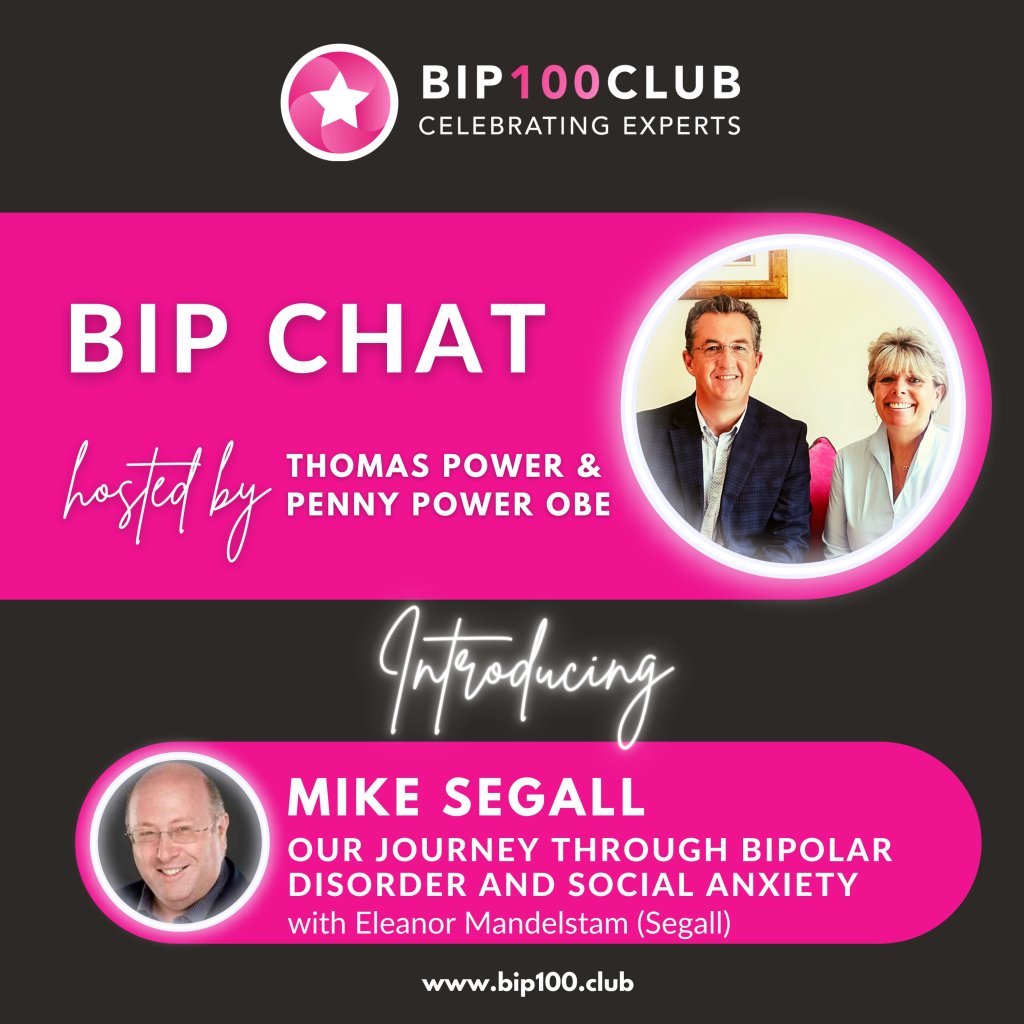
Yesterday, 9th Feb, my dad Mike and I were honoured to be interviewed by his friends of many years, Penny Power OBE and Thomas Power of Business is Personal- live on Linkedin, Youtube and Facebook.
They asked us to come on their weekly show to talk about our hereditary journey with bipolar disorder and anxiety and shed light on all things mental health.
It was a real pleasure to talk all about our lives and how my Dad was diagnosed with bipolar just 4 years before me. Trigger warning: discusses suicidal ideation and psychosis.
This has to be the strangest time in all our lives. Not being able to leave the house for fear of passing on a deadly virus, all the family working from home, worrying that symptoms are indeed Covid 19.
This outbreak has already infected friends and potentially family. I think I may have had a mild version and have been isolating for at least a week already, and now until the danger passes. Thinking of all my friends who are affected and anyone who has the virus or whose life is being disrupted because of it.
There are good things happening- acts of kindness, communities pulling together, sunshine and flowers and spring blooming. Supermarkets opening for NHS workers and the vulnerable, the homeless being housed in hotels, financial help from the government (although can we please help our self employed workers more?).
I do worry though about the impact the virus will have on those with mental health conditions. My appointment with a psychologist to help me with my PTSD has been postponed and no new date given. I can’t go to see my therapist either but I think will organise a Skype call so that we can continue the EMDR trauma therapy I have been having. Medication supplies are so far unaffected.
I am lucky to live with family at the moment and have the support of my husband, mum and step dad and wider family too. For those living alone, having to buy groceries and navigate this new and scary world alone is terrifying for them. I was heartened to see this week, the Jami appeal for the vulnerable in the Jewish community. Mental illness does not discriminate and with all the pressures at present, suicide remains a real risk. We can combat this through checking in on friends and family regularly and signposting them to emergency support such as the Samaritans or crisis teams.
It is a scary time but we all must pull together and reach out to each other, by video call, phone call, whatsapp message or more and try, from our homes, to look after the vulnerable and our neighbours.
Most importantly, we must look after ourselves and our households and try to stay well.









 beurownlight.com