The UK went into Lockdown and I went into Meltdown: Guest blog by Nicole

quotesblog

(image: Nicole_no_filter)

The UK went into lockdown and I went into meltdown.

When I heard the announcement on the news, I was on my Mum’s sofa and I immediately felt the usual sick way that I do when I get anxious. I needed to get out of the house, so I quickly escaped on a walk with my dog. My thoughts were far from pleasant and I silently cried while I slowly paced around my local area. This marked the start of a tough couple of weeks.

I fell into the behaviours that you would probably expect from a person with anxieties, I was obsessed with updates on the lockdown, it became my most frequently searched term on Google! My skin condition, urticaria, flared up which happens when I experience stress. My sleeping got worse than usual and I was easily irritated by silly things. Most of all, I fixated on the negatives of my situation, such as the impact living alone would have on me.

I’m not going to pretend that I had an epiphany on day fifteen and I’m now thriving in my new life of one daily walk and it being a glam day if I put on jeans!

However, I’ve now established a flexible routine and I’ve settled into working from home.

I check the news once a day and I appreciate that I am lucky to be healthy and still have my job. However, I don’t give myself a hard time when I have a bad day and I don’t pay attention to unhelpful comments online, criticising people for struggling as there are others with more serious struggles. Of course, this is true, but I heard recently that, ‘you wouldn’t tell someone not to be happy, because there is someone happier’ and that has stuck with me ever since.

The most positive outcome of this situation for me, is that I am in touch with my thoughts, emotions and my behaviour, more than ever.

Some things that have helped me are:

  • Reawakening my passion for writing: As a Careers Coach, I regularly create resources and assist others with writing about themselves. However, it had been so long since I wrote for pleasure. I now record my thoughts in a journal, you are currently reading my second blog post and I rediscovered my love for writing poems. Writing has felt a bit like offloading to my best friend; I get out my thoughts and I then feel better. 


  • Walking: I think it’s amazing that so many people are focusing on their fitness, but I was previously anxious about my weight, so I don’t put pressure on myself to follow a rigid exercise routine. Pre-lockdown, when I had a crap day, I benefitted from getting out of the house and being around others; walking isn’t a substitute for this, but it helps me to get rid of negative energy by doing something active. 


  • Keeping my space tidy: This won’t work for everyone but a clear space, means a clearer mind for me. I also find cleaning quite therapeutic as it helps me to focus on the task in hand and not overthink. 


  • Paying it forward: I have been trying to spread some positivity remotely, for example, I suggested to my colleagues that we each send a card to another person in the team with a positive message. I also started an Instagram account to raise awareness of mental health and share experiences and strategies with others. As a people person, helping and connecting with others always lifts my mood. 
  • Revisiting coping mechanisms for anxiety: I have done a lot of research into cognitive behaviour therapy techniques over the last few years, as some of the principles are useful for my job in supporting young people. I have also personally been through this type of therapy; this helps me to reframe negative thoughts and therefore gain better control of my feelings and actions. 

I’d be lying if I didn’t say that I still regularly think that I can’t wait for this to be over! I miss the little things in my life, but the lockdown has caused me to have a deeper appreciation for all the good aspects of it.

I have also realised that the little things ARE the BIG things. Being forced into this situation that I have no control over, has helped me to put less focus on other things that I can’t control.

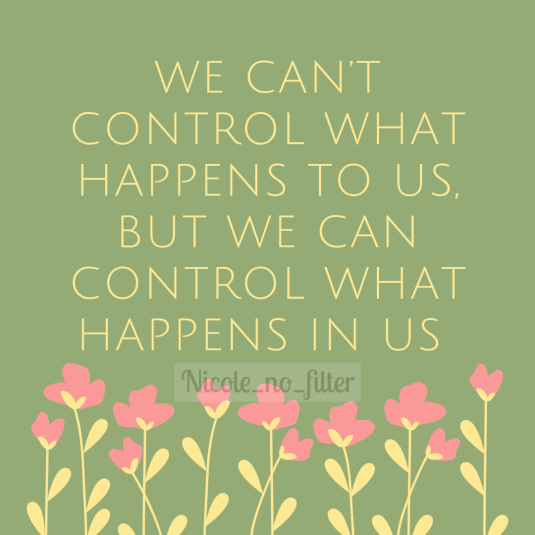
I was previously anxious about being single as I am about to approach my 30th birthday, but I have gained a more positive perspective on this. I may not be able to control what happens TO me, but I can control what is IN me, which are my thoughts and how they make me feel and react.

Nicole is a careers coach and freelance writer in the UK and is on Instagram @nicole_no_filter

My crippling Anxiety once floored me. Now I wouldn’t be without it : Guest blog by Emma Johnson at Worry Knot Jewellery

emmajohnson2

(image: Emma Johnson at Worry Knot)

Trigger warning: talks about self harm, anxiety, depression and mental illness 


For 10 or so years, throughout adulthood, I have battled on and off with something invisible and something I still don’t fully understand myself.

Generalised Anxiety Disorder. 

I’m now 29 but my illness started at about the age of 21. In my third year of University, I started to dread things, I started to worry about everything I said, did and I started to question if anyone liked me. I have always been apologetic but this was different. I felt like apologising for walking into a room. 

I was unable to switch off, unable to focus on my University work and I withdrew a lot socially. Life moved quite slow back then. 

For me I knew this was out of character. I’ve always been fun loving and outgoing, with a smile on my face. I became confused about who I was. I developed an uneasy feeling that would take almost 8 years to learn to sit with.

During the first few years of my disorder, I definitely still achieved a lot. I often feel my disorder makes me thrive more, sort of like overcompensation, a little bit like proving people and myself wrong. I graduated with a BSc in Psychology and at the age of 24, I went on to gain my MSc in International Development.

I don’t think I truly recognised these achievements until about the age of 27. 

Whilst studying my MSc life changed quite a lot for me. I had gone through a bad break up in my younger years but then I finally met someone who lifted me back up, who challenged my thoughts, someone who was completely different to me in every way. This was oddly comforting for me, a bit like escapism from my own ruminating thoughts. 

Then I entered the world of professional work. I started out as a fundraiser, and in my most recent role I tried my hand at facilitating group therapy. In 5 years I have moved through 4 jobs within the charity sector. Sometimes part time.

During this time my anxiety disorder would often become too much. I often sunk low and developed bouts of depression. I would cry and sob. I was back and forth to the GP, often teary, often red in the face and always a bit embarrassed, even though I didn’t need to feel embarrassed.

At one point I was signed off sick from work, bed bound for 3 months, with no motivation at all, just me, myself and my catastrophic thoughts. I was pretty exhausted, shaky, drained and more confused than ever. My physical symptoms manifested as sweating, chest pains, palpitations, shortness of breath and the odd panic attack. 

One thing I started to do was open up, I began to share things with my partner and colleagues. They let me cry if I needed and at the same time my GP was stabilising and finding the right medication to suit me. But I was clearly still unwell.

I quit another job I enjoyed through my inability to cope and my lack of self esteem. My Imposter Syndrome led me down another uneven path.  Always overworking. Always overthinking. Always overcompensating. I didn’t slow down until I was forced to.

Another behavioural symptom of my anxiety is skin picking and nail biting. In early adulthood I would sit for 3 hours picking at my face and over the years I have made the skin around my thumbnail so sore it would bleed. It is now scarred.

My need to fiddle with something to ease anxiety is always apparent. Earlier this year, I was talking to my friend about making jewellery and how cool it would be to make my own. I have always been into accessories, fashion and jewellery so I said I’d love to make something I can wear and carry with me discreetly but also fiddle with, to stop me from picking so much. 

She mentioned worry beads and I was intrigued. I wanted to make my own twist on them. A prettier version, merging them with jewellery design that I would more likely wear, so I did and my life has changed. I have started a small business called Worry Knot.

necklace1

(image: Emma Johnson at Worry Knot)

Alongside selling calming jewellery, I’m blog writing. I’m advocating more widely about the importance of opening up when confusing and sometimes debilitating symptoms develop. Not only is it therapeutic for me to make my jewellery but it’s extra therapeutic playing with this jewellery a few times a day. 

Having something to focus on, things to make and to write about has been crucial in managing my own anxiety, especially at such an anxious time for the world. I hope my jewellery can go on to help those feeling anxious not only now but going forward into the future too.

emmajohnson1

beads

(Images: Emma Johnson)

For more information please visit:  www.worryknot.co.uk and instagram.com/worryknotuk

You can also find me @worryknotuk on Facebook and Instagram.


Emma Johnson is a writer with lived experience of mental health issues. She is the founder of Worry Knot, a jewellery brand to help others who have anxiety.    worryknot


Stuck in Self-Isolation? Here Are Some Simple But Useful Home DIY Projects: Guest blog by Brandon Smith

firefly2

(image : Paper Mart Blog)

With the world in turmoil right now and lots of cities across the world closed, many of us are stuck in self-isolation at home. Why not start a DIY project?

With the sun coming out quite a lot over the last few weeks across many parts of the UK, and government guidelines only allowing limited travel, now is the time to make use of being at home.

Not all B&Q, Homebase and other hardware outlets are open across the country, but most companies offer online delivery of any product you would need to buy for a project. 

Why not also involve some of the people who live with you? If you have small children and you’ve decided to spruce up the garden, then why not place a table outside so they can paint their garden while you work on yours?

Here are some simple home DIY projects you can do while at home under lockdown:


Make a Sharpie Mug

This is a quick and easy one for the children. Buy a handful of plain mugs from your local supermarket, along with a few Sharpie permanent markers (choose different colours if you like). Then, draw or write your design on the mug and pop in the oven at 175oC for 30 minutes. Once cooled, your self-made mug is yours to use and keep!


fence1

(image: Pinterest)

Paint the Garden Fences

It’s usually a job left until the Summer, but getting outside in the Sun is good for vitamin D levels and being in the sunlight helps to boost our mood and immune system. Painting the garden fences is a simple DIY project, but once you’ve completed it the satisfaction looking at a job well done and ticking off another box on your list of Summer jobs is sure to make you feel better about being indoors.

 Simple Custom Shelves

You don’t need a fancy kit when it comes to building some shelves indoors. All you need is some wood, brackets, a saw and a cordless drill/driver. This is a one or two-person job, and it won’t take you all day, but putting up some shelves will help with storage (whether in the kitchen, living room or bathroom). Be sure to use the right tools for your project! If you’re unsure about saws and drilling, there are many resources such as hints, tips and full guides available online.

Mosaic CD Mirror

Want to add a bit of a wow factor to a mirror in your hallway? Take an old mirror or order a cheap one online (eBay or Facebook marketplace usually have some) and put a frame around it that has a good 3 to 4 inches space. Then, cut up a bunch of old CDs (preferably ones that don’t have lots of scratches on them) with some plastic scissors or toughened kitchen ones, cover the pieces with glue (like Copydex you used in school) and stick them to the frame. Once it’s done, you’ll see an abundance of colour and reflections when it’s on the wall.

Firefly Night Lanterns

The is super simple, and the kids will love them. You should order the following from your favourite online retailer:

  • Glow sticks (one for each jar)
  • Glitter
  • Large jam or marmalade jars (or use some of the empty ones in the cupboard)

Take a glow stick, cut the top off and empty the contents into the jar, then sprinkle in some glitter. Attach the lid and seal. Shake the jar so that all of the materials are distributed. Then, either close all of the curtains in your front room or wait until it goes dark outside, and you’ve got a night lantern with fireflies in. The children will love them.

Window Shutter Mail Holder

We don’t tend to use window shutters all that much in the UK, but they are common in the rest of Europe. You’d think that means they are hard to get a hold of, but used ones can be found on marketplaces like eBay. Once you have one, take the shutter and sand it down. Then, paint with whatever colour you want and allow to dry. Depending on the shutter, paint colour and type of paint used, you might need more than one or two coats.

Then, drill some holes in the wall and fix the shutter to the wall with raw plugs and screws. All of your mail that the postman brings can be put into the slots, and everyone can see who each letter is addressed to – a great way to show the children where mail can go when it comes in the post.


Body Pillow

If you have children, then you’ll be spending a lot of time doing fun things while at home. And, for many families, this involves some relaxing in the front room.

When shopping in one of the larger supermarkets, pick up some cheap pillowcases and stuffing, Or you can buy some pillows. If buying pillows, you’ll need four pillowcases and the filling from two pillowcases for one body pillow.

When you get home, lay out the pillowcases as you would if you were using them to sleep on: placing them next to each other on the floor to create a caterpillar. Fill the pillowcases with the stuffing or pillow material and stitch up the sides. Then, sew the pillowcases together to create your body pillow.


Being stuck at home all day doesn’t mean you need to sit there doing nothing or watching multiple episodes on Netflix while also feeling bored and drained. It’s important to take control of your mental health and well-being and keep yourself busy with activities that bring comfort and joy. Try some of the DIY projects above and let me know how you get on.


Brandon Smith is an Editor at TheSawGuy.com – a woodworking & DIY resource for everything from comparing the best table saws and miter saws, down to home and garden project

How to help Teens with Mental Illness succeed at School: Guest blog by Brooke Chaplan

teenmentalillness

(image via B Chaplan)

It can often feel like the educational system is not set up to deal with anyone who falls outside of a fairly narrow set of parameters. If you know a teen who is dealing with a mental illness, you have most likely seen ways that the system fails to help him or her. If you want to help that teen succeed, though, you can take a few of the steps below.


Seek Out Treatment

The first, and perhaps most important, step is always ensuring that the teen in question is actually receiving treatment for his or her illness. While you might think that the teen’s coping skills are up to the task of school, the truth is that professional help is still the best way to stay on track. Whether this means therapy, medication, or a combination of the two, seeking out treatment is always a wise first step, from a doctor (GP) or psychiatrist if needed.


Find the Right School

The next step requires taking a look at the school environment. Some students do well in a typical school, while others might need a more therapeutic environment. Even choosing a smaller college prep high school may be the best way to help out a teen who has to deal with significant emotional problems. The setting in which education occurs matters, so make sure that your teen has the support he or she needs.


Create a Support Network

Make sure that the teen in question doesn’t have to do it all on their own. Setting up a support network that involves friends, therapists, and even teachers is a great way to give your teen a bit of extra help when it comes to dealing with the tough days. While you should be careful with how you talk about your teen’s illness, it’s also a good idea to make sure that others are aware of what he or she is going through.


Involve the Teen

Finally, give the teen a stake in his or her success. Let him or her be part of the decisions about schooling, therapy, and finding the right support. Developing a sense of agency is a must for any person who deals with a mental illness, so start the process sooner rather than later.

Don’t be afraid to seek out help when your teen is struggling. Find a good therapist, build support networks, and make sure that you’re making the right educational sources.

With the right kind of help, your teen can be quite academically and emotionally successful.


Brooke Chaplan is a freelance writer and blogger. She lives and works out of her home in Los Lunas, New Mexico. She loves the outdoors and spends most of her time hiking, biking, and gardening. For more information, contact Brooke via Facebook at facebook.com/brooke.chaplan or Twitter @BrookeCha

Mental Health Blog Awards 2020- Vote for Us! : by Eleanor

mhblogawards1

(image: Mental Health Blog Awards)

Hi friends,

Voting is now open (first round) for the Mental Health Blog Awards 2020 and we have been nominated in the Blogger of the Year Category.

We would love you to vote for us, to recognise all of our hard work- including that of our guest bloggers, in battling mental health stigma.

I started the blog 4 years ago and it is an honour to be nominated.

You can vote for us- listed as Eleanor at Be Your Own Light here and please also vote for others in other categories if you are aware of their work! There are some incredible people nominated.

From Mike Douglas, founder of the awards:

“I am delighted to welcome you to the Mental Health Blog Awards. 

I look forward to continuing to celebrate the amazing work, effort, energy, emotion and so much more you all put into raising awareness, supporting, signposting, explaining and comforting in 2020.”

mhblogawards2

(image: Mental Health Blog Awards)

First round voting closes on 1st May and you can vote here: https://s.surveyplanet.com/bG5vzH_q


With love and thanks,

Eleanor 

x

5 Ways you can reduce Anxiety in Every Day Life: Guest blog by Samantha Higgins

theway2

(image: Picuki.com)

Reducing anxiety at the moment in our every day lives is so important.

Having anxiety is something that many people have challenges with. It is estimated that about 1 in 5 adults have an anxiety disorder and that more than that will experience an anxiety disorder at some point in their life.

The symptoms of anxiety include feeling restless or on edge, being easily irritated, difficulty controlling feelings of worry and having difficulty sleeping, amongst others. 

If you feel that you may be experiencing symptoms of anxiety, there are many things you can do to help reduce and manage those feelings. 


1. Look at Lifestyle Choices

A number of different lifestyle behaviours could contribute to your anxiety. Drinking alcohol, taking drugs, eating junk food will all play a big role in how you feel. For example, excessive drinking or the use of drugs can cause a multitude of health problems including liver and kidney damage. It also causes mental illness such as drug and alcohol addictions. You may need further support from a psychiatrist or rehab unit if you are struggling with addiction or mental illness.

On the opposite side, exercising regularly and eating healthy foods are proven to boost your mood, increase the chemicals in your brain that make you feel happy and improve your overall physical health. 

If you want to manage anxiety, consider looking at your current lifestyle choices and if there is anything you have the power to change. Be honest in your assessment but know you have options for assistance.  Making a big lifestyle change is hard but if there is something you know is causing your mental health and anxiety to worsen, it is a good idea to remove that from your life if possible. 


2. Talk to Your Family and Friends

Even if you think your family and friends would not understand, you might end up getting some of your most valuable support from them. You should not ever feel you have to hide any of your mental health concerns from them, unless you know that they would react badly.

Try to avoid shutting people out, being secretive about your mental illness or becoming defensive when people ask. 

True friends will listen and care. There is still a stigma to mental illness but it is important to find someone you trust.


 3. Set Boundaries

If necessary you can set boundaries for yourself. This could mean letting people know there are certain activities you don’t participate in. It could also mean a limit on how much time you spend with friends and family, in order to practise self care and recuperate. 

Many people who struggle with anxiety disorders find that setting up a schedule for themselves that they are consistent in keeping can greatly reduce feelings of anxiety. It helps them to feel more in control and gives them a structure that feels secure.

Setting boundaries is a way for you to have control over your situation and environment, although these should not be too rigid. There are certain things that can’t be controlled that can increase anxiety. 


4. Let Go of Things You Can’t Control

If something is out of your control that is causing your anxiety there are ways that you can cope with these feelings.  One suggestion is to write down how you are feeling to help let those emotions go. The BACP tells us that, “It can help to express this anxiety in a way that you can control. That could be writing down what you feel, or keeping a journal.”

You can also try making a list of things you are grateful for, or use breathing and relaxation techniques. 

If you are still struggling to cope with things out of your control seek help from a professional. 


5. Get Professional Help

You could turn to all types of mental health professionals to get help, including GPs (physicians), psychiatrists, psychologists, counsellors and therapists. You may be referred for talking therapies, cognitive behavioural therapy, mindfulness or EMDR therapy for trauma.  They may also recommend medication for you too.

In the UK, you would go via your NHS GP who can refer you on to see a psychiatrist or to IAPT for counselling.  Also check out the Counselling Directory website.

When searching for a good therapist in the USA, Karen Whitehead, who does counseling in Alpharetta, GA tells us that, “Psychologists (PsyD), Licensed Social Workers (LMSW/LCSW), Licensed Professional Counsellors (LPC), and Licensed Marriage and Family Therapists (LMFT) can all evaluate and treat mental illness, provide talk therapy, support and feedback, and teach coping strategies such as mindfulness.”

Your counsellor will be able to help you better assess your situation and get to the core of your anxieties. Even if you already know why you get anxious, you can benefit from learning coping skills.

Your counsellor can indeed equip you with tools adapted for your specific needs. You will have feedback on what is and what is not working. You can learn to live with, manage and in many cases, recover from anxiety.


You Are Not Alone

Do not ever think you are alone when it comes to your anxiety. Try not to beat yourself up if setbacks occur or you have a bad day.

Talk with your therapist about ways that you can help to further reduce your anxiety. They will be able to help you.


This blog was written by freelance writer Samantha Higgins.

Im not coping perfectly right now, but that’s OK: Lockdown Life by Eleanor

hopenikki

(image: Pinterest)

Hope will carry you through. At the moment it feels like fear is taking over at times! Everything is so uncertain with the current global pandemic and routines changing, being unable to source certain freelance work, having to stay indoors a lot, not being able to see friends or family in person. People dying and being hospitalised. Everything is scary. Add to that the fear of death, the fear of the virus whenever I go out and you have…

Anxiety overdrive!

I was in self isolation a few weeks ago for what could have been mild Covid 19- I had a dry cough, sweats and fatigue. I recovered and am fine and still don’t know if it was Coronavirus or something else.

Then, the UK went into a form of lockdown.

I am not coping perfectly with all this. I’m trying my best to put routine and structure into my days. Some days I am so tired from it all, I need an afternoon nap in order to be more productive. I wake some days feeling anxious about what is to come, it all feels so surreal. One night, I sat and cried as everything felt too much with trying to balance work and life.

But, I wiped my tears, talked it out with family and felt better.

One thing I have started is a project called Corona Cards which sends handmade cards to people feeling lonely or needing cheering up in isolation. I now have 3 other team members (Bex, Donna and Abigail) making cards and its been really enjoyable. We send them by post to UK residents at no cost to them and you can follow us on Twitter @corona_cards and Instagram @coronacards1.

We have sent about 30-35 cards already and you can request them by asking me or messaging our pages. We hope it helps people’s mental health, particularly anyone very low or suicidal.

Crafting and focusing on the project has helped me a lot, I go for a short walk to the postbox to post them and therefore have a purpose to my walks! To know it is helping people also means a lot, and I have had 2 back in return which is lovely.

Thankfully, I can still have sessions with my therapist by Zoom and I have family support too. It is such a strange time in all our lives and it is understandable that anxiety and fear will creep back in. Especially if we have loved ones who are ill or we have existing mental health conditions.

I have learnt that life is a long game. Obviously, simply telling you to think a particular way isn’t helpful, but if you can slowly train your brain with help , then you’ll get a much better perspective on everything surrounding life and Covid. By no means does this suggest that we should all look miles away in the future and think about retirement properties or what your grandkids will be like, it simply means that you should take stock of the most important things around you and prioritise those.

I am thinking of those who are ill, particularly the ones I know about personally and wish them a full recovery.

A wise friend of mine told me this week that it is OK to take time for yourself. To just be, to look after your mental health. She is right.

So right now, despite feeling like I should be constantly working or busy with Pesach cleaning, I will be looking out for self care and I hope you will too. Keep focusing on gratitude.

Wishing all my Jewish friends a happy Pesach and everyone else a good Easter break.

How are you feeling?

Eleanor x

5 Ways to Evaluate your Body, Mind and Soul: Guest post by Daniel Torres

beurownlightblog

(image:  https://unsplash.com/photos/h7qhDX6ExD4)

Many people think about their wellness in terms of exercise, nutrition, weight management, and physical health. However, wellness involves much more than you think. Your well-being must include mental, spiritual, and physical aspects. You need to engage your mind, nurture your spirit, and strive to get the general body balance. 

The balance of mind, body, and spirit is more about living your life to the fullest. It is a personalized approach and lifestyle decision. It allows you to maximize your potential. To attain the best health, we need good self-stewardship for those we care for and for ourselves.  

The body reaches a state of energy balance when you meet emotional, physical, social, intellectual, environmental, financial, and vocational dimensions. You need to pay close attention to all these dimensions as neglect of one will affect others. However, you do not need to balance them equally. The most important thing is personal harmony, which will feel authentic to you. Everyone has their aspirations, approaches, and priorities.

Making the correct choice to balance the mind, body, and soul can be a challenge. Many factors influence human behavior. What you want to do, how you intend to do it, and the chances of you succeeding should be your point of focus. They play a critical part when it comes to our habits, self-regulation, and wellness. 

There are several ways you can evaluate your body’s well-being, including:


The food you eat

Many people downplay the significance of the food we eat on our body and mind. You need to eat foods that are dense in nutrients to improve your health. By doing this, you will feel energised, rested, and will be able to tackle day-to-day challenges. 

There is a direct connection between chronic depression and the kind of food you eat. Avoid fast foods as much as you can. Moreover, consuming foods rich in nutrients and vitamins such as the best MCT oil that will help keep your athletic body in balance. It also has fantastic results on your nails, hair, skin, and more.

Getting enough rest

Some people are addicted to work. They will keep pushing to the limits even when the body has had enough. One thing you need to know is that your body needs rest, or you will burnout. You need to evaluate yourself and understand what is essential to your health and well-being or work.

Taking a break and resting increases your productivity and the satisfaction you get from working. Engage in outdoor activities like jogging, do the body in balance yoga and pilates, or get a massage. Engaging in these activities will work wonders in your body, mind, and spirit. You need to take good care of yourself before thinking about anyone else. Taking time off to meditate is an excellent way to unwind after a day’s hard work.

Working out

When you experience pain, it is mostly a sign that your body is not balanced. Your body is trying to convey information that there is something wrong. Keeping your body in balance through physical therapy tries to correct any dysfunctions that you may have. Physical therapy is a safe way that gets rid of the pain without having to take medicine.

Being free of pain is right for your mind, soul, and spirit. There are several techniques, which you can use to release facial, joint, and muscular pain. You can keep your body in balance through chiropractic care to help you recover without having to take medicine or surgery. 

Disconnecting from Technology

In recent times, people have become so dependent on technology. Lifestyles have been changing rapidly hence, the need to be connected at all times. Engaging with your phone and laptop is a daily occurrence.

Over usage of these electronic devices has come at very high-cost health-wise. Sometimes, leave your phone at home and take a long walk. You should strive to be more connected to the reality of day-to-day activities. Moreover, being too attached to sites like Facebook and Instagram may lead to comparisons, thereby lowering your self-esteem. 


beurownlightblog2

(image: Unsplash)


Read books and learn something new

When you have the urge to watch television, keep reminding yourself that you have to read a book. You will be able to create a balance between watching television and reading. The more you read, the more knowledgeable you become. It also helps your mind relax.

Another thing that will help to keep your mind, body, and soul in shape is challenging yourself to do something new. Encourage yourself towards personal growth and visit new places you may like. 


At the end of the day, the little things count. Keeping your body in top shape should be at the top of your priorities.

Do you sometimes feel like you have neglected your body, mind, and soul? Share with us in the comment box below how that made you feel.


Bio: Daniel Torres is a fitness and wellness coach. Aside from his work, he is also a writer, and he has written on various topics, fitness, and wellness topping the list. Currently, Daniel is working with the youth from his local church on a fitness project for the community.

Covid 19: Positive and Negative for Mental health and Work? Guest blog by Danielle Strouther

hajoon1

(image: morefamousquotes.com)


For anyone that’s suffering from anxiety, OCD or other mental health conditions, living through a pandemic is not a walk in the park. 

A time of crisis is enough to cause panic in anyone. If you’re already struggling with a ‘normal’ day, the added stress means it’s even more difficult to keep your head above water. 

But, it might not all be bad news. Using mental health data commissioned by Adzooma, there may be some light at the end of this tunnel. 


Why we should care about mental health

COVID-19 is a pandemic, with just under 500,000 people affected around the world as of March 26th 2020. 

To put things into perspective, mental health currently affects 676 million people worldwide. It’s not a pandemic, it’s an epidemic.

Mental health isn’t contagious. You don’t contract depression from shaking hands with someone that has it. But it is a crisis that’s often overlooked. In fact, 70-75% of people with mental illness receive no treatment at all, choosing to remain silent. This is particularly true in men, who make up 75% of all suicides. In the UK, men aged 40-49 have the highest suicide rates in the country.


Mental health caused 44% of all sick days 

1 in 5 employees have called in sick to avoid work. And no, this wasn’t because they simply didn’t want to go. It’s because their mental health had become too much for them to do their job. 

Rather than be honest, 90% of people lied about it, using another reason for their absence. 

In 2019, there were 602,000 total cases of work-related stress, depression or anxiety in the UK. That’s 44% of all health-related sick days.

The cost of this is projected to be between £39.4 billion to £99 billion each year for businesses. If you break this down, it can cost employers £1,300 per employee if they don’t have the mental health support in place for their staff. 

“My mental health has impacted my work. It’s caused me to leave jobs, to call out some days when it’s just too much for me to do normal day to day activities. I also have tried to go into work on days where I’m not 100% and my quality of work and productivity have suffered.”

Rhea – Via Adzooma. 


69% of people say working at home helps with mental health

Here’s the light at the end of the tunnel. According to research, 69% of people believe that working at home improves their mental health.

Around the world, offices are shutting en-masse, sending entire workforces to complete their jobs from the comfort of their own homes. If there’s ever a time that people needed space to focus on their mental health this would be it. 

Its given employees the space they need to recover mentally. Beyond that, it’s showing employers that their business is capable of functioning remotely.

The positive outcome of this is that hopefully after the COVID-19 crisis, we can set up a world where employees aren’t needed in an office every day. A world where employees are free to work at home and care more for their mental health – reducing office-based overheads and the cost of sick days. 


Astonishing mental health data

The data on mental health was complied by interviewing employees of a range of digital marketing and technology companies, including Google, Facebook and The Independent. It revealed stark information about the current state of mental health, such as: 

  • 67.9% of people state that their mental health has impacted their work. 
  • 57.5% of people state that work has a negative impact on their mental health. 
  • Only 32.1% of people have told their employer about their mental health. 
  • Of the 67.9% of people staying silent on mental health, 83.3% of them don’t plan on ever telling their employer. 
  • 66% pf people feel that their work is understanding about their mental health. 
  • But 46% of people feel like they don’t have enough mental health support at work. 
  • 90.4% of people believe working flexible hours can help with mental health. 
  • Only 24.4% of people have mental health first-aiders at their work. 
  • 91.7% of people believe there should be more services for mental health.
  • 89.9% of people think the government doesn’t do enough to support mental health. 
  • Only 28.6% of people currently access mental health services. 
  • But if more services were available to them, 66.7% would access them. 

Access the full data here. 


A push for positive change 

One of the best things to come of out the COVID-19 pandemic is people working together. 

Communities are being brought closer and we’re showing compassion and offering help in brand new ways. If you’re ever unsure of that, just watch a video of people coming together to applaud everyone who’s working to stop the virus every single night. It’s a wonderful show of camaraderie. 

It’s a global crisis and we’re in it together. Now, hopefully, we can carry on this momentum to help with mental health and continue the fight for better mental health support. 

With support, we can get better. We can push for positive change to help the crisis. Without support, it will only get worse.

Together, let’s take action and break the silence.


dannii (2)

This guest blog was written by Danielle Strouther. She is currently writing lots of words about all kinds of unique subjects at Adzooma and searching for a word she likes more than discombobulated. She has a masters in Film and Television, so can tell people she knows what’s good on Netflix.