Today a wonderful email from Christina at Vuelio here in the UK dropped in my inbox, to say that Be Ur Own Light is a Top 10 UK Mental Health Blog for 2026 (and has been every year since 2018!). I am really not good at blowing my own trumpet but am so proud of this achievement and know that it is a true blessing. Click here to see the full list: https://www.vuelio.com/uk/social-media-index/mental-health-blogs-uk-top-10/
As well as working with some incredible people, brands and collaborators, I am proud of myself for showing up consistently for 10 years to talk about mental health online here and on our social media. The blog has published over 800 posts and has reached so many and I am forever grateful to our readers.
Thank you Vuelio for listing us at No 7 among really fantastic bloggers and blogs (shout out to you all!)
I often get imposter syndrome so will just say thank you to Vuelio and I hope this blog will continue to share about mental health, wellness, bipolar, life and everything in between- and reach even wider audiences online.
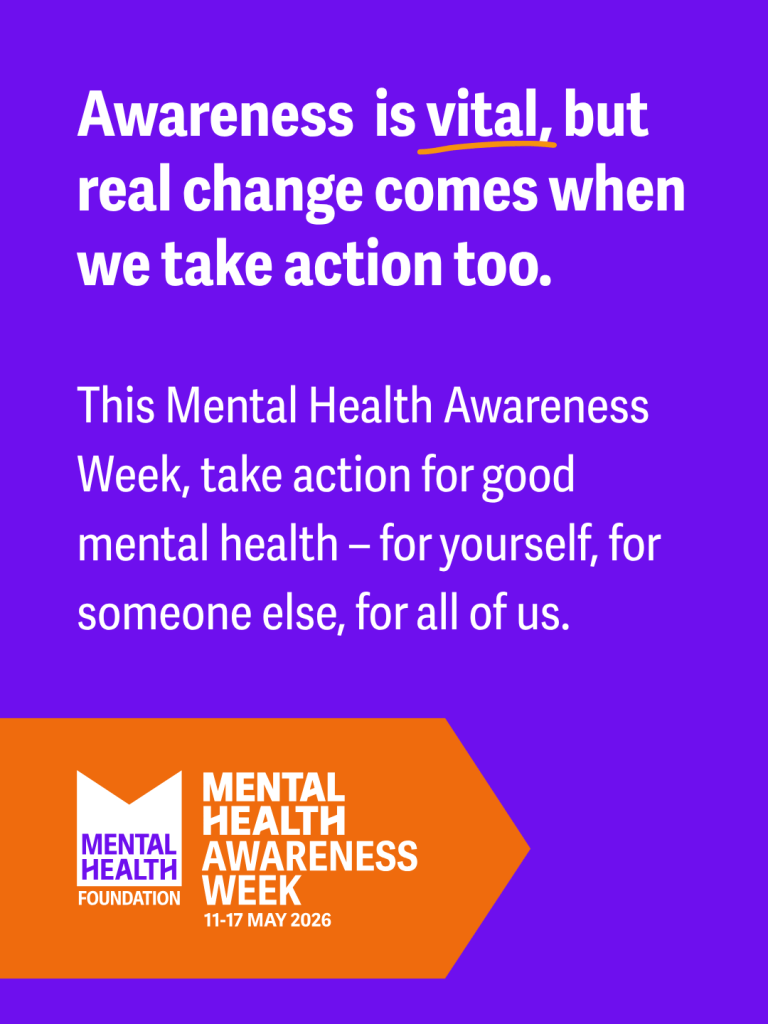
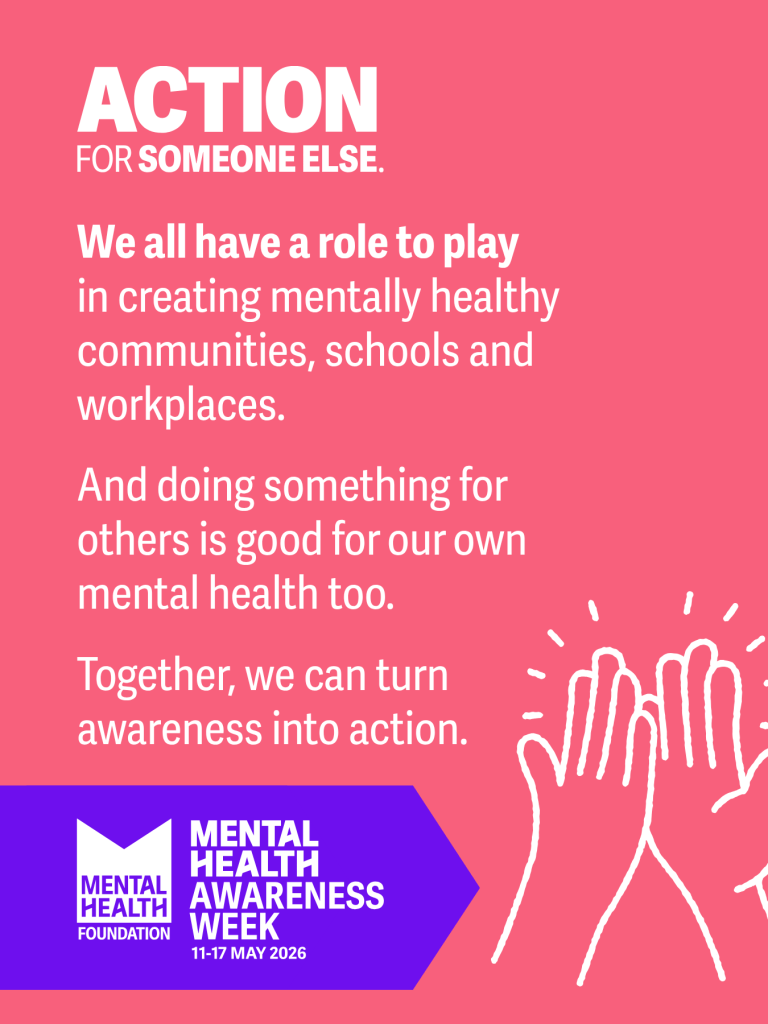
It’s Mental Health Awareness Week (with the Mental Health Foundation) and this year’s theme is Take Action for good mental health- for yourself or a loved one and for the wider community. They say, “we’re asking people to join us in taking action to support good mental health. Even small actions can help us feel hopeful and less powerless. And while our individual actions matter, when we come together we are even more powerful.”
Real change happens when we take action. Here’s some Top 10 tips from the Mental Health Foundation of simple actions to support good mental health, lift your mood and improve your ability to cope with life:
Plan something to look forward to– Making plans for things we enjoy can increase our sense of hope, which is important for our mental health. It could be a plan to sit down with a cup of tea and take a quiet five minutes, or a long-term plan for an ambitious trip. Whether it’s a big or small goal, the important thing is to plan it.
2. Eat Well- One of the simplest ways to improve mental health is by eating a healthy, balanced diet. Not only can it support your emotional health, but introducing small habits, such as staying hydrated or having fruit snacks, can help make changes stick easier.
3. Get closer to nature- Spending time in nature can boost your mood, lessen stress, and help you concentrate.
4. Get good sleep- Good quality sleep helps your brain work better, lifts your mood, and is good for your overall health.
5. Get Creative– Spending time on creative activities is a great way to help ease stress and anxiety. Carve out some time to listen to music, paint, sing, or do whatever you enjoy most.
6. Move regularly- Being active can boost your mood and raise your self-esteem. It’s also an effective stress management technique. Whether you go for a walk, do some yoga, or vigorously clean the kitchen, it all counts.
7. Try Mindfulness- Being fully aware in the present moment can positively change the way you feel about life and how you approach challenges. Aim to notice the colour of the sky, the sound of leaves, or the feeling of your feet on the ground.
8. Friends- Having good relationships with others can help you feel like you belong, allow you to share experiences, and receive emotional support. It’s a great reason to have a catch-up with a friend on the phone.
9. Be Kind to yourself– Bad days happen to everyone. If you’re having a tough time, remember to treat yourself with kindness and understanding. You’re doing the best you can.
10. Talk things over with someone you trust- It can take a lot of courage to tell someone else how we’re feeling or what we’re finding hard. Just talking things through with a person we trust can feel like a relief and make us feel less alone.
There are times when some of the above will be or feel too much, for example if facing a deep depression or a serious episode of mental illness. In these cases, the most important thing is to reach for help from your doctor or therapist (or both) and get referred in to mental health services to see a psychiatrist. Practising self care such as eating, sleeping and taking prescribed medication as well as simple things like showering and getting dressed can make a big difference on a day to day basis.
Remember that you are not alone and that you have so much to give and offer to the world. Take small achievable actions and reach for help and support from a trusted place, charity or helpline.
Support lines in the UK:
First port of call if a new referral (not already known) is to call 111 or request an urgent GP appointment
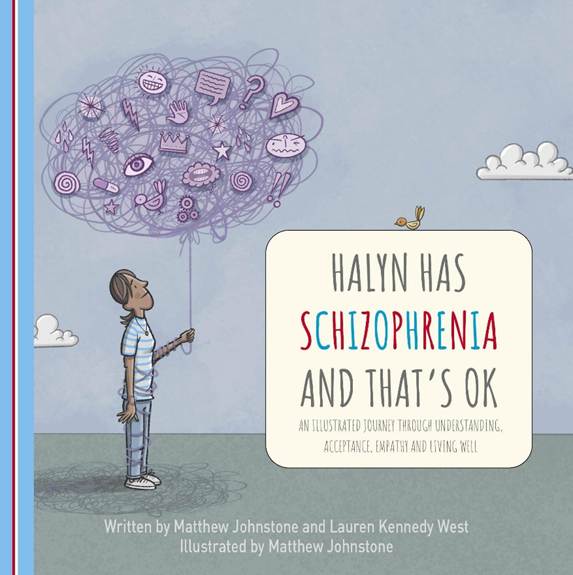
The latest book from authors Matthew Johnstone and Lauren Kennedy West has hit the shelves today and it has such an important message to share. Described as an ‘illustrated journey through understanding, acceptance and living well.’ the book tells Halyn’s story of understanding and accepting her schizophrenia diagnosis.
The publisher says, ‘ Schizophrenia is complex disorder that affects how a person thinks, feels and behaves, with symptoms such as delusions and hallucinations. It affects 1 in 300 people, and more than 24 million globally. It is a serious condition but can be managed effectively with early intervention, ongoing treatment and compassionate support.
This book is for anyone seeking to understand their diagnosis, or for friends and family hoping to support their loved one with schizophrenia. Through humorous and moving illustrations, it shows that it is possible to live a happy and fulfilling life with this condition, and promotes clarity, honesty and caring for those living with mental illness.‘
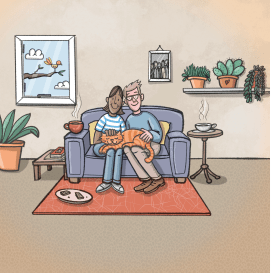
The book is beautifully illustrated with special added extras like the change in colour on Halyn’s T shirt when she is having symptoms (red) and when she feels well, her shirt is blue and there is little bird of hope present. This encourages the reader to see Halyn as a full person with hope and remission and not just a person with a mental illness. Halyn is 26 and she lives with her partner Johann and Chalky Boy, the world’s laziest cat.
The book describes how schizophrenia impacts Halyn on a day to day basis but also says, ‘I have to be a little more vigilant and work a little bit harder at my state of wellbeing than most…but I manage quite well.’. Halyn says, ‘I accept that I may have to live my life a little differently but thats OK’.
(Image: Matthew Johnstone/ Robinson)
This book will go a long way to helping people living with schizophrenia and their loved ones be seen and heard. As someone living with bipolar disorder, I also found the book very inspiring and uplifting, with a hopeful take on what can often be so difficult. It doesn’t shy away from the realities of schizophrenia but explains them through the illustrations and language, in an accessible, clear and powerful way.
‘Halyn Has Schizophrenia And That’s OK‘ is out now, published by Robinson (Hachette) in good bookshops. With thanks to Little Brown and Robinson for the gifted book.
(Image: Matthew Johnstone/ Robinson)
About the authors
Matthew Johnstone has written and illustrated several bestselling mental health and wellbeing titles such as I Had a Black Dog. Matthew’s company Drawn from Experience develops creative/educational programmes, illustrations and videos on understanding mental health and resilience for schools, communities, eHealth and the workplace.
Lauren Kennedy West lives with a diagnosis of schizoaffective disorder, bipolar type, and brings a unique perspective to mental health advocacy. With experience both as a social worker within the mental health care system and as a patient navigating its challenges, Lauren reaches millions through her YouTube channel, Living Well After Schizophrenia.