Are Workplaces Doing Enough for Mental Health in a Post-Covid Era?

(image: Mateus Campos Felipe at Unsplash)

The global coronavirus pandemic brought mental health and personal wellbeing to the forefront of our working life. As more companies return to the office, employers need to think about whether or not they are doing enough to make mental health in the workplace a priority. We speak to consumer finance startup, CapitalBean.com, to get some insight.

Workplace Mental Health Post-Covid

“The coronavirus pandemic highlighted serious concerns regarding mental health and personal wellbeing,” explains Richard Allan of Capital Bean.

“With ongoing uncertainty and a heightened sense of risk, it could be argued that we were experiencing an unprecedented global mental health crisis, often with no end in sight.” 

From a workplace perspective especially, many workers were facing uncertainty regarding their job stability, redundancies and, for some, navigating an entirely new way of working and interacting with colleagues.”

“In response, many companies started to take employee mental health more seriously and implement frameworks and best practices; however, now that we are returning to normal and trying to leave Covid-19 in the past, what is the extent to which companies are keeping up with their commitment to employee mental health?”

The Return to the Office

During the Covid 19 pandemic, the majority of workers were learning how to do their jobs remotely. This presented a range of new challenges to navigate and loneliness was widely reported. Not only were people missing the daily social interactions with their colleagues, but they were also finding the blurred lines between home life and work life difficult to navigate – with people’s homes doubling up as their offices, many workers were finding it difficult to switch off and reported working more hours. 

Now that people are starting to return to the office, after adjusting to nearly three years of remote working, they are being faced with new challenges. People are finding the return to work difficult and reporting a great deal of anxiety regarding social interaction. In addition, after working from home, they are now having to juggle their home commitments alongside going to the office. Whether it is squeezing in laundry, balancing childcare, or even factoring in an extra hour for the commute, the return to the office is proving more difficult than expected for many and is causing stress and anxiety for some. Others prefer working from home, so there is a balance.

The Employer’s Role

Millions of workers are returning to the office or workplace with changed attitudes and new expectations. In order to attract and retain talent, it is important for employers to acknowledge this and respond empathetically. Many companies have included mental health in their promises to employees on return to the office but now it is their time to demonstrate that this is not merely lip service. 

Employers need to proactively introduce programmes that are promoting workplace mental wellbeing and help employees with the challenges that they are facing. It is important for workplaces to create a psychologically safe space for workers and welcome conversations surrounding mental health and support.

(image: Luis Villasmil at Unsplash)

The Great Resignation And Mental Health at Work

After the pandemic, more people than ever before started evaluating their working life and what their main priorities were. With new focus on mental wellbeing and work-life balance, workers started to question what their expectations were and what they required from their place of work. The great resignation, the mass exodus of millions of workers in 2021, left employers having to think about what they needed to offer workers to not only attract talent initially, but retain it. 

 Workers who were asked about the great resignation pinpointed lack of workplace communication, sense of belonging, employee-manager relationship and toxic environments all as reasons to leave their jobs. 

In a post-Covid era (and what should have been before this), it will fall to the employer to make sure their staff feel looked after, not just financially but also emotionally.

Employers need to make their employees feel like they are taken care of, respected and acknowledged, and that their personal wellbeing and mental health is a top priority. Going forward, this will be more important for jobseekers than free office lunches or staff drinks.

We all have mental health and it is vital this is acknowledged and cared for, and not ignored in the workplace.

This article contains links to partner organisations.

A Lovely Review Of My Book ‘Bring Me To Light’ By Deb Wilk at Living Bipolar Blog.

(image: https://www.pauladennan.com/reviews/)

Sometimes, you receive amazing book reviews on the internet and don’t realise they are there!

Yesterday, I stumbled upon Deb Wilk’s blog Living Bipolar – Deb has lived with bipolar disorder for many years and very kindly reviewed my book last year. She lives in the USA and is a talented blogger, sharing about her life living with bipolar.

I don’t always know what to expect with reviews, but this was so positive so thank you Deb for reading, enjoying and recommending my book Bring me to Light: Embracing my Bipolar and Social Anxiety. Heres some quotes from the review:

Every word, paragraph and chapter of Bring Me to Light was utterly mesmerizing.  Eleanor Segall’s account of her battle with bipolar 1, panic attacks, and crippling social anxiety is so vibrant that the reader feels as though they are experiencing it right alongside her.

I would love to describe the book in detail, but I am not going to give anything away because this book is an absolute must-read.  Anyone who is bipolar or loves someone who is, should read this story.  It is a moving narrative that anyone, even those who do not suffer with mental illness, should read.  

She is now an extremely forceful voice in the mental health community, and this accolade is incredibly well deserved.  Please read this book.  You will find it well worthwhile and, I am certain, as enthralling as I did.” (Deb Wilk, living bipolar blog)

To read more of Debs review click here

Bring me to Light is available now on Amazon and in all good bookshops (including Waterstones, W H Smith and Blackwells and is available globally).

My Interview On Life With Bipolar Disorder by Best For You NHS

(image: Best for You NHS)

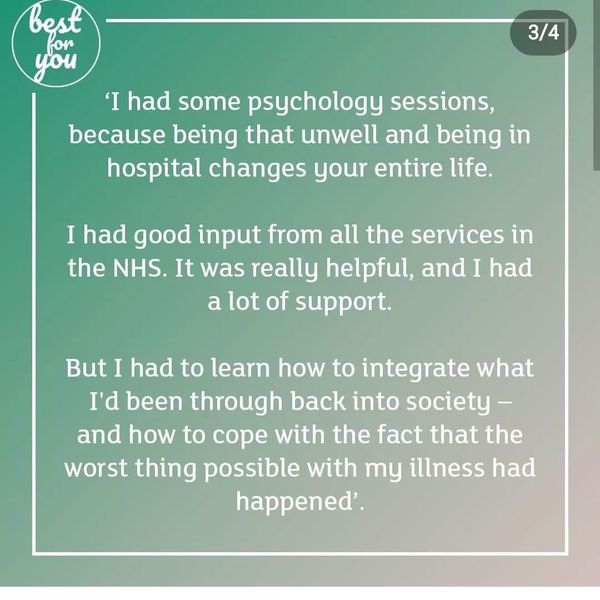
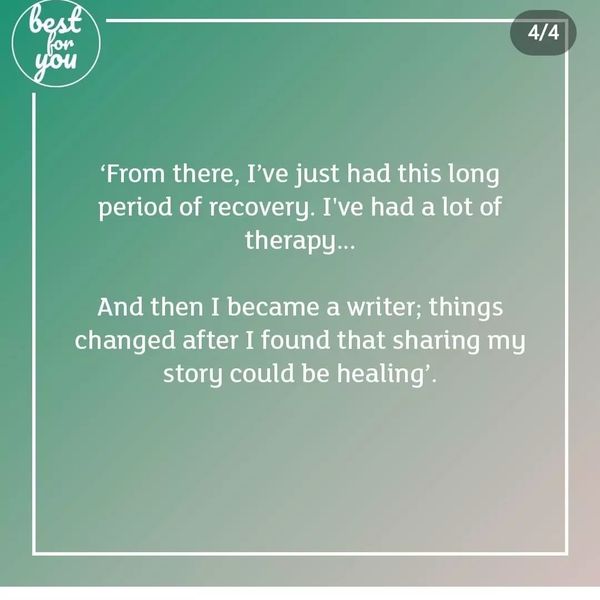
The team at Best For You NHS interviewed me about my life journey with bipolar disorder and anxiety. I hope it helps anyone, particularly young people, who are struggling.

You can read the interview that I did with Annabel here. Trigger warning as discusses suicidal thoughts, being in hospital and sexual assault.!

Thank you Annabel and team!

Best for You is a new NHS programme in London to help young people and their families access mental health support We know many can’t access the support they do desperately need and CAMHS services here in the UK are overstretched. I hope that by sharing my story it helps young people feel less alone, but we desperately need more funding into childrens mental health services too!

(Images by Best for You NHS)

Eleanor x

Reasons Why Group Therapy Might Be Your Next Step to Healing by Lizzie Weakley.

(image: Pexels: §§

Accepting help for mental health issues is an undeniably courageous step in the healing process. Individual counseling can provide you with many helpful tools for coping with your issues, but so can group counselling. Here are a few reasons why group therapy might be the next step in your healing journey. 

Groups Are a Sounding Board 

One of the most beneficial aspects of group counselling is that the group can act as a sounding board. Whatever dilemmas you are facing, whatever you’re struggling with in your mind, you can voice it to your group and get helpful feedback. Your group mates will likely come from diverse backgrounds and have had their own unique experiences. Their outside perspectives can give you insight into how to handle difficult situations and emotions. Whether it is, a group can give you guidance based on their own experiences, which can help yours. 

Group Therapy Can Be More Cost-Effective Than Individual Therapy 

Group therapy can be more budget-friendly than individual therapy. And, just because group therapy tends to cost less, that does not mean it lacks any of the quality you would get from individual counselling. Group counselling can be empowering and helpful in the same way individual therapy is, and it is a great option for those who will have to pay out-of-pocket costs. 

Groups Help You Learn About Yourself 

Each of your group’s members will figuratively hold up a mirror so that you can take a deeper look at yourself. You can only learn so much about yourself on your own; having those outside perspectives can make your self-introspection all the more intensive and meaningful. There are things about yourself you might not be able to see that others can help you uncover. 

Groups Can Help You Develop Social Skills 

Social skills are something many of us adults haven’t fully developed, especially as we struggle with our own psychological issues. In a group, you might feel less isolated, plus you will have the opportunity to engage with other people. Here you can learn how to better get along with others and express yourself in a group setting. Studies have found that adventure-based group therapy can particularly help people develop their social skills. 

Whether you choose to do group therapy due to finances or because you want to build your social skills, it is an option that works well for most people. You get a new support network of people who are going through similar things and are also looking for reciprocal support. Allow them to hold up the mirror so you can look in and see who is really there. 

This article was written by freelance writer Lizzie Weakley

11 Most Effective Ways for People to Protect Their Mental Health- A Guide by The Mental Health Foundation.

(image: Mental Health Foundation)

The 11 most effective ways for people to protect their mental health are revealed in a guide launched today by the Mental Health Foundation. 

The free guide, Our Best Mental Health Tips is based on the Foundation’s own ground-breaking study on what protects people from common problems such as anxiety and depression.  

The innovative study on which the new guide is based combined existing evidence about how we can protect our mental health with experts’ views, alongside the opinions of members of the public. 

Dr Antonis Kousoulis, who led the research and is a Director of the Foundation, said: ‘Our new guide encourages us to take care of the fundamentals of life – our relationships, our experiences, our bodies and our finances.  

The evidence shows that this is far more likely to keep us mentally healthy than the gimmicks and miracle cures promoted by some in the ‘wellness’ industry, who prey on our vulnerability. 

The truth is, there are no quick fixes for good mental or physical health. What works is developing healthy habits in our daily lives, that help us to feel OK and able to cope with everything. 

For example, in our new guide we talk about getting more from our sleep, learning to understand and manage our feelings, planning things to look forward to and getting help with money problems.’ 

The full list of mental health-promoting actions suggested by the new guide is as follows: 

  • Get closer to nature 
  • Learn to understand and manage your feelings 
  • Talk to someone you trust for support 
  • Be aware of using drugs and/or alcohol to cope with difficult feelings 
  • Try to make the most of your money and get help with problem debts 
  • Get more from your sleep 
  • Be kind and help create a better world 
  • Keep moving 
  • Eat healthy food
  • Be curious and open-minded to new experiences 
  • Plan things to look forward to 

Most members of the public involved in the study had experienced their own, or family members’ problems with mental health, so had the benefit of hindsight when assessing what helps most with prevention.  

The study was published in the peer-reviewed American Journal of Health Promotion

The new guide (and the research on which it is based) acknowledges that people may be unable to follow some of its suggestions, for instance because the place they live makes it impossible to sleep well or spend time close to nature. 

Dr Kousoulis added: ‘Enjoying good mental health should be an equally accessible goal for all of us, yet it is often out of reach for many. Government action is needed to create the circumstances that solve problems that are beyond individuals’ reach, and help prevent people having problems with mental health in the first place.’ 

You can download the new guide free of charge from the Mental Health Foundation website. You can also order hard copies by post, with a small charge.

About the Mental Health Foundation   

Our vision is of good mental health for all. The Mental Health Foundation works to prevent mental health problems. We drive change towards a mentally healthy society for all, and support communities, families and individuals to lead mentally healthy lives with a particular focus on those at greatest risk. The Foundation is the home of Mental Health Awareness Week www.mentalhealth.org.uk  

This is a non sponsored article written by the Mental Health Foundation.

Learning to Accept and Embrace Having Schizoaffective Disorder This Mental Health Awareness Week by James Lindsay

(image: Mental Health Foundation)

I do often wonder how long I had schizoaffective disorder before my diagnosis, but I guess I will never know. Back in 2016, I had my first experience of displaying symptoms of Schizophrenia (such as delusions), when I suffered from my first psychotic episode.

Before that, I had not really heard of any of these medical terms. I used to wrongly associate schizophrenic people with characters from the film ‘One Flew Over the Cuckoo’s Nest’. I thought they were lost causes who needed constant care, I didn’t think they could be functioning members of society like everyone else, and I feel bad that I used to think that. But I had a lack of education and personal experience.

In late 2019, I suffered from a relapse and had another experience with psychosis (which can be defined as losing touch with reality with delusions and/or hallucinations).. In early 2020 I was finally diagnosed with Schizoaffective Disorder. For those who are unsure, this condition is where symptoms of both psychotic and mood disorders are present together during one episode. ‘Schizo‘ refers to psychotic symptoms and ‘affective’ refers to mood symptoms. It is often described as a cross between Bipolar Disorder and Schizophrenia, as it includes symptoms from both of those conditions.

For me, it is currently something I am able to keep at bay, mainly thanks to my medication but also through being self-aware and looking after my mental wellbeing. I take Quetiapine (200mg slow release) every single day and I am more than happy with that. I have my tablet in the evening, which then helps me fall asleep without much struggle.

Without my meds, I can tell you now that I would be in all sorts of trouble. Every now and then I might forget to take it until just before bed, which means I need much longer to fall asleep because it takes a couple of hours to kick in.

That is ok though, as long as it’s not every night. But I know for a fact that without the medication, I am much more likely to start having delusions (irrational thoughts) and have an episode. Both my 2016 and 2019 episodes happened because my sleep was terrible and at times non-existent. I used to take sleep for granted, which is easy for anyone to do, but if you don’t let the brain repair itself it can lead to all sorts of problems. Just remember that psychosis can happen to absolutely anyone, I would not wish it on my worst enemy.

I am learning new things about my Schizoaffective Disorder all the time. I have joined a few Facebook groups which are supportive communities full of people with (or supporting those with) the same condition, such as this one which has nearly 18k members. For example I discovered through this group that some people who take meds before dinner (e.g. 4/5pm), find themselves waking up around 3am when they’ve worn off. They realised taking them an hour or so after dinner can give them a better sleep.

I have read books by authors with mental illness and they really help normalise it and give me peace of mind. I recently read ‘The Stranger on the Bridge’ by Jonny Benjamin (who is also Schizoaffective) and this gave me so much comfort. When you read a story that has parallels to yours, it gives you so much more hope and confidence that you can overcome your own adversities. Podcasts are a great source of help too and there are plenty out there that cover all kinds of mental illnesses.

I am also fortunate that my job gives me more opportunities to enhance my understanding of the disorder. I am proud to work for Hertfordshire Mind Network (my local mental health charity) as Fundraising & Marketing Officer, who are really supportive and always ask if there is anything they can do to help with my condition. I would advise anyone with mental illness to make your employer aware, because that’s the first step to them being able to support you and make any adjustments you might need.

I think ever since I changed my attitude to being schizoaffective, I have been able to befriend it and realise it’s not my enemy, but part of who I am. I used to feel embarrassed and was maybe even in denial at first. When I had the shame, I was never in the right mindset to go out and learn what this illness actually is, what is it doing to me, what should I look out for, what are my triggers/warning signs, what help can I get from other people.

The reality is – millions of people are schizoaffective and they are some of the best people you can encounter. They are incredible for living through it every day and I am proud to be one of them.

I hope you found my post useful and big thank you to the wonderful Eleanor Segall for the opportunity to contribute to her fantastic blog! If you’d like to connect over mental health you can find me here –

(image: James Lindsay)

@JamesLindsay23– Twitter

What To Do When You Feel Alone: by Eleanor

(image: QuoteFancy)


As I started opening this page to write this blog post, on youtube, the Jessie J live concert I was listening to flicked on to one of my favourites of hers, ‘Who You Are’.

The lyrics:

‘Don’t lose who you are

In the blur of the stars

Seeing is deceiving

Dreaming is believing

its Ok not to be OK

Sometimes its hard to follow your heart

Tears don’t mean you’re losing

Everybody’s bruising

Just stay true to who you are.’ (Jessie J)

I wanted to write a post on what to do when you feel alone. This sums it up- self care and staying true to yourself.

  1. Its ok to cry. Let the emotion out, feel the grief/fear/sadness/anger. Allow it to be present and wash over you. Crying can be healing.

2. Seek support from a loved one, someone you trust or a helpline like Samaritans. You are never truly alone even if you don’t have a supportive family or friends- though it is harder.

3. Write out your feelings on paper in a journal or talk about them with a therapist if you can access one.

4. Do a little activity to make you feel a bit happier– talk to a friend, sing, paint, write, do sport- whatever your thing is- do it.

5. Find a support group- Mind run good ones or a local charity to you.

6. Remember – these emotions, these feelings will pass like clouds eventually. This too shall pass. make sure you keep speaking, sharing and healing yourself.

7. If you are feeling very depressed or at crisis point, call a helpline or go to your GP.

8. Make sure you eat, drink and look after yourself. If this isnt possible- see point 7.

Sometimes we can all feel alone or lonely in the world. Its a part of being human. But taking small steps towards looking after ourselves and our mental health can be really helpful.

What helps you?

Eleanor x

What It’s Like To Go Through Severe Depression as a Bipolar Episode: Looking Back by Eleanor

(image of Eleanors book Bring me to Light: Eleanor Segall/ Trigger and Welbeck publishing)

TRIGGER WARNING- DISCUSSES SUICIDAL IDEATION, SELF HARM AND BIPOLAR DISORDER. PLEASE READ WITH CARE

This weekend, I went home to my mums to celebrate the Jewish festival of Pesach (Passover) and have some quiet, family time. It was wonderful and because our religious laws mean we don’t use the internet, our phone on our festivals, it meant I had time for digital detoxing and switching off. But with that silence, came space. To think and reflect.

Something you may not know about me is that as well as being a writer, throughout the years I have been a prolific diary (journal) writer. The act of putting pen to paper and type to keyboard has always been therapeutic for me in my darkest moments. I found a diary I had written in 2013, when I was living with depression, suicidal ideation and self harm thoughts and actions.

The journal was covered in butterflies- always my symbol of hope. I don’t want to trigger anyone so I will say this carefully- essentially, I was so unwell that for me, my symptoms were: sleeping until the afternoon with a slight break for a meal or tablets, not socialising, finding it hard to wash due to increased anxiety and lethargy, feeling like I didn’t want to wake up the next day and wanting to harm myself in various ways- but being so frightened by these thoughts (because i knew they weren’t really Eleanor) that i had to vocalise them to my family and psychiatrist to keep myself safe. Thats what I did and its why I am still here today, in recovery.

I lived with this depression for about 6 months- my psychiatrist was encouraging me to try Lithium to stablise the bipolar but I wasn’t ready and wanted to see if Quetaipine could halt that. As we know, I became hospitalised for mania soon after in 2014 which led me to recovery and writing my book Bring me to Light.

When you live with an illness like bipolar disorder, you can sometimes forget the nuances of all the details of how you were when you were unwell. For me, I always felt that I handled the depressive episodes ‘better’ than the mania- just because I was able to keep myself as safe as possible by telling my family and doctor and changing medication. My psychiatrist had to come out to see me at home with a nurse as I was so unwell and I wrote out how I felt for him to know.

So many people live with terrible episodes of depression so this blog is just looking back and giving you some knowledge of how it manifested for me. Essentially, depression is a slowing down of the mind towards inactivity, darkness, misery, anxiety, agitation and it is often triggered due to changes in hormones and brain chemistry (if you have a family history its more likely to happen). Depression is not just low mood. Its paralysing. Its not wanting to be in the world and being in so much emotional pain. You may think of ways to harm yourself and you may dream of not being in the world. Or you may be ‘high functioning’. I somehow managed to go to friends weddings during this time despite spending the other days in bed til 5pm- I have no idea how- anti depressants and support helped greatly. However, my depression was dark and invasive.


Now, I had forgotten a lot of these finer details. For me, I never truly wanted to die- I wanted the uncontrollable bipolar to go! The suicidal ideation was my bipolar brain chemistry but also an expression of not coping with life and the bipolar moods I had been given- I was 24 and I couldn’t enjoy life- i was wracked with anxiety too. My mental health was fragile and unstable and it is no way to live- but what saved me, was being hospitalised and finding medication and therapy that has helped me to live in remission (thank God) for 7 years now.

I can say now that my brain chemistry is balanced and even if i ever get sad or frustrated, I don’t have those awful thoughts and if they ever come up, I can deal with them. I have such a supportive partner and family- my family and psychiatrist saved me as well as me trying to save myself- I frightened myself with my thoughts and I had some semblance of being able to keep myself going, which is not possible for everyone. It helped that my Dad has bipolar and could really understand what was going on for me too- he understood exactly how I was feeling but he knew it was the illness and not Ellie. I feel so lucky for that because not everyone has this. My mum, step dad and sister and wider family also were so supportive and never blamed me for being unwell. That helped too. My faith also has helped me dearly,

(Me at 25 when I was going through depression. This photo was a selfie taken when I was dressed up to go to a friends wedding and my sister had done my make up. There were no photos with messy hair or red eyes and tears. I never looked this good when I was in bed til 5pm most days in my PJs).

If youve got this far thank you for reading. My mission is to help others with these conditions feel less alone, through sharing my own experiences. I have been careful not to reveal what certain thoughts were here so I don’t trigger anyone.

If you live with depression and a host of other issues, you can recover again. Hold on. You will not feel like this forever and you can find a level of happiness and stability again. Reach for help, someone you trust, a help line, a psychiatrist and don’t give up.

5 Risk Factors For Post Partum Depression.

(image: Fat Camera via Unsplash).

During the 2020 COVID season, UK health experts stated that new mothers were twice likely to experience postpartum depression. The report further stated that women with babies younger than six months were the most at risk of developing this mental health condition.

While 47.5% of women may seem on the high side, it is a reality some people have faced in their motherhood experience. While science is still at a loss for the exact cause of postpartum depression, the medical fraternity believes risk factors exist.

  1. Stress associated with new baby care

Without a doubt, baby care is a demanding responsibility. It can take a toll on your physical, emotional and mental wellbeing. Unfortunately, women who are unable to properly manage all these three elements may increase their risks of post partum depression. Feeding, diaper/nappy changes, and constant monitoring can take all your time.

This is why experienced parents believe it is necessary to adopt certain measures to ensure you do not push yourself to the backburner. One of these measures is to sleep when your baby naps. So, how long does it take to sleep train your baby? This question is an issue many new parents struggle with as they streamline their babies’ sleeping patterns.

  1. Preexisting mental health condition

Usually, a female with a preexisting mental health condition is believed to be at a higher risk of postpartum depression. Psychologists believe that the issue of brain chemical imbalances may significantly influence a person’s vulnerability. While the discussion on postnatal and postpartum depression continues to rage on, you may find it helpful to know the subtle difference. Postnatal depression is usually the mental health condition associated with a woman’s depressive mood in the first six weeks after birth. However, postpartum depression (PPD) refers to the period exceeding that.

According to a mayoclinic.org study, women with bipolar conditions may have a higher risk of PPD. Individuals in this category experience more depressive symptoms if the condition is left unmanaged. Additionally, a person with a history of Schizophrenia or Bipolar, may also have an increased chance of experiencing postpartum depression. Usually, women without a prior diagnosis of any preexisting mental health condition can have difficulty understanding why they have PPD.

  1. Family history 

A 2019 report by postpartumdepression.org claims a possible genetic and hereditary disposition to PPD. Although some medical circles believe the findings are inconclusive, there is a strong belief that this mental health condition can run in families. For example, if your mother experienced postpartum depression in her reproductive years, you may have inherited genes that put you at a higher risk. Indeed, this is not the kind of news people want to hear, but it is vital to be armed with this crucial piece of information.

It is worth noting that since specific genes run within biological families, the discussion of genetically inherited PPD cannot be a mere claim. PPD researchers claim that certain genetic alterations during pregnancy could indicate whether a woman would experience postpartum depression. Additionally, these researchers believe that the chances of it happening to a first-time mother may be higher than another who has had multiple births.

  1. A drastic change in image perceptions 

In many instances, women experience weight gain and other image alterations during pregnancy and after childbirth. While some women can bounce back to their former selves within weeks of birth, most take longer. For the latter group, the drastic change in physical appearance can affect their self-confidence and self-esteem. Unfortunately, the inability to embrace these physical body changes could contribute to postpartum depression.

A preemptive measure may be to embrace the fact that a changed appearance is a part of the pregnancy and childbirth journey. If you find that too hard to believe, you may find it helpful to be patient in the ‘waiting period.’ This is the phase when women’s bodies gradually return to the pre-pregnant state. If you can psych yourself up in this period, you can reduce your chances of developing an image-induced PPD.

  1. Absence of social support after birth

Contrary to public perception, single mothers are not the most at risk of absent support. Undoubtedly, the absence of a partner may double up the burden of baby care. However, this issue cuts across both divides. Whether you have a partner or not, the absence of a support group from family or friends can increase your risk of postpartum depression.

Post partum depression can be a difficult struggle, but it is one that can be overcome with support. Reach for help from your doctor or psychiatrist, friends and family and support groups/ other mums too. You may decide to take anti depressants or engage in therapy to help. There are also helplines and charities out there to help new mums with mental health issues, including PPD. You are not alone!


This article was written by a freelance writer and contains affiliate links.

Mental Health Chat With Penny Power OBE and Thomas Power of Business Is Personal with Myself and my Dad Mike Segall. Our Journey With Bipolar Disorder and Anxiety.


Yesterday, 9th Feb, my dad Mike and I were honoured to be interviewed by his friends of many years, Penny Power OBE and Thomas Power of Business is Personal- live on Linkedin, Youtube and Facebook.

They asked us to come on their weekly show to talk about our hereditary journey with bipolar disorder and anxiety and shed light on all things mental health.

It was a real pleasure to talk all about our lives and how my Dad was diagnosed with bipolar just 4 years before me.

Trigger warning: discusses suicidal ideation and psychosis.


Thanks Penny and Thomas! We hope it battles stigma around this much misunderstood illness. Watch here:

https://www.youtube.com/watch?v=Fghp8RNTvX0