Start up Founders 50% more likely to suffer from a Mental Health Condition by Daniel Tannenbaum

(image: John schnobrich- Unsplash)

A recent article in Forbes highlights that entrepreneurs and startup founders are 50% more likely to have a mental health condition than an average employee or member of the public. 

Running a startup is very stressful and there is a lot on the line, including your name, reputation and finances. The article highlighted that being an entrepreneur can lead to ‘self-doubt, imposter syndrome, loneliness and burnout.’

In a survey conducted, it showed that only 25% of startup CEOs have some kind of executive coach or therapist to help them overcome their daily anxieties and stresses – suggesting more support is needed to help those entrepreneurs manage the stress of running a high-risk venture.

Mental wellbeing is an important factor for any startup founder, Forbes continues. The levels of stress and anxiety can shape one’s creativity, productivity and ingenuity. Taking care and managing your stress will preserve your talent and innovation and help you to become the best leader possible.”

Daniel Tannenbaum, co-founder of startup news site TechRound and a partner at short term lender Pheabs, explains:

“Startup founders and entrepreneurs are often taking on a huge risk financially, with hopes that they can raise enough money, grow a large company or exit for huge sums.”

“In the short-term, this means taking a financial pay cut, working significantly more hours with the hope that their proposition becomes established and successful.”

“But the process can be incredibly stressful. For example, a lot of startups do not really make money until they exit or are bought out, so regardless of how many hours you work in the first few weeks, months or years, your financial position does not necessarily change. Bear in mind, that you might be missing crucial time with your family, loved ones or you are not fully present in the room because you ‘cannot switch off.’”

“Running a startup is a huge financial risk and there is always going to be someone better funded and getting more PR. So don’t sweat, just do it for enjoyment.”

“Meanwhile, it can be soul destroying to see other competitors in your space or people you know getting massive PR, large funding rounds or sales – and you can really start to doubt yourself and feel like you’ve hit a wall. It becomes a horrendous spiral of jealousy, anxiety and doubt, whilst you have been underpaid and overworked for too long.”

“More than 50% of startups fail, yet it doesn’t stop people creating them, and new businesses being created daily.”

“But I think before you get into a startup, it is important to manage your expectations and understand your vision.” explains Tannenbaum

“You might need to look at this like, ‘I am going to work hard for 3 to 4 years and then reassess if it does not work out.’”

“And also, you just have to do it for enjoyment,” he concludes. “After all, running a startup means that you are calling the shots, not having a boss and being able to hire who you want. So if you can enjoy the everyday part of running a business and a startup, that’s great, and if you happen to make a lot of money, well even better!” 

Daniel Tannenbaum is the co founder of start up news site Techround
What is the Connection between Mental Health and Addiction by Jennifer at Mandala Healing.

(image: Unsplash)


Everyone has their own mental health. But people who are addicted to drugs, alcohol, or any other substance abuse are more prone to develop mental illness. While on the other hand, individuals who have mental illnesses are also more prone to developing drug, alcohol, or substance addiction. 

People struggling with addiction and mental health problems have complained about the co-occurring disorder. However, it can be tough to identify which one is the primary. A mental health diagnosis, such as clinical depression, can undoubtedly worsen an individual’s problems with addiction. Similarly, a person experiencing addiction may find that their mental health declines as their use grows. 

If these conditions are left untreated, then co-occurring disorders can lead to a nasty cycle of repeated addiction and worsens mental health symptoms. To overcome addiction and mental health issues, professional care is necessary at a rehab center like Florida Addiction Treatment

But before that, it is vital to understand the relationship between addiction and mental health when looking for help for yourself or a loved one. Because both addiction and mental health diagnoses are chronic medical conditions, they can be treated and managed with the right and approachable treatment while they cannot be cured. 

Understanding the Link Between Mental Health and Addiction:

You might wonder if mental illness can cause addiction or if addiction creates the perfect storm leading to mental health problems. However, in most cases, it is rarely clear which one manifested first. 

Addiction to drugs and alcohol or any other substance can occur due to people self medicating if they suffer from any mental health disorder. Self-medicating with addiction in times of crisis may provide temporary relief at first. But it may help you feel more comfortable connecting with your peers or boost your confidence. However, this is part of the danger of the link between mental health and addiction. 

Continued use is hazardous and develops the risk of addiction. What you look at as a remedy to your problem can quickly put you on a brutal cycle of misuse and abuse. 

Long-term use of addiction often produces side-effects such as anxiety and depression. Taking addictive substances alters your brain chemistry, and extended use of it only increases your chances of developing mental illness. 

People coping with these specific mental health conditions are more likely to get addicted to drugs or alcohol (but not in every case)-

  • Major depressive disorder
  • Anxiety disorders
  • Personality disorders
  • Bipolar disorders
  • Post-traumatic stress disorder (PTSD)
  • Attention-deficit hyperactivity disorder (ADHD)


Potential Causes of Co-Occurring Disorders:

Addiction and mental health issues can occur because of many factors; however, some potential causes may involve genetics, age, and environmental factors. 

  • Genetics or family history-

Genetics can play a critical part in the evolution of both addiction disorder and mental condition. It has been studied that genes contribute to many health issues.

As genes are passed down from generation to generation, the family history of a disorder is also a strong indicator. Autism, ADHD, bipolar disorder, major depression are all examples of conditions that can be spread through your genes. 

  • Environmental factors-

However, you don’t have to have the genes for a particular disease, which does not mean that you will develop the condition. The environment plays a key role in how their genes are expressed. 

High-stress environments, trauma, physical or sexual abuse can also contribute towards a co-occurring disorder. Looking at your friends and family engage in dangerous behavior like addiction can also play a key factor. People likely to follow the examples of those they are close with. When your close ones behave poorly, you may be more likely to as well. 

  • Age-

Exposure to certain things during teen years can also be an element. Being offered drugs or alcohol at an early age can also contribute to addiction and possibly mental illness. Since at an early age, the brain is still in the developing stage. Developing a mental health illness at an early age may also make you more susceptible to addiction. 

Treatment for Mental Illness and Addiction: 

The best treatment for both disorders is an integrated approach, where both the substance abuse problem and the mental illness are treated together. Whether your mental health or addiction problem came first, long-term recovery depends on getting treatment for both the disorders by the same treatment provider. 

Obtaining professional drug rehab support is a crucial step in getting help for mental health struggles and addiction. Rehab centres aren’t just buildings; they’re your haven, your home away from home. They give you the tools and support to tackle the deep-seated reasons behind your addiction, often linked to mental health. Therefore, it’s highly advisable to find a reputable rehab organisation and start asking questions about how they work. Their helping hand will provide you with much-needed backup on your journey to long-lasting sobriety and a happier life. 

Treatment for mental health may include medication, individual or group counselling, self-care measures, lifestyle change, and peer support.

Addiction treatment may include detoxification, managing withdrawal symptoms, behavioral therapy, and support groups to help maintain sobriety. 

The Book of Hope is Out Now!

I have written here before but I am so excited to say that the Book of Hope, which features my essay ‘Of Hope and Sunflowers’ and put together by my friends Jonny Benjamin MBE and Britt Pfluger is out now!

Happy Publication Day!


It is such an honour to be in a book with so many incredible people in their own fields talking about overcoming their own adversity and mental health issues.

As I write, the book is currently 16th in the bestsellers chart for all books on Amazon.

Hugely thankful to Jonny and Britt for including me in such a great project.

You can get your copy here: https://www.amazon.co.uk/dp/1509846379/ref=cm_sw_em_r_mt_dp_3VAKJ0JC6HV05ZYMNHW2

Being Kind to Myself: Social Anxiety, Mental Health and Life in Recovery.

I really wanted to write today because the sun is shining, apple blossom is on the trees and Spring is finally here! I always feel more hopeful and happy once Spring is here but living with bipolar disorder and an anxiety disorder can mean that some days are harder than others.

This week, I have really struggled with low mood and social anxiety. I’m an optimistic person and sometimes I pack too much into my days and end up having a panic attack because I can’t cope. This is what happened to me yesterday when I decided it would be a great idea to pack in too much, including going across London and delivering many Body Shop orders to my customers and friends. My social anxiety was so high (I think largely due to being in lockdown) , I just wanted to hide and I ended up sleeping to escape my feelings and feeling super low. I am lucky that I understand what to do when this happens and I have a husband and family who support me too. I am still in therapy for my panic disorder and it has improved a lot but there are times when it gets triggered like this week.

I have also found that I am worrying more about what people think of me- if I have said the right or wrong thing or upset anyone. Its so silly but due to past rejection I get scared and those fears bubble to the surface.

On Friday, I had a really productive therapy session. There are a lot of worries about the future that I still hold and being able to unpack them in therapy is really useful for me. I am doing EMDR trauma therapy but a lot of it is talking out and facing those triggers one by one. I have a very good relationship with my therapist and having a session often calms my mind.

In positive news, last week I became an aunt to a beautiful baby girl, Cara Harriet who is the sweetest little baby. She is a joy and light in all our lives and I feel so lucky to have a little niece! My sister and brother in law are amazing 🙂

And in other good news, in April, my essay in the Book of Hope by Jonny Benjamin MBE and Britt Pfluger will be published alongside many others I look up to (Dame Kelly Holmes and my friend Hope Virgo). So there are good things as well as bad!

I am doing a lot better- I dont rapid cycle, I havn’t had an episode of mania or hypomania since 2014. My brain seems to like Lithium and Quetaipine (a mood stabiliser and anti psychotic). I have to learn to be kind to myself and practise self care, because my social anxiety is a fear response from the past.

Being kind to myself is of utmost importance. Heres a list of what I do when I am having a bad day: take a nap, have a bubble bath, read a book, hug the guineapigs and Rob, talk to Rob, a friend or family member, put on a face mask, cry, breathe and listen to calming music, watch a good TV show (I have been watching First Dates Teens), book in a therapy session, eat something nice, put some make up on, wash my hair, wear an uplifting perfume.

How are you kind to yourself on your bad days?

Love,

Eleanor x

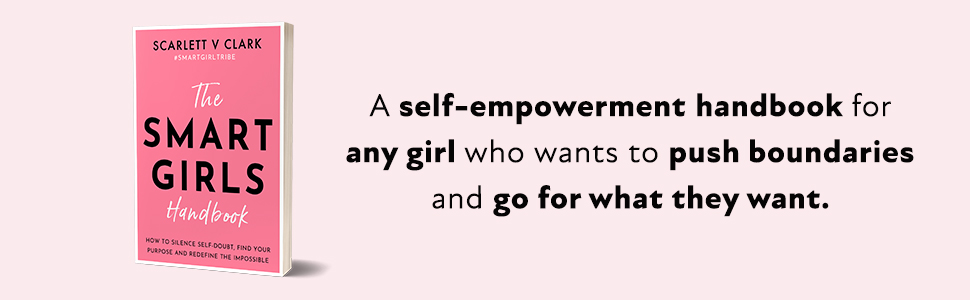
Book Review : ‘Smart Girls Handbook: How to Silence Self Doubt’ by Scarlett V Clark of Smart Girl Tribe

Disclaimer: I got sent a free copy of the book to review but did not receive payment for this review.

I was so excited to receive my copy of this book! I have been following Scarlett Clark’s work for a year or more- she is an incredible woman! She set up a global hub for women on issues that matter, Smart Girl Tribe at the age of only 19! Scarlett is a true trailblazer and entrepreneur, who is all about womens empowerment. Smart Girl Tribe is now the UK’s number one empowerment organisation and as well as being an accomplished motivational speaker, activist and writer, Scarlett can now add author to the list!

On International Womens Day, earlier this month, Scarlett released The Smart Girls Handbook: How to Silence Self Doubt, Find your Purpose and Redefine the Impossible’ with Trigger Publishing (who also published my book!). I often have self doubt and it can be hard to find life purpose too for so many of us, especially if you struggle in life.

(image: Scarlett Clark/ Trigger Publishing)

Using her own story alongside the most popular questions that Scarlett is asked at the many events she runs in schools and colleges, The Smart Girl’s Handbook  aims to help you:

• Discover your talent and find your passion.
• Learn how to deal with fear of failure.
• Cope with anxiety and start speaking your truth.
• Build a strong group of true friends and slay the naysayers.
• Be confident and love yourself.

Each chapter follows the themes above and uses examples from Scarlett’s own life to explore the central idea. Included are tools, tips and exercises to work through, as well as interviews with other ‘Smart Girls’. This is a handbook for any girl who wants to push boundaries and go for what they want.

Scarlett tackles each issue head on, giving examples from her life journey and providing incredible motivational tips. I loved learning more about her, her life story and why she set up Smart Girl Tribe by herself at such a young age. Her fearless attitude and strength of character really stood out to me but also how she empowers other women to be and do the same.

Having lived with anxiety since the age of 15, I have had many years of holding back through fear but I have also achieved a lot too. I will go back to this book for advice again and again! It is an empowering book that will help women of any age, and especially teens and young women to reach for their dreams.

Each chapter has the Smart Girl Tribe promise headings and includes exercises to help you on your way too:

1) I promise to discover my talent and find my passion
2) I promise to learn how to deal with the fear of failure
3) I promise to learn to cope with anxiety and start speaking my truth
4) I promise to slay the mean girls and build a strong tribe of true friends
5) I promise to be confident and love myself unconditionally
6) I promise to be a total #boss
7) I promise to embrace self-care and take a well-needed pause
8) I promise to stand up and help change the world

Thanks Scarlett for being you and publishing this wonderful book too!

If you;d like to read your copy you can here


About Scarlett Clark:
At 19, female entrepreneur Scarlett V Clark set up a global hub for young women. Smart Girl Tribe quickly became the UK’s number one female empowerment organization. Since then she has worked with the UN, the British Council, HeforShe, Women for Women, and spoken at the Houses of Parliament. Now in her mid 20’s, Scarlett is an ambassador for the NSPCC and 50:50 which lobbies parliament and the political parties to be more inclusive of women. With a Masters degree in journalism, Scarlett has written for major publications including Cosmopolitan and Harper’s Bazaar. She is an avid traveller, competitive skier and multi linguist.

Body Shop, Confidence and Mental Health: ‘I can’t do what you can do.’


As many of you know, last year I began working as a consultant (and now manager) for the Body Shop at Home. This was after leaving a job due to severe panic attacks that left me not able to attend work or leave the house daily (related to past trauma) . I eventually lost that job, as I had to leave so many ‘normal’ workplaces that weren’t able to accommodate me.

My confidence was on the floor. I lost my job, we lost the flat we were going to buy and then in March, we went into lockdown.

I have had to face many dark times throughout my life, as I am sure you have. However, in the darkest of times I have learnt one important thing- resilience. Resilience is something that helps me when I am on the floor, sobbing my eyes out from a panic attack (or in the past when I felt low and suicidal). Resilience got me through my GCSES, A levels and University. Resilience (and medication) somehow got me through being sectioned in 2014 for my bipolar and having to recover to live again.

I am not perfect but I know what it is like to have no confidence, no self esteem, to be highly anxious or severely depressed and for each day to be a struggle. To feel like you are wading through treacle or for every fibre of your being to be stressed with anxiety.

When I talk to people about my Body Shop journey and the opportunities that it has brought me and my manager Sarah (who also lives with mental illness), people not only can’t believe it but they also tell me:

I can’t do what you do, you have so many supportive friends.’

‘I can’t do what you do, I feel really low in confidence and low on time’.

While it is true I do have wonderful friends and a good network, I still had to build my group, build my business and build my team from nothing. From scratch. I had to familiarise myself with the products, learn what they do and their ingredients. I had to make contact with new people and find new customers via my network. I had to sell to friends and family….which I was petrified of doing.

I thought I couldn’t sell a product as I had never worked in retail. My anxiety and confidence was really low and it took a lot to go live and share the products, play games like bingo and go live in the group.

But people got behind me and because they did, my confidence began to grow. I realised I loved what I was doing. I was good at it. I could help others and work from home with flexible hours. I could rebuild again.

But what I want to ask you is:

Why can’t you do what I do, if you want to do it?

Why can’t you say yes to an exciting opportunity- and have support from me and a great team?

Why can’t you devote an hour in your day to your Body Shop business?

All it takes is a yes, a leap of faith and slowly building confidence. There is no pressure, coming from a background of mental illness, I want to empower and support others (not count sick days). I want to uplift and help, in the spirit of my manager Sarah who is wonderful too.

If you want to change your life and start on a new journey, drop me a message and reach out.

Developing a Newfound Confidence in Yourself this Festive Season.


(image: Pexels)


It’s okay to need to spend some time renewing your confidence now and then. Confidence is often seen as a brick wall that stands the test of time once it’s built, but often, it’s more like a flame, one that must be fed, and felt with quality fuel, in order to keep going. Even the strongest and most audacious people on Earth can be knocked back by life, and they regularly are. This is humbling, because it shows that no matter how good things are, we can always find struggle. However, this also shows an opposite and no less important truth, that no matter how bad things are, we can always improve and come to love ourselves again, building that confidence necessary to moving forward.

This is the essential principle shown by the famous symbol of the yin-yang, the white has a little black in it, and the black a little white. So – if confidence is more of a fire to be kindled than a wall to be built, how can we re-fuel it? Let’s consider that, below:

Finding New Opportunities

It can be worthwhile to find new opportunities in life, even if they’re self-directed, and even if they come straight after an intense experience such as a life setback, trauma, bereavement or a divorce settlement. Taking stock of what your new situation means, how you can use it to your benefit, and what exactly it is that you want can help you move forward with confidence, resilience and a patience that not everyone has. The primary thought to keep in mind is this – new opportunities are always there. You just have to dig for them.

Going For Gold

Going for gold is important, once you have your opportunities or ideals prioritised. It might be that you invest completely in a new hobby or practice, or that you do something you’ve always wanted- a dream, travelling to a new place or something you’d never do normally such as getting a new tattoo. Going for gold- making things a reality , can also help you feel expansive, generating your purpose from one day to the next. No matter if this is getting back in the dating scene, trying to go for a new job, or finally enjoying your freedom, don’t forget to go for gold.

Being Unapologetic

It’s important to be unapologetic about who you are. Why is this? Well, what do you have to apologise for? Your sense of style? Your sexual orientation? Your dreams and desires? Absolutely not, and actually, you should take complete and total pride in these things. This is what makes you, even if, as an individual, you are more than these designated labels. Being unapologetic helps you realize that you have dignity too, and that you’re worth expressing it. Having that mindset can help you curate your best attitude, which may or may not help you become a better, less bitter and more empathetic person. We all need to learn this lesson in life. It’s good to learn it now.

We hope you can develop that newfound confidence in yourself you truly deserve.


This article was written by a freelance writer

How Can You Better your Mental Health?

Your mental health is precious, and you’ve got to look after it as much as you can. We know sometimes this isn’t the easiest thing in the world as there are so many things that are beyond your control. We also know that even when things are okay, sometimes it’s still difficult to control the way that we feel. But, that’s why we’ve written this article, so that you’ve got some ideas as to the things that you can do to better your mental health. Keep reading if you would like to find out more.

Try To Relieve Whatever Stress You’re Holding

The first thing that we’re going to recommend is that you try to relieve whatever stress you are holding onto. We know that this isn’t easy, and we’re not saying it is, but it’s something that you’ve got to do if you want to recover. Your mental health is not going to benefit if you are constantly stressed. But, the only way that you are going to be able to relieve stress is if you know what is causing it. It’s for this reason that you’re going to have to think yourself or speak to a therapist and figure out what is causing most of the stress. From there, you can work out the best way to destress and take control, and this should ultimately end up improving your mental health. 

Hypnosis Might Be Worth A Try

Have you ever given much thought to trying hypnosis? Professional hypnosis involves interaction with you and the therapist to heal mental health issues going on in your life. For example, you can get hypnosis downloads that will help you to do whatever it is you’re aiming for. Hypnosis will involve your consent and its worth a try- Your mental health is worth it. Search for a recommended therapist.

Try Taking Up A New Hobby

The final thing that we are going to suggest is taking up a new hobby. Your mental health will always be worse if you are not distracting yourself from negative thoughts. You’re going to get too deep into things and you may spiral into anxiety or depression. Instead of doing this, find something that you enjoy doing, thats a positive focus. It can be a sport, or a game, reading, watching TV, completing some arts and crafts, whatever you want to do as long as it takes your mind off of your thoughts for a little while. Become immersed in whatever you are doing, and leave the rest of the world behind for a while.

We hope that you have found this article helpful, and now see some of the things that you can do to better your mental health . Something on this list should help, and if it doesn’t, there are also plenty of other things that can be done as well. Make an appointment to see your GP or therapist if your mental health worsens and take care of yourself- self care is vital.

This article was written by a freelance writer.

Digital Detox Ideas for Mental Wellbeing.

(image: Unsplash)

It’s no surprise that our mental health is affected by the culture around us and our technology-based lifestyles. Every day we are bombarded with stimuli and information that influences our mental and emotional states and alters our opinions and worldviews. This is happening all the time, every day.

Today, we spend so much time online that it has become second nature, and we are losing important social skills and mental abilities that were once considered essential for a healthy lifestyle. It’s important to remember the impact technology has on us and adapt our lifestyles to include more nourishing practices. You can do this with a digital detox, read on to discover more. 

Spend time offline 

Depression comes in many forms and is very common. You can be mildly depressed due to a situation eg something that happened in work, or clinically depressed meaning you have a low mood that doesn’t seem to go away and only medication seems to help. Any state of depression can be exacerbated by using the Internet. 

Those who overuse the Internet are prone to depression, researchers have found. This may be due to the lifestyle of heavy Internet usage that limits social contact and encourages a stay at home mentality, but it could also be caused by mental feedback loops when feeling of depression and low mood are reinforced through Internet behaviour. 

Naturally, there are several solutions to the issue. If you experience low mood coupled with high Internet usage, consider switching off for a period or limiting your usage in the week. Instead of Internet usage, try a different activity such as talking to friends and family or taking a nature walk. 

Limit SmartPhone Usage 

Smartphones are a wonderful invention, as are mobile phones for seniors; they are portable computers and communication tools, essentially. But there are some underlying issues associated with them, especially with regards to mental well being. It’s thought, for instance, that high smartphone usage can increase anxiety and feelings of unease and restlessness. It’s no wonder with so much of our lives dependent on them. 

Smartphones can increase anxiety due to our attachments to using them. We not only store important everyday information on them; we also communicate through them, socially and for work. In some ways, our smartphones have become our gateway to the world, and it’s difficult to put them down sometimes or go a few minutes without checking them for updates. 

Although it’s challenging a successful digital detox will involve a reduction of smartphone usage. You can limit your usage by making certain rules for yourself. The phone is not allowed in the bedroom, for instance, or you are only allowed a certain percentage of screen time per day. Train yourself to use the smartphone less and create discipline by opening up other avenues of communication.  

Log Off Social Media

The Internet is useful for many things, but no one knows what it’s main purpose is; that said if it’s meant for anything, it’s meant for communication. Social media is an online phenomenon that has emerged or evolved throughout the age of the Internet, from chat rooms in the early days, to MySpace and then Facebook and others. There are now 2.7 billion Facebook users worldwide. 

Although this platform is an excellent way to communicate with friends and relatives globally, to start businesses, sell things, and market services, there are some hidden dangers that can lead to anxiety and depression in people, some of whom are unable to escape from their online habits. 

Everyone on Facebook presents the best possible image of themselves, which leads to feelings of inadequacy and low self-esteem when some people start comparing and contrasting. The reality is that many people experience issues in their lives, and no one is as perfect as how they like to be perceived. Logging off social media for a time can greatly benefit your mental wellbeing. 

Social Media Dangers 

The dangers of social media extend beyond low self-esteem based on comparisons. Facebook and Instagram may be the catalyst for such conditions, but the conditions can then manifest in various ways and cause long term mental and physical health issues. Disorders such as anorexia and addiction can worsen from heavy usage.

A phenomenon that affects mainly women is an increase in body awareness and adaptive behaviour based on the effects of social media. Since so much of social media feeds are occupied with perfect images, some women feel pressured into conforming and changing their body shape to achieve positive attention. This encourages eating disorders like anorexia or body dysmorphia. 

This all points to a reduction in social media usage for improved mental wellbeing. It should also highlight the consequences of comparing ourselves to others. You can limit your social media usage by deleting your apps for a period, perhaps a week or a month. It doesn’t mean you have to leave the website, but train yourself to develop healthier online habits. 

Improve your Sleep

Researchers have found that the average person requires eight hours of sleep per night to go through their full sleep cycles. What’s more, your sleep should happen through the night due to your circadian rhythms – these help keep the chemicals in your brain properly balanced so that you regulate and maintain optimal mental wellbeing. 

Technology can influence and disturb your sleep patterns and cause insomnia in extreme cases. Harford researchers discovered that the blue light from laptops phones and devices was sufficient to reduce the levels of melatonin in your system. Melatonin is the chemical responsible for putting you to sleep. So using your screen every night in bed might cause you to fall asleep later and feel more drained in the morning. 

A digital detox is recommended if you find your sleep pattern is disturbed for some unknown reason.

Make your bedroom and technology-free zone. Leave all your devices elsewhere in the house and take a book to bed instead. Reading a book does not have a digital glow and should help you fall asleep faster. You might also delay your technology usage in the morning shortly after waking. 

Above all, look after your mental wellbeing and detox when you need to.

This article was written by a freelance writer

The Secret Signs of Anxiety.


(image: Unsplash)

We all think we know what anxiety looks like. It looks like hyperventilating, sweating, and a worried look on someone’s face. But the truth is anxiety looks like a lot of different things to different people, and there are some secret signs of anxiety too. 

While you can’t mask all of the physical signs like hair loss, increased or decreased appetite; a lot of anxiety is dealt with in secret. 

Even if you don’t personally have anxiety, it is important that you can spot the signs of anxiety in your loved ones. It will help you to help them. 

There are some common, yet not totally obvious signs that someone (or yourself) is suffering. It is important that you let them know that there are options for support. Sometimes a good conversation and regular therapy can help. Other times medication and rehabilitation like The Banyans might be the answer.

Headaches

Some headaches are caused by dehydration, and others are caused by stress. A stress headache usually happens because someone is holding their jaw clenched tightly, which causes tension in the neck, shoulders and up to the head. The clenched jaw may last through the night, and this will cause headaches. 

Eczema

Note that stress and anxiety cause an inflammation reaction in the body. This, in turn, will cause eczema to flare up. Another issue is that when people are anxious or worried, they tend to sweat more. The sweat will act as an irritant and increase the impact that eczema is having on the body. 

Sweating

As mentioned above, extra sweating can be a sign of anxiety. This is due to the adrenaline that is running through our bodies. The adrenaline is involved in the fight-or-flight reaction, and that ‘state’ is a high alert state. It causes sweating. 

Bad sleep

If you, or someone you care about, are often talking about how poorly they are sleeping, there is a good chance there is something deeper going on. Most often mental health fluctuations will cause a person to sleep more than usual or not at all. Insomnia, nightmares, sleepwalking, disturbed sleep are all common signs of anxiety and stress. 

Illnesses

Coughs, colds, aches, pains, and generally feeling run down are signs of anxiety too. Stress has an awful impact on your immune system. It promotes and overproduction of the hormones that regulate your immune system. This affects the ability of your body to produce white blood cells to fight infection. The weakened immune system means you are more susceptible to illness. 

Stress and anxiety will also impact your mood. It will make it more difficult for you to regulate your emotions. People who are feeling stress are usually irritable and can have mood swings too. Difficulty concentrating can also be a symptom as well as an issue caused by stress and anxiety. Decision making and memory are impacted too. 

If any of these things sound familiar to your then it is time to take steps to reduce your stress and anxiety levels or have a chat with a friend who is exhibiting signs. 

Make sure you look after yourself and speak to a doctor if you are concerned about your health.


This article was written by a freelance writer.