I havn’t written here for several weeks, because I have felt a little bit like Dorothy and Toto the dog at the start of the Wizard of Oz film, when they are caught in the hurricane.
Sometimes life sweeps you up in its path and can get very busy. This for me at the moment is not a bad thing. My boyfriend- now fiance and I got engaged about 2 weeks ago. If you didnt know (WordPress followers) he proposed to me at the Shard here in London, overlooking the sunset over the river Thames and Tower Bridge/ Tower of London. It was super romantic and very very special. We are both so excited.
However, in the community we come from, we have had to organise an engagement party and ceremony quite quickly and do all the admin that comes with coordinating families. My parents are divorced and my Mum has remarried which means we have more family than normal too.
So, getting 200 emails in just a week and a half was not easy but we did it! We also got our families together for a meal and went to visit grandparents too. As well as organising other plans. Its been a lovely yet overwhelming time and so grateful for everyones love and kindness.
Sometimes I literally have to take myself away from planning so I can cope. I was doing a lot of it myself but decided for my health (and bank balance) that I need to get back to work properly- and do what I love, writing
When I feel overwhelm I just tell my support network and take a breather. Its the only way. Self care is hugely important.
I will also be writing an article for Metro on stress and insomnia during engagement period. Thankfully I am sleeping a lot better now but in the first few days after we announced our engagement, I struggled to sleep due to adrenaline overload.
I have also enjoyed the summer like sun here in London and being in nature at the weekend (we had a bank holiday- day off work).
Sometimes life does feel like a whirlwind- whether that is positive or negative. What is important is to ride out the storm and take time for you. This is what I am learning….
The writer of this article is an anonymous woman who wanted to speak out to share her story of being sexually abused as a child and teen. She also has mental health issues as a result.
Trigger warning: please read with care
I have been abused twice, both times were at the hands of people I knew and respected, once when I was 8 and once at around age 17/18.
A lot of the memories were lost due to the extent of the trauma, but having EMDR has opened up the box, broken the chain that was firmly fixed around it and let all the memories out.
It has been horrendous, reliving the abuse, the detail of my memory, almost physically feeling I am back, as a child in that bed, remembering the details . The family friend was a women, who was so trusted by all of us, growing up I adored her, admired her, almost wanted to be her, and now, all of those feelings have vanished replaced by to many emotions to specify one.
When I was a teenager I was abused by a well known Rabbi, thankfully the abuse this man carried out has come out in to the community.
I have written this letter in the hope that more people in the community may feel more able to step forward to talk about this.
If someone would like my e mail address please ask the blog owner for it.
Dear my abuser (s)
This letter will never get sent , but I want you to know what impact you had on my life, how those actions which may have only lasted 15 -30 minutes , actions which you probably have forgotten about, shaped the person I have become.
In a strange way I am grateful for the memories of what you did, as not having the memory, yet knowing that something happened was worse. When the memories savaged my brain, invading my mind with your face, your hands and your body I believed that the shock and horror would never pass, everything I had ever thought of you, all my memories of you changed from seeing you as a positive, supportive influence to a monster who had harmed me in the worst way possible.
Your actions, made me aware from such a young age of my body .For years I knew, that from the age of around 9 my body was an immensely complicated thing in my mind, at such a young age being so aware of my body affected my confidence, self esteem and self love .
At age 8 you took away the most precious thing, you helped yourself to my innocence, you took away from the person I could have become and began my journey to becoming the person I have been.
That knowledge made me in to a pretty messed up person.
My child is around that age . I look at my child and see a happy future, a future filled with love and self confidence. The thought of something similar happening to my child is to painful to contemplate.
By the time I was in my teens, my journey of self destruction was well on its way. I had learned by that time how to hide things, how to keep secrets, how to come across as confident and well adjusted and to this day my public persona and the person I am inside are two very different people. My life, for so many years was about seeking physical pleasure in order to reassure myself that I was a loveable, attractive person, that having sex was the self affirmation I needed to survive, lowering myself, giving my body freely, whilst hating myself for doing it, gave me the tools to breath, to live. Even today, if I do not feel my husband desires me it destroys me for days.
There were so many questions, mostly WHY, and HOW, how could I have let this happen to me twice, and why did it happen twice ( I know now that is was BECAUSE it happened once it happened again ) , how could I have stood as an older teen -when I let the pictures overtake my mind I am screaming silently why, why, why.
It is like being at a movie, a never ending movie, you can not leave the screening, you are on the screen, you try to yell, you try to reach out to the girl in the movie, but she can not hear you, you see her at 8, you see her at 17 you see her life unravelling, and you can not do anything to stop it, you want to beg her to tell, you want to beg her to be strong.
You see the girl grow, you see the way she lived her life, and you understand how the girls journey began, it makes sense to you that the girl ends up with severe mental health issues , you see how mental health issues are worsened by no self esteem, how other tragic events could tip her over the edge and compel her to seek comfort in the arms of any man who would take her, and you understand her.
I understand now that cause and effect would dictate that the reason I ended up in your office, was a direct result of what she did to me at age 8, that she was the one who started the chain of events.
You taught me, you guided me to the mind-set that “the way to get love and care is to do what a man wants”.
My whole self worth was wrapped up in a package labelled, please sleep with me.
I feel so much sadness, sadness for the girl you both violated, sadness that the girl whose body you choose to fulfil your sick desires was mine, sadness that I am constantly questioning everything, why was I there, how could I have let you, why didn’t I tell anyone, when will I be able to go a day, an hour, 10 minutes without one of you pushing your way in to my thoughts.
There is nothing I can do to turn back time, there is no way I can ask you why, or sit with you and show you the movie of my life, the one which you started, I pray that there will come a time I can accept what you both did, I hope with all my heart a day will come when you will not mean anything to me.
All I can do is wait, sit with these constant overwhelming thoughts, trying to untangle them like a necklace with those annoying knots in the chain that are impossible to open, yet I will persevere.
I will continue to pick at the chain until all those knots have gone and you both become dust that is blown away from my mind
If you need support with sexual abuse and you live in the UK please contact:
The ‘Beast from the East’ put homelessness under the spotlight in February and March as rough sleepers faced freezing conditions. But a more persistent problem among homeless people, which is little talked about, is the prevalence of mental health issues. As someone with bipolar disorder, who has never been homeless, I wanted to investigate what support there is out there for homeless people with mental health conditions.
Anyone can be affected by homelessness, regardless of age, race or sex. Among homeless people, 44% have been diagnosed with a mental health condition, according to Homeless Link. Homeless link points out that homelessness is a stressful, lonely, traumatic experience, which has a major impact on mental health.
In summarising some of its research into homelessness and mental health, Crisis says: ‘Serious mental health issues, such as schizophrenia, bipolar and post traumatic stress disorder are more common among homeless people. ‘Suicide rates are nine times higher, demonstrating the very real need of effective support’
Homeless people with mental health issues, particularly rough sleepers, often have less access to mental health professionals due to their lack of address or their complex needs. Being homeless is extremely overwhelming. Treatment may be the last thing on the mind of a homeless person with a mental health condition when they are focused on finding a way to get food and a place to sleep. The prevalence of drug and alcohol addictions is an added problem.
According to Crisis: ‘Homeless people are more vulnerable to alcohol and drug use. ‘Multiple diagnosis of substance and mental health issues can be a barrier. Rates of alcohol and drug use are four times higher than in the general population.’
Understandably, addiction can get worse when someone is homeless, due to the stress. St Mungo’s is charity that has conducted research into this area and affected change in legislation. Its investigation ‘Stop the Scandal’, looks at mental health and rough sleeping. The charity called for a national strategy to end rough sleeping and changes to the law.
Following St Mungo’s campaign, in 2017 the government backed the Homelessness Reduction Act. This legislation, which came into force on 3 April, is designed to prevent people becoming homeless and to give councils more power to tackle the issue. The government also committed to halve rough sleeping by 2022.
St Mungo’s is leading the way on this. It said: ‘Our experience is that homeless people are treated poorly and often labelled and judged. ‘People see drink or drugs behind rough sleeping, but rarely think about mental health. ‘Mental ill-health can affect anyone, but people sleeping rough face adverse weather conditions, fear and isolation’.
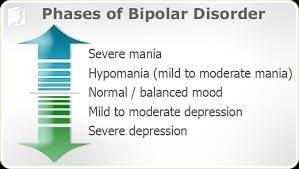
When most people think of bipolar disorder, they may think of the two opposing poles that make up the illness. High and low. Manic and depressed. Many also believe that all people with bipolar flit between these moods constantly and that the illness is severe or alike in everyone who has it. This is not the case.
There are two types of bipolar disorder. I have the first one – Bipolar affective One disorder, which means that I have serious manic episodes which include psychosis (loss of touch with reality). This has happened to me twice in my life and both times I have needed hospitalisation. Bipolar two is characterised by lesser manic episodes (hypomania) and more mixed states.
Being Bipolar One is very challenging. When I get ill, I get really really sick. Loss of insight, loss of reality, needing anti psychotic medicines now- ill. Ill to the point of being sectioned under the mental health act due to lack judgement and insight. Believing that my family are out to get me and people are going to harm me – ill. Really unwell.
When one of these serious manic episodes strikes for me, my thoughts begin racing and I can’t concentrate. I don’t sleep, I am more creative in the short term but a gibbering wreck in the long term. I start believing I can do things that I can’t rationally. I am super vulnerable and I speak much faster. I may not make much sense and when the delusions begin, I start believing I am going to be harmed.
Luckily, these episodes are kept at bay by a host of excellent medications including Lithium and Quetaipine. I also take anti depressants to keep the low periods at bay in my life.
Full blown psychosis and mania for me are very rare but they do happen. In 10 years, from 2004-2014 I did not have a hospitalisation. I was depressed and anxious but I was able to recover at home.
I had no hypomanic or manic episodes for a decade! No psychosis. One therapist even questioned my diagnosis, before my 2014 hospitalisation.
Mania for me means danger. That danger means I am more vulnerable. I have to be very careful who I surround myself with during those times. I don’t drink alcohol to excess or take drugs, but some with this kind of mania do. Or they spend lots of money or engage in risk taking behaviours such as sexual activity.
I have learnt that as long as I take my medication regularly, get enough sleep, eat well (and don’t engage in long haul travel) that I can keep my symptoms at bay. If my medicines work! (this is always a fear.. that they could stop working).
Mania for me strikes out of the blue sometimes. I also have to be careful that my mood stabiliser medicine is holding me- as with high doses of anti depressants, mania can be triggered without it.
When in psychosis in hospital I have thought the following untrue delusions
– I am being harmed by my family
– There are CCTV cameras watching and filming me in my bedroom/ hospital room
– I have been abused in some way (my mind convinces itself)
– I am being held by a criminal gang (in hospital)
These delusions have always disappeared over time, with excellent care from psychiatrists and psychologists, anti psychotic medicine and good support from family.
I don’t get these when well, and rarely have to go through them. I am learning to accept that my brain chemistry is not the same as other people and having bipolar, a chronic illness, is not my fault. I just do the best I can to manage symptoms and keep myself as well as possible. If you want to share your story of mania and bipolar, please do write below.
There is hope and recovery after mania.Thank you to all on the Facebook group who voted for this one.
Having Bipolar Disorder can sometimes feel rather like being in a washing machine!
Luckily my illness is now under control. But it has taken a long time to get here, and was not always so. Mindfulness has played a big part in my ongoing wellness, alongside a tweaked medication regime.
This is my list of just how mindfulness has helped me cope with BP over the past few years…
It has levelled out my moods – I was last in hospital in 2014. Mania. Psychosis. Sectioning. The whole lot. Since that time, my moods have at times, fluctuated a lot. But mindfulness has helped me. It has made me a calmer, steadier person all round. A quick 20 minute session before bed does wonders for my mood if I’m feeling down, and can bring me down if I’m feeling a little hyper. More stability = less episodes. Less time in hospital.
It has helped me to sleep better – As I mentioned above, I tend to meditate before bed. This has the possible negative effect that I sometimes fall asleep while doing it. You may not get the whole benefit then. No matter, just try again the next time. My bed time ritual does help me to establish a routine before going to sleep. This routine helps me sleep.
It has deepened my self-knowledge – “Know Thyself” was written over the Oracle at Delphi in Ancient Greece. The principle being that knowing oneself, self-knowledge, is of prime importance in life. Mindfulness aids that process greatly. Through meditation, and self-observation, you learn to understand your own motivations and reactions to events. With Bipolar, mindfulness helps you learn your triggers for high and low moods much better than by thinking alone.
It has helped me eat better – Odd one this. How it works is that eating mindfully – that is slowly, deliberately, consciously – helps you to taste food better. Rather than scoffing down each mouthful, you instead savour the food, eat slowly, actually taste it. Because of this, you end eating better food, and less of it. I was doing this the other night, just taking 5 minutes to eat it food and really tasting it. It intensified the eating experience tenfold.
It helps me to remind me to take my meds – . Since I meditate before I go to sleep, it reminds me at the same time that I must take my medication. This has helped me to be almost religious about taking my meds, and improved my stability at the same time.
It helps me to pray and connect with God – In the Christian Tradition mindfulness is called “silent prayer” or “contemplation”. It has been used for thousands of years to connect with the Divine and purify the spirit. And in all religions, too. Today’s secular mindfulness derives from Buddhist meditation. Anyhow, my practice enables me to spend time with God every night, and further my spiritual relationship and growth with him. It’s a healing time. I couldn’t have got through my illness without my faith. Its been invaluable.
It gives me a feeling of achievement – This feeling can be vital when I am between jobs and often have little to give substance to my day. Even if I am feeling low and have achieved very little that day, I can always say I’ve done my 20 minutes quiet time. Just this can give me a boost, and leave me feeling settled whereas before my bad moods will have dragged me down previously.
The scientific evidence is in favour of mindfulness for helping Bipolar – A 1995 study in the Biological Study Journal concluded that mindfulness is effective in levelling out Bipolar moods. A landmark 2005 study by esteemed neuroscientists from the University of Massachusetts also discovered that the brains of meditation practitioners had much more thickness, density, and activity within their prefrontal cortex — just like physicist Albert Einstein. The pre-frontal cortex is the area of the brain associated with emotion, and emotional control.
Mindfulness has also made me a more patient person – with others, and with myself. This level of self-patience and self-care has helped me to cope with my Bipolar a lot. Meditation has removed much of the agitation and bad moods that used to plague my everyday life.
Most of all mindfulness has made me more appreciative of the now, and the beauty of living in the present– so much of our lives – Bipolar and mentally well – are spent elsewhere, in our heads, instead of focusing on what we are doing right now. We are typically either ruminating and regretting things in the past, or worrying about the future. Enlightenment, as I understand it, is not withdrawing into some grand philosophical way of life, but a renewed focus on the now. “The Power of Now” as the spiritual teacher Eckhart Tolle puts it. My recovery from my Bipolar was not so much about grand realisation but an increased awareness of what I was doing, moment by moment – the food I was eating right then. The person I was talking to right then. Everything happens in the now; the rest is just illusion.
This is a guest post written by Kevin Morley. Kevin is a spiritual seeker and runs a meditation and spirituality blog called Satori Mind (www.satorimind.co.uk). He has Bipolar Disorder, but has many other more important character traits too!”
I havnt written a blog update on life for a while. I think this is because so many amazing and exciting things have been happening that the anxiety and panic attacks have had less air time.
Many of you know that since January, I have been published widely across the media and am now writing as a career. Ive been nominated for a blog award, given my first radio interview, am writing chapters for a potential book and achieved my dream of being featured in Glamour Magazine, Cosmopolitan and Elle as well as being a writer for Metro, Happiful Magazine and the Jewish News where my life story was published. And working with charities such as Mind, No Panic, SANE and STOP Suicide and the amazing team at AND Digital.
And breathe.
This is all exciting and wonderful and I feel very blessed that people are accepting of me and my story. I feel lucky to have a new career and to be achieving my dreams.
But what most of you may not see or know is I still suffer with social anxiety.
I was invited to record a mental health podcast but couldnt travel there because it felt too overwhelming to step into this new big media environment. I was due to give a talk but couldnt attend due to anxiety about standing up there on my own being vulnerable. Luckily we had planned for this scenario and they were so kind and used my blog testimony anyway.
However I hate letting anyone down. For me panic attacks happen as a response to stress. I get triggered in new work situations and when I havnt met the person before. Everything feels overwhelming and all I want to do is hide from the fear.
Ive been in therapy for 6 months…psychodynamic …talking therapy and its been helpful. Im still learning to find coping mechanisms as my response to the feared situation is often to cancel or postpone it and shut down.
Im learning how to navigate my new world whilst having a panic disorder. I will get negative thoughts and fears, tight chest, racing heart. And then have to stop the feared trigger.
I know I am not the only one feeling like this and many of you also have anxiety disorders. Please know that you aren’t alone.
Seek support from your doctor and try different methods. I find meditation to be helpful to me alongside exposure therapy and talking therapy. It will be trial and error for you as it is for me.
Im not sure if i should have anxiety medication for emergencies as I already take so much medication. But it could be that I need them in order to function and progress further. Im on anti depressants and mood stabilisers already which help me.
I feel lucky to be able to work and write and blog. I just hope that I can learn to cope better in face to face work situations too. Thanks to all who voted for this blog on Facebook and I hope it will give you an insight.
Mental health has become a strongly discussed topic in today’s world and rightly so. With more and more people vocalising their struggles with mental health, it’s the perfect time to make sure you’re looking after yours.
The How and Why of Mental Health
You’ll be pleased to know, that when indulging in physical activity, you’re bringing a whole array of benefits to your body – many of which you may not have realised.
1. Reduces Depression, Anxiety and Stress
Although there’s growing awareness that exercise helps to improve depression, anxiety and stress, it’s still not a dominant reason why people choose to be active. In many cases, people tend to turn to medication and other remedies to treat their stresses, not realising how great a gentle run or yoga session can be too.
Depression
Studies show that exercise can be used to treat mild to moderate depression as effectively as antidepressant medication. It is important though to speak with a Doctor and find out the best plan for you.
Reasons why exercise helps fight depression:
Promotes changes in the brain including neural growth, reduced inflammation and promotes feelings of calm and well-being.
Releases endorphins that energise you, making you feel happy and positive.
It acts as a distraction from depressed thoughts and gives you opportunities to socialise and meet new people, all of which help to boost spirits.
Anxiety
Exercise is known to help with anxiety. Through fully-focusing on your fitness sessions you can tune your body to be mindful about your exercise, receiving more health benefits.
Reasons why exercise helps fight anxiety:
By concentrating on the sensations that happen during exercise, you can interrupt the flow of worries in your mind and improve physical condition quicker. For example, you can workout to the beat or rhythm of the music or focus on the sensation of your feet hitting the ground.
Relieves tension and stress through performing stretches that loosen tight muscles.
Boosts physical and mental energy through the release of endorphins.
Stress
When you are stressed more often than not, your body tenses up. Your muscles begin to tighten particularly in your face, neck and chest area, which can lead to headaches, chest pains, a pounding pulse and muscle cramps. Experiencing these stress-related symptoms can lead to you worrying more which brings on a whole array of other symptoms. These include heartburn, insomnia, and stomachache. The more pains you get, the more stressed you become and sadly, you’re found battling a vicious cycle between your mind and body.
Reasons why exercise helps fight stress:
Exercise helps to break the cycle of worrying by mixing up your routine.
Releases endorphins in the brain that help the muscles to relax and relieve the built up tension in your body.
Makes sleeping easier which reduces any sleep-related stress from your mind.
Remember: When your body feels better, so will your mind.
2. Helps Sharpen Memory and Thinking
The same endorphins that work to boost your mood also improve your concentration. This makes you mentally ‘sharp’ when completing tasks. Physical activities that require hand-eye coordination such as tennis, badminton or squash, are particularly beneficial for brain building.
Reasons exercise helps the brain stay sharp:
Increases the level of oxygen to your brain improving circulation.
Breaks the mental fatigue and slumps often experienced during a day’s work. Short walks at lunch time or even a few jumping jacks can help reboot your brain for an afternoon of learning.
Stimulates the growth of new brain cells, reducing the risk for disorders that lead to memory loss and enhancing the effects of helpful brain chemicals.
Whatsmore, the birth of new brain cells also fight against age-related decline. That means by doing daily fitness activities, you can keep your body looking and feeling like your younger, healthier self. Perfect!
3. Gives Your Immune System A Boost
Catching a cold can leave you feeling blue mentally as well as physically. As you feel groggy from a blocked nose and sore head, you tend to act groggy too. Though we’re not suggesting exercising whilst you’re ill is a good idea, frequently exercising when healthy can help to combat illness, boost your immune system and make you feel happier.
Reasons why exercise improves your immune system:
Getting active helps to flush bacteria out of the lungs and airways, reducing your chances of developing a cold, flu or other illness.
Exercise causes your white blood cells (WBC) to circulate quicker helping you to detect illnesses earlier than before. White blood cells are the body’s immune system cells that fight disease.
Slows down the release of stress hormones making your mind a more peaceful place.
4. Improved Self-Esteem And Energy
Regular activity is an investment in your mind, body and soul.
Along with the feelings of conquering your fitness goals, finding a healthy, balanced routine will also work to give you an energy boost.
Getting Into A Routine
Start easing yourself into exercise with a 10 minute home workout, walking the dog or quite simply having a dance around your room.
Increase your workout by extending the time you are active for or start going to more fitness classes.
Establish a routine of which days you will exercise.
Even on your days off, making simple changes to your fitness routine like taking the stairs instead of a lift or going for a short walk instead of sitting on the sofa can keep your brain active and stresses at bay.
Remember: The key to unlocking improved mental health through exercise is to do it regularly. The more you workout and get active, generally, the healthier and happier you will feel.
Family-Friendly, Mixed Gender Sport Ideas
Having looked at six reasons why and how sport helps mental health, let’s take a look at some ways you can adapt sports into your daily routine. Exercise doesn’t have to be boring, gender-specific or child-unfriendly. Here are some great ideas to incorporate some moderate exercise into your daily routine:
Taking daily 20 to 30 minute walks during work breaks, after dinner to walk the dog and so on. Develop this by joining hiking clubs and take to trekking through the wilderness. You’ll soon be saying ‘the bigger the hills the better!’
Go cycling with your children a few times a week. Particularly if you live on a quiet road, going up and down the street and having races, can be super fun as well as tiring! Or, make the most of cycling clubs and enjoy a group venture to the hundreds of mountain bike trails out there.
There’s plenty of male and female football clubs knocking about. Join a team and enjoy the competitive side to sports whilst making new friends. Some clubs also offer family-friendly football games for parents and children to play together, so ask if your club does or organise it yourself!
Family swimming sessions every other weekend. Take advantage of your local leisure centre or make it a fun, family-bonding activity, venturing to the swimming baths every so often.
Play social, leisurely sports like golf. Done regularly can help you build friendships with other players, which contributes to boosting your mood and confidence, improving your mental health.
Fit some physical activity in your evenings by joining the local gym and taking part in fitness or yoga classes. See some awesome yoga tutorials here for use at home.
Ultimately, if there’s one thing you should’ve learnt from this article, it’s any exercise is better than none when taking care of your mental health.
By improving circulation of important cells in the body, loosening tight muscles from built up stress and distracting yourself from worrying thoughts, you can make yourself into a happier, healthier you. So, go forth and fitness! Sara Whitehouse, SEO and Content Editor at Stadia Sports
Stadia Sports are a leading UK manufacturer and supplier of sports equipment, offering a wide range of products including football goals, football nets and accessories.
Holistic medicine, as an approach to health, has been gaining ground rapidly over the last ten years. It focuses on how the mind affects the body. That means creating an integrative plan that supports a patient’s mental health throughout the entire treatment process- including follow-up care.
Holistic Medicine – A New “Whole Person” Medical Approach
The Holistic medical approach, now most frequently referred to as “Integrative Medicine,” has evolved from a variety of alternative medical approaches. Its standout feature is the fact that the medical practitioners, or team of practitioners, treat each patient in a comprehensive capacity. They look for “imbalances” in a person’s day-to-day activities, mental health, and physical health. They may even take spirituality and strong personal beliefs into account on a case-to-case basis.
This “whole person” approach can lead to differences in things as simple as scheduling. For example, in a Western medical setting, it’s usual for patients to be assigned a time slot of about15-minutes per visit. On the other hand, holistic medical practitioners may spend an hour or more with each patient. This approach allows them to develop a lasting, therapeutic relationship and develop a comprehensive treatment plan. While shorter visits may make sense to some patients and can be ideal for check-ins and updating prescriptions, some patients feel that they need more attention, or that their condition can’t be addressed in short bursts.
Borrowing from Eastern, Western, and “Conventional” Medical Traditions
Holistic, integrative medicine takes a little bit of everything from every possible health tradition. This approach has a firm scientific basis, considering all of the physical signs and symptoms and researching all known diagnosis and treatments to match.
Holistic medicine then diverges sharply and involves the patient, along with their value and opinions, in the entire process.
By doing so, holistic medicine shows that it has respect for the sanctity of every person’s health- something that’s more often seen in Eastern medicine.
How Holistic Medicine Supports Mental Health
Looking at the Big Picture – Each person is more than just the product of their DNA. With advances in epigenetic research, doctors are learning how profoundly a person’s physical appearance and health status are influenced by their thought patterns and life experiences.
Treatment and Medication Balance – Holistic medicine tends to favour procedures that don’t involve medications but their use is never ruled out. For some, the right prescription can work miracles. If that is the case, then a holistic approach would be to continue using that medication but also bolster it with additional therapies. So, if you are likely to have SAD (Seasonal Affective Disorder) a doctor taking a holistic approach might ask you tomake changes to your home or lighting in addition to taking a look at any current supplements and medication.
Accepting Alternative Therapies as Valid – In a similar vein as the above, if you aren’t responding to a given treatment, a holistic medical practitioner will listen to your reasons why and help you develop an alternative solution. If you feel strongly about a particular therapy, that, too, will be taken into account. In the long run, a more holistic approach may lead to more resources given to therapies that people feel have the most substantial impact, like talk therapy.
Seeing Spiritual and Mental Needs as Relevant – Chronic stress, from work, home, unfulfilled needs, or a significant life event can lead a person to develop a physical illness. By seeing a patient and considering their mental health needs, a doctor has a higher chance of identifying the cause of a given symptom, although it is hard to know.
Treating You, the Patient, Like a Person – Patients should be listened to and educated about their treatment options. A holistic medical practice will allow patients to have more time with their doctors and specialists.
Wow! I can’t believe that Be Ur Own Light has turned 2 years old! We celebrated our second blogiversary on 1st March so I am a few days late but it doesn’t matter.
This blog has provided me with so many amazing opportunities so far. I have met more and more people who are like minded and want to speak about their own mental health to battle stigma. I have met some incredible people online too and such wonderful contributors. I love also finding and telling untold stories.
The blog has really grown this year into a good mental health resource. We have had lots of contributors which has been fab. I (Eleanor, founder of blog) have also started a new career as a mental health writer and journalist. That is largely down to the success of the blog and I have truly found a niche. Be Ur Own Light is also a shortlisted finalist in the Health and Social care individual category of the UK Blog Awards 2018! Thank you for all your support of the blog and what we do.
I have written this year for Metro.co.uk, Glamour Magazine (online), No Panic, Happiful Magazine and Happiful.com, Counselling Directory, Mind, SANE, Time to Change, STOP Suicide, Jewish News, Equilibrium Magazine, World Union of Jewish Students,
and been featured in Cosmopolitan UK, Elle UK and Prima.
Thank you to all these amazing people who have provided guest blogs this year. I have been humbled to work with experts and people with lived experience, to provide information and tell others stories to help end the stigma and provide a resource on mental health.
So thank you to these guest bloggers who gave me such wonderful content. There is more to come. This year March 2017-18 thanks to:
Hannah Brown- Recovery from Anorexia Time With- Therapy queries
Charlotte Underwood- Recovery from depression/ suicide
Trysh Sutton- Pure Path Essential Oils
Ariel Taylor- Trichotillomania guide Jon Manning- Mental health in schools Channel 4 and Lloyds Bank- Get the Inside Out campaign Stephen Galloway- Inspirational lyrics Eugene Farell AXA PPP- Loneliness tips Peter Lang- PTSD and recovery Kaitlyn W- Light beyond self harm Jess Harris- Organ donation Sam- Recovery from bipolar disorder Ryan Jackson- Reasons for drug and alcohol addiction stigma Redfin.com- Seasonal Affective disorder United Mind Laughter Yoga- Job and wellbeing Christina Hendricks- on PTSD Reviews Bee- Child Mental Health Consumer Money Worries- Mental Health and money Stephen Smith- OCD and nOCD app Arslan Butt- University students and mental illness Tony Weekes- Unity MHS Ellie Miles- Fighting Health Anxiety Hope Virgo- Anorexia and recovery Ann Heathcote- Government and mental health Jasmine Burns- Strategies to help Binge eating Bill Weiss- Surviving Opiate withdrawal Jessica Flores- Bipolar 2 – depression Jay Pigmintiello- Mindfulness and Meditation David Baum- 365 Challenge for PTSD awareness Karen- Mental health professional with anxiety Dr Stacey Leibowitz Levy- CBT Lucy Boyle- Burnout Syndrome Diamond G Health Informer- Technology and mental health
Juno Medical- Anxiety Disorders
Thank you to everyone! This year we aim to cover even more mental health issues and disorders in our quest to provide information and be a home for all.
This year I have also written personal posts about my fight with my anxiety disorder, bipolar disorder, mental health and dating, mental health and weight gain, NHS waiting lists and therapy, book reviews for Trigger Press for Hope Virgo and Karen Mantons books, Workplace and mental health stigma, Reading as therapy and more! Time to Talk Day and Eating Disorder Awareness Week marked and many conversations had eg stigma about psychiatric medication.
We have won various awards from other bloggers- Liebster, Sunshine, Mystery and Top 30 social anxiety blog and Top 100 bipolar blog from Feedspot.com.
I am so excited that we have over 4,000 followers on Twitter, almost 600 on WordPress, over 2000 on Instagram and of course my loyal Facebook followers too.
Thank you friends and supporters! Heres to a great year talking about all things mental health and normalising it to all.
“I started taking antidepressants when I was 15 after an acute depressive episode where I had to take time off school. A year later I was diagnosed with bipolar disorder and was hospitalised so I was prescribed a mood stabiliser as well to keep me on an even keel.
I was concerned about some of the side effects but the positives for my mind and brain chemistry outweighed the negatives. Over the years, I have been on different antidepressants including fluoxetine, duloxetine and now sertraline. I also continue to have psychodynamic therapy and have tried CBT, art therapy and meditation.
Overall, I’ve been taking antidepressants for almost 14 years and they do help. I am prone to depression, my brain chemistry is such that bipolar runs in my family, so the antidepressants help keep me at an even, functioning level. Without them, I am tearful, low, emotional and find life a lot harder. I also become suicidal when depressed so it is vital I take medication for my health.
There is a big stigma around anti depressants, particularly against bipolar and other chronic conditions. But I think this new study offers proof that, for some of us, they are vital.”