Guest Interview with Mark Simmonds: Author of ‘Breakdown and Repair’ mental health book.

mark1

(image: Mark Simmonds and Lucy Streule)


breakbook1


What inspired you to write a book about yours and your daughter’s journey with mental health?

It was July 2017 and I was attending a summer party, hosted by the Marketing Society, the organisation that brings together business people working together in the areas of marketing and advertising. Gemma Greaves, the CEO, was delivering a speech, during which she announced that the Society was going to join the mental health crusade. This seemed odd, slightly incongruous. But then it dawned on me that times had changed. Mental health was no longer the taboo topic it was when I suffered my mental breakdown back in 2001.

Everyone was talking about it now. I also had another 16 years’ experience under my belt, including caring for Emily, my daughter, who suffered from anorexia from 2012 until 2018. So, I had no excuse but to come out of the mental health closet and leave a legacy of sorts to the world. And even if that book helped just one person, then it would have been worth the effort.


How did you manage to recover from your stress, anxiety and break down, what helped you?

It was the 19th July 2001. Extreme stress at work had brought on the panic attacks, which were soon followed by a mental breakdown and the onset of severe agitated depression. I was no longer communicating with my wife or my three young children, even though we were all living under the same roof. That morning, I went cycling down a country road. My brain felt like a jumble of spaghetti when I collided with a 10-ton truck. It appears I tried to take my own life.

That’s how I recovered from the breakdown, because when I woke up in the John Radcliffe Hospital in Oxford a few hours later, the dense fog seems to have lifted. From that point onwards, I began to behave like a normal human being. No idea why. The physical impact caused by the accident to my brain? The awful realisation that I had come within a whisper of losing my life, my wife and my kids. There are far more conventional ways of recovering from breakdowns, but that was mine.

How did I recover from stress and anxiety? To be honest, I haven’t! I have simply learned to manage it over the years. I have put banisters in place that help keep me on the straight and narrow: I pick the right working environments, I manage my own expectations and set realistic goals. I satisfy my needs as an introvert. I take medication. I sleep well, eat well, exercise enough. But like all mental illnesses, be aware that it’s always lurking in the bushes, ready to pounce at moments you don’t expect.

mark2

(image: Mark Simmonds and Lucy Streule)

Did you find that Emily received good care and how did you help support her?

Yes, Emily received excellent help and support both from the NHS (Buckinghamshire Child and Adolescent Mental Health Services, the Highfield Unit and Cotswold House, Oxford) and from the Cardinal Clinic near Windsor. The dedication and professionalism of all the staff was outstanding and they did their absolute best to help Emily through the illness. But here is the thing. The quality of the support and the hours spent coaxing a patient back to health have little effect or impact until that patient wants to recover.

It took Emily 6 years to decide that she had had enough of anorexia. and it was only then she finally got better. Anorexia (or Ana as we ‘affectionately’ called her) was a brutal enemy, unforgiving and merciless. More than a match for even the most qualified, most experienced doctors, psychiatrists and counsellors.


As a father, what was it like to see Emily struggle with anorexia and to try and save her at the time?

I have suffered from depression at various stages in my life and have experienced living at the bottom of the dark pit where Emily found herself. So, it was painful to watch her suffer because I knew exactly what she was feeling. The upside was that I was able to empathise and sympathise with her. I got it. And the way in which I talked to my daughter and tried to support her was more in line with what she needed. People who are suffering from mental ill health don’t respond very well to rational or logical arguments because their brains are temporarily ‘broken’. The neurotransmitters are not connecting with one another. They need lots of hugging, hand holding, being listened to and loved. An irrational and emotional approach is more effective than a rational one.

Where are you both now in terms of recovery?

As far as my daughter was concerned, it was just 12 months ago when the full-blown Anorexia Wars came to an end. We are all fully aware that war could break out again sometime in the future. As a good friend described it, all we could hope was “that Ana will get incarcerated and gagged in small section deep in Emily’s brain, a high security area from which she can never escape.”

Thankfully, at the moment, our daughter is flying high. She is living and working in London for ITV, eating well, drinking alcohol in moderation (trust me that is a positive thing!), firmly back on track.

As far as I am concerned, life is great. As I mentioned earlier in this piece, I don’t think that you ever escape fully from either stress or anxiety, but I am determined not to let it get in the way of doing great things, trying new stuff, taking risks, saying things that you might regret, taking on people with whom you don’t agree. I want to make sure I end up under the right tombstone.


How has reaction to the book been and how was the writing process?

The writing process was a joy! I loved more or less every minute of it. Working closely with Kasim, my editor at Trigger to agree the overall shape and structure of the book, researching stories and expert perspectives/points of view to add colour, collaborating with the wonderfully talented graphic designer, Lucy Streule, around the illustrations. And spending hour after hour with my wife and family editing, tweaking, improving the book. A wonderful experience.

The reaction has been great, both from friends and from people I have never met.

Alastair Campbell comes into the latter category and he kindly agreed to endorse my book. This is what he said: “I loved this book and devoured it in a single day. Whether on his own illness, his mother’s or his daughter’s struggles, Mark writes clearly and without sentimentality. He is brutally honest about the reality of mental illness across the generations with important insights about how to survive it. Though it is filled with sadness and heartbreak, ultimately his story is a testimony to the power of love and of the human spirit.”


breakbook2

Mark Simmonds published his first book, Breakdown and Repair, with Trigger Publishing, in March 2019 (https://www.amazon.co.uk/Breakdown-Repair-Fathers-Success-Inspirational/dp/1912478994). It provides a full account of his daughter’s struggle against anorexia and is illustrated by Lucy Streule. It also talks candidly about his own experiences with mental ill health.

You can also follow Mark on Instagram (mentalhealthmark).


Looking to the future: Life and Positivity by Eleanor

‘The only thing constant in the world is change‘- India Arie

In the past few weeks, it hasn’t been the easiest of times. My anxiety has come back on some days, leaving me feeling pretty low and unable to do certain tasks. However, as each day passes it is slowly improving and I am looking towards the future, both in my life and career.

I am making the transition again to being self employed. For me, this is difficult to blog about- but as we look towards the Jewish New Year, I am holding on to hope.

Hope that all will improve.

Hope that good things are on their way.

Hope that the light is coming back again.

My book will be published in just over a month’s time and I am so excited to hold the paperback in my hands! Thank you everyone who pre ordered the book and made it into a best seller.

I am grateful for every blessing that has come my way. I also have more writing projects planned, stay tuned for further details :). I know it all will lead to good in the end.

I’m currently looking into therapy and further support- EMDR therapy if possible, which helps to process trauma through rapid eye movements and images.

Everything will work out for the good, just some days it is hard to see. A note to self: keep positive and keep going. Good, happiness and dreams are on it’s way even if temporarily hidden.


Mental health and the juggling act: New Job, My book and Wedding. by Eleanor

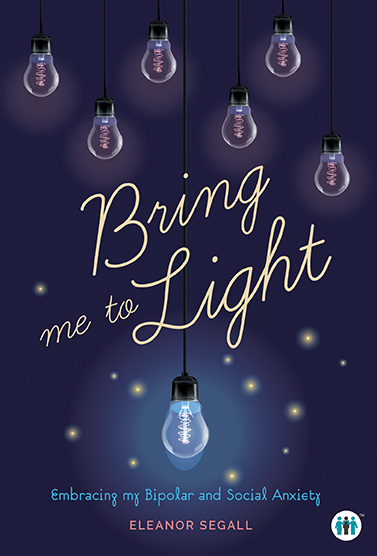
bringmetolightbook

(image: Trigger Publishing)

Nearly a month ago, I started my new job at a big Jewish charity here in London. I work in a small but lovely team in PR and Communications- helping run social media, write and distribute press releases and copywriting. I am enjoying it but its totally different from my other work and I am far less immersed in the mental health world than I was a few months ago. It is a juggling act. Trying to keep up with changes and all that’s occurring though. Hopefully soon I will find time to write articles again for my friends at Metro.co.uk and Happiful.

This has brought its own challenges as I havn’t been blogging here as much either, due to writing my book. My book  ‘Bring me to Light’  will be released in the UK on November 5th and the USA shortly after, with Trigger Publishing. The title references going from darkness to light, as I have done with my bipolar and anxiety since I was 16. I have written most of it (50,000 words!) but my very kind editor has extended the deadline for it so I can write everything I need too, whilst also doing my day job and wedding planning (!). I am really excited to see a printed copy and to promote it later this year- the hard work will be worth it I hope. I also hope you enjoy reading it and thank you all for your ongoing support.

So, wedding planning, we are 5 weeks away now until I marry Rob, my fiance. It has come round so fast especially as we have had a year and few month’s engagement, I am counting down the days until I am under the Chuppah (Jewish marriage canopy) and we are officially married in presence of those we love! This week I had my final dress fitting and it was super emotional. I still can’t believe its happening. Rob’s dad is recovering slowly at home but his condition is still serious as he has cancer.

Naturally, you will be wondering- how am I staying sane with my bipolar with everything going on and with Robs dad not being well? Firstly, as we know, stressors can make bipolar worse and trigger episodes. At the moment, my main mood stabiliser Lithium keeps me very grounded and stable. Despite the stress, I am not dipping down into  deep depression as I would have done in the past. Yes-  there are times when I might feel stressed, overwhelmed, exhausted or tired and just want to sit in my pyjamas watching Made in Chelsea or First Dates. There are also times when I am too tired to cook or do laundry and need support with those. I am lucky to have a very supportive family who look out for me too.

My work colleagues have been super supportive when I have been overwhelmed or anxious and I am finding the flexibility of my work helpful too.  I am having less anxious days now I am working too due to exposure therapy and going out a little more (taking the bus and cabs and talking to new people).

For me, I really need self care time, time to switch off and unplug. As we go into Shabbat  now is the perfect time to read and be quiet, come off my phone and computer and just be. I really promote looking after you and taking time to sleep and rest for optimum mental health and to feel better again. Sometimes it can help to let others know how you’re feeling too.

I have two weeks to give in my first book manuscript and five til my wedding day. These are dreams I have had for years and I can’t quite believe they’re happening. Staying sane while planning a wedding without a planner can be hard but we have worked as a team. Having a good cry has really helped also at times, when things get too much! But generally happy, wonderful things so not to complain. Everything at once can get a lot for anyone. Life at the moment is hectic but I am pacing myself as much as possible.

If you would like to preorder my book, you can do so on Amazon or the Trigger website and I would love to know if you do :).

Thanks for being there for me and for supporting my work too. I hope we end the stigma against mental health by talking, sharing and explaining.

Love,

Eleanor xxx

Spring Rebirth: Waking up my Mental Health by Eleanor


blossom1

(image: Eleanor Segall)

Its that time of year again here in England. The candy- floss pink cherry blossom are on the trees. The sky is a cornflower blue and the sun is streaming down, just waiting for the odd April shower. And I was outside to see it and enjoy it today.

Why is this a victory? Because over the winter I was mildly depressed and hardly leaving home. The lack of light had really got to me and I just wanted to curl up inside with a blanket. Now the days are getting longer and the spring is here, I am thinking about rebirth, waking up anew and starting afresh.

I am writing my book still (cover and title to be revealed) and I will be starting a new job in PR soon. Tonight, Rob and I are going out to celebrate that over dinner. Our wedding is 3 months today 🙂 and coming round fast.

Theres a lot to do, plan for and a lot of change (mostly positive but still a shift). I know that this is not a bad thing however this week I did start feeling overwhelmed. That was because my step grandpa passed away and we had to go to Wales for the funeral, followed by a week of mourning in our home. It was a challenging week, he will be so missed.

Yet what I have learnt from life is that there may be constant intensity or ups and downs, with everything happening at once but we have to learn to try and go with it.

Going with the flow is not something I do well. I get anxious, overwhelmed, tired, stressed, sad like any other human. I hope and I pray and I try to see signs from God and the Universe. Getting fresh air and sun is good for me and you too .

Ultimately I am learning life is a blessing but I need to guard my mental health carefully (and thank goodness for medication and a strong support network)

How are you this Spring?

Eleanor x

Social Anxiety: How I stopped feeling nervous about talking to others. Guest blog by David Morin

This is my story on how even when things look dark, there might be change just around the corner.

You see, I grew up deep inside the Swedish countryside as an only child. My parents were rather old when they had me, so people often assumed them to be my grandparents.

In school, I was an outcast. Because I had only socialised with adults, I had a hard time bonding with people my own age.

Naturally, this made me socially awkward and anxious in social settings, especially around strangers and large groups.

One time, a friend convinced me to join a party. When I finally showed up, I felt everyone’s eyes on me, like radar-tracking from all directions. I locked myself into the bathroom. Looking at the person in the mirror, I couldn’t help but wonder what was wrong with him.

Later, I learned that my awkwardness and nervousness was much more common than I had first thought. It’s just that everyone hides their chaotic inner under a calm surface (just like I did).

I started studying behavioural science. As it turned out, social anxiety often starts small in life. But when we start avoiding social settings, our anxiety snowballs into a monster.

We can’t overnight break the shackles of social anxiety. But what we CAN do, is take small steps out of what we normally do.

I started doing things slightly out of the ordinary. Instead of looking down the ground, I forced myself to hold eye contact with people I walked by on the street, if only for a split second. After a few weeks, when that felt normal, I tried to hold it a bit longer, and maybe even smile.

My smiles were forced and awkward, and I probably looked like a weirdo. But over time, I could interact with people in a warm and relaxed manner.

Thanks to taking small steps and challenging myself a little every day, I became more confident as the years went by. Not just with other people but in life in general.

7 years ago, I started a blog where I teach people how to stop being nervous. That confirmed to me that I wasn’t lonely. We’re one big nervous family all in this together. So why not help each other?

I recently got the opportunity to leave all my friends and family in Sweden and move to New York City – a place where I knew no one. If I hadn’t had the confidence I have today, I would never have dared to do it.

Challenging my anxiety was my key to living life to the fullest.

But back then, in that Swedish forest, things looked dark. Thinking back to that time taught me a lesson:

Just because things are hard at the moment, doesn’t mean that it will always be that way. Life is ever-changing, and that’s what makes it so exciting.  


This blog was written by writer David Morin who used exposure therapy to help his own social anxiety and find recovery.


How to Maintain Mental Health at Work: Guest blog by EM Training Solutions

workplacementalhealth1

(image: EM Training Solutions)

This article written by EM Training Solutions introduces some simple yet effective steps you can take in order to ensure your health and wellbeing remain a priority in the workplace.

There’s no ignoring the fact that as adults, we spend the majority of our time and lives at work. It’s where we make friends, earn our income and spend day to day so it’s no surprise that a massive 89% of workers with mental health problems reported an impact on their working life and nearly half of the people surveyed also admitted that they had considered leaving a job role because it negatively impacted their mental health.

These shocking statistics show that there is a clear correlation between mental health and our working lives, making it crucial that we take the necessary steps to maintain our mental health and wellbeing in the workplace. Here are some tips on keeping a positive and healthy mental attitude in work:

Keep Organised

One of the simplest things you can do to help you remain focused and stress-free in work is to try and be as organised as possible. When you feel on top of your tasks and are working in an organised environment, this make you feel calm and in control.

When you’re in control, you’re much less likely to panic or feel overwhelmed. Keeping your diary up to date with commitments and important reminders will allow for your days to run smoothly. Also try taking small steps such as arriving to work 15 minutes early to give yourself plenty of time to set up for the day ahead, make yourself a hot drink and tidy your email inbox.  Having this head start can help you clearly plan out your day and it also gives you a few extra minutes to yourself.

Speak up

Communication is key in any working environment. Whether it’s voicing your opinion on a situation that is negatively impacting you, or admitting when your workload is too much; speaking up to someone that is able to offer help and support is a great way to deal with any form of stress before it builds up into an even bigger issue. Although this may be daunting, especially if you suffer from anxiety it will bring a great sense of relief once you have got your feelings and thoughts off your chest. Your employer should also respect you for your honesty and will be able to come up with a plan on how to help you.

Practise Self Care

Self care comes in many different forms, and it can be something as little as taking your full lunch break and spending it alone in your favourite coffee shop in order to get some time to yourself. If you suffer from anxiety or depression in general, then recognising your limits and when you need a day off is also incredibly important.

Having a day off work to focus on your mental health is just as valid as having a day off when you have a sickness bug. Both require time to rest and recover and you don’t need to feel guilty for putting yourself and your mental health first.

Be Realistic

Constant demands, deadlines and pressure in the workplace can leave us feeling overwhelmed and stressed to say the least. Try your best to be realistic about the work you can cope with and don’t try and take on more than you can handle.

If your boss is giving you ridiculous amounts of work to do in a short space of time, or is asking too much from you then try and speak with them, or if they aren’t approachable book in a chat with a member of the HR team to explain and try to find a solution. You will feel better for being honest and getting the extra support you need.


This article was written by: 

EM Training Solutions are a Pearson Vue approved training provider for a number of different compliance and health and safety courses. They boast over 10 years of experience within the industry and specialise in first aid training as well as traffic and fire marshal courses.

World Bipolar Day is Tomorrow!

Tomorrow, join in and learn what you can about bipolar disorder.

As many of you know, I have bipolar 1 disorder and when not on medication, have episodes of high mood- mania/ psychosis and low mood- severe depression. Thankfully I am in recovery but it affects so many people and is thought to run in families.

Remember you are not alone.

Bipolar UK-  https://www.bipolaruk.org/

Bipolar in USA: http://www.mentalhealthamerica.net/conditions/bipolar-disorder

Loving Yourself: 4 Tips for Living a Body Positive Life: Guest blog by Emma Sturgis

Starting to live a body-positive life all begins with you, the individual. It can be challenging with so much pressure from society trying to dictate our lives. It becomes easier when you block out all negative forces and decide to start loving yourself and your body no matter what others have to say.

Loving yourself no matter what will increase your happiness and your overall peace in life. Here are four tips to help you down the body-positive life and feel total peace of mind about your body and physical appearance.

Work on Self-love

A significant number of girls have been through the trauma associated with body shaming, especially in high school. Some have taken the weight of the shame to our adult life where we lose our confidence and tend not to love ourselves as we should.

Many women and girls suffer from poor body image for years, or even through their entire life. The first step into living a body-positive life is by loving yourself first. We all come in different shapes and sizes, and no one is perfect. You just have to own your flaws and flaunt your strengths.

This can often be easier said than done, especially with years of social conditioning. You can achieve self-love through daily practices that make you feel your best physically and emotionally. Tell yourself every day that you appreciate your body and all it does for you.

Eat Instinctively and Respectfully

You don’t have to starve yourself to fit into that wedding dress within an unrealistic time-frame. Diets don’t work and neither does overfeeding any time you are stressed, sad or angry. Stop for a moment and ask yourself what your body desires to look great.

If you feel that you are struggling to keep an eating routine and your mental health is worsening, accept the problem and seek inpatient eating disorder treatment. under a psychiatry team or your local doctor.  


Change Your Perspective on Exercising

Most of us quit taking exercise and going to the gym because we hate working out. Exercise can be fun when we redirect the focus from it being a weight loss challenge to treating your body correctly and healthily.

You don’t have to attach any pressure or targets to your daily workout routines. Do exercises that are fun to you and even make it a social event with your friends. Once you start viewing exercise as healthy for your body , you will begin to love it. You will enjoy exercising because of how it makes you feel, endorphins from it will make us feel happy. You may even feel proud after a work out!


Pamper Your Body

After all the stress and pressure that your body endures, it deserves to be pampered and treated right. Get some good fitting outfits, wear the best lotions, go for therapeutic massages and take frequent hot tub baths. Fall in love with every curve while you look straight into the mirror.

This will allow you to connect with your body instead of feeling detached and negative toward it. You can make these things part of each day. Carve out some time from your busy schedule to pamper yourself, even if it includes simply putting on your favorite perfume. It will give you a simple confidence boost to carry through your day. Always take time for yourself and don’t let your daily tasks take priority over caring for your physical and mental health.

Once you change your mindset, the journey to living a body-positive life will be so much easier. You don’t have to lose 20 pounds to start loving yourself and your body. You are much more than your physical body.

Knowing your worth is a gift to yourself and your body. Eventually, it helps you rediscover your true self. You will be able to go forward in the world with confidence and give your amazing gifts and what you have to offer, to the universe.

This blog was written by freelance writer Emma Sturgis from the USA 

We are a Top Bipolar Disorder Motivation Blog from Mytherapyapp.com

bipolarblog1
Lovely news today.
 
Thank you to Dan at MyTherapyApp for awarding Be Ur Own Light as a Top Bipolar Disorder Blog for Motivation– helping motivate those with the condition and providing information.
 
Dan said: ‘Eleanor’s own ‘darkest night’ may have occurred in 2014 when she was hospitalized with an episode of severe mania. She began her blog a couple of years later and has continued to write about her ongoing recovery in a manner that is upbeat, but that does not marginalize the realities and difficulties posed by both bipolar disorder and anxiety disorder.’
 
 
Read here for the full list of amazing bloggers : https://www.mytherapyapp.com/blog/top-bipolar-bloggers

The Anxiety Rollercoaster : Going beyond my Comfort Zone. by Eleanor

I don’t really know where to start with this blog except I have needed to write this one  for several weeks. As many of you know, I struggle with an anxiety disorder (alongside/ part of the bipolar) which when triggered can make life quite difficult. This includes things that anyone would find anxiety provoking, such as job interviews.

I have had to dig deep, leave the house and use every ounce of strength to attend face to face job interviews in the past few weeks. This is not an exaggeration. My body floods with adrenaline and cortisol (stress hormones) and I feel overwhelmed. All my energy becomes consumed around preparing for the interview, attending the interview or NOT attending the interview because I wake up in a panic not wanting to go out- and having to try and reschedule it. Which just adds more stress as I fear I will lose the chance to interview.

This is really hard for me. There is still such a stigma to mental health issues that disclosing it early on without someone knowing you fully, means you are still less likely to be hired. Having to reschedule an interview also floods me with fear that the employers will think I am just flaky, even if I say I am unwell.

I am very proud of my achievements in the past month. Last week, I went to an interview and did well- travelled alone, was fine throughout. I even got a second interview. However, I woke this morning at 7am in anxiety and am seeing if I can reschedule it.

Essentially, this is one big test of exposure therapy. Reaching outside my comfort zone and going out into the world to use my skills. Its scary and exhausting. But it can also be validating and exhilarating too.

Today I feel a bit of an exhausted, worried mess. However, I refuse to let my panic disorder beat me. Next week, I have some positive things happening too re work.

For anyone else going through this- you aren’t alone. I take medication on time, I have had years of therapy and I still have panic attacks at times and struggle with the debilitating anxiety. I am searching for a new form of therapy (maybe EMDR- rapid eye movement) as I am concerned that my disorder mimics some PTSD symptoms, although that will need to be determined by a psychiatrist . I went through a lot in 2014 when in hospital and just before in a manic state and when I came home after and got back to work.  I wonder if this is what is behind the panic.

This is an honest assessment of whats going on. Despite the anxiety attacks, I have been able to see some friends. I am also still writing my book – deadline fast approaching.

Thank you to all my online twitter ‘cheerleader’ friends who sent me so many messages of love and support, of cute animals and inspiring quotes. You helped give me the strength to go to my interview and be ok. And to my friends and family in ‘real life’ too.  

If you are also struggling, keep fighting. I am always here for you to talk too.

Love,

Eleanor x