Love and Remission by Annie Belasco: Book review

loveandremission

(image: Trigger Publishing and Annie Belasco)

I only tend to review books that make an impact on me and that really touch my heart.

I ordered Annie’s book ‘Love and Remission’ , about her life recovering from breast cancer in her twenties and finding the love of her life. Annie and I have been connected on Twitter and she is signed to the same publisher as me so I was super excited to read her inspirational story.

When reading, I found a person of immense strength and an amazing sense of humour. Annie was diagnosed with stage 3 breast cancer aged just 25 years old. Her entire life was falling apart but she found a way through treatment, through the chemotherapy and radiotherapy-to put it back together. She describes what it was like for her to lose her hair and buy wigs, and to go through a masectomy and trying to feel womanly again- which she succeeded in doing. She was scared that the treatment wouldn’t work but she is now incredibly,  in remission.

Annie also had mental health issues due to the trauma but talks about how she slowly overcame her anxiety to live again.

The ‘love’ part in the title refers to her now husband, who she met while undergoing treatment and who stood by her against all the odds.

I don’t want to reveal any more than that- but this book was so inspiring, so moving, so well written that I read it in just two days!

I really recommend this book to anyone who wants to learn more about cancer and mental health whilst being a young woman. Annies story truly blew me away- with her strength, courage and unique take on life- she is so fun loving- and really loves her friends and family.

I was so touched by this book and her story. Thank you for writing it.


(You can buy the book now by Trigger on Amazon and in bookstores).

Dealing with my mental health on holiday abroad: Trip to Israel

recharge
(image: GoThinkBig)

On Monday, I returned from a wonderful holiday to Israel with my fiance Rob, seeing friends and family. I hadn’t been to Israel in 9 years for various reasons and he hadn’t been for 13 years (!) so we were determined to make the most of our trip. We definitely don’t want to leave it so long next time.

We travelled around the country staying with family and in hotels too. If anything, we almost packed in too much trying to see everyone- and I still didn’t get to see everyone I wanted to as we were only there for a week. I was also very conscious of the fact that it was very hot and it became apparent that I couldn’t cope with walking  in 36 degree heat for too long!

I made sure that I had lots of water on me as my medication, Lithium,  dehydrates my body quickly so I have to intake more water than most. I found that through heat and dehydration, I would get tired quite quickly so if we had spent a morning travelling, I would need to spend a few hours either resting in air conditioning or sleeping.

In general, my anxiety is better when I am abroad, though there were a few days where morning anxiety did overwhelm  and I chose to rest and sleep and then go out later in the day. My fiance was very understanding of this and went for a wander some mornings. However, once I was rested and had eaten breakfast/ drunk lots of water, I was able to enjoy and do lots of fun things.

On our trip we went to visit my best friend/ cousin and her family in a place called Tel Mond, near Netanya and we went for a day trip to Netanya- which is a beach side resort. They also made a barbeque for us when we arrived which was lovely and we saw other friends who live there. We met their newest arrival – gorgeous baby girl- and I had lots of cuddles with my new cousin!

We then went to Jerusalem for a few days- to the Western Wall to pray, walking in the Old City, seeing my other cousins and catching up over ice cream and meeting friends for dinner in the evening. We spent time in the Jerusalem First station near our hotel, which has restaurants and stalls as well as live music- a bit like Covent Garden! Rob and I went shopping and bought things for our future home as well as for family in England.

After this, we travelled to spend Jewish sabbath- shabbat with my other cousins who moved to Israel last year- and spent time walking around where they live and meeting their friends. It was restful and lovely to catch up with them, eat delicious food and rest.

Our final day was spent in Tel Aviv, going in the swimming pool,  walking around the streets by the beach, drinking iced coffee and going out for dinner with another cousin who happened to be travelling there with her friends. Rob and I also had time to ourselves which was important and we didn’t want to leave!

I am lucky that my medication very much helps my bipolar and so I was able to do all of the above.

For me when abroad, my main concerns are taking my medication on time and each day, getting enough sleep, eat well, staying out the sun at hot times and making sure I rest and drink enough. If I follow that, I can largely function.

Sometimes my anxiety  about being in a new place can kick in upon waking- so I was thankful my fiance understood it took me a bit longer to adjust to the day, but once I was rested, I was able to really enjoy the holiday.

Its important to note that everyone is different on holiday. However, it is vital to cut yourself slack, take rest days (or rest half days) and also take medication on time. I don’t drink alcohol on my meds- but keeping hydrated if you are is so important too.

Also make sure you declare your condition on travel insurance so you are covered if you become unwell abroad! This will make it more expensive but worth it. You don’t want to get sick abroad and have no cover.

I am pleased too that I stayed well- despite being very tired on my return. I made sure I caught up on sleep and didn’t go straight in to work – although I am now back at work.

I am missing my trip already and so thankful to my fiance, friends and family for making it so special.

A Guide to Mood Disorders: Guest blog By Ellie Willis

Mood disorders encompass many disorders of how you feel from day-to-day, whether that is abnormally elevated (mania) or depressed and in low mood. They can include depressive illness such as major depressive disorder, dysthymia, postnatal depression and the bipolar spectrum disorders. They also feature anxiety and panic disorders. These are often down to brain chemistry and sometimes environment.

mooddis1

(image: Pinterest/ Healthyplace.com)


Major Depressive Disorder

Major depression is defined as a depressive illness where you experience a significantly lowered mood and a loss of interest in activities that you would normally enjoy. While it is normal to feel sadness and grief when your life significantly changes, such as when a loved one passes away, when it doesn’t go away or gets worse, it may evolve into major depression. Some of the symptoms of depression are:

• Feelings of helplessness or hopelessness • Feeling guilty over insignificant things • Withdrawing from family and friends • Drinking alcohol or taking drugs as a coping mechanism • Having problems with concentration • Being unproductive • Having a lack of confidence • Feeling irritated or frustrated • Having a lack of interest in sex.

While sometimes a depressive episode seems to come out of the blue, there are often things that can trigger them. These may include: Genetic risk factors • Alcohol or other substance abuse • Medical problems such as thyroid issues or chronic pain • Certain medications such as steroids • Sleeping problems • Stressful life events 

Studies have shown that there appears to be a genetic component to depression. That is, if one of your parents has a depressive illness, you may end up suffering from depression yourself.

Dysthymia is a chronic form of depression that occurs when you suffer from a mild to moderate depression for at least two years. Although dysthymia causes problems in everyday life, dysthymia is often not severe enough to warrant hospitalisation. The chronic nature of the disorder means that you may believe that you have always felt like this.

The good news is that there are a wide range of medications to treat major depressive disorder, such as antidepressants. There are many kinds of medications around, and you may have to try a few until you and your psychiatrist find the perfect one with little to no side effects.

As of the time of writing, the antidepressants most commonly used are SSRIs and SNRIs (selective serotonin reuptake inhibitors and serotonin-norepinephrine reuptake inhibitors). These refer to the types of neurotransmitters (chemicals in the brain that affect mood, among other things) that they affect.

With antidepressants, it is extremely important not to stop medication all at once, unless there are serious side effects and even then, only under medical advice. This is because of discontinuation syndrome. Simply put, this means that your body gets used to the medication being in your system (different to addiction where you crave the drug) and you experience symptoms such as nausea, dizziness and insomnia, to name a few.

Another important way to treat depression is psychotherapy in one form or another. This can help you by learning coping skills to deal with depressive thoughts and negative thinking, as well as having someone to speak to with complete privacy. There are a few other ways for you to combat depression in adjunct to medications or therapy.

These are: • Maintaining good sleeping habits • Exercising more • Seeking out activities that bring you pleasure • Being around caring and supportive people

Postnatal Depression

Postnatal depression is a depressive illness where a new mother experiences depression in the first few months after giving birth to a child.

Some of the symptoms of postnatal depression include:

• Feeling sad or empty • Lowered self-esteem • Changing appetite (usually a decrease) • A loss of enjoyment in everyday activities • Changes in sleep patterns such as insomnia • Not being able to concentrate • Feeling cut off from the baby • A loss of interest in sex • Feeling ashamed, guilty or inadequate • Withdrawing from family and friends • Mood swings • Thoughts of harming yourself or the baby

There are a number of factors that make postnatal depression more likely. Some of these may include: • A history of depression, especially postnatal depression in the past • If the baby is sick or colicky • If you are in an abusive relationship • If you are suffering from stress • If you have little support from family and friends •

Treatment for postnatal depression is essentially similar to that for major depression, such as antidepressants and therapy and in some cases intervention from a psychiatrist or hospital team is required.


Bipolar Disorder Spectrum

Bipolar disorder is a mental illness characterised by periods of extreme mood states known as mania and depression. It is one of the most serious mental illnesses and is the sixth most disabling condition in the world at the time of writing. It is chronic and potentially life threatening. However, those with it can go on to recovery and live happy and fulfilled lives between episodes. 

According to some studies, one in fifty people may suffer from a form of bipolar disorder. In many cases, there is a family history.

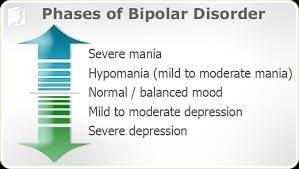
Mania is one pole of bipolar disorder – an extremely elevated or depressed mood, sometimes accompanied by psychosis. You may have racing thoughts or speak so quickly it is difficult for others to understand. You may also have trouble getting to sleep at night or suffer from insomnia. There is a danger of reckless behaviour such as overspending, unsafe sexual activity or aggression. You may feel a sense of grandiosity, making unrealistic plans. Despite mania feeling great at the time, the consequences of mania can be destructive.

Some of the signs of depression include a lowered mood, self-esteem or interest in enjoyable activities, pessimism, reduced energy and changes in appetite. Suicidal thoughts are also possible and must be monitored closely. As bipolar disorder is a recurrent illness and there isn’t any known cure, you may need to take medications to maintain your mood at a normal level.

Hypomania is the hallmark of bipolar II where the patient might feel euphoria or agitation. Hypomanic episodes are similar to manic episodes except they are less severe and sometimes pleasurable to you. There is never psychosis in a hypomanic episode. Despite hypomania increasing productivity, or making you feel increased self-esteem, the consequences can be major, especially as your mood goes down to depression.

A mixed state is a combination of manic and depressed symptoms. In a mixed state you may feel very sad or hopeless while feeling extremely energised. These can be dangerous, because of the suicide risk from being depressed as well as impulsive. If you feel you are heading into a mixed state, you should contact your psychiatrist as soon as possible.

Bipolar disorder type I is characterised by at least one episode of full-blown mania as well as depressive episodes. There is also a chance of psychosis (delusions/ hallucinations)  accompanying a manic episode. Bipolar type II features only hypomania and never mania or psychosis. While these manias are less destructive, the depression tends to be worse, and there is often a high suicide risk.

Cyclothymia is a bipolar spectrum disorder where you may have long periods of minor depression lasting at least two years alternating with hypomania. These depressive periods tend to be irritable and agitated rather than melancholic and lacking in energy.

Bipolar NOS (not otherwise specified) simply refers to bipolar disorders that do not strictly meet the criteria of any of the previously mentioned types of bipolar disorder.

The treatment of bipolar disorder involves medications such as Lithium carbonate, lamotrigine, sodium valporate, and quetiapine, as well as psychotherapy to help overcome negative thoughts that exacerbate depression or after effects of mania. 

As bipolar disorder is a recurrent illness and there isn’t any known cure, you may need to take medications for life to maintain your mood at a normal level. Despite this, many patients continue to do well as long as they stay compliant with treatment and keep aware of their changing mood states.

demilovato1

(image: MTVFORA: http://fora.mtv.ca/words-of-wisdom-celebrity-quotes-on-mental-wellness/)


Anxiety Disorders

The term anxiety disorder covers a wide range of illnesses from panic disorder to post-traumatic stress disorder (PTSD). Despite the wide range of diseases, many share similar treatment options. There is a stigma affecting some anxiety disorders due to stereotypes in the media.


Generalised Anxiety Disorder

It is normal for people to feel some anxiety over normal life events such as exams, work problems or family issues. However, when it causes problems in your everyday life or is particularly severe you may have an anxiety disorder. Generalised anxiety disorder involves having irrational fears, such as being afraid harm will come to you or your loved ones, financial issues, health, relationships and work.

Physical symptoms when experiencing anxiety may include: • Light-headedness • Becoming tired easily, or being unable to sleep properly • Feeling tense or restless, or losing your temper easily • Nausea • Shortness of breath • Headaches • Trembling • Muscle tension Treatment generally involves medications or therapy.

Psychological treatments may involve: • Learning relaxation techniques such as muscle relaxing exercises or meditation • Therapy to teach you how to solve problems that cause anxiety with anxiety disorders, psychological treatments are generally more effective than medication, however it can still be useful.

The most common treatments are antidepressants or benzodiazepines such as alprazolam or diazepam. Generally, benzodiazepines shouldn’t be taken long-term, as there is a risk of becoming dependent on them.

Anxiety disorders are relatively common in the population, with statistics that approximately 25% of the people suffer some kind of anxiety disorder that may warrant treatment in their lifetime. Anxiety is treatable, and therapy or medication may minimise the effects on your life and relationships.

Panic Disorder

Panic disorder is a mental health condition where you experience a feeling known as a panic attack recurrently.

Some of the symptoms of a panic attack include: • Shortness of breath • Dizziness or light-headedness • Tightness or pain in the chest • Trembling or shaking • Dry mouth • Muscle tension • Difficulty gathering thoughts or speaking • Tingling fingers or feet • A choking or smothering feeling • Hot or cold flushes • Nausea or butterflies • Blurred vision • Fear of dying, losing control or going mad

When you have panic disorder, you may also worry about the implications of a panic attack such as humiliation or feeling of going crazy.

You may try and flee from the situation hoping the panic attack will stop. Panic disorder is generally treated via therapeutic methods rather than medications. This may involve your doctor teaching you about panic disorder, for example, that a panic attack is distinguishable from other mental illnesses such as other anxiety disorders or psychosis – this is known as psycho education.

A therapist may instruct you not to avoid any situations where a panic attack may occur. This may be unpleasant at first, but slowly you will not feel anxious in the situation. This will help prevent agoraphobia and the disability it causes.

A common treatment for anxiety disorders is CBT – but there are many types too including exposure therapy and talking therapies. They can be incredibly helpful for you to overcome feelings of anxiety.

This guest blog was written by Ellie Willis, an expert in mental health.


On Selfie Day: Is social media bad for our health? Guest post by AXA PPP Healthcare

socialmedia1
(image: https://www.designweek.co.uk)

Today’s world is dominated by social media and it seems to be playing an ever increasing role in our lives.

Dr Mark Winwood, Director of Psychological Services at AXA PPP healthcare acknowledges that social media can give young adults a certain perception of life, that isn’t always reality.

 “Social media is a window where people choose what they want to present to the world – whether this real or altered – and in many ways it can be a ‘false reality’.

 It’s natural for an onlooker to make assumptions about others based on what they see online, but often those who are vulnerable cannot make this distinction, which can have a negative affect both on their mental health and their body image.” comments Dr Winwood.

For some, being online is their main source of social interaction and, over time, this can turn out to be an isolating and lonely experience. And, whilst the ‘rewards’ of communicating online are instantaneous, this isn’t necessarily a good thing” he says.

Social media website Instagram has been rated as having the worst effects on teenagers’ sleep, body image and fear of missing out.

 Ultimately with four of the five most popular forms of social media found to be harming young people’s mental health, it is important for young adults to realise that there is a world outside of the screen.

In 2016, seven young people who switched off from social media told the Guardian about the positive results they experienced. One said “I can live my life instead of trying to shape it into one that looks good online. I also have a lot more time now, and it’s easy enough to keep in touch with my friends in other ways.

If you decide to have a social media holiday, here are Dr Winwood’s observations:

 Suspend your accounts – suspending them for a week means you can take a break without the temptation to check for any new notifications.

Make an effort to meet up with friends face to face – you may find that cutting down on your social media time leaves a temporary void, so arrange to see friends and family personally and you’ll feel in touch when you’re off-line.

Enjoy the gift of renewed focus – think of all the occasions when your attention was split between checking social media and having a conversation or watching TV or walking along and just tune in to the moment of what you’re doing without the distraction.

Get an alarm clock – using your phone as an alarm can make it tempting to automatically check the online scene the minute you’re getting up. Having a separate alarm clock removes that temptation from arm’s reach.

If you find you crave social media try checking out apps designed to block certain sites at certain times of the day. This approach helps avoid that mindless checking and re-checking we all fall victim too.

This guest post was written by AXA PPP Healthcare.  If you think you might be addicted to social media, find more tips and advice at AXA PPP healthcare’s Mental Health Centre or speak to one of its help at hand nurses online.

Metro article extract by Eleanor: ‘My Dad and I have helped each other through our Bipolar disorder’

Our founder Eleanor and her Dad shared their story with Metro.co.uk for Fathers Day and Dads Mental Health Day. Here is an extract:

I am the child of a father with bipolar disorder. I was diagnosed with the same condition aged 16 in 2004 – this was only four years after my dad was diagnosed at the age of 44. Our story is a special and unique one, and dad and I have a strong bond as a result.

However, it has not always been easy for me and my family.  Growing up with my mum, dad and younger sister in Hertfordshire, I didn’t fully know that my dad had serious mental health issues until my teenage years. I was largely sheltered from it by my mum and my loving grandparents as a child. My grandparents would look after us when dad was ill with depression and mum had to work.

I am the eldest, and being the child of someone with a mental illness did bring its own challenges. I have always felt a sense of duty and responsibility to look after my sister and both my parents, despite receiving a lot of love and care. This sentiment has meant that I have always felt a need to look after those around me, and make sure my dad is stable with his health.

Many children of those with serious mental health issues are exposed to a lot more than I was. My childhood was largely happy. My dad was never sectioned or hospitalised and never experienced the psychosis that I have experienced with my own bipolar. There were no alcohol or drug issues in my home but dad did experience mood fluctuations with both mania and depression.

He also experienced panic attacks that stopped him from working. Dad remembers having these when I was just four-years-old. In 1996, he had his first bout of severe depression and anxiety. His panic attacks meant that he had to stop working at his job in finance after collapsing there.

Mum became the breadwinner, with two children under seven. My sister was only five-years-old. I know this wasn’t easy for anyone though I don’t fully remember it. I have been told that dad was often not around during the day due to his depression. He would retreat into his bed and sleep, but would come and see us in the evenings, once we came home from school.

I do remember visiting him in hospital one time after his severe panic made him collapse in the street. He was having his heart monitored to rule out a heart attack and was eventually discharged home.

Dad was never referred to a psychiatrist and he believes this is why his bipolar was undiagnosed for so long. He gradually recovered with antidepressant medication and support from the GP and my mum.

He slowly coaxed himself out of bed and out the house to walk down the road to buy a paper. This would take several hours. His depression lifted and he eventually went back to work. Life was easier for our family for a while, although financially, things were tight and there was always a risk my dad might not be able to work.


Read the rest of the article : https://metro.co.uk/2018/06/17/my-dad-and-i-have-helped-each-other-through-bipolar-disorder-heres-our-story-7627817/?ito=cbshare

Twitter: https://twitter.com/MetroUK | Facebook: https://www.facebook.com/MetroUK/

Taking a Mental Health Day: Retriggering the Anxiety Cycle by Eleanor

‘Sometimes you’ve got to face the darkness to step into the Light again’– James Arthur ‘Sermon’

mentalhealthday.png

(image: rockonruby.co.uk)
I just want to start this post by saying that I am doing alright- I just have moments of bad anxiety or panic when triggered by specific issues. This week, I have been feeling more anxious than normal and when this happens I often have to take a step back, take a mental health day to rest and relax and recover.

As many of you know, I have social anxiety and this manifests in various ways. At the moment, I have issues with body image as I have put on a lot of weight over the past 5 years- partly due to medication and partly to lifestyle (I love sugar and don’t move as much). However, this means that in some situations,  my anxiety gets a bit heightened.

Early mornings are also the worst time for me in terms of anxiety so I try and do things later in the day now.

So what do my mental health days look like?

Sometimes they can involve:

– Sleeping or resting if needed for a few hours
– Watching something funny- today I watched the Windsors Royal Wedding special
– Speaking to a friend
– Eat something healthy that I love (and sometimes eating chocolate.. which I am trying to stop)
– Taking space and time from work to breathe. As I am self employed, I make my own hours so I know this isn’t the same for everyone.

Listening to relaxing music, taking a bath, doing something mindful eg colouring or going for a walk if I feel able are also good.

I am looking forward to a more restful weekend and taking care of my mental health. Once I’ve had a mental health day I usually feel better, more rested, calmer and centred.

Overwhelm is hard but it doesnt have to rule everything.

I’d love to hear about what you do when overwhelm sets in, to help ease the tension?

Love,

Eleanor x 

Guest Post: Interview with Dr Janina Scarlet, author of new book ‘Therapy Quest’

I have got to know Dr Janina Scarlet, psychologist as I have written more across the media. Janina writes about therapy and mental health in an approachable and meaningful way. She also loves superheroes and fantasy and incorporates them into her work!

This week for Mental Health Awareness Week, I spoke to her as she launches her  new book ‘Therapy Quest’.

bloggertour.png
(image: The Book Publicist/ Dr Janina Scarlet)


What is your new book Therapy Quest about?

Therapy Quest is an interactive fantasy book in which YOU (the reader) are the main character. You are transported to a magical world of Here and are the Chosen One to stop an evil sorceress, Mallena, from destroying the world. Only you don’t feel like a hero. Not at all. Your anxieties and insecurities nearly lead you to abandon your quest altogether. However, if you decide to partner up with some new friends, such as a vampire with an eating disorder, and an Ogre who struggles with obsessive-compulsive disorder, you just might be able to become a hero after all.

The book is written in a game-like format, which allows you to make choices along the way. Each choice you make will change the rest of your journey and can either allow you to earn or lose points. Some choices can kill your friends or your character, so you have to be careful.

Each time you make a choice, you will also learn a mental health skill, and you will need all the skills you can learn along the way to help you in your final battle.

What was your inspiration for writing it?

I knew I wanted to write a fantasy book with self-help elements in it, in which the reader could learn these skills through the characters they were reading about. My editor, Andrew McAleer, had the brilliant idea of having a similar format to “Choose Your Own Adventure” fighting fantasy books. This sounded like a very interesting challenge to me, and I am extremely honoured to have been able to work on it.

Could you explain a bit about what Superhero Therapy is and how it works in the book?

Superhero Therapy refers to incorporating elements of popular culture, such as fantasy and science fiction books, movies, TV shows, as well as video games, comic books (Superhero or otherwise) into evidence-based (research-supported) therapy to help clients to become their own version of a superhero in real life (IRL).

In Therapy Quest, the reader is the Chosen One, the Hero of their own journey even if they question their ability to do so. Through learning skills such as mindfulness, self-compassion, acceptance, and following their own core values, the readers are invited to take their own superhero journey and develop their own superhero skills, which can be utilized in their every day life as well.

Who could you recommend the book to?

I would recommend this book to anyone age 12 and up who might enjoy fantasy books and would like to learn skills to manage depression, anxiety, trauma, or other mental health struggles.

drjanina

Dr Janina Scarlet is a clinical psychologist and the author of Therapy Quest, a revolutionary self-help book which combines therapy with an interactive fantasy quest.

Extract from my Metro article on Homelessness and Mental health issues

homeless
(image: concordhomeless.org)

This is an extract from a Metro.co.uk article that our founder Eleanor wrote and researched on rough sleeping, homelessness and mental health issues. To read the full article click here: http://metro.co.uk/2018/04/10/homelessness-and-mental-health-whats-being-done-to-help-7421391/

The ‘Beast from the East’ put homelessness under the spotlight in February and March as rough sleepers faced freezing conditions. But a more persistent problem among homeless people, which is little talked about, is the prevalence of mental health issues. As someone with bipolar disorder, who has never been homeless, I wanted to investigate what support there is out there for homeless people with mental health conditions.

Anyone can be affected by homelessness, regardless of age, race or sex. Among homeless people, 44% have been diagnosed with a mental health condition, according to Homeless Link. Homeless link points out that homelessness is a stressful, lonely, traumatic experience, which has a major impact on mental health.

In summarising some of its research into homelessness and mental health, Crisis says: ‘Serious mental health issues, such as schizophrenia, bipolar and post traumatic stress disorder are more common among homeless people. ‘Suicide rates are nine times higher, demonstrating the very real need of effective support’

Homeless people with mental health issues, particularly rough sleepers, often have less access to mental health professionals due to their lack of address or their complex needs. Being homeless is extremely overwhelming. Treatment may be the last thing on the mind of a homeless person with a mental health condition when they are focused on finding a way to get food and a place to sleep. The prevalence of drug and alcohol addictions is an added problem.

According to Crisis: ‘Homeless people are more vulnerable to alcohol and drug use. ‘Multiple diagnosis of substance and mental health issues can be a barrier. Rates of alcohol and drug use are four times higher than in the general population.’

Understandably, addiction can get worse when someone is homeless, due to the stress. St Mungo’s is charity that has conducted research into this area and affected change in legislation. Its investigation ‘Stop the Scandal’, looks at mental health and rough sleeping. The charity called for a national strategy to end rough sleeping and changes to the law.

Following St Mungo’s campaign, in 2017 the government backed the Homelessness Reduction Act. This legislation, which came into force on 3 April, is designed to prevent people becoming homeless and to give councils more power to tackle the issue. The government also committed to halve rough sleeping by 2022.

St Mungo’s is leading the way on this. It said: ‘Our experience is that homeless people are treated poorly and often labelled and judged. ‘People see drink or drugs behind rough sleeping, but rarely think about mental health. ‘Mental ill-health can affect anyone, but people sleeping rough face adverse weather conditions, fear and isolation’.


Read more: http://metro.co.uk/2018/04/10/homelessness-and-mental-health-whats-being-done-to-help-7421391/?ito=cbshare

Twitter: https://twitter.com/MetroUK | Facebook: https://www.facebook.com/MetroUK/

What happens during a Manic episode: Bipolar One Disorder Tales by founder Eleanor

healthyplace1.jpg

When most people think of bipolar disorder, they may think of the two opposing poles that make up the illness. High and low. Manic and depressed. Many also believe that all people with bipolar flit between these moods constantly and that the illness is severe or alike in everyone who has it. This is not the case.

There are two types of bipolar disorder. I have the first one – Bipolar affective One disorder, which means that I have serious manic episodes which include psychosis (loss of touch with reality). This has happened to me twice in my life and both times I have needed hospitalisation. Bipolar two is characterised by lesser manic episodes (hypomania) and more mixed states.

mania2

(image: https://www.34-menopause-symptoms.com/mood-swings.htm)

Being Bipolar One is very challenging. When I get ill, I get really really sick. Loss of insight, loss of reality, needing anti psychotic medicines now- ill. Ill to the point of being sectioned under the mental health act due to lack judgement and insight. Believing that my family are out to get me and people are going to harm me – ill.  Really unwell.

When one of these serious manic episodes strikes for me, my thoughts begin racing and I can’t concentrate. I don’t sleep, I am more creative in the short term but a gibbering wreck in the long term. I start believing I can do things that I can’t rationally. I am super vulnerable and I speak much faster. I may not make much sense and when the delusions begin, I start believing I am going to be harmed.

Luckily, these episodes are kept at bay by a host of excellent medications including Lithium and Quetaipine. I also take anti depressants to keep the low periods at bay in my life.

Full blown psychosis and mania for me are very rare but they do happen. In 10 years, from 2004-2014 I did not have a hospitalisation. I was depressed and anxious but I was able to recover at home.

I had no hypomanic or manic episodes for a decade! No psychosis. One therapist even questioned my diagnosis, before my 2014 hospitalisation.

Mania for me means danger. That danger means I am more vulnerable. I have to be very careful who I surround myself with during those times. I don’t drink alcohol to excess or take drugs, but some with this kind of mania do. Or they spend lots of money or engage in risk taking behaviours such as sexual activity.

I have learnt that as long as I take my medication regularly, get enough sleep, eat well (and don’t engage in long haul travel) that I can keep my symptoms at bay. If my medicines work! (this is always a fear.. that they could stop working).

Mania for me strikes out of the blue sometimes. I also have to be careful that my mood stabiliser medicine is holding me- as with high doses of anti depressants, mania can be triggered without it.

When in psychosis in hospital I have thought the following untrue delusions

– I am being harmed by my family
– There are CCTV cameras watching and filming me in my bedroom/ hospital room
– I have been abused in some way (my mind convinces itself)
– I am being held by a criminal gang (in hospital)

These delusions have always disappeared over time, with excellent care from psychiatrists and psychologists, anti psychotic medicine and good support from family.

I don’t get these when well, and rarely have to go through them. I am learning to accept that my brain chemistry is not the same as other people and having bipolar, a chronic illness, is not my fault. I just do the best I can to manage symptoms and keep myself as well as possible.
If you want to share your story of mania and bipolar, please do write below.

There is hope and recovery after mania. Thank you to all on the Facebook group who voted for this one.  

Love, Eleanor x


A Life Update: How Stress and Anxiety can turn into Panic Attacks.


safe

(image: healthyplace.com)

I havnt written a blog update on life for a while. I think this is because so many amazing and exciting things have been happening that the anxiety and panic attacks have had less air time.

Many of you know that since January, I have been published widely across the media and am now writing as a career. Ive been nominated for a blog award, given my first radio interview, am writing chapters for a potential book and achieved my dream of being featured in Glamour Magazine, Cosmopolitan and Elle as well as being a writer for Metro, Happiful Magazine  and the Jewish News where my life story was published. And working with charities such as Mind, No Panic, SANE and STOP Suicide and the amazing team at AND Digital.

And breathe.

This is all exciting and wonderful and I feel very blessed that people are accepting of me and my story. I feel lucky to have a new career and to be achieving my dreams.

But what most of you may not see or know is I still suffer with social anxiety.

I was invited to record a mental health podcast but couldnt travel there because it felt too overwhelming to step into this new big media environment. I was due to give a talk but couldnt attend due to anxiety about standing up there on my own being vulnerable. Luckily we had planned for this scenario and they were so kind and used my blog testimony anyway.

However I hate letting anyone down. For me panic attacks happen as a response to stress. I get triggered in new work situations and when I havnt met the person before. Everything feels overwhelming and all I want to do is hide from the fear.

Ive been in therapy for 6 months…psychodynamic …talking therapy and its been helpful. Im still learning to find coping mechanisms as my response to the feared situation is often to cancel or postpone it and shut down.

Im learning how to navigate my new world whilst having a panic disorder. I will get negative thoughts and fears, tight chest, racing heart. And then have to stop the feared trigger.

I know I am not the only one feeling like this and many of you also have anxiety disorders. Please know that you aren’t alone.

Seek support from your doctor and try different methods. I find meditation to be helpful to me alongside exposure therapy and talking therapy. It will be trial and error for you as it is for me.

Im not sure if i should have anxiety medication for emergencies as I already take so much medication. But it could be that I need them in order to function and progress further. Im on anti depressants and mood stabilisers already which help me.

I feel lucky to be able to work and write and blog. I just hope that I can learn to cope better in face to face work situations too. Thanks to all who voted for this blog on Facebook and I hope it will give you an insight.

Eleanor x