Thriving Through Time: Prioritising Mental Health for Life’s Journey by Millie Fuller

(image: Unsplash: Denys Nevozhai)

Mental health is finally getting recognition in society. The NHS in the UK has appointed their first medical director for mental health and neurodiversity. Our wellbeing should come first during all stages of life. 

Mental Health at Any Age

Poor mental health doesn’t discriminate, and it can affect anyone at any age. It impacts how we cope and how we relate to other people.  

The Signs of Mental Health Issues

Note anything that might be a sign of poor mental health. 

This can look different depending on age. 

Some common signs include:

  • Mood changes
  • Pulling away from social activities
  • Changes in sleep habits
  • Unexplained aches and pains
  • Suicidal ideation/ self harm
  • Unexpected anger or always tearful
  • Change in eating habits

Carers should also look out for any of these signs early on. The faster these are acted on, the sooner the quality of life can improve. 

The Role of Social Connection

As humans, we thrive around others. Our loved ones and our community give us both emotional support and a sense of belonging. 

To expand connections, look at joining a club or doing some volunteering. These interactions can ease loneliness, which can be especially common in older adults. 

Coping with Life Transitions

As we age, we’ll go through many transitions in life, some positive, and some not. Things like retirement, the loss of a spouse or even moving house can be difficult to navigate. Triggering negative feelings.

Reach out to a trusted friend. But if things start to become unmanageable, seek the help of a professional, like a GP or psychiatrist.

(image: Lesley Juarez, Unsplash)

Trying Mindfulness and Meditation

Lots of people find these practices useful. It helps to connect us to our feelings without judgment. Being aware of our emotions is so important and connecting with our breath.

Start with breathing exercises or guided meditation. To reduce anxiety, mindfulness should be done regularly.

Maintaining Hobbies and Interests

Make time for your hobbies- whether its sport, art, writing, gaming, music or drama. Taking time to do things we enjoy gives a sense of achievement. In some cases, it also connects us with others.

The Role of Technology in Mental Health

Many apps offer mental health support, and some of them are even free. Social media is also a great tool for staying in touch with loved ones. 

Older adults might need some support for navigating new technology. Carers or loved ones might need to give them a helping hand.

Nutrition and Mental Health

When we’re not feeling great mentally, it’s easy to fall into bad eating patterns. But we need to make sure we’re getting the vitamins and minerals that keep our brains healthy.  Eating well is key at any age to support a healthy mind. 

Summary

As we go through life’s journey, we must focus on our mental health at every stage. Learning to test how we’re feeling and navigate changes will keep our brains healthy. If we start to notice a decline, there’s no shame in seeking the help of a professional. It can help us navigate through this tough period. 

Stay connected to others and build new connections through mutual interests. For carers there’s plenty of resources online for creating a plan to help your loved one’s mental health.

Millie Fuller is a freelance writer.

We’re a Top 10 UK Mental Health Blog by Vuelio for Mental Health Awareness Week 2024!

(image: Vuelio).

I am absolutely delighted to share that Vuelio has listed Be Ur Own Light as a Top 10 UK Mental health blog! For the 6th year running! I am so grateful as we work hard year-round on the blog. Thank you to all our amazing collaborators too. These lists recognise influential blogs in their sectors.

You can see Vuelio’s Top 10 Mental health blog list here this Mental health awareness week: https://www.vuelio.com/uk/social-media-index/mental-health-blogs-uk-top-10/

We are number 7! (last year number 5, but getting on this list is a huge achievement and for 6 years in a row… can’t believe it.)

Thanks Christina and all at Vuelio!

Looking forward to sharing more mental health blogs and battling stigma daily.

Eleanor x

10 Tips For Supporting A Loved One Struggling with Alcohol Dependence by Elizabeth Howard.

(image: Alvin Mahmudov: Unsplash)

Alcohol dependence is an addiction that has a significant effect on the person who is struggling with it, as well as their loved ones. While it might be difficult, aiding someone through their recovery process is essential to assist them in kicking their alcohol addiction. These are some insightful suggestions for offering a loved one struggling with alcohol dependence genuine support.

Understanding the Nature of Alcoholism

Understanding the nature of alcohol dependence is crucial for providing appropriate support to a loved one who is struggling with the addiction. Physical and psychological dependence are both aspects of the complicated illness. . Knowing the nuances of this lays the groundwork for providing knowledgeable and empathetic support.

Foster Open Communication

Encourage your loved one to communicate honestly and openly. Establish a secure environment where people can freely express their ideas and experiences without worrying about being judged. They can communicate their emotions to you in a non-judgmental setting, which helps to develop trust and reinforce your bond. This candid conversation is essential to comprehending their viewpoint and offering useful assistance.

Educate Yourself About Alcohol Addiction

When it comes to assisting someone who is battling alcohol dependence, knowledge is a powerful tool. Spend some time educating yourself on the various facets, including its causes, effects, and the available treatment options. If you are well-informed, you will be able to provide support that is more meaningful to the individual and will become an invaluable resource for them on their path to recovery.

Encourage Professional Help

Encouraging your loved one to seek professional aid is just as vital as providing emotional support. They will have access to professional help that is designed to meet their unique requirements if you suggest therapy or counselling to them. They can also use free alcohol addiction helplines to connect them with experienced specialists who can offer urgent support and guidance at any time.

Set Boundaries

Being your loved one’s supporter means looking after yourself too. Set up healthy, defined boundaries for your own emotional and physical wellbeing. Maintain your composure while asserting these limits and be sure to explain that you are doing it to maintain a healthy and supportive connection between you and the other person. By establishing boundaries, you foster a more positive dynamic.

Attend Support Groups Together

Investigate the option of joining support groups together as a group. Friends and family members whose lives have been impacted by the addiction of a friend or loved one might find a supportive community in these groups. It can be really encouraging to talk to other people who have gone through similar experiences, and it can provide useful insight into different ways of dealing with difficult situations.

Practice Patience and Empathy

Alcohol dependence recovery is a progressive process that calls for both tolerance and compassion. Recognise that setbacks and relapses are possible and that this is a journey. Adopt a compassionate stance in these instances instead of passing judgement, stressing the significance of carrying out the healing process. Your constant support through thick and thin can play a big part in their eventual success, however not everyone is the same.

Encourage Healthy Lifestyle Changes

Encourage healthy behaviours to help in the healing process. Inspire people to engage in regular physical activity, maintain a healthy diet, and get enough sleep. Not only does engaging in healthy behaviours contribute to one’s physical well-being, but it also helps in the improvement of one’s mood and the reduction of stress.

Celebrate Milestones

Maintaining motivation throughout the process requires acknowledging and celebrating victories at every stage of the healing process, regardless of how minor they can appear. Positive reinforcement can be provided by acknowledging accomplishments along the path to recovery, such as abstaining from alcohol for a short time, finishing a counselling session, or achieving a particular objective. By celebrating together-achieved milestones, you can improve your connection with one another and emphasise the significance of their efforts.

Be a Source of Consistent Support

When helping a loved one through alcohol dependency, consistency is the most important thing you can do. Maintain a persistent commitment to the welfare of the people you care about to establish yourself as a dependable source of assistance. They may report feeling more confident and secure in their ability to heal because of this unwavering support, which helps establish trust and confidence. Keep in mind that the steadfast dedication you show toward helping them can be a big factor in their recovery.

Understanding, empathy, and encouragement are necessary while helping a loved one who is battling alcohol dependency. You can help them heal a great deal by being involved in their path, remaining informed, and encouraging good adjustments. Consider calling a helpline for professional advice and support if you or someone you know needs help right away.

This blog was written by Elizabeth Howard.

Finding A Sense Of Belonging, Where No One Wants To Belong: On a Psychiatric Ward by Katie

(image: Kelly Sikkema: Unsplash)

In 2021, I was hospitalised for the second time in my life, due to an acute psychotic episode as a result of my then-recent diagnosis of Bipolar Disorder (Type One). Hospitalisation is one of the scariest, most unsettling periods of time but – a sometimes – necessary stage to recovery. I was so deep within my psychosis for the first week of my admission that I was quite oblivious to my surroundings and the people I was sharing the space with.

However, when my psychosis started to subside and I began to return to my true self, more free from delusions and mania, I was struck with a strong feeling of not belonging. I felt truly and utterly lost. 

My ward was made up of around fifteen other women, with varying diagnosis, in differing mental states and from different walks of life. Yet, somehow I still felt like an outsider.

At first I was trying to think why. Was it because I was a Northerner in a Southern hospital? Was it because I was one of few that was the same ethnicity as myself? Was it that I was younger than most? There were so many factors that could have been the result of me feeling at a loss and not finding belonging.

Ultimately, no one wants to feel like they belong inside a psychiatric hospital. However, I believe there is merit in feeling like you have a place and in finding a sense of belonging helped me to have grounding and a base that wasn’t initially there. 

Here are a few factors, of which helped me to find belonging:

  1. Acceptance – A lot of my initial struggle was the complete denial, fuelled mainly by my delusional thoughts, that I wasn’t mentally ill and I was in the wrong place. The acceptance that I was a patient in a place that was designed to help me was a key turning point within my recovery. I belonged and thus was worthy of treatment and a future. 
  1. Routine – Although I grappled with feeling like I was becoming institutionalised, I think sticking to the routine of the ward was really important. Asides from the benefits of attending meal times, having the structure meant seeing familiar faces, both staff and patients and having positive interactions. 
  1. Involvement – Attending the therapy sessions that were available were so beneficial. My ward had a brilliant occupational therapist and other specialists that would come in to do structured sessions such as music therapy, cooking or yoga classes. Again, I got to see familiar faces and it brought with it a sense of community. 
  1. Authenticity – One of my biggest struggles throughout both manic, and depressive periods, is finding it hard to connect to my true authentic self. Reconnecting to myself and allowing myself to just be me meant that I felt more relaxed and at ease.

Finding this sense of belonging in a place where no one wants to belong ultimately gave me the grounding to go forward and look forward to a brighter future. 

Katie is a freelance writer who lives with bipolar disorder in recovery and has courageously shared her experiences of being hospitalised here.

Clear Examples of How Eating Affects Your Mental Health by Anita Ginsburg.

(image: Jacopo Maia: Unsplash)

When it comes to mental health, many people tend to focus on the usual suspects: stress, anxiety, depression, and medications. However, did you know that your food choices also play a significant role in your mental well-being? Over the years, studies have revealed the powerful connection between what we eat and how we feel emotionally. It’s not just about getting the right nutrients for physical health, but also for mental health. This blog post will explore some of the clear examples of how eating affects your mental health.

Mood Swings

What we eat affects the chemistry of our brain, which can lead to mood swings. Consuming foods high in sugar and simple carbohydrates, such as cakes and candy bars, may give you a quick energy boost, but it can also cause blood sugar spikes and crashes, leading to irritability, anxiety, and depression. Eating a balanced diet with protein, complex carbs, and healthy fats will help stabilise your mood and keep your energy levels consistent; buying from health food stores with less processed foods and organic produce like Southtown Health Foods can help with this goal.

Stress and Anxiety

Eating nutrient-dense foods can play a big role in reducing stress and anxiety. Foods like salmon, walnuts, and chia seeds contain omega-3 fatty acids, which are linked to lower levels of stress hormones. Other foods, such as leafy greens, are rich in magnesium, which can help decrease anxiety. On the other hand, consuming caffeine and sugar can increase feelings of anxiety.

Brain Fog

The foods we eat can also impact our cognitive function. Processed foods and fast food meals that are high in trans fats and sugar can cause inflammation, which affects the brain’s ability to think clearly and process information. It’s important to fuel your brain with nutrient-dense foods, such as whole grains, lean protein, and healthy fats like avocado and nuts.

Depression and Mental Health Disorders

Studies have shown that people who consume a diet high in fruits, vegetables, whole grains, and lean protein have a lower risk of depression and other mental health disorders. These foods are rich in vitamins and minerals that are crucial for proper brain function and emotional well-being. On the other hand, a diet high in processed and fast food can increase the risk of depression and other mental health issues.

Gut Health

The gut-brain connection is a well-known phenomenon, and the gut microbiome plays a vital role in our mental health. Consuming a diet high in fibre, fermented foods like yogurt and kimchi, and prebiotics like garlic and onions can help foster a healthy gut microbiome and improve mental health. On the other hand, consuming a diet high in sugar and processed foods can lead to an imbalance in gut bacteria and inflammation that can negatively impact mental health.

In conclusion, what you put into your body matters for both your physical and mental health. Meal planning and making mindful food choices can go a long way in nourishing your brain and keeping your mood stabilised.

It’s important to note that there is no one-size-fits-all diet that will work for everyone, but incorporating more whole foods into your diet is a good start. Take control of your mental health by paying attention to your diet and making changes as necessary. Your body and mind will thank you for it!

Please note that a healthy diet without any other support is not a ‘cure’- make sure to reach out to professionals if you are in crisis.

This article was written by Anita Ginsburg.

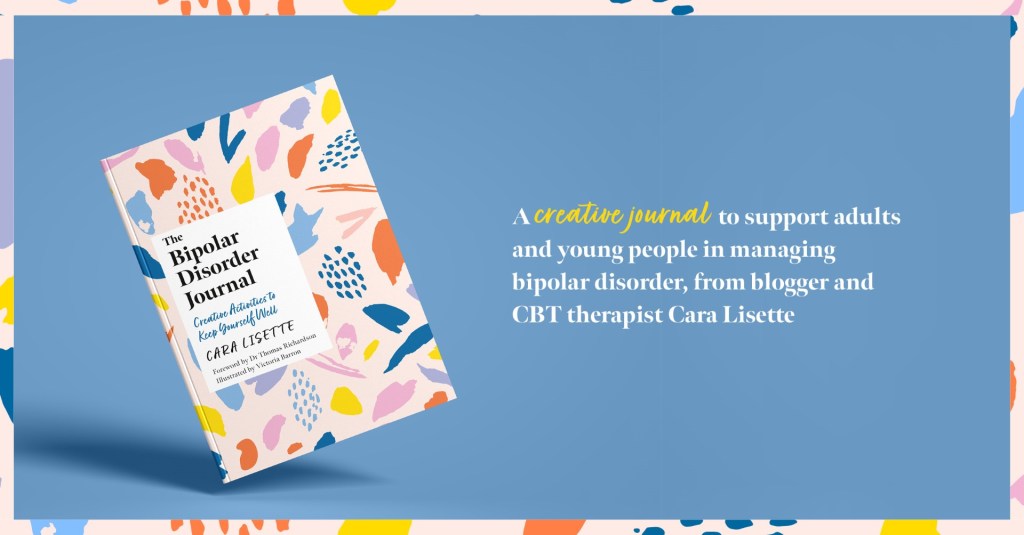
The Bipolar Disorder Journal: Creative Activities To Keep Yourself Well (by Cara Lisette and Victoria Barron).

(image: Jessica Kingsley Publishers and Cara Lisette)

I have followed the work of friend Cara Lisette for quite some time. Cara is not only a fellow mental health blogger, author (of the Eating Disorder Recovery Journal and Recovery Journal series) and advocate, but she lives with bipolar disorder and an eating disorder in remission. Cara is also a trained CBT Therapist and uses techniques that have worked for her and many others, to help people.

She created the Bipolar Disorder Journal: Creative Activities to Keep Yourself Well (with Jessica Kingsley Publishers) using evidence based techniques such as CBT and mindfulness with journalling prompts, creative activities, colouring pages and motivational quote pages to help you stay well and keep on track. It is designed to help those with bipolar disorder to understand and manage our condition, from someone with lived experience, who has learnt how to manage her condition.

Cara and the publisher say, ‘The techniques in this journal support those with bipolar in recognising and coping with episodes of depression, mania, and psychosis, understanding their triggers, and finding ways of seeking support. This journal is intended for those who want to learn more about themselves and live a full and happy life.’

Cara and Jessica Kingsley Publishers have very kindly gifted me a journal of my very own to use, thank you! It looks amazing and I will be using it and reviewing it very soon!

If you would like to get a copy of this amazing creative journal click here. and it can be found in all good bookshops.

Note: This is not a paid ad, I was gifted a journal and wanted to share about it as I believe in Cara’s mission to help others with bipolar disorder.

How Mental Illness Can Affect Our Coping Mechanisms.

(image: Unsplash)

Coping mechanisms are strategies that people use or develop in order to deal with, or avoid dealing with, difficult and stressful emotions or situations. Whilst some people may use exercise, a healthy diet or meditation as a way to process difficult feelings, it can be very easy to fall into unhealthy habits instead, especially if we have pre-existing mental health conditions.  

For example, those who have suffered with eating disorders may automatically fall back into restrictive eating habits or fall into a pattern of binge eating when life gets difficult. Whilst we can easily beat ourselves up for not ‘handling things’ in a healthy and productive manner, it’s important to remember that coping mechanisms serve an instinctive purpose. In times of stress, we seek comfort and safety. On a biochemical level, unhealthy coping mechanisms are serving that purpose.  

That doesn’t mean we should allow them to continue, however. Part of overcoming mental illness is learning how to cope in healthy ways that serve a higher purpose for you long term. Here, we will take a closer look at how mental illness can affect our coping mechanisms, and how you can learn to shift your unhealthy coping habits into more helpful ones. 

Why mental illness makes us vulnerable 

Mental illnesses come in a wide variety, and each person will experience them slightly differently to the next. But essentially, mental illness means that our brains aren’t working exactly how they should. This can warp our perception, and make us feel more anxious, stressed, insecure and prone to depression than we would be otherwise. 

When we are stressed, we seek instant comfort. Our brains instinctively drive us to seek the quickest fix and push us to run away from our cause of stress. This is why when you are really, really hungry, all you want to do is eat sugary foods such as chocolate – your body knows that’s the quickest fix for its hunger, even though you know consciously that it’s not the healthiest option. 

For people with mental illness, this stress response can trigger a repetition of a familiar pattern of negative behaviour that instantly soothes or avoids the initial problem, but also creates bigger issues long term. 

Recognise your behaviour 

It’s important to recognise when we are relying on unhelpful coping mechanisms to avoid facing stress, as they can lead to more serious mental and physical problems. If you are fixating on something that is not going to help you long term, such as obsessive cleaning, isolating yourself from family and friends, or abusing alcohol, you need to consciously recognise the signs that your habits are not serving you. 

You may find it helpful to write down the root causes of your negative habits, and commit to facing the problems head on instead of allowing them to cause you further problems. Talking to someone you trust can be a massive help and relief, and can help you springboard yourself into a better place mentally. 

Make small changes 

Often when our mental health is low, we can feel overwhelmed by the thought of fixing everything. Remember, your perception is magnified when you are struggling mentally, so everything will seem worse and harder than it truly is. Being kind to yourself and committing to changing just one small habit at a time can be really helpful in focusing on what you can achieve – one step at a time.  

Speaking to a health professional can be an intimidating thought, but sometimes it is necessary in order for us to make profound changes to our health and wellbeing. There is no shame in asking for help, and you are not alone. By recognising when our coping mechanisms are beginning to be less than healthy, we can make the choice to improve them. 

This article is written by a freelance writer.

Exciting News- We Are A Vuelio Top 10 UK Mental Health Blog Again!

Thanks to our friends at Vuelio, who not only ranked as again as a Top 10 UK Mental Health blog which is amazing- but included this little blog in the top 5!!

This is our highest ranking and I am so honoured. Thanks to all the writers and business/brands we work with too for their hard work in creating content.

This blog is in its 7th year now and can’t wait to see what the next year will bring. This is particularly special as this week is Mental Health Awareness Week too. The aim of this blog is to provide information to help people feel less alone and to dispell any myths of stigmas around mental illness.

Well done to all on this list and all the fab mental health bloggers out there.

You can see the list here: https://www.vuelio.com/uk/social-media-index/mental-health-blogs-uk-top-10/

Thank you Vuelio team!

Eleanor x

On World Bipolar Day I Hope For: The Road to Remission by Eleanor

(image: World Bipolar Day)

Today is World Bipolar Day and for those of us living with bipolar disorder we know that living with it every day, year round is more accurate. However today is our day to talk about life with mental illness and to try and eradicate the stigma around the illness… ‘crazy lady’ ‘nuts’ ‘drama queen’.

World Bipolar Day is designed to raise awareness worldwide of bipolar conditions and to work to eliminate social stigma whilst providing information to educate and help people understand the condition.

Even though I live in remission/recovery with the illness, I am medicated daily to be this way, and I have undergone years of therapy and learnt coping methods too, with support from family.

Well, before I found medication that stabilises my bipolar highs and lows, life looked very different.

There were times I couldn’t work. I was so depressed I lay in bed in all day, only getting up to eat. I was scared to have a shower and wash my hair.

Life looked bleak. All I wanted was my duvet and oblivion. I had intrusive thoughts about ending my life, I was in a lot of emotional pain and this would last for weeks, sometimes months on end.

Bipolar isn’t just a bit high or a bit low…. its depression and mania, suicidal ideation and psychosis, self harm thoughts, hypersexuality, hyper activity, believing delusions that aren’t real…..SO much. Its episodic but it can ruin your life. Some turn to drugs, alcohol, sex to cope. Some hear voices too.

I have been in hospital twice for fairly long stays. I have been sectioned under the mental health act and held in a hospital unit against my will. I have been injected with sedatives to calm my mind and body when I couldn’t consent. I have met people in hospital who were suicidal, anxious, depressed, high on drugs, in psychosis. I lived on a ward where I heard people being restrained.

So, not much fun really. Luckily this month I am celebrating 9 years of remission out of hospital! I also came out of hospital as a nervous wreck and thankfully, therapy has helped.

(Image: speakingbipolar.com)

This blog is inspired by one of my followers who asked me what was my ‘Aha’ moment in recovery.

As well as finding the medicine Lithium, a salt that controls the mood fluctuations, the biggest thing I did for my own healing was go through therapy for my panic attacks and PTSD like symptoms. This was done with the support of my husband and family and because I has been on an NHS waiting list for 2 years, I needed help. My therapist and I have done EMDR trauma therapy which has helped me to process things.

In fact, I still do get anxiety attacks – just less. I have been in a very good place generally in the past year. Finding support at home, at work and from friends and family has been the most stabilising part.

I have had bipolar since I was 15, I am 34 and can tell you that this has not always been the case and my mental health has and will fluctuate.

I learnt recently that bipolar brains are neurodiverse, meaning our brain chemicals act differently to a neurotypical brain. Always good to understand the biology behind it too as this illness can be inherited and run in families- my Dad and I and other relatives have it.

On World Bipolar Day I hope:

-Employers adhere to the disability act and make reasonable adjustments to help those of us with bipolar to work in a better way for them, including hybrid working.

-People with mental illness aren’t fired because they can’t get to a physical workplace.

-Mental health services need better funding, so that people with bipolar can get a correct diagnosis sooner and get the help they need.

-People not in the Western world will get access to mental health medication and therapies that they desperately need.

Thank you for your ongoing support,

Eleanor

x

Read more about my journey with bipolar in my book Bring me to Light

6 Tips To Keep Your Morale High While Job Hunting by Rachelle Wilber

Job hunting is never easy, and it can be especially challenging in this current climate. With more people competing for fewer jobs, the pressure to find a job can really take its toll on your mental health and morale. But there are steps you can take to help keep your spirits up during your job search. Here are six tips to help you maintain a positive outlook while job hunting. 

Maintain Your Physical Health 

Ensure you eat healthy meals, get enough sleep, and exercise regularly. Taking care of yourself physically will give you the energy and strength you need to stay motivated throughout your job search process. Plus, the dopamine you get from exercising helps stabilise your mental health. 

Set Realistic Expectations 

Setting goals for yourself when job searching is important, but it’s also important to set realistic expectations for what you want out of the process. Setting unrealistic expectations can lead to frustration and disappointment when things don’t go as planned. Keeping realistic timelines, salary goals, and more in check will help you in this process. 

Stay Connected with Friends and Family 

Reaching out to friends and family during your job search can provide much-needed support and helpful advice from those who know you best. Staying connected with people who care about you will boost your morale and remind you that people in your corner are rooting for you. 

Develop Networking Skills 

Networking is key when it comes to finding a new job, so focus on building strong relationships with those in your industry or field. You never know who might have connections or insights into potential opportunities that could be perfect for you. Attend conventions, group meetups, or whatever is available to you to further your network. 

Stay Organised 

Keeping track of all the applications, resumes, emails, interviews, etc., can be overwhelming at times. Make sure you stay organized throughout the process by creating systems that work for you. This could include keeping notes in documents, making spreadsheets tracking your progress, or whatever works for you. Having things in order will help reduce stress levels associated with searching for a new job significantly. 

Take Breaks 

While it’s important to remain focused on finding a new position, taking some time off every now and then is essential as well – even if it’s just one day per week where all you do is relax and enjoy some much-needed “me time.” Taking regular breaks from the search allows time for reflection which may lead to fresh ideas and perspectives on how best to tackle the next step in your journey. 

Searching for a new job can be stressful at times, but these six tips should help keep your spirits high. Remember that taking care of yourself physically, setting realistic expectations, staying connected with friends/family members, developing strong networking skills, staying organised, and taking regular breaks should put up in good stead throughout this journey – so don’t give up. 

Rachelle Wilber is a freelance writer.