Christmas for CAMHS Campaign to brighten up Children’s Christmas in Mental health wards: Guest post

christmascam

(image: Christmas for CAMHS charity)

Christmas for CAMHS (Children and Adolescent Mental Health Services) are a registered charity providing gifts each year for children and young people who are in mental health units in the UK over the Christmas holiday. They say,

Our aim is to make as many children and young people who are inpatients over the Christmas holidays feel thought-about, special and included.

We have been hugely supported over the past few years by generous donations from the public and have received much gratitude as a result from inpatient units. However, we are only able to provide gifts with your charitable donations. ‘

Christmas For CAMHS was originally set up because volunteers saw a huge disparity in the way CAMHS units were treated over the festive period compared to other NHS services for children and young people. They wanted to do something to change that and say,

‘Children are admitted to CAMHS units to receive support and treatment for mental health issues. There are no official figures for how many children will spend the festive season in CAMHS units across the UK. While many members of the public and corporate donors give Christmas gifts to Children’s hospitals or children’s wards in general hospitals, CAMHS units, which are usually based away from other services, are often forgotten, or not known about.’

Ro Bevan, doctor and founder says,

‘Five years ago I worked in a children’s hospital at Christmas time and there were many presents donated, mostly from corporate donors. There were so many presents that there was enough leftover for patients’ birthdays until June of the following year. A year later, I was working in child and adolescent mental health. We had no presents donated. Our patients had one present each, chosen by the therapy team, paid for out of the ward’s budget – saved from the NHS budget that is meant to cover therapeutic activities, and other expenses. I posted about the inequality on Facebook and before I knew it, my post had goneviral with 1,032 shares and so many supportive comments. It inspired me to start a group the following year and together we have raised over £1,000 to help children who would otherwise be forgotten by the generous public.

‘We don’t know whether this disparity is because people just don’t know that there
are children in mental health hospitals, or whether it’s indicative of the stigma that
society attaches to mental health issues. Regardless, we’re hoping to raise
awareness and address the balance. Although this project started with a simple
Facebook post, it has already gone further than I ever could’ve imagined possible
and reaching units across the UK which is a dream come true.’

This year, a special advent calendar has been designed by Sam Barakat, featuring  positive quotes every day, rather than chocolate. As well as this, there will be 32 windows, one for every day from December 1st to January 1st. 50 will also be donated to mental health units via Christmas for CAMHS. Sam says, ‘For many, Christmas is a joyful time that is spent with friends and family. For others, it can be the hardest time of year. This could be due to past events, trauma,  loneliness  or mental illness. ‘

I (Eleanor) feel this is such an incredible campaign that will touch the hearts of many. I was in a CAMHS unit aged 16 over Christmas and think this will help many people.  

You can donate and buy a calendar here for someone struggling : https://www.gofundme.com/f/a-mental-wellbeing-advent-calendar?utm_source=customer&utm_medium=copy_link&utm_campaign=p_cf+share-flow-1

To donate to Christmas for CAMHS and give presents to ill children click here: http://uk.virginmoneygiving.com/fund/
CAMHS2019

Website and more information: www.christmasforcamhs.org.uk
 

The difference between Psychotherapy and Counselling: Guest post by Aaron James

youareenough1

(image: Weheartit)

In our age of information, choice and variety, there are hundreds of different types of therapy and counselling available. As a starting point, one of the most common questions asked is, what is the difference between counselling and psychotherapy?

The answer is much debated as the boundaries are not always clear, especially in the UK.  However, it is generally stated that counselling is typically a shorter undertaking that focuses on the present and on current behaviours. On the other hand, psychotherapy addresses deeper, longer-term issues by exploring all experiences including those from childhood and with clients undergoing therapy for longer periods of time. 

To get a fuller understanding, it helps to look at both the similarities and differences.


Blurred lines

The terms counselling and psychotherapy are frequently used with overlap and flexibility. Certain therapists offer both. Some psychotherapists choose to use the term ‘counsellor’ simply as a softer, more approachable title, some use counselling as part of a psychotherapy process. There are also counsellors who adopt psychotherapeutic approaches. You can see where the confusion arises.

There are many individuals and practices offering counselling, but less that offer a full range of therapies including in-depth psychotherapies (for example, Brighton and Hove Psychotherapy who also happen to discuss this topic on their site).  Reputable practices share the interests, approaches and qualifications of their therapists and will be happy to discuss their compatibility with clients.

The similarities – what you get from both

Counselling and psychotherapy are both focused on creating an open, non-judgmental, safe space to help people improve their mental wellbeing and to remove distress from their lives. The majority of therapies across the board are talking or communicative therapies where participants aim for a better understanding of themselves, and often their relationships with other people, through guided discussions with a therapist. 

In talking therapies people explore their feelings and thoughts and often look at their choices. Both counselling and psychotherapy have different branches and specialisms and  both can work with individuals, families, groups or particular focus areas. But there are some general distinctions that can help people decide which is most appropriate for them.

Counselling

Counselling addresses present problems and current personal issues such as a relationship breakdown, anxiety or confidence or behavioural issues. Often with some kind of structured process, the counsellor helps alleviate symptoms and current behaviour patterns that are causing distress. It may offer practical tools to break down negative feelings and habits, and it can often be goal or action based.

As it generally deals with more surface level ‘life’ issues, clients are usually involved in therapy for shorter timeframes. The Counsellor’s Guide is a good source of information for those wanting to know more.

Psychotherapy

Psychotherapy is a deeper and longer term approach. It looks not only at the present situation, but how someone’s childhood and past may be affecting and shaping emotions they have now. The therapist may help someone delve into their past to reveal hidden experiences that have affected them. Psychotherapy looks to identify the roots of an issue as part of the process. 

As such it can address more complex mental health problems. It is a much more in-depth exploration of a person’s emotions aiming to bring buried issues to the surface to deliver a more profound understanding of who they are and their relationships.

Training

The training a therapist undergoes is often stated as another key difference. A counsellor or psychotherapeutic counsellor requires a diploma or degree, along with a number of hours of work placement experience. Psychotherapists are required to undergo postgraduate level specialist training of around 4 years. It is often noted too, that most psychotherapists are required to undergo therapy themselves as part of their training and so that they have experience from both sides.

However, counsellor and psychotherapist are not legally protected titles and further specialisms may often entail more training for both. A good therapist will openly share their training details and should be a registered member of one of the appropriate industry bodies such as the British Association for Counselling and Psychotherapy.

Which therapy is right for me?

The distinctions made here are broad ones to give a general guide. There are counselling and psychotherapy options to suit different types of problem, different types of people and different levels of previous experience. The therapies on offer will vary and some people undergo counselling for a long time, and some find a psychotherapy that offers a shorter solution. 

It depends massively on the person seeking therapy and their needs, and the important thing is for a client is to find a therapist that they feel comfortable with. Many experts say that much of the healing comes from the positive experience of the therapist to client relationship and this can be down to a personal match. 


This guest blog was written by freelance writer Aaron James, based in the UK. 

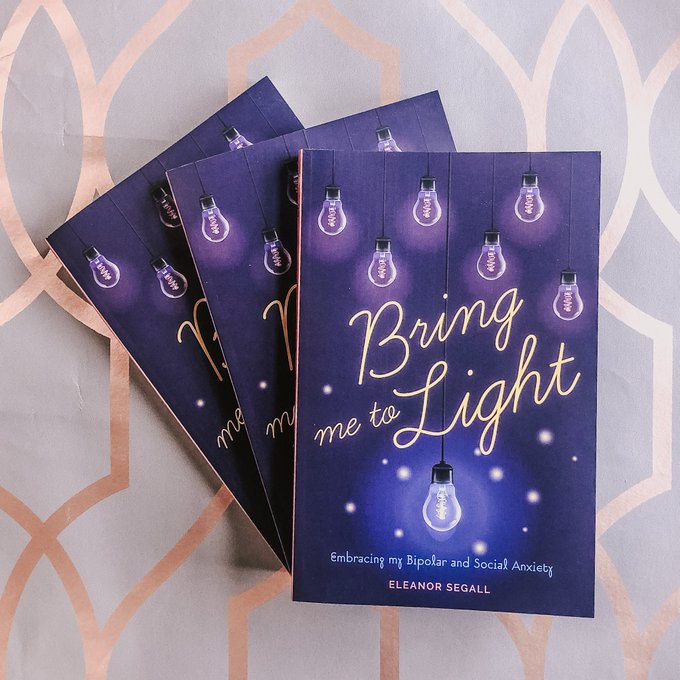
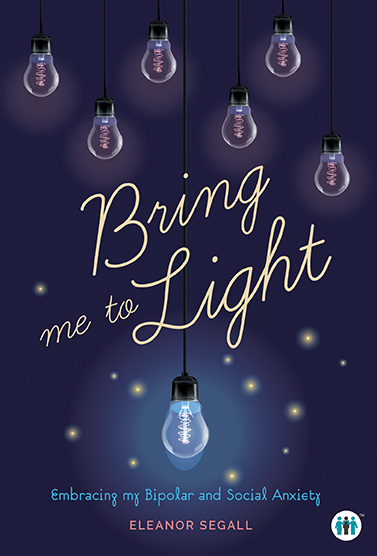
Two Book Reviews: ‘Bring me to Light: Embracing my Bipolar and Social Anxiety’ is out tomorrow!

header1

This week is publication week for my book ‘Bring me to Light’!

I can’t quite believe that it hits the shelves tomorrow! I started writing the manuscript in early 2018 and now here we are! I am lucky to have had my book reviewed by two great bloggers this week.

The first is by Rachael Stray, a UK based blogger. Rachael received a free copy of the book in exchange for an honest review and she said:

” Eleanor is extremely honest as she tells her very personal story of being diagnosed with bipolar 1 disorder and her journey from adolescence to adulthood. In this book we are taken through Eleanor’s struggles with her mental health and what a profound impact it has had on her life.

She really opens up about her struggles with her mental health and the inner turmoil she was facing. Eleanor clearly has a great support network of family and friends who have been such a support for her which she acknowledges.

I found her honest account of struggling with medication, institutionalisation following hospital stays and feeling lost in her own life extremely difficult to read but so educational and inspirational.

Eleanor hasn’t let her mental health stop her from being successful, finding a career she loves, she’s got such a strong faith, a great network of family and friends and now a loving husband.A lot of what she talks about within this book really deeply personally resonated with me.” (Rachael Stray https://rachaelstray.com/bring-me-to-light-review-ad/)


Thank you Rachael for your kind review. The second was by Nyxie who is based in Northern Ireland and is also a book blogger (at Nyxie’s nook). She also received a free copy in exchange for an honest review:


Eleanor began blogging while in outpatient treatment as both an outlet for her thoughts and to provide education to others. Like many of those with mental and physical illness, Eleanor’s writing became like therapy. When the words are placed on page or screen, they’re less likely to be bouncing off the walls of our brains. It’s a perfect example of how art, of any kind, can release built-up tension.

She has also successfully worked with mental health organisations such as Time to Change, Mind and SANE, and has even written for publications such as The Telegraph, Glamour and Happiful Magazine.

Bring Me To Light is a wonderful and brutally honest account of living with Bipolar Disorder. For anyone who lives with any illness, chronic or mental, should read this book. Like me, you’ll find yourself identifying with parts of Eleanor’s past.

I found it quite difficult to read some chapters as I empathised quite a bit with her emotions and thought patterns. With that being said I do love a book that makes me feel strong emotions, as many memoirs usually do.”  (Nyxie at Nyxies Nook: https://www.nyxiesnook.com/bring-me-to-light/)


Thank you both for your kind reviews.

Want to order a copy of my book? Click here for Amazon (but also in other book shops):

bringmetolightpink1

https://www.amazon.co.uk/Bring-Me-Light-Embracing-Bipolar/dp/1789560365/ref=sr_1_fkmrnull_1?keywords=eleanor+segall&qid=1558346142&s=gateway&sr=8-1-fkmrnull

Love,

Eleanor x

Why I wrote my book, ‘Bring me to Light: Embracing my Bipolar and Social Anxiety’ by Eleanor

bringmeinsta1

(image: Trigger Publishing)

This blog has been a long time coming. I have been so busy promoting my book on social media and in the press that I havn’t actually sat here and told you WHY I decided to write this book. So, here goes.

Firstly, can I just express so much gratitude to this here WordPress blog because without it, I would not have got commissioned at Metro.co.uk (thank you Yvette) or for other places online. This blog gave me the confidence to write and to expand my writing’s reach and for that I will be forever grateful.

In 2013/ early 2014, I sat on the couch, crying and living with a suicidal depression. My bipolar was unstable and all over the place- I felt so low and like there was no way out. However, as I sat and cried- a friend of mine’s face peered up from the newspaper. He was looking for the man that saved him from suicide and was launching a campaign called Find Mike to find him. That man was Jonny Benjamin (who now has an MBE). I had known Jonny for many years as a teenager through friends, but he became my inspiration and my hope that I too could do good things despite having mental illness. He very kindly has provided an endorsement too for my book- thank you Jonny!

With the help of my psychiatrist, I recovered temporarily from the depression but then spun very fast into mania and psychosis (possible due to a large dose of anti depressant). I was sectioned and in hospital for 4 months as an inpatient and a further 4 as an outpatient.

Throughout this time, I could not think about writing because my mind wasn’t stable enough. But as I pieced my life back together, started taking a new mood stabiliser to help control the bipolar episodes and started to recover slowly, I found the power of blogging about my social anxiety due to trauma of the bipolar, to be so helpful. I found that others would share their stories and would reach out to me about their mental health too.

Although life is not perfect and I am still living with an anxiety disorder, I have found a way to write and speak about mental illness. I was diagnosed with bipolar at 16 and there was a lot of shame for me about it back then in 2004. These days, I tell my story for other scared 16 year olds newly diagnosed but also to break down barriers and stigma against mental illness. To explain you can have bipolar or be sectioned or have psychosis but you can recover and you don’t need to spend life in hospital forever. To explain that while this cruel illness runs in families, that with the right healthcare, staying more stable is possible.

I started writing my book with Trigger Publishing because they believed in my story when I sent them my proposal. They are part of the mental health charity the Shaw Mind Foundation and royalties go towards the charity as well as some to me.

I hope that when you read my story, you won’t see it as a despairing ramble- but rather a story of hope, of life, of light triumphing over the darkness- but the darkness making the good times shine brighter. I also bring my bipolar to light, I share it with the world- as scary as this is, so that others can also tell theirs.

I wrote this book too provide a place to talk, start conversation and help heal myself through writing it but sharing that feeling of hope with others too. The book cannot change things that are so needed like urgent mental health funding of the NHS so we have parity of esteem. Yet, i hope it is a starting point about how important mental health treatment is for people to move forward in their lives.

Bring me to Light is out on 5th November 2019 in the UK and is available worldwide. It will be out in the USA in 2020. It can be purchased on Amazon, in book shops and at triggerpublishing.com

I will be sharing press articles and more about the book as it happens, but I hope this blog explains why I wrote my book. Thank you all for your ongoing love and see some of you at the book launch!

Love,

Eleanor x


Guest Interview with Mark Simmonds: Author of ‘Breakdown and Repair’ mental health book.

mark1

(image: Mark Simmonds and Lucy Streule)


breakbook1


What inspired you to write a book about yours and your daughter’s journey with mental health?

It was July 2017 and I was attending a summer party, hosted by the Marketing Society, the organisation that brings together business people working together in the areas of marketing and advertising. Gemma Greaves, the CEO, was delivering a speech, during which she announced that the Society was going to join the mental health crusade. This seemed odd, slightly incongruous. But then it dawned on me that times had changed. Mental health was no longer the taboo topic it was when I suffered my mental breakdown back in 2001.

Everyone was talking about it now. I also had another 16 years’ experience under my belt, including caring for Emily, my daughter, who suffered from anorexia from 2012 until 2018. So, I had no excuse but to come out of the mental health closet and leave a legacy of sorts to the world. And even if that book helped just one person, then it would have been worth the effort.


How did you manage to recover from your stress, anxiety and break down, what helped you?

It was the 19th July 2001. Extreme stress at work had brought on the panic attacks, which were soon followed by a mental breakdown and the onset of severe agitated depression. I was no longer communicating with my wife or my three young children, even though we were all living under the same roof. That morning, I went cycling down a country road. My brain felt like a jumble of spaghetti when I collided with a 10-ton truck. It appears I tried to take my own life.

That’s how I recovered from the breakdown, because when I woke up in the John Radcliffe Hospital in Oxford a few hours later, the dense fog seems to have lifted. From that point onwards, I began to behave like a normal human being. No idea why. The physical impact caused by the accident to my brain? The awful realisation that I had come within a whisper of losing my life, my wife and my kids. There are far more conventional ways of recovering from breakdowns, but that was mine.

How did I recover from stress and anxiety? To be honest, I haven’t! I have simply learned to manage it over the years. I have put banisters in place that help keep me on the straight and narrow: I pick the right working environments, I manage my own expectations and set realistic goals. I satisfy my needs as an introvert. I take medication. I sleep well, eat well, exercise enough. But like all mental illnesses, be aware that it’s always lurking in the bushes, ready to pounce at moments you don’t expect.

mark2

(image: Mark Simmonds and Lucy Streule)

Did you find that Emily received good care and how did you help support her?

Yes, Emily received excellent help and support both from the NHS (Buckinghamshire Child and Adolescent Mental Health Services, the Highfield Unit and Cotswold House, Oxford) and from the Cardinal Clinic near Windsor. The dedication and professionalism of all the staff was outstanding and they did their absolute best to help Emily through the illness. But here is the thing. The quality of the support and the hours spent coaxing a patient back to health have little effect or impact until that patient wants to recover.

It took Emily 6 years to decide that she had had enough of anorexia. and it was only then she finally got better. Anorexia (or Ana as we ‘affectionately’ called her) was a brutal enemy, unforgiving and merciless. More than a match for even the most qualified, most experienced doctors, psychiatrists and counsellors.


As a father, what was it like to see Emily struggle with anorexia and to try and save her at the time?

I have suffered from depression at various stages in my life and have experienced living at the bottom of the dark pit where Emily found herself. So, it was painful to watch her suffer because I knew exactly what she was feeling. The upside was that I was able to empathise and sympathise with her. I got it. And the way in which I talked to my daughter and tried to support her was more in line with what she needed. People who are suffering from mental ill health don’t respond very well to rational or logical arguments because their brains are temporarily ‘broken’. The neurotransmitters are not connecting with one another. They need lots of hugging, hand holding, being listened to and loved. An irrational and emotional approach is more effective than a rational one.

Where are you both now in terms of recovery?

As far as my daughter was concerned, it was just 12 months ago when the full-blown Anorexia Wars came to an end. We are all fully aware that war could break out again sometime in the future. As a good friend described it, all we could hope was “that Ana will get incarcerated and gagged in small section deep in Emily’s brain, a high security area from which she can never escape.”

Thankfully, at the moment, our daughter is flying high. She is living and working in London for ITV, eating well, drinking alcohol in moderation (trust me that is a positive thing!), firmly back on track.

As far as I am concerned, life is great. As I mentioned earlier in this piece, I don’t think that you ever escape fully from either stress or anxiety, but I am determined not to let it get in the way of doing great things, trying new stuff, taking risks, saying things that you might regret, taking on people with whom you don’t agree. I want to make sure I end up under the right tombstone.


How has reaction to the book been and how was the writing process?

The writing process was a joy! I loved more or less every minute of it. Working closely with Kasim, my editor at Trigger to agree the overall shape and structure of the book, researching stories and expert perspectives/points of view to add colour, collaborating with the wonderfully talented graphic designer, Lucy Streule, around the illustrations. And spending hour after hour with my wife and family editing, tweaking, improving the book. A wonderful experience.

The reaction has been great, both from friends and from people I have never met.

Alastair Campbell comes into the latter category and he kindly agreed to endorse my book. This is what he said: “I loved this book and devoured it in a single day. Whether on his own illness, his mother’s or his daughter’s struggles, Mark writes clearly and without sentimentality. He is brutally honest about the reality of mental illness across the generations with important insights about how to survive it. Though it is filled with sadness and heartbreak, ultimately his story is a testimony to the power of love and of the human spirit.”


breakbook2

Mark Simmonds published his first book, Breakdown and Repair, with Trigger Publishing, in March 2019 (https://www.amazon.co.uk/Breakdown-Repair-Fathers-Success-Inspirational/dp/1912478994). It provides a full account of his daughter’s struggle against anorexia and is illustrated by Lucy Streule. It also talks candidly about his own experiences with mental ill health.

You can also follow Mark on Instagram (mentalhealthmark).


Looking to the future: Life and Positivity by Eleanor

progress1

(image: Pinterest)

‘The only thing constant in the world is change‘- India Arie

In the past few weeks, it hasn’t been the easiest of times. My anxiety has come back on some days, leaving me feeling pretty low and unable to do certain tasks. However, as each day passes it is slowly improving and I am looking towards the future, both in my life and career.

I am making the transition again to being self employed. For me, this is difficult to blog about- but as we look towards the Jewish New Year, I am holding on to hope.

Hope that all will improve.

Hope that good things are on their way.

Hope that the light is coming back again.

My book will be published in just over a month’s time and I am so excited to hold the paperback in my hands! Thank you everyone who pre ordered the book and made it into a best seller.

I am grateful for every blessing that has come my way. I also have more writing projects planned, stay tuned for further details :). I know it all will lead to good in the end.

I’m currently looking into therapy and further support- EMDR therapy if possible, which helps to process trauma through rapid eye movements and images.

Everything will work out for the good, just some days it is hard to see. A note to self: keep positive and keep going. Good, happiness and dreams are on it’s way even if temporarily hidden.


Coping with the Anxiety and Stress of Becoming a Single Parent : Guest blog by Emerson Blake

jordanwhitt1

(Image: Jordan Whitt at Unsplash)

About one-in-five children in the United States live with an unmarried parent; a percentage that has more than doubled since the late 1960’s and one that is slowly on the rise. While many people have children with the idea, and hope, that they will raise their kids alongside their partner, there are some situations in which parenting becomes a party of one. Whether the reason be due to the death of a spouse/partner, divorce, or in some cases, abandonment, the transition to taking over the job alone can be challenging. 

There are many stressors that can be faced by single parents, including: 

  • Visitation and custody problems 
  • Continuing conflict between the parents 
  • The grief of losing a spouse or partner 
  • Effects of the breakup or loss on the child’s peer relations
  • Less opportunity for the parents and children to spend time together
  • Potential problems when entering new relationships 

The increase in daily stressors can not only negatively impact the family relationships, but it can also cause an increased level of stress and anxiety on the parent that is now learning to navigate the new territory of single parenting. 

The fear of the unknown, the stress of trial and error and the anxiety about what the future holds can make the transition into single parenting emotionally stressful. While you may feel as if you are entering into a world full of the unknown, there are some ways you can aid in coping with the stress and anxiety that this major change can bring. 


Find Sources of Support 

Maintaining positive support systems will be a crucial part in transitioning to a single parent household. While many parents may feel as if they have something to prove by showing that they can handle the change on their own, they are likely to feel deeper effects of the stress if they choose to not accept the help of others. Welcome the help of your family and friends with open arms and don’t be afraid to vocalize when you feel like you need assistance. Whether that be asking a family member to help out while you run a few errands or taking the time to talk about your feelings with a close friend on your drive home from work; realizing you have the support of other people and utilizing that will help alleviate some of the stress and anxiety. 

There are also other forms of support available should you be interested in seeking them out. Finding a support group for single parents will allow you to find others who are in your same situation and understand the struggles, allowing you to build a friendship based on commonalities. Not only will this support group be good for you, but it will also assist in bringing other children into your child’s life that they can play with and learn from! 


Take Time for Yourself 

While becoming a single parent may give you the illusion that you no longer have time for yourself, it is important that you do make personal time a priority. Time spent away from your children is actually good for you and them. As parents, we constantly feel the need to put our children’s needs above ours; however, taking a little bit of time for ourselves occasionally is a healthy desire and can have a positive impact on our overall mental health. These don’t have to be costly, extravagant gestures. Here are a few simple ideas of things that you can do for yourself as a single parent: 

  • Indulge in a good book – set aside some time for yourself each night to escape into a completely different world by indulging in a book that interests you, inspires you and teaches you. 
  • Take a hot bath – there’s nothing nearly as relaxing as a long, hot bath at the end of a stressful day. Consider adding essential oils to your bath or using a bath bomb to really get yourself feeling calm and relaxed. Both of which are commonly used to alleviate stress and anxiety. 
  • Plan a dinner with friends – part of maintaining yourself is keeping a social life. Adult interaction is well-deserved after a day spent at home with the kids. Feeling like you have someone you can talk to who understands and relates to you is helpful in opening up about any stressors or anxiety you are currently feeling and need to get some advice on. 


Stay Consistent 

Sticking to a daily routine will keep the structure and will help you and your children feel more secure. While things don’t always go according to plan, maintaining a schedule is a healthy way to set expectations for your family. Focus on scheduling meals, chores and bedtimes at regular times – especially during the week days with school and work. Keeping discipline consistent across families that have divorced or separated parents is also a suggested way to remain consistent. Children that rotate between each of their parent’s houses likely experience a lot of inconsistency between schedules and routine; so, agreeing to discipline the children the same way will bring about some level of familiarity across each home. 

Much like many other times in life, learning to take on a new role and live a new kind of lifestyle can be anxiety and stress-inducing. The major change of becoming a single-parent can impact everyone in the family, so it is important to ensure efforts are made to make the transition a little bit smoother for everyone. As the parent, we will likely be affected in many different areas i.e. financial status, relationships, routine, schedule and workload, which is likely to make the stress and anxiety almost overpowering.

Welcoming the support of friends and family, making time for yourself and sticking to a routine are all natural and healthy ways to cope with the adjustment. The stress and anxiety that come along with change are common, but ensuring you take steps to aid them will benefit you, your family and your mental health in the long run. 

Guest blog written by Emerson Blake, Freelance writer from USA


An Increase in Anxiety: Panic attacks and Therapy thoughts.

panic1

(image: Your Tango)

Hi friends,

It has been a while since I’ve shared a personal blog and I want to be as honest as possible.

It has been a whirlwind of a time- I got married to my wonderful husband in July- we really had the best day, I have been editing and finishing writing my book Bring me to Light and I also started a new job at a charity in May- which has meant I have been blogging less. I love my new job however I am much busier!

This has meant an increase in my anxiety levels and panic attacks in the mornings at times, related to social anxiety. I worry about the day ahead and sometimes don’t feel able to leave home. I have been trying to combat this but its been really hard and is still ongoing for me.

I have had a lot of CBT and talking therapies but believe my anxiety to be trauma based re what happened to me 5 years ago, being sectioned and in hospital. As such, I would like to have EMDR therapy, a type of therapy that helps to process trauma through focusing on images and rapid eye movement. It is hard to describe but I believe this is what I need in order to keep my anxiety disorder under control- and get rid of most of it.

In the mean time I have been leaning on my support network and have been prescribed beta blockers for when the anxiety is at its highest. I have also been referred back to psychiatry in order to get a referral for EMDR.

Except…. my NHS borough don’t fund EMDR therapy so the only route in is via a service called IAPT. It may be that I have to go privately if the NHS standard of therapy is not good enough but there we are. There is still a 2 year waiting list to even have an assessment for therapy, but via IAPT it is quicker, so I hope I can get some form of help for me. The funding for mental health in the UK is atrocious and I hope this will improve….

Having the support of my parents, Rob and family has been hugely helpful to me and my new amazing colleagues who believe in me and have been very supportive.

But, it has been exhausting.

Panic attacks make me want to sleep, blank out and sometimes you can’t do that. You have to face the day and fight. That’s where the beta blocker meds come in for me right now as they calm the body down when you need to show up to something (deep breathing doesn’t do it for me). Usually, I feel better once I don’t react to the anxiety negatively and try to dig deep and push through, but its not easy.

This week, we are going on honeymoon in Italy and I am looking forward to a relaxed, sunshiney break by and in the pool, beach and spa with Rob and eating lots of delicious Italian food. A break is desperately needed and I hope I won’t have any panic attacks on holiday, but have a restful time!

Here’s hoping I will find something that will help ease the panic. I have tried so many things for so many years and it’s still here.

Eleanor x


Mental health and the juggling act: New Job, My book and Wedding. by Eleanor

bringmetolightbook

(image: Trigger Publishing)

Nearly a month ago, I started my new job at a big Jewish charity here in London. I work in a small but lovely team in PR and Communications- helping run social media, write and distribute press releases and copywriting. I am enjoying it but its totally different from my other work and I am far less immersed in the mental health world than I was a few months ago. It is a juggling act. Trying to keep up with changes and all that’s occurring though. Hopefully soon I will find time to write articles again for my friends at Metro.co.uk and Happiful.

This has brought its own challenges as I havn’t been blogging here as much either, due to writing my book. My book  ‘Bring me to Light’  will be released in the UK on November 5th and the USA shortly after, with Trigger Publishing. The title references going from darkness to light, as I have done with my bipolar and anxiety since I was 16. I have written most of it (50,000 words!) but my very kind editor has extended the deadline for it so I can write everything I need too, whilst also doing my day job and wedding planning (!). I am really excited to see a printed copy and to promote it later this year- the hard work will be worth it I hope. I also hope you enjoy reading it and thank you all for your ongoing support.

So, wedding planning, we are 5 weeks away now until I marry Rob, my fiance. It has come round so fast especially as we have had a year and few month’s engagement, I am counting down the days until I am under the Chuppah (Jewish marriage canopy) and we are officially married in presence of those we love! This week I had my final dress fitting and it was super emotional. I still can’t believe its happening. Rob’s dad is recovering slowly at home but his condition is still serious as he has cancer.

Naturally, you will be wondering- how am I staying sane with my bipolar with everything going on and with Robs dad not being well? Firstly, as we know, stressors can make bipolar worse and trigger episodes. At the moment, my main mood stabiliser Lithium keeps me very grounded and stable. Despite the stress, I am not dipping down into  deep depression as I would have done in the past. Yes-  there are times when I might feel stressed, overwhelmed, exhausted or tired and just want to sit in my pyjamas watching Made in Chelsea or First Dates. There are also times when I am too tired to cook or do laundry and need support with those. I am lucky to have a very supportive family who look out for me too.

My work colleagues have been super supportive when I have been overwhelmed or anxious and I am finding the flexibility of my work helpful too.  I am having less anxious days now I am working too due to exposure therapy and going out a little more (taking the bus and cabs and talking to new people).

For me, I really need self care time, time to switch off and unplug. As we go into Shabbat  now is the perfect time to read and be quiet, come off my phone and computer and just be. I really promote looking after you and taking time to sleep and rest for optimum mental health and to feel better again. Sometimes it can help to let others know how you’re feeling too.

I have two weeks to give in my first book manuscript and five til my wedding day. These are dreams I have had for years and I can’t quite believe they’re happening. Staying sane while planning a wedding without a planner can be hard but we have worked as a team. Having a good cry has really helped also at times, when things get too much! But generally happy, wonderful things so not to complain. Everything at once can get a lot for anyone. Life at the moment is hectic but I am pacing myself as much as possible.

If you would like to preorder my book, you can do so on Amazon or the Trigger website and I would love to know if you do :).

Thanks for being there for me and for supporting my work too. I hope we end the stigma against mental health by talking, sharing and explaining.

Love,

Eleanor xxx

The Connection Between Anxiety and Substance Abuse: Guest blog by Nu View Treatment Center

breatheimage1

(image: Recovery Direct)

When people abuse drugs and alcohol, it is often the sign of a deeper underlying issue. For many people struggling with addiction, the source of their addiction is due to mental illness that often has gone undiagnosed. One of the most common co-occurring disorders seen with substance abuse is anxiety. The following article will outline what defines anxiety, and the connection between anxiety and substance abuse.

What is Anxiety?

In general, anxiety is an important emotion to have. While it may be normal to feel fear, apprehension, and nervousness from time to time, it becomes an issue when people experience these emotions at excessive levels. When anxiety takes over a person’s thought process, it manifests itself into physical symptoms such as the following:

  •    Increased and constant restlessness
  •    Increased and uncontrollable feelings of worry
  •    Irritability
  •    concentration difficulties
  •    sleep problems


Anxiety can be grouped into several types of disorders. These can include generalized anxiety disorder (GAD), panic disorder, post-traumatic stress disorder (PTSD), phobias, social anxiety disorder, and selective mutism among others. The leading causes of anxiety include work and family stresses, financial worries as well as underlying medical issues. The roots of anxiety can also be traced to past traumatic events that are unresolved.


How Anxiety and Substance Abuse Connect

When people suffer from anxiety, mental and physical symptoms can be very intense and can wear on the body and mind. To get some form of relief, people may turn to substances that stimulate dopamine in the brain to help numb the feelings of discomfort. Self-medicating oneself to take the edge of off anxiety only works in the short-term and can have a rebound effect that makes anxiety worse over time. Without addressing the roots of anxiety, their condition will worsen over time—along with their substance use.

The connection between anxiety and substance abuse can also trace back to the teenage and young adult years. During adolescence, the brain is still developing and forming. If people used drugs as a teenager, it could alter the development of the parts of the brain that govern reasoning and impulse control. Drug and alcohol use early in life can increase the likelihood of anxiety and substance abuse as that person gets older.

Another reason for anxiety disorders and substance abuse connection is because of one’s genetics. Some people may be more predisposed to both anxiety and drug and alcohol dependence through genetic factors shaped by one’s environment.


Getting Help

For those dealing with co-occurring disorders, they must seek specialised help from a dual diagnosis treatment facility specializing in mental health and addiction disorders. The first step in getting help is undergoing medical detoxification. During detox, patients will undergo medication-assisted therapy to help better tolerate the physical and psychological symptoms associated with withdrawal. Additionally, staff will perform physical and mental health evaluations to pinpoint any underlying issues that may impact recovery.

For those suffering from dual diagnosis, treatment will include mental health services in addition to addiction treatment services. Dual diagnosis facilities feature mental health professionals working alongside addiction treatment personnel in creating an individual treatment plan that fits each client’s specific needs.

In addition to therapy, 12-step counselling, life, and coping skills training and other forms of treatment, patients will receive mental health treatment with a focus on ongoing counselling and medication-based therapies that will give them the tools to handle anxiety.


This guest blog was written by Nu View Treatment Center