Highlighting The Anxiety That Men Face With Their Appearance And Body Dysmorphia By Michael Saul, Partner At Cosmetic Surgery Solicitors.

(image: Pexels- Martin Pechy)

Appearance-related anxiety in men is deeply rooted in psychological and societal factors. Body dysmorphic disorder (BDD) describes how men can become fixated on perceived flaws, such as their hair, muscles, or facial features. This preoccupation goes beyond ordinary concern and can lead to behaviours like avoiding mirrors or compulsively seeking reassurance. Research shows that this anxiety is not purely superficial but often stems from deeper psychological issues, including past trauma or negative experiences during adolescence. Understanding these origins helps to address the mental health challenges men face, rather than solely relying on cosmetic interventions.

The Psychological Roots of Male Appearance Anxiety

Psychological and societal factors often drive appearance anxiety among men. Body dysmorphic disorder (BDD) exemplifies how men can become fixated on perceived flaws, such as their hair, muscles, or facial features. This fixation goes beyond normal concern and is marked by distress and compulsive behaviours, including excessive mirror checking and seeking reassurance. The condition often has roots in past traumas or negative experiences, particularly during adolescence which compounds the development of BDD.

This anxiety is further exacerbated by cultural narratives around masculinity and appearance where societal expectations can aggravate the psychological impact of conditions like androgenic alopecia. Addressing these issues requires a comprehensive understanding of their origins, as relying on cosmetic interventions alone fails to resolve the underlying psychological distress. This deeper understanding provides effective support and treatment options for men struggling with appearance-related anxiety.

The Impact of Hair Loss on Men’s Mental Health

Androgenic alopecia (AGA), commonly known as male pattern baldness, has a profound impact on men’s self-esteem and mental health. Studies indicate that AGA can impair quality of life, particularly in younger men who view hair loss as a sign of ageing or loss of masculinity. This psychological burden is often underestimated, as societal attitudes towards baldness remain largely negative. Men may feel pressured to conform to idealised standards of appearance, which can lead to anxiety, depression, and social withdrawal.

Unlike BDD, which involves a distorted perception of minor or imagined flaws, AGA concerns are based on actual physical changes, yet the emotional distress can be similar. Many men experience shame and lowered self-esteem, avoiding social situations or altering their behaviour to hide their hair loss. These reactions underscore the need for psychological support rather than cosmetic interventions, which often fail to address the underlying emotional distress associated with hair loss.

The Misconception of Cosmetic Surgery as a Solution

Despite the psychological distress caused by conditions like BDD and androgenic alopecia, many men mistakenly view cosmetic surgery as a solution to their appearance-related anxieties. This misconception is particularly evident in cases where individuals pursue surgical interventions without addressing the underlying psychological issues. Surgery often fails to resolve the distress, and in some instances, it can worsen symptoms. BDD is a perceptual disorder where the perceived flaw is rarely corrected by physical changes. Men seeking surgical solutions may find temporary relief, but this approach does not address the root cause of their anxiety.

Treatment for BDD should include psychological therapies like Cognitive Behavioural Therapy (CBT), which help individuals manage their obsessive thoughts and develop healthier ways of coping with their appearance concerns. Without this psychological support, men remain at risk of dissatisfaction and further psychological harm, even after undergoing surgery.

(image: Daria Liudnaya: Pexels)

The Importance of Recognising Psychological Triggers

To address male appearance anxiety, men must recognise its psychological triggers. Research indicates that many men develop BDD or experience distress from hair loss due to past traumas or negative experiences during adolescence. These triggers can include bullying, teasing, or other forms of social rejection. Recognising these underlying factors is essential for effective treatment, as focusing solely on cosmetic solutions overlooks the deep-seated psychological issues. Integrating therapeutic approaches that address these triggers can significantly improve outcomes and reduce the reliance on cosmetic interventions.

Legal Considerations for Men Seeking Cosmetic Surgery

Men opting for cosmetic surgery must be aware that, even with informed consent, procedures can sometimes lead to complications or dissatisfaction. Those with psychological conditions like body dysmorphic disorder may not fully grasp the risks involved, which could result in a poor surgical outcome or aggravation of mental health issues. If a surgeon fails to assess psychological fitness or provide adequate information about potential risks, this may constitute cosmetic surgery negligence. Men in such situations have the legal right to pursue claims if the surgery worsens their condition or results in harm.

Solicitors can assist clients who have experienced negligent cosmetic surgery by examining whether the medical professional involved adhered to their duty of care. For men affected by psychological issues like body dysmorphic disorder, a failure to conduct proper assessments or consider the mental state of the patient before surgery could be grounds for legal action. Solicitors provide guidance on collecting evidence and understanding the options available for claiming compensation if the surgery has caused further harm or did not meet reasonable standards.

Men contemplating cosmetic surgery should prioritise professional psychological support to understand their motivations and potential outcomes better. Conditions like body dysmorphic disorder can distort self-perception, and as such, points to psychological therapy as the first step. Consulting a mental health professional can clarify whether surgery is the appropriate course of action. Combining psychological and legal support provides a more secure and informed approach to managing appearance-related issues.

This article was written by Michael Saul, Partner at Cosmetic Surgery Solicitors.

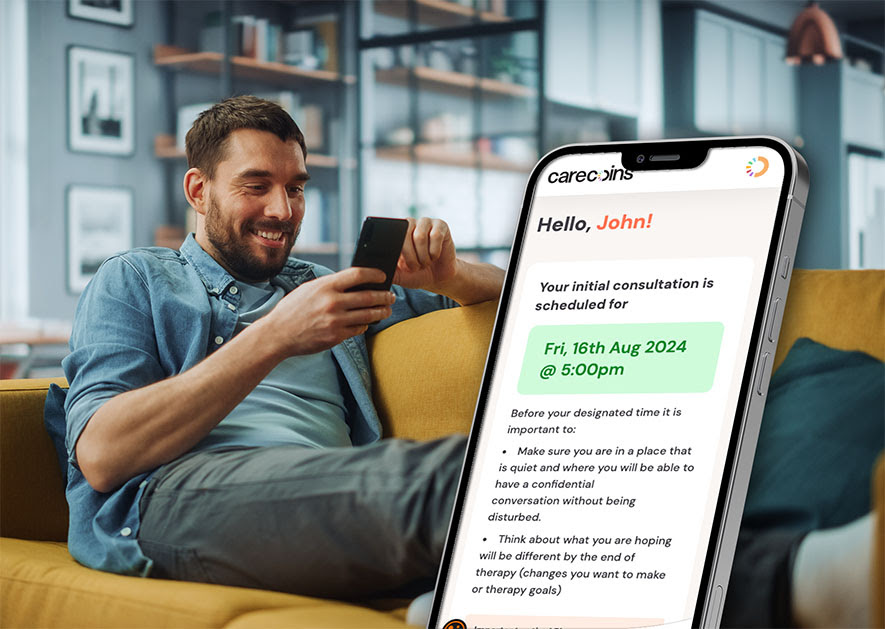
New Online Therapy Platform CareCoins Revolutionises Access to Mental Health Support for Employees This World Mental Health Day 2024.

(image: Carecoins)

This World Mental Health Day 2024, the focus is on mental health at work- it’s time to prioritise mental health in the workplace. As the Mental Health Foundation say, ‘Work can have a huge impact on our mental health. It can be good for our mental health, giving us a sense of purpose, boosting our self-worth, and providing opportunities to connect with others. But it can also be a source of stress and anxiety and contribute to developing or worsening mental health problems. ‘

Introducing Carecoins, a pioneering new mental health platform, which is set to transform the landscape of employee mental wellbeing, offering employers a unique support system for their staff this World Mental Health Day 2024 and beyond.

Designed to connect individuals with qualified mental health therapists in an entirely flexible, hassle-free way, Carecoins ensures efficient and reliable access to professional care, Carecoins brings a unique proposition to the market.

Commenting on this exciting venture, managing director and founder, Tim Ladd, said:

Put simply, Carecoins gives employees access to the support they need to become a happier, healthier version of themselves.

We are all acutely aware of the growing mental health crisis in the nation, and the difficulty in accessing resources through the NHS. This means employers need to step up to provide that all-necessary support to staff.

Mental health is now a significant challenge for a large portion of the UK workforce, with surveys showing at least 63% of employees exhibit signs of burnout, and 91% have experienced high or extreme levels of pressure and stress in the past year.

Finding effective support structures to help combat these trends can be challenging for employers. Providing access to a large pool of BACP accredited therapists, comprehensive mental health and suicide prevention services, specialised support for trauma and bereavement and a number of other resources, Carecoins is a holistic solution for employers

Offering full flexibility, the platform gives access to multiple formats of therapy, ensuring services fit around the user’s life and work schedule and suit their individual needs. As part of its groundbreaking offering, Carecoins supplies every new user an innovative human-to-human consultation to assess their needs and preferences and then allocate a therapist that best matches those requirements.

“The element of personalisation is one that is of vital importance to us – everyone’s mental health journey is different and we wanted to build a platform that could honour that,” added Ladd.

We also understand that confidentiality is a key concern for many employees. Carecoins can be purchased and utilised anonymously, giving employees the freedom and peace of mind they need to take this important step.”

But the platform does not limit organisations to buying therapy services. It enables access to a wide range of mental health and wellbeing services including Mental Health First Aid training provided by Carecoins’ sister company Red Umbrella.

Using Carecoins is much more than just a means to an end. It showcases a visible commitment from employers to protect the mental wellbeing and resilience of their employees, making them happier, more engaged and more productive.

“More than that, it encourages a much-needed positive attitude towards mental health in the workplace, which benefits businesses and employees alike.”

So, this World Mental Health Day, definitely check out this platform!

Me And My Bipolar.. Forever Together Book by Brigid Sheehan.

(image: Brigid Sheehan/Trigger Publishing)

Brigid and team very kindly gifted me a copy of her wonderful book for review. Although I have not yet finished it, I have found it very inspiring and such an important read. Here’s what Brigid and her publisher have to say:

Brigid Sheehan didn’t receive her bipolar diagnosis until early adulthood but, looking back, she realises how the condition may have affected her in so many pivotal moments. By writing this memoir and sharing her highs and lows, she hopes that her journey into the past will help others in the same position – and show them that they, too, can live full lives in spite of their bipolar diagnoses.

Brigid says, “I have chosen to tell the story of my lifelong experience as a bipolar sufferer because I think another person’s lived experience can help access knowledge, although no two situations are the same… Bipolar has not become a friend, but I have simply got to know it better and found the means to cope.”

Living with bipolar is never easy and Brigid documents the many highs and lows and how she lives with it.

You can read more about Brigid’s journey in her interview here: https://worldequal.com/brigid-sheehan/

Brigid’s book is available here on Amazon and in all good book shops.

How to Get the Most Out of Therapy by Elizabeth Howard

(image: Kateryna Hliznitsova: Unsplash)

As the world gets more concerned and more appreciative of mental health and its impact on life, therapy has become more of a viable option for many. Whether you’re trying to cope with trauma or just work on some aspects of your personality and lifestyle, therapy is a great tool, but before you’re ready to jump in, you’ll need to know how to get the most out of your therapy. 

Be open 

The first and most important thing to keep in mind about therapy is that before you even sit in the office, you should have an open and comfortable attitude about the entire process. Much therapy gets stagnant as clients wait for breakthroughs just because they’re not ready for uncomfortable conversations or for sharing intimate details about your life. Withholding crucial information like that of your family members or crucial events in your life will only slow down the progress you’re able to get out of therapy. Instead, trusting the professional you’ve partnered with and really internalising their advice will allow you to get acclimated to the process much faster, and you’ll get more out of it as a result.  

Get ready for uncomfortable conversations  

As previously mentioned, another thing you’ll need to ensure is that you’re mentally prepared for the uncomfortable conversations you may have in the therapist’s office. This is because a lot of the trauma people carry throughout their lives is tied to a few incidents earlier in life, and talking about those incidents is the first step to truly healing. That means you’ll have to eventually vocalize your deepest fears and insecurities and the issues you’ve been going through, both to allow your therapist to better understand your psyche and to help yourself make important breakthroughs throughout your journey. 

Find the right therapist 

Another part of getting the most out of your therapy is finding the right therapist to guide you on your journey because the person you’re working with will eventually be entrusted with the deepest parts of your personality and subconscious. This means finding someone you’re fully comfortable with and one that is easy to visit; in your own country. Chicago residents (USA), for example, should look for an experienced therapist in Chicago. Finding a professional that you’re comfortable with and someone who’s nearby will only make it easier to regularly make your appointments and make time for therapy, pushing yourself towards more progress. 

Be consistent 

Consistency is the most important part of any major life goal you’re trying to achieve, and that includes therapy because of how unique the experience of therapy is for most people. If you’re not making it to your therapist’s office week after week for your regularly scheduled appointments, you won’t be able to make those important breakthroughs because each appointment will mostly be concerned with you and your therapist getting used to each other again. If you feel that your therapy isn’t working in its earliest stages, you shouldn’t let that discourage you since different people make progress over different periods.  

Do the homework 

Most therapists out there know the importance of daily self-improvement habits for their clients, and that includes things like journalling or keeping a dream diary. This can be tiring at first, but this homework is crucial to the entire process since your therapist will get a better idea of your underlying fears and the thoughts that take control of your unconscious mind most often. This will help your own progress, so you get the most out of therapy you possibly can. You can communicate all of your fears if you’re writing them down regularly for therapy.  

Like most aspects of self-improvement, therapy has the capacity to change your life and can even cause you to have a major shift in perspective about key moments in your life. However, before you’re ready to embark on the phase of your life that will inevitably have a giant impact on you, it’s important to prepare yourself for what’s next so that you can get the most out of the therapy you’re participating in. 

Elizabeth Howard is a freelance writer. (this article contains sponsored links)

Gila’s Way: A Charity Set Up To Help Prevent Teen Suicide And Educate On Mental Health. Interview with Rabbi Hammer.

Sometimes, I get emails about stories and they really stand out to me. This was one of them. A friend of mine knew about this suicide prevention charity in Israel, called Gila’s Way. The Hammer family in the Jewish community sadly lost their daughter Gila z’l to suicide when she was just 18. Gila had mental health issues and the family want to save lives in her name and make sure it doesn’t happen to another family. Rabbi Shalom Hammer, Gila’s father and a world renowned lecturer, started sharing his insights from Gila’s tragic story in order to raise awareness, teach empathy, and promote dialogue regarding suicide in order to ensure its prevention.

Gila’s Way is a non-profit organisation which implements, educates and presents programs regarding mental health awareness and suicide prevention in order to save lives.

I asked Rabbi Shalom Hammer a few questions about his life saving mission:

  1. Your charity Gila’s Way has such an important mission. Please can you tell me more about Gila as a person, her mental health struggles and how you as a family coped in the aftermath of her tragic death/ how the charity got set up?

Gila was an unbelievable girl, vibrant, vivacious, social, hilarious and extremely sensitive. She was a leader of her peers socially and she loved to have fun. She also saw the world in a very innocent wholesome way, she was not capable of harming anyone nor did she believe that people would harm her. Tragically she experienced a sexual episode which was obviously extremely traumatising for her. She also did not wish to or know how to openly communicate the degradation she felt and the pain she was experiencing. Consequently, a swell of anxiety and depression built up inside of her and she eventually began to lose hope which ultimately lead to her passing away.

After Gila died, we decided to take the inexplicable pain and the unfathomable loss to as much of a positive place as possible. My wife and I feel that Gila should be alive and the reason she is not is largely because of the lack of knowledge with mental health and certainly suicidal ideation that we had and that so many others have as well. Gila’s Way is an organisation therefore, who’s primary concern is education via seminars, lectures, interactive workshops and presentations, understanding that the more we educate and inform the greater chance we have of lowering the numbers and preventing suicide.

(image of Gila z’l: Gila’s Way and Hammer Family)

2. What would you like people to know about teen suicide and suicide prevention in Israel and globally?

The most important vital point that I cannot emphasise enough, is that the vast majority of people who die from suicide, do NOT want to die. Particularly when we are speaking about adolescents who are experiencing so much pressures and may impulsively make a decision within a few seconds and not realising that it is finite. When people understand that most people who die from suicide, did not want to die, they also understand that this means we are capable of saving that person.

3. What is your message to other parents coping with children with mental health issues or who have also experienced bereavement?

There are a number of very crucial messages for parents. Firstly, don’t be afraid or ashamed to talk and converse, secondly don’t converse with just everyone. Dealing with mental health and a child who is challenged, is very procedural and therefore exhausting. Make sure to speak to the right people and save your energies for those people. Don’t speak to just anyone because you will grow more confused and more exhausted; make sure to find those/that people/person who can be helpful and focus on speaking to them.

In addition, pay attention to what your child is “saying”. A child (or anyone for that matter) who is dealing with mental health challenges or experiencing a crisis, will not necessarily explicitly say “I need help”, but they will often send “cries for help” and share those signs because they really want help. Some of those “warning signs” can be familial/social isolation , spending long hours in their bedrooms and refusing to join the family for activities which they normally enjoyed. In addition, they may be exhibiting exhaustion, or become physically unkempt, and they also might desist from performing normal expectations (like going to school, doing their homework, participating in events etc.)

Finally, and this is something that I consistently emphasise, trust your parental instincts. We were blessed with instincts and often a Dr or professional might suggest something and our instinct is saying “this just does not sit well with me”…trust that instinct and pay attention to it, because it is there for a reason.

(image: Gila’s Way)

4. What do you at Gila’s Way want to achieve through your charity and how are you doing this through programmes/events?

Our primary focus is on education. We don’t want any parent or any significant other, to be in situations where they “don’t know” or “didn’t know enough” because knowledge is power and empowers us with the capacity to be aware, respond and even save a life. We do so through the many programs, presentations, seminars and interactive workshops and exhibitions that we offer for diverse groups (parents, educators, adolescents, leaders, professionals, here in Israel in the army and pre-military academies). Engaging audiences in the conversations breaks stigmas and allows for knowledge and consideration.

Finally, Gila’s Way offers a consultation service (NOT a hotline). Navigating the mental health system, especially in Israel, isn’t simple. If one knows someone struggling with their mental health, they can schedule a consultation with us to help guide them through initial steps towards healing and recovery.

Whoever saves a single life is considered to have saved an entire world’ (the Talmud)

For more about Gila’s Way, please go to their website here.

We’re a Top 10 UK Mental Health Blog by Vuelio for Mental Health Awareness Week 2024!

(image: Vuelio).

I am absolutely delighted to share that Vuelio has listed Be Ur Own Light as a Top 10 UK Mental health blog! For the 6th year running! I am so grateful as we work hard year-round on the blog. Thank you to all our amazing collaborators too. These lists recognise influential blogs in their sectors.

You can see Vuelio’s Top 10 Mental health blog list here this Mental health awareness week: https://www.vuelio.com/uk/social-media-index/mental-health-blogs-uk-top-10/

We are number 7! (last year number 5, but getting on this list is a huge achievement and for 6 years in a row… can’t believe it.)

Thanks Christina and all at Vuelio!

Looking forward to sharing more mental health blogs and battling stigma daily.

Eleanor x

Book Review: Emily Katy – ‘Girl Unmasked: How Uncovering Autism Saved My Life’.

(image: Emily Katy)

Trigger warning: discussion of self harm/suicide attempts.

I was so excited when I saw my online friend Emily Katy’s brand new book coming out! Emily was one of the first reviewers of my book Bring Me to Light and had taken photos of her reading it with her dog and some horses :). I followed her on social media and saw that she was writing her own memoir on what it was like to live as a teenager with undiagnosed autism and mental ill health. This review is not gifted or sponsored- I just wanted to read Emily’s story.

I want to congratulate Emily and her team as this week it has become a Sunday Times Bestseller which is an incredible feat for any author, especially for their first book!

Emily says,

“Far too many autistic people – women and girls especially – fly under the radar, unseen and unsupported. Many of us reach crisis point and only then (if we are lucky) do we find out that we are autistic. I hope this book can add to the collection of autistic voices demanding change in how autism is understood and recognised”.

I bought this book because I wanted to understand what it was like to live as someone with autism undiagnosed and how that affected Emily’s overall mental health, leading her to be sectioned on a psychiatric unit as her health deteriorated. Although autism is not a mental illness and many see the positives living with a neurodiverse brain, it does impact on mental health, especially when it is undiagnosed by a system not set up to understand it in women.

To the outside world, Emily , who is from the UK like me, looks like a typical girl, with a normal family, living an ordinary life. But inside, Emily does not feel typical, and the older she gets, the more she realises that she is different. As she finally discovers when she is 16, Emily is autistic.

Girl Unmasked is the extraordinary story of how she got there – and how she very nearly didn’t. Still only 21, Emily, writes with startling candour about the years leading up to her diagnosis. How books and imagination became her refuge as she sought to escape the increasing anxiety and unbearable stresses of school life; how her OCD almost destroyed her; how a system which did not understand autism let her down; and how she came so close to the edge that she and her family thought she would never survive. We see how family and friends became her lifeline and how, post-diagnosis, Emily came to understand her authentic self and begin to turn her life around, eventually becoming a mental health nurse with a desire to help others where she herself had once been failed.

(image: Emily Katy)

Emily bravely navigates how being undiagnosed with her autism led to her struggling with OCD, anxiety, self harm and depression -which led to suicide attempts. Thankfully, once Emily was able to get a proper diagnosis of all her symptoms that felt right for her (autism and OCD), she found herself able to recover from her depression. In the book, Emily also discusses ways to help you if you are self harming or feeling suicidal. She talks about how being on a psychiatric unit was extremely distressing and as someone with autism, she found that things like loud noises, unpredictability, lack of normal routine or a schedule and new people coming, were just some of the things she struggled with. While at the unit, Emily was also misdiagnosed as having a personality disorder, as well as an anxiety disorder.

It is clear from reading this important book, that Emily feels one of the reasons she was misdiagnosed was because she was a girl. Autistic females tend to fly under the radar for longer due to assessment methods being developed for males, masking to try to fit in with others socially and their special interests being more socially accepted. As someone with bipolar, I have often been called ’emotional’ or ‘drama queen’ and Emily mentions these labels were given to her and other women with autism too. I found reading the lists of autism myths and facts really helpful to further my understanding.

What stands out to me in Girl Unmasked is Emily Katy’s courage. Not just in telling her own story of the perils of living with undiagnosed autism and how it impacted her mental health, but the fact that after surviving multiple self harm and suicide attempts and being sectioned on a psychiatric unit, she has now become a mental health nurse at just 21 (and now bestselling author) to help others. Emily has managed to move forward with her life and achieve huge things, despite living with the trauma she has faced and she has amazing friends and family too, who are there to support her.

I loved this book and read it in 2 days. Girl Unmasked is not an easy read – it is a meaningful, powerful real story of someone’s life. Please do read with care as it discusses mental health themes alongside autism. On the front of Emily’s book is a rainbow and to me that symbolises the hope with which she lives her life and is now bringing to others.

Girl Unmasked: How Uncovering My Autism Saved My Life is out now, published with Monoray.

Emily Katy, 21, lived as an undiagnosed autistic girl for nearly seventeen years. After completing her degree in 2022, she qualified as a mental health nurse. She has a large, highly engaged following on social media: @ItsEmilyKaty X (formerly Twitter) 68.4k followers, 21k Instagram followers and a blog www.authenticallyemily.uk, where she talks about autism and mental health. Emily is a Trustee of the charity ‘The Autistic Girls Network’


World Bipolar Day 2024

Today is World Bipolar Day and its a day where we raise awareness globally about living with bipolar disorder and battling social stigma

When I had my first depressive and manic episodes in 2004; I was a teenager and had no idea what was happening to me. I was helped not only by family support (my dad was diagnosed 4 years before me) but also by some amazing psychiatry health professionals (shout out to Dr Mark Berelowitz at the Royal Free and the team at the Priory North London).

Bipolar changed my life as a young person in both good and difficult ways. It made me stronger; more resilient and more empathetic. But it also made me depressed, manic; anxious and fearful. There were times where I was scared of my own brain and didn’t know where bipolar started and Eleanor ended.

20 years later, I take daily medicines and engage in therapy and I go long periods between episodes due to finding the right medications. This is my own experience and some people with bipolar rapid cycle or have more regular episodes.

Remember it’s ok not to be ok but reach for support and never give up. There is a future and a way forward. I will keep talking about bipolar to help others and raise vital awareness and funds for our condition. Please also support charities like Bipolar UK and have a read of my book Bring me to Light.

5 Ways How Working Remotely Can Benefit Your Mental Health by Breanna Howell

(image: Kornel Mahl, Unsplash)

People are embracing working remotely; even tech companies are allowing their employees to decide whether they want to work from home indefinitely. There are several advantages of working remotely compared to working in offices, in person, but most importantly, remote work is valuable to your mental health. Here are five ways that working remotely can benefit your mental health.

1.   Flexibility and Work-Life Balance

When focusing on work, other aspects of life often end up neglected unless you have a healthy work-life balance. To be content and excited about work, employees also need leisure time to connect with their loved ones and pursue other talents and interests. Based on the time constraints, this becomes challenging with in-person work. Luckily, it is easier to find a balance when working from home; there is more time with family, and with proper management, more leisure time to pursue other interests.

If working conditions are more flexible, staff can find a healthy and effective work-life balance. Being able to work while still having a personal and social life makes them happier and improves their mental health. That is why more and more companies opt for time and attendance solutions to help their employees have a better work-life balance.

2.   Reduced Commute Stress

The daily commute is the least favourite part of a job for employees. Whether private or public transport, a lot of time is spent on the roads and you have to deal with traffic and overcrowding as everyone is in a hurry to get to their workplace. Thanks to remote work, you don’t have to worry about waking up early to beat traffic; simply prepare and start your day. You even have more time to establish an effective morning routine.

Commuting daily can take a toll on you, making you anxious and increasing your stress. You have to wake up early every day and deal with other people rushing to get to work on time. Working from home gives you a reprieve, allowing you to rest, have a good night’s sleep, and avoid traffic and congestion, which is a win for your mental health.

3.   Customisable Work Environment

With the traditional work setup, you get a designated space at the office, work with the same people, and have the same routine daily. You can also get interrupted by colleagues or have managers looking over your shoulders. The monotony and lack of freedom can negatively affect your outlook on life, sometimes even making you indifferent towards your job. Imagine working in your living room, your favourite cafe, or on the seafront. Being able to customise your space makes remote work exciting because it is not predictable; you can finally look forward to the day.

The power to control where and when you work makes you more productive because you are more relaxed and excited about your day. You can customise your workspace however you want, and that makes you happy and fulfilled, which is recommended for your mental health.

4.   Increased Autonomy

One of the advantages of working from home is that the staff gets the freedom to structure their day. Everyone knows what works best for them and can easily decide when and where they are more productive. Instead of a strict and stressful routine, you get the flexibility to choose, which has a massive positive impact on your work and overall well-being.

Autonomy allows you to prioritise the important while scheduling other activities that matter to you. Having control gives you peace of mind, calms you down, and makes you more productive, positively impacting your mental health.

5.   Opportunities For Healthier Habits

Between the daily commutes and extended office hours, there is little or no time for exercising, cooking, and eating healthy meals. Establishing a morning exercise routine becomes challenging, and many rely on calorie-rich snacks to help get them through the day. Fortunately, working from home gives you enough time to work out, cook proper meals, and develop healthier habits.

Eating healthy and exercising have a positive and lasting impact on your mental health. Being healthier can (along with other medical treatments) help issues like depression, ADHD, anxiety, memory loss, insomnia, and other illnesses that affect your productivity.

Conclusion

High stress levels are common in the workplace. There is quite a lot to deal with, from hectic daily commutes to strict schedules and a lack of time to pursue other interests and connect with loved ones. Before all these take a toll on your mental health, it is crucial to consider working from home. This way, you don’t have to worry about commuting, and you can customise your work environment and lead a healthy, happy life.

Breanna Howell is the public relations specialist at Claremont Diamonds living her dream of promoting positive public awareness of the company. As a freelance blogger and mom of two millennials, she’s also passionate about providing inspiration and support to everyone on their journey to a fantastic marriage.

This article contains a non sponsored link.

Digital Detox: How To Get Respite From Constant Connectivity For Your Mental Health by Daisy Moss.

(image: Pexels)

Our generation loves digital media and smartphones. While it can be highly beneficial in some ways, unfortunately it does come with negative associations, known to affect our mind and bodies more than we may know. Taking more time away from our screens can help to reduce stress, improve sleep quality, improve our relationships, free up more time for friends and family, and help with our personal growth.

As we have become very reliant on our phones and social media, sometimes it’s necessary to actively seek ways to reduce our time using them to help with our overall health.

Spend An Hour A Day On A Screen-Free Hobby

The first thing you should do to help you get respite from constant connectivity and to help your mental health is to spend an hour a day on a screen-free hobby. Identify an hour a day you have free consistently and set it aside for a hobby, whether that’s an hour before you start work or after work. Some examples are throwing on your favourite loungewear and spending an hour exercising, meeting a friend for a fun activity, reading, cooking, crafting, journalling, gardening, listening to a podcast, volunteering or going to explore a new place. If you have the time, on weekends or when you’re not working, try to increase this hour to a few.

Not only does this help you reduce your screen time, but you can focus on yourself and things you enjoy. You don’t have to spend money on this (or you of course can if you want to) and can get creative, whether they’re solo activities or you’re planning activities with a partner or family.

Use An App To Limit App Usage

If you struggle to put your phone down once you’ve picked it up to check what you need to, then you can use your phone to help you limit your phone usage. Most phones have a setting where you can set a limit on your phone, either for specific apps (e.g. you spend too much time on Instagram specifically), or for your phone in general, to flag you when you need to switch it off and have used your limit. Whilst you can switch this off if you need to, it’s not 100% effective of course, but it just provides that extra indication and reminder to help you break unhealthy cycles. Give this a try, it might not be fully effective when it’s the only measure you put in place, but when you combine it with other healthy alternatives to using your phone, it should help overall!

Eat Without Your Phone

Something else that can help you break the cycle of constant connectivity with the digital world is to make sure you don’t use your phone when you’re eating. There are studies that suggest when you eat food and scroll at the same time, a double hit of dopamine is released, so you naturally become more inclined to use your phone more and eat more food. This forms an unhealthy habit for both our mind and body, so keeping them separate is important. Meal times are a great opportunity to sit at a table, listen to your favourite album or have a catch up with friends, family or your partner, rather than keeping on scrolling.

(image: Unsplash: Micheile Henderson)

Leave Your Phone Out Of Your Bedroom

Something else that can really help you to reduce your digital use is to leave your phone out of your bedroom. Get yourself an alarm clock, then you have no reason to need your phone in there. Sitting and scrolling on our phones in bed is so tempting and it’s really easy to do, however it often means we go to sleep later than we should or would want to, as well as making it more difficult to actually sleep when you do put your phone down, as the blue light can disrupt your sleeping patterns and leave you awake for longer.

So, keeping your phone out of your room, for at least an hour before bed, helps to break this cycle. Replace your habit of scrolling on your phone with something relaxing that helps you to unwind, like reading a book or magazine for an hour, having a nice bath and doing your skincare, some meditation or just listening to music. You’ll find you sleep much better, helping you to feel energised and refreshed the next day, as well as helping your mental health.

This article was written by writer Daisy Moss.