Achieving positive change in Mental Health: Guest post by Tony Weekes of Unity MHS

inmyright

My name is Tony Weekes. I feel honoured to have been invited to post on Be Ur Own Light. I have witnessed at first-hand the mental suffering of close family members. In trying to ease their suffering, I have tried, sometimes succeeded, other times failed, to surmount the problems – which they have faced – caused by the current care system’s serious lack of funding and the resulting lack of cohesion.

I am not a professional in the field of mental health but I could not sit back and do nothing. So, I founded Unity MHS, a grassroots movement to revolutionise mental health care in the United Kingdom through education, recognition and intervention.

As a not-for-profit Company limited by guarantee (not a charity), Unity has no shareholders. Therefore, our driving force is the commitment we maintain on our mission rather than personal or financial gain. Our mission is two-fold:

  • To challenge the way society views mental health.
  • To facilitate vast improvement in access to ongoing care and socio-economic empowerment for those suffering with any kind of mental ill health.

I strongly believe that when mental health is viewed with the same level of importance as physical health, the funding necessary for the care system to operate as one unified force will be made available in an instant. Additionally, considering the component parts of the current system, I believe that most of the logistics required for UK mental health care to shine already exist. It is the consistent lack of investment which has allowed the system to show great strain under the pressure it faces.

The general-public are only now becoming aware of the possible mental health crisis we face as a country, or even as a planet. The conversations are becoming increasingly more open. However, it is only a widespread shift in public opinion, which will give the greatest burden of illness in the UK the priority status and corresponding national investment it desperately needs.

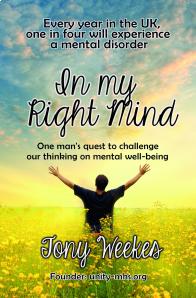
Hence, I set-off on my mission by writing In my right mind – a book which seeks to tackle this crisis from angles which may never have been considered in the public domain – to instigate that shift in the public’s perception of mental health.

Moving onto the second part of our mission, we aim to facilitate improvements through ongoing education, recognition and intervention in mental health. How can this be achieved?

Education:

There are two social entities which represent what should be the front line on a proactive approach to mental health. These are our schools and our families. The teachers at the school which my children attend actively promote working in educational partnership with parents. We believe this should and will also be the case with their mental well-being. Schools and parents will be given the tools they need to build resilience and notice signs of mental distress in youngsters at home and in the classroom. This will also give us all the knowledge to observe and act accordingly in the case of adolescents or even adults showing the signs of mental illness.

At Unity, we have developed a program with this aim and are in talks with a number of schools about implementation.


Recognition:

The earlier that the possibility of any form of illness is recognised, the sooner it can be diagnosed and the more effectively it can be treated before it gets more serious. The importance of early-  recognition for the whole system, cannot be over-estimated. Once we have the knowledge required to notice what may be the early signs in any setting, with a good treatment plan in place then arguably any form of mental illness can be managed over time with persistence.


Intervention:

In many instances, in-patient care will be necessary. Arguably, this is the area where the current system is showing the greatest signs of strain as there are simply not enough beds available. This results in patients sometimes being discharged before they have received the level of care needed or in other instances, people being admitted for care hundreds of miles from home, away from their all-important support network.

For any form of serious illness, varying degrees of rehabilitation are needed to ensure that recovery from the illness can be sustained once a patient is discharged. Our greatest challenge is to generate all the resources necessary for these beds and the other resources necessary, to be made available sustainably. With the right treatment, for the right amount of time, followed by ongoing care and support in the community, social and economic empowerment would make positive long-term recovery more likely and hopefully minimise the risk of relapse.

The NHS is a world leader, Unity will also make mental health care here world renowned.
tonyw

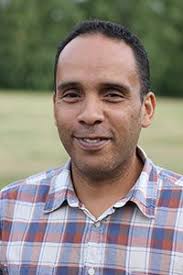
Tony Weekes is a mental health activist and founder of grassroots movement Unity MHS and author of the book, ‘In My Right Mind’. He campaigns for better mental health and can be found at www.unity-mhs.org  and his book at www.unity-mhs.org/book. Tony can be contacted at progress@unity-mhs.org

Looking after Mental Health as a Student and Beyond: for World Union of Jewish Students on World Mental Health Day

This blog is one of a series of blogs that Eleanor, founder of Be Ur Own Light, wrote for the World Union of Jewish Students- www.wujs.org.il/blogs . It was prepared for World Mental Health Day written by young Jews about their experiences dealing with mental health.

eltwitter

​In 2007, when I was 19,  I started my BA (Hons) in Drama and English Literature at Goldsmiths, University of London. Goldsmiths is a quirky, art school with an area of excellence in the arts. It was the perfect place for me to study, despite the distance to South London!

Having grown up and gone to primary and secondary school in Bushey, Hertfordshire in a close knit Jewish community, leaving my comfort zone behind was both nerve wracking but exciting. I was thrilled to be studying what I loved and being on a new journey. In my first year, I lived in halls and made lots of new friends .

However, it had only been 3 years since I had been diagnosed (at the age of 16) with bipolar disorder. Bipolar is a serious mood disorder where you can get low, depressive moods and at the other end of the spectrum- high, manic moods. Bipolar can be medicated with mood stabilisers and anti depressants, and I was very good at keeping to my medicine regime and of course avoiding alcohol, not so easy in a student environment!

Throughout my 3 years at Uni, although my Bipolar symptoms were largely kept at bay, I did suffer from social anxiety which impacted slightly on my Drama degree. Anxiety is something that I have lived with for a long time. When you are diagnosed with a mental illness as a teenager, you don’t want to be different. As I had been in hospital as a teen due to a bipolar episode and had to go down a year at school to catch up, getting to university was a victory for me. In fact, just three years before I began my degree, doctors had told my parents that due to the severity of my illness, I may not make it to university. I was so pleased to prove them wrong!

Yet, I did still feel different and although I loved my course, I did have times when my anxiety impacted. Studying Drama was (and is) a love and passion of mine. I loved creating characters, learning acting theories and forming performances with my fellow drama students. However, when I was feeling at my worst throughout my 3 years at Uni, there were times when I felt I couldn’t perform on stage.

In those times, my university tutors were hugely supportive and I disclosed to them that I was struggling with my anxiety disorder. I only ever had positive support and was set an alternative writing assignment instead, which meant I could still get my degree.

My advice if you are struggling with anxiety, depression or other mental health conditions at university is to do the following:

  1. Disclose your condition to your tutors (and particularly a supportive form tutor) if your illness is impacting on your work. It is not weakness to disclose, rather if you do, then the University can help. University has a duty of care to you to make sure you are safe and well. Once disclosing, you will often find that you will be highly supported by staff. Sometimes too, the University pastoral department can get involved to help you and refer you to counselling If needed. You are not alone.
  2. Be honest and kind to yourself. If you are living away from home, there is temptation not to tell your family or friends what is going on. You may think that you will be worrying them but actually having a strong support network really helps, so speak to those who are supportive and get some advice as to what you should do.
  3. If you are really struggling and cannot continue on the course, speak to University about it and see if you can defer a year. Also, make sure you make a GP appointment to discuss what is going on with your mental health- or if you are under a psychiatrist- go and see them.
  4. Try not to isolate yourself. At uni, I found strength from joining Goldsmiths Jewish society and later becoming President of it, working with local Rabbis and meeting Jewish students from all over the world. Its important if you can and are feeling well enough, to make new friends and try out new clubs in the Student Union. In London, we have UJS- Union of Jewish students, which I found really helpful to join. In my third year, I was on the events committee and organised a bar night, Booze 4 Jews London. Having those connections was really helpful to me and I enjoyed my time at university even more.
  5. Remember there will be times when Uni can be challenging. Whether its being away from home, meeting new people, having difficult assignments and lots of independent work, writing a long dissertation… know you can and will get through it but make sure you have the right support in place.
  6. If you are really struggling ie feeling very depressed, suicidal or want to harm yourself- please do share this with your doctor, family or someone you trust, so you can get the right support. You can also call Samaritans and various helplines.  It may help you to take time out of university to get well.

In my experience, my universities (after Goldsmiths, I did a year at Royal Central drama school) really supported me with my anxiety and mental health. Remember to speak out, get help and support and know you can still get your degree despite your health challenges – you are not alone.

Eleanor Segall is a mental health writer, blogger and advocate. She went to Goldsmiths University from 2007-10 and did her masters at the Royal Central School from 2011-12. She lives and works in London, England.

http://www.wujs.org.il/blogs/looking-after-mental-health-as-a-student-and-beyond-eleanor-segall
​

Guest Post: Hope Virgos amazing story about Anorexia and reaching recovery.

hope1

‘You are fat’

‘you are worthless’

‘No one really cares…’

‘You can’t possibly be going to eat that…’

…     I am not entirely sure when that voice in my head began to dominate me the most and when I stopped enjoying the company and the value that she brought me. She definitely was my best friend when we were 13 and she was ace. She helped me switch off from the real world. She gave me purpose and I loved her for that. She was my best friend, there when I needed her, and reassuring me when I felt lost or alone. The bond we had was incredible… or was it. After three years of being best friends I no longer seemed to do what she wanted. I wasn’t trying hard enough and I wasn’t losing enough weight. The cycle of happiness I had been living in for so long had disappeared. Instead of wishing I could do better and please my anorexia more I felt trapped. I would lay in bed for hours wishing that I would not wake up. Wishing my life away not knowing when I would feel better again. I hated what I had become and I felt lost and so afraid. Maybe that’s why part of me was secretly happy when my pre CAMHs routine got disrupted.

Every Tuesday my Mum would come and get me after registration to take me to CAMHs to get weighed and have a therapy session. I would get registered and then head to the locker room where I would have about 3 2 litre bottles of water. I would stand in the locker room downing the water. Stars in front my eyes, my head spinning as it took all my strength to keep drinking and full up on water. But one Tuesday she turned up and I hadn’t had time to water load. I felt agitated on the way to the hospital and as I reached inside my school bag to pull out the weights I realised that I had forgotten those as well. As I sat in the waiting room I felt in a complete mess and then I got weighed. My weight had dropped.

Two weeks later I ended up in hospital – my heart had nearly stopped and this was the last resort.

I spent the next year of my life recovering from anorexia. It was hard work and made harder that my weight seemed to go up and up and my mind couldn’t keep up. I had to learn the important of eating and the importance of talking about how I felt – both of these things seemed aliened to me. As I put on the weight, feelings that I had never felt flooded back through me. This was terrifying at the time and at times I do still panic when I feel too much. But learning to cope with my feelings in hospital helped me. I learnt the power of the words ‘I am not okay’ – and I gradually realised that people did care and want to help and sharing my feelings was much better than not eating. Like seriously, what had not eating ever done?

I spent a year getting intensive treatment and I was equipped with the resources to help me keep well but the reality was the battle was not over yet. I had to keep well and manage my recovery. I had to keep managing those voices in my head telling me I was fat, worthless and only good at anorexia.

Managing my recovery got easier. I had less fat days and began to switch off at meal times. I gradually began to accept that anorexia does not make me feel better or give me value but that I can get that value from those round me. I also realised how much better life is when I am not letting anorexia consume me. Yes, I didn’t think this was an issue when I was best friends with her but it was so true. I never could have gone travelling had I been friends with her still and I never could have done marathons or even had a more normal life. I was so lucky that I was given a second chance at life to conquer anorexia and start living again.

Please give it ago. If you are living with an eating disorder, please do seek help. Give beating anorexia a go.

I guarantee you it will be worth it – yes hard work but the best thing you decide to do.

Hope Virgo suffered with anorexia for 4 years before being admitted to hospital in 2007. She lived in the hospital for a year and since being discharged, has fought to stay well. Hope now lives and works in London, runs marathons and has a keen interest in exercise and maintaining good mental health. She is in a whole new place, taking each day as it comes and living life to its fullest. Hope has recently written her first book, Stand Tall Little Girl (https://www.amazon.co.uk/Stand-Tall-Little-Girl-Inspirational/dp/1911246151)

hope2

Guest post: What can the UK government do to cultivate good mental health? by Ann Heathcote at Worsley centre of Psychotherapy

mentalhealthblogger
According to statistics revealed by mentalhealth.org.uk 65% of people in the UK have experienced a mental health problem in their lives at one time or another. What’s more revealing is that just a mere 13% of us say that we live with high levels of good mental health in our daily lives.

These stats suggest there is much to do to improve the state of our mental wellbeing, but to turn things around will require help from the powers that be, namely Government.

But is the UK Government doing enough to ensure that current and future societies have good mental health. And if you believe they could more, what action can be taken to fix this prevailing problem?

We reached out to some of the leading voices on mental health issues to get their opinion.

See full article at https://theworsleycentre.com/what-can-the-uk-government-do-to-cultivate-good-mental-health/


Ann Heathcote opened The Worsley Centre for Psychotherapy and Counselling in 2001, as a centre for the provision of professional psychotherapeutic services.

The Worsley Centre is a warm and welcoming environment for people wishing to undertake counselling and psychotherapy. The practitioners at the Centre care deeply about each individual’s mental health and well-being. They all share a passion for providing high quality therapeutic services.

Experts share strategies to stop Binge Eating. Guest post by Jasmine Burns

BED

Binge eating is a very serious disorder. Someone who has binge eating disorder will most likely be of normal weight, therefore making it hard to recognize if they have it by just looking at them. Signs and symptoms that you or someone you love have this disorder can include of the following:

  • Eating a lot of food in one sitting
  • Keep eating even when you are physically full
  • Dieting often without losing weight
  • Keeping food around you at all times

Binge eating can have vastly negative effects on your health and life. The impacts are not just physical but also emotional. Binge eating generates shame, guilt, anxiety and depression. These are emotional stressors that can cause your blood sugar levels to go awry.

We have sought out the expertise of professionals who share ways you can have control over this disorder. Please read through them to learn coping mechanisms.

https://www.thediabetescouncil.com/53-experts-share-life-changing-tips-strategies-stop-binge-eating/

Stand Tall Little Girl: Hope Virgo- Book Review

standtall

I came across this wonderful book and Inspirational Mental Health book series by new publisher Trigger Press, on Twitter and via a friend of mine who knew Hope. The publisher is part of mental health charity the Shaw Mind Foundation and its book series is about reducing mental health stigma and showcasing inspirational people and stories.

Hope Virgo is a British mental health speaker, author and advocate, a survivor of eating disorder Anorexia nervosa, who continues to break stigma and speak about her recovery and on going battle with anorexia.

‘Stand Tall Little Girl’ is the real story of Hopes journey with anorexia and mental health issues. She talks about her childhood and her first diagnosis and hospitalisation. She describes anorexia as tricking her into thinking it was her best friend and coping mechanism, when it almost killed her. Hopes weight dropped so dangerously low that doctors gave her a week to live- her heart couldn’t take the strain.  At this point she was hospitalised to a specialised unit for year and was able to access treatment to start on the process of being well again.

Hope describes what living on an inpatient ward as a teenager is like and the difficult process of learning to eat and having to eat calorific meals again. She talks about the friends and comrades she made in hospital and the struggle of being in hospital for a year.

She talks about leaving hospital and finding coping mechanisms to live again, about her support network and tentative steps back out into the world, and about going to University and starting to live her life again, whilst still in the shadow of anorexia.

The book is expertly written, with insights from Hopes family about what it was like for them and Hope, when she was unwell and getting better. Each chapter deals with a specific period of time and Hope is very honest about her recovery journey. It is not smooth and she did relapse a few years ago. However, her relapse was better managed as she had developed ways of coping after hospital and most importantly, she asked for help from those around her, recognising she was unwell again.

Hopes story is one of utmost bravery and triumphing against the odds. She is now an advocate, author and speaker for mental health, runs marathons and has a healthy attitude towards food. I loved reading her inspirational, well written and beautiful story.

For more from Hope you can find her on Twitter @HopeVirgo and on the BBC and Good morning Britain on 30th July 2017.  Â