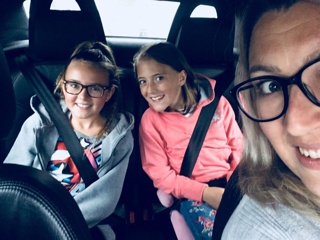
Beginning the Conversation: On my Mums Depression- Guest post by Sarah for Time to Talk Day

begin

Note : Please read with care- Trigger warning (suicidal thoughts)

When a topic of conversation hits the mainstream, it becomes easier to understand and it spawns more conversations. It snowballs.

Right now, we’re living in a time when society is more open than ever about mental health. Issues are not swept under the rug (as much as they used to be, at least), and life-changing conversations are being had. For me, these conversations on Time To Talk day tend to be amongst friends. It feels…easier, to be open with them.

But what about having a discussion with your parents? What is it like to talk about mental health with a mother or father who has struggled, or currently is struggling with their mental health?

It’s tough. I will tell you that now. But it is important.

I know this because my mum has had depression for 12 years. The best way that I can describe her depression, whilst remembering that every experience is unique, is that it is like a cloud. Some days it can be lighter, and almost brighter, though still casting some shade.

Other days it can be dark, foreboding, and cast its shadow over any and all. The darkest time for her, and for our family, was at the beginning of her depression. It was during that time that I nearly lost my mum at 14.

I could almost say that she actually was lost to our family, if only for a while. I lived with a woman who looked like her, and sounded like her. But her words and actions were foreign and strange to me. Her drive and her energy seemed to vanish overnight, and a woman sitting in the dark, who felt like she had nothing to give, took her place.

I remember going to school, walking past her open bedroom door and saying goodbye to her as she lay in bed. At that time, when I asked her if she would be getting up that day, the only response I heard was:


“No.”


Those conversations were short. They definitely weren’t sweet.

She struggled. I struggled. My brother struggled. My dad struggled. We were desperate for her to get better, and feared that she’d never make it out of the dark. Eventually, with help though, she did. But, while she is now in a better place, there are still highs and lows.

Because I was so young at the time, I never really spoke to my mum about her illness. Life carried on for me, and a new status quo emerged. But over time, we began to talk.

They still weren’t nice conversations, but they were a start. My mum told me how she felt suicidal, as she lay there in bed. At the time, she said it so matter-of-factly that it sounded blasé to my teenage ears. This revelation stung, and I couldn’t understand a simple question. Why?

Why would she want to do this to me? Why would she want to leave her two children without a mother? Why would she want to leave behind a husband who loved, cared for and adored her? These questions swam in my head for years, and I was incredibly angry with her as I saw it as some form of maternal betrayal. I thought she was selfish.

As I’ve gotten older and talked to her even more about this, my views have changed. I realised that my response was selfish. She explained to me that her depression made her feel so worthless, and so useless, that she would in fact be doing us all a favour by leaving our lives.

I’ve also realised that I’m incredibly lucky, because a lot of parents sadly succumb to this insidious disease. This needs to change.

That’s why I’m writing about this today.

That’s why I still talk to my mum about how she’s feeling. That’s why my brother calls me and lets me know when she’s feeling low, which is a common occurrence in winter for a lot of people with depression. As I live far from home, he reminds me that a quick conversation to ask about her day, tell her about mine, and maybe even make her laugh makes all the difference.

If you are, or have been in my situation, I urge you to talk to your mum or dad. I urge you to talk to your friends and family, because it can be a huge burden to carry alone. It’s like I said, when more people talk about something, it becomes easier to understand. When we understand the problem, we can start to treat it.

If you’d like to find out more about having these conversations, you can do so by visiting the Time To Talk website. They have a range of materials that can help you take that first step, and start talking.

This article was written by Sarah, a mental health writer for Time to Talk Day 2019. You can find her at : 

http://pandorashealth.co.uk/

https://twitter.com/PandoraHealth

www.instagram.com/pandorashealth/

Song of the Day: How I learnt to manage my Depression: Guest post by Mallory Gothelf for Time to Talk Day

music1

(image: BrainyQuote)

Hi, I’m Mallory and today I am sharing my story for Time to Talk Day .

From the ages of 15 to 17 I didn’t speak very often, and when I did, my voice came out stifled. With the onset of a depressive episode, one of the first things to go is my ability to speak. I find it difficult to form sentences, and utterly draining to have to speak out loud. Even writing becomes increasingly more difficult. My illness robs me of words, the tool I most often turn to when attempting to write and claim my story. I’m quick to shut down when I feel the rumbling of inner turmoil.

It makes it awfully difficult to communicate with me; friends and family often feel left on the outskirts, unsure of what to say or do. And even with improved coping mechanisms, and countless therapy sessions under my belt, I find that even a whiff of depression causes a knee-jerk reaction to shut the blinds, so nobody can see through me.

When I was in my first diagnosed year of depression, my brother started sending me a “song of the day”. He would email me a link to a YouTube video, with a song he hoped would tap into my inner workings. He believed that even muted by hopelessness and despair, there was one language that would break down my emotional barriers: music.

Each day I looked forward to the songs he would send, always carefully selected to reflect my struggle. We had created an emotional connection through lyrics and the kick of a bass.

Music has always been something that speaks to me on a level that feels deeper than some of my peers. I’m one of those people who wants you to be quiet when I’m showing you a new song, so as to fully appreciate its beauty. I’m one of those people who can feel goosebumps prick the surface of their skin, when the perfect note is sung. And I’m most certainly one of those people who can be propelled out of bed with a beat that you can actually feel in your veins. Music has always made sense to me, and I loved how my brother was able to tap into that piece of my identity, and speak to me when I didn’t have any words of my own to offer.

Fast forward to the present day, and I still find myself trapped in the thick brick walls that I have painstakingly built around myself. Knocking down walls that thick requires effort, and even if I want to let a person in, I can barely push the walls open wide enough for them to slip in. It has put a strain on many friendships, but one in particular really struggled from a lack of open communication. We came to what felt like a dead end in our discussion to improve communication. And that’s when I looked back and found a detour that would lead straight into my heart and mind. Music.

Most people have songs that spark an emotional reaction within. For me, music is strongly intertwined with memory and emotional energy. If I could pick one song each day to send to my friend, perhaps it would shed some light on my state of being. If she sent one back, maybe I would better understand where her mind was in that moment. It was a way to have intimate communication when words were difficult to find. I texted her my idea, hoping this would be enough to show her I was committed to growing, without having to emerge from my fortress too quickly.

We have sent each other songs back and forth, learning about one another from every track selected and played. We ask each other questions about what the song means to us in general, or at that specific point in time. We talk about how it may be the beat or the lyrics that drive that particular song home for us. We discuss topics we wouldn’t breath otherwise. It’s an invitation that says, “Hey, I want you to come closer. I want you to hear me and know me”. And there aren’t any rules. You can send multiple songs if that better captures your day. It’s an open process that lacks structure, empowering us to communicate freely, with love and understanding.

My walls still remain intact, but their structure is starting to weaken a bit. Some days I’ll still add more bricks, and others days I’ll knock a whole bunch loose. When robbed of my ability to use words, I lose all sense of connection to the world around me. Music throws a line of connection my way, and it’s helping me find healthy communication in my every day. If you ever meet me someday, I’d love to exchange songs, so we can really get to know one another.

Mallory told us: ‘I have had a diagnosis of Major Depressive Disorder, and Generalized Anxiety Disorder for 9 years. I was given both diagnoses at the age of 15. I have also more recently been given tentative diagnoses of disordered eating and OCD tendencies. I currently take medication for my anxiety, but no longer take antidepressants after years of painful side effects. I currently engage in therapy once a week, and follow a treatment plan that focuses on nutrition, exercise, meditation, DBT skills, and creative coping. I also want to acknowledge that I do not see anything wrong with medication, and it absolutely has a wonderful place in treating mental illness.’

Mallory Gothelf is a mental health advocate in recovery, a blogger at  https://www.theinfiniteproject-mallorysfight.com/ . 

She can be found online @mallorysfight


4 Helpful Treatment Options for those who suffer from PTSD- Guest post by Rachelle Wilber

ptsd1

Post-traumatic stress disorder (PTSD) is a serious mental health condition that affects people who’ve experienced major trauma events. Common among military service members who’ve fought in combat zones, PTSD can also affect people who’ve lived through other terrifying episodes that have resulted in physical and/or mental harm. If you believe that you suffer from PTSD, you can work with a therapist and try any of these four different treatment methods to overcome the condition.

Cognitive Behavioural Therapy (CBT)

This type of therapy works to alter thought patterns that often cause people to relive the traumatic events in their minds. As Mayo Clinic states, the goal of cognitive behavioural therapy is to make you more aware of negative or inaccurate thoughts so that you can adopt a healthier perspective of challenging situations and respond in a better way. Undergoing this therapy may also help prevent relapses that could jeopardise your mental health.

Exposure Therapy

Your therapist may also try exposing you to things that trigger traumatic thoughts as a way to alleviate them. This is done in a safe way, and your mental health care provider will be there to help you process your thoughts and feelings and give you tools to overcome your anguish. You may be shown pictures, see writings or even revisit a place where the traumatic episode occurred. Gradually, these negative thoughts should lose their power and cause you less mental grief the more that you’re exposed to them.

Eye Movement Desensitizing and Reprocessing (EMDR)

Also known as EMDR therapy, this treatment method involves recalling distressing thoughts while a therapist’s fingers move in front of your face. You’ll be asked to follow these finger movements with your eyes while discussing your feelings, however, you generally won’t be required to talk about your thoughts in great detail.

Some therapists use foot or hand tapping or musical notes instead of finger movements in front of the face. This more active approach to therapy is intended to minimise the effects of bad thoughts.

Medication

Medication is sometimes prescribed by mental health professionals to work in conjunction with other types of therapy. Prozac, Zoloft and similar antidepressant medications are formulated to boost serotonin levels in the brain to alleviate negative thoughts and emotions. Your doctor may also prescribe Depakote to stabilize your moods. Prazosin often works well in stopping nightmares.

You don’t have to continue letting PTSD dominate a large part of your life. Seeking professional help and undergoing any of these therapies will likely give you positive results.


This article was written by freelance writer Rachelle Wilber from San Diego, California

How to Manage Bipolar Disorder in the Workplace: Guest blog by Ralph Macey

bipolarwork

(image: bphope.com)

People with bipolar disorder face a major problem in maintaining a good job performance at work due to frequent mood shifts (from high moods to extremely low moods). High moods are characterised by mania and hypomania. On the other hand, low moods are characterised by depression. These mood shifts create several types of challenges in the social, professional, and personal life of the people.

Bipolar disorder can make it very difficult for a person to get or keep a job especially if the symptoms are hampering day-to-day functioning, and if they also have anxiety.

In a recent survey, it has been found that 88% of the individuals with bipolar disorder face problems in maintaining a decent work performance. Around 58% of the people have stopped working altogether.

It’s a fact that bipolar disorder brings many challenges that can hamper work productivity. However, qualified psychiatrists specialising in bipolar disorder say that it’s possible to get and maintain a job while having a bipolar disorder by following a few tips. Let’s talk about them today.


How to get and maintain a job with bipolar disorder

1. Don’t volunteer to disclose your medical information to the employer during the interview. Employers have full right to decide if you can do the job properly. But they can’t ask confidential questions to you.

2. As per the Americans with Disabilities Act, (and other disability legislation around the world like her in the UK), employers can’t force you to give a medical exam or check your medical records. They also can’t ask you questions regarding your medical history. Moreover, this Act forbids any kind of discrimination on the basis of perceived or actual disability. So it’s better you read the rules and regulations of this Act before going for a job interview.

3. Try to avoid talking about your past. Instead, talk about your current capability of doing a job properly.

4. Ask about health insurance after getting a job. Just review the benefits information before accepting the job officially.

5. If your mental illness becomes an issue for the employer once in the job, then bring a letter from your psychiatrist that gives a general outline of the treatment you’re undergoing. Request that the psychiatrist issues a letter where it’s clearly written how much you can cope with at work. You can read the letter before giving it to the employer. 

How to keep a job with bipolar disorder

It’s a myth that you can’t be successful at work with a bipolar disorder. There are several things you can do to control your mood swings and manage your work. Let’s talk about them in detail now.

1. Take medicines as instructed: Even if you’re extremely productive during a manic high, don’t skip your medicines. That is not advisable as you can become unwell too with your mania.  Don’t stop taking medicines even when you feel well for several months. Remember, medicines keep all your symptoms under control. When you stop taking medicines, your symptoms can reappear and aggravate your mental illness.

Bipolar disorder medications have some side effects. Some medications cause drowsiness. This makes it quite difficult to focus on work. Speak to a psychiatrist specialising in bipolar disorder about this issue if you feel too sleepy at work. Ask if you can change the time you take the medication. Learn about the various strategies to combat drowsiness so that you can give your 100% at work.

2. Relax a little bit: Take short breaks between work regularly. Take a short walk during the lunch break. Listen to music that uplifts your mood. Take deep breathing. All these things help you to relax, especially if you are low or have anxiety .

3. Lead a healthy lifestyle: Exercise regularly to keep your mind and body fit. Eat healthy and nutritious food. Have adequate sleep at night. If possible, try to sleep for 8-12 hours at home. Try to avoid eating unhealthy food. A healthy lifestyle can help you manage bipolar disorder both at home and work, by making you feel at your best.

4. Organise your tasks:   Bipolar can at times interfere with work functioning.This means your mind may not cooperate with you on a regular basis. Try to organise your tasks. I

Create a ‘to-do’ list on the Google calendar and check if each task has been completed. Whenever you fail to finish a particular task on a specific date, move it to the next date on the calendar. This way you’ll remember about the unfinished task. Divide big projects into small tasks. It will be easier for you to manage them.

If you are struggling, you can speak to your work HR if they are understanding.


Should you inform your employer? The eternal dilemma

Let’s accept it. There is a social stigma attached to mental health, however many employers are becoming more understanding and the stigma is lessening. Your medical information is something confidential and private. Obviously, you may not want to share it with everyone. You don’t need to talk about your mental health openly at work if you don’t want.

However, if your boss or line manager is cooperative and a good human being, then you can have a conversation with him or her. When you need to take leave for doctor appointments, your boss will understand and give you a day off without issue.


Conclusion

Don’t panic. Don’t feel that you’re less than anyone because of your bipolar. Your mental disorder doesn’t define you. Your work is not the only thing you have in your life. Spend quality time with your friends and family and volunteer to help others.

If you have a good conversation with your employers and/or your doctor/ occupational health, you may be able to manage at work.

The Mental Health Benefits of Yoga: Guest post by Manmohan Singh

yoga1

(image: https://www.gaia.com/series/yoga-every-day)

Mental illness is like any other illness in the body. With Yoga, it can be treated and helped to heal. Yoga encourages mental fitness and healing of the mind.

Living in a modernised world, many of us still have conformist ideologies. Mental illness  is misinterpreted. It is often a deep-rooted issue, which, if not helped, can become life-threatening. Day-to-day stresses and heartbreak can lead to depression and other mental illness. If the condition becomes severe, it can lead to self-destructive tendencies, including self harm.

There are many ways (meditation, therapies, etc.) to prevent and help mental illness, with yoga being one of the most natural and safe options. According to many studies, it is confirmed that Yoga has the ability to relieve stress and anxiety and reduce mild depression and other mental illnesses.

So, let’s see the amazing mental health benefits of Yoga:


Calms The Nervous System

Yoga has the power to calm the nervous system and reduce anxiety levels. It makes you enter into a more relaxed state, and gradually, you move from flight or fight-to rest and digest mode (or move from the sympathetic nervous system to parasympathetic nervous system). Yoga reduces stress, anxiety, depression, treats insomnia, and other kinds of health issues.

Makes You Self-Aware

Yoga practice helps to ignite the sense of Self. Through yoga, you know yourself better and form a deeper connection from within. Yoga helps build self-trust, increases self-awareness that helps in making healthier choices- like eating healthier, living the right lifestyle. You learn to accept yourself, develop stronger willpower, bring your consciousness back to the present, feel more confident, and gradually realise your self-worth.

Helps Mend  Relationships

Emotions and feelings contribute a lot towards ones mental health. A traumatising incident, heartbreak, death of loved ones, and many other day-to-day relationship struggles, can affect our mind and lead to mental illness.

Yoga ignites awareness and not only helps us improve our relationship with the Self but with others as well. When you form a positive relationship with the Self, you tend to deal with others in the same manner. A healthy relationship helps to maintain the overall mental well-being as well.

Reduces Inflammation Related To Genes

According to a study, it is proven that 15 minutes of yoga practice or relaxation techniques switches off the genes that are responsive to stress and inflammation. With the modern world, stress is something that is often found. This stress leads to various mental health conditions. Our body is designed in a manner that it has the ability to reduce stress and this mechanism is called the ‘relaxation response’. With yoga relaxation techniques, you can easily trigger the stress reduction ability.

Yoga practice is the best way to fire your body’s built-in mechanism that helps mental relaxation. 15-20 minutes of yoga practice triggers the biochemical changes in the brain cells and protects from stress and anxiety.

Yoga Boosts GABA Level

Our brain is filled with receptors and GABA or GABA receptors or gamma-aminobutyric acid is linked with anxiety and mood disorders. When the brain drops the GABA activity, the mood of a person becomes lower and they start feeling more anxious.  

With the help of yoga practice, you can boost the GABA level. Practice yoga for an hour daily to get positive results.

Reduces The Effect Of Traumatic Incidents

Post Traumatic Stress Disorder or PTSD is a serious issue that people face after going through a traumatising or negative situation, shocking or terrifying experiences. People in this condition frequently experience flashbacks and nightmares of the situation they have had come across. With yoga, a person can help himself come out from the situation and help the mind.

Improves Concentration And Boosts Memory

Sometimes, our brain finds it difficult to do or concentrate on the day-to-day tasks. Yoga practice has proven effective in boosting memory and improving concentration and also clears the mind and calms the senses.

Prevents Mental Health Disorders At Every Age

A mental health condition can occur at any age depending on the situation you are in or what you’re going through. According to a study, people of age group 18-35 are at high risk of mental illness and have periods of severe stress.

These issues can also occur during adolescence, due to various reasons, including genetics but also envrionmental- family disputes, fights, peer pressure, body shaming, academics etc. Teenagers also go through many physical, mental and emotional changes.

Yoga practice helps elevate the mood, reduce stress and anxiety, prevent depression, control anger, and ignites mindfulness.

People as they get older can also face these mental health issues due to loneliness, change of the environment, alcohol abuse, dementia, loss of loved one, long-term illness, physical disability, poor diet, etc., Yoga can be beneficial to health.

Yoga Asanas To Practice For Mental Health- Balasana, Viparita Karani Asana, Uttanasana, Adho Mukha Svanasana, Setu Bandha Sarvangasana, Bhujangasana, and Shavasana. Also practice Pranayama like: Kapalbhati, Anulom Vilom and Bhramari.

It is rightly said that a healthy mind breeds a healthy body, and vice-versa. It is important to have good, positive mental health for complete fitness and healthy, happy living.

Practising yoga promotes better health, try it today!


Author Bio: Manmohan Singh is a passionate Yogi, Yoga Teacher and a Traveller in India. He provides Yoga Teacher Training in Rishikesh, India. He loves writing and reading the books related to yoga, health, nature and the Himalayas.

Website: https://www.rishikulyogshala.org/

2018 Round up: The year that has been: New Year by Eleanor


newyear

When I look back at this year, 2018, I don’t fully know where to start. It has been one of the most meaningful, eventful, and wonderful years of my life so far, but there have also been sad times.

Outside of work, this year was a very special one as back in April, my fiance Robert proposed to me at the Shard, overlooking London. I said yes and 8 months later we are in the middle of wedding planning and planning for our future (and I found my wedding dress!). The proposal was the most amazing thing to happen this year. Also, two of my best friends got engaged and for one we were involved in the proposal and got to see him propose so that was fantastic!  I am looking forward to the weddings 🙂 We also celebrated other friends 30th birthdays, engagements and weddings this year as well as many births of their children which was so wonderful.

Sadly this year, we lost my beloved Grandma in June to Parkinsons disease and I miss her every single day- we were very close.  A month ago, my Grandpa (on the other side of family) passed away after a short battle with cancer, but I was able to fly to Portugal where he lived and see him before he passed and give him a hug, so that was very important. There is also family illness occurring, my father in law to be is very unwell with cancer and mid treatment- and this is very hard for us all but trying to be a positive as possible!

Back in February, My Dad and I went to Romania to the town of Iasi, to explore where our ancestors lived. There was a lot of snow and walking around palaces and churches and finding the synagogues. When we came back, we discovered that my Great grandpas sister and family died in Moldova across the border, at the hands of the Nazis (via the Yad Vashem online database) A very bittersweet trip but we were pleased to see Iasi.

In happier news, after celebrating our engagement with those we love, in July, my fiance Rob and I went on holiday to Israel which was really wonderful. We stayed with close friends and family and also in hotels and had a really special, meaningful, fun and sunshine filled trip! A personal highlight – the swimming pool at the InterContinental hotel in Tel Aviv and of course, walking through the Old City while sipping iced coffee (it was so hot) and visiting the Kotel. When we came back, we spent a weekend in the Cotswolds at my dad with family- a lovely escape. This year too, I also read some great books (like Michelle Obamas autobiography) and watched some fab films/ theatre shows.

In July, I celebrated my 30th birthday with friends and family (thanks Katie for my delicious birthday cake) and then this December, we celebrated Robs 30th birthday at London Zoo light trail.

This year work wise, has been a blessing- I managed (somehow) to secure a book deal which has been a lifelong dream and am working with the fab team at Trigger Publishing and my patient editor Stephanie- thanks to her, Katie and James for their support as I continue to tap away at my keyboard.

Before 2018 began I was in touch with Naomi Greenaway at the Telegraph (Stella Magazine). Thank you Naomi for helping me to tell and share my story in a sensitive way. It was an honour for me to be featured online at the Telegraph and for my story to reach new readers.

Back in January, I met a wonderful editor on Twitter, Yvette Caster, who was looking for new writers for Metro Blogs (as it was then). She looked at this here blog after I sent her a pitch email and commissioned me to write my first ever article for Metro.co.uk on mental health, weight gain and medication. From there, she and her colleagues continued to commission me to write and when she and they left in the summer, I have continued to pitch articles and be published. Thank you to Ellen Scott, Aimee Meade and the current team at Metro too. Being published online by Metro has been an amazing journey and I am proud to write for them on lifestyle topics and mental health, my favourites this year being about the Royal wedding, homelessness and mental health and sharing my Grandpas story.

Thanks also to Bianca London for commissioning my two Glamour articles, this was another amazing bucket list dream ticked. The one on dating and mental illness, bipolar and how I met my fiance (when I wrote the article, he was my boyfriend) was something very close to my heart and it was a genuine honour to be featured in a magazine I had a read as a teenager and one of the biggest womens magazines in the UK. Still can’t believe it.

Thanks to Rebecca Thair, editor of first ever mental health magazine, Happiful magazine for not only being first to publish my story with bipolar back in January (which was so important to me) but also publishing my later articles on social anxiety and a guide to bipolar. I love working with you and the Happiful team and hope to write more for you.  Thanks also to Sonja at UIO Podcast and Sarah Cardwell for interviewing me.

Thanks to Francine Wolficz, Richard Ferrer and Jack Mendel at the Jewish News for all the articles and positive support of my mental health work in and outside of the Jewish community this year.  And to Rabbi Ari Kayser at Aish for including my story in Perspectives Magazine with the Jewish Weekly newspaper.

Thanks to writer Olivia Blair at Cosmopolitan/ Hearst for featuring my thoughts on bipolar in several articles which were also published across Hearst publications like Elle Magazine, Prima Magazine and Netdoctor.co.uk . Thanks also to the team at Refinery 29 for featuring me in an article on Seasonal affective disorder and to the fantastic charity No Panic for publishing my personal story with bipolar disorder.

This year I was also a shortlisted finalist for a UK Blog Award for the Health and Social Care Category  in March (thank you Lauren and team)  and invited to come to the Mind Media Awards as a highly commended journalist in my category. (This was incredibly magical).

Going to the Mind Media Awards in November with my Dad at the Queen Elizabeth Hall and hearing peoples stories of mental health across the UK media was just incredible. It was also a fun night of celebrity spotting- Fearne Cotton, Bryony Gordon, Dame Kelly Holmes, Kim-Joy from Bake Off, Stacey Solomon and Loose Women team, Frankie Bridge and many more. Stephen Fry presented the awards and was just remarkable, humble and funny as always. I was so pleased I managed to attend, it was a privilege to meet people. I met Yvette, Ellen and their producer at Mentally Yours podcast and fellow blogger Katie Conibear. My Dad and I were honoured to attend.

This blog has been a joy at times alongside the hard work. Thank you to all my guest bloggers and all sending submissions- you’ll get a proper individual thank you at our 3rd anniversary in March, but I couldn’t run the blog without your articles and careful attention. Thanks To Vuelio and Feedspot for awards too. Heres to a 2019, our third year of Be Ur Own Light! Thanks also to my Twitter followers who make it so easy for me to share thoughts and ideas with them- and for all the online friendships I have made- you know who you are!

This year has been hard at times but there has been SO much beauty and I feel so grateful and thankful for it all. My mental health has taken a hit at times, but I have found a really good therapist for talking therapy- who has helped me so much and I have also spoken to my GP. Its OK to reach out for support. Thankfully I have a good support network.  I have been a little more anxious and battling mild depression but I am slowly getting better again and starting to see the light :).

I just want to wish you all a happy and healthy new year 2019- this will be the year that I please God get married and my best friend Katie (as well as my fiances cousin too!). May it be a year of better health, wellness and joy for us all. And heres to keep fighting stigma!

May the new year be one of dreams coming to fruition and love and laughter.

Love always and thank you for reading,

Eleanor x 

engagedfb

How to Enjoy the Holidays after Addiction: Guest blog by Alek Sabin


Holiday After Addiction 2 (2)

Socialising during your recovery always requires some effort, and life after rehab always takes some serious adjusting, but it can be especially difficult during the holiday season. The holidays are a time when you reunite with family and friends and spend time at seasonal social gatherings. You may encounter friends from your past times of using, people with whom you have impaired relationships, and social situations that tempt you to compromise your sobriety. In short, despite being one of the happiest times of the year, the holidays can also be stressful and dangerous for sobriety.

While the holiday season is a season of joy and giving that ought to be celebrated, it is important to be on your guard in order to protect your newfound sobriety. In case you find yourself or a loved one struggling to navigate recovery from addiction this season, here are some tips for protecting the sobriety you’ve worked so hard for during the holidays…


Know Your Triggers

Take an inventory of what your triggers for substance use are. In the past, did you use when you were hungry, angry, lonely, or tired? Was substance use an outlet for stress? Do you experience cravings most when you are bored or sad?

Whatever your triggers, be sure to take the necessary steps to keep those triggers at bay. If stress is a trigger for you, for example, practice regular stress relief techniques like meditation, even when you don’t feel particularly stressed. If you are tempted to relapse when you are bored, on the other hand, make it a point to plan out your days with wholesome activities and to have a go-to activity for those times when you truly do have nothing to do.


Use Your Support System

It is so crucial to set up a support system within your social circle during recovery, and the holidays are a perfect time to take advantage of that support system. Talk to members of your support system, especially family members and friends with whom you may be attending holiday gatherings. Tell them about what struggles you are facing and what you are worried about this season. This will help them remain mindful of you and allow them to help you at those times this season when you need it most.


Don’t Be Afraid to Call for Help

Your support system can carry you through the most difficult times of the holiday season. If you are worried about temptations to pick up alcohol during a particular holiday gathering, for example, a friend or family member can refrain from drinking with you or stay by your side throughout the evening to help hold you accountable. If you are worried that spending time with a particular group of people might tempt you to use again, make alternate plans with a friend or family member who understands your recovery.


Consider Whether an Event is Worth It

Holiday gatherings can be stressful for a variety of reasons. You have to answer questions about what you have been up to and what’s new in your life. You may encounter people with whom you used to use during times of addiction. You may find yourself around loved ones with whom you are still trying to repair harmed relationships. There are all kinds of reasons to be stress about attending a holiday season event, and for those occasions when you think the stress may be too much, it’s important to recognize when it may be better to miss an event.


Make a Plan for Parties

If you do feel that a holiday party will be low-risk enough for you to attend, be sure that you still come with a plan. Bring your own non-alcoholic party drink to sip on if you know alcoholic drinks will be present. Drive yourself so that you can duck out a bit early and have more control over when you leave. Plan out what you will say any time someone offers you a drink at parties. Try to envision which scenarios may arise so that you can be prepared for them.


Wear Your Sobriety on Your Sleeve

Finally, make the decision to own your sobriety this season. When someone asks you what is new in your life, go ahead and tell them about your sobriety (only if you feel comfortable doing so, of course.) Talk to them about your journey thus far, in as little or as much detail as you desire. Share what you are looking forward to as you continue your journey. When others see you talk enthusiastically about your recovery, they are sure to respond with similar enthusiasm, offering a shoulder of support and becoming advocates of your recovery.

12 Tips on how to Accept Yourself: Guest post by Spela Kranjec

I know that everyone suffering from an eating disorder wants some magical cure. But there is no such cure. And I can’t give you one, even though I had anorexia and searched for such a cure for whole nine years. But I can give you some useful tips that helped me – and they might also help you.

I also described my entire experience in a book for which I just launched a Kickstarter campaign which you can visit here :https://www.kickstarter.com/projects/spelakranjec/notice-me-my-9-year-struggle-against-anorexia.

I’m sure you’ll find something that will help you find your own happiness.

spelak

Here are my 12 tips:

  1. Find your motivation

After I overcome anorexia the first time, I relapsed a few years later – and it was even worse. Thinking about it today, why it happened, I’m convinced that it’s because I didn’t want to get better the first time. I got better because my parents made me. I needed to find my purpose to reach recovery.

Today I am aware of how important it is that you do something because you want to do it and are motivated to do it. I discovered myself that finding motivation when you’re at the lowest point in your life is far from simple. But I’ve also proven that it is possible.

  1. Don’t give up 

Know that you will have moments where life is really difficult, so get ready for them. These are turning points in your life, so you can’t give up.

  1. Read a motivational book and attend a workshop on personal growth

There are many books and workshops on the subject of personal growth – some are more technical, while others include personal experiences of people who faced a similar situation to the one you face.

These books are filled with advice that could be helpful. Furthermore, reading these books will help you realize that you’re not alone.

  1. Go shopping

You don’t actually have to buy anything – you can just go window shopping. Try on a gown, browse free samples in a cosmetics shop, go to a furniture store and find the most comfortable sofa – anything to distract you and make you happy.

  1. Spend time in nature

If you don’t like big shopping centres and prefer to spend time in nature, take every opportunity to do so. I’m one of such people. I love to climb mountains, spending hours sweating to reach the top, where I can enjoy a wonderful view and a delicious sandwich. This makes me forget all my worries, and I come home a new person. And afterwards, I can look in the mirror at home and tell myself, “Damn, you’re not too bad!” 😉

  1. Socialize

Human beings are social creatures, and solitude has a negative effect on us. We need love, we need laughter, and we need to feel accepted. Without this, it’s inevitable that your thoughts, stuck as you are between four walls, will become occupied by the negative. And suddenly everything will become negative – even you. So don’t let that happen.

  1. Write a diary

If you have problems sharing your problems with others, find a new way to express yourself – maybe start writing a diary. You can also write down a list of positive characteristics that you like about yourself.

  1. Listed to music / sing / draw / be creative

Find your creativity and keep your mind active. Boredom has a similar effect on us as loneliness – an opportunity for pessimism to creep in.

  1. Do something nice for others

I spend my time with my grandmother. I knew she was lonely and that a cup of coffee shared with her granddaughter meant a lot to her. It was heartwarming spending time with her in a cafe, listening to her talk, because I could see how important that moment was for her.

  1. Find something that will make you feel useful

You’ve certainly done something for which you received praise. The feeling was phenomenal, right? Remember what you felt at that time – a feeling of pride, success, joy. So make sure there are more moments like that.

  1. Visit a counsellor

If you’re feeling completely down and think you can’t do it on your own, seek help. There is nothing to be ashamed of. I sought help from a psychiatrist. Even though I was ashamed at the time, I am so happy I did it. Ultimately, it helped me become happy and well again by working with a professional.

  1. Talk about your problems

Never shut yourself off from others and isolate. That’s the worst that can happen! If you isolate yourself and don’t talk about your problems, negative thoughts may get worse. So find someone you trust and share your feelings – you will feel much better!

Most importantly, never give up! I’ve proved that it’s possible – and so can you! To find out how I did it, visit https://www.notice-me.net/free-chapter/.

spelak2

Womens Health Awareness and Taking Action: Guest post by Sarah Cardwell

sarahc1

(image: Sarah Cardwell)

I remember wanting to start my periods when I began secondary school. I had no idea what to expect, but it just felt like it would be the first step in growing older, becoming an adult. Within 6 months of starting I hated it. I had horrifically heavy & painful periods since the age of 13 and my mum always suspected I had endometriosis, the same condition she had been diagnosed with.

I never struggled to get pregnant with either of my two children, but with a heavy first natural baby of 10lb 7oz, it was decided after many scans that I would have a planned caesarean with my second daughter. She was only 7lb 11oz. When my periods returned after my second baby, I knew I had to do something.

After months of pursuing issues, and aged just 30, I eventually took my mum along to my appointment  and was referred for a laparoscopy. It was then that my mums suspicions were confirmed & they found signs of endometriosis.

On average it takes 7.5 years from onset of symptoms to get a diagnosis, according to Endometriosis UK (https://www.endometriosis-uk.org/endometriosis-facts-and-figures). It has taken almost 17 years for my diagnosis. The cause of endometriosis is unknown and there is no definite cure.

It was then I asked for a hysterectomy (removal of the womb) & was rejected.

Hysterectomies are known to treat endometriosis well:

• With mild endometriosis, the chance of needing further treatment is 4 out of 100 women

• For severe endometriosis, the chance of needing further treatment is 13 out of 100 women within three years and 40 out of 100 women within five years.

https://www.endometriosis-uk.org/sites/default/files/files/Information/

And I’m in good company, with many celebrities having hysterectomies for many reasons, Angelina Jolie and Michelle Heaton to be two of them. Lena Dunham too had her hysterectomy due to endometriosis. 

I was told I was too young and was offered a range of treatments from the coil to the pill, I even was treated with hormones to replicate the feelings of the menopause to see how my body would react, gonadotrophin-releasing hormone (GnRH) analogues.

After six months it reacted brilliantly, no periods, no pain. I thought I was cured, but they said I couldn’t continue on the treatment due to risks of osteoporosis . I was in pieces and soon back to having periods spending days of my month in bed unable to move.

It was another 2 years of trialling medications & eventually changing my gynaecologist, before I was finally booked to have a hysterectomy operation. I was ecstatic. It was booked in February for the June of 2015 following my family holiday, I couldn’t wait.

However, things were about to take a turn for the worse. In March (the following month), my mum was informed that they had found a tumour where her ovaries had previously been, and within six short weeks she had passed away. It was the most awful time of all our lives, although thankfully she was surrounded by her family as she passed away. She had made me promise to go through with the hysterectomy, but to request and ensure they removed both my ovaries, even though they were healthy. So I did. In June 2015 I had a Bilateral total hysterectomy.

I knew I was very young at 32 to lose everything that made me a woman, but this was more than pain relief now, it was about survival and securing my future with my children.

The procedure went well and I recovered quickly, I was back at work part-time within 2 weeks, probably due to being a younger patient, but it didn’t have the same impact on my menopause symptoms. I suffered and still do, with every possible symptom, night sweats, hot flushes, weight gain, moodiness, although I think those closest to me would say that had always been there it just worsened.

Whether it was connected, it was then that the rest of my health deteriorated. I was never super fit or thin since my teens, but over the next year I gained almost 3 stone, started with severe anxiety and following an asthma attack after a serious lower chest infection, I was finally diagnosed with adult onset asthma. These of all could also have contributed to my recent spiral in mental health illnesses, but I still believe it was the right decision.

At 35 years old, I am on HRT and more medication than most pensioners, but I’m still here. I’ll be on most of my medication for life, but my HRT for a minimum of 20 years until I’m the average age for a natural menopause.

I wish my mum was here, as she too went through early menopause after her hysterectomy and I’m sure she’d have some tips that beat ice cubes down my top and lining my bed with ice packs to keep me cool in the night.

She’d hopefully have some advice on last summers rare heatwave in the UK, but sadly she was only 54 when she passed away and she inevitably saved my life and helped preserve my life so I can live beyond that she and be there for my children. And this hysterectomy added another layer of protection!

For more information please check out the resources above.

This article was written by writer Sarah Cardwell- who also experiences anxiety alongside her other health conditions. Check out her blog here: www.sarahsthinkingagain.blog

Lifestyle Changes: How to Combat your Eating Disorder: Guest Post by Lizzie Weakley

laurieg1

Recognising you have an eating disorder is one of the biggest (and hardest) steps you can take to combat your disorder. It’s important to make sure you know how to combat the disorder so you don’t find yourself fighting a losing battle.

Don’t Expect Huge Changes

Just the idea of helping yourself get better from an eating disorder is important, but it won’t bring about the change you really need. You won’t get to see the results of the change until you start making changes. Be prepared for things to stay the same for a long time after you start trying to fight this battle.

Seek Professional Help

It’s almost always necessary to get professional help with eating disorders. There are many eating disorder center options you can choose from that have intensive processes. These centers can make things easier for you and can give you the specific tools you need to start getting better.

Try Something New

Not all eating disorders are the same. There may be differences from person to person so it’s important to keep that in mind when you start this battle. Your eating disorder probably won’t be like anyone else’s battle. Just like you are a unique person, the way you handle your eating disorder will be unique. You can try different things and new techniques to try and help yourself through the eating disorder. Things may change, but it’s important to keep trying new things that might help you.

Recognize Your Struggle

The struggle to combat an eating disorder can be one of the hardest things you do. You should recognize that struggle and work with it to help yourself. If you know it will be difficult to overcome the eating disorder, you’ll be better prepared to fight it when you’re dealing with issues that come from eating disorders.

Continue Fighting

Fighting an eating disorder is a battle you’ll have to deal with for the rest of your life. Even when things do get easier for you, you might still struggle with the issues that come from the eating disorder. Keep that in mind before you start the process. It’s a good idea to know that you’ll be in this fight for the rest of your life, but it does get easier.

Eating disorders are hard. Trying to figure out how to combat one on your own can be even harder. It’s important to know what to expect and take the steps necessary to help yourself get better.

Lizzie Weakley is a freelance writer from Columbus, Ohio. She went to college at The Ohio State University where she studied communications. In her free time, she enjoys playing with her Husky, Snowball, camping, and binging on Netflix.

Twitter: @LizzieWeakley

Facebook: facebook.com/lizzie.weakley