Small But Powerful Ways To Improve Your Mental Health.

Photo by Anastasiya Gepp

How many people do you think are currently struggling with their mental health and want to know how to improve it? The answer will probably surprise you; around a quarter of the population have a mental health disorder, and this can either be minor or something that needs serious medical attention. 

That’s a huge number, and it could be that you are one of these people. If that’s the case, it’s crucial to know what you can do to improve your mental health and ensure that you start to feel better. Of course, medication and therapy can be the ideal solutions in some cases, and it’s important to see a medical professional for help no matter what. However, if you can do as much as you can at home to help yourself, things will get a lot better.

Read on for some useful suggestions about some small but powerful ways to improve your mental health.

Take Mental Health Breaks Throughout The Day

If you’re feeling as though you’re struggling with your mental health on any given day, you should be able to take a mental health day. This means staying home and doing what you need to do to feel more positive. This will be down to you, but some people like to go for walks in nature, catch up on sleep, read a book, enjoy a spa day at home, and so much more. 

However, if you can’t take a whole day for any reason (although it’s wise to try if you can), taking a mental health break of anything from ten minutes to a couple of hours is the next best thing. When you are starting to feel overwhelmed, take some time for yourself. Not only can you protect your mental health in this way, but taking breaks when you’re busy can actually make you more productive rather than put you behind because when you get back to what you were doing, you are more focused and feeling healthier. 

Look For The Positives

As much as we all love technology, sometimes it serves as a negative force in our lives. Social media, 24-hour news feeds, online newspapers, and even channels like YouTube, can offer us a glimpse of the bad things that are happening around us, and when you have a mental health disorder, this can make things worse. Even if there are positive things happening, it can be hard to see them through all the negative things. 

However, in order to improve your mental health, it’s important to change things and ignore the negative to see the positive. The easiest way to do this to begin with is with your own life. Stop scrolling through social media if you know it upsets you and makes you angry, and instead focus on the good things all around you. That could be anything, no matter how small. Perhaps you notice a flower blooming. Your coffee might be delicious. Your little one might make you laugh now that you’ve seen ways to help your baby rollover. There are hundreds of tiny but important positive things happening all around you all the time. When you are feeling down, look for them. This will help to make you feel better, but it will also distract you from your feelings, and that will improve your mental health as well. 

Ask For Help When You Need It 

They say that communication is the cornerstone to a healthy relationship, and that is true not only with other people but also with yourself. If you trust your partner or a friend, it might help to talk about some of the problems you’re having and get those concerns out of your brain. This can help make things clearer. It’s important to keep the lines of communication open when you feel safe to do so. Emotional stress can sometimes make other problems worse in your relationships with your spouse and other people.

And if you feel like you can’t talk about your mental health, there are multiple types of therapeutic interventions that might help you work through some of the problems you’re having.

When you start to feel like you can’t handle day-to-day tasks or when you often think bad things about yourself or other people, it might be time to ask for help or talk to someone about what’s been going on.

Exercise Every Day

When you stay active and work out every day, your blood flow improves all over your body. With more oxygen in your body and more blood flow, you feel more energetic, fresh, and mentally alert.

If you work in an office, it’s even more important to exercise and do other physical things. Exercise not only keeps our bodies in good shape, but it also keeps our minds in good shape. You don’t have to pay a lot to join a gym to do that. A simple walk is all you need. The most important thing is to do this every day. 

Exercise is good for your mental health, but it also makes your bones and muscles stronger, which keeps you from getting hurt while working out or running errands. Since being injured can be a terrible thing for your mental health, exercise can help in this way too. 

Expose Yourself To Sunlight (Carefully)

A lack of vitamin D can lead to a number of mental health problems, like Seasonal Affective Disorder, or SAD. When you go outside in the sun, your body releases endorphins, which are also known as “happiness hormones.” These hormones make your brain work better.

So, take a break from your normal routine (which we already know is a good thing to do) and go outside. But make sure you wear sunscreen so you don’t get a sunburn.

Learn To Live In The Present 

When a person stays stuck in the past, they are more likely to have mood swings, depression, and anxiety. Negative self-talk like “Why did people do this to me?” steals a person’s happiness and makes them miss opportunities in the present. Try not to think too much about the future and learn to live in the present. By doing this, we can be much more prepared for anything that might happen in the future, so there is no need to worry about it.

This article was written by a freelance writer.

Non Traditional Therapeutic Services To Try For Anxiety by Brooke Chaplan.

(image: Monstera, Pexels)

If you’re struggling with anxiety, you may be looking for non-traditional therapeutic services to help you cope. Anxiety can be a debilitating condition, making it difficult to function in day-to-day life. While there are many traditional treatments available, such as medication and therapy, sometimes these aren’t enough. If you’re looking for something different, there are a few non-traditional therapeutic services you can try. 

Acupuncture Therapy 

One non-traditional service that has been shown to be effective for anxiety is acupuncture. Acupuncture is a form of traditional Chinese medicine that involves inserting thin needles into the skin at specific points on the body. This is said to help improve the flow of energy and promote healing. 

There is some scientific evidence to support the use of acupuncture for anxiety. A study published in the Journal of Alternative and Complementary Medicine found that acupuncture was effective in reducing anxiety symptoms in people with a generalized anxiety disorder (GAD). If you’re interested in trying acupuncture, be sure to find a qualified practitioner. It’s important that the needles are inserted correctly to avoid any complications. 

Additionally, if you are depressed, self harming or having self harm thoughts, this may not be an appropriate therapy for you at that time.

Virtual Reality Therapy 

Virtual reality (VR) therapy may be among the newest types to seriously consider. Professionals like AppliedVR are companies that specialize in providing virtual reality therapy for various conditions, including anxiety. Their approach is based on the theory that VR can help to desensitize people to their fears and phobias. 

Numerous studies published in the Journal of Cyberpsychology, Behaviour, and Social Networking found that VR exposure therapy was effective in reducing symptoms of a variety of anxiety types. While more research is needed, VR therapy shows promise as a treatment for anxiety and many other conditions. If you’ve tried a list of other treatments that haven’t helped, this could be an opportunity to try something innovative. 

Herbal Supplements 

Certain herbs have been used for centuries to help treat various health conditions including reducing anxiety. It may be worthwhile to meet with a local herbalist to see what is recommended for anxiety, and of course, consult with your doctor before taking any supplements. If you get the green light from your doctor, just be sure to buy quality supplements from a reputable source to avoid any adverse effects. 

While these are not the only non-traditional therapies you can turn to, they are some great ones to begin with. Finding ways to manage anxiety can be a challenge, but it’s important to keep trying different things until you find what works for you. Don’t give up hope and remember that there are many options available. 

This article was written by writer Brooke Chaplan.

Looking Out For The Wellbeing Of Elderly Parents From Far Away.

(image: Hasan Albari: Pexels)

Distance should never keep you from ensuring your elderly parent is safe and living a good life. This blog post will discuss some tips on how to look out for your elderly parent from far away. While you cannot be there with them every day, these tips will help you ensure they are living comfortably and safely.

1) Check in regularly

The first step to take is to ensure you are checking in with your parents regularly. This can be done via phone, text, email, or video chat. Ask them how they are doing and if they need anything. If possible, try to schedule regular check-ins, so you always have a set time to catch up.

In addition, it can be helpful to set up a check-in system with other family members or friends who live close to your parents. This way, if you are unable to check in for a period of time, someone else can check for you.

2) Stay updated on their health

As we age, our health can decline quickly. It is important to stay updated on your parent’s health so you can catch any problems early on. Make sure you know their current medications and dosages, as well as any allergies they may have.

You should also know their medical history, including any chronic conditions or surgeries they have had in the past. This information will be helpful if your parents need to see a doctor while you are not there.

3) Know their financial situation

It is also important to stay updated on your parent’s financial situation. This includes knowing how much money they have in the bank, as well as any debts they may have. If your parents are having trouble paying bills, you may need to step in and help out financially if you are able.

If your parents live in their own home, it is vital to help with home maintenance, if your parents need it. This can include tasks such as yard work using a battery powered snow blower for snow removal, and making repairs around the house. If your parents are unable to do these things themselves, you may need to hire someone to help out.

4) Consider a care home

If your parents are having difficulty taking care of themselves, you may want to consider a care home. Care homes can provide around-the-clock assistance with activities such as bathing, dressing, and eating. They can also help with medication management and provide transportation to doctor’s appointments. Of course, putting your parents in a care home is a big decision that should not be made lightly. You will need to weigh the pros and cons carefully before making a decision.

If you are concerned about their mental health as well, its important to raise any concerns with other family members and their doctor if appropriate.

5) Make sure they have an emergency plan

It is important to make sure your parents have an emergency plan in place in case something happens when you are not there. This plan should include a list of emergency contacts, as well as instructions for what to do in case of an emergency.

In conclusion, these are just a few tips on how to look out for your elderly parent from far away. While you cannot be there with them every day, these tips will help you ensure they are living comfortably and safely.

This article was written by a freelance writer.

How To Stay Emotionally Healthy During A Divorce: by Lizzie Weakley

(image: Karolina Grabowska: Pexels)

When you are in the midst of getting divorced, you may be surprised at just how much it will drain you emotionally. Whether you have been married only a short period of time or perhaps for decades, knowing you will soon be divorced can be a scary thought that may leave you very depressed, which can result in you making poor decisions as your divorce moves forward. If you want to emerge from your divorce with some emotional health, here are some steps you should take along the way.

Don’t Stay Isolated

As your divorce process moves forward, don’t make the mistake of staying isolated. Instead, stay in touch with your family and friends. If your social network is now cut in half due to your divorce, make new friends by perhaps attending church/synagogue or learning a new hobby- whatever feels right for you.

Don’t Blame Yourself

When couples divorce, it is not unusual for one spouse to blame themselves for the marriage breaking up. Even though there is usually fault to be found on both sides in most divorces, this does not mean you should continually beat yourself up emotionally day after day about your marriage ending. Instead, you need to accept that it happened, plan your future, and try to move forward as best you can. You should reach for support if you need it.

Write Down Your Thoughts

During your divorce, you will be having plenty of meetings with your divorce lawyers and others as well. Needless to say, you may feel a bit drained at the end of the day. If you have plenty of thoughts running through your mind, take some time to write them down in a journal. By having the chance to express your innermost thoughts in this manner, it can be a great way to relieve stress and keep your emotions in balance. Another option would be to talk about your feelings with a therapist when you are ready.

Take Care of Yourself

Last but not least, taking care of yourself physically will play a big role in keeping you feeling ok emotionally. Therefore, you should eat healthily, exercise regularly, and treat yourself to something special now and then, such as dinner at your favourite restaurant, a relaxing vacation, or getting pampered at a day spa. By doing so, you will find many things that were eating away at you will suddenly not seem nearly as important. Self care is vital in the aftermath of a relationship breakdown.

Though you may wonder what the future will hold for you after your divorce is final, looking after yourself and your mental health will pave the way for a new chapter in your life.

Lizzie Weakley is a freelance writer, based in the USA.

How To Help Your Older Relatives Take Care of Themselves (And Look After Yourself Too).

(image: RODNAE Productions: Pexels)

As we get older, so do our parents and grandparents. This comes along with new challenges, such as health problems that crop up and new aches and pains that make seemingly simple things more difficult. 

Eventually, it may reach a point where your older relatives need some help in their daily lives. This doesn’t mean that they can’t have any independence at all, but they might need some extra support. One of the tricks to helping your older loved ones is to find the balance between being helpful and completely taking over. 

Be Alert

As your family members start to age, it’s important to be alert to potential health conditions. For example, you may notice that your relatives are struggling to keep up with conversations or ask you to repeat yourself often. They might have suddenly started using closed captions when watching television, or turning the volume up. These are typically signs of hearing loss, which is a common symptom of old age.

If you’re alert to these issues, then you can mention them quickly and help your family to navigate through such challenges. The sooner that you catch something like hearing loss, the sooner that your relatives can get the treatment they need.

This is even more important when you’re concerned about a more serious health problem, such as dementia. If you catch a severe health concern quickly, then you can adapt your lifestyle and work out the best way to help your older family members. 

Practical Assistance 

There’s also practical, day to day assistance that you can offer to your family as they get older. Sometimes this means simply spending some time with your elderly relatives, as loneliness can become an epidemic for older people. 

It’s important that your relatives remain as independent as possible as they get older. Assistance devices, like stairlifts, are a fantastic way to allow people to look after themselves despite any new limitations. Stairlifts can allow older or disabled people to use their whole homes without any risks, and can also be helpful for carers to get those under their care up and down the stairs.

Cooking meals for your older relatives and offering them lifts to doctor’s appointments or other days out are small ways that you can make their lives a lot easier. Some people are resistant to asking for help, so you may need to offer to lend a hand.

Looking After Yourself

As the needs of your older relatives get more complex and demanding, you may find yourself transitioning to the role of a carer. This is a difficult situation for everyone involved, and it’s important that you don’t neglect your own mental and physical health. 

Self-care for carers prevents burnout or other issues that can negatively impact your life and the lives of those who depend on you. If possible, get help in the form of nurses or carers who can take on some of the hard work, allowing you to focus on being there for your family. 

This article was written by. a freelance writer.

Managing Mental Health When You Start College Or University.

(image: Pexels: Ketut Subiyanto)

Going to college or university is one of the most exciting life events we experience, but it can also be one of the most daunting. This is a period of upheaval and change, which often triggers a mixture of emotions. If you’re preparing to start a new course or move to a different town or city, here’s a handy guide to managing mental health.

Make your new base feel like home

One of the best ways to settle into a new area and adjust to a different routine and environment is to make your new base feel like home. Whether you’re living in student accommodation or you’re renting a flat or a house, try to be proactive in creating a homely, welcoming feel. Decorate your bedroom and turn it into a sanctuary that makes you feel relaxed and calm. Put photographs up on the walls, use soft furnishings to add a cosy feel and choose colours that you love. Create a space that celebrates your style and personality and makes you feel safe and comfortable. 

Socialise

Making friends is one of the biggest challenges for students. Some people are naturally very sociable and they’ll start conversations and build relationships without even thinking about it, but for others, creating bonds is more difficult. Try to socialise and meet people through activities, lectures, classes and group sessions and societies and clubs. Use your hobbies and interests to find people with shared passions and don’t panic if you don’t click with the people in your flat or on your course immediately. Keep putting yourself out there and you’ll find your crowd. It’s important to be yourself and to find friends who make you feel confident and valued. You shouldn’t feel like you have to change or put on an act. 

Look after yourself

Going to university is synonymous with partying, staying up late and embracing the experience of living in student halls. It’s fun to go out and enjoy a few drinks with new friends, but try to look after yourself as best you can. Get enough sleep, stay hydrated, keep an eye on how much you drink and try to follow a healthy diet. Exercise daily, spend time outdoors, hang out with friends and keep in touch with family members. 

(image: Pexels Pixabay)

Don’t be afraid to talk

It can be incredibly stressful to start a new life at university, especially if you’ve never been away from home before, or you find it hard to make friends. If you’re struggling with your mental health, or you feel anxious or low for a prolonged period, don’t be afraid to talk. Open up to friends you trust or relatives, speak to your GP, or research resources you can access through your college or university. It may also be helpful to speak to others who are in the same boat via online communities and social media groups. There are also free helplines you can call such as Samaritans 116 123 (UK).

Going to college or university is an adventure, but it can also be an upheaval. It’s crucial to look after yourself and manage your mental health. Socialise and make friends, create a happy, calming home environment and take care of your body and mind. Talk to people and seek advice if you are finding life tough. 

This article was written by a freelance writer.

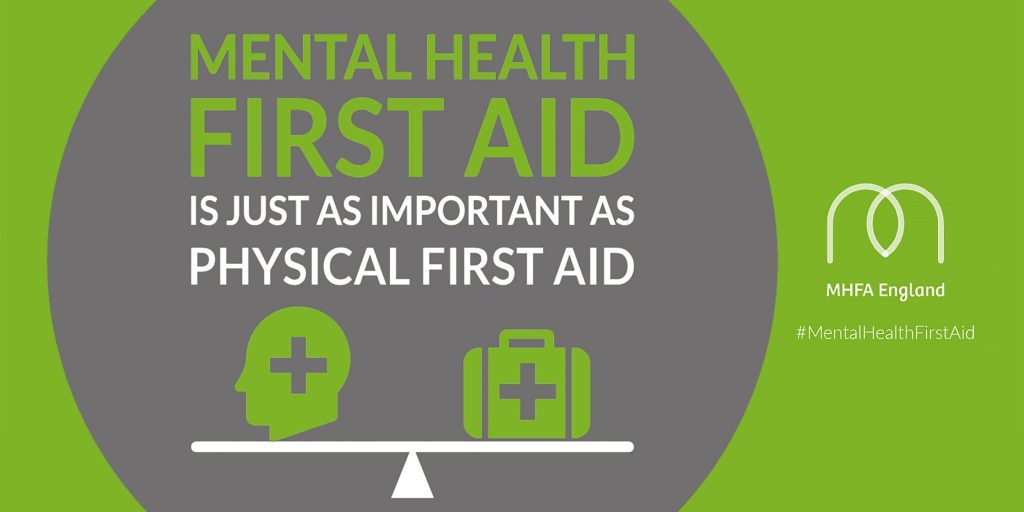
Mental Health At Work: First Aid Products Have Surged In Popularity In 2022.

(image: MHFA England)

Awareness days, weeks and months have helped to familiarise people all over the world with the term “Mental Health First Aid”. Now, first aid retailer FirstAid.co.uk reports a 260% uplift in interest for MHFA products on their site, noting that an increase in work-related stress, depression and anxiety cases each year is the most likely driving force.

The retailer has now sold more Mental Health First Aid items this year so far than everyday travel and motoring first aid kits.

Data from the Health and Safety Executive shows that cases of work-related ill health (of which 50% are stress, depression and anxiety) have risen almost 28% since 2015, despite physical injuries being in decline since 2000.

Their data also shows that 820,000 people in Great Britain suffered from work-related stress, depression and anxiety in 2021, compared to 441,000 people who sustained a physical injury at work.

“According to Mental Health First Aid England, one in six people of working age in the UK is experiencing symptoms of mental ill health at any given time.” Says Mike Thakoordin, MHFA Instructor and Suicide First Aid Associate at FirstAid.co.uk“We know that around 81% of employers have increased their focus on employee mental health since the pandemic began, and it is fair to say that awareness days and events are doing their part to sustain that focus. 

“During the first week of Stress Awareness Month in April we had an 85% increase in the number of people visiting our stress-related products compared to 2021, and we’re anticipating a similar surge between Suicide Prevention Day in September and World Mental Health Day in October as individual and business shoppers research items and guidance that can support those who are struggling.”

(image: Unsplash)

While events and awareness days like these play a big part in the ongoing rise in interest around mental health-related products online, it’s the persisting growth in the number of people struggling with poor mental health that is likely the bigger factor at play. Despite several years of employers saying they’re taking mental health more seriously, the reality is that a huge number of people each year still find themselves with too much work, not enough rest, workplace politics issues and concerns over job security – among other things.

“For several years running now, the HSE has reported an increase in the number of people taken ill by work-related stress, depression and anxiety.”  Thakoordin goes on to say. “Poor workplace mental health has knock-on effects in many other areas, and we hope that this increase in people shopping for MHFA materials translates into a greater number of workplaces offering meaningful, consistent support.

“With the 2-day Mental Health First Aid course recently being updated, now is the time to get enrolled and play your part in making workplaces safer from a mental health perspective.”


For information on how to recognise stress in the workplace, and advice on dealing with stress,
visit FirstAid’s Stress In The Workplace page.

This article was written in collaboration with First Aid.co.uk

Are Workplaces Doing Enough for Mental Health in a Post-Covid Era?

(image: Mateus Campos Felipe at Unsplash)

The global coronavirus pandemic brought mental health and personal wellbeing to the forefront of our working life. As more companies return to the office, employers need to think about whether or not they are doing enough to make mental health in the workplace a priority. We speak to consumer finance startup, CapitalBean.com, to get some insight.

Workplace Mental Health Post-Covid

“The coronavirus pandemic highlighted serious concerns regarding mental health and personal wellbeing,” explains Richard Allan of Capital Bean.

“With ongoing uncertainty and a heightened sense of risk, it could be argued that we were experiencing an unprecedented global mental health crisis, often with no end in sight.” 

From a workplace perspective especially, many workers were facing uncertainty regarding their job stability, redundancies and, for some, navigating an entirely new way of working and interacting with colleagues.”

“In response, many companies started to take employee mental health more seriously and implement frameworks and best practices; however, now that we are returning to normal and trying to leave Covid-19 in the past, what is the extent to which companies are keeping up with their commitment to employee mental health?”

The Return to the Office

During the Covid 19 pandemic, the majority of workers were learning how to do their jobs remotely. This presented a range of new challenges to navigate and loneliness was widely reported. Not only were people missing the daily social interactions with their colleagues, but they were also finding the blurred lines between home life and work life difficult to navigate – with people’s homes doubling up as their offices, many workers were finding it difficult to switch off and reported working more hours. 

Now that people are starting to return to the office, after adjusting to nearly three years of remote working, they are being faced with new challenges. People are finding the return to work difficult and reporting a great deal of anxiety regarding social interaction. In addition, after working from home, they are now having to juggle their home commitments alongside going to the office. Whether it is squeezing in laundry, balancing childcare, or even factoring in an extra hour for the commute, the return to the office is proving more difficult than expected for many and is causing stress and anxiety for some. Others prefer working from home, so there is a balance.

The Employer’s Role

Millions of workers are returning to the office or workplace with changed attitudes and new expectations. In order to attract and retain talent, it is important for employers to acknowledge this and respond empathetically. Many companies have included mental health in their promises to employees on return to the office but now it is their time to demonstrate that this is not merely lip service. 

Employers need to proactively introduce programmes that are promoting workplace mental wellbeing and help employees with the challenges that they are facing. It is important for workplaces to create a psychologically safe space for workers and welcome conversations surrounding mental health and support.

(image: Luis Villasmil at Unsplash)

The Great Resignation And Mental Health at Work

After the pandemic, more people than ever before started evaluating their working life and what their main priorities were. With new focus on mental wellbeing and work-life balance, workers started to question what their expectations were and what they required from their place of work. The great resignation, the mass exodus of millions of workers in 2021, left employers having to think about what they needed to offer workers to not only attract talent initially, but retain it. 

 Workers who were asked about the great resignation pinpointed lack of workplace communication, sense of belonging, employee-manager relationship and toxic environments all as reasons to leave their jobs. 

In a post-Covid era (and what should have been before this), it will fall to the employer to make sure their staff feel looked after, not just financially but also emotionally.

Employers need to make their employees feel like they are taken care of, respected and acknowledged, and that their personal wellbeing and mental health is a top priority. Going forward, this will be more important for jobseekers than free office lunches or staff drinks.

We all have mental health and it is vital this is acknowledged and cared for, and not ignored in the workplace.

This article contains links to partner organisations.

Tips On Coping With Borderline Personality Disorder And Obsessive Compulsive Disorder by Dr Joann Mundin.

(image: Unsplash)

Borderline personality disorder (BPD) affects people’s thoughts about themselves and others. People with borderline personality disorder experience extreme emotions. A person with this disorder is likely to have intense relationships with many ups and downs. Other signs of borderline personality disorder include impulsivity and changes in one’s self-image. Anger management issues and mood swings can both be symptoms of BPD. They could also fear being left behind or abandoned.

Sometimes, people with borderline personality disorder are also affected by obsessive-compulsive disorder or OCD. The person and their loved ones may find it challenging to cope with a borderline personality disorder. But borderline personality disorder is something that can be learned to manage. You can learn to manage borderline personality disorder with the proper professional care, self-help techniques, and coping skills and have a happy and successful life.

Coping mechanisms for borderline personality disorder

A borderline personality disorder is a condition that affects each person differently. Find out what works for you by taking your time. Everyone’s situation may be different, but by taking the actions listed below, you can cope with borderline personality disorder :

1. Engage in physical activities

Exercise may help you stabilize and regain emotional control if you have problems coping with BPD. Exercises like yoga, boxing, running, and cycling may be beneficial.

2. Take some time off for yourself

Although social isolation has adverse effects, occasionally removing yourself from other people might be a healthy coping mechanism for BPD. Spend some time alone, and rejuvenate yourself without the influence of others. Reflecting alone might assist you in readjusting if you are experiencing intense anger or feeling emotionally out of control.

3. Write emails or letters to people but don’t send them

This is a great way to express feelings and decompress. The effects are similar to keeping a journal, making it possible to express yourself without having your words negatively affect your relationships. By delaying sending the message, you can go back and read what you said after the initial emotions have subsided.

4. Take breaks

Feelings of rage and anger might be reduced temporarily by leaving a stressful setting and looking after yourself.

5. Keep yourself occupied as much as you can

Keep yourself occupied to divert your attention from your current feelings. Holding a fidget toy such as a slinky, helps keep your hands engaged and allows your mind to concentrate on the recent activity.

(image: Unsplash)

Is obsessive-compulsive disorder related to borderline personality disorder?

BPD is thought to be fundamentally linked to obsessive-compulsive symptoms. These symptoms are intense, and BPD patients who experience them often exhibit poor insight, resistance, and sometimes obsessive control in interpersonal interactions.

A 5% prevalence of borderline personality disorder (also known as BPD) has been seen in OCD patients. Additionally, these patients with BPD and OCD had greater rates of anxiety, mood, and eating problems. These examples of co-occurring BPD and OCD have been linked to motor impulsivity, mental compulsions, and compulsions involving interpersonal domains.

How is OCD treated?

Treatment for obsessive-compulsive disorder may not provide a cure, but it can help keep symptoms under control so they don’t interfere with your everyday life. Some patients may require long-term, continuous, or more extensive treatment depending on how severe their OCD is. Psychotherapy and medicines are the two essential OCD treatments, and treatment is frequently most successful when these are used in conjunction.

How can you cope with OCD?

Below you’ll find mechanisms that will help you cope with obsessive-compulsive disorder:

1. Acknowledge your OCD’s existence

Like the monster you used to think lived beneath your bed as a child, OCD can seem like an uncontrollable power waiting to strike. Give your OCD a name and a shape rather than letting it be a faceless villain. It might benefit kids and adults to view OCD as a distinct condition. Remember, OCD is not your fault, and there is no need to feel ashamed.

2. Maintain an OCD journal

An OCD journal serves the same purpose as the food journals that some people use to record their daily dietary intake when on a diet. You can keep note of your triggers in an OCD journal, discover new ones, and evaluate the general state of your OCD. Keep an OCD journal with you at all times, and write down what happens when you perform a compulsion. After reading through your diary entries at the end of the day, ask yourself the following questions.

● Why did these circumstances make me OCD-prone?

● What would have occurred if my resolutions hadn’t been carried out?

● What proof is there that what I feared would occur?

3. Use Exposure and Response Prevention (ERP) techniques

ERP is a popular method for addressing and maybe easing OCD. When adopting ERP, a person exposes themselves to a circumstance that causes an obsession and then refrains from acting on their compulsion. Try creating an OCD ladder by ranking your triggers and associated anxieties on a ten-rung ladder from 1 to 10 in terms of their seriousness. You should start with a low-level trigger when you initially start ERP, and after you’ve faced it, wait 10 seconds before acting on your urge. Increase the amount of time you go without gradually employing your compulsion until you can handle the task or scenario without it. As you master your triggers, climb the OCD ladder.

4. Redirect your focus

If you have OCD compulsions or obsessions or feel one coming on, try diverting your attention from the problem. You can either mentally or physically refocus your attention. Try repeating the program if, after the period of refocusing, you still feel the need to finish your obsession.

5. Keep your stress levels down

OCD is difficult to live with, and stress can make these tasks even more difficult. Keeping your stress level low is essential because it has been demonstrated that stress dramatically increases OCD in people. Make sure to arrange some time each day to relax. Finding an hour each day to decompress, watching some TV, reading a book, or going for a run, can be pretty helpful.

Final thoughts

You can learn coping methods and healthy lifestyle choices without allowing the illnesses and symptoms to define you. Finding strategies that work for you is critical. You should also be open and honest with close family members about your needs. For example, you should tell family members how to help you if you feel angry or emotional. You are not defined by your illness and you can learn to cope- reach for support.

About the Author: Dr. Joann Mundin is a board-certified psychiatrist who has been in practice since 2003. She is a Diplomate with the American Board of Psychiatry and Neurology and a Fellow with the Royal College of Physicians and Surgeons of Canada. Currently associated with Mindful Values, she provides assessments and treatment for patients with severe mental illness.

4 Kinds Of Therapy To Consider by Rachelle Wilber

(image: free image)

Therapy can be a great way to work through personal issues, improve your mental health, and make positive changes in your life. But with so many different types of therapy available, it can be hard to know where to start. Many people find that a kind of therapy works well for them, while others may benefit from a combination of different approaches. This overview will help you learn about four of the most common types of therapy to make an informed decision about what might work best for you. 

Cognitive Behavioural Therapy 

Cognitive behavioural therapy (CBT) is a type of psychotherapy that helps some people change negative thinking and behaviour patterns. CBT is based on the idea that our thoughts, feelings, and behaviours are interconnected. Changing our thoughts and beliefs can change our behaviour and emotions. CBT is effective in treating a wide range of mental health conditions, including anxiety and depression, so its worth a shot to see if its right for you. 

Group Therapy 

Group therapy is a type of psychotherapy that involves meeting with a group of people who are dealing with similar issues. Group therapy can be helpful because it allows you to share your experiences and feelings with others who understand what you’re going through. It can also help you learn new coping skills and gain insight into your thoughts and behaviors. Many people find group therapy to be a supportive and helpful experience- but see how it goes for you as an individual too. 

Interpersonal Therapy 

When we have issues with our relationships, it can be challenging to know how to make things better. Interpersonal therapy (IPT) is a type of psychotherapy that helps people improve their relationships with others. IPT focuses on the here and now, helping you to understand and change patterns of behaviour causing problems in your relationships. Several studies have shown that IPT is an effective treatment for depression- so this could be one to try. 

Family Therapy 

Family therapy is a type of psychotherapy that involves meeting with a therapist along with your family members. Family therapy can be helpful because it allows you to address problems within your family system. It can also help improve communication and relationships within the family. Research by experts found family therapy to be a supportive and helpful experience. However, some have said that it wasn’t the right experience for them and their family, so it is trial and error too.

These are just a few of the many therapy types available. If you’re considering starting therapy, talk to your doctor or mental health professional about what might be right for you. Also, remember, there is no “right” type of therapy. What matters most is finding a therapist you feel comfortable with and who can help you achieve your goals. You may also try a few therapies before finding the correct one to help yourself, your relationships and your family.

This article was written by freelance writer, Rachelle Wilber, living in the San Diego, California area, USA. She graduated from San Diego State University with her Bachelor’s Degree in Journalism and Media Studies. Follow her on Twitter and Facebook: @RachelleWilber; https://www.facebook.com/people/Rachelle-Wilber/100009221637700/