Trigger warning: discussions of FND, illness and mental health.
Hi! My name is Liam Virgo and I’m pleased to share my story with Be Your Own Light blog.
In 2016, at age 13 and after months in hospital, I was diagnosed with severe Functional Neurological Disorder (FND). I was suddenly paralysed and unable to speak. I had all my abilities taken away from me and was left severely disabled. For six months my mind switched off and I didn’t know who or what anything was. I don’t remember the early days of my illness and life before it is a blur. My FND resulted in me being bedridden, unable to walk or talk. I felt trapped inside my own body.
Being a prisoner in my own body felt like my body had completely betrayed me. The psychological impact of being locked inside my own body is still felt to this day. It’s been a long hard battle with FND- painful and very isolating. The doctors aren’t sure what caused my FND. All we know is that it happened and I was severely affected by the condition but without any real explanation as to why this was the case.
However, while I was bed bound I found comfort in a few things and one of them was London. It was my dream to visit the city but because of my FND I wasn’t well enough to go. I was supported by CAMHS (UK NHS child mental health services) for four years and they created London themed progress charts to help motivate me to achieve my wish.
FND hasn’t only affected my physical health but my mental health too. The impact of severe FND left me with difficult feelings and emotional difficulties. The emotional scars of FND are still felt to this day. Over the years I’ve been supported by Psychiatrists and Psychologists. Some of the overwhelming feelings I experienced and still do are anxiety, I felt misunderstood and isolated. I sometimes became tearful and emotional. I was put on different medications over the years but nothing really helped. I also had many other assessments and strategies used to help understand my mental health including a cognitive test and I also had a mood diary.
Because of FND I’ve missed years of schooling as I wasn’t well enough to return to education.
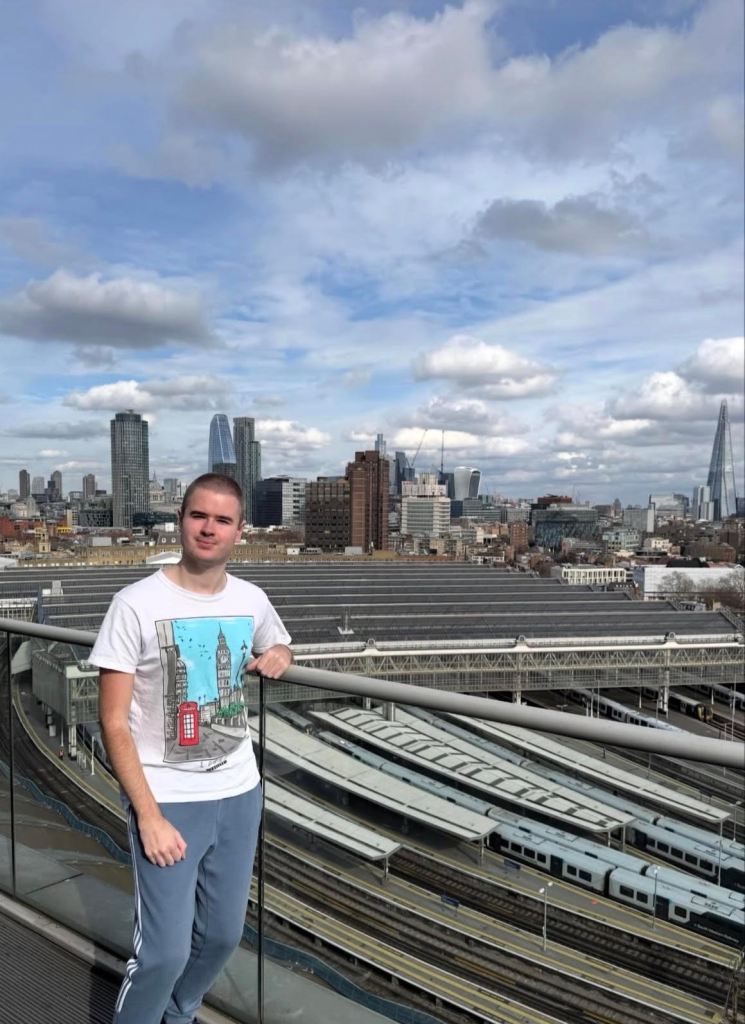
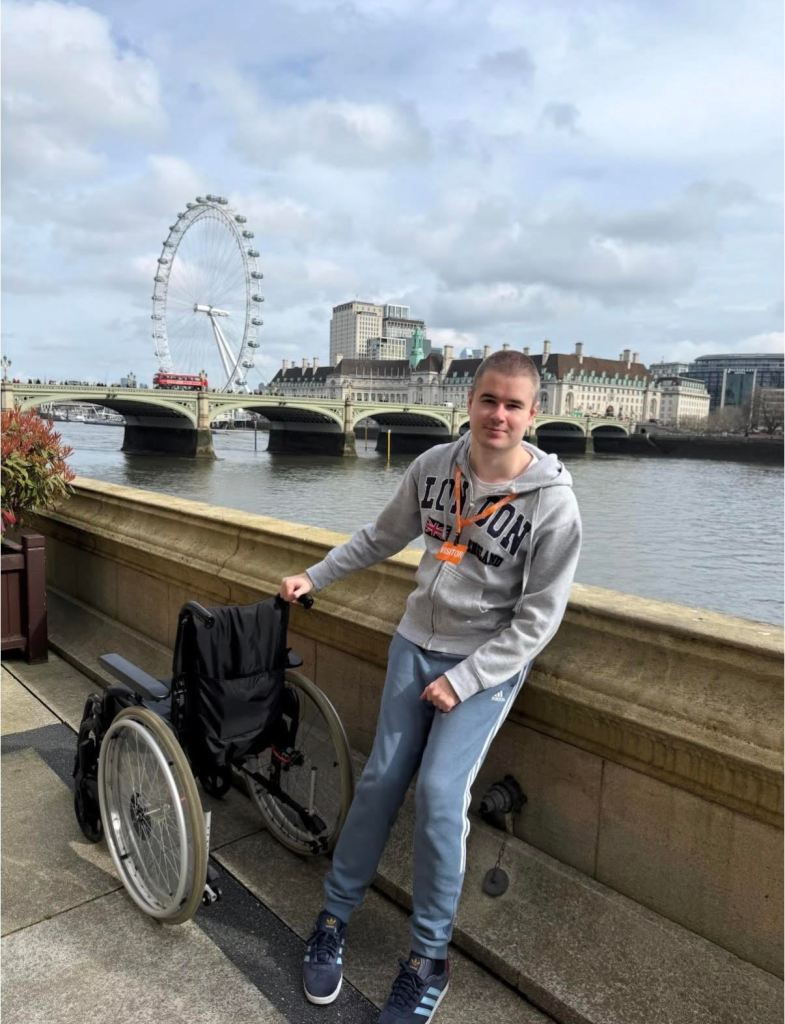
Eventually after three years my physical health started to improve and when I was well enough I made it to London and have been back many times since to my favourite place. I went to London with my parents and I loved visiting Central London. I went to all main sights such as London Eye, Big Ben, Tower of London, Buckingham Palace and lots more.
10 years on, I’m now slowly recovering and learning to walk again. I’m using my voice, the voice that FND stole from me to raise awareness about the condition. I still have very difficult days with FND but I’m learning to live with my new normal and adjusting to life post severe FND. I’ve had a very long journey with FND but I know if I can get through all of that I can get through anything.
At 13, I lost all my abilities to FND but one thing FND could never take from me is my determination.
(image: Liam Virgo)
The medical professionals are unsure if I’ll ever make a full recovery because of the impact of severe FND but I’m now at a stage in my life where I’m able to live with the condition. I’m able to talk and I can move my arms again. I’m no longer bedridden and can walk with support. I still battle with FND daily but I’m determined to never give up hope. I still use a wheelchair but just sitting in a wheelchair is a big achievement for me as I couldn’t tolerate sitting in anything before.
You can follow Liam on his adventures here on Instagram.Thank you Liam for your bravery in using your voice and sharing your story.
On 1st March 2016, I wrote my very first blog about my mental health struggles with bipolar disorder and anxiety. For me, it was an outlet to share with friends and family what I was experiencing after one of the worst bipolar episodes I had faced and after hospitalisation in 2014. I didn’t realise that this traumatic time in my life, would also cause my mental health to dip and struggle further as I developed PTSD symptoms (panic attacks) and sat on a 2 year waiting list for NHS therapy. Professional support was not coming easily during this time, and so this blog became not only a therapeutic outlet but a place to connect with others going through similar things. And to explain to those who had never experienced mental illness, exactly what it can do but just how you can support those experiencing it.
Part of me can’t fully believe that I have been blogging consistently for 10 years. There have been times where I have wanted to give up but this little blog has been my saviour and in truth, helped me to launch a writing career that I did not expect and am so grateful for. It has also helped others to share their mental health stories and products, been a platform for mental health campaigns and charities and I am super proud of the impact we have had. One of our biggest accolades is being a Top 10 UK mental health blog by Vuelio every year since 2018- which means we are having a positive impact and reach!
The blog has published over 800 posts, with hundreds of thousands of views! It is read on every continent with a particularly large readership in the USA (as well as UK and other countries). We have covered so many topics- bipolar disorder, PTSD, anxiety disorders, depression, pre and post natal depression, OCD, BPD, eating disorders, psychosis, mania, schizophrenia, schizoaffective disorder, trichotillomania, addictions (drug, alcohol, gambling), body dysmorphia and mental health topics like child mental health, work stress, emotional burnout, relationships, domestic and sexual abuse, homelessness. We have shared about wellness products and worked with inspiring health and lifestyle brands.
The blog inspired me to share my own story far and wide – writing for mental health charities Mind, Rethink, Time to Change, Bipolar UK, No Panic, SANE and Metro.co.uk, The Telegraph, Happiful, Glamour, Jewish News, Huff Post. Featured in Cosmopolitan, Elle, Yahoo News and other publications. Thank you particularly to the editors at the publications for sharing my story and believing in my mission! This also led to me writing my book ‘Bring me to Light’ which was published in 2019 by Trigger and remains one of my proudest achievements. I then released my children’s book ‘Arabella and the Worry Cloud’ and had some writing featured in ‘The Book of Hope’ by my friends Jonny Benjamin MBE and Britt Pfluger (an amazing experience!). In 2017-18, I was also involved with setting up the Jami mental health shabbat in my community and spoke in several synagogues and at a community festival Limmud with my Dad, about our journey with bipolar. The same year that I started this blog (2016), I also met my now husband, who supports me through all of my writing and mental health work.
As I look back over the past 10 years, to where we were in 2016 with mental health stigma, I am proud to have played a small part in changing the landscape and narrative online around mental illness, particularly bipolar disorder and psychosis. We have many followers on social media platforms and continue to share about mental health and well being and be a resource for all those who need it, so they never feel alone.
(image: Ineffable Living)
Thank you to every single contributor (and every reader) to Be Ur Own Light Blog 2016-2026. Your words and belief in our mission to end the stigma around mental illness have meant the world to me. I hope going forward I can continue to share more real stories, more important information on care and treatment and campaign for better care.
There is still a way to go. NHS waiting lists are too long and care is under funded, leading to not enough beds. Mental health stigma online (and sometimes offline) sadly still remains high. As a society, although we have improved, we still need to fully understand mental health conditions and separate them from the person themselves. I am optimistic that things can and will change.
To everyone reading this going through a period of mental ill health or living with a chronic mental illness, I see you and you are never alone. As a blog community, we can come together to empower each other, so no one ever feels invisible and I hope that I can continue to write too.
Thank you, from my heart, for the past 10 years! Here’s to many more years,
10 years ago, Rabbi Daniel Epstein and the team at Jami charity had an idea about making the stigmatised topic of mental health in the UK Jewish community be more visible amongst synagogues and organisations. They did this by focusing on the day of rest- Shabbat, with Rabbis and speakers of lived experience or mental health professionals. I was lucky to come on board as a volunteer in the first few years, alongside a wonderful team. My role was to help contact Jewish shuls and organisations by email and in the first year I believe we got the Shabbat in to over 80 organisations and over 100 in subsequent years.
My reason for doing this was because I struggled with bipolar disorder (depression, mania and psychosis) and anxiety/PTSD from when I was 15. I felt that no one really talked about it publicly on a communal level and I was inspired by my friend Jonny Benjamin MBE, who was open about having schizoaffective disorder and taking a sledge hammer to stigma. I also admired the work of Jami in the hubs and with their Head Room Cafe and I wanted to make a difference.
I can’t quite believe that the Jami Mental Health Shabbat is 10 years old this year. The Shabbat enabled me to speak about lived experience with my Dad (who also has bipolar) to two large communities (my childhood one- Bushey and husbands- Chigwell) and my Dad spoke at Belsize Square and Edgware Yeshurun about our joint story. I was diagnosed with bipolar at 16 and my Dad was at 44. We were honoured to help dispell stigma through telling our stories from the pulpit, however difficult they were.
The Shabbat has also enabled thousands of people to have conversations and mental illness is no longer hidden in the shadows to be feared. The theme for the tenth Jami Mental Health Shabbat is ‘Bringing Mental Health to the Table’
Jami says, “This special Shabbat is an opportunity for us to encourage conversations on mental health, raise awareness of mental illness and distress and share ideas on how to support ourselves and others within our community. There are many ways for you, your synagogue, school, student or youth group to get involved and everyone can mark Jami Mental Health Shabbat in their own way. Some communities choose to arrange for members of their congregation to share their lived experience or invite mental health professionals to lead a talk, discussion or panel event.”
This year you can get involved by hosting a meal for JMHS and ask your guests to donate instead of bringing a gift, sign up for the free toolkit of resources (services, activities for all ages and much more) or donate at https://jamiuk.org/donate-to-jmhs_meal/ . For other ways to get involved please see: https://jamiuk.org/get-involved/jmhs/.
Jami Mental Health Shabbat coincides with Torah portion- Bo. On this Shabbat, we read about the plague of darkness, which can be likened to the experiences of many living with mental illness and distress. The Torah portion also talks about how the Israelites, full of hope, could see through the darkness into the light. This special Shabbat is an opportunity for us to encourage conversations on mental health, raise awareness of mental illness and distress and share ideas on how to support ourselves and others within our community.
As the Shabbat is this weekend, I want to show my support. Although I won’t be sharing our story in shul this year, everyone doing so should be so proud. I will be donating to Jami to show my support.
Where to get help with your mental health
If you or someone you know needs mental health help, there are a variety of options depending on the issue of concern.
SHOUT – 24/7 crisis text service – Text Jami to 85258
Ring your GP or out of hours service for an emergency appointment
Contact your Community Mental Health Team (CMHT) if you have one
Samaritans – Call Samaritans on Freephone 116 123 (24 hours a day)
Call the PapyrusHopelineUK, on 0800 068 41 41 or text 88247 if you are under 35 and worried about how you are feeling. Or call if you are worried about a young person.
Call 999 or NHS Direct on 111 (England) or 0845 46 47 (Wales)
Don’t hesitate to call 999 in mental health emergencies
Heres to 10 amazing years of mental health conversations!
Everyone tells you how amazing it is once the baby comes. And it is, no doubt. But everyone also skips the part of how hard and confusing it can be at times. You lack sleep, run on instinct and love, and all of the responsibility comes down on you hard. But all that’s normal.
Every parent gets that mix of joy and struggle at some point. However, if the downs start to outweigh the ups, you should take a pause and look at it more deeply.
All the Emotions No One Warns You About
Before birth, it’s all about the baby – the ultrasound photos, due date, tiny clothes and picking names. But few people prepare you for what happens after.
In reality, many of the emotional changes begin well before birth. Reading about mental health during pregnancy can help expecting parents notice early signs of anxiety or mood shifts that often carry into postpartum life.
All the hormonal changes and lack of sleep can make even the simplest task feel difficult. Anxiety, sadness, and self-doubt can creep in, sometimes out of nowhere. In fact, around one in five women experience postpartum depression or anxiety, and partners often feel it too.
But remember, no one really gets into it completely ready, and everyone learns as they go.
Rest Isn’t a Bonus, but a Necessity
“Sleep when the baby sleeps.” You’ve heard it a million times, and it’s certainly easier said than done. But rest really is essential. It’s how your body heals, and your mind resets.
You can try using the 5-5-5 rule: five days in bed, five days on the bed, five days near the bed. No strict formula to it, of course, but use is a reminder to slow down a bit.
If naps still seem impossible, just lie down for a few minutes and breathe, even when your brain insists that your baby needs you every second. And if someone offers to take a night shift, let them. One full night of sleep can change how you see everything.
Pregnancy and early parenthood can really impact maternal well-being. You must learn how to rest effectively, because your recovery is your number one priority next to your baby.
When “Baby Blues” Don’t Fade
Crying for no clear reason? Worrying constantly about the baby? That’s normal in those first days. However, if it lasts more than two weeks, or you start feeling numb, detached, constantly anxious and worried, there could be something more to it.
Watch out for signs like:
Persistently low mood
Trouble bonding with your baby
Racing thoughts or panic
Appetite or sleep changes that don’t make sense
Thoughts of harm to yourself or your baby
If these sound familiar, reach out to your doctor, midwife, or mental-health professional. With help, things do get better. Getting support early makes healing faster and safer, for both of you.
Take Care of Your Body
It’s hard to think clearly when you haven’t eaten since breakfast or when you’ve lived on coffee for days. Keep yourself hydrated – a water bottle within reach works best. Your body needs steady fuel, especially if you’re breastfeeding.
Once your doctor says it’s okay, take short walks or stretch a little. You don’t need to “work out”, just move a bit. And if you’re healing from a C-section or stitches, follow the recovery plan. Pain makes everything harder.
Small Things Count
Some days, you’ll feel like you’ve disappeared under all the baby tasks. But you’re still there, you just need to remind yourself.
Try reclaiming tiny moments. Close the bathroom door and take that shower – even if it’s a quick one. Put on a song you love. Drink your coffee before it goes cold. It sounds silly, but it matters. The little things add up. You don’t need a meditation app or fancy breathing routine.
Just stop for a second, notice your breath, maybe wiggle your toes on the floor. That’s it. Even a minute or two of peace can reset your nervous system.
Know When to Ask For Help
There’s a point where no amount of self-care or deep breathing can help. If you’re struggling to function, or if each day feels harder instead of easier, that’s your signal. That doesn’t mean you’re weak; it means you’re human.
Postpartum depression and anxiety are real medical conditions, but they’re treatable. A doctor, midwife, or therapist who understands postpartum life can help you find the right mix of support. Sometimes that’s talking, sometimes medication, sometimes both. The right kind of help makes everything easier.
Give Yourself Time
Recovery after birth doesn’t move in a straight line. One day you’ll feel like yourself again, the next you won’t, and that’s fine. Your body, mind, and heart all need time to settle into this new life you have.
Rest when you can, ask for help when you can’t.
Some days, progress is just making it through – and that’s still progress.
For many people, Christmas time/festive season is a time for happiness, family and bringing people together; however,one in seven UK couples face a hidden grief : infertility..
Research reveals that nearly three in four people battling infertility are burdened with feelings of failure, adding to the hidden grief many already feel during the holidays. In response, mental health platform JAAQ wants to spread awareness around why infertility can be harder during the holidays and what we can do to approach the topic sensitively.
Male fertility coach explains why infertility feels heavier during the festive season
Male fertility coach, Shaun Greenway, who was diagnosed with azoospermia, explains on JAAQ why the holiday season is so difficult: “We got a pregnancy announcement at Christmas, and it took me right back to that place. That hurt. That weird feeling of happiness mixed in with jealousy and anger and pain.” Even after he had twins via donor sperm, the emotions didn’t disappear “It will always be part of me. It’s always there.”
Shaun’s experience highlights a truth many people face – that infertility doesn’t end with treatment or conception; it changes shape, often resurfacing during emotionally charged times like Christmas, a time filled with pregnancy announcements and marketing imagery filled with children and togetherness.
Founder and CEO of Fertility Help Hub, Eloise Edington, knows that pain well. Supporting her devastated husband while navigating her own grief, she recalls when speaking on JAAQ: “Supporting my devastated husband while also equally grieving myself and knowing that we would never have a biological child together meant we were both drowning in separate pain.”
She’s open about the reality of those moments: “Lots of crying, lots of eating chocolate, wine, being together. Not pretty. Not Pinterest-worthy. Just real.” For many couples facing infertility, this is the reality of Christmas – raw, difficult and far from the idealised celebrations we often imagine.
(image: Priscilla Prisceez, Unsplash)
4 dos and don’ts for talking about infertility this holiday season
To make the festive season a little easier, mental health platform JAAQ has revealed four essential dos and don’ts for talking about infertility this Christmas – whether you’re facing it yourself, or want to approach the topic sensitively with others.
Dos:
1. Think before you ask sensitive questions about pregnancy or starting a family and wait for them to bring it up themselves naturally in conversation.
2. Share with someone you trust – If you are struggling, consider speaking openly with someone, whether in person or by message, which can help you to process your emotions. For Shaun, he shared: “Once I did start opening up, that’s when everything got a bit lighter.” Elouise suggests, “Find community, find support, speak to other people who are going through similar struggles. How are they dealing with it? What are they doing to keep the romance alive or to get through this tricky time and enjoy life?”
3. Encourage without imposing your opinion. If someone shares something personal, listen fully before responding. Let them know you are there for them and ask how you can support them, rather than assuming what they need.
4. Create a Christmas/ festive routine that works for you. If traditional celebrations feel overwhelming, permit yourself to do things differently. You might skip the big dinner, start a new ritual like a quiet morning walk with coffee, or find other ways to mark the day that feel manageable.
Dont’s:
Don’t ask personal questions about pregnancy or family plans, especially in social settings
Don’t offer unsolicited advice like ‘just relax’ or ‘it’ll happen when it’s meant to’
Don’t probe with follow-up questions if someone opens up; listen supportively rather than asking questions that might cause unintentional distress
Don’t pressure someone to participate in every activity or ‘get into the spirit.’ Sometimes the kindest thing is simply allowing them to step away
(image: Pereanu Sebastian: Unsplash)
About JAAQ
JAAQ – which stands for Just Ask A Question is a pioneering mental health platform designed to make credible, compassionate support accessible to everyone – especially in the workplace. The platform provides engaging, clinically backed content by connecting users with experts and individuals with lived experience, who answer mental health questions anonymously. This unique, interactive approach empowers people to explore their mental wellbeing in a safe, stigma-free environment.
When people begin looking for psychological support, Cognitive Behavioural Therapy, or CBT for short, is one of the most well-known and accessible forms of psychotherapy. Recently, more and more therapists are offering Eye Movement Desensitisation and Reprocessing (EMDR), particularly for trauma.Both are well established, evidence-based treatments that can help people move forward from distressing experiences — but they do so in quite different ways.
If you’ve been wondering what sets them apart, or which might be the best fit for you, this post aims to break down the differences in a clear and down-to-earth way.
Understanding CBT
Cognitive Behavioural Therapy (CBT) is arguably the most widely accessed and researched psychological approaches, particularly in the UK. It’s based on the understanding that our thoughts, emotions, physical sensations, and behaviours are all connected. When one of these areas becomes unhelpful — for example, when our thoughts become overly negative or worrisome — it creates a negative cycle that keeps us stuck and in turn maintains that distress.
CBT helps a person to notice these patterns and challenge them with practical, realistic alternatives. The aim is not to “think positively” but to think more accurately. For instance, if you often find yourself thinking “I always mess things up,” CBT would explore the evidence for and against that thought, helping you see the situation in a more balanced light.
Sessions are focused on the present and typically structured towards achieving mutually agreed goals. There is less emphasis on the past and childhood, although this can be useful to consider in relation to the development of a person’s belief system or how they see the world today. This, in turn, influences a person’s responses to distress. CBT continues outside of sessions as clients engage in task such as trying alternative response to distress, or journalling at challenging times.
CBT for trauma focuses on making changes to the way a person thinks about a traumatic event, and themselves within that event. Re-living is a key element of CBT for trauma and enables the person to safely revisits the traumatic memory in a structured, supportive way with their therapist. This allows the brain to process the event as a memory, rather than something that is still happening now, which in turn reduces distress around the event and any associated flashbacks or nightmares. The overall aim is to reduce distress, restore a sense of safety and control, and help the person make sense of what happened so the trauma feels like something from the past — not something still happening in the present.
CBT is highly effective for anxiety, low mood/depression, panic attacks, phobias, obsessive-compulsive disorder (OCD), PTSD/trauma, poor sleep/insomnia and many other mental health difficulties.
Understanding EMDR
Eye Movement Desensitisation and Reprocessing (EMDR) might sound unusual at first — after all, what do eye movements have to do with mental health? Yet EMDR is a powerful, evidence-based therapy originally developed to help people recover from trauma.
The theory behind EMDR is that when something distressing happens, our brains sometimes struggle to process it properly. The memory can get “stuck,” remaining vivid and the person continues to experience the fear as if the event is happening again. EMDR helps the brain work through these memories so they can be stored more adaptively — as something that happened in the past, rather than something that continues to feel threatening now.
During EMDR sessions, the therapist will guide you through sets of bilateral stimulation — this could involve following their fingers with your eyes, hearing alternating tones through headphones, or feeling gentle taps on your hands. This process is thought to mimic the way the brain naturally processes memories during REM sleep.
One benefit of EMDR is that it’s not necessary to go into detail about the event if you don’t want to. The focus is on how it feels in your body and what comes up in the moment. Over time, people often report that distressing memories lose their emotional intensity, and the beliefs tied to those experiences begin to shift to something most positive and empowering, rather than fearful or critical.
Can CBT and EMDR Be Combined?
Absolutely. Many therapists are trained in both and will tailor the approach depending on your needs. For example, someone with trauma may start with CBT techniques to manage anxiety and develop coping skills, then move into EMDR once they feel more grounded and ready to process deeper memories. In some cases, EMDR can help resolve traumatic roots of long-standing patterns, while CBT provides the tools and strategies to maintain progress in day-to-day life.
It isn’t about one being “better” than the other — it’s about finding what works for you, at the right time and pace.
Which One Should You Choose?
If you’re feeling stuck in unhelpful thoughts or patterns — for example, overthinking, avoidance, or self-criticism — CBT can be a great place to start. It’s structured, practical, and gives you tools you can continue using long after therapy ends. If you’ve experienced trauma, flashbacks, or distressing memories that feel “frozen in time,” EMDR might be more suitable. It’s gentle yet powerful, and often helps people move on from experiences they’ve been carrying for years.
Ultimately, the best way to decide is to talk with a qualified therapist who can help assess your situation and guide you towards the most appropriate treatment.
Final Thoughts
Both CBT and EMDR offer genuine hope for change. Whether you’re learning to manage anxiety, heal from trauma, or simply understand yourself better, the right therapeutic relationship can make all the difference.
At its heart, therapy isn’t just about techniques — it’s about feeling safe, understood, and supported while you make sense of your experiences. Whether through CBT, EMDR, or a combination of both, the goal is the same: helping you feel more in control of your thoughts, emotions, and your life again.
This blog was written by UK therapist Andrew Kemp at www.clearmindcbt.comand contains sponsored links.
Mental health is an essential part of overall well-being, yet it is often overlooked until symptoms become overwhelming. Millions of people around the world live with mental health conditions that can affect their mood, thoughts, and behavior. These challenges can interfere with relationships, work, and daily routines, but the good news is that treatment options are more accessible and effective today than ever before.
When individuals understand their condition and seek the right support, they can build healthier coping strategies and regain control of their lives. Two common struggles people face are bipolar disorder and anxiety—both of which can be complicated further when substance use is involved. Exploring recovery options designed specifically for these conditions can open the door to long-term healing.
The Importance of Addressing Mental Health Early
Early recognition of mental health symptoms is critical. Too often, individuals dismiss mood swings, prolonged sadness, excessive worry, or fatigue as “just stress” or “a bad week.” However, these patterns can signal a deeper issue that requires professional support. Addressing mental health concerns at the onset not only improves outcomes but can also prevent the development of secondary challenges such as addiction, chronic stress, or physical health problems.
By taking proactive steps, individuals are more likely to develop resilience and maintain stability over time. Family members, friends, and colleagues also play an important role by offering encouragement and understanding instead of judgment or stigma.
Understanding Bipolar Disorder
Bipolar disorder is one of the most misunderstood mental health conditions. Characterized by extreme shifts in mood, energy, and activity levels, it goes far beyond the typical ups and downs that people experience in daily life. Those with bipolar disorder may experience manic or hypomanic episodes—periods of high energy, impulsivity, and elevated mood—followed by depressive episodes that bring sadness, hopelessness, or loss of interest in activities.
Because bipolar disorder exists on a spectrum, its symptoms vary greatly from person to person. This makes individualized care essential. Professional intervention, therapy, and medical management can significantly reduce the intensity and frequency of mood episodes, allowing individuals to lead fulfilling and balanced lives.
For those seeking guidance, comprehensiveBipolar Disorder Treatment programs provide structured support that combines psychotherapy, medication management, and lifestyle strategies to stabilize mood patterns. These programs focus on helping individuals better understand their triggers, strengthen coping mechanisms, and create long-term wellness plans.
The Overlap Between Mental Health and Substance Use
Mental health conditions often coexist with substance use disorders. This dual challenge, known as co-occurring disorders, can complicate both diagnosis and treatment. For example, individuals with bipolar disorder may use drugs or alcohol during manic episodes to maintain their energy or during depressive episodes to numb emotional pain. Similarly, those with anxiety might turn to substances as a form of temporary relief, leading to dependency over time.
The presence of co-occurring disorders makes it critical to find treatment centers that specialize in dual diagnosis. Traditional approaches that treat mental health and substance use separately may fail to address the underlying causes of each condition, resulting in relapse or incomplete recovery. Integrated treatment programs, on the other hand, provide a holistic approach that tackles both issues simultaneously, improving long-term outcomes.
Anxiety and Its Connection to Addiction
Anxiety disorders are among the most common mental health conditions worldwide. They can manifest as generalized anxiety, panic attacks, social anxiety, or phobias. For many, constant worry and fear interfere with work performance, social interactions, and even physical health.
When anxiety is left untreated, individuals often look for ways to escape their symptoms. Unfortunately, this can lead to reliance on alcohol, prescription medications, or illicit substances. While these may provide short-term relief, they create long-term consequences and increase the risk of developing addiction.
To break this cycle, specializedanxiety and addiction treatment programs are designed to address both issues together. These programs typically combine evidence-based therapies such as cognitive-behavioural therapy (CBT), mindfulness practices, and medical support to help individuals identify the root causes of their anxiety while also treating their substance use.
(image: Sydney Rae: Unsplash)
Building a Strong Support System
Professional treatment is only one piece of the recovery puzzle. Having a strong support network can make a tremendous difference in maintaining long-term wellness. Family therapy, peer support groups, and community-based programs help individuals stay accountable while fostering connections that reduce isolation.
Loved ones can also benefit from education and counseling, as understanding mental health conditions makes it easier to provide the right kind of support. Encouraging open conversations about mental health challenges helps break down stigma and creates an environment where healing is possible.
Healthy Lifestyle and Daily Habits
Lifestyle changes play a critical role in managing conditions like bipolar disorder and anxiety. Regular exercise, balanced nutrition, adequate sleep, and mindfulness practices can all reduce symptom severity. For example, yoga and meditation help regulate stress, while consistent sleep patterns can stabilize mood swings.
Journaling, creative activities, and spending time in nature are additional strategies that promote mental clarity and emotional balance. While these habits may not replace professional care, they work in tandem with treatment to strengthen resilience.
Long-Term Recovery and Hope
Recovery is not a one-time event—it’s an ongoing process that requires commitment, patience, and self-compassion. Relapses or setbacks may occur, but they don’t mean failure. Instead, they can serve as opportunities to re-evaluate strategies and adjust treatment plans.
The growing availability of specialized programs for conditions like bipolar disorder and anxiety shows that no one has to face these challenges alone. With proper care, individuals can achieve stability, rebuild relationships, and pursue meaningful goals.
Final Thoughts
Mental health conditions such as bipolar disorder and anxiety can feel overwhelming, especially when compounded by substance use. However, effective treatment and recovery programs provide hope and healing. By seeking out resources tailored to specific needs, individuals can find balance and create a foundation for lasting well-being. It is important to be lead by a psychiatrist about medication and treatment when someone also has substance abuse.
No matter how challenging the journey may seem, recovery is always possible. Support, understanding, and professional guidance are the keys to moving forward and embracing a healthier, more fulfilling future.
In a world of continuous alerts, daily stresses, and the need to be effective, inner peace can be a distant, even impossible idea, but there are still moments- tiny, little corners that speak of peace. The difficulty is to get back to that silence when life is noisy.
These are five easy and considerate steps that can be used to guide the path towards inner peace. All of them need perfection, but most importantly, they need willingness.
1. Make Room to Pause
The sound of daily life usually overshadows what is important. It does not mean that one has to retreat or change drastically to slow down. Other times, it is just a choice of sitting down and taking a few minutes before rushing out the door or taking a walk without music or any other distractions.
Space is the process of letting the mind breathe. It is in silence that thoughts can settle. The ever-rotating motion starts to decelerate. This is where the foundation of peace is made by creating space in your busy lives.
2. Listen to the Body
In many cases, the body narrates before the mind can comprehend. The tight shoulders, shallow breathing, and clenched jaws are indications that something is wrong inside. Peace is not only about having the right thoughts, but it is also about feeling safe and being in the body.
That is why physical awareness is important. Observing posture, breath, or tension may be a way to come back to the present. In case you live in the region/USA, somatic healing Orange County specialists can lead this type of body-based consciousness in a more comprehensive, supported manner. They are concerned with making people realise that emotions and experiences are stored in the body, and this can be the gateway to healing and permanent peace.
3. Make Things as Simple as Possible
It is not possible to have peace in a filthy environment. Whether it is a cluttered room or a cluttered calendar, what fills your space and what fills your time is what defines your feelings on the inside. Simple does not imply giving up everything.
It is a matter of making decisions that can really promote well-being. It can be as easy as removing two or three items that you do not need, like saying no without feeling guilty, or emptying the small drawer that has been cluttered up long ago.
All small streamlining gestures say something that life does not need to be hectic, and in most cases, there is peace beyond the clutter.
Each small act of streamlining says something: Life does not need to be busy, and in many cases, there is peace on the other side of the clutter.
4. Gentle Self-Honesty
Peace does not imply evading harsh realities. Actually, one of the most obvious ways to become whole is honesty, which is said in a kind way to oneself. This type of honesty is not judgmental. It is about the soft question of what you really need, or if this is how you want to live.
Truthful contemplation can raise painful feelings. It also brings clarity. And in that clarity, peace may start to grow.
5. Find Time for Others
Life has its moments of greater meaning, the sunrise, laughing with a loved one, or doing something nice to a stranger without any reward. These are the times that make you remember that you are more than the to-do list.
Inner peace can be found by looking at meaningful moments, not urgent moments. It is the act of paying attention to what is joyful, awing, or connecting. These experiences satisfy something within that nothing in terms of productivity or distraction ever can.
The more meaningful moments are embraced, the more they increase, and in them, there comes a feeling of peace that does not rise and fall with the day.
Conclusion
Inner peace is not a place to visit. It is a soft manner of getting around in the world, of being with yourself in a kind and openhearted way.
The small moments are the beginning of peace. It is fed by being there, fed by telling the truth, and cultivated by being in touch with the body, with others, and with what is most important.
If you’re reading this, you likely know what it’s like to care deeply for others – whether as a nurse, paramedic, therapist, social worker, or in one of the many roles that keep our communities going. But here’s something we don’t say out loud enough: caring for others can quietly take its toll on our own wellbeing, especially when it comes to health anxiety.
The Hidden Weight of Health Anxiety in Caring Professions
Caring professionals are often assumed to be unshakeable in a crisis – the calm in the storm, the voice of reason when others are spiralling. But what happens when your own mind starts to race? When a fleeting ache becomes a late-night Google search, and that spirals into a restless night? Or when the stories you hear at work bleed into fears about your own health or loved ones?
Health anxiety isn’t “just worrying” or “hypochondria.” It’s a very real, common challenge for those who look after others. NHS surveys found 76% of staff experienced a mental health issue last year, with over half reporting anxiety. We absorb others’ pain and witness uncertainty, sometimes internalising that anxiety until it shapes our own thoughts and behaviours.
Why Caring Professionals Are Prone to Health Anxiety
Caring roles put us face-to-face with illness, unpredictability, and loss. We’re trained to scan for problems – a strength that can turn inward, fuelling cycles of health anxiety. Many of us are also experts at minimising our own needs. My clients (and yes, I’ve been there myself) often struggle to switch off “helper mode” and create space for their own wellbeing. No wonder health anxiety can creep in.
Recognising the Signs
Health anxiety can show up in subtle – and not-so-subtle – ways:
– Excessive checking: Monitoring your body for symptoms, repeatedly seeking reassurance, or going down “Dr Google” rabbit holes. – Preoccupation: Struggling to focus on anything but health worries, even outside work. – Avoidance: Steering clear of situations or tasks for fear of illness. – Physical symptoms: Real sensations (like palpitations, headaches, or stomach issues) that reinforce anxious thoughts. – Sleep disturbance: Lying awake, unable to switch off your mind.
My Integrative Approach: You’re Not Alone
As a therapist specialising in anxiety, stress, and burnout among caring professionals, I understand the unique pressures you face – not just as a therapist, but as someone who’s walked in your shoes. At Ardolino Counselling, my approach combines: – CBT (Cognitive Behavioural Therapy): We map the cycle of anxious thoughts and behaviours, learning practical ways to break free from unhelpful patterns. CBT helps you question catastrophic thinking and gently test healthier beliefs. – ACT (Acceptance and Commitment Therapy): We work on making space for uncertainty, learning to “unhook” from distressing thoughts, and focusing on what really matters – without trying to eliminate anxiety altogether. – Person-centred therapy: All our work is grounded in compassion, empathy, and respect for your unique story and strengths.
It’s not about “fixing” you – it’s about working together so you can keep doing the work you care about, without being overwhelmed.
Image: Unsplash: Tim Mossholder)
Practical Tips: Coping Day-to-Day
1. Challenge Catastrophic Thinking When a health worry pops up, pause and ask: “What’s the evidence for this thought? Am I assuming the worst?” Label these as “catastrophic thoughts,” and consider: “What’s a more balanced or likely explanation?” Notice how believable the new thought feels and how you might behave differently if you believed it.
2. Ground Yourself in the Present When anxiety spirals, try grounding techniques like box breathing or the “5-4-3-2-1” exercise: name five things you can see, four you can touch, three you can hear, two you can smell, and one you can taste. This anchors you in the here and now.
3. Limit Reassurance and ‘Dr Google’ Notice when you’re seeking reassurance – asking colleagues, Googling symptoms, or scanning your body. Set gentle limits on these habits, reminding yourself: “Uncertainty is uncomfortable, but I can handle it.” Reducing reassurance-seeking helps break the anxiety cycle.
4. Set Boundaries to Protect Your Energy Give yourself permission to say no, or to step back from work worries outside your shift. Small routines – like a walk after work or a tech-free hour – help reinforce this boundary and support your wellbeing. 5. Reach Out for Support If anxiety persists, talking things through with a trusted friend, colleague, or therapist can give you perspective and relief. You don’t have to manage it alone.
When to Reach Out
Everyone experiences worry sometimes. But it’s worth seeking help if:
– Health anxiety is interfering with your work, relationships, or daily life. – You’re finding it hard to “switch off,” even away from work. – You’re avoiding situations or tasks because of health fears. – Your anxiety is getting worse, not better, over time.
Mental health struggles are common and nothing to be ashamed of. Reaching out isn’t a sign of weakness – it’s a step towards regaining balance and resilience. Many caring professionals find that talking to someone outside their immediate work circle helps them process fears and develop healthier ways of coping.
Ready for Real Change?
If health anxiety is making it harder to do the job you love, you deserve support tailored to you as a caring professional. At Ardolino Counselling, I offer a free, no-pressure 15-minute consultation to see if therapy feels right for you. Sessions are available UK-wide (online or in Barry, South Wales) with flexible scheduling, including Fridays, evenings, and weekends.
Special Blue Light Card Offer: Blue Light Card holders receive 50% off their first 8 sessions. Block bookings are also available for added savings.
You give so much care and skill to others. Let’s make sure you get the same support in return.
So many aspects of life can impact your mental and physical health and overall wellbeing. In this blog, we will be focusing on relationship stress, seasonal changes and our homes and how they can impact our wellness.
Your Relationship
Your relationship is one of the things that can impact your health the most. Of course it has the ability to impact your mental health, though we’re also talking about the physical side of things. This is especially apparent if your relationship is full of stress and causing you to struggle mentally. Stress from relationships can trigger skin conditions such as acne and break outs. It can be a reaction that your body is having, to tell you that it needs to slow down and heal.
Relationship troubles can lead to arguments and isolation and cause emotional difficulties. If you’re worried that your relationship is not good for your health, try talking to your partner calmly and in a safe environment. If this is not possible, reach out to a therapist or support network too.
The Season
Time of the year has a huge effect on our mental health, the season changes everything. In the fall (autumn) and the winter it’s far more common for people to be ill with depression due to the weather, than it is in the summer months. People also become more physically unwell too. This could be for a number of reasons, but it’s partially because people’s immune systems are weaker when it’s colder outside.
So, if you notice that you are getting poorly, that your joints are hurting, that you’re generally feeling unwell, it could be because of the colder weather and season.
Your Home
Your home doesn’t mean to harm you, but sometimes a build up of dust or toxic material, a leaking roof or something else can really cause you problems you can’t avoid. You can try cleaning, making repairs, and even throwing out old furniture and replacing it with new pieces. Oak dining chairs and tables are in fashion right now, so why not consider it?
At the end of the day, there are so many different things that can impact your health and you have to be ready for all of them. It’s important that you remain vigilant, and if something seems to be causing you any issues with your health, you have to work on it asap and reach out for support from your doctor.













 beurownlight.com