The UK went into Lockdown and I went into Meltdown: Guest blog by Nicole

quotesblog

(image: Nicole_no_filter)

The UK went into lockdown and I went into meltdown.

When I heard the announcement on the news, I was on my Mum’s sofa and I immediately felt the usual sick way that I do when I get anxious. I needed to get out of the house, so I quickly escaped on a walk with my dog. My thoughts were far from pleasant and I silently cried while I slowly paced around my local area. This marked the start of a tough couple of weeks.

I fell into the behaviours that you would probably expect from a person with anxieties, I was obsessed with updates on the lockdown, it became my most frequently searched term on Google! My skin condition, urticaria, flared up which happens when I experience stress. My sleeping got worse than usual and I was easily irritated by silly things. Most of all, I fixated on the negatives of my situation, such as the impact living alone would have on me.

I’m not going to pretend that I had an epiphany on day fifteen and I’m now thriving in my new life of one daily walk and it being a glam day if I put on jeans!

However, I’ve now established a flexible routine and I’ve settled into working from home.

I check the news once a day and I appreciate that I am lucky to be healthy and still have my job. However, I don’t give myself a hard time when I have a bad day and I don’t pay attention to unhelpful comments online, criticising people for struggling as there are others with more serious struggles. Of course, this is true, but I heard recently that, ‘you wouldn’t tell someone not to be happy, because there is someone happier’ and that has stuck with me ever since.

The most positive outcome of this situation for me, is that I am in touch with my thoughts, emotions and my behaviour, more than ever.

Some things that have helped me are:

  • Reawakening my passion for writing: As a Careers Coach, I regularly create resources and assist others with writing about themselves. However, it had been so long since I wrote for pleasure. I now record my thoughts in a journal, you are currently reading my second blog post and I rediscovered my love for writing poems. Writing has felt a bit like offloading to my best friend; I get out my thoughts and I then feel better. 


  • Walking: I think it’s amazing that so many people are focusing on their fitness, but I was previously anxious about my weight, so I don’t put pressure on myself to follow a rigid exercise routine. Pre-lockdown, when I had a crap day, I benefitted from getting out of the house and being around others; walking isn’t a substitute for this, but it helps me to get rid of negative energy by doing something active. 


  • Keeping my space tidy: This won’t work for everyone but a clear space, means a clearer mind for me. I also find cleaning quite therapeutic as it helps me to focus on the task in hand and not overthink. 


  • Paying it forward: I have been trying to spread some positivity remotely, for example, I suggested to my colleagues that we each send a card to another person in the team with a positive message. I also started an Instagram account to raise awareness of mental health and share experiences and strategies with others. As a people person, helping and connecting with others always lifts my mood. 
  • Revisiting coping mechanisms for anxiety: I have done a lot of research into cognitive behaviour therapy techniques over the last few years, as some of the principles are useful for my job in supporting young people. I have also personally been through this type of therapy; this helps me to reframe negative thoughts and therefore gain better control of my feelings and actions. 

I’d be lying if I didn’t say that I still regularly think that I can’t wait for this to be over! I miss the little things in my life, but the lockdown has caused me to have a deeper appreciation for all the good aspects of it.

I have also realised that the little things ARE the BIG things. Being forced into this situation that I have no control over, has helped me to put less focus on other things that I can’t control.

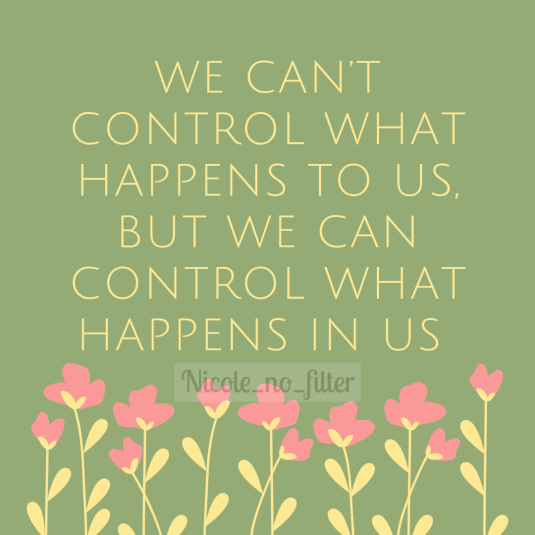
I was previously anxious about being single as I am about to approach my 30th birthday, but I have gained a more positive perspective on this. I may not be able to control what happens TO me, but I can control what is IN me, which are my thoughts and how they make me feel and react.

Nicole is a careers coach and freelance writer in the UK and is on Instagram @nicole_no_filter

Mental Health Blog Awards 2020- Vote for Us! : by Eleanor

mhblogawards1

(image: Mental Health Blog Awards)

Hi friends,

Voting is now open (first round) for the Mental Health Blog Awards 2020 and we have been nominated in the Blogger of the Year Category.

We would love you to vote for us, to recognise all of our hard work- including that of our guest bloggers, in battling mental health stigma.

I started the blog 4 years ago and it is an honour to be nominated.

You can vote for us- listed as Eleanor at Be Your Own Light here and please also vote for others in other categories if you are aware of their work! There are some incredible people nominated.

From Mike Douglas, founder of the awards:

“I am delighted to welcome you to the Mental Health Blog Awards. 

I look forward to continuing to celebrate the amazing work, effort, energy, emotion and so much more you all put into raising awareness, supporting, signposting, explaining and comforting in 2020.”

mhblogawards2

(image: Mental Health Blog Awards)

First round voting closes on 1st May and you can vote here: https://s.surveyplanet.com/bG5vzH_q


With love and thanks,

Eleanor 

x

5 Ways you can reduce Anxiety in Every Day Life: Guest blog by Samantha Higgins

theway2

(image: Picuki.com)

Reducing anxiety at the moment in our every day lives is so important.

Having anxiety is something that many people have challenges with. It is estimated that about 1 in 5 adults have an anxiety disorder and that more than that will experience an anxiety disorder at some point in their life.

The symptoms of anxiety include feeling restless or on edge, being easily irritated, difficulty controlling feelings of worry and having difficulty sleeping, amongst others. 

If you feel that you may be experiencing symptoms of anxiety, there are many things you can do to help reduce and manage those feelings. 


1. Look at Lifestyle Choices

A number of different lifestyle behaviours could contribute to your anxiety. Drinking alcohol, taking drugs, eating junk food will all play a big role in how you feel. For example, excessive drinking or the use of drugs can cause a multitude of health problems including liver and kidney damage. It also causes mental illness such as drug and alcohol addictions. You may need further support from a psychiatrist or rehab unit if you are struggling with addiction or mental illness.

On the opposite side, exercising regularly and eating healthy foods are proven to boost your mood, increase the chemicals in your brain that make you feel happy and improve your overall physical health. 

If you want to manage anxiety, consider looking at your current lifestyle choices and if there is anything you have the power to change. Be honest in your assessment but know you have options for assistance.  Making a big lifestyle change is hard but if there is something you know is causing your mental health and anxiety to worsen, it is a good idea to remove that from your life if possible. 


2. Talk to Your Family and Friends

Even if you think your family and friends would not understand, you might end up getting some of your most valuable support from them. You should not ever feel you have to hide any of your mental health concerns from them, unless you know that they would react badly.

Try to avoid shutting people out, being secretive about your mental illness or becoming defensive when people ask. 

True friends will listen and care. There is still a stigma to mental illness but it is important to find someone you trust.


 3. Set Boundaries

If necessary you can set boundaries for yourself. This could mean letting people know there are certain activities you don’t participate in. It could also mean a limit on how much time you spend with friends and family, in order to practise self care and recuperate. 

Many people who struggle with anxiety disorders find that setting up a schedule for themselves that they are consistent in keeping can greatly reduce feelings of anxiety. It helps them to feel more in control and gives them a structure that feels secure.

Setting boundaries is a way for you to have control over your situation and environment, although these should not be too rigid. There are certain things that can’t be controlled that can increase anxiety. 


4. Let Go of Things You Can’t Control

If something is out of your control that is causing your anxiety there are ways that you can cope with these feelings.  One suggestion is to write down how you are feeling to help let those emotions go. The BACP tells us that, “It can help to express this anxiety in a way that you can control. That could be writing down what you feel, or keeping a journal.”

You can also try making a list of things you are grateful for, or use breathing and relaxation techniques. 

If you are still struggling to cope with things out of your control seek help from a professional. 


5. Get Professional Help

You could turn to all types of mental health professionals to get help, including GPs (physicians), psychiatrists, psychologists, counsellors and therapists. You may be referred for talking therapies, cognitive behavioural therapy, mindfulness or EMDR therapy for trauma.  They may also recommend medication for you too.

In the UK, you would go via your NHS GP who can refer you on to see a psychiatrist or to IAPT for counselling.  Also check out the Counselling Directory website.

When searching for a good therapist in the USA, Karen Whitehead, who does counseling in Alpharetta, GA tells us that, “Psychologists (PsyD), Licensed Social Workers (LMSW/LCSW), Licensed Professional Counsellors (LPC), and Licensed Marriage and Family Therapists (LMFT) can all evaluate and treat mental illness, provide talk therapy, support and feedback, and teach coping strategies such as mindfulness.”

Your counsellor will be able to help you better assess your situation and get to the core of your anxieties. Even if you already know why you get anxious, you can benefit from learning coping skills.

Your counsellor can indeed equip you with tools adapted for your specific needs. You will have feedback on what is and what is not working. You can learn to live with, manage and in many cases, recover from anxiety.


You Are Not Alone

Do not ever think you are alone when it comes to your anxiety. Try not to beat yourself up if setbacks occur or you have a bad day.

Talk with your therapist about ways that you can help to further reduce your anxiety. They will be able to help you.


This blog was written by freelance writer Samantha Higgins.

Covid 19: Positive and Negative for Mental health and Work? Guest blog by Danielle Strouther

hajoon1

(image: morefamousquotes.com)


For anyone that’s suffering from anxiety, OCD or other mental health conditions, living through a pandemic is not a walk in the park. 

A time of crisis is enough to cause panic in anyone. If you’re already struggling with a ‘normal’ day, the added stress means it’s even more difficult to keep your head above water. 

But, it might not all be bad news. Using mental health data commissioned by Adzooma, there may be some light at the end of this tunnel. 


Why we should care about mental health

COVID-19 is a pandemic, with just under 500,000 people affected around the world as of March 26th 2020. 

To put things into perspective, mental health currently affects 676 million people worldwide. It’s not a pandemic, it’s an epidemic.

Mental health isn’t contagious. You don’t contract depression from shaking hands with someone that has it. But it is a crisis that’s often overlooked. In fact, 70-75% of people with mental illness receive no treatment at all, choosing to remain silent. This is particularly true in men, who make up 75% of all suicides. In the UK, men aged 40-49 have the highest suicide rates in the country.


Mental health caused 44% of all sick days 

1 in 5 employees have called in sick to avoid work. And no, this wasn’t because they simply didn’t want to go. It’s because their mental health had become too much for them to do their job. 

Rather than be honest, 90% of people lied about it, using another reason for their absence. 

In 2019, there were 602,000 total cases of work-related stress, depression or anxiety in the UK. That’s 44% of all health-related sick days.

The cost of this is projected to be between £39.4 billion to £99 billion each year for businesses. If you break this down, it can cost employers £1,300 per employee if they don’t have the mental health support in place for their staff. 

“My mental health has impacted my work. It’s caused me to leave jobs, to call out some days when it’s just too much for me to do normal day to day activities. I also have tried to go into work on days where I’m not 100% and my quality of work and productivity have suffered.”

Rhea – Via Adzooma. 


69% of people say working at home helps with mental health

Here’s the light at the end of the tunnel. According to research, 69% of people believe that working at home improves their mental health.

Around the world, offices are shutting en-masse, sending entire workforces to complete their jobs from the comfort of their own homes. If there’s ever a time that people needed space to focus on their mental health this would be it. 

Its given employees the space they need to recover mentally. Beyond that, it’s showing employers that their business is capable of functioning remotely.

The positive outcome of this is that hopefully after the COVID-19 crisis, we can set up a world where employees aren’t needed in an office every day. A world where employees are free to work at home and care more for their mental health – reducing office-based overheads and the cost of sick days. 


Astonishing mental health data

The data on mental health was complied by interviewing employees of a range of digital marketing and technology companies, including Google, Facebook and The Independent. It revealed stark information about the current state of mental health, such as: 

  • 67.9% of people state that their mental health has impacted their work. 
  • 57.5% of people state that work has a negative impact on their mental health. 
  • Only 32.1% of people have told their employer about their mental health. 
  • Of the 67.9% of people staying silent on mental health, 83.3% of them don’t plan on ever telling their employer. 
  • 66% pf people feel that their work is understanding about their mental health. 
  • But 46% of people feel like they don’t have enough mental health support at work. 
  • 90.4% of people believe working flexible hours can help with mental health. 
  • Only 24.4% of people have mental health first-aiders at their work. 
  • 91.7% of people believe there should be more services for mental health.
  • 89.9% of people think the government doesn’t do enough to support mental health. 
  • Only 28.6% of people currently access mental health services. 
  • But if more services were available to them, 66.7% would access them. 

Access the full data here. 


A push for positive change 

One of the best things to come of out the COVID-19 pandemic is people working together. 

Communities are being brought closer and we’re showing compassion and offering help in brand new ways. If you’re ever unsure of that, just watch a video of people coming together to applaud everyone who’s working to stop the virus every single night. It’s a wonderful show of camaraderie. 

It’s a global crisis and we’re in it together. Now, hopefully, we can carry on this momentum to help with mental health and continue the fight for better mental health support. 

With support, we can get better. We can push for positive change to help the crisis. Without support, it will only get worse.

Together, let’s take action and break the silence.


dannii (2)

This guest blog was written by Danielle Strouther. She is currently writing lots of words about all kinds of unique subjects at Adzooma and searching for a word she likes more than discombobulated. She has a masters in Film and Television, so can tell people she knows what’s good on Netflix.


The best employee benefits supporting Mental health: by Daniel Tannenbaum

lovemyjob1

(image: Policy Bee)


In 2020, many startups and companies are implementing strategies or creating employee benefits that put mental health first. This is a welcome change that shows just how far attitudes towards mental health have changed in the past decade, becoming no longer a taboo.

Here are the firms that are supporting mental health amongst staff members best:

Equipsme

The London-based startup Equipsme has created an inexpensive employee benefit that means employees can benefit from comprehensive yet affordable health insurance policies. Whatever the size of the business, companies can insure staff with plans from as little as £7 per month per person.

Customers get 24//7 GP access, online health checks, nurse support and 3 physio sessions as standard with the option to upgrade to stress support for as little as £1.50 per person per month, optical and dental cover for £7.50 per person per month too.

Sweaty Betty

The hugely popular activewear brand strongly promotes to staff a healthy mind and body and keeping stress in the workplace to a minimum. How does the firm do this? Each week, it gives its employees the chance to join lunchtime yoga classes to help them relax. There is also the chance to join running clubs and start later in the day if they so wish, all with the aim of helping with stress management.

Ernst & Young (EY)

Ernst & Young makes mental health a big focus in its organisation, providing not only private healthcare, but also free online health assessments in a counselling service that can be used by not only staff members but also their families. It is completely confidential and available for 24-hours.

yulife

yulife is another exciting London startup that incentivises employees to look after their mental health by promoting healthier lifestyles. The company has radically shaken up the life insurance industry for the better with their insurance package.

For example, businesses who take up yulife insurance policies can reward their employees through earning yucoin. Yucoin is earned by engaging in a healthy lifestyle, tracked by staff in a daily app. This includes doing exercise and meditation.

By accumulating yucoin online, staff can then redeem these for real life rewards at shops, restaurants, and much more.

Innocent smoothies

The company is known for providing a range of employee benefits that puts the needs of its staff first. This is particularly the case when it comes to mental health. For example, the smoothie firm is dedicated to reducing work stresses through the inclusion of a free gym and breakfast to all staff. It also provides a yoga club to its employees and a 100% confidential 24 hour employee assistance programme that means they can talk to someone privately if they need to.


This blog was written by writer Daniel Tannenbaum.

Lockdown and Dealing with Mental Health: Guest blog by author Graham Morgan MBE

ardmore1

(image of Ardmore, Scotland by http://scotlandwildlife.blogspot.com/2011/07/tobermory-to-ardmore-bay-isle-of-mull.html )

My name is Graham Morgan. This is my story of how I’m coping under lockdown.

I have just got back from walking Dash the dog round Ardmore. There was not a person in sight; just the sound of the curlews and the crows, the roar of the cold wind in the trees and the sound of the waves on the seashore. It gave me a chance to think and ponder on this first day of lockdown. It blew my tiredness away. As I reached the point; I looked along the Clyde to Dunoon; where my sister works as a midwife and hoped she was ok and thought about my brother, a medical director and psychiatrist;  having to make decisions about the future that no one should have to make.

Driving the two minute journey home I passed the post office van ; strange to see the postie with his mask and blue gloves. I felt slightly guilty for being out and had to remind myself that we are allowed one exercise session a day; that walking the dog counts as that.

I am so lucky compared to others. My friend phoned last night to say he had just managed to get home after breaking the news to his friend’s sister that that friend had killed himself days ago. Back to an email saying he was sacked from his job and that his tenant. who he shares his house with, was leaving the house as London, feels too unsafe. To deal with that?

I found out recently a Twitter friend was passing round my book on a psychiatric ward. The thought of being back in hospital but with no visitors and all the restrictions that happen now, fills me with horror; makes my last hospital stay feel pleasant. 

Yesterday a young man contacted me on Facebook to say how much he enjoyed my book START and how he was now in self isolation. I remembered he had been in hospital for months and months; was just getting used to his first flat; getting back to education, finding joy in his creativity. I remembered the loneliness I felt when I lived alone; those days when there was no one to speak to, to share a smile with. How it tore at me! Slapped me to the ground with sadness. I think of so many friends who are already lonely; lost in their lives, lacking the energy to even make a cup of tea.

I am indeed lucky. So far in our tiny household we have got over the twin’s meltdowns when we took them out of school last Monday. How frightened they were and how much they miss their friends. Home schooling for the moment is fun, I imagine, as the weeks go, by it will get harder. We are lucky we still have perspective; not to get angry and argue because of our own anxiety.

I am used to being awake in the early hours, yet somehow I am sleeping OK at the moment and have decreased my drinking. 

My understanding of the world (due to my beliefs at the moment) is that I am evil and bringing about its destruction; I think I am partly responsible for the fires and floods; the wars but, for some reason, coronavirus seems to have nothing to do with me. I have no idea why, but it is a relief.

I have more realistic worries, like the special care my Mum made to get a long tight hug when I left her in England to go back up to Scotland. 

We have been working from home and have been more or less self- isolated since Monday because my partner has asthma and yet her separated husband is a key worker  and looks after the kids too. There is relief that these are ‘real’ worries that I can grasp; not my usual ones.

The most pressing concerns are how to work from home as well as home schooling the children; how to get bread and eggs. The biggest inconvenience has been having to queue outside the chemist for my anti depressants; thankful that my GP realised I was taking them too infrequently and that now I am back up to the required dose I feel so much more relaxed.

I have one quandary; a minor one. I went to get my jag (injection) yesterday for my mental illness. The CPN (community psychiatric nurse) who gave me it had no more protection than normal. It was quick and painless.

He said he didn’t know where the community mental health team would be soon; they may be based with another more urban one by my next appointment. He said that if I, or anyone else near me, got any symptoms I was to phone in but that he had no idea what they would do if I did; that I might have to take oral medication.

At that I was lost because, of course I would have to;  not doing so at such a time would cause so much trouble but, at the same time; I am on a community section because I cannot make myself take medication, how can I agree to that, if it happens?

I have my work, I have food, my lovely family and Dash the dog who cuddles tightly up to me every night. I have my writing, my books, my music. So many people I know have nothing approaching that. 

I think I am glad I don’t have the imagination to see the scale of what is happening and am not torturing myself with the ‘what ifs’. Good luck to all of you who may not be in such a good place. Let us all help each other as best we can over the coming weeks.


Graham Morgan has an MBE for services to mental health and is the Author of START (by Fledgling Press) a memoir of compulsory treatment, love and the natural world. Available from Amazon and Waterstones on line.

He can be found at @GrahamM23694298 on twitter and at Graham Morgan – author; on facebook or at the Scottish Booktrust Live Literature database at https://www.scottishbooktrust.com/authors/graham-morgan


Life under Lockdown: Keeping yourself busy at home: Guest blog by Chloe Walker

cottage1

(image: https://www.cottagesforcouples.com/)

As Covid-19 continues to spread and the world scrambles to stay a step ahead, many of us are finding ourselves isolating at home in unprecedented circumstances. All around the world governments are increasingly ramping up safety measures to protect both their medical staff and their most vulnerable citizens.

As we all adapt to a new and still rapidly changing world, there are challenges to our wellbeing, financial security and even mental health.

On the other hand, many people are now realising that life in lockdown offers many unique advantages. Just because you’re self-isolating or social distancing, it doesn’t mean that life has to be put on hold completely. In fact, now could well be the time to capitalise on the extra time spent at home to do things that otherwise would have taken the back seat.

Here are a few ideas for ways to make sure your time under quarantine is spent wisely.
Get your garden ready for spring

In the UK, the first glorious days of spring have appeared, reminding us all that there’s plenty to be grateful for. Warmer and brighter days lure us outside again after a long winter. If your garden needs some love, put on your wellies and know that a little outdoor work could do wonders for stress levels.

Gardeners know that work in the yard is never really finished. Still, avoid mowing your lawn too short for now. According to mowing specialists Mowers Online, “As the growing season starts selecting the blade height to 50mm will give optimum grass blade thickness which is crucial for growth. This height may seem rugged at first but remembering that grass blades are solar panels for the lawn and the more energy created, the more luscious the lawn.”

Finding time to garden during the Spring will keep you occupied, physically active and out there getting essential vitamin D.

Try some spring cleaning

In the same spirit, why not use the longer, brighter days to inspire you to clean up a little? If you’re now working from home, you may find yourself with extra time on your hands – and the opportunity to get around to all those deep cleaning jobs that have accumulated over the year.

This is also a great time to catch up on any maintenance jobs that you haven’t had time for. For instance, when was the last time you cleared out the gutters? Or checked everything was ok in the loft? These are both areas that can deteriorate quickly when not maintained and can result in pests making their way into the home. If this has already happened, then you’ll need to call some exterminators as soon as possible here is a great example of the sort of company to contact https://www.pestcontrolexperts.com/exterminator/louisiana/. The lockdown will end eventually, and you’ll really appreciate a bright and shiny home to see you through the challenges that will come with getting back to work again.

Bring a little of the outdoors indoors

It’s now well understood that nature has an incredible ability to relax us and boost mental wellbeing. As most of us try to manage the inevitable stresses the coronavirus has brought with it, we can turn to nature to recalibrate, de-stress and remind ourselves of what’s important.

Even if it’s gloomy outside, bring a little nature indoors to get the benefits. Stonehouse Furniture suggest ‘‘A window box on the outside is a great way to add a splash of colour to your day as you do mundane kitchen chores. Spring bulbs, miniature daffodils, polyanthus and summer bedding plants are a very cheap way to add nature and colour to your kitchen outlook.’’
Enjoy cooking
Now’s the time to get in touch with your domesticity! There’s more time now than ever to really relish the joys of preparing fresh, healthy, home-cooked meals for your family. With grocery shop orders being a little unpredictable, you likely have a stock of ingredients on hand anyway. Why not get creative and try some new recipes you were always too busy to attempt before, or concoct your own meals? Rope in the family for some quality time cooking together, and experiment with different daily routines.

Can’t find your usual ingredients in the store anymore? Accept the challenge and eat something a little more exciting and out of your culinary comfort zone. Have too much fresh food on your hands? Try batch cooking and then freeze the extra food for emergencies.

It may at first seem limiting to have to stay at home, but use your imagination and reframe staying at home as a great opportunity instead. Get stuck into that hobby you’ve always put off, or flex your creativity with painting, poetry, crafts or knitting. Stay fit indoors by doing yoga or YouTube workouts, enjoy your pets, or have your own mini party in the living room with your favourite music. Films, books and musical instruments are your friends right now.  Keep in touch with your literal friends online, or get out some board games to play with the family.

The coronavirus has challenged us all to prioritize what’s truly essential: our mental and physical wellbeing. Take this opportunity to reconnect with yourself, with nature, and with those you love, and you’ll soon wonder why you don’t spend more time at home!

This blog was written by freelance writer Chloe Walker, who is based in the UK.  

Coronavirus Thoughts: Acts of Kindness and Mental Health by Eleanor

01-Hope-Quotes-That-Will-Instantly-Lift-You-Up-Nicole-Fornabaiord.com-shutterstock-760x506

(image: Readers Digest)

Dear friends,

This has to be the strangest time in all our lives. Not being able to leave the house for fear of passing on a deadly virus, all the family working from home, worrying that symptoms are indeed Covid 19.

This outbreak has already infected friends and potentially family. I think I may have had a mild version and have been isolating for at least a week already, and now until the danger passes. Thinking of all my friends who are affected and anyone who has the virus or whose life is being disrupted because of it.

There are good things happening- acts of kindness, communities pulling together, sunshine and flowers and spring blooming. Supermarkets opening for NHS workers and the vulnerable, the homeless being housed in hotels, financial help from the government (although can we please help our self employed workers more?).

I do worry though about the impact the virus will have on those with mental health conditions. My appointment with a psychologist to help me with my PTSD has been postponed and no new date given. I can’t go to see my therapist either but I think will organise a Skype call so that we can continue the EMDR trauma therapy I have been having. Medication supplies are so far unaffected.

I am lucky to live with family at the moment and have the support of my husband, mum and step dad and wider family too. For those living alone, having to buy groceries and navigate this new and scary world alone is terrifying for them. I was heartened to see this week, the Jami appeal for the vulnerable in the Jewish community. Mental illness does not discriminate and with all the pressures at present, suicide remains a real risk. We can combat this through checking in on friends and family regularly and signposting them to emergency support such as the Samaritans or crisis teams.

It is a scary time but we all must pull together and reach out to each other, by video call, phone call, whatsapp message or more and try, from our homes, to look after the vulnerable and our neighbours.

Most importantly, we must look after ourselves and our households and try to stay well.

How are you coping?

Love,

Eleanor x

Coronavirus Anxiety: Self Isolation by Eleanor

corona1

(image by Eleanor using Canva.com)


Hi friends,

Those of you who follow me on social media will be aware that due to fatigue, a non persistent dry cough and feeling warm/sweaty (but no full blown fever thank God), I am self isolating at home for 2 weeks as a precaution.

I am doing alright today, slept a lot as had little energy and had chicken soup and Paracetemol. It is very unlikely I have Covid 19, probably just another virus but due to the current climate, I am taking precautions. I also have a surgical face mask which I am wearing to protect my husband, mum and step dad, in case it is anything more sinister. I have friends who are also self isolating and who are NHS front life staff that I am worried about.

In truth, this kind of isolation is something I am used to as with my anxiety I work from home. However, this is an unprecedented situation and one that we have never seen before in our life time. It is scary and the news feeds can cause anxiety.

I have decided that :

1)I will limit how often I check the news about coronavirus and will try not to listen to LBC overnight- I love LBC but I think this is best as there is rolling news coverage.

2) I will increase self care, rest and relaxation time- in order to stay sane, this may mean getting fresh air in our garden.

3) I will take each day as it comes and do as much as I can while in isolation.

4) Get enough sleep and eat healthily

5) Stay in touch with friends


What are you doing to manage your anxiety around coronavirus?    

Love,

Eleanor x

Why People are using Weighted Blankets to cope with Anxiety: by Calming Blanket

weightedblanket1

(image: Calming Blanket)

Weighted blankets have been found to have a number of key benefits to those that use them. One of the biggest advantages of using weighted blankets has been its ability to reduce stress and anxiety in users. But how do weighted blankets work, and how does it impact on people’s levels of anxiety? We decided to take a closer look.

How do weighted blankets work against anxiety?

It works in a few different ways, but the main factor it all comes down to is these blankets’ ability to stimulate the body’s proprioceptive input. This input in our body is important, as it helps the body recognise and establish environment awareness.

The awareness trigger is key, as this can help the brain get access to the body’s environment at a much quicker rate than without this type of blanket. This can help the brain to feel more relaxed, having a domino relaxation effect on the rest of the body.

In short, this entire process stimulated by the proprioceptive input, helps to reduce feelings of anxiety, because of the light pressure that is applied to the body.

In addition, for many people suffering from anxiety, lack of sleep unfortunately also goes hand in hand, and weighted blankets also tackle this too. This is because this light blanket pressure helps to release the hormones serotonin and melatonin. The former is known for having a huge impact on mood, while the latter helps with falling to sleep.

Interestingly, it is also believed that the feeling of a weighted blanket has similar emotional benefits to that of a hug or a baby that is swaddled tightly. The main reason for this is the release of the hormone oxytocin, known for helping to make people feel calmer and more relaxed.

Where can I find a weighted blanket?

The best weighted blankets on the market are by the Australian company Calming Blanket – and are recently available to buy in the UK.

Available for adults and children, they provide a range of super comfy weighted blanket options (2.2kg, 4.5kg, 6.8 kg and 9kg) that only use super soft fabric, as well as providing inner ties which do an important job of making sure weight is distributed evenly across the blanket.


This blog was written by Calming Blanket, a weighted blanket company that helps people with anxiety.