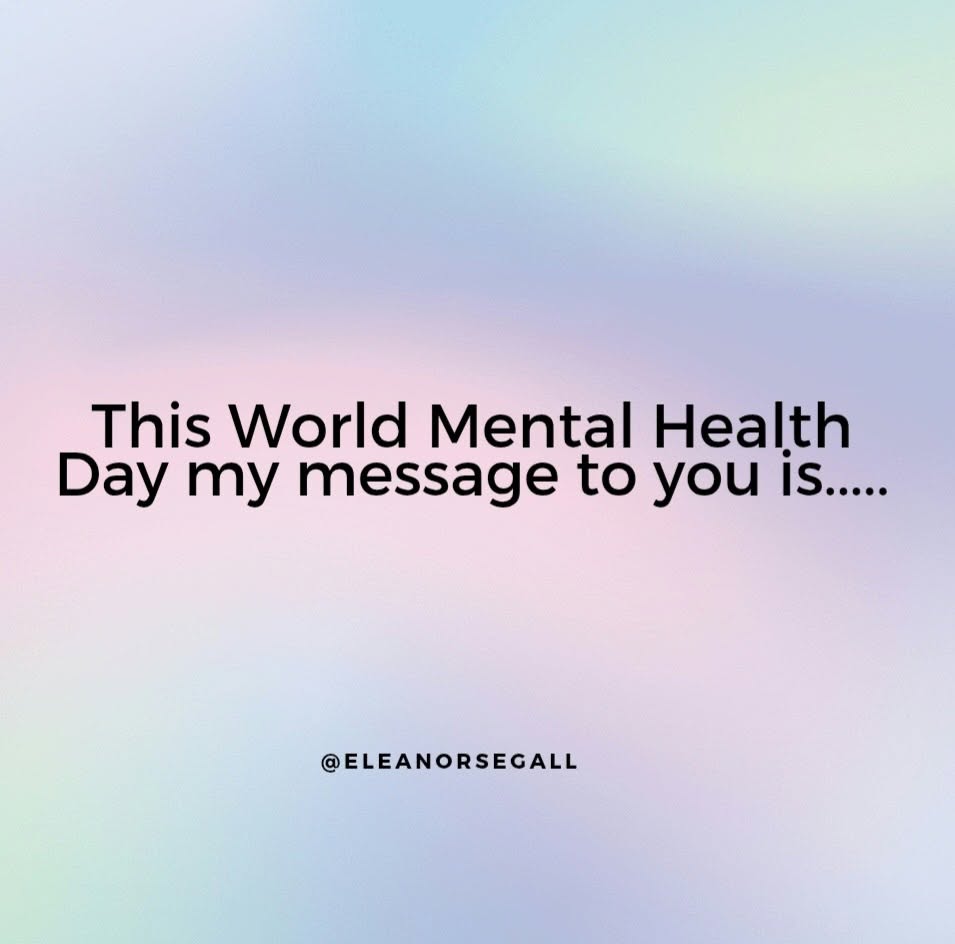
This weekend was World Mental Health Day, an important day to shine a light on mental health and people with lived experience of depression, anxiety disorders, bipolar, psychosis, eating disorders, schizophrenia, OCD, PTSD, BPD, EUPD and many other conditions.
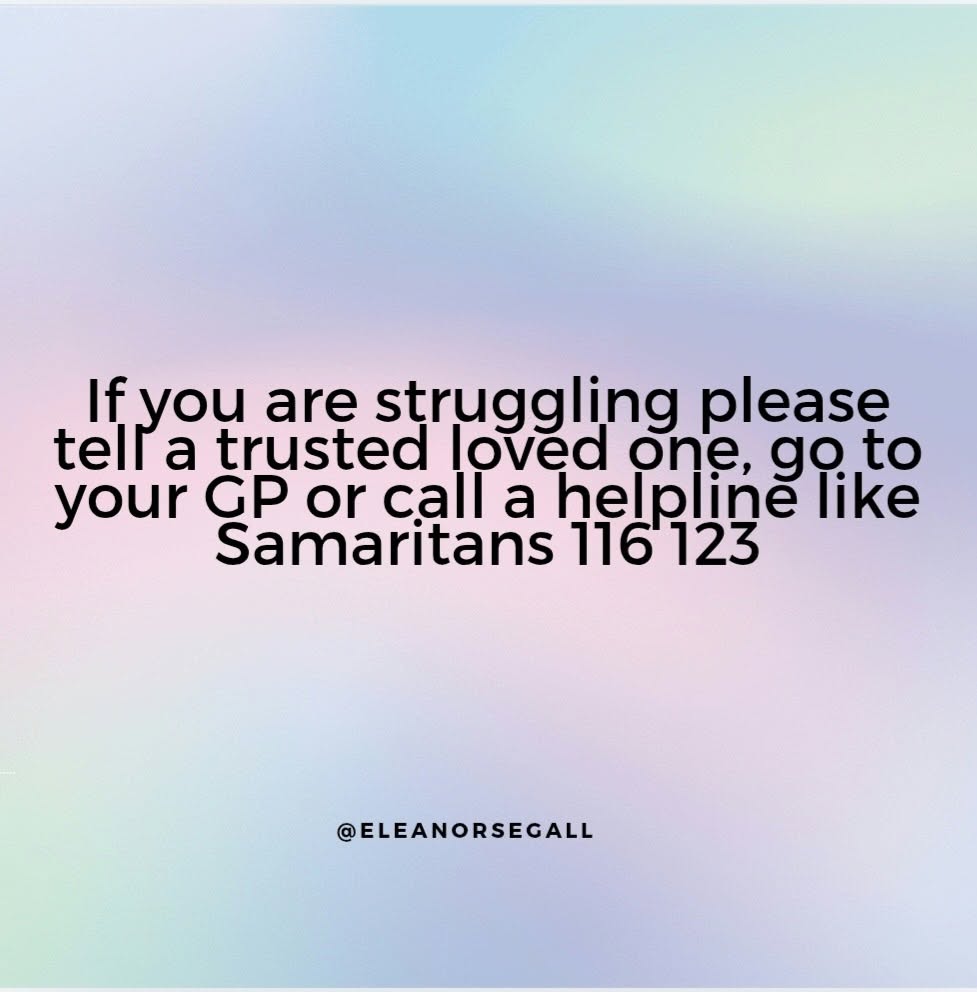
Today I want to tell you- do not suffer in silence. If you are struggling please tell a loved one, a therapist or a trusted GP. There are also incredible helplines including Samaritans (116 123 in UK), JTeen, SHOUT and UK charities running services including Noa Girls UK, Jami, SANE, Mind Charity, Bipolar UK and Rethink Mental Illness.
(image: E Mandelstam)
Ive written about my journey with Bipolar 1 and PTSD/Panic disorder. Please make sure you do not suffer with painful feelings or dark thoughts alone. Talking saved my life and I hope it will help you on the road to recovery. You matter and you are not alone.
You can also call NHS 111 option 2 for urgent mental health support and call 999 for emergencies.
Remember the theme this year is for those of us with lived experience to talk safely and make change where we can.
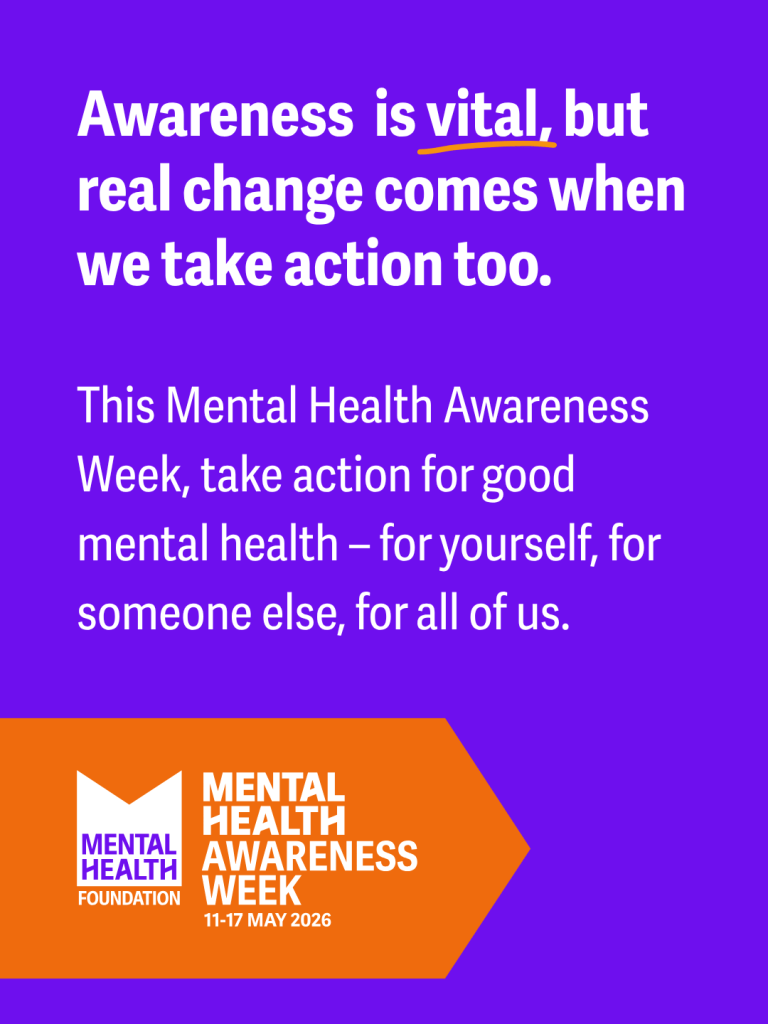
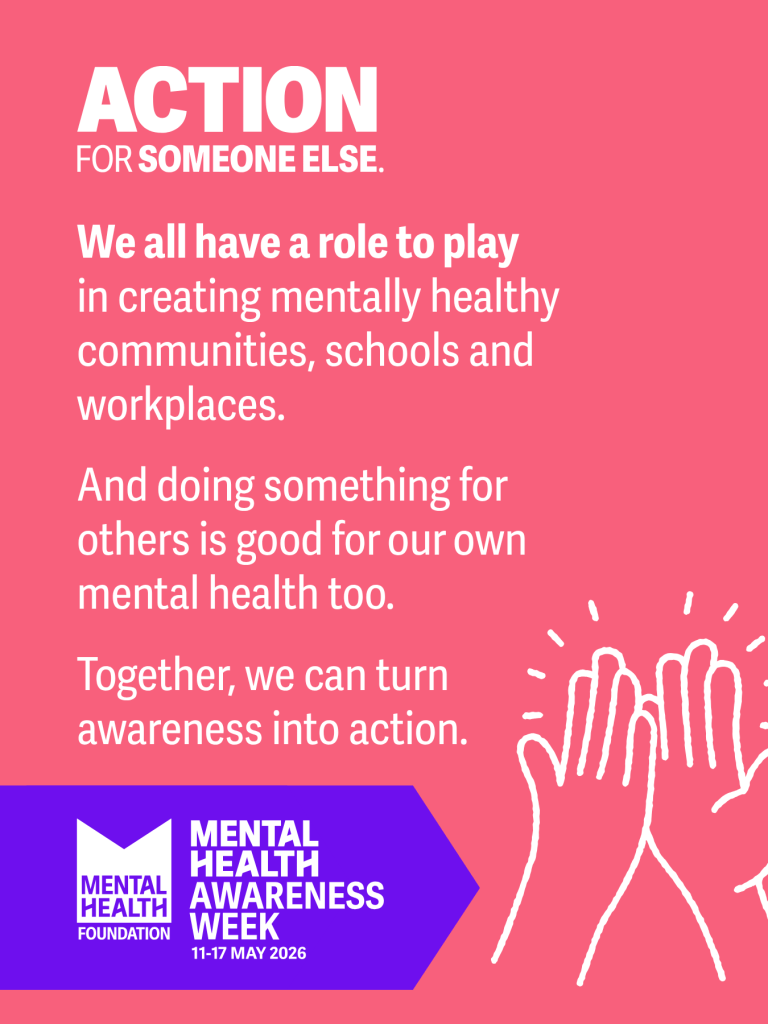
It’s Mental Health Awareness Week (with the Mental Health Foundation) and this year’s theme is Take Action for good mental health- for yourself or a loved one and for the wider community. They say, “we’re asking people to join us in taking action to support good mental health. Even small actions can help us feel hopeful and less powerless. And while our individual actions matter, when we come together we are even more powerful.”
Real change happens when we take action. Here’s some Top 10 tips from the Mental Health Foundation of simple actions to support good mental health, lift your mood and improve your ability to cope with life:
Plan something to look forward to– Making plans for things we enjoy can increase our sense of hope, which is important for our mental health. It could be a plan to sit down with a cup of tea and take a quiet five minutes, or a long-term plan for an ambitious trip. Whether it’s a big or small goal, the important thing is to plan it.
2. Eat Well- One of the simplest ways to improve mental health is by eating a healthy, balanced diet. Not only can it support your emotional health, but introducing small habits, such as staying hydrated or having fruit snacks, can help make changes stick easier.
3. Get closer to nature- Spending time in nature can boost your mood, lessen stress, and help you concentrate.
4. Get good sleep- Good quality sleep helps your brain work better, lifts your mood, and is good for your overall health.
5. Get Creative– Spending time on creative activities is a great way to help ease stress and anxiety. Carve out some time to listen to music, paint, sing, or do whatever you enjoy most.
6. Move regularly- Being active can boost your mood and raise your self-esteem. It’s also an effective stress management technique. Whether you go for a walk, do some yoga, or vigorously clean the kitchen, it all counts.
7. Try Mindfulness- Being fully aware in the present moment can positively change the way you feel about life and how you approach challenges. Aim to notice the colour of the sky, the sound of leaves, or the feeling of your feet on the ground.
8. Friends- Having good relationships with others can help you feel like you belong, allow you to share experiences, and receive emotional support. It’s a great reason to have a catch-up with a friend on the phone.
9. Be Kind to yourself– Bad days happen to everyone. If you’re having a tough time, remember to treat yourself with kindness and understanding. You’re doing the best you can.
10. Talk things over with someone you trust- It can take a lot of courage to tell someone else how we’re feeling or what we’re finding hard. Just talking things through with a person we trust can feel like a relief and make us feel less alone.
There are times when some of the above will be or feel too much, for example if facing a deep depression or a serious episode of mental illness. In these cases, the most important thing is to reach for help from your doctor or therapist (or both) and get referred in to mental health services to see a psychiatrist. Practising self care such as eating, sleeping and taking prescribed medication as well as simple things like showering and getting dressed can make a big difference on a day to day basis.
Remember that you are not alone and that you have so much to give and offer to the world. Take small achievable actions and reach for help and support from a trusted place, charity or helpline.
Support lines in the UK:
First port of call if a new referral (not already known) is to call 111 or request an urgent GP appointment
On 1st March 2016, I wrote my very first blog about my mental health struggles with bipolar disorder and anxiety. For me, it was an outlet to share with friends and family what I was experiencing after one of the worst bipolar episodes I had faced and after hospitalisation in 2014. I didn’t realise that this traumatic time in my life, would also cause my mental health to dip and struggle further as I developed PTSD symptoms (panic attacks) and sat on a 2 year waiting list for NHS therapy. Professional support was not coming easily during this time, and so this blog became not only a therapeutic outlet but a place to connect with others going through similar things. And to explain to those who had never experienced mental illness, exactly what it can do but just how you can support those experiencing it.
Part of me can’t fully believe that I have been blogging consistently for 10 years. There have been times where I have wanted to give up but this little blog has been my saviour and in truth, helped me to launch a writing career that I did not expect and am so grateful for. It has also helped others to share their mental health stories and products, been a platform for mental health campaigns and charities and I am super proud of the impact we have had. One of our biggest accolades is being a Top 10 UK mental health blog by Vuelio every year since 2018- which means we are having a positive impact and reach!
The blog has published over 800 posts, with hundreds of thousands of views! It is read on every continent with a particularly large readership in the USA (as well as UK and other countries). We have covered so many topics- bipolar disorder, PTSD, anxiety disorders, depression, pre and post natal depression, OCD, BPD, eating disorders, psychosis, mania, schizophrenia, schizoaffective disorder, trichotillomania, addictions (drug, alcohol, gambling), body dysmorphia and mental health topics like child mental health, work stress, emotional burnout, relationships, domestic and sexual abuse, homelessness. We have shared about wellness products and worked with inspiring health and lifestyle brands.
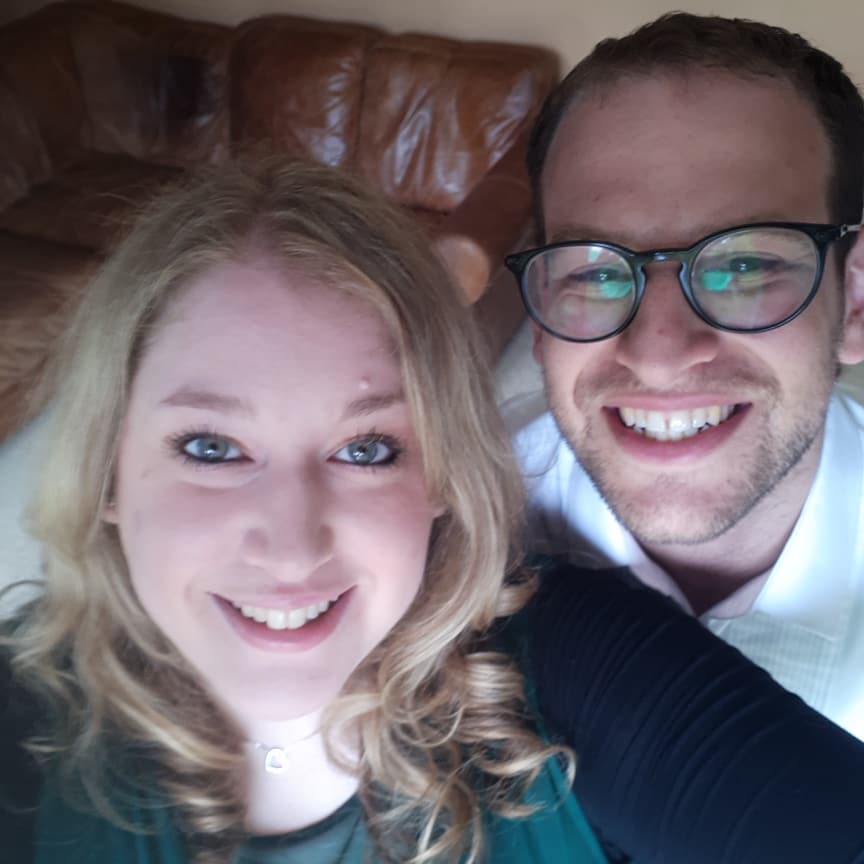
The blog inspired me to share my own story far and wide – writing for mental health charities Mind, Rethink, Time to Change, Bipolar UK, No Panic, SANE and Metro.co.uk, The Telegraph, Happiful, Glamour, Jewish News, Huff Post. Featured in Cosmopolitan, Elle, Yahoo News and other publications. Thank you particularly to the editors at the publications for sharing my story and believing in my mission! This also led to me writing my book ‘Bring me to Light’ which was published in 2019 by Trigger and remains one of my proudest achievements. I then released my children’s book ‘Arabella and the Worry Cloud’ and had some writing featured in ‘The Book of Hope’ by my friends Jonny Benjamin MBE and Britt Pfluger (an amazing experience!). In 2017-18, I was also involved with setting up the Jami mental health shabbat in my community and spoke in several synagogues and at a community festival Limmud with my Dad, about our journey with bipolar. The same year that I started this blog (2016), I also met my now husband, who supports me through all of my writing and mental health work.
As I look back over the past 10 years, to where we were in 2016 with mental health stigma, I am proud to have played a small part in changing the landscape and narrative online around mental illness, particularly bipolar disorder and psychosis. We have many followers on social media platforms and continue to share about mental health and well being and be a resource for all those who need it, so they never feel alone.
(image: Ineffable Living)
Thank you to every single contributor (and every reader) to Be Ur Own Light Blog 2016-2026. Your words and belief in our mission to end the stigma around mental illness have meant the world to me. I hope going forward I can continue to share more real stories, more important information on care and treatment and campaign for better care.
There is still a way to go. NHS waiting lists are too long and care is under funded, leading to not enough beds. Mental health stigma online (and sometimes offline) sadly still remains high. As a society, although we have improved, we still need to fully understand mental health conditions and separate them from the person themselves. I am optimistic that things can and will change.
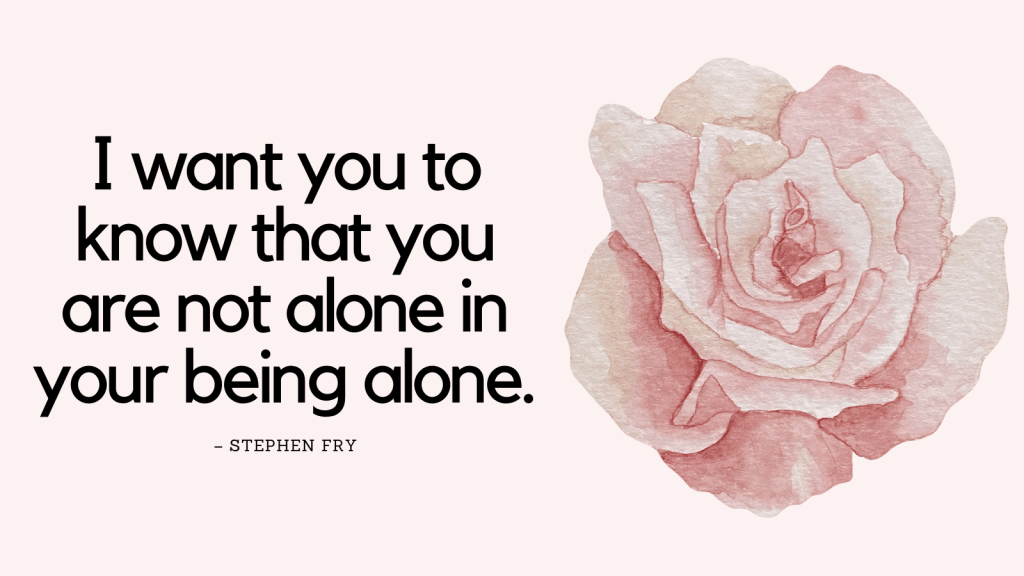
To everyone reading this going through a period of mental ill health or living with a chronic mental illness, I see you and you are never alone. As a blog community, we can come together to empower each other, so no one ever feels invisible and I hope that I can continue to write too.
Thank you, from my heart, for the past 10 years! Here’s to many more years,
Thanks to our friends at Vuelio, who not only ranked as again as a Top 10 UK Mental Health blog which is amazing- but included this little blog in the top 5!!
This is our highest ranking and I am so honoured. Thanks to all the writers and business/brands we work with too for their hard work in creating content.
This blog is in its 7th year now and can’t wait to see what the next year will bring. This is particularly special as this week is Mental Health Awareness Week too. The aim of this blog is to provide information to help people feel less alone and to dispell any myths of stigmas around mental illness.
Well done to all on this list and all the fab mental health bloggers out there.
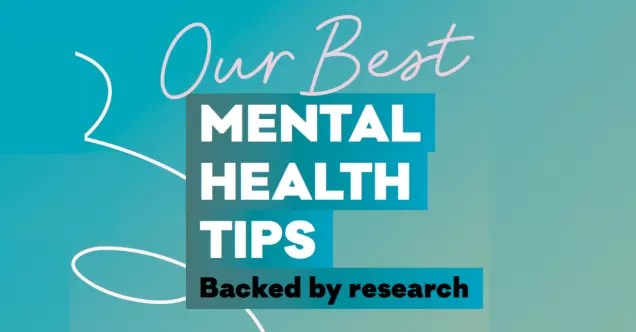
The 11 most effective ways for people to protect their mental health are revealed in a guide launched today by the Mental Health Foundation.
The free guide, Our Best Mental Health Tipsis based on the Foundation’s own ground-breaking study on what protects people from common problems such as anxiety and depression.
Dr Antonis Kousoulis, who led the research and is a Director of the Foundation, said: ‘Our new guide encourages us to take care of the fundamentals of life – our relationships, our experiences, our bodies and our finances.
‘The evidence shows that this is far more likely to keep us mentally healthy than the gimmicks and miracle cures promoted by some in the ‘wellness’ industry, who prey on our vulnerability.
‘The truth is, there are no quick fixes for good mental or physical health. What works is developing healthy habits in our daily lives, that help us to feel OK and able to cope with everything.
‘For example, in our new guide we talk about getting more from our sleep, learning to understand and manage our feelings, planning things to look forward to and getting help with money problems.’
The full list of mental health-promoting actions suggested by the new guide is as follows:
Get closer to nature
Learn to understand and manage your feelings
Talk to someone you trust for support
Be aware of using drugs and/or alcohol to cope with difficult feelings
Try to make the most of your money and get help with problem debts
Get more from your sleep
Be kind and help create a better world
Keep moving
Eat healthy food
Be curious and open-minded to new experiences
Plan things to look forward to
Most members of the public involved in the study had experienced their own, or family members’ problems with mental health, so had the benefit of hindsight when assessing what helps most with prevention.
The new guide (and the research on which it is based) acknowledges that people may be unable to follow some of its suggestions, for instance because the place they live makes it impossible to sleep well or spend time close to nature.
Dr Kousoulis added: ‘Enjoying good mental health should be an equally accessible goal for all of us, yet it is often out of reach for many. Government action is needed to create the circumstances that solve problems that are beyond individuals’ reach, and help prevent people having problems with mental health in the first place.’
You can download the new guide free of charge from the Mental Health Foundation website.You can also order hard copies by post, with a small charge.
About the Mental Health Foundation
Our vision is of good mental health for all. The Mental Health Foundation works to prevent mental health problems. We drive change towards a mentally healthy society for all, and support communities, families and individuals to lead mentally healthy lives with a particular focus on those at greatest risk. The Foundation is the home of Mental Health Awareness Week www.mentalhealth.org.uk
This is a non sponsored article written by the Mental Health Foundation.
Its Today- 1st March 2020 and Be Ur Own Light is 4 years old! (cue the streamers!)
I still remember starting this blog as an outlet for my fears, thoughts and emotions dealing with my bipolar and anxiety. The blog started as a way to tell my friends and family how I was feeling and has evolved into working with guest bloggers and now brands/ partners on sponsored wellness posts too! Writing the blog and sharing thoughts has been so therapeutic and it has taken me on a journey that I could not have imagined.
In November 2019, I published my first book ‘Bring me to Light‘ with Trigger Publishing which is the book of my life story with bipolar disorder, anxiety and my life in general (travelling, going to drama school, starting a career as a writer). The blog has also grown so much this year and is currently nominated in the Mental Health Blog Awards for Blogger of the Year, thank you to our nominee!
Additionally, Vuelio awarded us as a Top 10 UK Mental Health Blog for the second year running and interviewed me (Eleanor) about working as a blogger! Thanks also to Feedspot.com and My Therapy App for listing us in their mental health blog lists too for social anxiety and bipolar!
This year, I have written about World Bipolar Day for the Centre of Mental Health, about my search for EMDR therapy on the NHS, living with depression in winter, about writing my book and new life changes (getting married) and 2020 new year round up with hopes for the future. We also promoted mental health campaigns such as Shout UK text line (founded by the Duke and Duchess of Cambridge and Prince Harry and Meghan), Christmas 4 CAMHS, Time to Talk Day and Mental Health Awareness Week. Additionally, I spoke in Essex with my Dad about our joint story with bipolar for the Jami Mental Health Awareness Shabbat and we also spoke at Limmud Conference in Birmingham!
This winter I did some interviews for the book which can be seen on the Book tab above and also received some lovely reviews. It was amazing to appear in Happiful Magazine’s bonus wellness Mag this January (edited by campaigner Natasha Devon) and to write for Glamour and Bipolar UK. I also enjoyed being interviewed for the Jewish News and Jewish Chronicle! Hopefully at some point I will do podcasts about it too and more interviews.
From March 2019-2020, the blog has attracted wonderful and talented guest bloggers wanting to spread their messages about mental health and wellness.
We have also worked with the following brands on sponsored and gifted posts and hope to work with many more this next year : YuLife, Nutra Tea, Essential Olie, Loveitcoverit on mental health apps, I-sopod floatation tanks, Core Wellness Maryland, Wellbeing Escapes Holidays.
My guest bloggers have written about their recovery and living with mental illnesses, as well as advice on how to improve your mental health. There a posts for whether you are going through a divorce, a bereavement, are stressed or have anxiety. We also had posts with people’s first hand experiences of mental illness including a brave post about being a sibling of someone with mental illness and one of living with an eating disorder. Furthermore, Be Ur Own Light has also covered World Mental Health Day and Time to Talk Day this year, featuring personal mental health stories as a way to raise awareness and fight misconceptions.
We have also covered new books coming out, a mental health fashion brand and a song about social anxiety, as well as posts about different therapies to help you.
Thank you to my amazing guest bloggers (non sponsored) March 2019-2020 for your fantastic content:
Ashley Smith- How Massage Therapy helps Anxiety Disorders
Emily Bartels- 5 tips for a mental health emergency plan
Dale Vernor- Understanding PTSD by Gender
Tan at Booknerd Tan- How audio books and walking has helped anxiety
Emma Sturgis- Loving yourself, tips for a body positive life
EM Training Solutions- How to maintain mental health at work
David Morin- On social anxiety and talking to others
Lyle Murphy- How equine therapy can help those with mental health issues
Charlie Waller Memorial Trust- Best of Musicals event
A Time to Change Hypnotherapy- Hypnotherapy for self esteem
Nu View Treatment Center- The connection between anxiety and substance abuse
Shout UK- Royal family launches mental health text line
Mental Health Foundation – Mental Health Awareness Week May 2019 Body Image
Emerson Blake- Coping with the stress of becoming a single parent
The Worsley Centre- A guide to therapies and finding the right one for you
Byron Donovan at Grey Matter – How I recovered from depression to form a fashion brand
Luci Larkin at Wooley and Co Law- How to reduce stress and maintain mental health during a divorce
Nat Juchems- How to keep your loved ones memory alive after bereavement
Emily Ilett- on her book ‘The Girl who Lost her Shadow’
Mark Simmonds- an interview about his book ‘Breakdown and Repair’ with Trigger Publishing
Curtis Dean- 5 facts about music for stress relief
Robert Tropp- How quitting illegal drugs helps anxiety in the long term
Aaron James- the difference between psychotherapy and counselling
Dr Justine Curry- 4 ways to help a friend with bipolar disorder
Christmas 4 CAMHS campaign for children in childrens mental health wards
Ani O- 4 ways to ease the fear of doctors appointments
Katherine Myers- Ways that spending time outdoors can improve your mental health
Anita- 5 ways to lift you out the slump of seasonal depression
Chloe Walker- taking care of your child’s mental health
CBT Toronto- how to deal with social anxiety and depression
Katy- a true story with anorexia and OCD
Vanessa Hill- Life changing habits to bring into the new year
Rachel Leycroft- Expressing social anxiety through songwriting
Shira- Living with a sibling with mental illness: the meaning of normal
Capillus- 10 signs you may have an anxiety disorder
Brooke Chaplan- When therapy isn’t enough
Jami Mental Health Awareness Shabbat 2020
Mike Segall- Time to Talk Day- 9 years undiagnosed, my story with bipolar disorder
Jasveer Atwal- Living with PCOS and managing mental health
Leigh Adley at Set Your Mind Free- How CBT helps children with anxiety
Lizzie Weakley- How to heal and move forward when you have an eating disorder
Sofie- Living with an eating disorder
Thank you so much to all of you and I am excited to see what 2020-21 brings for the blog!
Be Ur Own Light continues to be read globally and I love receiving your messages about the blogs and finding new writers too.
Heres to a 2020 of positive mental health, of fighting the stigma against mental illness and creating a positive and supportive community here.
Happy 4th birthday Be Ur Own Light! ❤ May this be an enlightening year of growth for us.
This week, starting today is the Mental Health Awareness Week by the UK charity the Mental Health Foundation. Its theme is looking at Body Image, how we think and feel about our bodies.
Mental Health Foundation say ‘Body Image can affect us all at any age- during this week we are publishing new research and campaigning for change’ .
They continued,
‘Last year we found that 30% of all adults have felt so stressed by body image and appearance that they felt overwhelmed or unable to cope. That’s almost 1 in every 3 people.
Body image issues can affect all of us at any age and directly impact our mental health.
However there is still a lack of much-needed research and understanding around this.
As part of Mental Health Awareness Week:
We will be publishing the results of a UK-wide survey on body image and mental health.
We will look at body image issues across a lifetime – including how it affects children and young people, adults and people in later life.
We will also highlight how people can experience body image issues differently, including people of different ages, genders, ethnicities and sexualities.
We will use our research to continue campaigning for positive change and publish practical tools to help improve the nation’s relationship with their bodies.’
The good news is that we can tackle body image through what children are taught in schools, by the way we talk about our bodies on a daily basis and through policy change by governments across the UK.’
Earlier this week, on the 1st March, Be Ur Own Light turned 3 years old! I still remember starting this blog as an outlet for my fears, thoughts and emotions after leaving a job in 2016 due to acute anxiety and panic ( part of my bipolar) . Writing the blog and sharing thoughts has been so therapeutic and it has taken me on a journey that I could not have imagined when I started writing. As many of you know, this blog led to me writing for big media outlets and to my book deal (book hopefully will be out in November) and I am so grateful for the confidence it has given me too- and the chance to connect with people all over the world.
However, this year (as with the past 2), the blog has attracted a horde of talented writers wanting to spread their messages about mental health and wellness. Some have shared their personal stories of hope and recovery, others have given useful tips on health and wellness and we have covered topics as wide ranging as Borderline Personality Disorder (BPD), Post Traumatic Stress Disorder (PTSD) and addictions to drugs and alcohol. We have talked about pet therapy, writing therapy, mindfulness and yoga, amongst other therapies.
My guest bloggers have written about their recovery from mental illnesses like anorexia and bipolar disorder. National campaigns like the Diana Award also got in touch with us to discuss bullying and LGBT issues too and Jami charity asked us to cover their mental health awareness campaign (which I helped set up). Furthermore, Be Ur Own Light has also covered World Mental Health Day and Time to Talk Day this year, featuring personal mental health stories as a way to raise awareness and fight misconceptions.
Thank you to my amazing guest bloggers March 2018-2019 for your fantastic content:
Donna at Wildwoman Book Club for Self care
Lynn Crilly- Hope with eating disorders (book)
Cordelia Moor- Living with Quiet BPD for Time to Talk Day
Sarah- On Depression for Time to Talk Day
Peter McDonnell- Managing anxiety and psychosis for TTD
Cara Lisette- Recovery from anorexia and bipolar disorder for TTD
David Welham- Depression and Recovery/ Being a parent of children taking exams
Rachelle Wilber- Treatment for PTSD (post traumatic stress disorder)
Brandon Christensen- What is mental health stigma?
Charlotte Underwood- Overcoming Adversity/ The Saviour Complex
Ralph Macey- Managing Bipolar in the workplace
Manmohan Singh- Benefits of Yoga
Alex Sabin- Enjoying the Holidays after Addiction
Spela Kranjec- How to Accept Yourself/ My Journey in surviving Anorexia
Jami charity- Mental Health Awareness Shabbat campaign
Brookman- Avoiding a relationship crisis at Christmas
Sarah Cardwell- Womens health awareness
Anti Bullying Week, the Diana Award and Everyones Talking about Jamie
Allen- Recovery from alcoholism and mental illness
Lizzie Weakley- How to combat your eating disorder
Posy and Posy- Flowers for wellness
N- Poem on depression- Copy of my Mask
Dan Brown at My Therapy- Suicide prevention on social media- World MH Day
Lydia- On complex PTSD and recovery
Ashley Smith- how Physiotherapy helps with stress and anxiety
Amy Hutson- How Writing Therapy helps
Christine H- What family therapy is really like
Meera Watts- How Yoga enhances your lifestyle
Dawn Prime- How can Animal and Pet therapy help
Bill Weiss- Mental Health Stigma and Drug addiction
Dr Nancy Irwin- Signs your loved one is abusing drugs
Eve Crabtree- The MIND diet for Dementia
James Kenneth- Overcoming mental health challenges
Ellie Willis- A guide to mood disorders
AXA PPP- is social media bad for our health?
Lori Longoria- How baths and spas help relaxation
Tomas Sanchez- can alcohol raise stress levels and affect mental health
Dr Janina Scarlet- Therapy quest book
Cloe Matheson- tips to reduce stress
Paul Matthews- fitness and how it helps depression
Katie Rose- How to help anxiety and panic attacks
Anonymous- on sexual abuse
Kayla Clough- coping with post partum depression
Kara Masterson- 4 tips to begin the fight against drug addiction
Michelle Hannan- 5 tips to boost your immune system
Kevin Morley- Satori Mind- Tips to boost mindfulness
Sara Whitehouse at Stadia Sports-How sport can help mental health
Amy Boyington- How holistic medicine helps mental health
Thank you so much to all of you and I am excited to see what 2019 brings for the blog!
2018 was a very special year for me and my writing- being published in Metro.co.uk, Glamour, The Telegraph, Happiful magazine, the Jewish News and several other media outlets. I was featured in articles in Cosmopolitan, Elle, Prima, Yahoo News, Prevention magazine and Refinery29 and guest blogged on other mental health blogs too.
This year on the blog I wrote about my life with social anxiety and work anxiety, winter blues and SAD/ depression, I shared my articles about being plus size and a bride and about my recovery from bipolar disorder. Furthermore, I wrote about the Twitter hashtags I started #mydepressionmeans and #myanxietymeans, to help people feel less alone and share their own experiences online.
On the blog I also reviewed the brilliant book ‘Love and Remission‘ by Annie Belasco by Trigger Publishing, about breast cancer and mental health. Triggers mental health books are great and I read so many that I was unable to review due to time constraints including Depression in a Digital Age by Fiona Thomas and books by Paul McGregor and Ruth Fox.
This year we were given the accolade of being a Top 10 UK Mental Health Blog by Vuelio and were a shortlisted finalist in the 2018 UK Blog Awards (Health and Social Care category). I was also invited to the Mind Media Awards which was an incredible experience and this year, we have been nominated for Blogger of the Year in the Mental Health Blog Awards.
Be Ur Own Light continues to be read globally and I love receiving your messages about the blogs and finding new writers too. Blogging makes me happy and I hope it helps so many of you too and you love what we do here.
Heres to a productive, wonderful, fun and exciting year of educating and battling mental health stigma too 🙂
Happy 3rd birthday Be Ur Own Light! ❤ May this be a special year for us
Today I got an email from the lovely people at Vuelio to say they have listed us as Top 10 UK Mental Health Blog.
We are number 8, alongside some incredible blogs and organisations such as the Mental Elf and Mental Health Foundation as well as blogger friends of mine- check them all out .
Thanks so much Vuelio! This award is important as it is about being influential in our industry so am so happy to recieve it.
This guest post was written by Tomas Sanchez and talks about Drinkaware, the UKs top alcohol education charity. For more and help and support, view their website at : https://www.drinkaware.co.uk/
Highly demanding jobs, family duties, money worries, relationships issues, they can all add up to make our stress levels go through the roof. The truth is, it can sometimes feel like we’re sat on a roller coaster, led by a high-pressure lifestyle that is ruining our health and happiness.
According to the Mental Health Foundation, 16 million people experience a mental health problem each year, and stress is a key factor in this. Which is why this year’s Mental Health Awareness Week is focused on understanding the impact stress has on our lives and how to tackle it effectively. The week took place last week between 14th and 20th May.
When it comes to coping with stress, reaching for booze might seem like a good idea to help you lift your spirits and relax. However, in the long run, alcohol can have the opposite effect and contribute towards raising your stress, affecting your mental health and wellbeing.
Wine, beer, cider or spirits, whatever your tipple of choice, the alcohol in your drink is a depressant, which means it can disrupt the delicate balance of chemicals your brain relies on for good mental health – especially when you drink above the alcohol unit guidelines.
In fact, while a pint or two may cheer you up, this is only a short-lived effect that will quickly wear off. But, in the long run, drinking too much too often can exacerbate your stress and contribute towards the development of mental health issues such as anxiety and depression.
Alcohol can also impact your sleep. You might think that drinking can help you nod off a stressful day at work, but in reality, alcohol can alter your sleep cycle and make it harder for you to get the rest you need to tackle the stress in your life.
If you’re struggling to deal with stress, there are more effective ways to cope with it than reaching for alcohol, such as:
Exercise, a great way to de-stress. Go for a run, swim or to a yoga class – or even a brisk walk can help clear your head of the day’s worries.
Talk to a friend about what’s worrying you. If you don’t feel comfortable talking to your friends or family, look for professional help – talk to your GP or an accredited counsellor. They will be able to help you manage your feelings and point you to the right resources to help you restore your wellbeing.
Take a hot bath or do some gentle stretches to relieve tension from your body.
If you do decide to have a drink, follow the UK Chief Medical Officers’ (CMO) advice – it’s safest not to drink more than 14 units of alcohol a week and spread your drinking evenly over three or more days.
If you’re drinking too much too often, cut back on it by:
Keeping track of what you’re drinking – use Drinkaware’s App to help you monitor your alcohol intake and change the way you drink.
Choosing low-alcohol drinks or mocktails.
Giving alcohol-free days a go. If you drink regularly, your body starts to build up a tolerance to alcohol. This is why many medical experts recommend taking regular days off from drinking to ensure you don’t become dependent on alcohol.