Herbal Wellness For Women: Balancing Energy, Hormones And Mental Wellbeing.

(image: Antonino Visalli)

Women’s wellness extends beyond the absence of illness — it is about achieving equilibrium across physical energy, hormonal harmony, and emotional wellbeing. From adolescence through menopause, women experience intricate biological changes that influence mental health, vitality, mood and desire. These fluctuations are often shaped by stress, nutrition, and environmental factors, making holistic self-care essential.

In recent years, many women have sought out natural and herbal approaches to maintain this balance, supporting their physical and mental health. Herbal wellness offers a time-tested, holistic alternative that works in harmony with the body’s natural cycles rather than overriding them. Rooted in ancient traditions like Ayurveda and Traditional Chinese Medicine, this approach uses plants and botanicals to regulate hormones, calm the mind, and renew energy.

Among these botanicals, Horny Goat weed for women has become particularly popular for its potential to revitalise energy, support hormonal balance, and enhance intimate wellbeing. Used traditionally to strengthen vitality and circulation, it is now gaining modern recognition as part of women’s natural wellness routines.

By exploring the synergy between herbs, hormones, and vitality, this article highlights how nature’s remedies can restore equilibrium, empowering women to sustain energy, regulate mood and mental health, and nurture desire naturally.

Energising from Within

Energy isn’t just about caffeine or sleep—it’s also about how your body maintains vitality through its hormonal and metabolic systems. For women, fluctuations in oestrogen, progesterone, thyroid hormones, and stress hormones like cortisol can significantly affect how lively or fatigued you feel. These also affect our mental health and wellness- balancing hormones is essential to keep balanced moods too and release stress.

The role of adaptogenic & tonic herbs

Adaptogenic herbs help your system respond to stress and restore equilibrium rather than merely stimulating energy. For example, botanicals such as Withania somnifera (ashwagandha) are shown to help regulate cortisol and support energy—particularly in women experiencing perimenopausal shifts. Meanwhile, classic tonic herbs can enhance overall vitality by supporting circulation, metabolism, and mind-body resilience.

Supporting daily vitality

Including herbal support doesn’t replace foundational habits—adequate sleep, balanced blood sugar, moderate exercise and good nutrition remain the core. But once you’ve done the basics, certain herbs can offer an extra layer of support: boosting mood, supporting adrenal reserve, and helping sustain physical and mental energy during hormonal transitions.

Hormone Balance: The Underpinning of Wellness

Hormones guide everything from mood and cycles to skin, sleep and sexual function. If they’re out of balance, the ripple effects can affect energy levels, libido, and overall well-being.

Herbs that support hormonal harmony

The research shows a growing list of botanicals that can help women:

  • Herbs such as Vitex agnus‑castus (chasteberry) and Cimicifuga racemosa (black cohosh) have been used for menstrual problems, perimenopause and menopausal symptoms.
  • Adaptogens like ashwagandha may help regulate adrenal output and thus indirectly influence hormones like progesterone and oestrogen.
  • Broad-based herb lists emphasise the role of phytoestrogens and adaptogens in natural hormone modulation and stress resilience. 

A specific botanical to highlight- but limited evidence

One herb worth special mention in women’s wellness for hormonal and energy support is Epimedium grandiflorum, more commonly known as Horny Goat Weed. While often marketed for men’s use, its active compound (icariin) has been studied for effects on hormone signalling, circulation, and energy. 

 Used in a women-centred herbal blend, it may contribute to hormone-supportive outcomes, though it’s important to emphasise the evidence is still limited and human data is scarce.

How this works in practice

When hormones are out of alignment, for example, in perimenopause or following a stressful period, typical symptoms may include low energy, irregular cycles, mood shifts or lowered sexual desire. By choosing herbs that support adrenal resilience, modulate mild hormonal shifts and promote circulation/tonicity, you give your system extra resources during transition periods.

Desire & Wellness, Naturally

Desire isn’t just a matter of emotion—it is influenced by hormone levels (especially oestrogen, testosterone, progesterone), mood, fatigue, circulation and self-image. Herbal support offers a gentle, subtle way to enhance this layered network.

The link between energy, hormones and libido

When a woman is tired, stressed and hormonally imbalanced, it’s no surprise that desire may take a back seat. Conversely, improving energy, reducing daily stress and supporting hormonal balance can create an internal environment more conducive to intimacy.
(image: Unsplash)

Practical Recommendations for Women

Here are suggestions on how to incorporate a herbal-wellness strategy, mindful of safety and synergy:

  1. Foundations first – Prioritise sleep, movement, a nutrient-rich diet (plenty of leafy veg, healthy fats, quality protein), hydration, and stress management.
  2. Choose adaptogens & tonics—for example, ashwagandha to regulate stress hormone output, or herbs such as chasteberry or black cohosh if you’re experiencing menstrual or menopausal challenges.
  3. Circulation & desire-support – A herbal blend containing Horny Goat Weed (for women) can be one component of a holistic intimate-wellness support plan, provided there are no contraindications.
  4. Cycle & life-stage awareness – Tailor your regimen to your particular stage (e.g., pre-menopause, post-menopause, post-partum). Your hormone profile and needs will differ.
  5. Check interactions & contraindications – Herbs are powerful; for example, Horny Goat Weed may interact with certain heart medications or hormone-sensitive conditions. Always consult a healthcare practitioner, especially if pregnant, breastfeeding or on medications.
  6. Expect gradual, subtle shifts – Herbal support is not abrupt therapy; you might notice steadier energy, fewer mood dips, mild improvements in desire—not dramatic overnight changes.
  7. Track your metrics—keep a wellness journal: energy levels, mood, cycle regularity, libido. Over 6–8 weeks, you can judge what’s working and what might need adjustment.

Evidence, Safety and Realistic Expectations

It’s important to approach herbal wellness with grounded expectation and awareness about the evidence base.

  • While many herbs show promising effects in cell or animal studies, human clinical trials are often limited. For example, with Horny Goat Weed, evidence for its impact on female intimate function is still very preliminary.
  • Herb-drug interactions and contraindications must be taken seriously. For instance, Horny Goat Weed can affect blood-pressure regulation, heart rhythm and hormone-sensitive cancer situations.
  • Quality matters: herbs vary in strength and purity. Look for credible sourcing, third-party testing and clear labelling.
  • Natural support is part of a broader wellness framework—not a substitute for medical evaluation if you have severe conditions (e.g., thyroid disorders, significant hormonal imbalances, sexual dysfunction caused by other medical issues).

Final Thoughts

For women, aiming for wellness means harmonising energy, hormones and desire, not just treating symptoms. A well-chosen herbal strategy adds an extra layer of support: adaptogens to stabilise stress, tonics to bolster circulation, hormone modulators to ease transitions, and formulae that incorporate botanicals like Horny Goat Weed for women to nurture desire and vitality gently.

When aligned with good lifestyle practices, this approach offers a natural, empowering path towards feeling balanced, energised and responsive. Remember: always tailor to your individual life stage, check with a health professional, and allow time for your system to respond.

Please know that Horny Goat Weed on its own is not a substitute for mental health or other medication. Please see your GP before taking new supplements.

This post contains a sponsored link.

How To Tell If You Or A Loved One Needs Psychiatric Help by Brooke Chaplan.

(image: free image)

Mental illness can affect anyone, regardless of age, gender, or background. It is important to recognise the signs and symptoms of mental illness in order to get help as soon as possible. Knowing what to look for can be tricky, so here are some common warning signs that you or a loved one may need psychiatric help.  

Unexplained Changes in Mood and Behaviour  

One of the most common signs of mental illness is a sudden and unexplained change in mood or behaviour. This could include changes in sleep patterns, eating habits, energy levels, attitude towards others, or motivation levels. If you notice any sudden shifts in these areas that last more than two weeks and cannot be attributed to a specific event or life change, it may indicate an underlying mental health issue.  

Negative Self-Talk or Rumination  

Another sign that someone needs professional help is if they frequently engage in negative self-talk or ruminate on the same thoughts over and over again. For example, if they often say things like “I’m not good enough” or “I can’t do anything right” without any basis for those statements, this could be a sign that something more serious is going on beneath the surface. Additionally, if someone spends hours every day thinking about their mistakes from the past without being able to move forward—this could also be an indication that professional help is necessary.  

Isolation from Friends and Family  

Finally, if someone begins isolating themselves from friends and family members more often than usual—or does not seem interested in having conversations with them—this could be another indicator that something more serious is happening mentally. It’s normal for people to want some alone time once in a while—but if you notice your loved one consistently avoiding social activities and interactions with others over long periods of time—it may mean they need extra emotional support from a professional psychiatrist before they can get back on track.   

Other Behaviours

Other behaviours you should watch out for is frequent tearfulness, self harm thoughts or ideas, suicidal thoughts and ideation- as this indicates someone is reaching a crisis point with their mental health. In some there may be an increase in activity or mania. This can lead to psychosis- where your mind loses touch with reality, common in bipolar disorder and schizophrenia (but can also happen outside these conditions).

Mental health issues are complex and often difficult to recognise at first glance. However, it’s important to understand that early intervention can make all the difference when it comes to managing mental illness effectively. If you notice any of these warning signs in yourself or a loved one—don’t hesitate to reach out for help!

Professional psychiatric services should always be sought out when necessary as this will create better outcomes for everyone involved in the long run. In the UK, that may be via the NHS but due to overwhelmed services, if you can afford private treatment, go down this route as it will be quicker!

This article was. written by Brooke Chaplan, freelance writer.

The Road to Recovery: On PTSD, Trauma and the Future… by Eleanor for Mental Health Awareness Week

Trigger Warning: sexual assault, details of assault and severe mental illness

Hi everyone,

Its been a while but I thought I would put type to keyboard and write a blog for more mental health awareness.

Since my book was published, I haven’t written many follow up personal blogs, purely because the launch of my life story into the public domain felt overwhelming and scary. 6 months on, I am used to it being out there but I have been working hard in EMDR trauma therapy to help myself.

See, the truth is that right now the Bipolar Disorder for me is stable and under control on my medicines. I still get side effects- weight gain, dry mouth and thirst, but my mind is generally healthy in terms of the Bipolar- no mania or depression. Anxiety and panic yes but Bipolar, not really at the moment.

Yet, almost lurking unseen after I left hospital in 2014 and began my recovery was the fact I was traumatised by my experiences of going into psychosis (losing touch with reality via delusions, false beliefs) and my experiences when being sectioned. I will just give an overview as the rest is in my book- but this included- being restrained, being attacked by other patients and seeing them self harm, being injected with Haloperidol (an anti psychotic) in front of both male and female nurses in a part of the body I didn’t want, being chased round A and E by security men in genuine fear of my life, dealing with lawyers and going to tribunals while ill, thinking I had been abused by family and was locked up by a criminal gang and fearing my family were against me. My bipolar mind could not cope.

Just before this all happened, I was very vulnerable and was sexually assaulted by a man I knew through friends and all of this trauma stayed with me.

I did what most of us with severe mental illness and assault survivors do- I tried to rebuild my life. I tried to work in schools helping children with special educational needs. I tried to work for a mental health charity as a peer support worker for people like me. I began to blog and write and share as therapy- from charities to national newspapers. Bit by bit, as I wrote out what I has been through, I started to slowly heal. But, the symptoms of the extreme panic remained. I lost jobs because of it. I became depressed. I started dating but I often had to cancel dates- (before I met Rob, my husband who listened to me talk about it all and didn’t bat too much of an eyelid.)

I was in a state of flux, a state of transition. I knew I had trauma still living in my brain and body. I had been physically and sexually assaulted, I had been mentally violated- I had been sectioned twice in a few months and now I was sent home to try and rebuild my life as a 25 year old single woman.

I share this important blog, not to share that I am a victim- because I am not. I want to share that I believe for about 5 years, I have been suffering with some of the symptoms of Post Traumatic Stress Disorder (PTSD). My therapist believes the same.

The panic attacks that grip me with fear before work or the day ahead when I have to leave the house. The fear of going out or travelling at night alone. The fear of being taken advantage of and having to trust men again (thank you to my husband for helping ease this pain). The fear of exploitation, of losing my mind, of not trusting mental health professionals any more.

My panic attacks get triggered by certain events- it could be having to speak about my life or book, or seeing people I don’t feel comfortable with, of feeling exposed, of worrying about others judgement. I am still healing from all I have been through and experienced. The PTSD means that I have to take medication (Propranolol) to function sometimes. It means that I experience flashbacks in my body- I feel gripped with fear, I get chest pain and shallow breathing and I start to cry. I had one the other day at 4am….. thank the lord for meds so I could calm down and sleep.

My therapist is incredible and we have been working since October to process the roots of my trauma and panic disorder. We use a combination of rapid eye processing with talking therapy which helps to tackle each and every trauma- and we are still at the tip of the iceberg. It takes time to process the deep rooted experiences in my brain- we are getting there slowly.

For me, in many ways my future is uncertain. My medicines have long term physical side effects. Motherhood will be more of a challenge due to medication and my mental health- I am still processing the choices I will have to make, which I will write in another blog.

I want to end this blog by saying- if you know someone with anxiety, PTSD, another anxiety disorder or something like bipolar or schizophrenia- Be Kind. You never know what someone has gone through.

The NHS waiting lists for help are too long, services are too underfunded- all my treatment has been private provided by my family due to being stuck on a list for years. I am lucky, not everyone is. 

I hope this blog gives some information about my experiences of PTSD since leaving hospital 6 years ago. It is by far the most personal thing I have posted since publishing my book but I hope it helps you feel less alone.

Positivity and Hope are key.  Meeting my husband and my therapist changed my life for the better as I slowly rebuild and find an equilibrium again.

Love,

Eleanor x

Mental Health Blog Awards 2020- Vote for Us! : by Eleanor

mhblogawards1

(image: Mental Health Blog Awards)

Hi friends,

Voting is now open (first round) for the Mental Health Blog Awards 2020 and we have been nominated in the Blogger of the Year Category.

We would love you to vote for us, to recognise all of our hard work- including that of our guest bloggers, in battling mental health stigma.

I started the blog 4 years ago and it is an honour to be nominated.

You can vote for us- listed as Eleanor at Be Your Own Light here and please also vote for others in other categories if you are aware of their work! There are some incredible people nominated.

From Mike Douglas, founder of the awards:

“I am delighted to welcome you to the Mental Health Blog Awards. 

I look forward to continuing to celebrate the amazing work, effort, energy, emotion and so much more you all put into raising awareness, supporting, signposting, explaining and comforting in 2020.”

mhblogawards2

(image: Mental Health Blog Awards)

First round voting closes on 1st May and you can vote here: https://s.surveyplanet.com/bG5vzH_q


With love and thanks,

Eleanor 

x

Looking to the Future and Life Dreams: by Eleanor


Dream big lettering on watercolored background

(image: 123RF.com)

Hi friends,

It has been a while since I have written a personal blog as there has been so much going on here that I was just focusing on getting through it all. Robs dad had surgery to remove a second brain tumour and is thankfully recovering well, the surgeon amazingly got all the cancer. Success.

Alongside this, I have been in therapy since November with a wonderful therapist and we are doing EMDR (Eye Movement Desensitisation and Reprocessing therapy). This therapy helps to process trauma that can get ‘stuck’ in the brain if not processed. That trauma can stem from childhood upwards- I was an anxious child from an early age even though I had a good childhood! I have also been through a lot due to my bipolar episodes and hospitalisations. So, I am working with my therapist to process memories and we are doing it slowly.

My therapist will either ‘tap’ on the side of my legs while I recall the memory to help process it or my eyes will follow a light or her finger as we process. Understandably, there has to be a lot of trust in this type of relationship as well as me being protected and not triggered by the therapy. For this, we have developed a ‘safe place’ memory that I go to when we bring up anything too distressing. We have just started to go deeper with this and I will update you with our progress. I am far less anxious than I was and it has been really helpful to build a positive, working relationship with my therapist.

The reason I started therapy was because I was having intense panic attacks and finding it difficult to manage my life due to it. I hope that by working on these triggers that I can react differently and live a healthier and better life. Stay tuned!

A month or so ago, I also went to see my psychiatrist for the first time in 2 years, mainly as I had worries about my weight and physical health. My medications means I have put on a substantial amount of weight and this is worrying me health wise more than anything. I have been advised to diet and exercise and maybe work with a nutritionist. So, this will also be a new journey and I will try my best with this, not easy as the meds may stop me losing weight due to slowing metabolism or encouraging cravings. We considered reducing my Quetaipine, a mood stabiliser and anti psychotic to help but because I have been more mentally stable, I have decided to keep it at the same dose for now.

Rob and I have also started to look at new homes, which has been good. There is a lot happening right now and important that I rest, look after myself and keep calm.

Life with bipolar disorder can be uncertain. I have some fears about the future, which I will talk about in another more detailed post. My medicines thankfully keep me mentally well, but coming off them for future life changes eg pregnancy could be a big risk for me and one I am not sure I should take due to being bipolar 1 (risk of mania and psychosis). This is not currently imminent, but is still a future fear, especially as I love children. A decision for a later date.

Overall though I am hopeful and excited about life and will keep you all updated with my therapy and health journey and news.

Thanks for reading and following Be Ur Own Light as we come up to our 4th anniversary,

With love,

Eleanor x


Talking for the Jami Mental Health Awareness Shabbat 2020 by Eleanor

jamimhas1

As some of you will be aware, back in 2017-2018, I helped as a volunteer with fellow volunteers (Lisa Coffman and others) to found the Mental Health Awareness Shabbat (Jewish sabbath) in our communities across the country here in the UK. The initiative, led by the mental health charity Jami and conceived by Rabbi Daniel Epstein, now runs in 150 Jewish communities.

This year, my dad Mike and I were delighted to be asked to share our father and daughter journey with bipolar disorder to Chigwell and Hainault Synagogue.

I have social anxiety- which includes at times a fear of public speaking. In December, I had a breakthrough, where I spoke for a short time at a conference called Limmud alongside my Dad and read from my book Bring me to Light. So, when we were asked to do this talk at Chigwell, I felt it could be possible.

I armed myself with the fact that I knew kind people in the community including the Rabbi and his wife and friends of my husband Rob (its the community he grew up in). I also wanted to share my story to help other people.

So, we stayed with a lovely lady in the community and had friday night dinner with the Rabbi and his family. On Saturday morning, I woke up feeling a little nervous but took my trusted anxiety medication for when I need it- Propranolol, and walked to the synagogue with Dad.

I managed not to have a panic attack and the thought of speaking to help others got me through (as did distraction, deep breathing and drinking a glass of water).

So, at the end of the service, we were called up to speak. Dad went first and talked about his journey with bipolar disorder from when it started for him in 1991 to finding recovery. Then, it was my turn.

I stood up there in the pulpit speaking to a packed audience with a prepared speech. I felt scared but also empowered and began to relax into the talk. I knew that by sharing what happened to me, being sectioned and so ill and talking openly, that I could break stigma and touch others. I was also so proud of my Dad for speaking so openly.

It was only after, when talking to people after the service, that we realised that about 150 people came to listen to our talk! We had some important conversations with people after our talk including someone very newly diagnosed and someone else whose niece had bipolar and is currently very ill.

I couldn’t and still can’t believe I was able to do that. However, since I have been very tired so trying to de-stress and rest as much as I can!

We just want to thank everyone who came to hear our talk and supported us, to every person who thanked us for coming and shared their stories with us. We are so grateful for such a positive reception and thank Rabbi Davis and the Chigwell community for having us.

The Mental Health Awareness Shabbat has had events in communities all across the country. It runs yearly and you can find out more here 

Winter Cosiness: A very happy Festive Season to you!

(image: Pinterest)

Thank you for supporting Be Ur Own Light blog and our mental health mission this year. We wish you all- from Rob and I, a wonderful festive season- whether you celebrate Christmas or Chanukah (like us), whether you get together with family and friends for magical, cosy nights, good TV and a glass of wine, I hope you enjoy it!

We will be spending time with family and friends, lighting our menorahs and eating doughnuts. This year we will be visiting my in laws, which should be lovely.

If you need help because you are struggling with your mental health, the Samaritans line is always open for free,non judgemental listening: 116 123 is the UK number.

Wishing you all a wonderful break, a cosy, happy, safe and peaceful one,

Love.

Eleanor x


Taking care of your child’s mental health: Guest blog by Chloe Walker

childmh1

(image: Power of Positivity)

Mental health is extremely important and has a significant impact on a person’s overall health and wellbeing. According to a recent survey by the NHS, one in eight 5 to 19 year olds had at least one mental health disorder when assessed. As a parent, you play a crucial role in your child’s mental health. Fortunately, you can help improve your child’s mental health by creating a supportive family environment at home and learning the early warning signs of common mental health disorders, for example. With this in mind, here are some top ways to care for your child’s mental health. 

Develop a good bedtime routine 

Sleep plays a vital role in a child’s mental health. Research shows that there is a strong link between sleep problems and an increased risk of developing certain mental illnesses. In fact, one study found that four-year olds with sleep disorders have a much higher risk of developing symptoms of mental health conditions as six-year olds, when compared with children without sleep problems. Experts at Little Lucy Willow add – “Sleep keeps you calm, your mind alert, and recharges your body to enable you to get up and face each day.” For that reason, you must try and get your child into a good bedtime routine from a young age. Here are some top tips to help your child sleep better:

  • Create an ideal sleeping space by providing a comfortable bed, installing blackout curtains, and minimising any outdoor noise. 
  • Encourage your child not to use electronics like smartphones before bed. 
  • Get your child into a consistent routine where they go to sleep and wake up at the same time each day. Try to keep this the same on school days and weekends. 
  • Make sure that your child avoids any caffeine in the afternoon or evenings. 
  • Visit your GP if your child has been experiencing sleep problems for more than two weeks, or if the symptoms are interfering with their daily life. 

Exercise as a family 

Exercise plays an important role in a child’s overall health. Along with the physical benefits, regular exercise can greatly improve mental wellbeing. This is because physical activity releases endorphins in the brain which creates feelings of happiness and alleviates stress and anxiety. According to advice on the NHS website, children should get at least 60 minutes of moderate intensity exercise every day.

To give you an idea, examples of moderate intensity exercise include walking to school, riding a bicycle, and playground activities. Exercising as a family is an excellent way to encourage your child to be active. It also allows you to spend quality time together as a family and build closer bonds. Playing games in the garden, going for a walk in the park, or going on a bike ride, are all fun ways to exercise together as a family. You could also encourage your child to start playing a team sport they’re interested in, such as football, rugby, or hockey. 

Encourage open communication

You must create a welcoming family environment that is built around trust and understanding. This will help your child feel comfortable telling you about any issues surrounding their mental health. Encourage open communication in your family and make sure you check on your child if you notice any changes in their behaviour i.e. they become distant or their eating habits change.

Remember that children tell people how they are feeling in several ways, not always verbally. A sudden change in behaviour may signal that your child is struggling and needs support. Always listen to your child and empathise with their feelings. Let them know that it’s natural to feel down from time to time and offer support in any way you can.

If you’re still worried about your child’s mental health, then speak with your GP or contact a mental health specialist for further advice. 

Final thoughts 

Mental health illnesses in children are becoming increasingly common and can lead to several serious long-term effects. Fortunately, there are plenty of ways for you to care for your child’s mental health. Encouraging healthy habits is a simple yet effective way to improve your child’s mental well-being. This should include exercising regularly, getting enough quality sleep, and following a nutritious diet. Along with this, you should also educate yourself on the symptoms of common mental health conditions in children and create a warm, trusting home environment that encourages open communication. Speak to a medical professional if you need to.

This guest blog was written by professional writer Chloe Walker.


Anxiety, Low mood,Winter and Me. By Eleanor

fairylightwinter1

(image: Istock)

I have sat down many times in the past few weeks to try and compose this blog and I havn’t felt able, the weight of it felt too much to put down on ‘paper’. The past month has been a lot more challenging for me, I have had an increase in my anxiety, particularly the social anxiety, fear of judgement and the world in general.

This has meant I have had to cancel media appearances and my book launch for friends and family and I sadly missed an old friend’s beautiful wedding and another old friend’s hen weekend 😦  (as well as missing going to the theatre to see Waitress with a wonderful friend). I have been having panic attacks again about socialising when feeling so vulnerable. This has been really, really hard because I hate letting anyone down, I have just been feeling ill at times and having to cope with the heightened anxiety and its ‘fun’  accompaniment (insomnia, racing thoughts, negative thoughts and chest pain).

My book got published and while that was amazing and a lifelong dream, it also felt exposing as I revealed a lot about my life that many wouldn’t know. So I felt like hiding away because it felt scary (social anxiety again).

Additionally, I started therapy 7 weeks ago to give me tools to a) understand but b) deal with the underlying anxiety about life and while it is helping (I am doing a type of trauma therapy called EMDR), I think it might be bringing issues I have buried to the surface from past trauma. This could be why I am getting triggered in social situations at present. I have a fear of negative judgement and also of crowds. I am working on this in therapy as I have been through a lot so far in my 31 years on this planet!

This time of year is also not helping me at all- the nights drawing in and the gloomy mornings. I struggle with SAD (seasonal affective disorder) and I start feeling lower this time of year. I am well medicated so my depression is mild in comparison to what it gets like when my medication doesn’t work but it is the anxiety I need to work on and expose myself to feared situations slowly.

To my friends, thank you for your kindness and for trying to support me (and coax me out) through this difficult patch again- you know who you are. If anyone wants to come round for a Disney night with chocolate- please do! 

Despite the negatives, there have been some successes in the past few weeks- seeing family, going to the cinema with Rob to see Last Christmas, going to the garden centre with my sister and bro in law, attending my therapy sessions, promoting the book online, job applying (exhausting but I’ve been doing it), speaking to friends regularly and trying to socialise even if I don’t always make it. I am working on that.

Oh and I have been volunteering for Christmas4CAMHS charity- that provide presents for ill children on mental health wards. I have been helping them gain awareness and raise funds via social media. This has been one of the most rewarding things I have managed to do in the past 2 weeks. Thank you Ro for letting me be involved and giving me some purpose to help others.

Social anxiety and depression are hard things to live with, but I know it will pass again in time and to reach for support if I need it. I am already on anti depressants and anti anxiety meds (as well as the therapy), so will have to wait and see what helps. I have an SAD lamp so need to use it when I wake in the mornings. Perhaps I should push myself to go for walks, although I am currently enjoying being a doormouse. If anyone else is struggling, please reach out- we are stronger together.


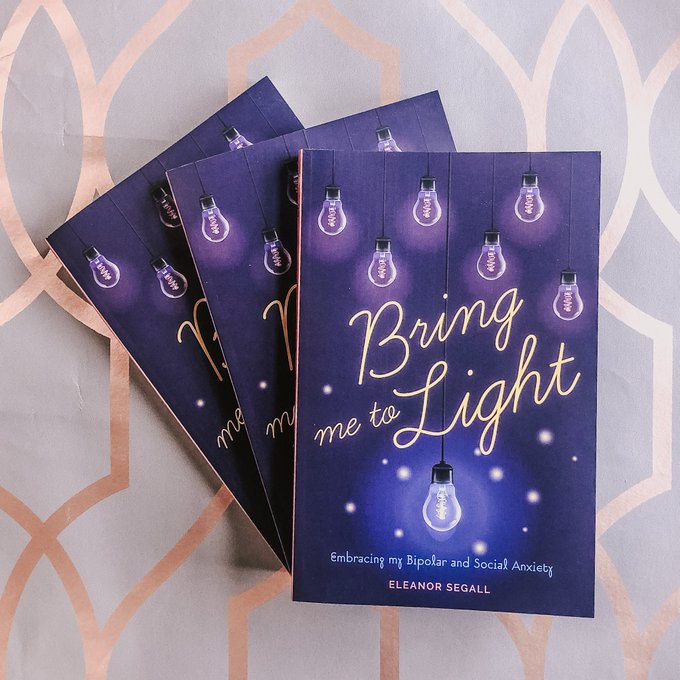
Why I wrote my book, ‘Bring me to Light: Embracing my Bipolar and Social Anxiety’ by Eleanor

bringmeinsta1

(image: Trigger Publishing)

This blog has been a long time coming. I have been so busy promoting my book on social media and in the press that I havn’t actually sat here and told you WHY I decided to write this book. So, here goes.

Firstly, can I just express so much gratitude to this here WordPress blog because without it, I would not have got commissioned at Metro.co.uk (thank you Yvette) or for other places online. This blog gave me the confidence to write and to expand my writing’s reach and for that I will be forever grateful.

In 2013/ early 2014, I sat on the couch, crying and living with a suicidal depression. My bipolar was unstable and all over the place- I felt so low and like there was no way out. However, as I sat and cried- a friend of mine’s face peered up from the newspaper. He was looking for the man that saved him from suicide and was launching a campaign called Find Mike to find him. That man was Jonny Benjamin (who now has an MBE). I had known Jonny for many years as a teenager through friends, but he became my inspiration and my hope that I too could do good things despite having mental illness. He very kindly has provided an endorsement too for my book- thank you Jonny!

With the help of my psychiatrist, I recovered temporarily from the depression but then spun very fast into mania and psychosis (possible due to a large dose of anti depressant). I was sectioned and in hospital for 4 months as an inpatient and a further 4 as an outpatient.

Throughout this time, I could not think about writing because my mind wasn’t stable enough. But as I pieced my life back together, started taking a new mood stabiliser to help control the bipolar episodes and started to recover slowly, I found the power of blogging about my social anxiety due to trauma of the bipolar, to be so helpful. I found that others would share their stories and would reach out to me about their mental health too.

Although life is not perfect and I am still living with an anxiety disorder, I have found a way to write and speak about mental illness. I was diagnosed with bipolar at 16 and there was a lot of shame for me about it back then in 2004. These days, I tell my story for other scared 16 year olds newly diagnosed but also to break down barriers and stigma against mental illness. To explain you can have bipolar or be sectioned or have psychosis but you can recover and you don’t need to spend life in hospital forever. To explain that while this cruel illness runs in families, that with the right healthcare, staying more stable is possible.

I started writing my book with Trigger Publishing because they believed in my story when I sent them my proposal. They are part of the mental health charity the Shaw Mind Foundation and royalties go towards the charity as well as some to me.

I hope that when you read my story, you won’t see it as a despairing ramble- but rather a story of hope, of life, of light triumphing over the darkness- but the darkness making the good times shine brighter. I also bring my bipolar to light, I share it with the world- as scary as this is, so that others can also tell theirs.

I wrote this book too provide a place to talk, start conversation and help heal myself through writing it but sharing that feeling of hope with others too. The book cannot change things that are so needed like urgent mental health funding of the NHS so we have parity of esteem. Yet, i hope it is a starting point about how important mental health treatment is for people to move forward in their lives.

Bring me to Light is out on 5th November 2019 in the UK and is available worldwide. It will be out in the USA in 2020. It can be purchased on Amazon, in book shops and at triggerpublishing.com

I will be sharing press articles and more about the book as it happens, but I hope this blog explains why I wrote my book. Thank you all for your ongoing love and see some of you at the book launch!

Love,

Eleanor x